











Living a “non-toxic” lifestyle isn’t just about wellness, it’s closely tied to sustainability, because what’s better for our bodies is generally better for the natural environment, too.
The more I’ve learned about how everyday products are made, the more I’ve realize how harsh and often toxic chemicals have been used for decades in everything from cleaning sprays to nail polish, from home appliances to rugs and couches, and even in the very structure of our homes, like insulation and paint. Some of these chemicals are now linked to health issues such as asthma, hormone disruption, skin irritation, cancer, and more. Others persist in the environment for decades, polluting our air, water, soil, and wildlife.
It’s no wonder there’s growing concern. Most of us know someone who has suffered from a debilitating illness that may be linked to the kinds of toxins we’re talking about here. Non-toxic living is a growing movement to address both the health impacts and the environmental consequences of these chemicals. Much like the broader zero waste and sustainability movements, it’s about choosing safer materials, avoiding harmful additives, and supporting brands committed to transparency. The goal is to create a healthier home that protects you and your family, and to have a ripple effect that drives broader environmental change.
In this guide, I’ll share what non-toxic living means, why it matters, and how to make simple, impactful swaps in every room of your house. Whether you’re just starting out or looking to take your efforts to the next level, you’ll find practical tips, resources, and links to our in-depth non-toxic product guides to help you make informed choices.
Table of contents
- What Does Non-Toxic Living Mean? Jump to section
- Why Non-Toxic Living Matters Jump to section
- Common Toxins to Watch For at Home Jump to section
- How to Start Living a Non-Toxic Lifestyle Jump to section
- Room-by-Room Non-Toxic Living Guide Jump to section
- How to Test Your Home for Toxins Jump to section
- Tips for Maintaining a Non-Toxic, Sustainable Home Jump to section
- Frequently Asked Questions: Toxin Free Living Jump to section
What Does Non-Toxic Living Mean?

At its simplest, non-toxic living means reducing or eliminating your exposure to substances known, or suspected, to be harmful to human health or the environment. In practice, this involves:
- Building awareness of well-known and potential toxins.
- Identifying sources of exposure in your home.
- Removing or reducing those exposures where necessary, while avoiding unnecessary waste, and repurposing items where possible.
- Replacing items with products and materials made without harmful chemicals like Perfluoroalkyl and Polyfluoroalkyl Substances (PFAS), Volatile Organic Compounds (VOCs), phthalates, and parabens.
So non-toxic living isn’t just about what you avoid, it’s also about what you choose instead.
Importantly, “non-toxic” is not a regulated term. It’s often used in greenwashing, since a label can claim “non-toxic” without any third-party verification. For a deeper breakdown of the term, see our guide: What Does Non-Toxic Mean?
For your awareness, you might also come across similar terms as you learn more about living a non-toxic lifestyle. These include:
- Low-tox: Focuses on reducing overall exposure without aiming for complete elimination.
- Toxin-free: Often used interchangeably with non-toxic, but can be misleading if not backed by testing.
Why Non-Toxic Living Matters
My interest in non-toxic living actually started with sustainability (surprise surprise!). One of the big reasons we started this publication was to understand the full environmental impact of the products we use every day, from how they’re made to what happens when we throw them away. And it didn’t take long to see how closely chemical safety and environmental protection are linked. Here’s why it’s super important to opt for non-toxic alternatives, where possible:
For the Planet
Many synthetic chemicals used in manufacturing, like PFAS, VOCs, and other flame retardants, are persistent pollutants. Once they’re in the environment, they can stay there for decades or even longer, building up in soil, waterways, and wildlife.
These substances often leach from products during their use or disposal, contaminating ecosystems far beyond our homes. For example, PFAS exposure has been found in wildlife in even remote parts of the planet (like the Arctic) and has been linked to health conditions like liver damage, developmental and reproductive problems, and more.
By raising awareness, pushing for change and choosing products without these toxins, we’re helping to reduce the chemical load on the planet and better protect biodiversity.
For Our Health
The same chemicals that harm wildlife and ecosystems often harm us, too. We’re exposed through the air we breathe, the water we drink, the food we eat, and even the dust in our homes.
Why is non-toxic living better? Call it whatever you like, but reducing exposure to harm is a core survival instinct. Collectively, these choices can shift entire industries away from toxic manufacturing processes toward healthier, more sustainable ones.
Common Toxins to Watch For at Home
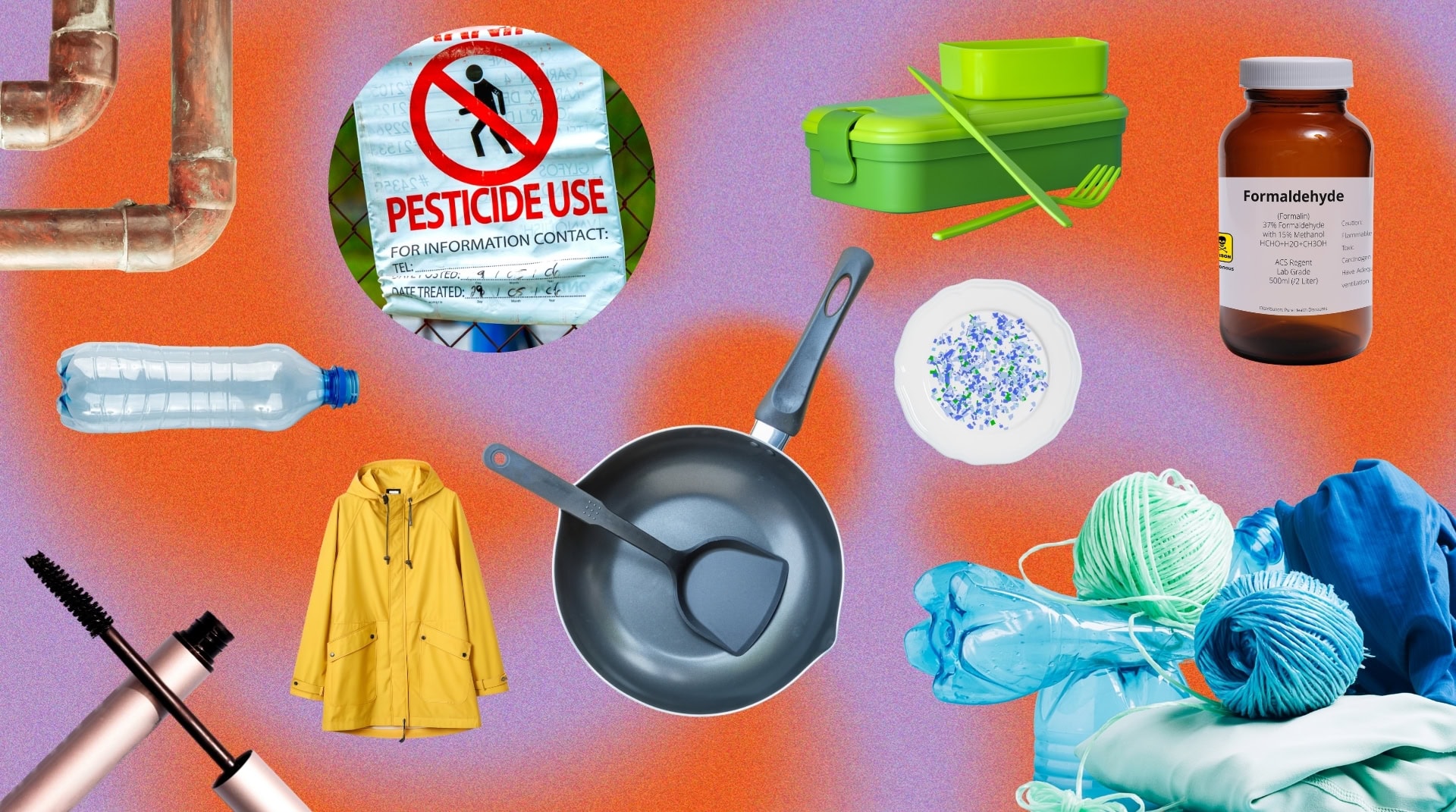
The deeper you dig, the more you find so while I hope this is not the case, I think it’s likely we’ll be adding to this list over time. Based on what science has found so far, here’s a breakdown of the most toxic things commonly found in a household, why they matter for both our health and the planet, and where they tend to hide:
PFAS (“Forever Chemicals”)
These are a large group of man-made chemicals used to make products resistant to water, grease, and stains. They don’t break down naturally, hence the nickname “forever chemicals.”
PFAS accumulate in people, wildlife, and the environment, contaminating waterways and soil. They have been linked to liver damage, immune system suppression, developmental issues, and certain cancers.
Common household sources:
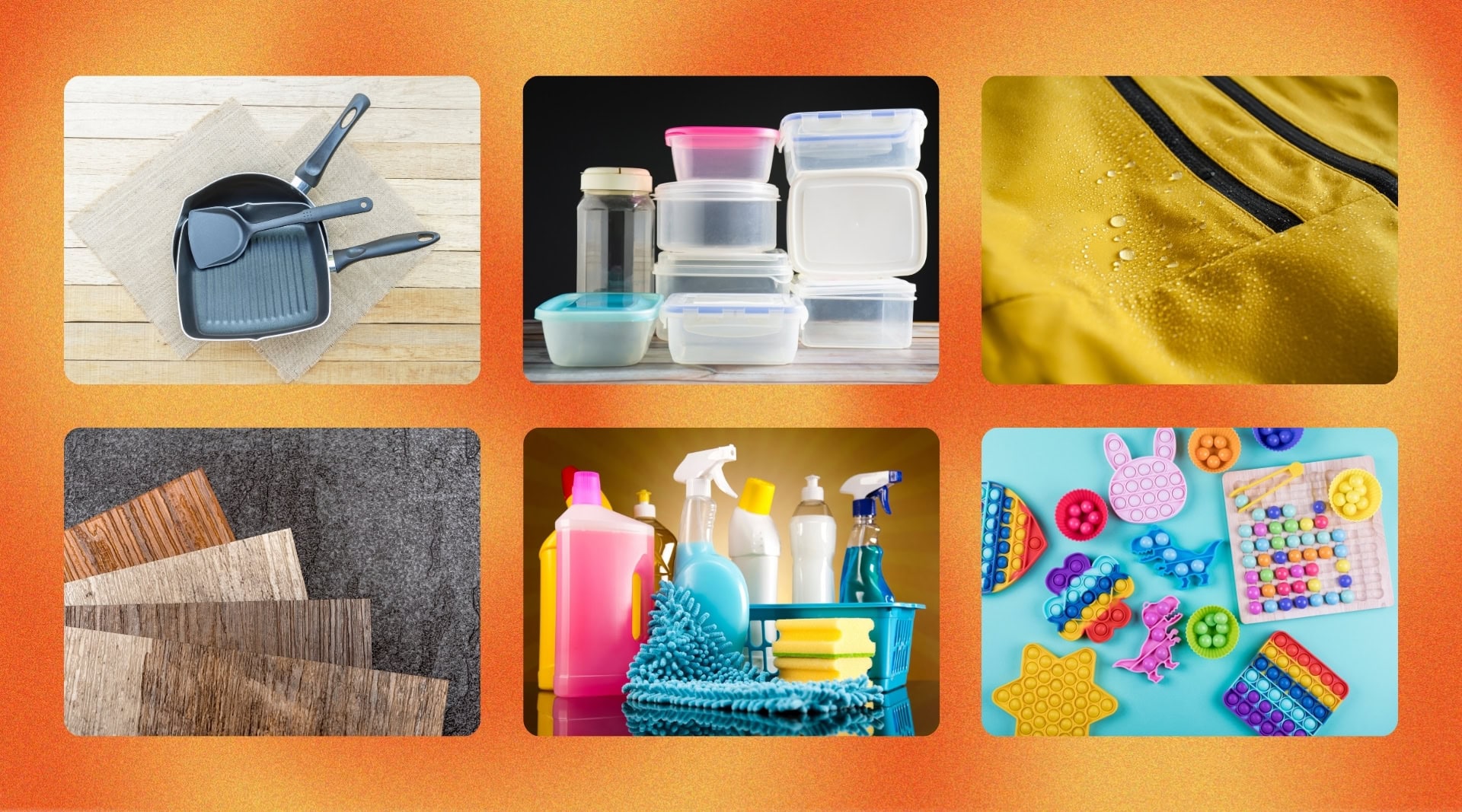
- Non-stick cookware and bakeware (especially older Teflon-coated pans)
- Stain-resistant carpets, rugs, and upholstery
- Water-repellent outerwear
- Fast-food wrappers and takeaway containers
- Some cosmetics like foundation, mascara (especially waterproof mascara), and lipstick
If you’re looking for more, see our guide to PFAS and we did a podcast episode on forever chemicals which you can listen to here.
VOCs (Volatile Organic Compounds)
VOCs are chemicals that easily evaporate into the air at room temperature, often giving off a noticeable smell. They contribute to indoor air pollution and can react with sunlight to create smog. Short-term exposure can cause headaches and respiratory irritation; long-term exposure is linked to liver, kidney, and nervous system damage.
Common household sources:
- Paints, varnishes, and wood finishes
- Air fresheners, candles with synthetic fragrance
- Cleaning products
- New furniture made with particleboard or MDF (including furniture that we spend a LOT of time on like beds, cribs and couches)
- Carpets and vinyl flooring
Formaldehyde
Formaldehyde is a chemical used in building materials, furniture, and household products as a preservative or adhesive. It’s classified as a human carcinogen (i.e. it causes cancer to grow or helps cancer grow). Exposure can also cause skin rashes, respiratory issues, and eye irritation. It off-gasses slowly over time, contributing to poor indoor air quality.
Common household sources:
- Plywood, particleboard, insulation, and MDF furniture
- Some textiles, especially wrinkle-resistant fabrics
- Certain paints, glues, and adhesives
- Nail polish and hardeners
- Preservatives in some medicines, cosmetics and cleaning products like dishwashing liquid and fabric softener
- Fertilizers and pesticides
Phthalates
Phthalates are a group of chemicals that are used to make plastics flexible and to help fragrances last longer. They are known endocrine disruptors, linked to reproductive and developmental issues in both humans and wildlife. They also leach into soil and water, impacting ecosystems.
Common household sources:
- PVC products (shower curtains, flooring, toys)
- Personal care products with synthetic fragrance (lotions, shampoos, perfumes)
- Food packaging and cling wrap
- Vinyl handbags, raincoats, and accessories
Synthetic Fragrances
Synthetic fragrances are lab-made scent compounds, often containing undisclosed chemical blends – they can be any mix of more than 3,500 chemicals. They can include toxic chemicals including phthalates and other allergens. These contribute to indoor air pollution and can affect respiratory health and wildlife when washed into waterways.
Common household sources:
- Air fresheners, scented candles, plug-in scented devices
- Laundry detergents and fabric softeners
- Soaps, shampoos, and body washes
- Cosmetics and perfumes
Flame Retardants
Flame retardants are chemicals that are added to materials to reduce flammability. Many are persistent organic pollutants (POPs) that build up in humans and wildlife, disrupting hormones and affecting brain development. They’ve also been linked to cancer and immunotoxicity.
Common household sources:
- Upholstered furniture and mattresses (especially older ones)
- Carpets and carpet padding
- Electronics and TV casings
- Sleepwear (especially for children)
- Building and construction materials
BPA (Bisphenol A)
BPA is a chemical used in making certain plastics and epoxy resins. It is yet another endocrine disruptor linked to reproductive issues, obesity, and certain cancers. It can leach into food and drinks, especially when heated. Numerous products now advertised to be “BPA-free” include substitutes that are also not safe.
Common household sources:
- Polycarbonate water bottles and plastic food containers (including takeaway containers)
- Canned food linings
- Takeaway coffee cups
- Receipts (thermal paper)
Pesticides & Herbicides
Pesticides and herbicides are chemicals designed to kill pests and weeds. However they also do damage to the natural environments where they’re applied. They’re harmful to biodiversity, especially pollinators (like bees). Humans who work with these chemicals are most exposed to a range of health problems – they’re linked to cancer, reproductive harm, and neurological effects in humans.
Common household sources (aside from food):
- Lawn and garden treatments
- Flea and tick collars or sprays for pets
- Indoor insect sprays and baits
Food sources:
Conventional produce like fruit and vegetables can carry pesticide residues. The now famous lists by EWG called the The Dirty Dozen and the Clean Fifteen give a high level guide of the “dirtiest” fresh produce (highest levels of pesticide residues) and the “cleanest” which have the lowest amount and are potentially safer when buying conventional.
Microplastics & Microfibers
Microfibers are a type of microplastic. They’re essentially tiny plastic particles shed from synthetic materials during use or washing. They pollute oceans and waterways, are ingested by wildlife (and us), and can carry toxic chemicals on their surfaces.
Common household sources:
- Synthetic clothing (polyester, nylon, acrylic)
- Rugs, carpets, and upholstery
- Cleaning cloths and sponges made from synthetic fibres
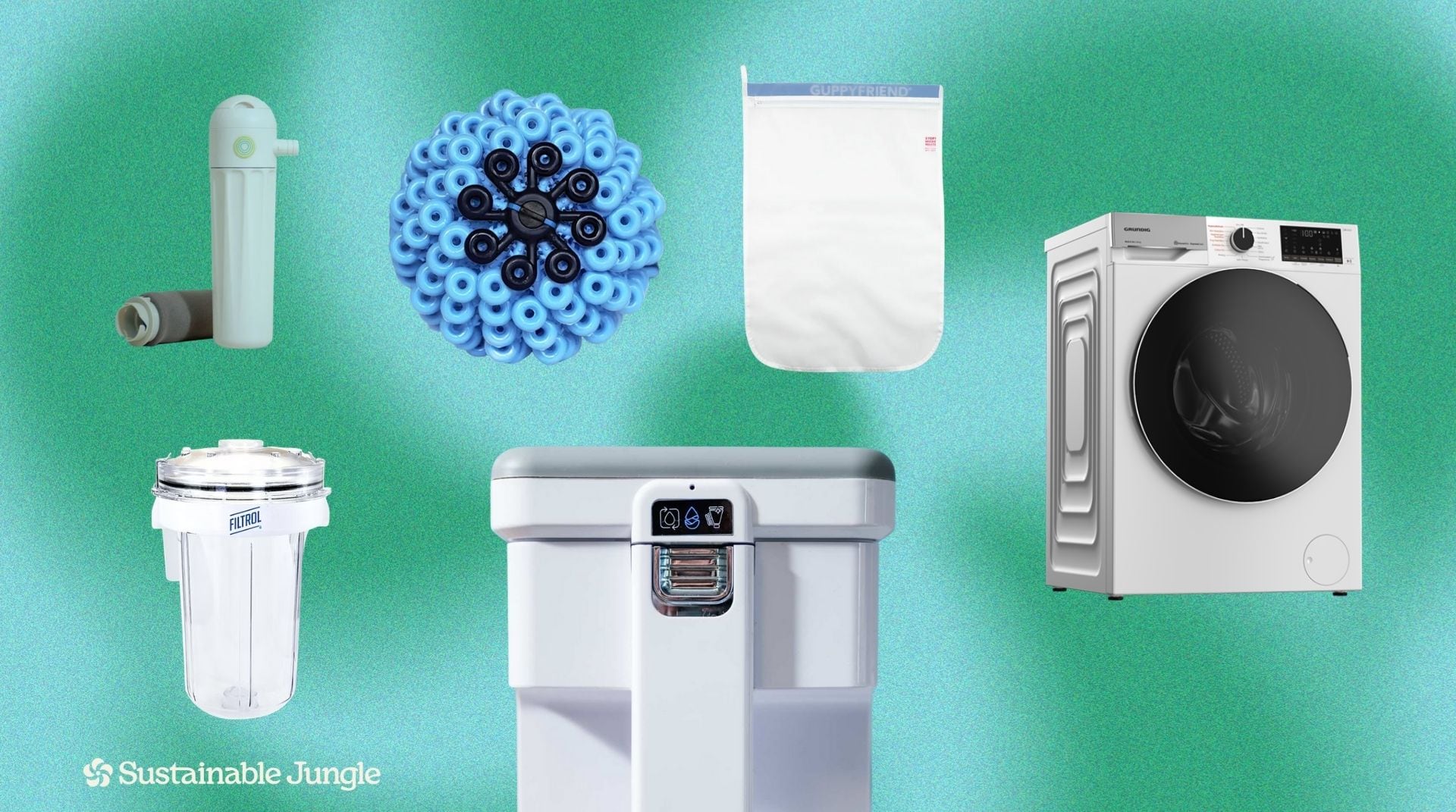
We cover microfibers in depth here: Microfiber Filters for Washing Machines: Why They Matter and Is Polyester Bad for You?
Textile Chemicals & Finishes
Textiles – especially clothing, bedding, and upholstery – can be treated with chemicals including formaldehyde, azo dyes, perfluorinated compounds (PFCs), and flame retardants, some of which we’ve covered above. The wide use of polyester in clothing (around 80% of synthetic fibers) means that many of these chemicals are used in its production, particularly for dyes. Polyester is also one of the major contributors to microfiber pollution. Pesticides are widely used in growing agricultural raw materials like cotton, adding another layer of potential exposure.
Common sources:
- Wrinkle-resistant or “easy-care” clothing and bedding
- Stain- or water-resistant fabrics (often treated with PFAS)
- Synthetic fabrics dyed with azo dyes (nylon, polyester, acrylic)
- Upholstery and carpets treated with flame retardants
- Non-organic cotton, which may carry pesticide residues from cultivation
Heavy Metals (Lead, Mercury, Cadmium)
These heavy metals are naturally occurring but become toxic in high concentrations, often through industrial use. They can damage the nervous system, kidneys, and brain. Lead is especially harmful to children’s development.
Common household sources:
- Lead-based paint (in older homes)
- Imported ceramics and cookware with unsafe glazes
- Jewellery and cosmetics (especially from unregulated sources)
- Some water pipes and solder
- Batteries
- Some types of fish!
We’ve covered several additional toxic chemicals in this guide: Common Ingredients to Avoid In Your Skincare Products
How to Start Living a Non-Toxic Lifestyle

I started down this path of non-toxic living a few years ago (coincidentally around the time I had a baby), and while I wanted to change everything all at once, I quickly learned that the most sustainable and realistic approach is to take it step by step. I’m still not there (I’m still trying to nail a low waste lifestyle at the same time – work in progress) but here’s a few tips I would recommend if you’re wondering how to start non-toxic living without feeling overwhelmed.
Tip 1: Identify Your Biggest Exposure Points
Look at the areas of your home where you or your family members have the most frequent contact with products. Often it’s cleaning supplies, personal care items, and anything that touches food.
For me, this was multi-purpose cleaning sprays, bathroom cleaning sprays, deodorant, skincare, shampoo and conditioner, cosmetics, and food storage containers.
I also paid attention to where I spent the most time, for example: in bed, at my desk, on the couch, or playing with my son on the floor.
And I thought about the food and drink I consume, including packaging, liquids in plastic bottles, and even cans. I’ve also checked my water source and looked at PFAS levels in our local water treatment facility (scary).
Tip 2: Switch One Area at a Time
With newfound awareness, you can start to make small changes incrementally (unless there’s a major health issue that suggests a more rapid approach).
Switching to a completely non-toxic lifestyle can be expensive, and it can also create unnecessary waste. I suggest a pragmatic approach: address the biggest exposures first, as well as those that are easy and inexpensive to change. Here’s where I’m at in some key areas:
- Consumables: Many sustainable and low waste products overlap beautifully with non-toxic products. In the case of consumables like cleaning products and personal care, I’ve replaced them with safe and clean alternatives as things run out. Because these products are constantly used up, I’ve been able to try different brands over time and find what works best for me.
- Big expensive things: Beds, desks, bedding, and couches are trickier because they’re not consumable, and throwing out old products is wasteful. I try to learn more about how the products I already own were made and decide from there whether replacing them is a priority.
- Food & drink: The obvious solution is to stop buying things in plastic. Especially takeaway food and anything you plan to heat up. In practice, this isn’t always convenient, so I focus on my biggest exposure points. For example, I never drink coffee in a takeaway cup (unless someone buys one for me without knowing), I rarely get takeaway food (and try not to panic if I do), and I never store or heat food in plastic. I still occasionally drink from tins (which may contain PFAS) but figure it’s better than plastic and fine in moderation.
If you’re starting from scratch—setting up a new home or building one—you have a brilliant opportunity to take more interest in the materials being used and the products you fill that home with. The next couple of sections will help with that.
Tip 3: If You Need New, Buy Better (or Make It Yourself)
Look for Sustainable, Low Waste Alternatives & Better Transparency
Sustainable, conscious brands often lead the way here because they’re more likely to be transparent about their materials and processes. We have a brand directory where you can search for consumer brands (clothing, beauty, furniture, etc.) rated by us on their sustainability credentials, which includes a criterion for customer safety. You can also filter for “organic”, “non-toxic” and “plastic-free”. The next section of this article also links to all our product guides.
Ideally, you want to see raw materials that are known to be non-toxic and, for products with higher toxicity risks (like cookware or cleaning supplies), evidence of lab testing to confirm there are no harmful chemicals.
Read Labels and Look for Certifications
Marketing claims can be misleading, so if you need to buy new household products, I’d always suggest checking for trusted certifications. Here are a few common ones:
- Consumables: MADE SAFE®, EWG Verified or EPA Safer Choice.
- Textiles: GOTS, OEKO-TEX®, bluesign®
- Furniture: GreenGuard Gold, GOLS, and eco-INSTITUT
- Food & Drink: Certified Organic
These don’t guarantee perfection, but they do help to cut through greenwashing and make it easier to choose safer products.
DIY Where Possible
Some of my favourite swaps have been homemade. From natural cleaning recipes to DIY beauty products, making things saves money, cuts packaging waste, and gives one full control over the ingredients. We have an extensive library of DIY recipes and guides for you to try.
Tip 4: When It Comes To Food, Buy The Best You Can Afford
Food is one of the biggest sources of chemical exposure, mostly from pesticide residues on conventional produce. Buying organic where possible (especially for items on the Dirty Dozen list, which tend to have the highest pesticide residues) is highly recommended.
If organic isn’t an option, choosing local and in-season produce (ideally from a farmers’ market) often tastes better, supports smaller growers, and reduces the environmental impact of transport. It also allows you to connect with producers directly and ask how they minimise chemical use.
For packaged and processed foods, ideally avoid these where you can but if you do need to buy them, check ingredients for unnecessary additives, and avoid anything stored in plastic when possible.
Room-by-Room Non-Toxic Living Guide

Thinking about toxin exposure room by room may be a helpful approach to tackle this shift over time. Below I’ve shared the areas I’ve tackled (or am working on), with links to our more detailed guides and product recommendations for each.
Gifts
- Non-Toxic Gifts: My top picks for safer gifting.
Kitchen
The kitchen is one of the most important (and often most toxic) spaces in the home, simply because so much of what we use here touches our food.
-
- Non-Toxic Cookware: I’ve replaced old non-stick pans with safer options like cast iron, stainless steel, and ceramic-coated cookware.
- Is Carbon Steel Non-Toxic?: A guide to the safety profile for carbon steel, particularly in cookware.
- Is Stainless Steel Non-Toxic?: A guide to the safety profile for stainless steel, particularly in cookware.
- Non-Toxic Cutting Boards: Replaced old plastic cutting boards with wood and titanium alternatives
- Non-Toxic Bakeware: Switching from traditional non-stick bakeware to glass, stainless steel, or silicone.
- Non-Toxic Food Storage Containers: My go-tos are glass, stainless steel, and beeswax wraps.
- Non-Toxic Cooking Utensils: Kitchen tools like spatulas, servers, spoons that are made from stainless steel, wood, bamboo, or titanium.
- Non-Toxic Dish Soap & Non-Toxic Dishwasher Detergent: Choosing formulas without synthetic fragrance or harsh surfactants.
- Plastic Free Water Filters: For removing toxins from your water supply.
- Plastic-free Coffee Makers: To minimize exposure in your brew.
- Plastic-free Water Bottles: A list of bottles that eliminate or minimize exposure to plastic.
- Is Silicone Safe & Non-toxic: We go into the research on safety, toxicity, biodegradability, microplastics, and more.
- How To Avoid Microplastics: Covers key sources of microplastics and the best ways to avoid them.
Bathroom
Between personal care products and moisture-prone surfaces, bathrooms can be a major source of chemical exposure.
- Non-toxic Toilet Paper: Better for all bums and those who make it.
- Non-Toxic Deodorant: Aluminium-free and made with safe, plant-based ingredients.
- Non-Toxic Makeup Brands: Clean, safe ingredients for daily wear.
- Non-Toxic Toothpaste: Avoiding artificial sweeteners, dyes, and unnecessary additives.
- Non-Toxic Pads & Non-Toxic Period Underwear: Breathable, organic cotton options without PFAS or fragrance.
- Non-Toxic Shower Curtain: PVC-free curtains that don’t off-gas harmful VOCs.
- Non-Toxic Nail Polish: We’d suggest it may be better to avoid it altogether but these are at least better than traditional nail polish.
- Organic Towels: Made from organic cotton for the most part – important given daily contact with your skin.
Bedroom
We spend a third of our lives sleeping, so this is a big one!
- Non-Toxic Bed Frames: Made from solid wood with non-toxic finishes.
- Organic Non-Toxic Pillows: Organic and natural materials, free from flame retardants and synthetic fragrances.
- Organic & Sustainable Mattresses: With relevant certifications to ensure the spot you likely spend the most time in is safe.
- Non-Toxic Rugs: Wool, jute, or organic cotton without toxic dyes or stain repellents.
- Organic Comforters: For that extra comfort of the mind too.
- Organic Mattress Protectors: Given you sleep on this every day!
- Guide To Natural & Organic Latex: Safety & sustainability guide to natural latex (including organic certifications)
Nursery & Kids’ Spaces
Children are especially vulnerable to chemical exposure, so I’ve made careful choices here.
- Organic & Non-Toxic Play Mats: PVC-free and made from natural or safe synthetic materials.
- Non-Toxic Bassinets & Non-Toxic Cribs: Solid wood, low-VOC finishes, and breathable organic mattresses.
- Non-Toxic Nursery Rugs: Natural fibers without synthetic backing or flame retardants.
- Non-Toxic Crayons & Non-Toxic Art Supplies: Especially important for little hands (and mouths).
- Organic Baby Blankets: Made from organic cotton mostly.
- Organic Baby Products: Covering clothes, skincare and more
Living & Working Spaces
From couches to desks, these are areas where we spend a lot of time but often overlook.
- Non-Toxic Furniture: Prioritising solid wood, natural fabrics, and non-toxic finishes.
- Non-Toxic Desks: Especially for home offices where you spend hours each day.
- Non-Toxic Wallpaper: Avoiding PVC and choosing low-VOC adhesives.
- Non-Toxic Yoga Mats: Made with safe materials
Cleaning & Household Products
Cleaning products are a low hanging opportunity for switching to low waste and non-toxic swaps.
- Non-Toxic Cleaning Brands: My go-to list of safe, effective brands.
- Non-Toxic Laundry Detergent: Cleaner formulations that still do the job.
- Non-Toxic Bandaids: Compostable, hypoallergenic options.
- Non-Toxic Bug Spray: Safer formulas for people, pets, and pollinators.
Clothing
How to Test Your Home for Toxins
Testing your home can feel intimidating, but it’s the best way to understand your current exposure and decide where to focus your energy (and budget). The results of this testing can take you beyond the guides we share above as you may find you want to make some pretty substantial changes to your home.
Here’s a few different ways to test for toxins:
Check Your Local Water Report
Most water utilities publish annual water quality reports. I looked mine up online and searched for PFAS, lead, chlorine byproducts, and other contaminants. If you can’t find the data, call your local water supplier and ask.
Extra step: If you want more specific results, you can use a certified lab testing kit to analyse your tap water. This can help you choose the right filter, whether that’s a simple carbon block or a more advanced reverse osmosis system.
Test for Indoor Air Quality
Indoor air can be more polluted than outdoor air, especially with VOCs from furniture, paints, cleaning products, and flooring.
You can hire a professional to do a full VOC and formaldehyde test, or use a home air quality monitor that measures particulate matter (PM2.5), humidity, and some chemical pollutants.
Even without a monitor, you can improve air quality by increasing ventilation, using plants strategically, and choosing low-VOC products when renovating or redecorating.
Dust Sampling
Household dust is a major carrier of toxins like flame retardants, phthalates, heavy metals, and microplastics. Testing your dust can give you a snapshot of what’s circulating through your home. Some labs offer dust testing kits you can use yourself.
Regular vacuuming with a HEPA filter and wet mopping can help reduce exposure in the meantime.
Test for Lead
If your home was built before the late 1970s, lead paint may still be present under newer layers. You can buy inexpensive lead test swabs for a quick check on painted surfaces. For more accuracy, have a certified lead inspector assess your home, especially before major renovations (or even better, before you buy a house!).
Look for Hidden Sources
Some exposures aren’t obvious until you check:
- Mould testing can be valuable if you’ve had water damage or persistent musty smells.
- Radon testing is important in certain regions and can be done with a DIY kit or by a professional.
- Soil testing (for lead, pesticides, or heavy metals) is worth doing if you grow your own food.
Tips for Maintaining a Non-Toxic, Sustainable Home
Once you’ve made swaps and tested your home, the next step is keeping it that way. Small habits make the biggest difference in maintaining a non-toxic, sustainable home over the long term.
- Ventilate Regularly: Fresh air helps reduce indoor pollutants, especially VOCs. Try to open windows daily (weather permitting) and use exhaust fans when cooking or showering.
- Clean With Purpose: Dust and dirt aren’t just messy, they can carry toxins like flame retardants, phthalates, and heavy metals. Vacuuming with a HEPA filter weekly and mopping with plain water or a mild non-toxic cleaner can help. Dusting with a damp cloth can stop particles from going airborne.
- Wash New Items Before Use: This helps remove manufacturing residues from clothing, bedding, and even some hard goods. Though ideally, you wouldn’t buy anything with toxin exposure in the first place as toxin runoff is not ideal.
- Monitor Air and Water Quality: If you want to take this to the next level, check the air quality monitor and review local water reports regularly to stay on top of any changes.
- Keep Learning and Updating: Research on toxins and sustainability is evolving. Subscribe to relevant resources (like ours!) can help you stay on top of the changes.
Even maintaining a few of these habits consistently can have a big impact on your health and the environment.
Frequently Asked Questions: Toxin Free Living
These are some of the most common questions asked about non-toxic living, based on what people are typing into Google (all of these are covered above in more detail):
What does non-toxic living mean?
It’s about reducing your exposure to substances known or suspected to harm human health or the environment, and choosing safer, more sustainable alternatives instead.
How do I start living a non-toxic lifestyle?
Start small: identify your biggest exposure points, switch one area at a time, look for trusted certifications, and choose low tox materials like glass, stainless steel, and organic fabrics.
Is a non-toxic lifestyle worth it?
For me, yes. It’s better for my family’s health, reduces our home’s chemical footprint, and supports brands that are doing the right thing for the planet. Plus it calms my eco-anxiety.
How do I detox my home from toxins?
You can improve air quality with ventilation, swap to safer cleaning and personal care products, reduce plastics, and test your home for things like PFAS, lead, and VOCs.
What makes a product non-toxic?
Safe raw materials, no harmful additives, and ideally third-party certifications like MADE SAFE®, OEKO-TEX®, or GOTS. For high-risk items (like cookware or mattresses), lab testing is also important.
What are the most common toxins in a household?
Common culprits include PFAS, VOCs, phthalates, flame retardants, formaldehyde, pesticides, and heavy metals like lead and mercury. See the list above for common household sources of these toxins.
How can I test my home for toxins?
Check your local water report, consider an air quality monitor, and use DIY or lab kits for dust, lead, mould, and other contaminants.
Final Thoughts
Non-toxic living can feel overwhelming and even scary at first. But every swap matters. For me, it’s been about balancing progress with sustainability, making changes where they count most, and not getting caught up in perfectionism.
If you’re just starting, pick one room or one product category from this guide and focus there. As you replace things over time, you’ll naturally build a healthier, more sustainable home.

Joy has been a passionate advocate for the environment since she was a small child. She grew up in South Africa and has been lucky enough to be exposed to the wonders of nature not just in Africa but all over the world. She founded Sustainable Jungle (together with her husband Lyall) back in 2017 after becoming enraged by the devastating impact of palm oil. She then founded the Sustainable Jungle Podcast and together with Lyall interviewed remarkable people from all over the world who were finding ways to create positive impact. Outside of Sustainable Jungle, Joy has always worked in the corporate world, starting out as an auditor and later moving into management consulting. More recently she specialized in Climate Investing for the Asia Pacific region. Given her experience, her current passion is Brand Ratings. She is very much enjoying going deeper on what it really means to drive sustainability performance and true impact through business operations.