













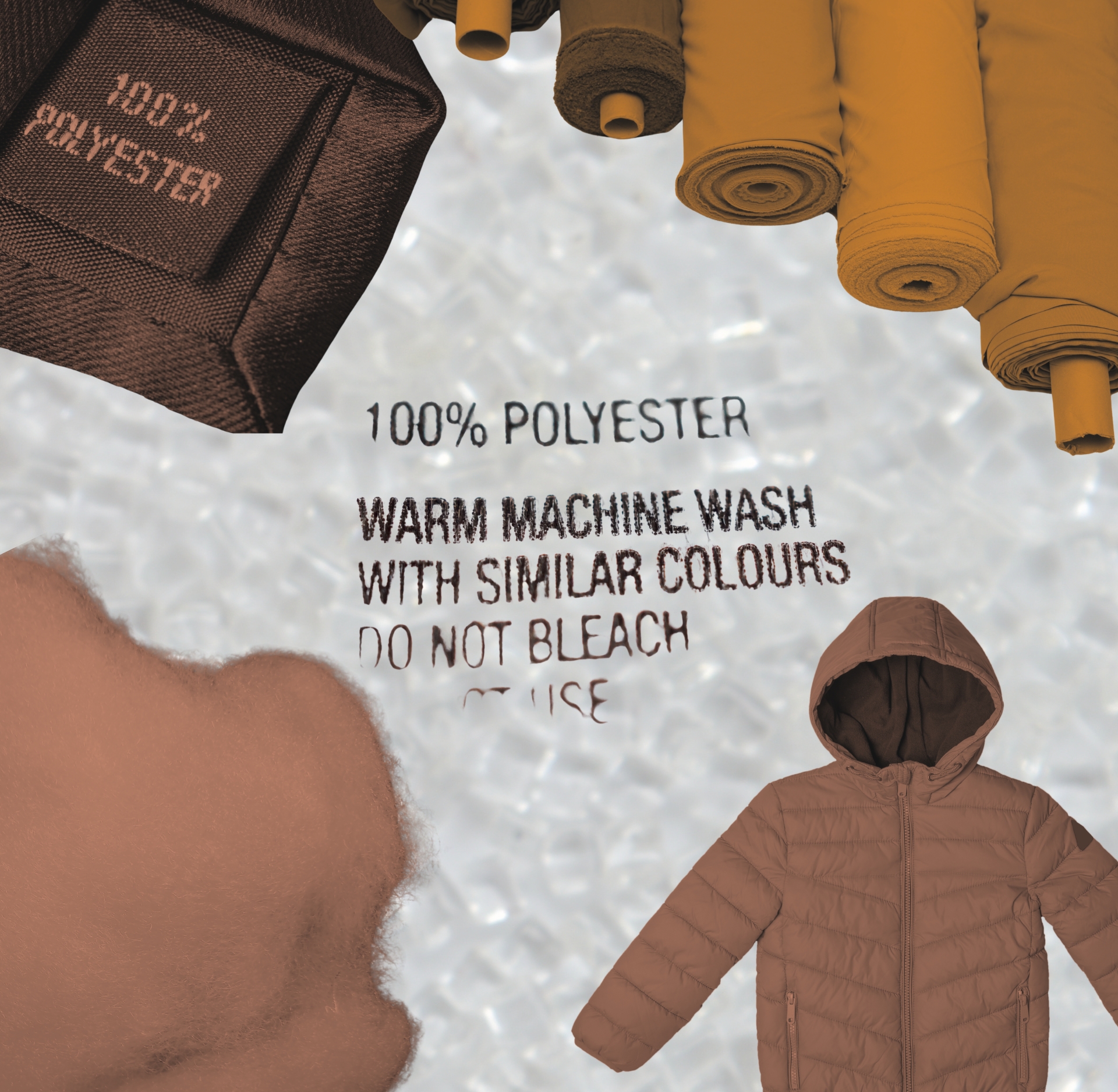
Polyester is a petroleum-derived plastic (polyethylene terephthalate, or PET) spun into fiber and woven into fabric. It accounts for roughly 59% of global fiber production, making it the most used textile material on the planet by a wide margin. You’re likely to be wearing some right now!
The health concerns aren’t new, but they’ve accelerated as research into microplastics, endocrine disruptors, and textile chemical finishes has expanded. And because it touches more human skin than any other fabric on earth, the question of whether polyester is safe to wear is worth answering carefully.
Some corners of the internet will tell you polyester is poisoning your hormones. The polyester industry will tell you it’s perfectly safe.
So we’ve gone through the peer-reviewed studies and the claims circulating online to lay out what the evidence supports, what it doesn’t, and what you can do with that information.
Related Guides: Sustainable Fabrics, Synthetic Fabrics, What Are Forever Chemicals?, What Is Sustainable Fashion?, Microfiber Filters, Non-Toxic Living, Viscose Fabric, How To Avoid Microplastics
At A Glance: Is Polyester Safe?
-
The base polyester (PET) polymer is chemically stable, but finished polyester garments often contain chemical additives including formaldehyde (a confirmed carcinogen), antimony trioxide (a possible carcinogen), and in some cases PFAS, BPA, and phthalates.
-
A single polyester wash releases almost half a million microplastic fibers into waterways. Microplastics have been detected in the blood of people tested, and polyester is the most commonly found polymer in human tissue samples.
-
Research from the 1990s found that continuous polyester contact against the skin caused sperm counts to drop to zero in all 14 male study participants. The studies were small, but the broader evidence for endocrine-disrupting chemicals in polyester garments is growing.
-
Natural fiber alternatives now exist for virtually every clothing category, from activewear to underwear. Swapping whatever you can is our recommendation.
Contents: Polyester
- What Is Polyester? Jump to section
- Is Polyester Bad for Your Skin? Jump to section
- Does Polyester Cause Cancer? Jump to section
- Polyester and Hormones: The Fertility Question Jump to section
- The Microplastics Problem Jump to section
- What About Recycled Polyester? Jump to section
- How to Reduce Your Exposure To Polyester Jump to section
- Frequently Asked Questions on Polyester Safety & Sustainability Jump to section
What Is Polyester?
Polyester is a synthetic polymer made from petroleum-derived ethylene glycol and terephthalic acid. The resulting material, polyethylene terephthalate (PET), is the same plastic used to make water bottles, food packaging, and film. In textile form, PET is melted and extruded through spinnerets to create fine filaments, which are then spun into yarn and woven or knitted into fabric.
The base PET polymer is chemically stable but in its finished form, the polymer chains are tightly bound and don’t readily break down at body temperature or through normal skin contact. A 2021 analysis of the polyester value chain published in Environmental Sciences Europe confirmed that the polymer itself is relatively inert under standard wearing conditions.
But before wear, the fabric passes through dyeing, finishing, and treatment processes that introduce a range of chemical additives. These include wrinkle-resistant finishes (often formaldehyde-based), stain and water repellents (sometimes PFAS-based), flame retardants, antimicrobial treatments, and synthetic dyes. It is these additives where most of the documented health concerns concentrate.
Is Polyester Bad for Your Skin?
Polyester wicks moisture along the surface of the fiber (which is why it’s popular in activewear), but unlike cotton or wool, it absorbs almost none of it. Under standard conditions, polyester has a moisture regain of around 0.4%, compared to 8.5% for cotton and 15-16% for wool. In practice, this means that during heavy sweating or in humid conditions, moisture can accumulate at the skin-fabric interface rather than being drawn into the textile. Combined with polyester’s lower airflow compared to open-weave natural fibers, this can create a warm, humid microenvironment that encourages bacterial and fungal growth, particularly in areas where skin folds or where garments fit tightly.
This is a problem for people prone to eczema, dermatitis, or sensitive skin. A 1995 study by Hatch and Maibach in Contact Dermatitis was one of the first to link synthetic textile fibers to contact dermatitis and skin irritation, though the researchers noted the reactions were often triggered by chemical finishes rather than by the fiber itself.
The more significant skin risk comes from formaldehyde, which is frequently applied to polyester garments as a wrinkle-resistant or “easy care” finish. The International Agency for Research on Cancer (IARC) classifies formaldehyde as a Group 1 carcinogen (confirmed carcinogenic to humans), and skin contact with formaldehyde-treated fabrics can cause allergic contact dermatitis in sensitized individuals. This reaction can appear as redness, itching, or blistering, sometimes days after wearing the garment.
Azo dyes, used widely in synthetic textiles, add another layer of concern. Some azo dyes can break down on contact with skin and sweat to release aromatic amines, a number of which are classified as carcinogenic. The EU has banned 22 aromatic amines from use in textiles under REACH regulation, but enforcement varies, and garments manufactured outside the EU may still contain them.
Our Takeaway On Polyester’s Impact on Skin
If you experience unexplained skin irritation from clothing, the culprit is more likely the chemical finish than the fiber. Washing new garments before wearing removes a significant portion of residual formaldehyde and dye chemicals, and choosing textiles certified under OEKO-TEX Standard 100 confirms the fabric has been tested for harmful substances.
Does Polyester Cause Cancer?
Antimony trioxide is the primary catalyst used in 80-85% of PET production and the International Agency for Research on Cancer (IARC) classifies it as Group 2B (possibly carcinogenic to humans).
Traces of antimony remain in the finished polyester fiber, and research has shown it can leach into liquids stored in PET containers, particularly at elevated temperatures. A 2010 review by Leonard Sax in Environmental Health Perspectives documented antimony leaching from PET bottles and noted its potential endocrine-disrupting effects.
In textile form, antimony can migrate into artificial sweat solutions in lab tests, with a 2021 study in Regulatory Toxicology and Pharmacology finding between 0.05 and 2% of total antimony was mobilized into artificial sweat under standard test conditions. However, the concentrations measured in these studies are typically low, and no epidemiological study has established a direct link between wearing polyester clothing and cancer in humans.
Formaldehyde, as noted above, is a Group 1 carcinogen. Its primary cancer risk is through inhalation (documented in industrial and manufacturing settings), but dermal exposure from formaldehyde-finished textiles is a recognized concern, particularly for garment workers and for consumers wearing treated fabrics against damp or broken skin.
PFAS (per- and polyfluoroalkyl substances) are applied to some polyester garments, particularly activewear and outdoor clothing, for water and stain resistance. These “forever chemicals” are persistent in the body and the environment, and have been linked to thyroid dysfunction, immune suppression, and certain cancers.
No peer-reviewed evidence has established that wearing standard polyester clothing directly causes cancer. The concern is about cumulative chemical exposure from multiple sources over time, with clothing being one contributor among many (food packaging, drinking water, personal care products).
The chemicals applied to polyester during manufacturing are the biggest concern, and these vary dramatically depending on the brand, the factory, and the regulatory environment the garment was produced under.
Polyester and Hormones: The Fertility Question
Some of the most striking research on polyester and health involves male fertility, and it comes from a series of studies by Dr. Ahmed Shafik at Cairo University in the early 1990s.
In a 1992 human study published in Contraception, 14 healthy men wore a polyester scrotal sling continuously. Within an average of 140 days, every single participant became azoospermic, meaning their sperm count dropped to zero. When the sling was removed, fertility gradually returned to normal.
A parallel 1993 study in dogs published in Urological Research confirmed similar findings over a 24-month period. Dogs wearing polyester underwear (must have been quite the sight!) showed significant decreases in sperm count and motility, with degenerative changes in testicular biopsies. Dogs wearing cotton showed no changes. Most of the polyester group recovered after the garments were removed, but two dogs remained oligozoospermic.
Shafik proposed that polyester generates electrostatic fields that disrupt testicular function, an effect he did not observe with cotton or wool. These findings were dramatic (shocking even), but they do come with important caveats. The sample sizes were small, the studies used direct scrotal contact devices rather than ordinary underwear, and the research has not been replicated in modern conditions with contemporary polyester blends.
Beyond the Shafik studies, the endocrine disruption pathway involves the chemical additives embedded in polyester rather than the fiber itself. Bisphenol A (BPA), a well-documented estrogen mimic, has been detected in polyester-spandex clothing at concentrations high enough to raise concern about dermal exposure, and phthalates (plasticizers that can interfere with hormonal signaling) have been found in synthetic garments in multiple studies. A 2024 review of over 120 studies on chemicals in clothing found widespread phthalate contamination in textiles, particularly in synthetic garments and printed areas.
The picture that emerges is that polyester serves as a carrier for endocrine-disrupting chemicals, and they can migrate out of the fabric into sweat and onto skin during wear.
The Microplastics Problem
Every time a polyester garment is washed, it sheds microscopic plastic fibers into the water. A 2016 study by Napper and Thompson at the University of Plymouth, published in Marine Pollution Bulletin, found a standard 6kg wash load of polyester releases approximately 496,030 microfibers per cycle. Acrylic was even worse at ~729,000, while a polyester-cotton blend released ~138,000.
Those fibers are too small to be fully captured by wastewater treatment plants. They enter rivers, oceans, and eventually the food chain, and they are now being found inside us. A 2022 study published in Environment International detected microplastics in the blood of 77% of participants, in what the researchers called a “breakthrough result.” A 2024 systematic review found that polyester is the most commonly detected polymer in human tissue samples, followed by polyamide and polyurethane.
The health effects of microplastics in the body are still being studied, and the World Health Organization noted in 2022 that establishing a firm link between microplastics and illness is difficult due to “limited data.” But the trajectory of the research is concerning. Microplastics carry attached chemicals (including endocrine disruptors) and have been linked in animal and cell studies to inflammation, disrupted insulin signaling, and effects on blood clotting.
This is both a personal health issue and an environmental one, and the two are connected. The fibers shed from your washing machine end up in waterways, are ingested by marine life, and return to humans through seafood, tap water, and even the air. Polyester accounts for the majority of synthetic microfiber pollution in oceans, making it a problem that extends far beyond your wardrobe.
What About Recycled Polyester?
Recycled polyester (rPET) is made by melting down post-consumer PET plastic (usually bottles) and re-spinning it into textile fiber. From a fossil fuel perspective, it’s a clear improvement: rPET reduces CO₂ emissions by approximately 70% compared to virgin polyester according to the Higg Materials Sustainability Index, and uses roughly 59% less energy because it skips petroleum extraction and primary polymerization.
That environmental case is strong, and we recommend recycled polyester over virgin polyester when synthetic fabric is needed, for the simple reason that it keeps existing plastic out of landfills and oceans and avoids pulling new fossil fuels out of the ground.
But (and it’s a big but) from a health and microplastics perspective, recycled polyester does not solve the problems outlined in this article. In fact, it may compound one of them.
A December 2025 study commissioned by the Changing Markets Foundation, conducted by researchers at Çukurova University, tested 51 garments from Adidas, H&M, Nike, Shein, and Zara and found that recycled polyester shed 55% more microplastic particles during washing than virgin polyester. The recycled fibers were also approximately 20% smaller on average, meaning they pass more easily through wastewater filters and penetrate more deeply into biological systems.
The likely explanation is that the recycling process (whether mechanical or chemical) degrades the polymer chains, creating shorter, more brittle molecular structures that fracture more easily during laundering. The study also flagged potential fraud in recycled polyester supply chains, with some garments labeled “recycled” shedding at the same rate as virgin equivalents.
Recycled polyester may also carry chemical residues from its previous life as food or beverage packaging, including BPA. And because 98% of recycled polyester currently comes from plastic bottles rather than old textiles, it doesn’t close the loop on textile waste at all. It diverts bottles from the packaging recycling stream into a product (clothing) that is much harder to recycle again.
Our Takeaway on rPET
Choose it over virgin polyester if you (absolutely) need a synthetic. But don’t treat it as an equivalent to natural fibers, because it sheds mountains of microplastics, still carries chemical additives, and still has the same skin and breathability limitations as any other polyester. And if you do buy rPET (as is the case with PET), use a washing machine filter to reduce your impact (see a link to our guide on this in the introduction to this article).
How to Reduce Your Exposure To Polyester
Avoiding polyester entirely can be difficult and, for many budgets, unrealistic. But you don’t need to overhaul your entire wardrobe at once. Prioritizing the highest-impact swaps and changing a few laundry habits can meaningfully reduce your exposure. Here are a few ideas on avoiding polyester:
Switch the items closest to your skin first:
Underwear, bras, sleepwear, and anything worn directly against the body for long periods should be your first swap. Organic cotton underwear, non-toxic bras, and non-toxic pajamas made from natural fibers eliminate the chemical and microplastic exposure where your skin is most permeable.
Rethink polyester activewear:
This is where polyester has dominated for years (including with rPET more recently), but natural alternatives have caught up significantly. Merino wool performance wear is naturally antimicrobial, moisture-wicking, and breathable. Organic cotton and lyocell blends work well for lower-intensity exercise. Check our activewear guide which includes a few brands using natural fibers or OEKO-TEX certified recycled synthetics.
Wash new polyester garments before wearing:
This removes a significant portion of residual formaldehyde, excess dyes, and other chemical finishes from manufacturing. It won’t eliminate everything, but it’s one of the simplest exposure-reduction steps.
Wash polyester on cold, gentle cycles and air dry:
Higher temperatures and aggressive spin cycles increase both chemical leaching and microfiber shedding. Research has confirmed that washing conditions significantly affect fiber release.
Use a microfiber-catching device:
A Guppyfriend laundry bag or a washing machine filter captures a meaningful percentage of the microfibers that would otherwise enter waterways. This protects the environment even if it doesn’t directly change what you’re exposed to while wearing the garment. See our guide to washing machines with microfiber filters (we include a list of separate filters too).
Choose certified synthetics when buying polyester:
OEKO-TEX Standard 100 and bluesign certification confirm the finished product has been tested for harmful substances. These certifications help limit the worst chemical additives.
Build toward a natural fiber wardrobe over time:
Organic cotton, hemp, linen, wool, lyocell, and modal are all available through sustainable clothing brands at a range of price points. As polyester items in your wardrobe wear out, replacing them with natural alternatives is the most sustainable approach. And thrifting is a great option here too. See our guide to online thrift stores or our thrifting directories.
For parents, non-toxic kids’ clothes and natural fiber bedding are especially worth prioritizing, because children’s skin is thinner, more permeable, and in contact with fabric for long stretches (particularly during sleep).
Frequently Asked Questions on Polyester Safety & Sustainability
Is Polyester Safe to Wear Every Day?
Polyester is unlikely to cause acute harm from normal daily wear. The risks are cumulative and long-term, relating to chemical additives in the fabric, microplastic shedding, and reduced breathability. Choosing certified polyester (OEKO-TEX or bluesign) and washing garments before first wear reduces exposure, but natural fibers remain the lower-risk option for everyday basics, especially for items worn directly against the skin.
Does Polyester Cause Cancer?
No direct causal link between wearing polyester clothing and cancer has been established in humans. The concern centers on chemical additives used during manufacturing. These include antimony trioxide (a possible carcinogen used as a PET catalyst), formaldehyde (a confirmed carcinogen used in wrinkle-resistant finishes), and certain azo dyes that can release carcinogenic aromatic amines. These chemicals are regulated more strictly in the EU than in the US.
Is Polyester Bad for Babies?
Babies and young children have thinner, more permeable skin and spend long periods in direct contact with fabric (sleepwear, bedding, onesies). For this reason, natural fibers certified to OEKO-TEX or GOTS standards are the safer choice for infant clothing and bedding. The EU regulates textile chemicals more tightly for children’s products, but many garments sold in the US are manufactured to less stringent standards.
Is Recycled Polyester Safer Than Virgin Polyester?
Not from a health perspective. Recycled polyester (rPET) still sheds microplastics and may shed more, because a 2025 Changing Markets Foundation study found rPET released 55% more microfibers during washing than virgin polyester. Recycled polyester may also contain chemical residues like BPA from its previous life as plastic packaging.
Does Polyester Affect Hormones?
Research from the 1990s by Dr. Ahmed Shafik showed that continuous direct scrotal contact with polyester caused sperm counts to drop to zero in all 14 study participants. More broadly, polyester garments can contain endocrine-disrupting chemicals including antimony, BPA, and phthalates, which have been shown to migrate into sweat and onto skin during wear. The evidence for hormonal effects from everyday polyester clothing is still emerging, but the additive chemical profile is cause for caution, particularly for underwear and activewear worn against the body.
What Fabrics Are Safest to Wear?
Certified organic cotton, hemp, linen, and GOTS-certified wool are among the lowest-risk options because they require minimal chemical processing and are free from synthetic additives. For performance needs, merino wool offers many of the functional benefits of polyester (moisture-wicking, odor resistance) without the plastic or chemical concerns. If you do wear synthetics, choose OEKO-TEX Standard 100 certified products.
Is Polyester Bad for Eczema?
Polyester can aggravate eczema and other inflammatory skin conditions because of its poor breathability, moisture trapping, and potential for chemical irritation from textile finishes.
Final Thoughts On Polyester Toxicity & Impact
Polyester wraps around more bodies than any other fabric in the world, and the research on what that means for those bodies is still catching up. So far, we can conclude that the polymer is relatively stable, but the chemical cocktail applied to it during manufacturing, and the microplastics it sheds throughout its life, are major concerns backed by a growing body of peer-reviewed evidence.
The fertility studies are small and old, but the microplastics data shows that polyester is everywhere (including, now, in human blood). The additive chemicals include confirmed and suspected carcinogens and endocrine disruptors. And recycled polyester, while better for the planet in some ways, doesn’t solve any of these problems for the wearer.
None of this means you need to throw out everything in your wardrobe tomorrow, but it’s important to be aware of its impact and we’d recommend making a shift away. Natural fiber alternatives exist for virtually every category of clothing, from swimwear to underwear.
And for the polyester that stays in your life, wash before wearing, choose cold and gentle cycles, and use a microfiber-catching device. Please share this with any activewear-loving or fast-fashion-consuming friends in your life!

Joy has been a passionate advocate for the environment since she was a small child. She grew up in South Africa and has been lucky enough to be exposed to the wonders of nature not just in Africa but all over the world. She founded Sustainable Jungle (together with her husband Lyall) back in 2017 after becoming enraged by the devastating impact of palm oil. She then founded the Sustainable Jungle Podcast and together with Lyall interviewed remarkable people from all over the world who were finding ways to create positive impact. Outside of Sustainable Jungle, Joy has always worked in the corporate world, starting out as an auditor and later moving into management consulting. More recently she specialized in Climate Investing for the Asia Pacific region. Given her experience, her current passion is Brand Ratings. She is very much enjoying going deeper on what it really means to drive sustainability performance and true impact through business operations.