














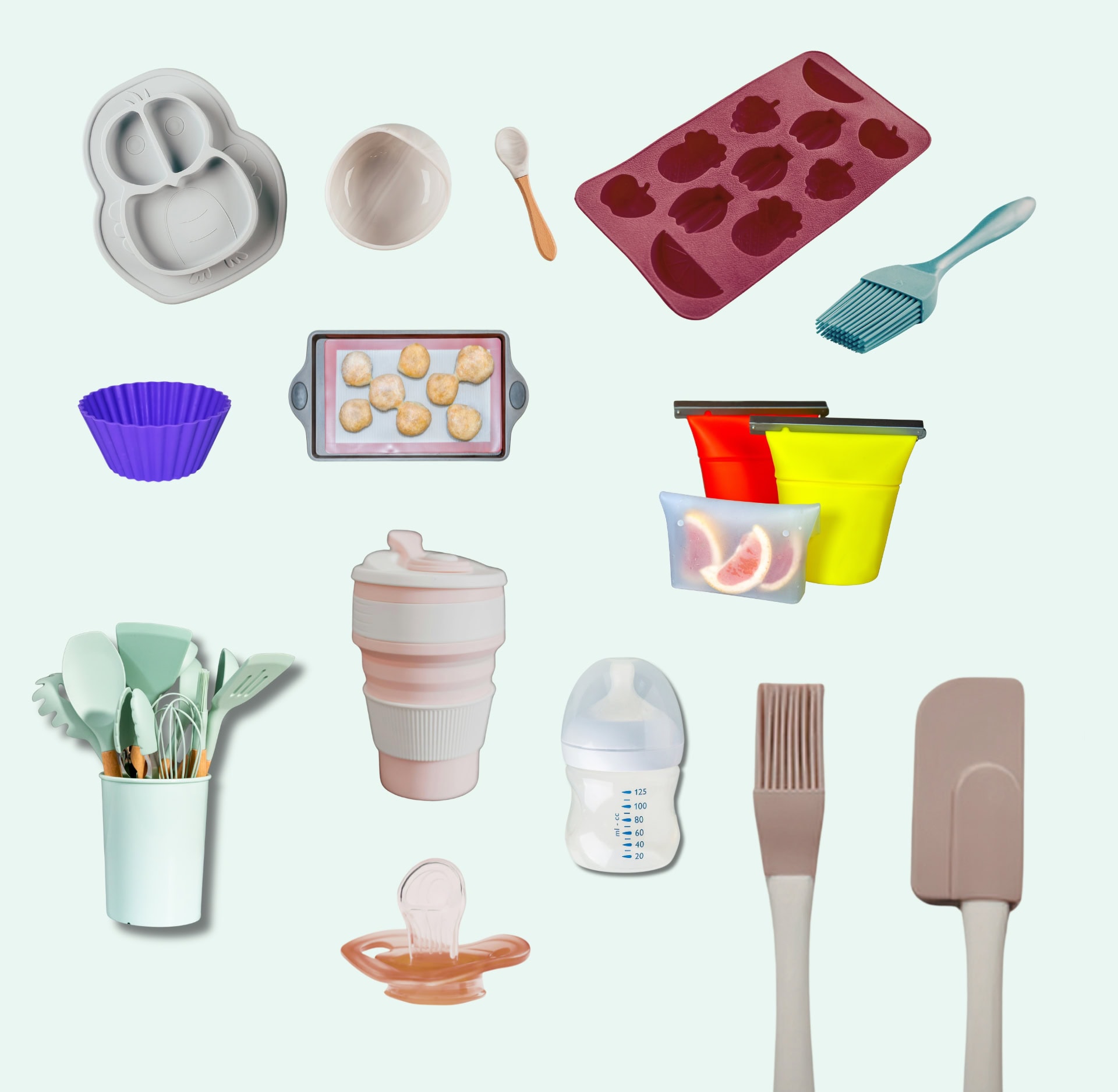
Silicone is having a real moment. Walk into any kitchen store and you’ll find silicone spatulas, silicone baking mats, silicone food storage bags, silicone ice cube trays, and silicone everything else. Swap “kitchen store” for “baby store” and it’s the same story with silicone bibs, silicone teething rings, and silicone bottle nipples. It’s marketed as the safe, non-toxic alternative to plastic, and for many of us trying to reduce our plastic footprint, it’s become a default swap.
But unfortunately “safer than plastic” is a low bar. And the actual research on silicone safety is more nuanced (and more recent) than the confident marketing claims suggest. Some studies are reassuring but others are not. And quality varies enormously between products.
We’ve gone through the peer-reviewed studies, the regulatory positions, and the environmental data to give you the full picture. And we’ve outlined what it means for the choices you’re making at home.
Related Guides: Non-Toxic Cooking Utensils, Non-Toxic Cutting Boards, Non-Toxic Cookware, Plastic-Free Food Storage, Eco-Friendly Kitchen Products, Non-Toxic Bakeware, Plastic-Free Water Bottles, How To Avoid Microplastics, Is Stainless Steel Non-Toxic?
Quick Summary: Is Silicone Safe
High-quality, platinum-cured, food-grade silicone is safer than conventional plastic for food contact. The FDA doesn’t test individual products (compliance is self-declared), European studies have found chemical migration from silicone bakeware into food (especially with heat and fat), and silicone is neither biodegradable nor recyclable through normal channels. Choose alternatives where you can. If you do buy silicone, buy high quality food-grade.
Watch our video for the key points on silicone safety:
Table of contents: Silicone Safety & Considerations
- What Is Silicone (and Is It Plastic)? Jump to section
- Is Silicone Toxic? What the Safety Research Says Jump to section
- Is Silicone Safe to Cook With? Jump to section
- Does Silicone Have Microplastics? Jump to section
- Is Silicone Bad for the Environment? Jump to section
- Silicone vs. Plastic: Which Is Safer? Jump to section
- What to Look for When Buying Silicone Products Jump to section
- Frequently Asked Questions About Silicone Safety Jump to section
What Is Silicone (and Is It Plastic)?
Let’s start with the basics, because there’s a lot of confusion here, starting with the name.
Silicon is a naturally occurring chemical element found in sand, quartz, and rock. It’s the second most abundant element in the Earth’s crust. Silicone is a synthetic material made from silicon, but they are not the same thing. Calling silicone “natural” because it contains silicon is like calling a plastic bag “natural” because it contains carbon. This distinction is important because silicone marketed as all natural is greenwashing.
Silicone (the material in your kitchen) is a synthetic polymer built on a backbone of alternating silicon and oxygen atoms, with carbon-containing groups (usually methyl groups) attached to the silicon. Chemists call these compounds siloxanes, and the silicone family includes thousands of variations with different properties depending on chain length, cross-linking, and additives.
To make silicone, manufacturers heat silica (from sand) at extremely high temperatures to extract silicon metal, then react it with fossil fuel-derived hydrocarbons (typically methyl chloride) through a process called the Müller-Rochow synthesis. The resulting compounds are then polymerized and cross-linked into the flexible, heat-resistant material we recognize.
So is silicone plastic?
The answer depends on your definition. Technically, silicone is a synthetic polymer, which puts it in the same broad family as plastics. Some organizations, including the Plastic Pollution Coalition, classify it as a type of plastic.
But silicone’s silicon-oxygen backbone is fundamentally different from the carbon-carbon chains in conventional plastics like polyethylene, polypropylene, PVC, and PET. This gives silicone distinct properties: much greater heat resistance, higher chemical stability, and (under normal conditions) lower reactivity with food and beverages. Most materials scientists would call it a synthetic elastomer, a hybrid sitting somewhere between plastic and synthetic rubber.
For practical purposes silicone is not a conventional plastic, but it’s not a natural material either. It shares some of plastic’s drawbacks in that it’s not biodegradable, it’s difficult to recycle, and it’s derived from non-renewable resources. But it does offer real advantages including heat stability, durability, and lower reactivity.
More than whether we define it as plastic, the quality spectrum matters enormously for safety. Within food-grade silicone, the most important distinction is how the silicone is cured (hardened):
Platinum-cured (addition-cured)
Considered the highest quality. It uses a platinum catalyst, produces little to no byproducts during curing, and is often described as “medical-grade.” This is what reputable cookware and baby product brands typically use.
Peroxide-cured (free-radical-cured) silicone
Uses organic peroxides as catalysts, which can leave residual byproducts in the finished product. It’s cheaper to produce and more common in lower-cost products. These byproducts are the likely source of the off-gassing and odors some people notice with new silicone bakeware.
Tin-catalyzed or zinc-catalyzed silicone
Generally lower quality and not typically used for food contact applications.
Is Silicone Toxic? What the Safety Research Says
The research on silicone safety is neither fully reassuring nor alarming. It’s evolving, variable by product quality, and depends heavily on how you’re using the silicone.
The Regulatory Picture For Silicone
In the US, the FDA regulates silicone for food contact under 21 CFR 177.2600, which governs rubber articles intended for repeated use with food. The regulation specifies which materials can be used and sets limits on extractable substances.
But the FDA doesn’t test or approve individual silicone consumer products. Compliance with 21 CFR 177.2600 is self-declared by manufacturers. And the regulation focuses on material composition and extractable limits, not on migration testing under real-world cooking conditions (sustained heat, high-fat foods, repeated use over time), which is where the European studies discussed below have found concerns.
In the EU, silicone is listed as a material that should have specific measures under the Framework Regulation (EC) 1935/2004, but no harmonized EU legislation for silicone food contact materials exists to date. Only a few countries (notably Germany and France) regulate silicone nationally, and the European Consumer Organization (BEUC) has called for stricter EU-wide rules after its own testing found concerning levels of chemical migration (more on this below).
What Leaching Studies Show
When scientists test whether a material is safe for food contact, one of the key things they measure is chemical migration. This is the study of whether chemicals from the material transfer into the food or liquid it’s touching. When we talk about “leaching” throughout this article, this is what we mean.
The 2023 Beijing study
A study published in Science of the Total Environment by researchers at Beijing Technology and Business University tested 42 silicone food contact products purchased on the Chinese market. After migration testing (in 95% ethanol at 70°C for 2 hours), 84% of the kitchenware showed endocrine-disrupting activity, including estrogenic, anti-estrogenic, androgenic, and anti-androgenic effects. The researchers identified 140 compounds in the products, of which 53 were flagged for further safety evaluation.
This study has been widely cited (including by the Food Packaging Forum) and it’s a legitimate concern. But the products were purchased on the Chinese consumer market, where regulatory standards for silicone food contact materials are less stringent than in the EU or for FDA-compliant products. The same study found that all 11 infant bottle nipples tested showed zero cytotoxic or hormonal activity. So the study essentially covered the quality gap between well-made and poorly-made silicone.
The BEUC European study
In 2022, the European Consumer Organization (BEUC) tested 44 silicone baking molds sold across European markets. 23% released chemicals at high concentrations (above 30 mg/kg) or in increasing amounts over time (suggesting the products aren’t suitable for repeated use). 82% contained substances of concern, including suspected endocrine disruptors and substances classified as carcinogenic, mutagenic, or reprotoxic, though at low levels. Three siloxanes classified as substances of very high concern (SVHCs) were detected as migrants.
The Swiss Federal Office study
An earlier study from the Swiss Federal Office of Public Health (2005) found that silicone baking molds released volatile organic compounds when first heated, but that this initial release decreased significantly after the first few uses (a process called “seasoning” or “conditioning”). They recommended baking empty at 200°C for four hours before first food use.
The Food Packaging Forum
The Food Packaging Forum’s comprehensive dossier on silicones (updated 2024) concludes that silicone can and does release chemicals during use, particularly under heat. The compounds most commonly detected are cyclic siloxanes (D4, D5, D6) and residual curing agents. Fat-rich foods increase chemical migration from silicone.
Cyclic Siloxanes: The Chemicals of Concern
The specific chemicals raising flags in silicone products are cyclic siloxanes, particularly:
- D4 (octamethylcyclotetrasiloxane): Classified by ECHA (European Chemicals Agency) as a substance of very high concern. It’s a suspected endocrine disruptor with evidence of reproductive toxicity in animal studies. The EU has restricted D4 in wash-off cosmetic products at concentrations above 0.1%.
- D5 (decamethylcyclopentasiloxane): Also an SVHC candidate and widely used in personal care products (it’s the slippery-feeling ingredient in many hair serums and primers). Persistent in the environment, with concerns about bioaccumulation in aquatic organisms.
- D6 (dodecamethylcyclohexasiloxane): Less studied, but flagged by ECHA for similar persistence and bioaccumulation concerns.
These siloxanes are present in some silicone kitchenware as residual byproducts of manufacturing. They can off-gas when silicone is heated and, in small amounts, migrate into food. The question is whether the levels people are actually exposed to through normal use of silicone cookware are harmful.
Unfortunately, we don’t have definitive data on long-term, low-level dietary exposure to siloxanes from cookware. The levels detected in most studies are low (often within EU migration limits where those exist), but the absence of comprehensive safety data is itself a concern.
Is Silicone Safe to Cook With?
High-quality, platinum-cured, food-grade silicone is probably safe for most cooking and baking applications. But we’d be misleading you if we said the science has settled this question.
Here’s what we can conclude:
- Platinum-cured silicone does not melt, warp, or release toxic fumes at standard cooking temperatures (up to ~220°C / 428°F). Health Canada and the FDA both consider food-grade silicone safe for oven use within that range. The Swiss Federal Office study found that after an initial “seasoning” bake, volatile compound release dropped significantly and stayed low.
- However, the BEUC study found that 23% of silicone baking molds sold in European markets (not just unregulated imports) released chemicals at concerning levels, and some released increasing amounts over time, meaning they got worse with repeated use. And fat-rich foods increase migration.
- Nobody has done a long-term study tracking health outcomes in people who regularly cook with silicone versus those who don’t. The migration studies tell us chemicals can transfer, and at what levels, but we don’t have the epidemiological data to tell us what that means for health over 10 or 20 years of use.
So we’d personally use a high-quality silicone baking mat or muffin pan within the suggested heat range. But we’d reach for cast iron, stainless steel, titanium or ceramic first if they were available and could be made suitable for the task.
Is Silicone Oven Safe?
According to the studies above, one could argue that food-grade silicone is oven safe up to approximately 220°C (428°F), which covers most baking and roasting. It will not melt or warp at these temperatures but above 260°C (500°F), silicone can begin to degrade and release volatile compounds.
Never use silicone cookware under a broiler, in direct contact with open flames, or on the stovetop. And if you’re cooking at higher temperatures, stick with non-toxic cookware like cast iron, carbon steel, stainless steel, or ceramic.
One practical tip is to season new silicone bakeware before first use. Based on the Swiss Federal Office research outlined above, baking new silicone molds empty at 200°C for four hours before using them with food can significantly reduce initial chemical off-gassing.
Are Silicone Baking Mats and Pans Safe?
Silicone baking mats, muffin pans, and cake molds are the most popular silicone bakeware, and they’re a reasonable choice if you buy good quality, food grade silicone.
But be mindful of fat content (buttery or oily bakes cause more chemical migration than dry bakes), season before first use, and don’t reuse products that have become tacky, discolored, or developed a persistent odor, as these are signs of material degradation.
Despite this, we’re in the camp of using other options like a greased metal pan instead, where possible.
Are Silicone Utensils Safe?
Silicone utensils (spatulas, spoons, tongs, whisks) are among the safest silicone applications. They have brief, intermittent contact with hot food rather than sustained heat exposure.
A 2012 study published in Food Additives & Contaminants found very limited migration from silicone baking sheets and infant bottle nipples under simulated use conditions. For utensils, which have even less sustained contact than baking sheets, the risk is likely lower still.
But if you want to avoid the question entirely, wooden, bamboo, or stainless steel utensils have no leaching concerns whatsoever and are ultimately the safer choice.
Is Silicone Microwave Safe?
Silicone is widely marketed as microwave safe, and food-grade silicone won’t melt or warp in a microwave. It’s largely transparent to microwave radiation (like glass and ceramic), meaning the silicone itself doesn’t heat up directly from the microwaves.
However, the food inside does get hot, and that heat transfers to the silicone. A 2021 study in Food Chemistry lists microwave heating alongside conventional oven use as a “severe food processing condition” that can cause migration of silicone oligomers into food.
And a 2025 study in Food Packaging and Shelf Life (Klaiber et al.) directly tested commercial silicone food containers under microwave conditions and found appreciable platinum migration, particularly with fatty foods. The levels detected under microwave heating were comparable to those found under conventional oven heating.
Glass containers remain the zero-migration option for microwave use. If you’re using silicone, keeping reheating times short and avoiding high-fat foods in silicone under microwave conditions reduces exposure, but “microwave safe” on the label means the silicone won’t be damaged by the microwave, not that migration has been ruled out.
Is Silicone Dishwasher Safe?
Most manufacturers market their food-grade silicone products as dishwasher safe, and claim that silicone won’t melt or warp in a dishwasher cycle. Though I have personally managed to ruin some silicone items in the dishwasher so I’m not so sure I’d agree completely.
No peer-reviewed study has specifically examined whether dishwashers accelerate silicone degradation compared to hand washing, though high-heat cycles and concentrated enzyme-based detergents are more aggressive than warm water and mild soap.
Silicone can develop a tacky or sticky surface over time, which is most commonly caused by oil and grease absorption rather than structural breakdown. A baking soda paste can usually resolve this. However, if the stickiness persists after deep cleaning, or if the silicone has become discolored or developed a persistent odor, those are stronger indicators of material degradation, particularly in lower-quality products.
Hand washing with warm water and non-toxic dish soap is the gentler option if you want to err on the side of caution.
Is Silicone Safe for Babies?
The research here is mixed.
On the reassuring side, the 2023 Beijing study that found endocrine-disrupting activity in 84% of silicone kitchenware found zero cytotoxic or hormonal activity in any of the 11 infant bottle nipples tested. Baby products from reputable brands are generally made with platinum-cured, medical-grade silicone and are subject to stricter regulatory standards than kitchenware.
On the less reassuring side, the Klaiber et al. 2025 study (referenced above) detected silicone microparticle release from a baby training cup, and found platinum migration from all three products tested (including the cup). This is a different type of concern from the endocrine activity the Feng study measured.
We’d also recommend reading the section below on microplastics which references a relevant study.
Despite the above findings, glass bottles with silicone nipples remain the most conservative option (vs plastics) for infants, and stainless steel options are also available. For older children using silicone cups, plates, and utensils, choosing platinum-cured, reputable products and avoiding heating food directly in the silicone reduces risk.
Is Silicone Safe for Food Storage?
Silicone food storage bags and containers are a popular alternative to Ziploc bags and plastic containers. Since the migration studies consistently show that heat and fat are the primary drivers of chemical migration from silicone, room-temperature and refrigerator storage represent the lowest-risk use cases. Silicone doesn’t contain BPA or phthalates in its base formulation, it’s reusable for years, and it creates an airtight seal.
For freezer storage, silicone handles temperature extremes well without cracking or becoming brittle, making it a practical option for anyone looking to freeze meat without plastic.
The caution applies to hot food. The 2025 study by Klaiber et al. (referenced above) also tested platinum migration from commercial silicone food containers under both oven and microwave conditions and found appreciable migration, particularly with fatty foods like salmon.
This aligns with the broader migration research in that heat plus fat increases the transfer of chemicals from silicone to food. Letting hot, fatty foods cool before transferring to silicone, or using glass containers with silicone-sealed lids for food storage, reduces this risk.
Does Silicone Have Microplastics?
After years of alarming research on microplastics from synthetic textiles and conventional plastics, people want to know if their silicone swap is creating a different version of the same problem.
The short answer is that Silicone sheds far fewer microparticles than conventional plastics under normal use, but it is not zero.
Under normal use conditions (moderate temperatures, standard wear), silicone’s cross-linked molecular structure makes it significantly more resistant to fragmentation than linear-chain plastics like polyethylene or polypropylene. It doesn’t break down into microplastics in the same way a plastic bag or a polyester shirt does.
However, a Raman imaging study analyzing silicone kitchen sealants found that both micro and nanoplastic particles of silicone can be released through mechanical wear (stretching, pulling, contact with abrasive surfaces). The researchers noted that nanoplastic release may be a particular concern, since the health effects of nanoparticles from silicone have not been studied.
Research on silicone pacifiers found that mechanical forces (chewing, biting) can release nanoparticles, suggesting that silicone products subjected to repeated physical stress may contribute to micro- and nanoplastic exposure, albeit likely at lower levels than conventional plastics.
So silicone is meaningfully better than conventional plastic on the microplastics question in that it is more stable, more durable, and less prone to fragmentation. But it is not microplastic-free because any synthetic material subjected to enough mechanical stress, heat cycling, and time will eventually degrade. The key advantage of silicone is that this process is much slower and produces fewer particles.
For people concerned about microplastics from cooking with silicone, glass, stainless steel, and titanium remain the zero-risk options.
Is Silicone Bad for the Environment?
Silicone’s environmental story is mixed. It has significant advantages over single-use plastic, but also some important considerations. We’re including these considerations in this article because ultimately being bad for the environment is a safety issue for humans and the natural world.
Is Silicone Biodegradable?
Not in any practical sense for consumers. Silicone won’t break down in a compost pile, and in an oxygen-poor landfill (where most discarded silicone ends up), degradation would be extremely slow.
A field study published in Chemosphere (Lehmann et al., 2000) found that PDMS (the main silicone polymer) does degrade in soil under natural conditions, primarily through hydrolysis, with extensive breakdown observed over a single summer in Michigan field plots. The degradation rate depends heavily on soil moisture (faster in dry soil, slower in wet conditions), and the main byproduct either biodegrades further or volatilizes.
However, PDMS fails standard 28-day “ready biodegradation” tests, which is why it’s officially classified as not readily biodegradable and you shouldn’t throw it on your compost heap.
The widely cited “50 to 500 years” estimate has no peer-reviewed source we’ve been able to trace. What we can say is that silicone will persist in landfill for a very long time, and it has no meaningful end-of-life pathway for the average consumer.
Can You Recycle Silicone?
Technically, yes but practically, it’s very difficult for consumers to recycle silicone.
Silicone can be chemically broken down and reprocessed into silicone oil (PDMS), which is used as an industrial lubricant or can be further processed back into liquid silicone rubber for new products.
ECO USA, the only full-scale silicone recycling plant in the US, processes over 500 metric tons of silicone monthly. But they only collect pre-consumer waste directly from manufacturers in bulk. They do not currently accept post-consumer silicone like your old baking mats and spatulas. There are no curbside recycling programs anywhere that accept silicone.
A 2019 study in ACS Sustainable Chemistry & Engineering demonstrated a promising chemical recycling method for silicone resins with near-100% property retention, but this is still just lab-scale research at this point.
For the average consumer, silicone at end-of-life currently means landfill (see our guide on what to do with old Tupperware for more on the broader plastic container end-of-life challenge). This is one area where silicone is actually worse than some conventional plastics because PET and HDPE have established (if imperfect) curbside recycling programs.
Is Silicone Eco-Friendly?
Silicone is a “less bad” material, not a “good” one. Its environmental advantages are:
- Durability: a quality silicone baking mat can last 10+ years
- Reusable: replacing hundreds of sheets of parchment paper or disposable cupcake liners
- Chemically stable: not leaching plasticizers into soil or water during its long landfill life
Its disadvantages are:
- It’s derived from non-renewable resources (silica mining and fossil fuel-derived methyl chloride)
- It requires energy-intensive manufacturing
- It has no viable end-of-life pathway other than landfill or specialist downcycling
Silicone earns its place when it’s replacing single-use items you’d otherwise throw away after each use. Examples:
- A reusable silicone baking mat replacing years of parchment paper is likely net positive.
- Silicone food storage bags replacing disposable Ziploc bags is also likely net positive.
- But a silicone spatula replacing a wooden spoon that would have lasted just as long has no environmental benefit.
Where glass, stainless steel, ceramic, cast iron, or beeswax wraps can do the job, those are the more sustainable choices.
Silicone vs. Plastic: Which Is Safer?
For people choosing between silicone and conventional plastic for food contact (food storage, cookware, baby products), silicone is the safer choice in most applications for the following reasons:
- Heat stability: Conventional plastics (especially those containing BPA, BPS, or phthalates) can leach chemicals when heated. Silicone is vastly more heat-stable and does not contain BPA or phthalates in its base formulation. If you’re microwaving food, storing hot food, or cooking, silicone is a safer container than plastic (though please scroll up to read more about whether silicone is safe in general).
- Chemical stability: Silicone is less reactive than most plastics. It doesn’t degrade as rapidly in contact with acidic foods, oils, or cleaning products.
- Microplastics: Silicone sheds far fewer microparticles than conventional plastics during normal use.
- Durability: A quality silicone product outlasts its plastic equivalent by years, reducing total waste.
However plastic has an edge when it comes to recycling infrastructure as we mentioned above so for single-use applications where a product will be recycled (not landfilled), plastic is potentially a better alternative.
The more appropriate comparison then, is silicone vs. non-plastic alternatives. If you’re choosing between silicone and glass, stainless steel, or ceramic for food storage or cookware, the non-plastic options win on safety (no leaching risk at all), sustainability (recyclable, repairable, longer-lasting), and end-of-life (recyclable or inert). Silicone’s advantage over these materials is primarily practical because it’s lighter, flexible, shatter-proof, and cheaper.
What to Look for When Buying Silicone Products
If you’re going to buy silicone, here’s how we’d recommend approaching a silicone purchase:
- Choose 100% food-grade, platinum-cured silicone: Platinum-cured silicone produces little to no byproducts during curing and is the highest-purity option available. Reputable brands will state this explicitly.
- Do the twist test: Pinch and twist the silicone. No white streaks = no fillers = better quality. White streaks indicate added fillers that compromise purity and may increase chemical migration.
- Check for third-party testing and compliance: Look for FDA compliance (US), LFGB compliance (Germany, one of the strictest standards globally), or EU food contact material compliance. LFGB testing is particularly rigorous and tests for specific migrating substances.
- Smell it: High-quality silicone should be virtually odorless. A strong chemical or rubber smell indicates residual volatile compounds.
- Buy from established brands with transparent sourcing: This isn’t the product category where the cheapest option from an unregulated marketplace is a good deal.
However, we would challenge you to consider whether you need silicone at all given excellent alternatives exist for many use cases. If you do buy silicone, bake empty at 200°C (400°F) for four hours because this reduces initial chemical off-gassing significantly.
Frequently Asked Questions About Silicone Safety
Is Silicone Non-Toxic?
High-quality, food-grade, platinum-cured silicone is considered non-toxic for food contact by the FDA and Health Canada. It does not contain BPA, BPS, phthalates, or the plasticizers found in many conventional plastics. However, studies are not super convincing and lower-quality silicone products (particularly those with fillers, peroxide curing agents, or poor manufacturing controls) can contain and release compounds of concern.
Is Silicone BPA-Free?
Yes. Silicone does not contain bisphenol A (BPA), bisphenol S (BPS), or phthalates in its base formulation. This is one of its key safety advantages over many conventional plastics. However, as the leaching studies above show, silicone products can contain other compounds of concern, particularly cyclic siloxanes and residual curing agents.
Is Silicone Biodegradable or Recyclable?
Silicone is not biodegradable in any practical consumer sense. While research shows PDMS can degrade in soil under certain conditions, in a landfill (where most discarded silicone ends up), degradation would be extremely slow. Silicone can be downcycled into silicone oil by specialist recyclers, but there are virtually no curbside recycling programs that accept it. For most consumers, silicone at end-of-life means landfill. So if you buy silicone, buy quality products you’ll use for years.
Is Silicone Plastic?
Silicone is a synthetic polymer, which puts it in the same broad family as plastics. But its silicon-oxygen backbone is fundamentally different from the carbon-carbon chains in conventional plastics. Most materials scientists classify silicone as a synthetic elastomer rather than a conventional plastic. It behaves differently from the plastics most people are trying to avoid (polyethylene, PVC, polystyrene), but it shares some of their drawbacks (not biodegradable, fossil fuel inputs, limited recyclability). See the “What Is Silicone?” section above for the full breakdown.
Is Silicone Safer Than Plastic for Food?
In most food-contact applications, yes. Silicone is more heat-stable, doesn’t contain BPA or phthalates, sheds fewer microparticles, and is less reactive with food. The safest options for food contact remain glass, stainless steel, and ceramic, but if you’re choosing between silicone and conventional plastic, silicone is the better choice for food storage and cooking.
Does Food-Grade Silicone Have Microplastics?
Silicone is far more resistant to microplastic shedding than conventional plastics under normal use conditions. However, research has shown that mechanical wear and extreme conditions can cause silicone to release nano-sized particles. Silicone is meaningfully better than plastic on this front, but not zero-risk. Glass and stainless steel remain the microplastic-free options.
Final Thoughts on Silicone
Silicone is not the toxic villain some fear, nor the perfectly safe material some brands promise. The research tells a story of a material with meaningful advantages over conventional plastic, but with its own set of open questions the science hasn’t yet answered.
If you’re replacing single-use plastic with reusable, high-quality silicone, you’re making a good trade. Use platinum-cured, food-grade products from reputable brands, season your bakeware before first use, and don’t exceed recommended temperatures. For most kitchen applications, this is a reasonable, if imperfect, approach.
But if you can use glass, stainless steel, cast iron, titanium or ceramic instead. Those materials have no leaching concerns, are fully recyclable, and have longer track records of safety. Silicone is the best flexible, lightweight, shatter-proof option but it’s not the best overall option, in our opinion.
The gap between well-made and poorly-made silicone is wider than for almost any other kitchen material, and the research makes clear that product quality is the primary determinant of safety. Cheap silicone is a false economy, for your health and for the planet.
Editor’s Note: This article was researched and written as part of Sustainable Jungle’s commitment to helping readers make informed, evidence-based choices about the products in their homes. All claims are independently sourced from peer-reviewed studies, regulatory body positions, and expert analysis. This article replaces and expands upon our previous articles on silicone biodegradability and silicone vs. plastic.

Joy has been a passionate advocate for the environment since she was a small child. She grew up in South Africa and has been lucky enough to be exposed to the wonders of nature not just in Africa but all over the world. She founded Sustainable Jungle (together with her husband Lyall) back in 2017 after becoming enraged by the devastating impact of palm oil. She then founded the Sustainable Jungle Podcast and together with Lyall interviewed remarkable people from all over the world who were finding ways to create positive impact. Outside of Sustainable Jungle, Joy has always worked in the corporate world, starting out as an auditor and later moving into management consulting. More recently she specialized in Climate Investing for the Asia Pacific region. Given her experience, her current passion is Brand Ratings. She is very much enjoying going deeper on what it really means to drive sustainability performance and true impact through business operations.