












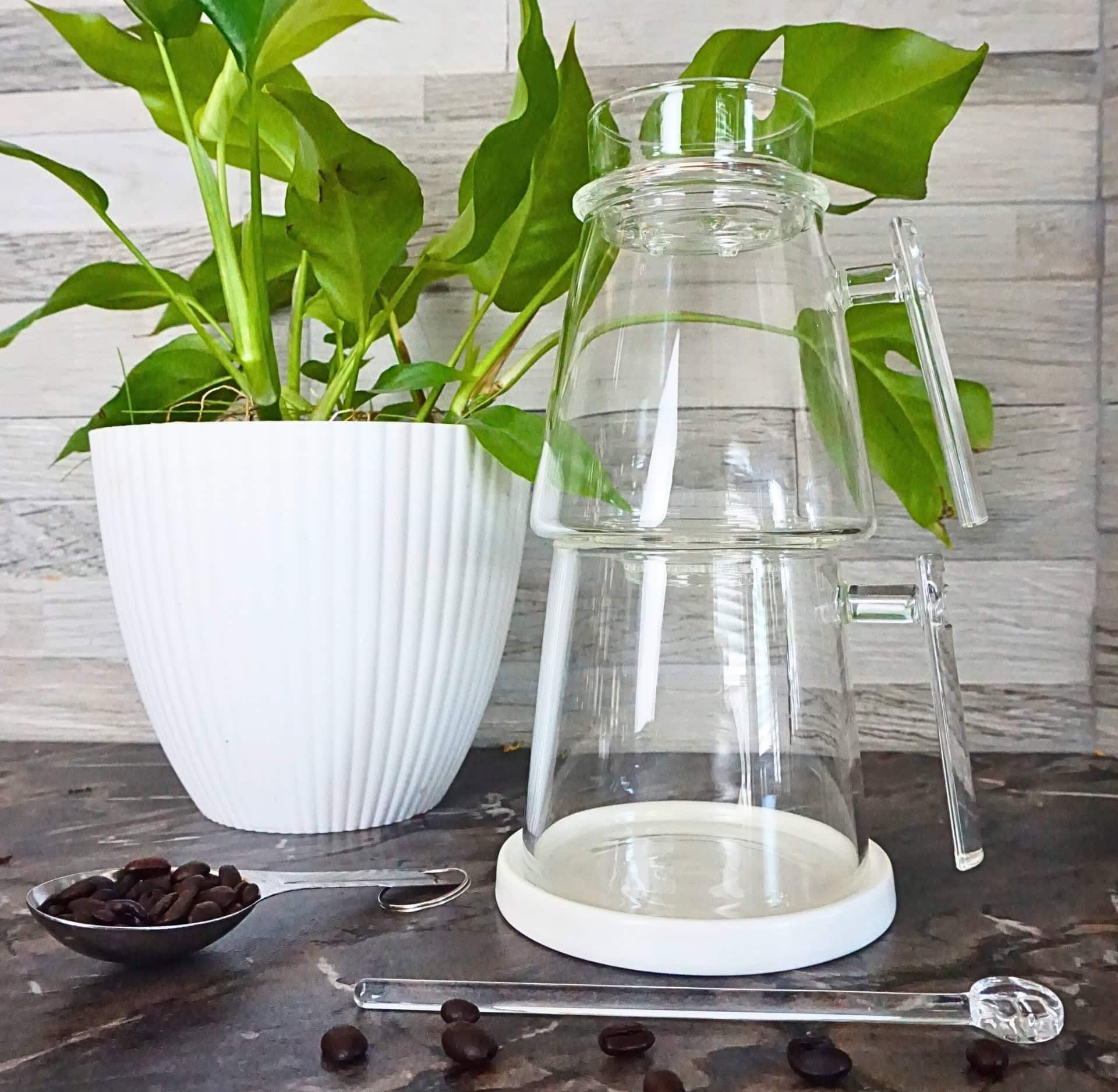
Fancy an oat milk latte with a splash of phthalates and an extra shot of BPA? Probably not. Plastic-free coffee makers ensure those phthalates and BPAs stay out of your morning brew while allowing you to take sips towards a zero waste coffee routine.
When we first wrote this article, the zero-waste movement was at its peak and the focus was on avoiding obvious plastic waste from each cup of coffee. These days, “plastic-free” has taken on a deeper meaning: it’s not just about waste, but about making sure our coffee isn’t exposed to the toxins found in plastic components that have traditionally been used in coffee makers.
Legitimate eco-friendly coffee makers that are both completely plastic-free and squeaky-clean from a sustainability perspective are rare to the point of non-existence. Though, there are brands that percolate to the top of our list including those that keep plastic out of the brew path. In this list, we highlight those options, focusing on models that either don’t require filters or can use reusable stainless steel or organic cotton filter alternatives.
You’ll notice there are no drip or espresso machines on this list. That’s because we couldn’t find any that can guarantee zero plastic exposure in the brew path. Some brands have swapped in metal water tanks, but questions remain about the safety of the metals used. We’ve linked to a couple of “close” contenders below, but if you want to avoid plastic altogether, pour-overs, French presses, and stovetop brewers are the way to go.
We were disappointed to find that most coffee-maker brands still lack meaningful sustainability initiatives. Here’s hoping that changes and we will start to see more sustainable appliances become widely available.
Quick note: We are using our Brand Rating System to rate brands (who opt in) on 22 sustainability criteria including chemical use, health & safety, climate action and circularity. We’re yet to see any coffee maker brands get rated (but we live in hope). Find other rated brands in our directory.
Now pop-on your eco kettle, order your sustainable beans, and sit back and relax as we cover the more sustainable coffee makers out there.
We independently research all featured brands, and we ask them to confirm their claims. In many cases we personally review recommended products. This post contains affiliate links which means we may earn a commission if you buy something. We explain this further in our Terms of Use.
The Best Eco-friendly & Non-Toxic Coffee Makers
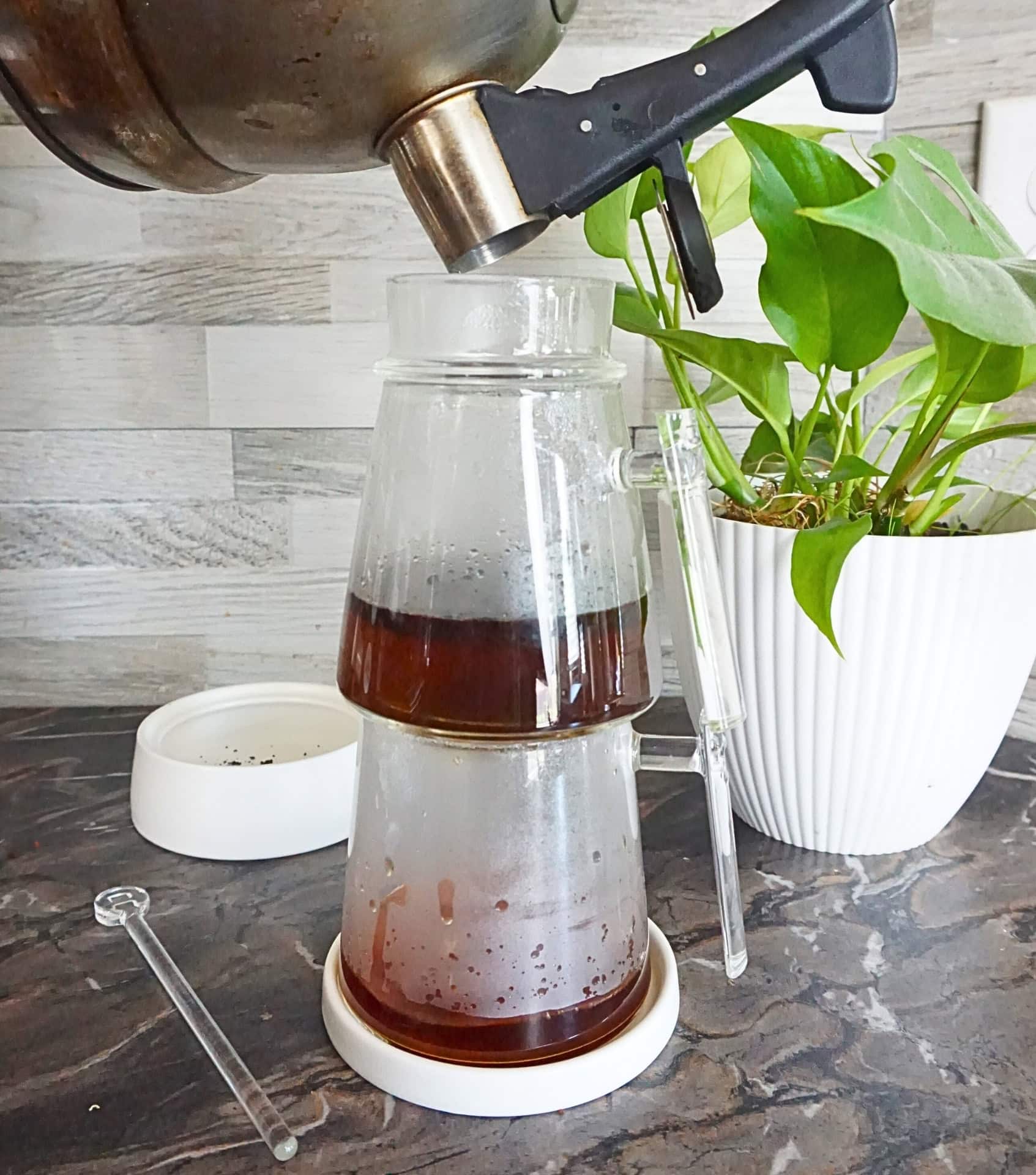
Pure Over offers a 100% plastic-free coffee maker without filter requirements that enhances your coffee’s natural flavors. The all-glass design creates a sleek aesthetic and ensures that your brew is free from any unwanted flavors or toxins, making every cup a pure (over) delight (we’ve tested and love this product).
When it comes to a coffee maker with no plastic parts, Hario is an attractive option. Their V60 Olive Wood Pour Over Stand Set features heatproof glass and a silicone seal to ensure a clean and perfect brew. Pair this with a 100% organic coffee filter from CoffeeSock and your toxin exposure plummets.
AeroPress now makes a Premium model that is made from double-wall borosilicate glass, anodized aluminum, and stainless steel. The only non-metal, non-glass component is the food-grade silicone seal. They also offer a reusable stainless steel coffee filter.
While not the focus of this article, if you’re really after a machine, the La Pavoni Lever Espresso Machines, the Rancilio Silva Espresso Machines, the Gaggia Classic Evo Pro and the Ratio Eight Series 2 Coffee Machine (pre-order) are commonly cited in forums as good options that have less plastic exposure. For another manual option, the Flair Manual Espresso Makers are also commonly cited.
Watch our video below where we explore a couple of coffee makers with no plastic.
Index: Non-plastic Coffee Makers
- Pure Over Jump to brand
- Chemex Jump to brand
- Hario Jump to brand
- Ovalware Jump to brand
- Coletti Jump to brand
- Mueller Jump to brand
- Aeropress Jump to brand
- Bialetti Jump to brand
- Canadiano Jump to brand
Pure Over

Price: $109 (Brew Kit)
What is the best non-toxic pour over coffee maker? Pure Over is probably our top pick with their brew kit being totally free of harmful chemicals including PFAS, BPA, phthalates, and heavy metals.
Their coffee maker uses no plastic or paper filters and is crafted entirely from durable and temperature-resistant borosilicate glass, guaranteeing a cup of joe that’s untainted. The coffee maker includes a ceramic coaster and drip tray, all of which are dishwasher safe.
In addition to designing long-lasting, simple products that will outlast trends, Pure Over donate a portion of profits to the The Crucible.
My Personal Review of Pure Over’s Brew Kit XL:
“I prefer my coffee maker to match my coffee: simple and no-nonsense. That’s why I absolutely love Pure Over’s all-glass coffee maker. Not only does it have a sleek, minimalist look, but its design is also highly practical. It’s a breeze to clean, and with no filters, no moving parts, and no excess brewing, it keeps things refreshingly straightforward. After settling on the right amount of coarse coffee grounds, you’ll get consistently great coffee every time. I use their non-toxic single-serve coffee maker to keep our caffeine consumption in check, but the Brew Kit XL is a solid option for sharing or when you want a second cup.
A word of caution: the glass doesn’t keep coffee hot for long, so you’ll need to sip quickly. Also, the handles are fragile. I’ve already had to glue ours back on, so be gentle with them.”
Review by Amber McDaniel, SJ’s Head of Content
Chemex


Price Range: $40-$140
Chemex is an iconic pour-over coffee maker made entirely from non-porous borosilicate glass, meaning your coffee never comes into contact with plastic. A polished wooden collar tied with a leather strap serves as the handle, keeping your hands cool while adding to its timeless design.
This completely plastic-free brewer is best known for producing clean, smooth coffee with the help of its specially designed bonded paper filters, which are biodegradable and home compostable. However we would recommend the reusable organic cotton filter from CoffeeSock which is made specifically for Chemex.
Because it is a simple glass vessel, the Chemex requires no electricity, and replacement collars, ties, and filters are easy to source. Chemex also has an electric coffee maker called the Ottomatic but this machine includes plastic parts.
Hario


Price: ~$100
If you have clumsy pre-caffeine hands (not so much post-caffeine shakes), the V60 Olive Wood Pour Over Stand Set from Hario holds the coffee dripper, so you don’t have to worry about breakages. The no plastic drip coffee maker including the dripper itself, server, and lid are all made with heat proof glass. Even the sealant on the glass lid is free of plastic and made with silicone rubber. Plus, it looks so elegant and classic that it’ll easily complement just about any interior decor scheme.
The kit does come with FSC certified paper filters but given we don’t know how these are treated, we’d recommend CoffeeSock’s reusable GOTS-certified organic cotton filter that’s designed to fit.
Hario also offer plastic-free presses and drip-pots – and several accessories to complement your coffee making experience including grinders and kettles.
Since 1972, Hario’s factory has been making glass with electricity, an environmentally friendly alternative to combustion smokestacks. It’s produced using a low-pollutant natural gas. Any excess glass material is returned to the furnace for reuse.
The Japanese company is also working to increase the number of women in managerial positions and participates in regular local philanthropic clean-ups.
Ovalware


Price Range: $48 (Cold Brew Maker)
Saving time, money, and our planet, the Ovalware cold brew coffee maker is a solid fix if you want a delicious coffee (or iced tea) with minimal effort.
Coarse coffee (or loose leaf zero waste tea) can be added to the medical-grade stainless steel filter and then the glass carafe can be filled with cold water and left to brew for 12-24 hours. No parts of the coffee come into contact with plastic.
The silicon seal is airtight, meaning that the coffee can be stored in a fridge for up to two weeks.
Founded by three brothers, Ovalware is made up of people from diverse backgrounds, who all share a deep-rooted love for brewing.
Coletti


Price Range: $30-$55
Coletti’s range of French press and percolator coffee makers don’t have any plastic components. Instead, they’re made of AISI 304 stainless steel, designed for durability and adventuring and the French press keeps coffee hot for 4+ hours. They can be used to make cold brew, too.
All Coletti products are backed by a lifetime replacement guarantee. The company is veteran-owned and operated and they donate 10% of profits to charities working to spread Christian dialogue in countries where religious freedom is lacking.
Mueller

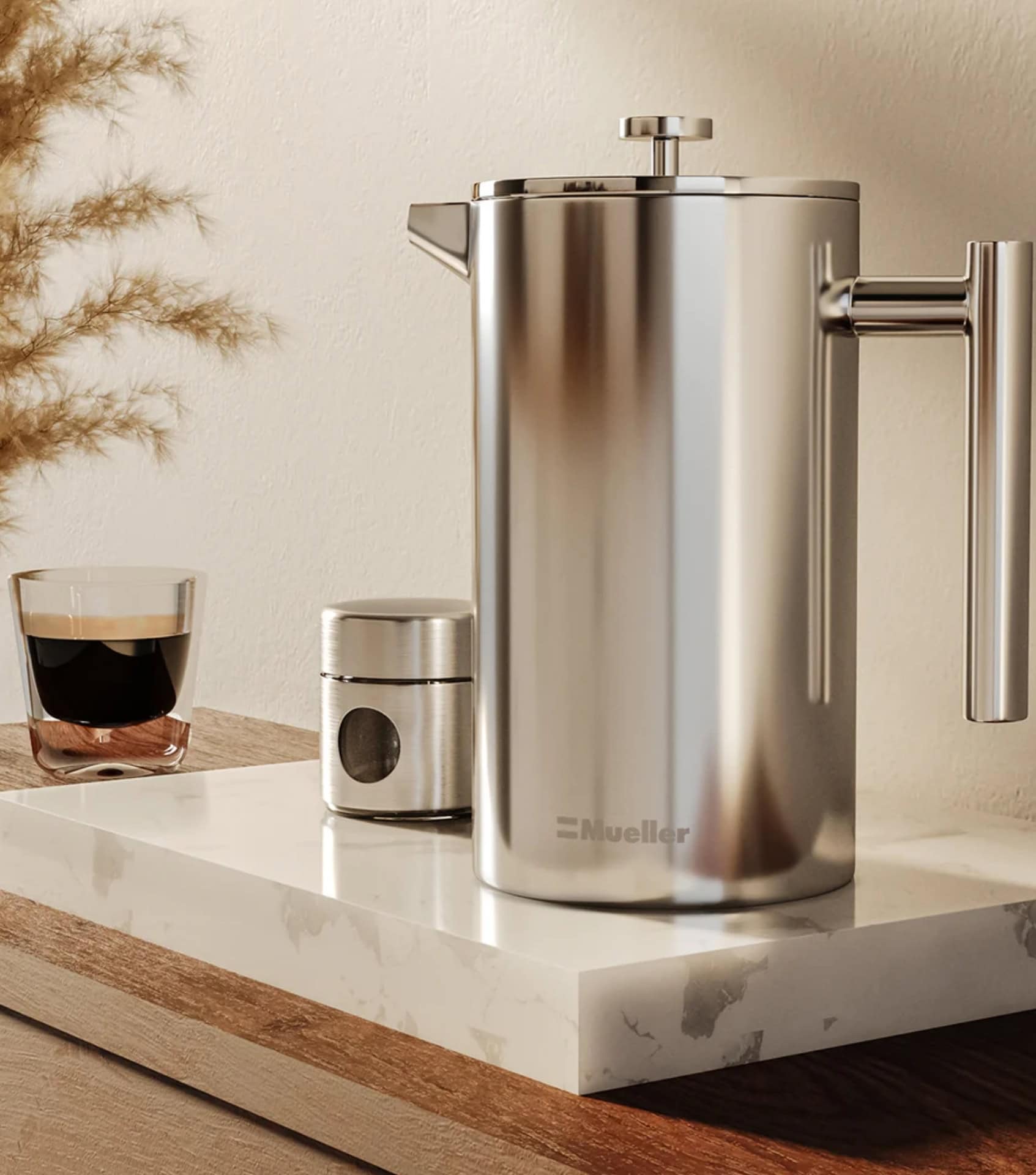
Price Range: $50
Mueller’s French press plastic-free coffee maker is made with double insulated 304 stainless steel. It also features a 4-level filtration system, keeping those grounds out of your cup.
The perfect eco-friendly travel product, it even comes with a travel canister to keep beans or grounds fresh while you’re on-the-go. Dishwasher safe and rust-free, this press is ready to fuel your caffeine addiction, time and time again.
Mueller donates a percentage of every purchase to the Youth Opportunity Center, which helps youth and families in crisis situations get back on their feet.
Aeropress


Price Range: $200
The AeroPress Premium is a redesigned version of the classic AeroPress coffee maker, built to exclude any plastic exposure from the brewing process. The chamber is made from double-wall borosilicate glass, the plunger and flange are anodized aluminum, and the filter cap is stainless steel. The only non-metal, non-glass component is the food-grade silicone seal, meaning hot water and coffee never come into contact with plastic.
This completely plastic-free coffee maker can be used for cold brew, American style coffee or espresso. The paper filters that come with the machine are home compostable but we would recommend buying their reusable stainless steel coffee filter.
Aeropress’ coffee makers don’t require electricity and there are replacement parts available for all components.
Bialetti


Price Range: $48-$65
Bialetti is the OG all metal coffee maker. The Italian brand made the stovetop coffee making process kinda sexy and with vintage vibes, the company has managed to keep their allure. Their original Moka designs are plastic-free (except for the handles) though they are made from Aluminum which some prefer to avoid. They are also not dishwasher safe (we learned the hard way, ours is completely ruined).
Their newer models (the Venus, Musa and Kitty coffee makers) ensure the full brewing path is made of food-grade 18/10 stainless steel, with the only plastic elements being the external, heat-resistant handle and knob, which do not touch coffee or water.
These are engineered with 20 % thicker walls and ere durable, induction-compatible (except in the 2-cup model), and built to last. And in independent tests, the Venus brews faster than aluminum models.
Canadiano

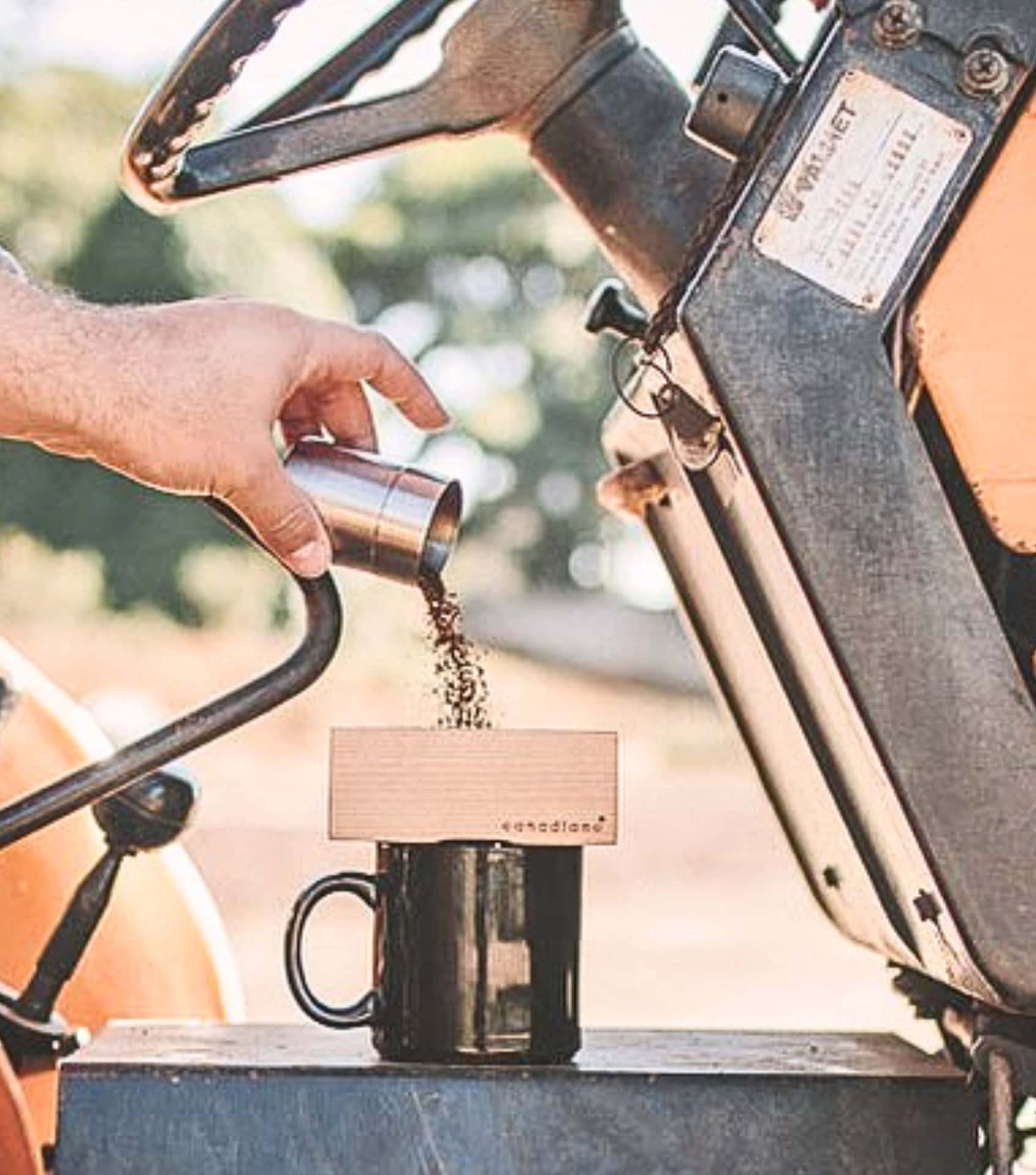
Price Range: $86 – $166 (CAD)
Giving the pour over a planet friendly twist, Canadiano offers one of the most sustainable, zero waste coffee making solutions.
A carved out piece of wood (cherry, ash, and walnut) is combined with an ultra-fine, medical grade stainless steel filter to filter out the grounds. All pieces use nut oil to extend their longevity. Walnut or safflower oil can be applied as a refinish every 3-4 months.
It doesn’t require replacement filters and the wood is biodegradable at the end of its life. Canadiano sources their FSC-certified wood locally before it’s manufactured in Toronto.
Why Choose Coffee Makers Without Plastic?
Plastic doesn’t really deserve an invitation to our coffee breaks – yet it’s been RSVPing. In fact, plastic coffee = toxic coffee.
Many components in a coffee maker are often made with plastic. This means that each cup likely exposes us to hormone disruptors like BPA and phthalates, which each have their own coffee pot full of potential problems.
The Big Bad BPA
The big problem here is that BPA is known to leach out faster in hot liquids than it does under normal conditions. The plastic-hardening chemical has been linked to a range of health concerns, like heart disease, high blood pressure, asthma, diabetes, reproductive disorders, obesity, cancer, and impaired brain development.
Even some “BPA-free” coffee makers should be met with skepticism, because it’s relatively easy to swap out BPA for its toxic chemical cousins, Bisphenol S and Bisphenol F (BPS and BPF).
So are there any coffee makers that are BPA free? Yes, but unfortunately, many plastic BPA alternatives are structurally similar. So, from a manufacturing standpoint, they make a worthy alternative.
Unfortunately, they’re hormonally active in similar ways, too. When it comes to estrogenic, antiestrogenic, androgenic, and antiandrogenic hormonal activities, BPS and BPF have been found to be just as potent as BPA as endocrine disruptors.
Phthalate Leaching
The water reservoir, basket, and pipes are often made with hard plastic or PVC, which may leach a variety of phthalates (DMB, DIBM, DEHP). Phthalates are the world’s most commonly used plasticizers, after all. Chronic exposure to phthalates has been known to adversely impact the endocrine system and healthy organ functioning.
Long-term impacts may include impaired growth and development and compromised reproductive system functioning.
Not only are these plastic-based toxins bad from a health perspective, but they can impart that gross plastic-y taste in coffee, too.
Environmental Impact Of Plastic Coffee Machines
BPA in the environment has been known to negatively impact ecosystem health. Especially since we annually release more than a million pounds of it, in the US alone.
Like many other chemicals, major sinks for BPA include rivers and lakes. Which is why we have a better understanding of BPA impacts on aquatic vertebrates than land-based ones. Studies have shown that BPA can lead to reproductive and developmental harm and diminished immune function in aquatic non-mammalian vertebrates.
Phthalates are close behind, as they’re produced in very high volumes and are a pervasive toxin in the environment. They, too, can lead to reproductive toxicity in animals, just as they do in humans.
Not to mention the fact that these plastic-based components are almost always impossible to recycle, and will remain in landfills for hundreds or thousands of years after their last brew session.
Makes you think twice about having that second (or third) cup of coffee, doesn’t it?

Joy has been a passionate advocate for the environment since she was a small child. She grew up in South Africa and has been lucky enough to be exposed to the wonders of nature not just in Africa but all over the world. She founded Sustainable Jungle (together with her husband Lyall) back in 2017 after becoming enraged by the devastating impact of palm oil. She then founded the Sustainable Jungle Podcast and together with Lyall interviewed remarkable people from all over the world who were finding ways to create positive impact. Outside of Sustainable Jungle, Joy has always worked in the corporate world, starting out as an auditor and later moving into management consulting. More recently she specialized in Climate Investing for the Asia Pacific region. Given her experience, her current passion is Brand Ratings. She is very much enjoying going deeper on what it really means to drive sustainability performance and true impact through business operations.







Confused why articles titled plastic-free coffee makers then go on to list coffee makers made of or with plastic? Plus curious why Chemex isn’t on the list? Thank you for your help
Hi Marie, you’re right, this needed an updated to be stricter on plastic components – though there’s not a ton about. I have now updated this article with better options. And Chemex is on now, thanks for the suggestion.
Have you managed to find a mill frother without plastic parts? Or with parts that are certified BPA, BPS and BPF free?
Hi Andrea, no I can’t say we have. Will keep an eye out!
The OXO does not have a glass water tank. I purchased because of this article, and now I will be returning.
Hi Cameron, sorry to hear but thanks for the feedback. We have removed OXO.
Hallo, please is there a coffe maker/maschine without plastic or aluminium parts?
Thank you!
Hi Ana, there’s a whole lot on this list that have no plastic or aluminum. There are several coffee makers that are entirely stainless steel for example. But if you’re after an electrical zero waste coffee maker, it can be a little trickier, although those on this list get pretty close.