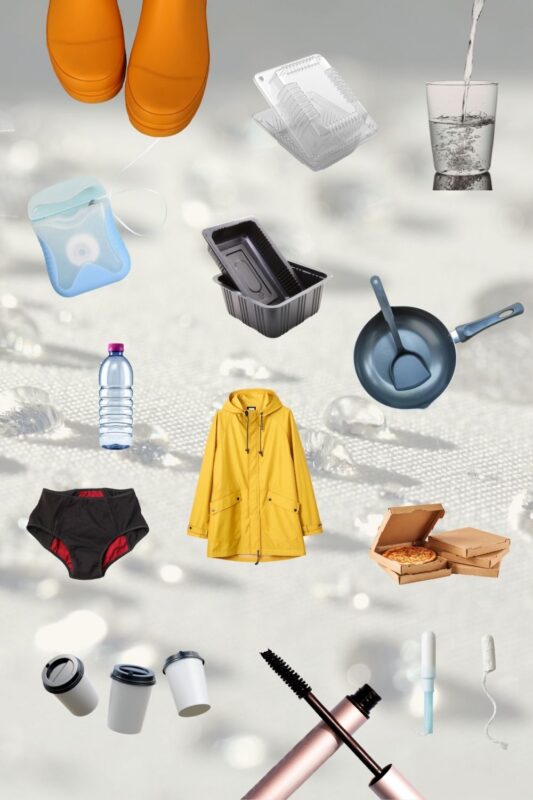













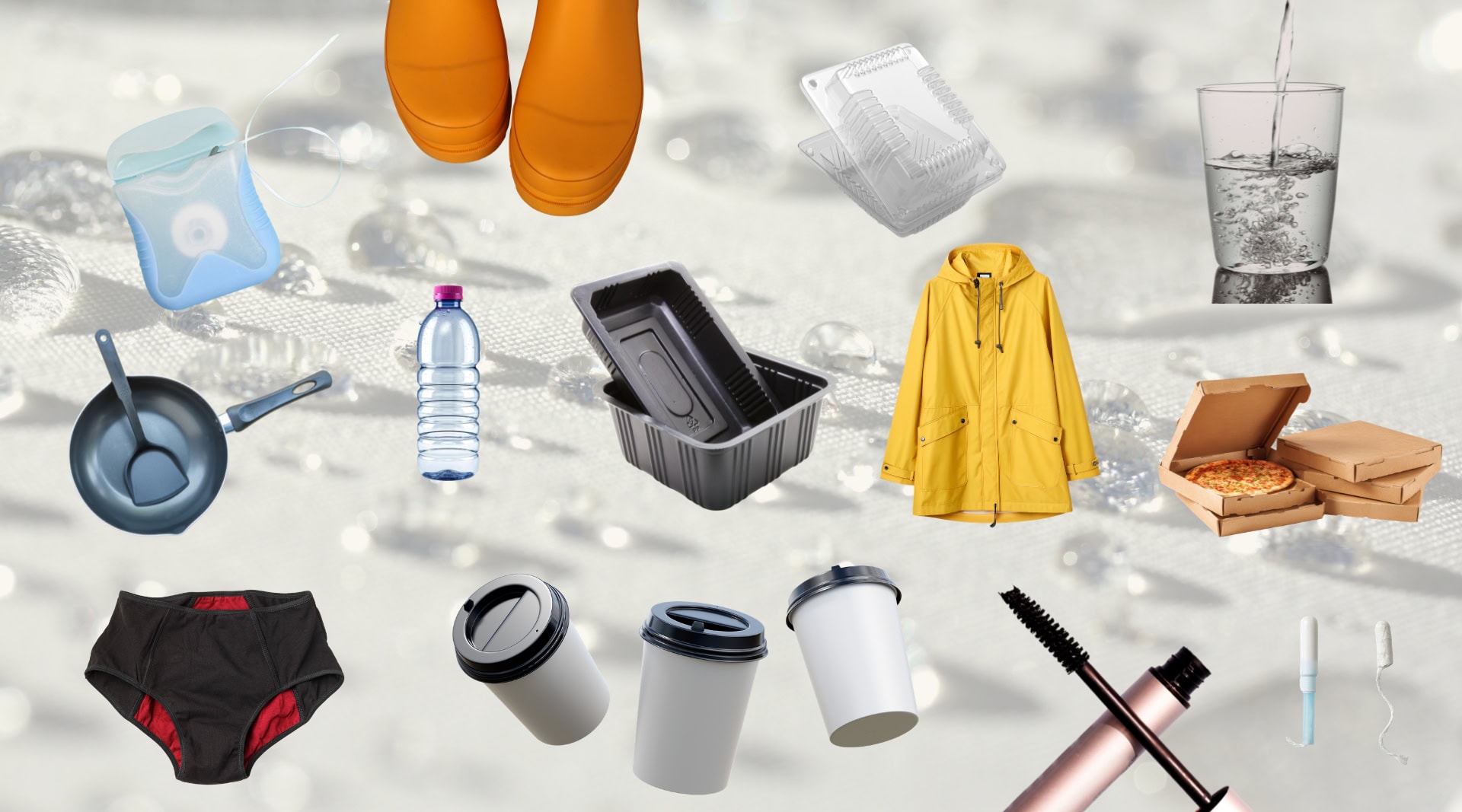
You know that vaguely unsettling feeling when you learn something you can’t unlearn? That’s PFAS. Short for per- and polyfluoroalkyl substances, these synthetic chemicals were engineered to last forever. And they do. In your cookware, your raincoat, your drinking water, your blood.
Most Americans have measurable levels of PFAS in their blood, according to the CDC. These chemicals don’t break down in the environment and they don’t metabolize in your body. They just… accumulate. And the health consequences are becoming harder to ignore.
But PFAS is also a sustainability crisis. The same chemicals contaminating your body are contaminating rivers, soil, and rainfall on every continent, including Antarctica. The manufacturing, use, and disposal of PFAS-laden products create a contamination loop that affects ecosystems, communities, and food chains far beyond your kitchen counter.
The short answer is that you can’t eliminate PFAS exposure entirely. But you can reduce it significantly, and you can stop buying products that perpetuate the cycle. In this article we dig into how.
Related Guides: Non-Toxic Living Guide, Non-Toxic Cookware, Non-Toxic Cooking Utensils, Is Granite Cookware Safe?, Plastic-Free Water Filters, Non-Toxic Period Underwear, Sustainable Rain Jackets, Ingredients To Avoid In Skincare, Is Polyester Bad For You?, How To Avoid Microplastics, Is Ceramic Cookware Non-Toxic?
In This Guide To Forever Chemicals (PFAS)
- What Are PFAS (Forever Chemicals)? Jump to section
- The Alphabet Soup: PFAS vs. PFOA vs. PFOS vs. PTFE Jump to section
- Why Should You Care? The Health Risks of PFAS Jump to section
- Where Are PFAS Hiding in Your Life? Jump to section
- PFAS as a Sustainability Crisis Jump to section
- The Regulatory Landscape: What's Being Done (and Undone) Jump to section
- How to Reduce Your PFAS Exposure Jump to section
- Frequently Asked Questions About Forever Chemicals Jump to section
- The Bottom Line On Avoiding Forever Chemicals Jump to section
What Are PFAS (Forever Chemicals)?
PFAS stands for per- and polyfluoroalkyl substances. That’s a mouthful, so most people just call them forever chemicals, a nickname they’ve earned by being virtually indestructible.
PFAS are a family of nearly 15,000 synthetic chemicals built around an extremely strong carbon-fluorine bond. That bond is one of the strongest in organic chemistry, which is why manufacturers love it. It makes materials resistant to water, oil, grease, heat, and stains. It’s also exactly why PFAS are an environmental nightmare, because nothing in nature can break that bond down.
These chemicals were first developed around World War II and entered commercial use in the 1950s. DuPont used PFOA (one specific type of PFAS) to make Teflon. 3M used PFOS (another type) in Scotchgard. From there, PFAS spread into thousands of consumer and industrial products, from food packaging to firefighting foam to waterproof clothing.
For decades, the companies manufacturing these chemicals knew about the health risks and kept quiet. Environmental attorney Robert Bilott, whose landmark case against DuPont was documented in the 2019 film Dark Waters, spent over 20 years fighting to bring the evidence to light.
The Alphabet Soup: PFAS vs. PFOA vs. PFOS vs. PTFE
The terminology around forever chemicals can be confusing, so let’s break it down.
What Is PFAS?
PFAS is the umbrella term for the entire family of per- and polyfluoroalkyl substances. Think of it like “fruit.” Everything below is a specific type of fruit.
What Is PFOA (perfluorooctanoic acid, sometimes called C8)
PFOA is one of the most widely studied and notorious PFAS chemicals. It was used for decades to manufacture Teflon and other nonstick coatings. The International Agency for Research on Cancer classified PFOA as carcinogenic to humans (Group 1) in November 2023. Most manufacturers phased out PFOA by 2015, but it persists in the environment and in people’s bodies for years.
What Is PFOS (perfluorooctane sulfonic acid)
PFOS is closely related to PFOA and was the key ingredient in Scotchgard and aqueous film-forming foam (AFFF), the firefighting foam used by military installations and airports worldwide. PFOS is classified as possibly carcinogenic (Group 2B). 3M voluntarily phased out PFOS production in 2002, but like PFOA, it lingers everywhere.
What Is PTFE (polytetrafluoroethylene)
PTFE is the nonstick coating most people know as Teflon. PTFE is itself a PFAS, but it behaves differently from PFOA and PFOS. It’s a solid polymer rather than a liquid chemical, which means it doesn’t dissolve in water or accumulate in blood the same way. The concern with PTFE is twofold: first, its manufacturing historically required PFOA (though many manufacturers have switched to alternative processing aids, which are themselves PFAS). Second, PTFE coatings can release toxic fumes when overheated above 500°F (260°C).
What Is GenX?
GenX is one of the replacement chemicals manufacturers introduced after phasing out PFOA and PFOS. It has a shorter chain length, which means it doesn’t bioaccumulate as long in the body, but emerging research suggests it poses similar health risks. It’s the “diet soda” of the PFAS world in that it is marketed as the safer alternative, but it the reality is not that clear.
Here’s the bottom line on terminology:
When a product says “PFOA-free,” that doesn’t mean it’s PFAS-free. PFOA is just one chemical in a family of thousands. The pan may still contain PTFE or other PFAS compounds. Look for products labeled PFAS-free, not just PFOA-free.
Why Should You Care? The Health Risks of PFAS
The health effects of PFAS exposure are well-documented and sobering.
According to the CDC’s Agency for Toxic Substances and Disease Registry (ATSDR), PFAS exposure has been linked to:
- Cancer: PFOA is now classified as a known human carcinogen, with strong associations with kidney and testicular cancer. Research has also connected PFAS exposure to liver cancer, and there is growing evidence of links to other cancers including prostate and breast cancer.
- Immune system suppression: PFAS impair vaccine effectiveness, including in children. This was a particularly alarming finding during the COVID-19 pandemic, as researchers suggested PFAS exposure could increase susceptibility to infection.
- Reproductive and developmental effects: Studies have associated PFAS with low birth weight, reduced fertility, accelerated puberty, and pregnancy-induced hypertension. Yale epidemiologist Vasilis Vasiliou has noted PFAS exposure may cause epigenetic changes that contribute to early-onset cancers in younger people.
- Metabolic disruption: PFAS exposure is connected to elevated cholesterol, thyroid disease, liver damage, and increased risk of type 2 diabetes and cardiovascular disease.
One of the most concerning aspects of PFAS is that no safe level of exposure has been identified. Unlike many other environmental contaminants, PFAS are not metabolized by the body. They resist breakdown and are only slowly excreted, which means they accumulate in human tissues (particularly the blood, liver, and kidneys) over time. Some PFAS have a half-life in the human body, meaning it takes that long for just half the chemical to leave your system.
Where Are PFAS Hiding in Your Life?
PFAS are sometimes called “everywhere chemicals,” and it’s not an exaggeration. Here’s where they’re most likely lurking in your daily routine.
Cookware and Bakeware
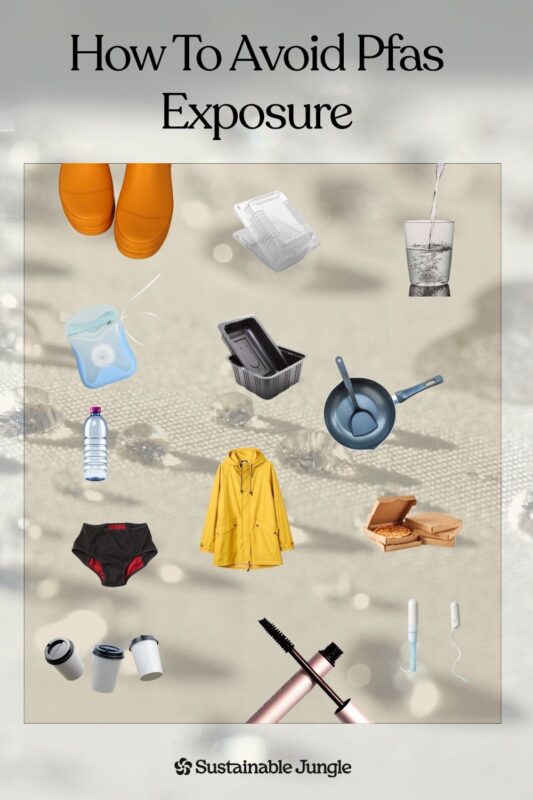
This is the most well-known source. Traditional nonstick pans use PTFE (Teflon) coatings, which are themselves PFAS and as mentioned above, were historically manufactured using PFOA. Even “PFOA-free” nonstick cookware may still contain PTFE or other PFAS. The safest alternatives are cast iron, stainless steel, and ceramic-coated options (see our guide linked in the introduction to this article).
Drinking Water
This is the exposure route that affects the most people. As of 2025, EPA data indicates 158 million Americans are at risk of drinking PFAS-contaminated water. Some estimates put the number over 200 million. The primary source of water contamination is AFFF firefighting foam, which has leached from military bases, airports, and fire training facilities into groundwater for decades. Industrial discharge and landfill runoff are also major contributors.
Bottled water isn’t necessarily safer. A 2021 study found PFAS contamination in 39 out of 101 bottled water products sampled. The FDA doesn’t enforce a limit on PFAS in bottled water. A quality water filter is a better bet. See our guide to plastic-free water filters (linked in the introduction above) and plastic-free water bottles.
Food Packaging
Grease-resistant food packaging is a major PFAS source. Pizza boxes, microwave popcorn bags, takeout containers, fast food wrappers, and some “compostable” food packaging all commonly contain PFAS to create that grease-proof barrier. If the wrapper doesn’t let oil soak through, there’s a good chance PFAS is why. For safer options, check out our guides to non-toxic food storage and eco-friendly lunch boxes.
Textiles and Clothing
Any fabric marketed as waterproof, water-resistant, or stain-resistant may contain PFAS. This includes rain jackets, outdoor gear, school uniforms treated with stain repellents, carpets, rugs, upholstered furniture, and even yoga mats. The outdoor apparel industry has been a particularly heavy user of PFAS-based durable water repellent (DWR) treatments, though some brands are now transitioning to PFAS-free alternatives.
For PFAS-free outdoor wear, see our guides to sustainable rain jackets, sustainable rain boots, and eco-friendly tents. For home textiles, check out non-toxic nursery rugs and non-toxic shower curtains. And see our guide to Non-Toxic Yoga Mats.
Period Underwear and Personal Care Products
This one made headlines. Testing by multiple consumer groups found PFAS in several popular brands of period underwear, which was especially concerning given the products’ direct and prolonged contact with skin. Luckily, several brands have since reformulated. For better alternatives, see our guides to non-toxic period underwear and non-toxic pads.
PFAS are also present in some cosmetics, particularly waterproof mascara, long-wear foundation, and other products marketed for durability. Some dental floss brands contain PFAS coatings for that “glide” factor. See our guides to non-toxic makeup and eco-friendly floss.
Toilet Paper
Yes, really. Research has found PFAS in toilet paper, likely from recycled paper sources that included PFAS-treated food packaging. Given the, well, sensitive application, this is one worth paying attention to.
Home Furnishings
Stain-resistant carpets, rugs, mattresses, sofas, and curtains can all contain PFAS coatings. This is particularly common in products marketed as “easy clean” or “pet-friendly.” Children’s products, including play mats and crib mattresses, are also potential sources. Check out our guides to non-toxic bed frames, play mats and organic curtains.
PFAS as a Sustainability Crisis
Most PFAS coverage focuses on human health, and rightly so. But PFAS are also an environmental sustainability crisis on a planetary scale.
The Contamination Cycle
PFAS are manufactured and applied to consumer products. During manufacturing, PFAS-laden wastewater enters rivers and groundwater. When you use and wash those products (a rain jacket, a carpet, a nonstick pan), PFAS shed into wastewater systems. When you throw them away, PFAS leach from landfills into soil and water. When wastewater treatment plants process sewage, PFAS pass straight through (conventional treatment doesn’t remove them) and re-enter waterways. Some PFAS become airborne and travel through the atmosphere, eventually falling back to earth in rainfall.
A 2022 study by Stockholm University, published in Environmental Science & Technology, concluded that PFAS contamination is so widespread that rainwater everywhere on the planet now exceeds EPA health advisory levels. Even in Antarctica and on the Tibetan Plateau, PFAS levels in rainwater are above safe guidelines. The researchers argued that PFAS contamination represents a new planetary boundary that has already been exceeded.
The Textile Connection
The fashion and outdoor apparel industries are significant contributors to PFAS contamination. Durable water repellent (DWR) treatments, which give jackets and gear their waterproofing, are overwhelmingly PFAS-based. When these garments are washed, PFAS enter wastewater. When they’re discarded, PFAS enter landfills and soil. In other words, the waterproof jacket that keeps you dry is contributing to global chemical contamination.
Some brands have shifted to PFAS-free DWR alternatives. But the transition is far from complete across the industry.
The Greenwashing Problem
PFAS creates a particularly insidious form of greenwashing. “Compostable” food packaging can contain PFAS. “Eco-friendly” outdoor gear can be treated with PFAS. Products marketed as “PFOA-free” can still contain other PFAS. “Natural” cosmetics can include PFAS for texture or water resistance.
The language around PFAS is deliberately confusing. “PFOA-free” is technically accurate and completely misleading at the same time. It’s like saying a product is “arsenic-free” while it still contains mercury. The only claim worth trusting is “PFAS-free,” backed by independent testing.
Why This Is a Sustainability Problem
Traditional sustainability conversations focus on carbon emissions, water use, biodegradability, and waste. PFAS break the model because they don’t biodegrade, period. A “compostable” cup with a PFAS grease barrier will contaminate the compost. A “biodegradable” rain jacket treated with PFAS DWR will leach forever chemicals into the soil as it breaks down. Circularity and composting, two pillars of sustainable product design, are undermined when PFAS are present.
Any product or brand claiming sustainability credentials while using PFAS-based treatments has a major credibility gap.
The Regulatory Landscape: What's Being Done (and Undone)
The regulatory situation around PFAS is, frankly, a mess. Here’s where things stand as of early 2026.
The Biden-Era EPA Rules (2024)
In April 2024, the EPA under President Biden set the first-ever legally enforceable drinking water limits for six PFAS chemicals, with maximum contaminant levels (MCLs) of 4 parts per trillion for PFOA and PFOS. This was a landmark regulation: for the first time, public water systems would be required to test for PFAS, report findings, and take steps to reduce contamination by 2029. The EPA also designated PFOA and PFOS as hazardous substances under the federal Superfund law (CERCLA).
The Trump-Era Rollbacks (2025-2026)
In May 2025, the EPA under President Trump delayed compliance deadlines for the PFOA and PFOS drinking water standards by two years (to 2031) and announced it would rescind the standards for four other PFAS chemicals (PFHxS, PFNA, GenX, and a mixture hazard index). Rather than go through the standard rulemaking process, the EPA asked a federal court to vacate its own rules for those four chemicals. In January 2026, the D.C. Circuit denied that request, keeping the existing standards in place while litigation continues.
The Trump EPA also proposed significant exemptions to PFAS reporting requirements under TSCA, including exemptions for PFAS in imported articles, byproducts, and low-concentration mixtures, which critics say would reduce the government’s visibility into how PFAS enter the environment.
New Federal Legislation (March 2026)
On March 19, 2026, Senator Dick Durbin and Representative Betty McCollum reintroduced the Forever Chemical Regulation and Accountability Act (S. 4153 / H.R. 8016). This bill would require a 10-year phase-out of all non-essential PFAS uses, establish accelerated bans on PFAS in consumer products like food packaging, cosmetics, carpets, and children’s products, and prohibit PFAS releases into the environment. It would also commission a National Academies study to classify PFAS uses as “essential” or “non-essential.” Whether the bill advances in the current Congress remains to be seen.
State-Level Action In The US
Some states aren’t waiting for the federal government. Minnesota passed Amara’s Law banning non-essential uses of PFAS. New Jersey is implementing a ban on PFAS in cosmetics and food packaging starting in 2028. Maine, California, New York, and several other states have enacted or are advancing their own PFAS restrictions.
The EU Approach
The European Union has proposed a near-total restriction on PFAS, covering both manufacturing and import of PFAS-containing products, which would be the most comprehensive PFAS regulation in the world. While the proposal is still under review, it signals a fundamentally different approach from the U.S. to essentially restrict the entire class of chemicals rather than playing whack-a-mole with individual compounds.
Our Take
The federal regulatory picture is moving backward. The EPA is weakening protections, delaying timelines, and exempting entire categories of PFAS use from reporting. Courts are pushing back, states are stepping in, and new legislation has been proposed, but the practical reality for consumers is that no one is going to definitively protect you from PFAS but you. That makes individual action more important, not less.
How to Reduce Your PFAS Exposure
You can’t eliminate PFAS exposure entirely (remember, it’s in the rain). But you can meaningfully reduce it with targeted changes. Start wherever feels most achievable. Here’s some ideas:
1) Switch Your Cookware
Ditch nonstick pans with PTFE coatings. Cast iron, stainless steel, and titanium cookware are all PFAS-free and will last decades with proper care. See our full guide to non-toxic cookware (linked in the introduction above).
2) Filter Your Drinking Water
Activated carbon filters (like solid carbon block filters) and reverse osmosis systems are effective at removing PFAS from drinking water. Standard pitcher filters vary in effectiveness, so check the specific model’s testing data. See our guide to plastic-free water filters for options that don’t introduce other concerns (linked in the introduction above)
3) Avoid Stain-Resistant and Waterproof Treatments
Skip fabrics marketed as stain-resistant or water-repellent unless the brand explicitly states they use PFAS-free treatments. This applies to clothing, furniture, carpets, and outdoor gear. When buying sustainable leggings or activewear, check whether DWR finishes are PFAS-free.
4) Choose PFAS-Free Personal Products
Switch to non-toxic period underwear, PFAS-free dental floss, and cosmetics from brands that disclose their ingredients and test for PFAS. Check out our zero waste skincare guide for more options.
5) Rethink Food Packaging
Minimize use of grease-resistant food packaging including takeout containers, microwave popcorn bags, fast food wrappers, and some “compostable” containers. Store food in glass, stainless steel, or silicone.
6) Check Your Toilet Paper
It sounds minor, but given the frequency of use and the sensitivity of the area, choosing non-toxic toilet paper is a quick win.
7) Support Brands and Policies That Are Getting It Right
Buy from brands that are transparent about PFAS and actively working to eliminate them. Pressure your favorite brands to disclose whether their products contain PFAS. Support state and federal legislation that restricts PFAS. Check our brand directory for companies we’ve vetted on sustainability and transparency (we have a “PFAS-free” filter).
8) Wash New Textiles Before Use
While washing doesn’t remove PFAS treatments entirely, it can reduce surface-level chemical residue on new clothing and textiles. Use an eco-friendly laundry detergent and consider a microfiber-catching washing machine to reduce what enters the water system.
Frequently Asked Questions About Forever Chemicals
What Does “PFAS-Free” Mean?
PFAS-free means a product contains no per- or polyfluoroalkyl substances of any kind. This is a stronger claim than “PFOA-free,” which only means one specific PFAS chemical is absent while others (including PTFE, GenX, or other short-chain PFAS) may still be present. Look for PFAS-free labeling backed by third-party testing. If a brand only says PFOA-free, ask what other PFAS their product may contain.
Can You Remove PFAS From Your Body?
Your body does slowly excrete PFAS, but the process is slow. Some PFAS have half-lives of up to eight years in the human body. There is no clinically proven way to speed up PFAS removal. The most effective strategy is to reduce ongoing exposure so that your body’s levels gradually decline over time. Blood donation may slightly accelerate the process, though this is not an established medical recommendation.
Does Boiling Water Remove PFAS?
No. Boiling water does not remove PFAS and can actually concentrate them as water evaporates. Effective removal requires activated carbon filtration, reverse osmosis, or ion exchange treatment. Standard pitcher filters may reduce some PFAS, but performance varies significantly by brand and model. Check whether your filter is specifically tested and certified for PFAS removal.
Are PFAS Banned Anywhere?
No country has implemented a full ban on all PFAS, but several are moving in that direction. The EU has proposed a near-total restriction covering the entire PFAS class. In the U.S., individual states including Minnesota, Maine, California, and New Jersey have enacted bans on PFAS in specific product categories like food packaging, cosmetics, and textiles. The Forever Chemical Regulation and Accountability Act of 2026, introduced in March 2026, proposes a 10-year federal phase-out of non-essential PFAS uses.
What’s the Difference Between PFOA and PFOS?
Both are long-chain PFAS chemicals and both are toxic. PFOA (perfluorooctanoic acid) was primarily used in manufacturing nonstick coatings like Teflon. PFOS (perfluorooctane sulfonic acid) was primarily used in stain-resistant treatments (Scotchgard) and firefighting foam (AFFF). PFOA is classified as a known human carcinogen; PFOS is classified as possibly carcinogenic. Both were largely phased out of production by the mid-2000s to 2015 but remain widely present in the environment and in human blood due to their extreme persistence.
Is PTFE the Same as PFAS?
PTFE (polytetrafluoroethylene) is a type of PFAS, yes. It’s the polymer used in nonstick coatings like Teflon. However, PTFE behaves differently from PFOA or PFOS: it’s a stable solid rather than a mobile liquid chemical, so it doesn’t dissolve in water or bioaccumulate the same way. The primary concerns with PTFE are that its manufacturing process may involve other PFAS as processing aids, and that it can release toxic fumes if overheated above 260°C (500°F). A product can be “PFOA-free” and still contain PTFE.
Are “Compostable” Food Containers PFAS-Free?
Not always, and this is a significant greenwashing concern. Some compostable food containers, particularly those designed for greasy foods, use PFAS-based coatings to provide the grease barrier. This means PFAS can end up in commercial compost and, from there, in agricultural soil. If you’re composting food packaging, look for containers explicitly certified PFAS-free. Several states are now banning PFAS in compostable food packaging for this reason.
Does Silicone Contain PFAS?
Silicone (a polymer made from silicon, oxygen, carbon, and hydrogen) is not a PFAS and does not inherently contain PFAS. It’s a separate material entirely. Silicone cookware, bakeware, and food storage are generally considered safe PFAS-free alternatives. However, as with any product, quality matters, and cheaply manufactured silicone may contain other additives worth scrutinizing. Read more about silicone in our guide: Is Silicone Safe?
The Bottom Line On Avoiding Forever Chemicals
PFAS are, in many ways, the perfect villain of the sustainability story. They were created by corporations who knew the risks, hidden from regulators and the public for decades, spread to every corner of the planet, and are now so embedded in our products and environment that complete elimination isn’t possible. The regulatory system tasked with protecting us is, at the federal level in the US, currently moving in the wrong direction.
But consumer pressure does work. For example, brands have reformulated period underwear because consumers demanded it. Outdoor apparel companies are transitioning to PFAS-free DWR because customers asked questions. States are passing PFAS bans because residents organized. The more people understand what PFAS are and where they hide, the harder it gets for companies to use them without consequence.
You don’t need to overhaul your entire life overnight. We recommend starting with the highest-impact swaps (cookware, water filter, food storage) and work outward. Support the brands doing the work. Ask questions of the brands that aren’t. And if the idea of forever chemicals in your rain, your blood, and your toilet paper makes you angry, let that energy go somewhere useful. Like demanding a world where products are made to be safe, not just convenient.
Let’s make like PFAS and share this message far and wide.

Joy has been a passionate advocate for the environment since she was a small child. She grew up in South Africa and has been lucky enough to be exposed to the wonders of nature not just in Africa but all over the world. She founded Sustainable Jungle (together with her husband Lyall) back in 2017 after becoming enraged by the devastating impact of palm oil. She then founded the Sustainable Jungle Podcast and together with Lyall interviewed remarkable people from all over the world who were finding ways to create positive impact. Outside of Sustainable Jungle, Joy has always worked in the corporate world, starting out as an auditor and later moving into management consulting. More recently she specialized in Climate Investing for the Asia Pacific region. Given her experience, her current passion is Brand Ratings. She is very much enjoying going deeper on what it really means to drive sustainability performance and true impact through business operations.