












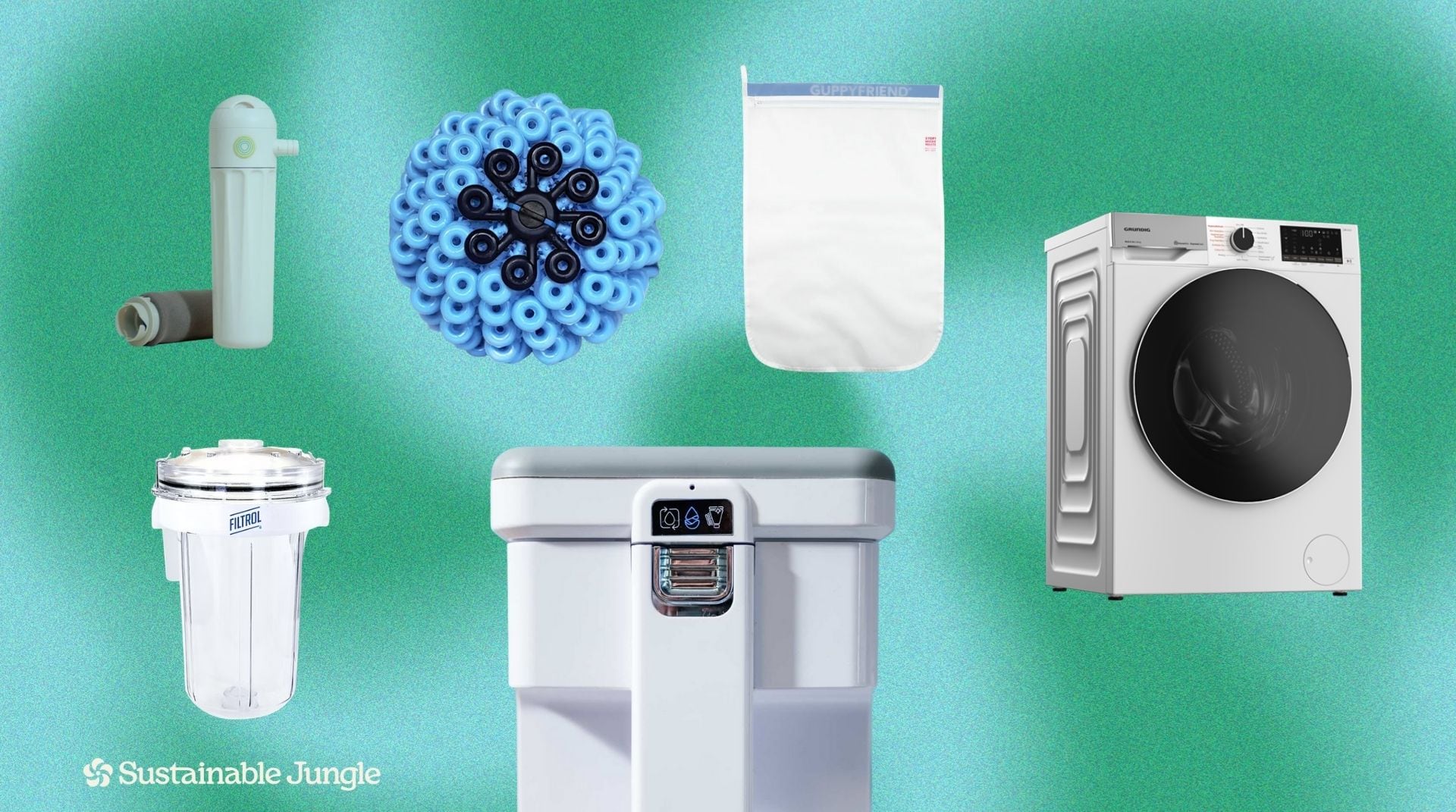
We talk about microplastics a lot here at Sustainable Jungle. Much of our work centers around finding better products and approaches to living that help our readers (and ourselves) reduce negative impacts on people and the planet. In this article, we’re focusing on a pretty big lever that you can pull to reduce how much microplastic pollution your laundry produces, and how much ends up in waterways and human bodies.
But first, let’s recap: Synthetic fabrics shed tiny fibers—microfibers—during each wash. These microfibers are so small that they can get through wastewater treatment plants and end up in oceans, lakes, and increasingly, human food chains.
Given 16-35% of microplastics released into the oceans are from synthetic textiles, we’re sharing the options you might want to consider to reduce the negative impact of your own laundry. While these solutions don’t address the root cause (synthetic fabrics), they’re a helpful step: built-in microfiber filters, retrofit devices, and laundry bags/balls are now emerging.
Below we also cover why microfibers are a concern, how these washing machine microfiber filters work, and which regulatory changes are driving adoption.
If you need a specific produce guide, this is for you: Guide to Eco Washing Machines which covers also microfiber capturing solutions.
Related Guide: How To Avoid Microplastics
Table of contents
- What Are Microfibers and Why Are They a Problem? Jump to section
- What Is a Microfiber Filter for Washing Machines? Jump to section
- Why Are These Filters Becoming More Common? Jump to section
- How Microfiber Filters for Washing Machines Work Jump to section
- 3 Ways to Reduce Microplastics from Your Laundry Cycles Jump to section
- How to Retrofit Your Current Washer With A Microfiber Filter Jump to section
- FAQs: Microfiber Filters For Washing Machines Jump to section
What Are Microfibers and Why Are They a Problem?
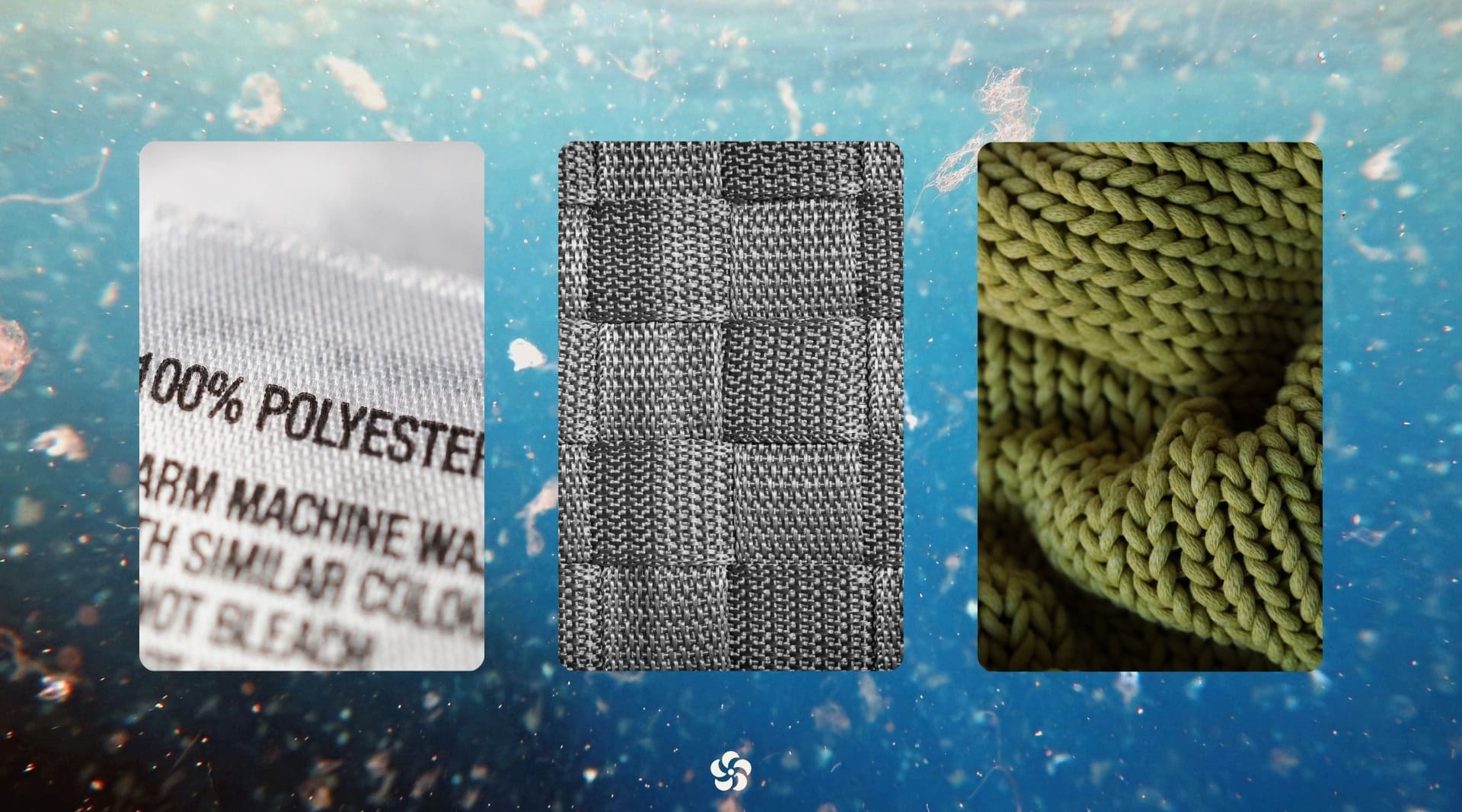
Microfibers are a type of microplastic—they are essentially synthetic fibers that are typically under 5 mm in size and are shed from garments and other textiles during washing. For example, clothing made from synthetic fabrics like fleece and polyester would shed these microfibers whenever they’re washed.
A single load of laundry can shed over 18 million fibers (though this depends on the volume of clothing and the percentage of synthetic materials).
These tiny fibers are an enormous problem not least because they accumulate in marine life like fish and shellfish, and can thus enter the human food chain – microplastics in general have been detected throughout the human body. Early studies suggest this has concerning implications for human health, though research is still emerging.
Likewise, in the natural environment, microfibers (and other microplastics) don’t biodegrade and are likely to be severely harming ecosystems.
What Is a Microfiber Filter for Washing Machines?
In general, a microfiber filter traps these tiny synthetic fibers in the washing machine before they escape down the drain. These are three different types of microfiber filters currently available for washers:
- Built-in filters: These are filters that come built directly into the washing machine – I would love for my next washing machine to include one of these but my current machine is still going strong after 11 years so for now, I have to make do with the other two options. Plus these are super rare (I’ve only found 1 model).
- External filters: Connect to the drain hose on the washing machine itself (e.g. PlanetCare, Filtrol, CLEANR). These generally require replacements for the mesh parts that do the filtering after some time.
- Laundry bags or balls (like Guppyfriend or Cora Ball): Capture shed fibers in the drum before discharge and/or reduce the friction that sheds the fibers.
Why Are These Filters Becoming More Common?
There are a few main drivers for increasing interest in microfiber filters. Most notably consumer awareness and happily, regulation too!
Industry Response & Consumer Awareness
As conscious consumers prioritize reducing harm from the products they consume, manufacturers are increasingly under pressure to innovate. OG brands like Guppyfriend and Cora Ball have been on this for years!
Brand leaders in the washing machine industry like LG, Samsung, Beko—are all exploring filter-equipped models which will hopefully become a new standard globally.
Regulation: France Leads With 2025 Law
Starting January 2025, all new washing machines sold in France must include a microfiber filter to capture fibers before they reach waterways. France is the first country to enact this law and given France sells ~2.7 million washers annually, this is quite an exciting policy step.
Other Regulations
California’s Assembly Bill 1628 proposed requiring microfiber filters on new washers by 2029. While the bill passed both the State Senate and Assembly, it was ultimately vetoed due to concerns about the feasibility and cost of implementation. However ongoing efforts remain to enact similar legislation in other jurisdictions so watch this space!
How Microfiber Filters for Washing Machines Work
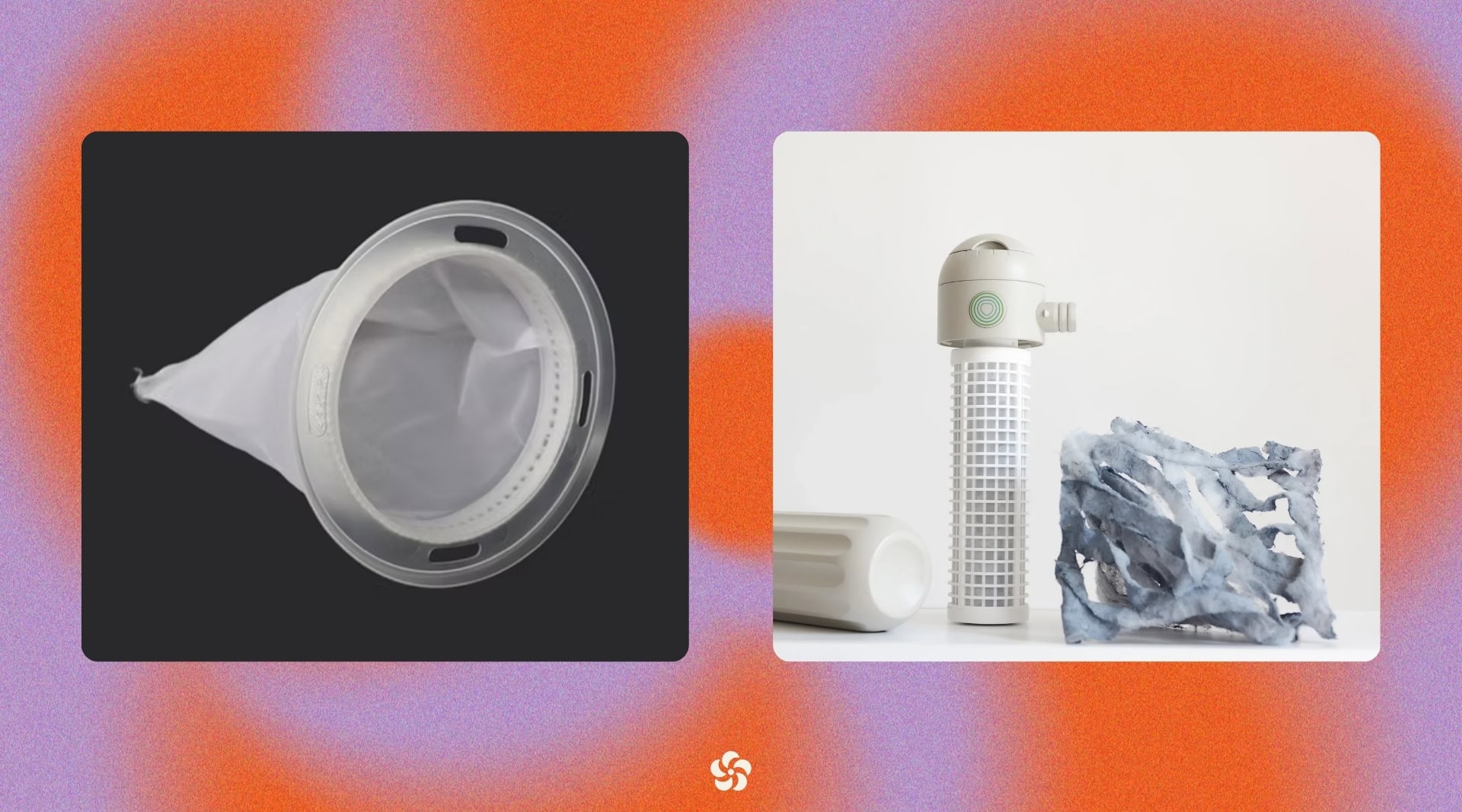
Both microfiber filters that are built into the washing machine and those that are externally retrofitted work in the same way to block the fibers using a tight mesh or a cartridge that still allows water to pass through. So during a wash, the wastewater flows through this filter which acts to trap synthetic fibers. Then the filter needs to be cleaned regularly to maintain efficiency. Studies show that these filters can be pretty effective at scale.
To use a Guppyfriend, you simply put your synthetic textiles inside the Guppyfriend bag, zip it up and pop it in your washing machine. According to sources reported by the Nicholas Institute, the bag captures around 39% of microfibers.
The Cora ball just gets tossed in with the laundry. This is a little less effective with studies showing a reduction of microfibers into the wastewater of anything from ~5% to ~30%
3 Ways to Reduce Microplastics from Your Laundry Cycles

Buy a Washing Machine with a Built-In Filter
This is the most seamless option and absolutely the best option in my opinion. These will come with integral filtration. The big issue with this is availability – there’s only one company offering this so far that I’ve found (Grundig).
Downside of this option of course is cost, and waste – disposing of a washing machine that works just fine is arguably a less sustainable option.
Install an External Microfiber Filter
Products like PlanetCare, Filtrol, and CLEANR attach to your drain hose and can filter ≥ 90% of fibers—even as small as 50 microns in size. These are intended as a set-it-and-forget-it retrofit solution, which is helpful for those who want high capture rates (higher than the bags and balls) without replacing their washing machine.
- PlanetCare: This brand offers a reusable external cartridge system that attaches to your washing machine’s drain hose. It captures around 98% of microfibers. Each cartridge lasts for roughly 30 washes before it needs to be replaced and sent back to PlanetCare for cleaning and reuse, creating a closed-loop service with free shipping and returns for subscribers. Cost: US$129 for the filter, then US$17.90 for the monthly subscription.
- CLEANR: Powered by a smart app, this external microfiber filter connects directly to your washing machine’s drain hose and uses a multi-stage filtration system to trap over 90% of microplastics, including particles as small as 50 microns. Each filter comes with 10 pods and each pod lasts ~5 loads. You can then send back the pods to CLEANR for proper disposal. Cost: US$299 for the filter (including 10 pods), then replacement pods cost US$29 for 20.
- Filtrol: This US-made product is a permanent, wall-mounted filter that connects to the washer’s drain line and uses a replaceable mesh bag to catch lint and microfibers. It requires you to clean out the filter bag periodically (every 8-10 washes), but has been shown in studies to capture up to 87% by count and 80% by weight. The filter bag lasts 1-2 years. Cost: USD$160, then US$14 per replacement filter bag.
Use Laundry Bags or Balls
Guppyfriend bags: The bag is made from a high tech polyester filter material and also doubles as a wash bag that prevents pilling. It can be used for 50 washes (at a maximum heat of 40 °C / 100°F) before it can be recycled. Though you need to check with your municipality first as not all accept polyester for recycling.
Guppyfriend are also innovating – if you live in Europe, you can buy their washing machine filters as well as a whole range of other products designed to address the microplastic problem – including an artificial turf filter.
Those of us in the ecobubble world have been using the Guppyfriend bag for years and years to prevent microfibers shedding in our washing machines and while this innovation has been helpful, after years of frustration washing enormous loads of cloth diapers (made from synthetics) and other old synthetic clothing, I personally am relieved that some more convenient options are now more easily available!
Cora Balls: The Cora Ball is made from 100% recycled and recyclable soft, BPA-free plastic, designed to tumble around inside your washing machine. Its open, looped structure tangles and catches loose fibers as clothes rub against it in the wash. You simply toss it in with your laundry and pull out the collected lint-like fibers to throw in the trash after several loads. It’s durable, lasts for years, and can be recycled at the end of its life through select programs.
While it’s a low-effort option, it does work best when combined with other filters (like a Guppyfriend or an external filter). I personally haven’t tried the Cora ball – mostly because they were always sold out when I was trying to buy one!
How to Retrofit Your Current Washer With A Microfiber Filter
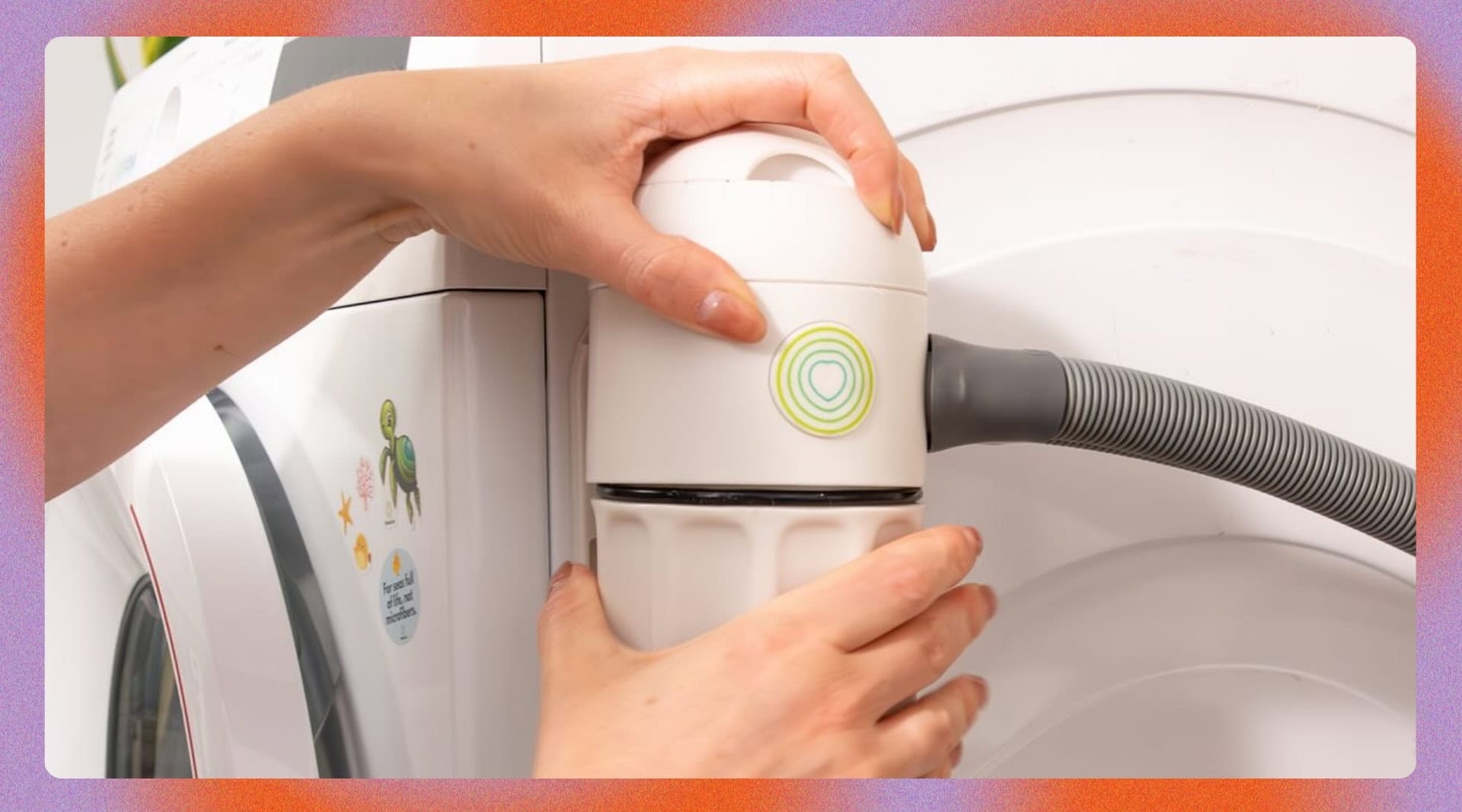
Thankfully, most external washing machine filters can be installed in 15–30 minutes with no plumbing skills required. So you know what to expect, generally speaking, the installation process looks like this (though always follow the instructions provided with your specific filter as they all differ):
- Step 1: For your safety, turn off your machine and disconnect it from power and water.
- Step 2: Find the drain hose at the back of your washing machine (usually a flexible tube that leads into a standpipe or sink).
- Step 3: Attach the filter housing to the hose according to the product’s instructions. This may involve connecting the hose to the filter inlet and then attaching a short extension hose from the filter outlet to your drain.
- Step 4: Mount or position the filter unit securely. Some units sit on the floor; others are wall-mounted for stability. Some units can rest on top of the machine, but wall-mounting or placing them on the floor is generally safer.
- Step 5: Run a test cycle to check for leaks and confirm water is flowing correctly through the filter.
- Step 6: After the cycle, check that the filter has captured some fibers and is working correctly. Dispose of the captured fibers as directed by the filter manufacturer (some offer return-and-refill cartridge programs).
Where to find good DIY information for fitting your own microfiber washing machine filter:
- Filter manufacturers (like PlanetCare, Filtrol, and CLEANR) have official installation guides and videos on their websites.
- YouTube search terms like “PlanetCare filter installation” or “Filtrol washing machine filter install” return detailed, visual walkthroughs.
- Forums (such as Reddit’s r/ZeroWaste or r/Appliances) often share real-world tips on setup, cleaning, and what to expect.
How to Clean and Maintain a Microfiber Filter
Again, following the manufacturer’s guidance on this is key but typically you simply empty the filter cartridges/drain filters after every few loads into the trash.
Never flush lint or captured microfibers down the sink (because this would completely defeat the purpose)—discard them to landfill to prevent further contamination. It would be nice if there was a better place to put these fibers!
FAQs: Microfiber Filters For Washing Machines
Do microfiber filters really work? Yes: filters have been generally shown to capture up to 30–97% of microfiber waste, depending on design and mesh size. It’s best to combine different types of filters (e.g. an external filter combined with in drum options as we’ve described above)
Are washer microfiber filters worth it? This depends on your perspective. To us, they’re absolutely worth it for peace of mind. The in-drum options (like the Guppyfriend) are relatively budget-friendly so are a good place to start if affordability is a priority.
Can you add a filter to an old washing machine? Yes—happily, external filters and laundry bags are compatible with most washers.
What’s the cheapest way to reduce microplastics from laundry? Start with laundry bags (like the Guppyfriend) or the Cora ball for the most affordable approach. Every little bit matters.
Which brands already have built-in filters? Refer to our washing machine guide which covers a range of good options that include water filters.
Final Thoughts
Microfibers are less than ideal and we as a global society need to rapidly address this problem. We’re starting to see the tides turn with a washing machine microplastic filter regulation in France—and potentially across Europe, the US, and beyond. But there’s no need to wait – using a washing machine microfiber filter is one clear step we can all take to do our bit for the health of our ecosystems and the people

Joy has been a passionate advocate for the environment since she was a small child. She grew up in South Africa and has been lucky enough to be exposed to the wonders of nature not just in Africa but all over the world. She founded Sustainable Jungle (together with her husband Lyall) back in 2017 after becoming enraged by the devastating impact of palm oil. She then founded the Sustainable Jungle Podcast and together with Lyall interviewed remarkable people from all over the world who were finding ways to create positive impact. Outside of Sustainable Jungle, Joy has always worked in the corporate world, starting out as an auditor and later moving into management consulting. More recently she specialized in Climate Investing for the Asia Pacific region. Given her experience, her current passion is Brand Ratings. She is very much enjoying going deeper on what it really means to drive sustainability performance and true impact through business operations.