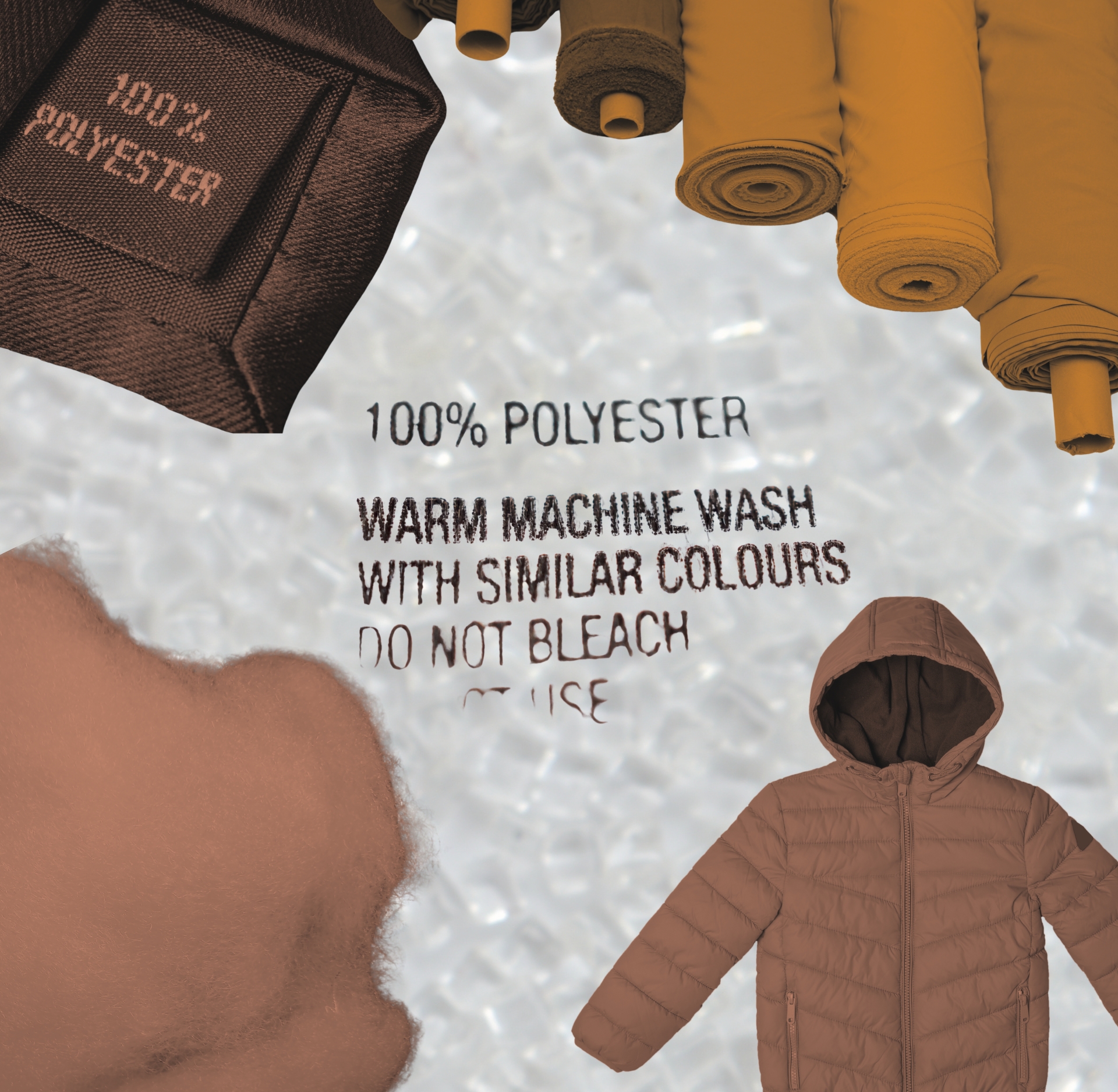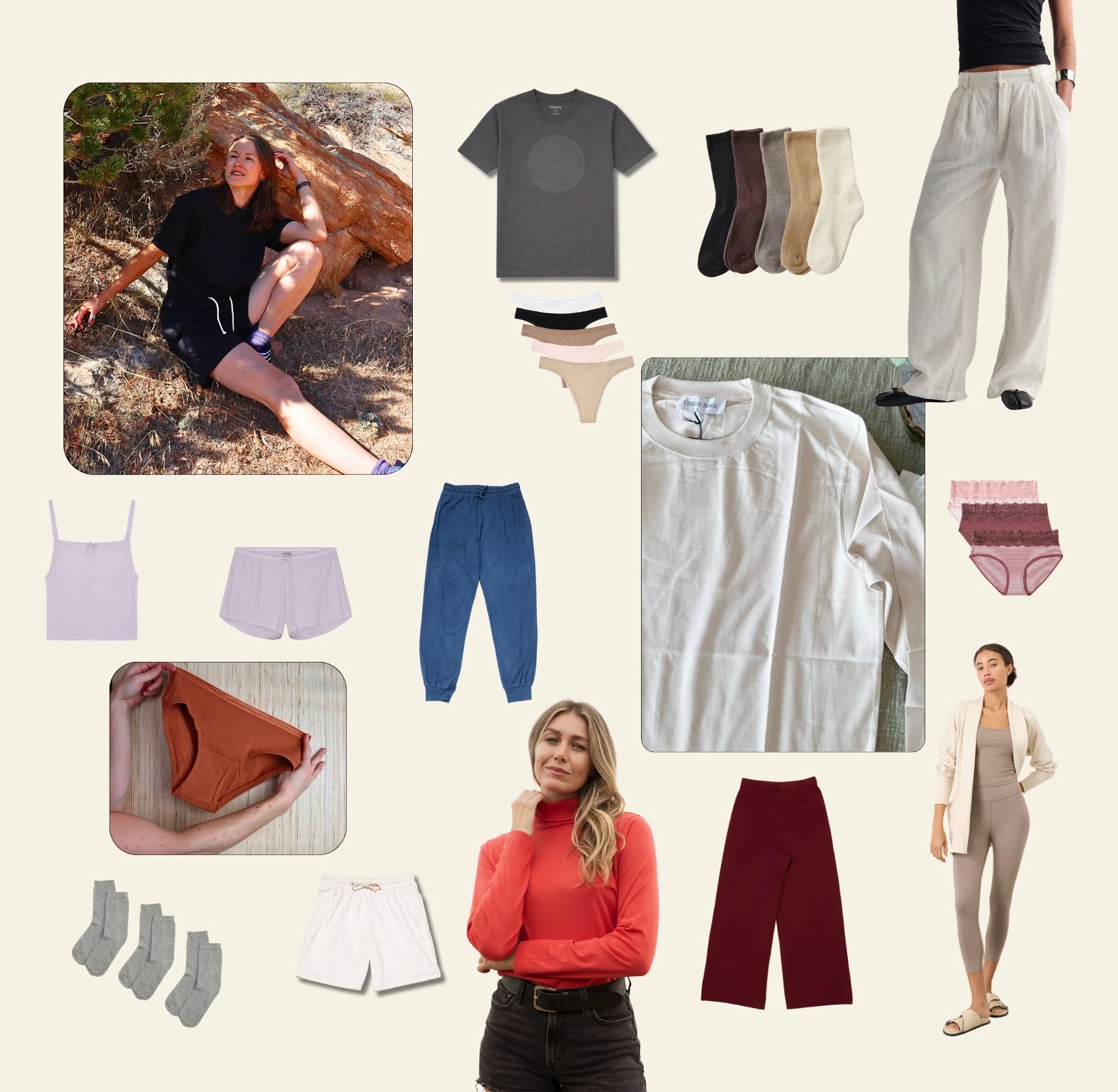













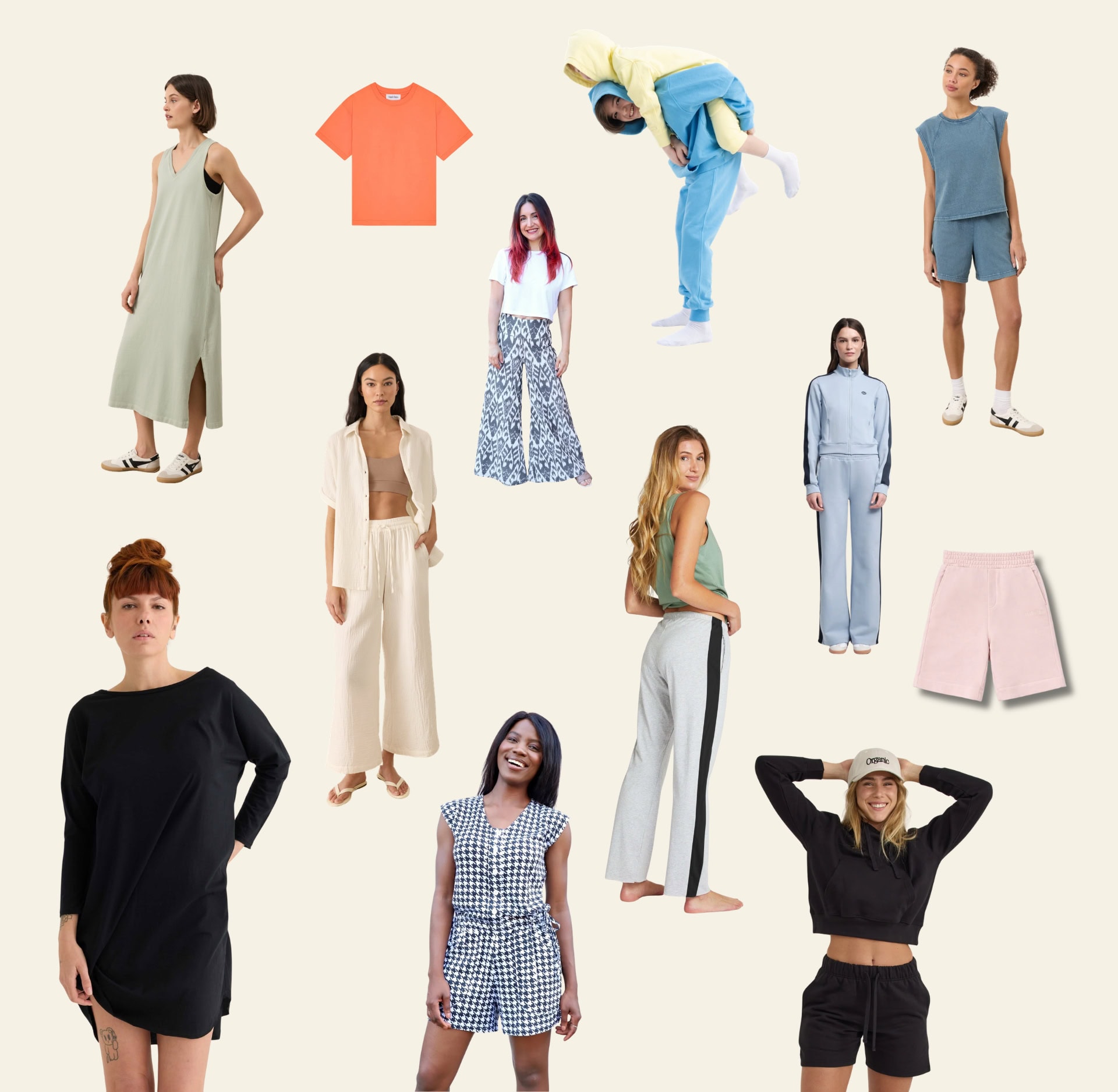
Organic clothing is largely a better alternative when compared to clothing made with conventional cotton or fabric that is really plastic (like polyester).
Why? Well, conventional clothing is made with a cocktail of chemicals you’d never knowingly put on your skin, from BPA and PFAS in polyester to formaldehyde in wrinkle-resistant finishes.
Around 60% of fibers produced are synthetic and derived from petroleum, and there are growing concerns around endocrine-disrupting chemicals (and more!) in these textiles. Organic clothing made from certified organic cotton, linen, and hemp skips the harmful pesticides in farming and the harsh chemicals in processing, giving you a cleaner alternative for the fabrics you wear all day.
We’ve pulled together the organic and natural fiber clothing brands we trust most.
What We Looked For
In evaluating the best organic clothing brands for this guide, we prioritized the following (as much as possible):
- Certified organic materials (GOTS, OCS) and natural fibers free from harmful chemical treatments and toxic dyes
- Third-party safety certifications backing up non-toxic claims (OEKO-TEX Standard 100, REACH)
- Transparent, ethical supply chains with fair wages, safe conditions, and third-party audits
- Durable construction and quality we can vouch for from personal wear
- A range of price points from accessible to premium
Our Testing, Ratings & Research
We’ve worn and tested clothing from many of these brands ourselves, in some cases for years. Where we’ve conducted personal reviews, you’ll find them in each brand section below.
For brands we work with through our sustainability rating system, we evaluated their initiatives across 22 criteria including supply chain, labor practices, and environmental commitments. See other rated brands in our sustainable brand directory.
For brands we didn’t rate directly, we conducted careful research to bring you the safest and most sustainable organic clothing brands available.
Related Guides: Is Polyester Bad For You?, What Are Forever Chemicals (PFAS), Sustainable Clothing Brands, Sustainable Basics, Non-Toxic Kids’ Clothing, Ethical Underwear, Fast Fashion Alternatives
We independently research all featured brands, and we ask them to confirm their claims. In many cases we personally review recommended products. This post contains affiliate links which means we may earn a commission if you buy something. We explain this further in our Terms of Use.
The Best Organic & Non-Toxic Clothing Brands (Formally Rated by Sustainable Jungle)
Best Fair Trade Organic Clothing: Passion Lilie | Beautiful printed dresses, bottoms, tops, and more. Handcrafted in India from organic cotton with non-toxic dyes. Fair Trade Federation member, fully traceable supply chain, women-owned.
Best Organic Clothing for Lounging: The Very Good Bra | Compostable organic cotton loungewear, sleepwear, bras and undies. Zero plastic, PFAS-free, fully traceable supply chain, Certified B Corp.
Best Organic Kids’ Clothing: Hahaha | 100% GOTS-certified organic cotton kids’ streetwear, made in LA, OEKO-TEX Standard 100 certified.
Best Organic Clothing Basics: Organic Basics | Wide range of minimalist GOTS-certified organic cotton clothing (though some are mixed with other fibers), OEKO-TEX Standard 100 and REACH certified, ZDHC compliant.
Best Affordable Organic Clothing: Pact | GOTS-certified organic cotton, Fair Trade Certified factories, extensive and affordable organic clothing range for women and men.
Contents: Natural Fiber & Organic Clothing Brands
- The Very Good Bra Jump to brand
- Passion Lilie Jump to brand
- Hahaha Jump to brand
- Organic Basics Jump to brand
- Pact Jump to brand
- The Classic T-Shirt Company Jump to brand
- Harvest & Mill Jump to brand
- MATE The Label Jump to brand
- tentree Jump to brand
- Outerknown Jump to brand
- Beaumont Organics Jump to brand
The Very Good Bra

Circular
All or some products are circular in nature - such that no part of the product needs to end up in landfill at the end of its life
Compostable
All or some products are compostable, either in an industrial facility or at home
Ethical Sourcing
Raw materials have been sourced ethically with people and planet in mind.
Non-toxic
All products are made with ingredients or materials that are currently considered non-toxic
Organic
Products are made from organic materials.
PFAS Free
Products have been tested and verified to be free of PFAS
Plastic-free
All products are entirely plastic-free
Small business
This brand is a small business run by less than 15 people
Sustainable Materials or Ingredients
Either all or most products are made with sustainable materials or ingredients.
Thoughtful packaging
Product packaging has been designed and created with the end of life outcome in mind and can be easily recycled or composted.
Traceable Supply Chain
Brand is able to fully trace their entire supply chain from end to end.
Vegan
This brand does not use any animal products or by-products in their products
Woman Owned
This brand is owned by a woman or a group of women.
Zero Waste
Products are made with a low or zero waste approach where ideally no or limited waste is created throughout the production process or at the end of life.
B Corp
BCSI
GOTS
OEKO-TEX®
SMETA
WRAP
B Corp
The B Corp Certification, administered by the nonprofit B Lab, recognizes companies that meet high standards of verified social and environmental performance, transparency, and accountability. Certified B Corps balance profit with purpose, committing to responsible practices that benefit workers, communities, customers, and the planet while embedding sustainability into their business model.BCSI
The amfori BSCI (Business Social Compliance Initiative) is a leading supply chain management system that helps companies improve social performance in global manufacturing. It provides a common Code of Conduct and regular third-party audits to ensure fair wages, safe working conditions, ethical labor practices, and respect for workers’ rights across all tiers of the supply chain.GOTS
The GOTS (Global Organic Textile Standard) certification is the world’s leading standard for organic fibers. It covers every step of production, from harvesting raw fibers to environmentally and socially responsible manufacturing, and prohibits toxic dyes, GMOs, and harmful chemicals. GOTS also enforces fair labor practices.OEKO-TEX®
The OEKO-TEX® Standard 100 certification ensures that every component of a textile product (threads, buttons, zippers, and fabrics) has been independently tested for harmful substances. Managed by the International Association for Research and Testing in the Field of Textile and Leather Ecology, it guarantees products are safe for human health, meeting strict global limits for chemicals such as pesticides, heavy metals, formaldehyde, and PFAS.SMETA
The SEDEX (Supplier Ethical Data Exchange) certification and platform help businesses manage and improve ethical performance across their supply chains. Companies that participate in SEDEX use the SMETA (Sedex Members Ethical Trade Audit) framework to assess and report on labor rights, health and safety, environmental practices, and business ethics.WRAP
The WRAP (Worldwide Responsible Accredited Production) certification ensures that manufacturing facilities operate safely, ethically, and lawfully. Focused primarily on the apparel, footwear, and sewn products industries, WRAP audits factories against 12 core principles covering labor rights, health and safety, environmental compliance, and legal operations.About The Very Good Bra’s Organic Cotton Clothes
The Very Good Bra is one of the best organic cotton clothing brands for comfortable, affordable undergarments. Stephanie Devine founded the brand after her win against breast cancer, seeking to develop the first biodegradable and completely plastic-free bra.
Now their bras and undies are continually busting (get it?) down barriers, like creating Australia’s first textile composting standard. Listen to our podcast with Stephanie for all the details.
Organic clothing range:
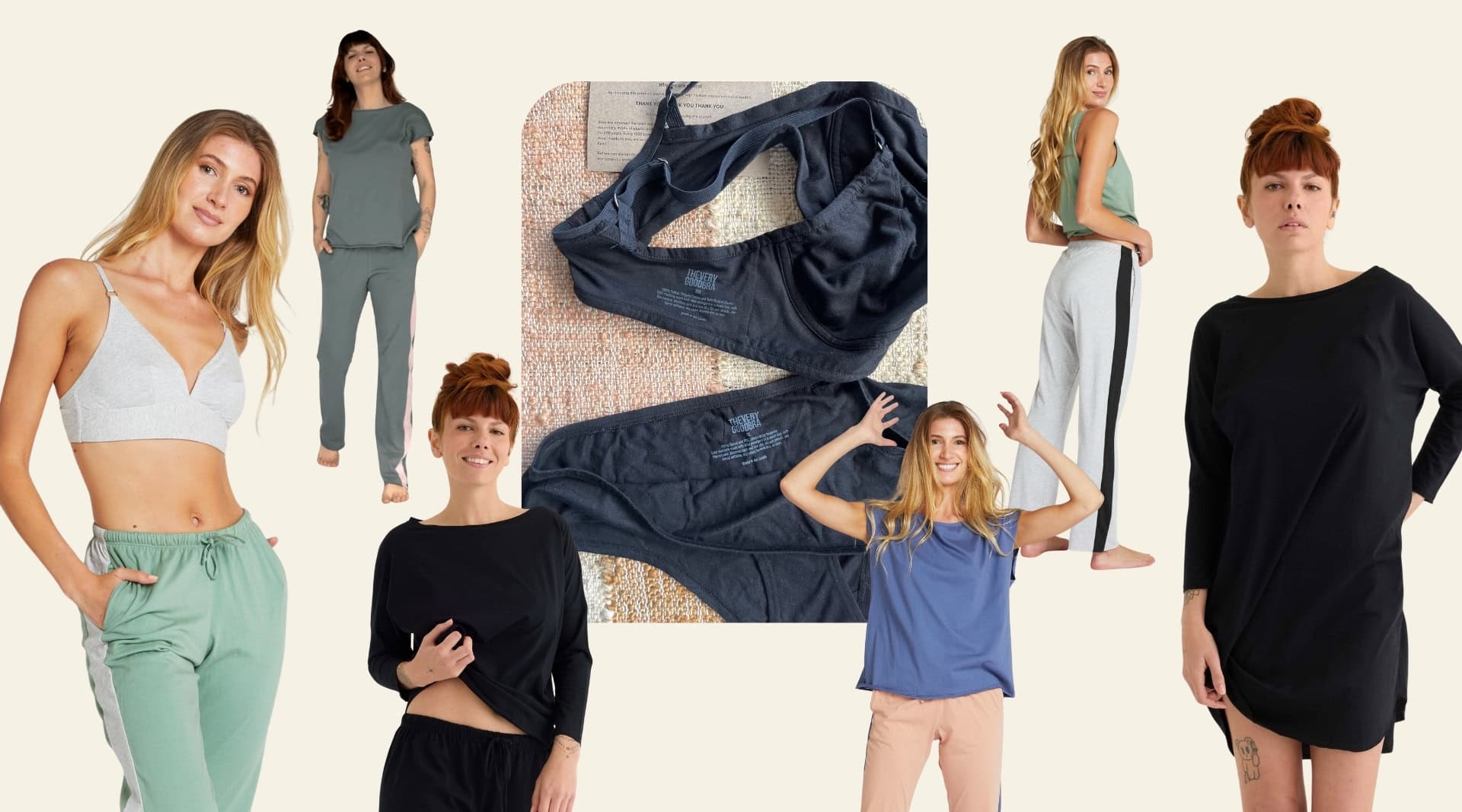
Lounge pants, tees, tee dress, sleep shorts, bras and underwear made from ultra-soft organic cotton or TENCEL™. All products are designed to be home compostable at end of life because every component is made from 100% natural materials, with no synthetic elastic, polyester thread, or plastic hardware.
The completely plastic-free clothing range is PFAS-free and either OEKO-TEX, REACH or ORGANIC certified.
What we love:
The Very Good Bra is a Certified B Corp with a fully traceable supply chain. They’re vegan and zero waste. The brand is women-owned and has GOTS, OEKO-TEX, WRAP, BSCI, and SMETA certifications.
Price: $$$
The Very Good Bra has been rated by Sustainable Jungle. See the full rating.
Our Review of The Very Good Bra’s Plastic-free Clothing
“I own TVGB’s TENCEL™ bra and undies. They are extremely soft and comfortable to wear and are a staple in my wardrobe. Though, I would choose the “Big Knickers” over the briefs next time as I like a bit more coverage.”
Review by Joy McConnochie, SJ Co-Founder
Passion Lilie
Ethical Sourcing
Raw materials have been sourced ethically with people and planet in mind.
Handcrafted
Products have been made by hand, typically by an artisan or group of artisans.Non-toxic
All products are made with ingredients or materials that are currently considered non-toxicOrganic
Products are made from organic materials.Plastic-free
All products are entirely plastic-freeSmall business
This brand is a small business run by less than 15 peopleSustainable Materials or Ingredients
Either all or most products are made with sustainable materials or ingredients.Thoughtful packaging
Product packaging has been designed and created with the end of life outcome in mind and can be easily recycled or composted.Traceable Supply Chain
Brand is able to fully trace their entire supply chain from end to end.Vegan
This brand does not use any animal products or by-products in their productsWoman Owned
This brand is owned by a woman or a group of women.
Fair Trade
GOTS
Fair Trade
The Fair Trade certification ensures that products are made according to rigorous social, environmental, and economic standards that protect workers and the planet. Overseen by organizations such as Fair Trade USA and Fairtrade International, it guarantees fair wages, safe working conditions, environmental sustainability, and community development funds, helping producers build more equitable and resilient supply chains.GOTS
The GOTS (Global Organic Textile Standard) certification is the world’s leading standard for organic fibers. It covers every step of production, from harvesting raw fibers to environmentally and socially responsible manufacturing, and prohibits toxic dyes, GMOs, and harmful chemicals. GOTS also enforces fair labor practices.About Passion Lilie’s Fair Trade Organic Clothing
Passion Lilie is a fair trade fashion brand founded in 2013 by Katie Schmidt in New Orleans. Every piece is handmade in small batches in India by artisans who specialize in heritage techniques like hand-block printing and handloom weaving, and the brand earned our highest “Disrupting” rating.
Organic clothing range:
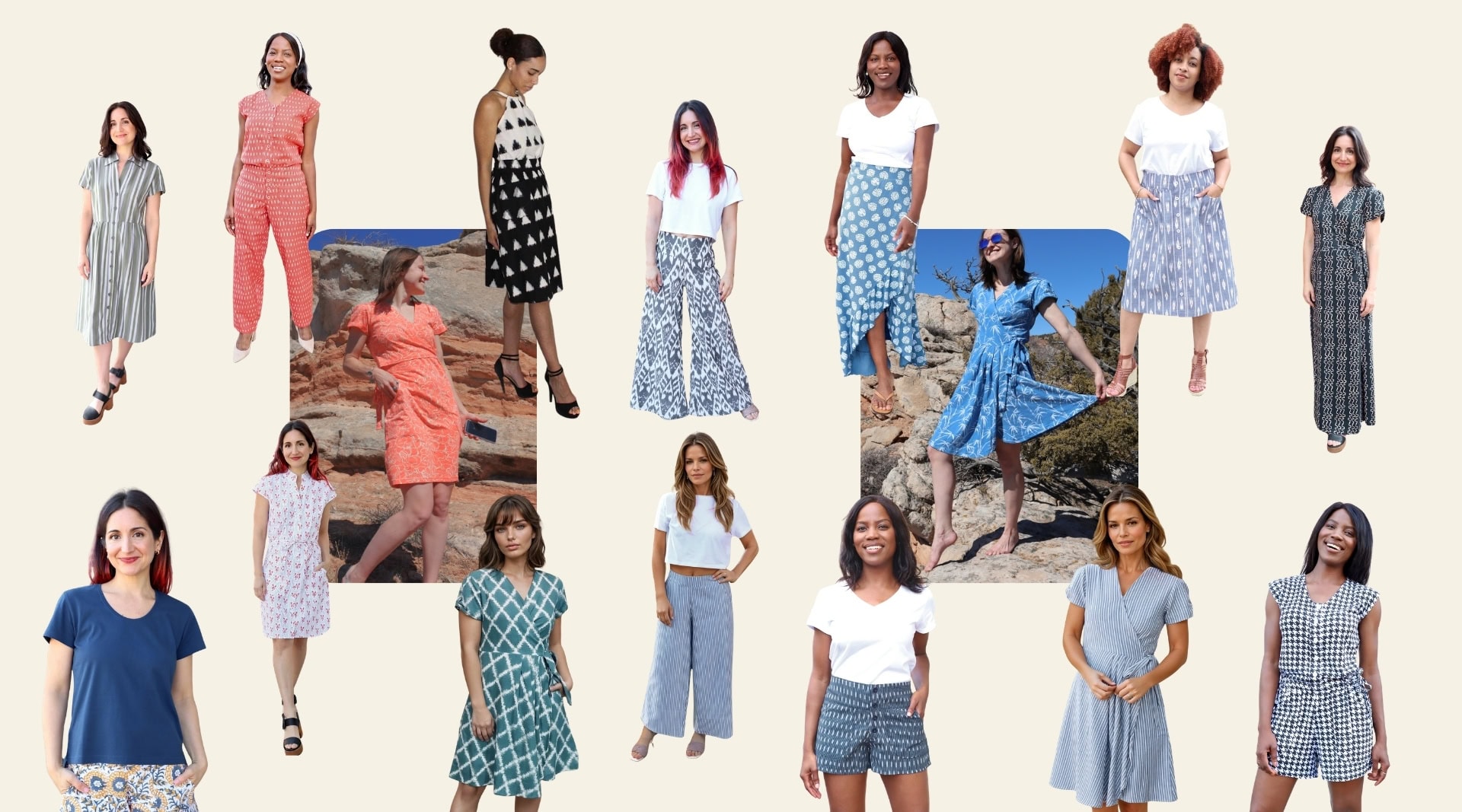
Women’s dresses, tops, pants, loungewear, scarves, accessories, baby clothing, and housewares. All made from natural fibers, namely GOTS certified organic cotton with azo-free dyes throughout.
What we love:
Passion Lilie is a Fair Trade Federation member with a fully traceable supply chain. Their garment manufacturers use 90% solar energy, their block printers are carbon neutral (verified by Climes), and all manufacturing is kept in close proximity to reduce transport emissions.
The bold block prints and classic silhouettes really stand out. Passion Lilie also provides additional training for aspiring female tailors beyond their FTF commitment to fair wages, and they’ve launched a Pre-Loved resale store where customers can return gently used pieces for gift card credit.
All their plastic-free clothing ships in recyclable packaging with 100% recycled content mailers.
Price: $$
Passion Lilie has been rated by Sustainable Jungle. See the full rating.
Our Review of Passion Lilie’s Organic Cotton Clothing
“I own two of Passion Lilie’s dresses and their Raina Modal Scarf, and each piece found its way into regular rotation fast. The Coastal Organic Wrap Dress is the one I reach for most often because there’s an inner loop to thread one of the ties through before wrapping, which keeps everything secure and comfortable even on windy days (and where I live in Wyoming, that’s most of them). The Floral Organic Dress has a similar cut and feel but without the wrap, and the bright salmon color brings an easy pop to summer outfits. The Raina Modal Scarf rounds things out nicely for warmer months when I want something drapey and a bit more polished without the weight of cotton.”
Review By Amber McDaniel, SJ Head of Content (tested over several months)
Hahaha
Ethical Sourcing
Raw materials have been sourced ethically with people and planet in mind.
Locally Made
Products are made local to the brand's headquarters.Non-toxic
All products are made with ingredients or materials that are currently considered non-toxicOrganic
Products are made from organic materials.Small business
This brand is a small business run by less than 15 peopleSustainable Materials or Ingredients
Either all or most products are made with sustainable materials or ingredients.Thoughtful packaging
Product packaging has been designed and created with the end of life outcome in mind and can be easily recycled or composted.Vegan
This brand does not use any animal products or by-products in their products
GOTS
OEKO-TEX®
GOTS
The GOTS (Global Organic Textile Standard) certification is the world’s leading standard for organic fibers. It covers every step of production, from harvesting raw fibers to environmentally and socially responsible manufacturing, and prohibits toxic dyes, GMOs, and harmful chemicals. GOTS also enforces fair labor practices.OEKO-TEX®
The OEKO-TEX® Standard 100 certification ensures that every component of a textile product (threads, buttons, zippers, and fabrics) has been independently tested for harmful substances. Managed by the International Association for Research and Testing in the Field of Textile and Leather Ecology, it guarantees products are safe for human health, meeting strict global limits for chemicals such as pesticides, heavy metals, formaldehyde, and PFAS.About Hahaha’s Organic Cotton Kids’ Clothing
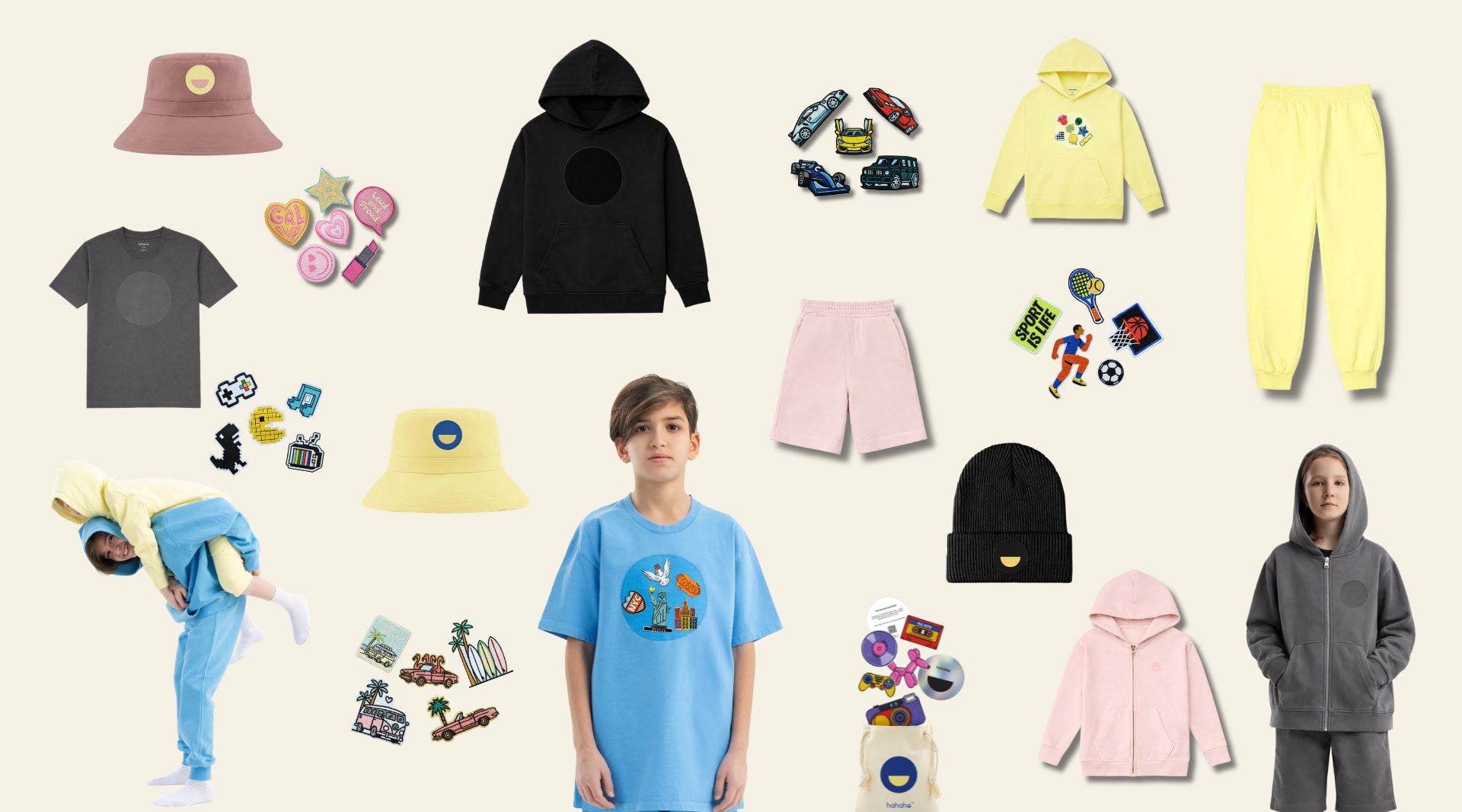
If you’re outfitting kids alongside yourself, Hahaha is a Los Angeles-based children’s streetwear brand worth knowing about. Founded by Armenian-American entrepreneur Gev Balyan, the brand earned our highest “Disrupting” rating in its first year of operations.
Organic clothing range:
Kids’ hoodies, tees, joggers, and embroidered patches. All garments are made from 100% GOTS-certified organic cotton (no synthetic blends, recycled polyester, or conventional cotton) and are OEKO-TEX Standard 100 certified.
Everything is cut and sewn locally by Euphoric Colors, an independent LA-based manufacturing partner, using USA-grown organic cotton processed domestically.
What we love:
Their interchangeable hook-and-loop patch system lets kids restyle garments as their interests change rather than replacing them, which extends the useful life of each piece.
Cultural heritage patch collections celebrate Native American, Mexican, Chinese, Indian, and Armenian communities. Every garment carries a sewn-in label encouraging parents to pass it on to another child when outgrown.
Price: $$
Hahaha has been rated by Sustainable Jungle. See the full rating.
For more organic kids’ clothing options, see our full guide to sustainable kids’ clothing.
Organic Basics

Carbon Neutral
Brand has been certified as Carbon Neutral.Ethical Sourcing
Raw materials have been sourced ethically with people and planet in mind.Organic
Products are made from organic materials.
Recycled materials
Some or all products are made with recycled materialsSustainable Materials or Ingredients
Either all or most products are made with sustainable materials or ingredients.Thoughtful packaging
Product packaging has been designed and created with the end of life outcome in mind and can be easily recycled or composted.
1% for the planet
Better Work
FSC®
GOTS
GRS
OCS
OEKO-TEX®
REACH
WRAP
1% for the planet
Certified Environmental Giving — Businesses give 1% of their annual sales directly to vetted environmental partners.Better Work
The Better Work program is a collaboration between the International Labour Organization (ILO) and the International Finance Corporation (IFC) that aims to improve labor standards and business competitiveness in the global garment industry. It combines independent factory assessments with advisory services, training, and public reporting to promote safe working conditions, fair pay, and respect for workers’ rights.FSC®
The FSC® (Forest Stewardship Council) certification ensures that wood, paper, and other forest-based materials come from responsibly managed forests that provide environmental, social, and economic benefits. Products bearing the FSC® label support biodiversity, protect the rights of forest communities and workers, and promote sustainable forestry practices.GOTS
The GOTS (Global Organic Textile Standard) certification is the world’s leading standard for organic fibers. It covers every step of production, from harvesting raw fibers to environmentally and socially responsible manufacturing, and prohibits toxic dyes, GMOs, and harmful chemicals. GOTS also enforces fair labor practices.GRS
The GRS (Global Recycled Standard) certification, managed by Textile Exchange, verifies that products contain recycled materials and that these materials are tracked through the entire supply chain. It also ensures responsible social, environmental, and chemical practices in production.OCS
The OCS (Organic Content Standard) certification, managed by Textile Exchange, verifies the presence and amount of organic material in a final product. It tracks the certified organic content from the source to the finished good through a transparent chain-of-custody system, ensuring that labeling claims about organic composition are accurate and independently verified.OEKO-TEX®
The OEKO-TEX® Standard 100 certification ensures that every component of a textile product (threads, buttons, zippers, and fabrics) has been independently tested for harmful substances. Managed by the International Association for Research and Testing in the Field of Textile and Leather Ecology, it guarantees products are safe for human health, meeting strict global limits for chemicals such as pesticides, heavy metals, formaldehyde, and PFAS.REACH
The REACH Regulation (Registration, Evaluation, Authorisation and Restriction of Chemicals) is an EU law designed to protect human health and the environment from risks posed by chemicals. It requires companies to identify and manage chemical risks by registering substances they manufacture or import, ensuring safe use, and promoting the development of safer alternatives. Products compliant with REACH are free from the most harmful or restricted chemicals under EU standards.WRAP
The WRAP (Worldwide Responsible Accredited Production) certification ensures that manufacturing facilities operate safely, ethically, and lawfully. Focused primarily on the apparel, footwear, and sewn products industries, WRAP audits factories against 12 core principles covering labor rights, health and safety, environmental compliance, and legal operations.About Organic Basics’ GOTS-Certified Organic Clothing
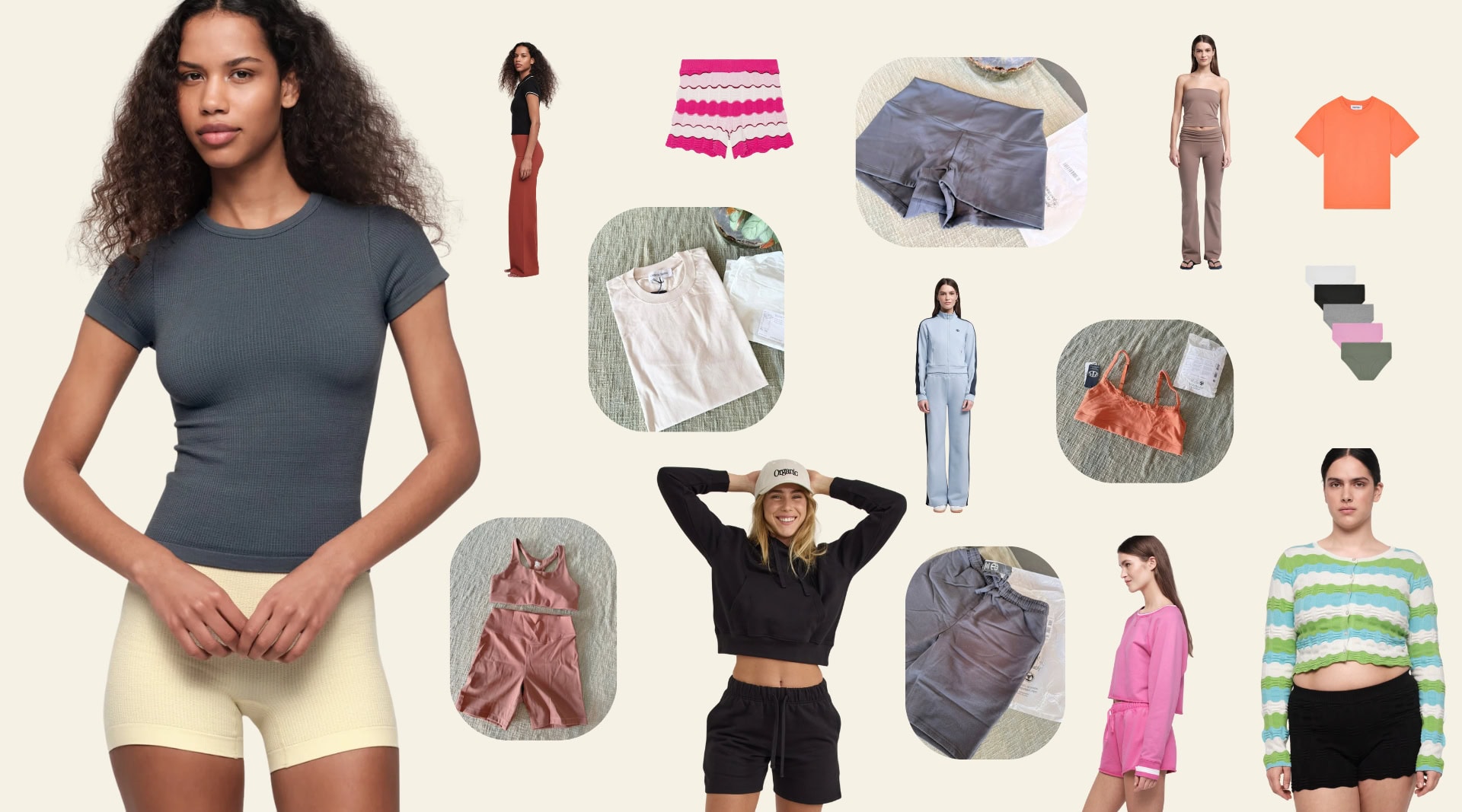
Organic Basics is a Danish company making a range of minimalist organic clothing. Founded in 2015, the brand has built a following around high-quality organic essentials and strong toxicity certifications.
Organic clothing range:
OB’s range includes underwear, tops and tanks, pajamas, knits, loungewear, socks, and more.
GOTS-certified organic cotton accounts for 90% of materials used, alongside a small amount of FSC-certified Lenzing semi-synthetics (TENCEL™), recycled nylon, and elastane.
Products carry REACH and OEKO-TEX Standard 100 certifications, and suppliers are required to adhere to Zero Discharge of Hazardous Chemicals (ZDHC) standards and Organic Basics’ own Restricted Substances List.
What we love:
Organic Basics is Carbon Neutral, a 1% for the Planet member, and their factories are audited by WRAP and Better Work. They provide comprehensive annual reporting on sustainability progress and are transparent about shortcomings.
The minimalist designs, focus on durability, and range of everyday essentials make them a strong anchor for an organic wardrobe.
Price: $$$
Organic Basics has been rated by Sustainable Jungle. Read their full rating, including their position on parent company Delta Galil’s operations.
Our Review of Organic Basics’ Organic Cotton Clothing
“I’ve been trying out a few of the organic cotton pieces from Organic Basics, including the True Knit Wide Leg Pants, True Knit Cardigan, True Boxy Tee and Long Sleeve and their tennis socks. Without a doubt the 100% organic cotton products are my preference. They’re soft, breathable, and comfortable. Not to mention their better end of life options.
I’m a fan of the looser-fitting items (so the boxy tops in particular) as they suit me better than the super tight fitting items. The True Knit Pants are incredibly soft and easy to wear but a bit too long for my 5’2″ frame, so I’ll have them hemmed.
I love the look of True Knit Cardigan but it’s a little tight for my liking so I’d size up if I could go back in time. The socks are comfy and I like their retro style.”
Review by Joy McConnochie, SJ Co-Founder (tested over the last year)
Pact
Ethical Sourcing
Raw materials have been sourced ethically with people and planet in mind.Non-toxic
All products are made with ingredients or materials that are currently considered non-toxicOrganic
Products are made from organic materials.Sustainable Materials or Ingredients
Either all or most products are made with sustainable materials or ingredients.Thoughtful packaging
Product packaging has been designed and created with the end of life outcome in mind and can be easily recycled or composted.Vegan
This brand does not use any animal products or by-products in their products
Fair Trade
GOTS
Fair Trade
The Fair Trade certification ensures that products are made according to rigorous social, environmental, and economic standards that protect workers and the planet. Overseen by organizations such as Fair Trade USA and Fairtrade International, it guarantees fair wages, safe working conditions, environmental sustainability, and community development funds, helping producers build more equitable and resilient supply chains.GOTS
The GOTS (Global Organic Textile Standard) certification is the world’s leading standard for organic fibers. It covers every step of production, from harvesting raw fibers to environmentally and socially responsible manufacturing, and prohibits toxic dyes, GMOs, and harmful chemicals. GOTS also enforces fair labor practices.About Pact’s Affordable Organic Cotton Clothing
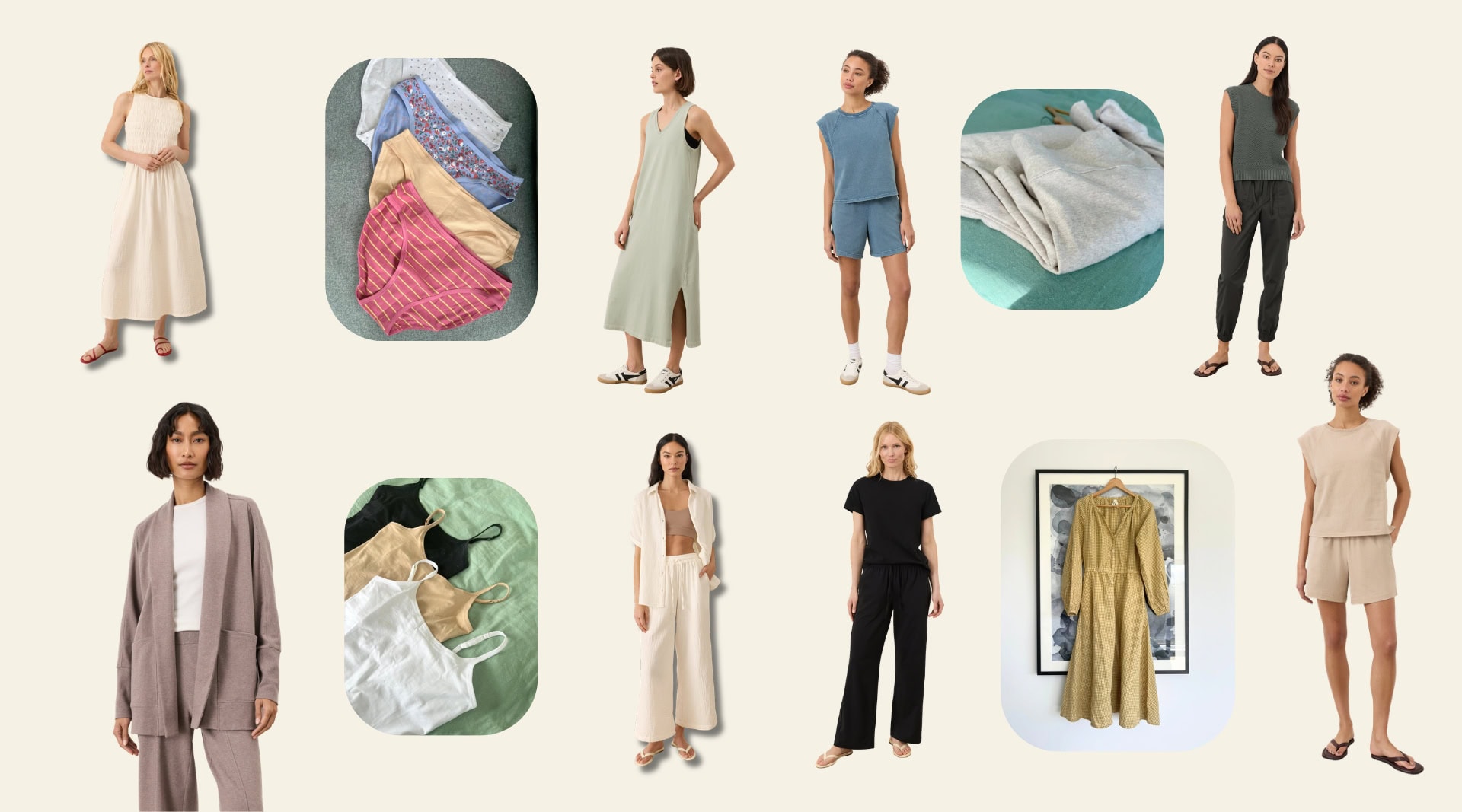
Based in Boulder, Colorado, Pact is one of the original affordable organic cotton clothing brands, and they’ve made it possible to outfit both men and women in non-toxic clothing.
Organic clothing range:
Pact probably has the widest range of organic cotton clothing of all the brands on this list which includes dresses, tops, bottoms, underwear, essentials, sleepwear, and organic cotton sets.
The range is made almost exclusively from GOTS-certified organic cotton, with only a small handful of garments containing minimal elastane for stretch. Over three quarters of their cotton is grown in India, where all clothing is made in Fair Trade Certified factories that meet strict environmental, social, and economic standards. Products can be narrowed to collections of 100% organic cotton for both men and women.
What we love:
The range and affordability are the key standout for Pact. Pact uses SimpliZero to measure and offset the impact of each product and ships in carbon-neutral, FSC-certified recyclable paper Vela Bags. They encourage circular fashion through their clothing recycling and donation program.
Price: $-$$
Pact has been rated by Sustainable Jungle. See the full rating.
Our Review of Pact’s Organic Clothing
“I’m a big fan of this brand’s organic cotton clothing and especially love the simple silhouettes and super soft organic cotton fabric of Pact’s dresses, like the Fit & Flare line, which is as elegant as it is comfortable and functional. And ladies, did I mention most of their dresses have pockets?! I also adore the Knit Short Cardigan, which is no longer an available style, but still one of my all-time favorite layering wardrobe pieces for just about any occasion.”
Review by Amber McDaniel, SJ’s Head of Content
The Classic T-Shirt Company
The Classic T-Shirt Company has some of the best organic clothing made in the USA. Founded in Alabama, they keep their supply chain local and simple.
Organic clothing range:
T-shirts (including long sleeve and other variations) are made from 100% GOTS-certified organic cotton, dyed with premium non-toxic Azo-free dyes. The cotton is combed, ring-spun, and pre-shrunk so the final product maintains its color, shape, and size wash after wash.
Cotton is ethically sourced from local farms in India and garments are manufactured in Los Angeles. Every garment is biodegradable at the end of life.
What we love:
A small brand doing one thing well, with full transparency about where and how their t-shirts are made. They provide fair wages, reasonable hours, and excellent working conditions.
The quality of the cotton is substantial without being heavy, and all orders ship in 100% plastic-free, recycled materials.
Price: $$
Our Review of The Classic T-Shirt Company’s Non-Toxic Clothing:
“I love the French Terry Box Te, it’s like a cozy sweatshirt and a short-sleeve tee rolled into one. I’ve worn it regularly for about a year, and it still looks fantastic; even the unhemmed cut hem that gives it it’s relaxed, casual vibe hasn’t frayed one bit.”
Review by Amber McDaniel, SJ’s Head of Content
“Don’t be fooled by the simple look of the Short Sleeve V-Neck. This ultra-soft organic cotton tee is way tougher than your regular $10 t-shirt. I’m seriously impressed with how well it holds up against fading and pilling. After a year of wear, it still looks almost new. Plus, the cut is perfect.”
Review by Christopher Ryan, SJ’s Menswear Tester
Harvest & Mill
Harvest & Mill is one of the few organic clothing brands where everything, from the cotton farming to the final stitch, happens in the USA. Founded in 2012, they work directly with American organic cotton farmers, heritage mills, and family-owned factories to keep their entire supply chain domestic and fully traceable.
Organic clothing range:
Minimalist basics for men and women including t-shirts, pants, shorts, socks, and pack sets. All made from 100% organic cotton grown in the USA.
Most of their line is made using natural color and organic heirloom cottons that are entirely dye-free and bleach-free, which means up to 100% less dye chemicals than conventional clothing.
Their black fabric is dyed in the USA with low-impact fiber reactive dyes under EPA discharge laws. Every garment is vegan and biodegradable.
What we love:
The fully domestic supply chain means their clothing travels an average of fewer travel miles, fewer greenhouse gas emissions, less energy use, and less water consumption (per their own lifecycle analysis).
They’re carbon neutral across their entire operation, including manufacturing, transportation, and order shipping. All packaging and shipping materials are plastic-free, reusable, recyclable, and compostable.
Price: $$-$$$
Our Review of Harvest & Mill’s Plastic-free Clothing
“I’ve worn the Natural Pack shirt and short set more times than I can count at this point and can confirm the organic cotton is soft, breathable, and surprisingly durable, probably because of the quality stitching and premium fabric. It’s become a summer lounge and sleeping essential for me. I also adore their thick, slouchy crew socks, which are our go-to grab for lounging around or throwing on with winter boots, though they are a little too thick and bunchy for more tight-fitting shoes or high-activity wear.”
Review by Amber McDaniel, SJ Head of Content (tested over several months)
MATE The Label
Female-founded MATE the Label is a natural fiber clothing brand making wardrobe staples from certified organic cotton in Los Angeles.
Organic clothing range:
MATE the Label offer women’s tees, long-sleeve tees, tanks, joggers, hoodies, sweatpants, pajamas, and more, alongside a smaller selection of men’s and kidswear.
Their signature fabrics are 100% organic cotton, using only low-impact dyes and organic thread. The organic cotton is grown in Maharashtra, India before being knitted and dyed in a Los Angeles-based factory that adheres to fair trade regulations.
Their non-toxic clothing is free from over 50 harmful chemicals and dyes (including pesticides, BPA, PFAS, and formaldehyde).
What we love:
The entire manufacturing chain, from cutting and sewing to dyeing, packaging, and shipping, operates within a 17-mile radius of their LA headquarters, which keeps their carbon footprint low.
MATE is a Certified B Corp and Carbon Neutral Certified. They use 100% recycled shipping materials and take back old garments to recycle into new MATE products.
Price: $$-$$$
Our Review of MATE the Label’s Organic Cotton Clothing
“If you’ve checked out my other reviews, you probably know I’m seriously into waffle textures, so I couldn’t resist giving this a try. It’s every bit as cozy as I imagined! The waffle weave is thick, snuggly, and snag-resistant. The collared button-down style gives it that classic flannel feel, but it’s even warmer and more versatile, especially in the cream color I chose, which goes with everything.”
Review by Amber McDaniel, SJ’s Head of Content
tentree
tentree is all about “Earth-first apparel,” using an array of both recycled synthetic and organic materials. Hailing from Canada, the brand is one of the best for men’s clothing but their organic women’s clothing is equally impressive.
Organic clothing range:
Organic cotton is a core part of tentree’s line which includes t-shirts & tanks, tops, dresses, jumpsuits, joggers, pants, leggings, skits, sweaters, hoodies, shorts, and more.
They also use other fibers including recycled polyester, hemp, ECOVERO, and TENCEL™. Worth noting that some pieces are blended with recycled polyester for active-ready performance, so check the materials description for 100% natural fibers.
Each product page features an Eco Log that breaks down the water usage, waste, and CO2 emissions prevented.
What we love:
tentree is a Certified B Corp with a strict code of conduct and full transparency about their manufacturing chain, including a Factory Ledger showing where each product is made.
Certifications from Fair Trade, Fair Wear Foundation, WRAP, BSCI, and SA8000 back their labor practices. They’re Climate Neutral and plant ten trees for every item purchased. The sheer range means you can outfit yourself from undies to outerwear.
Price: $$
Our Review of tentree’s Organic Clothing
“tentree’s hoodie has become one of those pieces I grab without thinking, whether I’m heading out for errands, doing something active, or just lounging at home. The cork detail on the drawstrings is a nice touch and the fit is spot on for me. Comfortable enough to live in, which is more or less what I’ve been doing.”
Review by Lyall Mabin, SJ Co-Founder
Outerknown
Outerknown may have an unlikely founder in professional surfer Kelly Slater, but they’ve made waves in sustainable and organic fashion. While their use of recycled ocean plastics means they’re not exclusively natural fiber, you’ll find plenty of organic, outdoor adventure-ready garments in their range.
Organic clothing range:
Outerknown offers organic tees, bottoms, denim, sweaters, socks, loungewear, and more.
Their mainstay organic materials include GOTS-certified organic cotton and ethical wool, available as both 100% organic or blended with other fabrics (so do check for 100% natural fibers before buying). Their bluesign-certified fabrics are free of toxic chemicals.
What we love:
Their ethical supply chain is backed by a partnership with Fair Trade USA, which prioritizes safe and fair working conditions in their Chinese, Mexican, and Peruvian factories.
They were accredited by the Fair Labor Association before they shipped a single piece of clothing. The quality and durability of their organic cotton pieces, particularly the Blanket Shirt, is outstanding. The brand is working toward 100% circularity by 2030.
Price: $$-$$$
Our Reviews of Outerknown’s Organic Cotton Clothing
“If you’re on the hunt for sweats that are comfy but not sweaty, OK’s Cloud Joggers might just fit the bill. They’re made from organic cotton and TENCEL™, so they’re silky, soft and lightweight, which makes them perfect for wearing on summer mornings when it’s still a little cool but too warm for anything more. The fit is nice and relaxed without looking like you’re drowning in fabric!”
Review by Amber McDaniel, SJ Head of Content
“Outerknown created an all-time favorite of mine: The Blanket Shirt. Made of tightly woven, extremely thick, 100% organic cotton, it is biodegradable, even down to the corozo nut buttons. I had no idea a flannel shirt could feel this cozy. I now own three and wear them all the time.”
Review by Christopher Ryan, SJ’s Menswear Tester
Beaumont Organics
Beaumont Organics is a UK-based brand that believes in transparency, publishing its list of suppliers and partners online. 97% of their production process takes place within a 50-mile radius of Braga, Portugal, where they source the majority of their raw materials, with the rest produced in the UK.
Organic clothing range:
Beaumont’s organic fashion for women includes tops, blouses, dresses, bottoms, loungewear, and knitwear. They offer the cutest range for babies too.
GOTS-certified organic cotton is used throughout, alongside small amounts of other sustainable fabrics. Customers can click a “sustainability” tab on each product page to see what’s gone into making each garment.
The European manufacturing keeps their supply chain tight and accountable.
What we love:
The level of transparency is impressive for a small brand. UK customers have access to product repairs and a circular resale program, which shows a commitment to extending garment life.
Price: $$$
Why Invest In Non-Toxic & Organic Clothing?
Health Risks of Conventional Clothing
Most conventional clothing is made from synthetic fabrics like polyester, nylon, and acrylic, all of which are derived from petroleum (unless they are recycled). These materials carry an environmental cost but also carry health risks because of the chemicals used in their production and finishing.
BPA and endocrine disruptors
A 2023 investigation by the Center for Environmental Health found BPA levels up to 22 times California’s safety threshold in sports bras and athletic shirts from major brands. B
PA is a known endocrine disruptor that can mimic estrogen in the body, and it’s commonly used in polyester as a processing aid and dye fixative.
PFAS (“forever chemicals”)
PFAS are added to clothing for water and stain resistance and are especially common in activewear and outerwear. These chemicals don’t break down in the environment or in the human body.
A 2020 review by Kwiatkowski et al. in Environmental Science & Technology documented PFAS bioaccumulation in humans and linked exposure to thyroid dysfunction, immune suppression, fertility issues, and elevated cancer risk.
Chemical absorption through skin
A 2025 study found that textile chemicals can migrate through skin, particularly during sweating. The conditions under which we wear clothing (heat, friction, perspiration) create an environment where chemical transfer from fabric to body is most efficient.
Formaldehyde and finishing chemicals
Formaldehyde is used in some textile finishing processes to make fabrics wrinkle-resistant and colorfast. It’s classified as a known human carcinogen by the International Agency for Research on Cancer. While concentrations in clothing are typically low, prolonged daily skin contact raises the potential for cumulative exposure.
Synthetic fragrances and dyes
Many conventional garments are dyed with azo dyes, which can break down into aromatic amines linked to cancer. Synthetic fragrances added to clothing can contain undisclosed chemicals, including phthalates (another class of endocrine disruptors).
Why Organic and Natural Fiber Clothing Is a Safer Alternative
Organic clothing addresses these concerns at the source. Certified organic cotton (under standards like GOTS) is grown without synthetic pesticides or fertilizers and processed without the harmful chemicals used in conventional textile manufacturing. GOTS prohibits toxic dyes, formaldehyde, and a long list of hazardous chemicals throughout production.
Natural fibers like organic cotton, linen, and hemp are also breathable and biodegradable, which means they don’t shed microplastics during washing the way synthetic fabrics do (assuming they’re not blended with synthetics).
A 2016 study by Napper and Thompson in Marine Pollution Bulletin estimated that a single laundry cycle can release nearly 500,000 microfibers from a polyester garment, contributing to microplastic pollution that has since been found in human blood, lungs, and placentas.
Certifications to look for when shopping for non-toxic clothing include:
- OEKO-TEX Standard 100 (tests the finished product against over 350 harmful substances)
- GOTS (covers the entire organic production chain)
- REACH (an EU regulation restricting over 200 hazardous chemicals)
The Environmental Case
Beyond personal health, organic cotton farming uses significantly less water than conventional cotton. The Soil Association reports that organic cotton uses up to 91% less water from blue water sources (rivers, lakes, and aquifers). Organic farming also avoids the synthetic pesticides that contaminate soil and waterways in conventional cotton-producing regions.
Choosing natural fiber clothing that lasts also means less waste. High-quality organic cotton garments can be worn for years, repaired, resold, and at the end of their life, composted (provided they’re free from synthetic blends, threads, and chemical finishes).
How We Chose These Non-Toxic & Organic Clothing Brands
Materials and Chemical Safety
Our top priority was fabric composition. We looked for brands using certified organic cotton (ideally GOTS-certified, which covers the entire production chain from raw fiber to finished garment) and other natural fibers like linen, hemp, and TENCEL™ lyocell or modal.
We paid close attention to how fabrics are dyed and finished, because even organic raw materials can be processed with harmful chemicals.
Certifications like OEKO-TEX Standard 100 and REACH compliance gave us confidence that what ends up against your skin has been independently verified as safe.
Sustainability Credentials & Ethical Manufacturing
For brands we’ve formally rated, we evaluated performance across 22 criteria covering supply chain transparency, climate action, labor practices, chemical management, packaging, circularity, and more.
For brands we haven’t rated, we looked for third-party certifications (B Corp, Fair Trade, FSC), transparent supply chains, and clear commitments to reducing environmental impact.
We prioritized brands with verifiable fair labor practices, whether through Fair Trade certification, WRAP or BSCI audits, or detailed public disclosure of factory locations and working conditions.
We looked for evidence that workers are paid fairly and that workplaces are safe.
Effectiveness and Range
An organic clothing brand is only useful if the clothes are well-made, comfortable, and cover the wardrobe basics you need.
We favored brands we’ve worn and tested ourselves, and prioritized those offering a range broad enough to make a meaningful dent in your wardrobe.
Affordability
We included a range of price points, from Pact’s accessible plastic-free clothes to premium options like Outerknown and The Very Good Bra.
Frequently Asked Questions About Organic & Non-Toxic Clothing
Is organic cotton clothing worth the higher price?
In most cases, yes, because you’re paying for cleaner farming practices (no synthetic pesticides or fertilizers), safer processing (non-toxic dyes, no formaldehyde finishes), and often better labor standards. Organic cotton also tends to be more durable than conventional cotton because the fibers haven’t been weakened by chemical processing.
That said, affordable organic options exist. Pact offers GOTS-certified organic cotton clothes for under $50, and many of the brands on this list run regular sales.
What does GOTS-certified mean?
GOTS (Global Organic Textile Standard) is the leading certification for organic fibers worldwide. It covers every step from harvesting raw fibers through to environmentally and socially responsible manufacturing.
GOTS prohibits toxic dyes, GMOs, and harmful chemicals while enforcing fair labor practices. When a garment carries a GOTS label, the organic content has been tracked and verified from farm to finished product.
Is organic cotton non-toxic?
Organic cotton itself is grown without synthetic pesticides, herbicides, or fertilizers, which means it starts cleaner than conventional cotton. However, fabrics can be dyed, bleached, or finished with harmful chemicals regardless of whether the cotton is organic.
This is why certifications like OEKO-TEX Standard 100 (which tests the finished product for over 350 harmful substances) are important alongside organic certification. The brands on this list prioritize non-toxic processing as well as organic raw materials.
What is the difference between organic clothing and sustainable clothing?
Organic clothing refers to garments made from organically grown fibers, certified to standards like GOTS or OCS. Sustainable clothing is a broader term that can include recycled materials, ethical labor practices, carbon offsetting, circular design, and other environmental commitments.
A brand can arguably be sustainable without being organic (e.g., using recycled polyester) and organic without addressing other sustainability concerns. The best brands combine organic materials with broader sustainability practices.
Is organic cotton better for sensitive skin?
Generally, yes, because organic cotton is processed without the harsh chemicals (like chlorine bleach, formaldehyde, and synthetic dyes) that can irritate skin. Fabrics with OEKO-TEX Standard 100 certification have been tested for substances known to cause allergic reactions.
For people with chemical sensitivities, brands like The Very Good Bra (which is also PFAS-free and plastic-free) or Hahaha (which is OEKO-TEX certified against 350+ substances for safe children’s skin contact) are good starting points.
Can organic clothing be composted?
Some organic clothing can be composted, provided it’s made from 100% natural fibers with no synthetic threads, elastic, or chemical finishes. Unfortunately, most garments contain at least some elastane or synthetic stitching, which means they can’t be fully composted. Always check the full fiber content before putting garments in your compost.
How do I know if my clothing contains harmful chemicals?
The most reliable way is to look for third-party testing certifications. OEKO-TEX Standard 100 tests finished garments against over 350 harmful substances. GOTS certification covers chemical use throughout processing. REACH compliance (an EU regulation) restricts over 200 hazardous chemicals. If a brand doesn’t carry any of these certifications, check whether they publish their restricted substances list (RSL) or disclose their dye and finishing processes.
As a general rule, clothing made from synthetic materials is more likely to contain BPA, PFAS, and other endocrine-disrupting chemicals than clothing made from certified organic natural fibers.
Final Thoughts on the Best Organic & Plastic-Free Clothing
Switching to organic, non-toxic clothing is one of the more straightforward ways to reduce your daily chemical exposure, because unlike food or skincare, most people don’t give much thought to what’s in the fabrics pressed against their skin for hours at a time.
The best option depends on your priorities and budget. For fair trade organic clothing with standout design, Passion Lilie impressed us. For underwear and bras made without a single gram of plastic, The Very Good Bra sets the standard (literally, they’re creating a new standard in Australia). Organic Basics covers the minimalist wardrobe essentials with strong toxicity certifications, while Pact makes the switch affordable for the whole family. And if you’re outfitting kids, Hahaha’s GOTS-certified organic cotton streetwear is a good place to start.
Whatever you choose, replacing even a few synthetic garments with certified organic, natural fiber clothing alternatives will reduce your exposure to BPA, PFAS, and the other chemicals that have no business sitting on your skin all day.
If you found this guide helpful, please share it with your loved ones!
Editor’s Note: This article was first published in December 2020 and has been updated several times since. This May 2026 update adds new rated brands (Passion Lilie and Hahaha), refreshes all brand sections, and additional context as to why organic clothing is a better choice.

Joy has been a passionate advocate for the environment since she was a small child. She grew up in South Africa and has been lucky enough to be exposed to the wonders of nature not just in Africa but all over the world. She founded Sustainable Jungle (together with her husband Lyall) back in 2017 after becoming enraged by the devastating impact of palm oil. She then founded the Sustainable Jungle Podcast and together with Lyall interviewed remarkable people from all over the world who were finding ways to create positive impact. Outside of Sustainable Jungle, Joy has always worked in the corporate world, starting out as an auditor and later moving into management consulting. More recently she specialized in Climate Investing for the Asia Pacific region. Given her experience, her current passion is Brand Ratings. She is very much enjoying going deeper on what it really means to drive sustainability performance and true impact through business operations.