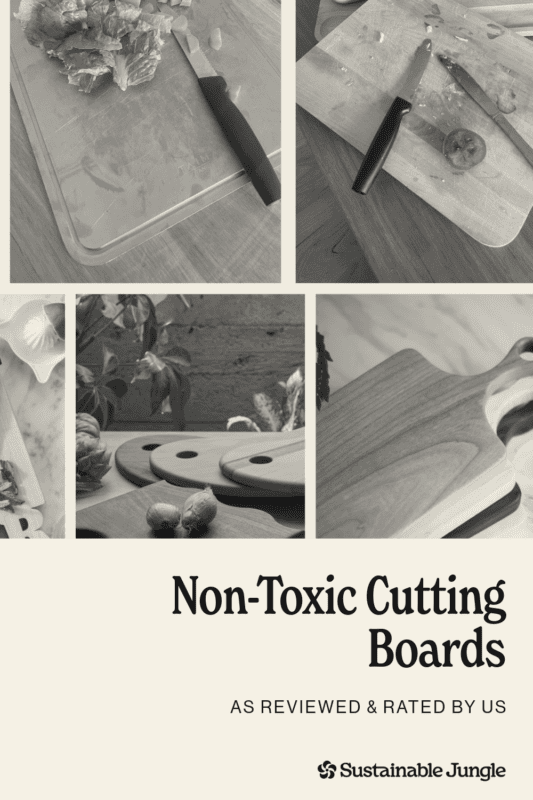














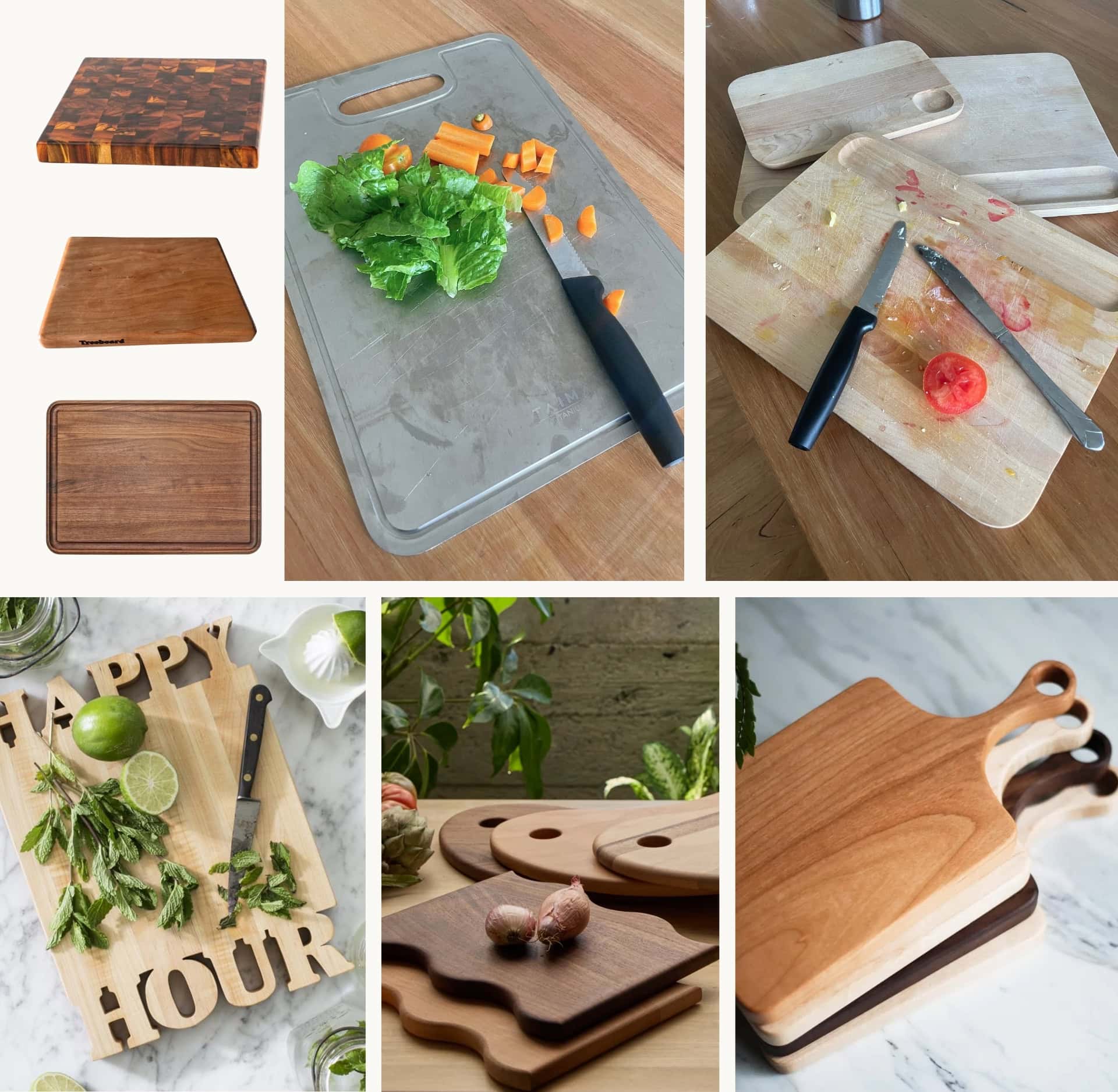
Your cutting board touches nearly every meal you prepare, yet most people don’t think twice about what it’s made from or what chemicals might be leaching into their food.
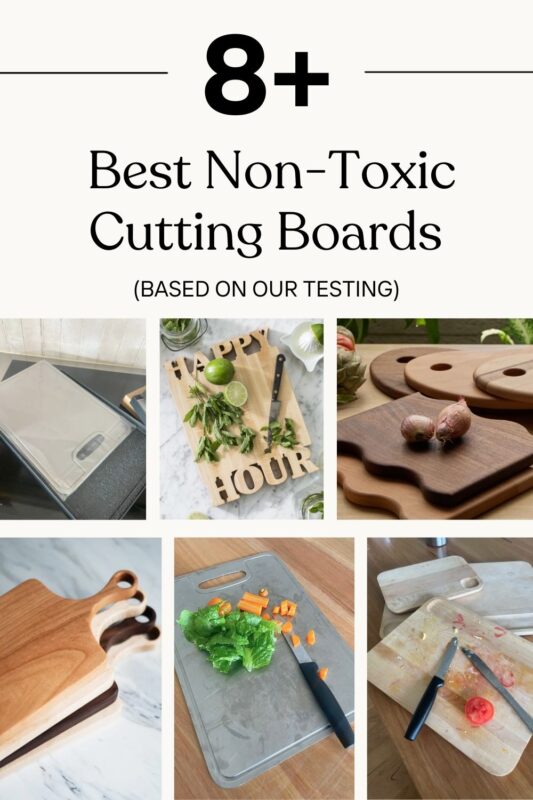
Many conventional cutting boards contain materials that can compromise both your health and the environment. So after months of testing cutting boards in our own kitchen and researching materials from food safety and environmental perspectives, we’ve identified safer options for preparing food without toxic exposure.
Why Non-Toxic Matters
Plastic cutting boards release microplastics when we chop on them and these particles end up in your food and eventually your body, where they’ve been linked to serious health concerns.
Beyond plastics, many wooden and bamboo boards use adhesives containing formaldehyde, a known carcinogen. Others are finished with mineral oil (petroleum-based) or synthetic coatings that can break down over time.
What We Looked For
In evaluating cutting boards for this guide, we prioritized the following (as much as possible):
- Materials free from harmful chemicals, plastics, and toxic finishes
- Sustainability and responsible manufacturing credentials, ideally with relevant certifications (FSC, B Corp, etc.)
- Durability and performance for everyday food preparation and cooking
Our Testing, Ratings & Research
In some cases, we used these cutting boards in our own homes for several weeks, assessing performance, durability under regular use, how well sustainability claims matched reality, ease of cleaning and maintenance, and condition after repeated washing and food prep.
For brands we work with through our sustainability rating system, we evaluated their initiatives across 22 criteria including supply chain, labor practices, and environmental commitments. See other rated brands in our sustainable brand directory.
For brands we didn’t test directly or rate, we conducted careful research to bring you the safest chopping boards available.
Related Guides: Non-Toxic Living Guide, Non-toxic Cookware, Non-Toxic Food Storage, Non-Toxic Cooking Utensils, Is Carbon Steel Non-Toxic?, Is Silicone Safe?, How To Avoid Microplastics, Is Stainless Steel Non-Toxic?
Best Non-Toxic Cutting Boards
Best Overall Performance (as tested): Taima Titanium Cutting Board
Pure Grade 1 titanium, inert surface, no microplastics, lifetime durability, minimal maintenance required. Sets with 3 sizes available.
Best Style: Caraway Birchwood Cutting Board
FSC-certified birch, food-safe finish, beautiful design with storage organizer included in set. Butcher blocks also available.
Most Sustainable: Avocado Cutting Board
Top-rated by Sustainable Jungle, comprehensive sustainability practices, transparent supply chain. Upcycled beechwood, walnut or maple. Linseed/beeswax finish. Option for single-slab.
Best Single-Slab Wood: Adirondack Kitchen Cutting Board
No glue construction, beeswax and coconut oil finish, handmade in USA, eliminates adhesive concerns. Customizable. Affordable options from $25
Best Budget: Hinoki Express Cutting Board
Single slab. No glue or coatings. Small size under $20. No information on sustainability.
Why Choose Non-Toxic Cutting Boards (and More Sustainable Options)
Health Risks of Conventional Cutting Boards
Plastic Cutting Boards and Microplastics
A 2023 study found that polyethylene cutting boards can expose users to up to 50.7 grams of microplastics annually, while polypropylene boards shed approximately 49.5 grams per year. These microscopic particles are released every time you cut or chop on the surface. Microplastics have been found in human blood, placentas, and even brain tissue. While research into health effects is ongoing, emerging evidence links microplastic exposure to inflammation, cardiovascular issues, and potential hormone disruption.
Chemical Concerns in Wood and Bamboo
Most multi-piece wooden cutting boards and virtually all bamboo boards use adhesives to bind strips of wood together. Many of these glues contain formaldehyde, a known carcinogen. Even boards claiming “food-safe” glues may use polyvinyl acetate (PVA) adhesives that can contain phthalates.
Additionally, many cutting boards are finished with problematic, toxic finishes.
Sustainability Considerations
Environmental Impact of Plastic Boards
Plastic cutting boards are made from petroleum-based materials and are neither biodegradable nor recyclable in most systems. As they wear out and are replaced, they contribute to landfill waste and microplastic pollution that extends far beyond your kitchen.
Sustainable Wood Sourcing
For the most eco-friendly wooden cutting boards, look for FSC (Forest Stewardship Council) certification or other sustainable forestry certifications, which ensure responsible forest management, protection of biodiversity, fair labor practices, and sustainable harvesting that allows forests to regenerate.
Durability & End-Of-Life Outcomes
High-quality wooden boards can last decades with proper care (see more on care at the bottom of this article). Titanium boards can last a lifetime. This longevity means fewer replacements and less waste compared to plastic boards that typically need replacing every few years. When they do reach the end of their useful lives, wooden boards can be composted (especially single-slab) and pure titanium, stainless steel, and glass boards can be easily recycled.
Ethical Manufacturing
Much like any industry, supply chains for chopping boards are complex. Brands with safeguards in place (like third-party audits) to protect the people in their supply chain gives some piece of mind that your board is not contributing to any human rights violations.
Material Deep Dive: What Makes Cutting Boards Toxic vs Non-Toxic
Materials to Avoid In Cutting Boards
1. Plastic (Polyethylene and Polypropylene)
Plastic cutting boards are popular because they’re inexpensive, lightweight, and dishwasher safe. But they come with significant health and environmental concerns. As we’ve mentioned already, the main issue is microplastic shedding.
Beyond microplastics, plastic boards can contain:
- BPA and phthalates (hormone disruptors)
- Chemical additives used in manufacturing
- Contamination from recycled plastic sources
As plastic boards develop scratches and grooves, they also become breeding grounds for bacteria that are difficult to sanitize completely.
2. Bamboo and Non-Solid Wood Boards with Toxic Adhesives
Bamboo sounds like an eco-friendly choice, and in theory it should be. Bamboo grows rapidly, regenerates quickly after harvesting, and requires minimal pesticides or fertilizers. It can also be grown organically and have FSC certification. The problem is that most bamboo cutting boards aren’t made from solid bamboo. Instead, they’re constructed from thin strips of bamboo glued together under pressure. The adhesives used often contain formaldehyde, a known carcinogen that can off-gas over time.
The same adhesive concerns that apply to bamboo also apply to wooden cutting boards made from multiple pieces glued together. Edge-grain and end-grain boards can be beautiful and durable, but unless the manufacturer explicitly discloses using formaldehyde-free, food-safe adhesives, there’s potential for chemical exposure.
Even boards labeled “food-safe” may use polyvinyl acetate (PVA) glues that can contain phthalates or other plasticizers. Without transparent disclosure about adhesive composition, it’s difficult to know what you’re getting.
3. Boards with Problematic Finishes
Many wooden cutting boards are finished with:
- Mineral oil: Petroleum-based and may contain contaminants like glyphosate and atrazine if not food-grade
- Polyurethane, lacquer, or varnish: Film finishes that contain VOCs and can chip into food when damaged by knives
- Microban or antibacterial coatings: Often contain triclosan, an endocrine-disrupting chemical
- Stains or dyes: May contain VOCs, acrylic, urethane, or other synthetic chemicals
Safe Materials For Cutting Boards
1. Solid Hardwood (Ideally Single-Slab Construction)
Single-slab cutting boards made from one piece of hardwood are among the safest options. They eliminate glue entirely, removing any risk of formaldehyde or adhesive chemicals. The best woods for cutting boards (in the US) are:
- Maple: Hard, durable, light color shows cleanliness, widely available in North America
- Walnut: Beautiful dark grain, naturally antimicrobial, slightly softer than maple (easier on knives)
- Cherry: Medium hardness, develops rich patina over time, domestic sourcing available
- Teak: Naturally water-resistant due to high oil content, durable, but typically imported from Asia
These hardwoods have tight grain patterns that resist deep knife marks and naturally contain antimicrobial compounds like tannins that inhibit bacterial growth. When properly finished with food-safe oils like fractionated coconut oil, beeswax, linseed oil, or walnut oil, solid wood boards are safe, sustainable, and long-lasting.
Cutting boards made from pieces of wood can also be a good option if they’ve been tested to be safe of toxins and are free of questionable adhesives.
2. Pure Titanium
Titanium cutting boards offer the most inert surface available. Pure titanium (Grade 1, 99.89% pure) is non-reactive with foods, non-porous (doesn’t harbor bacteria), free from chemical leaching, highly durable (lifetime use), and fully recyclable.
Titanium is the same material used in medical implants because of its biocompatibility and safety. Unlike stainless steel, which can leach small amounts of nickel and chromium, pure titanium is essentially inert. The downsides are cost (titanium is expensive) and knife wear (harder on blade edges than wood, though softer than glass or stone).
3. Tempered Glass
Glass cutting boards are completely non-toxic and inert. They’re more affordable, don’t react with food, don’t harbor bacteria, and are easy to sanitize. The major drawback is that glass is very hard on knives and will dull blades quickly. Glass surfaces can also be slippery when wet and may shatter if dropped.
4. Certified Composite Materials
Some paper composite cutting boards offer a middle ground. These boards are often made from FSC-certified paper pressed with phenol-formaldehyde resin. While formaldehyde sounds concerning, some board are NSF-certified for food contact, GREENGUARD Gold certified for low emissions, and tested for safety.
The resin should be fully cured, creating a stable, non-porous surface that doesn’t release formaldehyde during normal use. However, some people with extreme chemical sensitivities may still detect off-gassing, particularly when the board is new or heated.
5. Stainless Steel
Stainless steel cutting boards are safe, durable, and recyclable. Like titanium, they’re non-porous and easy to sanitize. Quality stainless steel (304 or 316 grade) is food-safe and won’t leach significant amounts of metals. The main downsides are that steel is hard on knives (though softer than glass) and boards can be noisy and slippery during use.
Understanding Wood Cutting Board Construction
If you choose wood, understanding construction methods helps you make an informed decision.
Single-Slab Boards
Single-slab boards are cut from one solid piece of wood. This eliminates glue entirely and often creates the most beautiful, unique grain patterns.
- Advantages: No adhesive chemicals, often locally sourced, unique appearance, and they can be more affordable (depending on wood type)
- Disadvantages: More prone to warping or cracking without proper care, may require more frequent oiling, less common and harder to find (though we have a few options on our list below)
Edge-Grain Construction
Edge-grain boards are made by gluing strips of wood together lengthwise, with the grain running horizontally across the cutting surface.
- Advantages: More affordable than end-grain, very durable, less likely to warp than single-slab and good for everyday use
- Disadvantages: Requires adhesive (check for formaldehyde-free), shows knife marks more readily, and dulls knives faster than end-grain
End-Grain Construction
End-grain boards are constructed from square pieces of wood arranged with the grain running vertically, creating a checkerboard pattern.
- Advantages: “Self-healing” surface (wood fibers separate and close back), most gentle on knife edges, very durable, and professional-grade quality
- Disadvantages: Most expensive, requires adhesive, heavier and bulkier, and may need more maintenance
Here are our top picks for non-toxic cutting boards, based on months of testing and research:
Table of contents: Best Non-Toxic Cutting Boards
- Avocado Jump to section
- Caraway Jump to section
- Taima Jump to section
- Adirondack Kitchen Jump to section
- Words with Boards Jump to section
- Itza Wood Jump to section
- Tree Board Jump to section
- Additional Safe Cutting Board Options: Notable Mentions Jump to section
Avocado

Carbon Neutral
Brand has been certified as Carbon Neutral.
Ethical Sourcing
Raw materials have been sourced ethically with people and planet in mind.
Non-toxic
All products are made with ingredients or materials that are currently considered non-toxic
Organic
Products are made from organic materials.
Sustainable Materials or Ingredients
Either all or most products are made with sustainable materials or ingredients.
Zero Waste
Products are made with a low or zero waste approach where ideally no or limited waste is created throughout the production process or at the end of life.
1% for the planet
B Corp
Certified Vegan
eco-INSTITUT
EWG
FSC®
GOLS
GOTS
Green America
Greenguard
MADE SAFE®
OEKO-TEX®
PETA
RWS
The Climate Label
USDA Organic
1% for the planet
Certified Environmental Giving — Businesses give 1% of their annual sales directly to vetted environmental partners.B Corp
The B Corp Certification, administered by the nonprofit B Lab, recognizes companies that meet high standards of verified social and environmental performance, transparency, and accountability. Certified B Corps balance profit with purpose, committing to responsible practices that benefit workers, communities, customers, and the planet while embedding sustainability into their business model.Certified Vegan
The Certified Vegan logo, managed by the Vegan Awareness Foundation (Vegan Action), ensures that products contain no animal ingredients or by-products and have not been tested on animals. It’s one of the most recognized vegan certifications, helping consumers identify items that meet strict vegan and cruelty-free standards across food, cosmetics, clothing, and household products.eco-INSTITUT
The eco-INSTITUT certification, issued by the independent German testing body eco-INSTITUT Germany GmbH, verifies that products meet rigorous standards for low emissions and pollutant-free materials. It’s commonly used for mattresses, furniture, flooring, and building materials, ensuring they are free from harmful chemicals like VOCs, formaldehyde, and heavy metals, and are safe for indoor air quality.EWG
The EWG Verified® mark, issued by the Environmental Working Group, identifies products that meet the organization’s strictest standards for health and transparency. To earn the label, products must avoid ingredients of concern, fully disclose all ingredients (including fragrance components), and follow good manufacturing practices.FSC®
The FSC® (Forest Stewardship Council) certification ensures that wood, paper, and other forest-based materials come from responsibly managed forests that provide environmental, social, and economic benefits. Products bearing the FSC® label support biodiversity, protect the rights of forest communities and workers, and promote sustainable forestry practices.GOLS
The GOLS (Global Organic Latex Standard) certification ensures that latex products contain more than 95% certified organic raw material and meet strict environmental and social criteria throughout production. Managed by Control Union, GOLS verifies that latex is sourced from organically managed plantations without harmful chemicals and that processing facilities uphold fair labor practices and sustainable manufacturing standards.GOTS
The GOTS (Global Organic Textile Standard) certification is the world’s leading standard for organic fibers. It covers every step of production, from harvesting raw fibers to environmentally and socially responsible manufacturing, and prohibits toxic dyes, GMOs, and harmful chemicals. GOTS also enforces fair labor practices.Green America
The Green America Certified Business seal recognizes companies that meet high standards for social and environmental responsibility. Administered by Green America, the certification evaluates businesses on their commitment to fair labor, environmental sustainability, community impact, and ethical business practices.Greenguard
The GREENGUARD Certification, issued by UL Solutions, ensures that products meet strict chemical emissions limits to help reduce indoor air pollution and exposure to VOCs (volatile organic compounds). Commonly applied to furniture, mattresses, paints, and building materials, it verifies that products contribute to healthier indoor environments.MADE SAFE®
The MADE SAFE® certification is a comprehensive non-toxic seal that verifies products are made with safe ingredients not known or suspected to harm human health, animals, or ecosystems. Overseen by the MADE SAFE nonprofit, it screens every ingredient against a database of toxicological and environmental science criteria.OEKO-TEX®
The OEKO-TEX® Standard 100 certification ensures that every component of a textile product (threads, buttons, zippers, and fabrics) has been independently tested for harmful substances. Managed by the International Association for Research and Testing in the Field of Textile and Leather Ecology, it guarantees products are safe for human health, meeting strict global limits for chemicals such as pesticides, heavy metals, formaldehyde, and PFAS.PETA
The PETA-Approved Vegan certification verifies that a brand’s certified products are completely free from animal-derived materials and that no animal testing is conducted at any stage of production. Managed by People for the Ethical Treatment of Animals (PETA), the label helps consumers easily identify fashion, beauty, and lifestyle products that align with a fully vegan and cruelty-free standard.RWS
The Responsible Wool Standard (RWS) is a global certification that ensures wool comes from farms that protect animal welfare and practice progressive land management. It also tracks the certified wool through every stage of production to maintain transparency and traceability.The Climate Label
The Climate Label certifies companies that measure and publicly disclose their greenhouse-gas emissions, set a financial commitment (a “climate transition budget”) tied to those emissions, and allocate verified funding for projects that reduce or remove emissions from their operations, supply-chain and beyond. Unlike a simple “carbon-neutral” claim, the label emphasises actual investment in the transition to a low-carbon future, not just offsets, and is designed to increase transparency and credibility for climate action by businesses.USDA Organic
The USDA Organic certification, regulated by the U.S. Department of Agriculture’s National Organic Program (NOP), verifies that products are made with ingredients grown and processed according to strict organic standards. It prohibits synthetic pesticides, fertilizers, GMOs, and harmful additives, while requiring practices that promote soil health, biodiversity, and animal welfare.Avocado’s Zero Waste Cutting Board
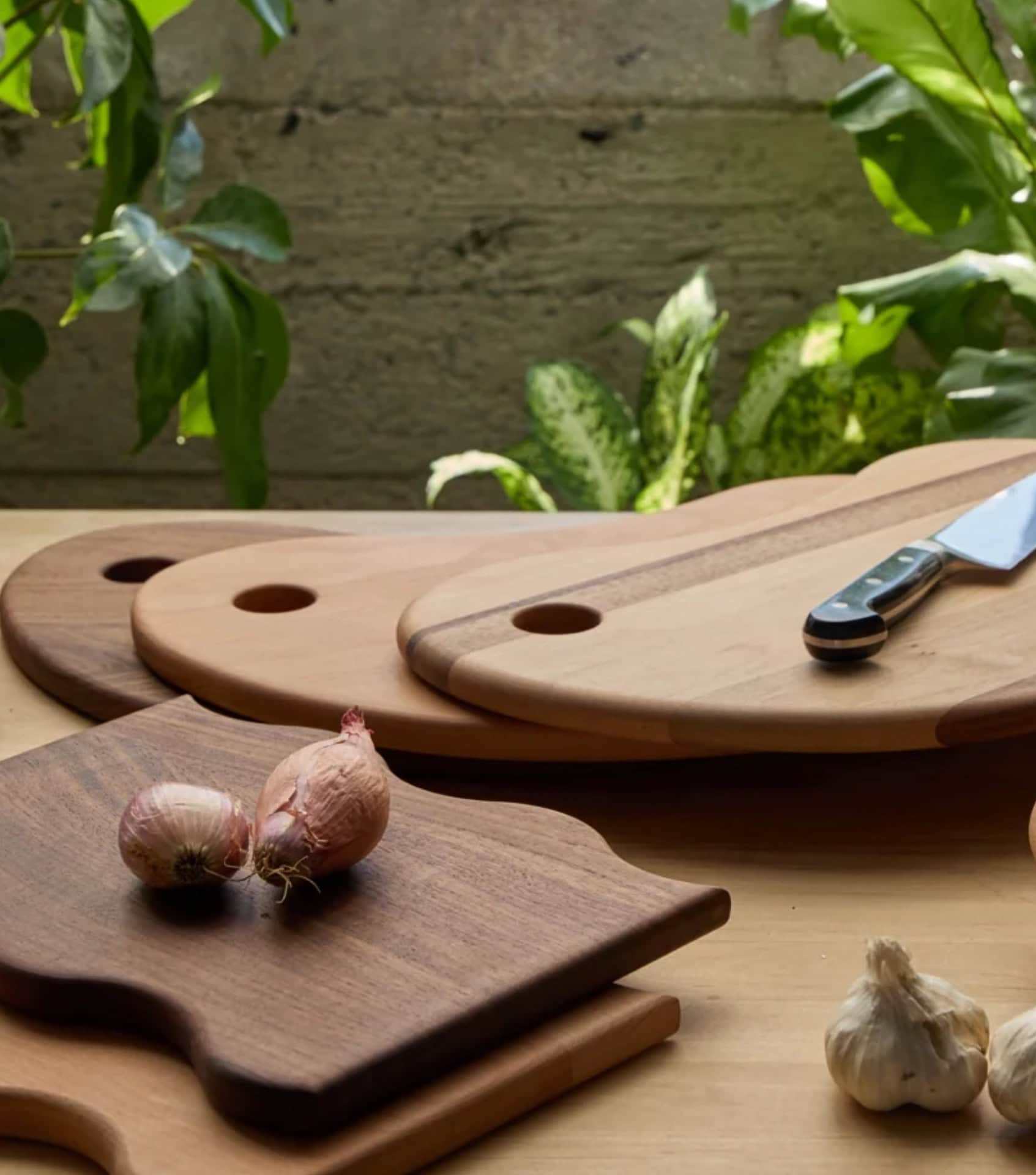
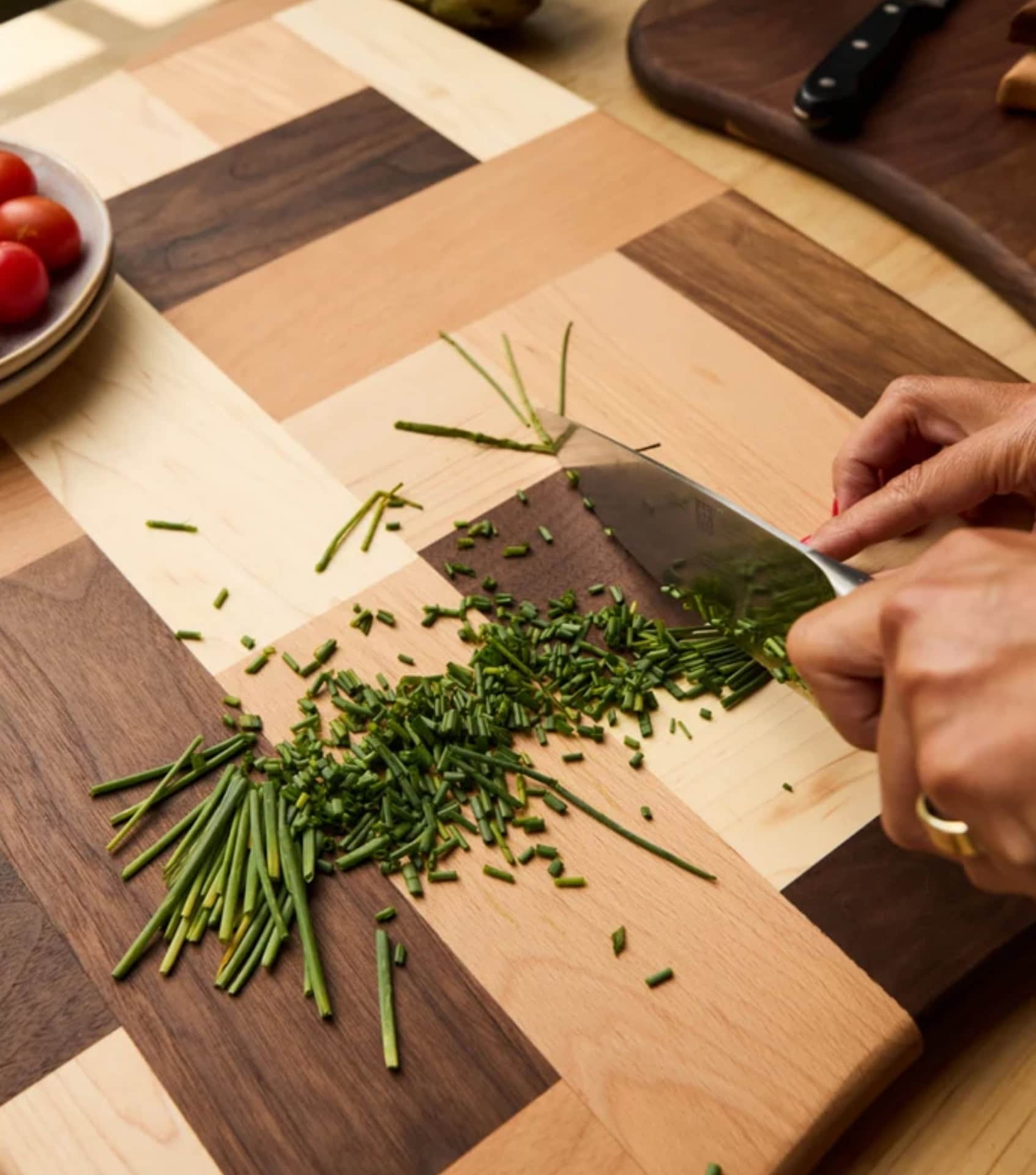
- Material: Upcycled wood (Beechwood, Walnut, and Maple) including single-slab or mixed options.
- Available Styles: Three shapes – Palette (18″ L x 12″ W), Scoop (24″ L x 18″ W), Mini Scallop Edge (12″ L x 8.5″ W)
- Finish: Tried & True Original Wood Finish (linseed oil and beeswax blend, zero VOCs)
- Made in: USA
- What makes it sustainable: Avocado crafts these boards from upcycled wood that would otherwise go to waste, giving new life to high-quality materials. The company has earned our highest sustainability rating. They’re a Certified B Corporation, Climate Label certified, and 1% for the Planet member.
- What makes it safe & non-toxic: Finished exclusively with Tried & True Original Wood Finish, a food-safe blend of linseed oil (from flax seeds) and beeswax with zero VOCs. No petroleum-based finishes or synthetic chemicals.
- Care: Hand wash only, dry immediately, apply food-safe mineral oil or wood cream regularly
- Price: $149-$170
Avocado has been rated by Sustainable Jungle. See the full rating.
Caraway
Caraway has not been rated.
Caraway Birchwood Cutting Board Set
- Material: Birch wood (edge-grain)
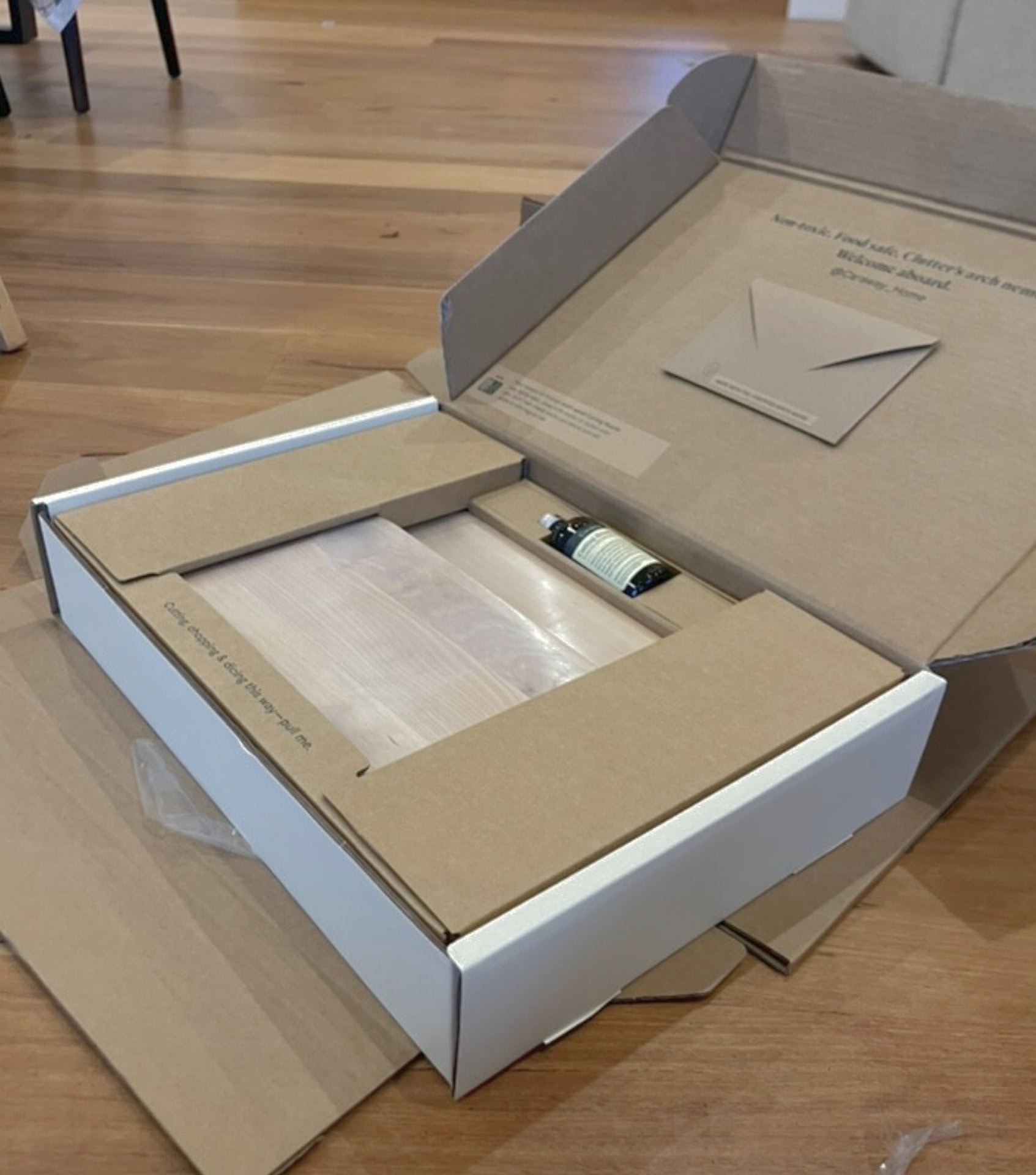
- Set includes: Three sizes (small, medium, large) plus complimentary storage organizer and conditioning oil
- Finish: Food-safe mineral oil and wax
- Made in: China
- Certifications: FSC-certified wood
- What makes it safe & non-toxic: Made without plastics, BPA, BPS, phthalates, melamine, or PFAS (forever chemicals). Third-party tested to verify absence of harmful substances. Finished with food-safe oil and wax only.
- Sustainability: Caraway prioritizes ethical manufacturing and transparency. Their China-based factories adhere to strict ethical manufacturing practices and maintain required standards for BSCI or SMETA audits. FSC certification in place for the birch wood.
- Care: Hand wash only, requires periodic oiling
- Price: $310 (set of 3) or individually ranging from $50-$125
Also Available: Caraway offers Prep & Serve Butcher Blocks in maple or walnut. Made in the USA from responsibly sourced edge-grain wood, it features a grooved prep side for mess-free carving and a dished serve side for slicing and serving. Like the cutting board set, it’s third-party tested free from plastics, BPA, BPS, phthalates, melamine, and forever chemicals, finished with food-safe oil and wax, and naturally antimicrobial. The butcher blocks come in either 12″ or 17″ or you can get both in a set ($415-$515 for the set). You can also purchase the complete cutting board set including the four birchwood boards and the two butcher blocks.
Performance Review of Caraway’s Cutting Board Set
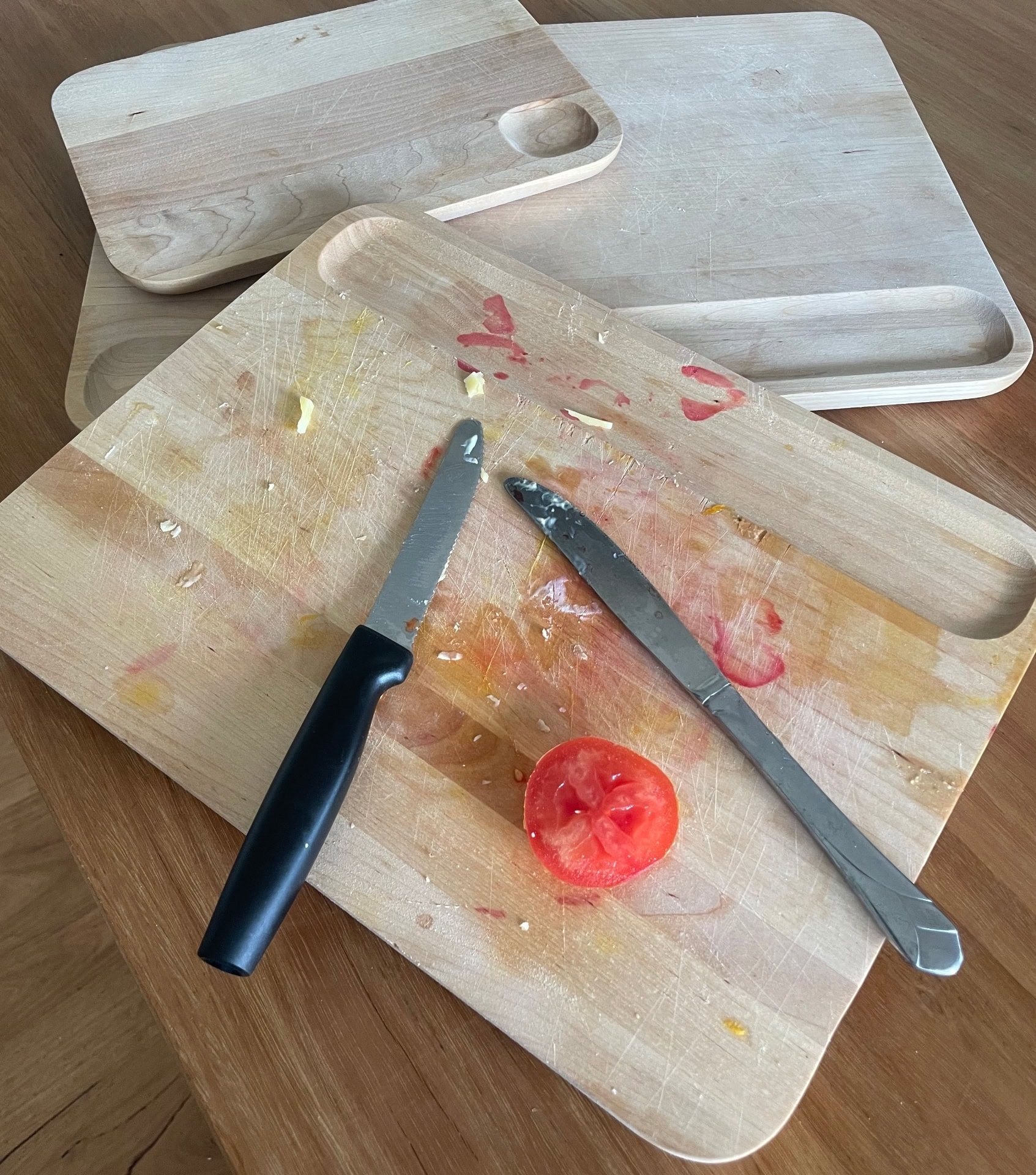
“I’ve been using this handy set for the past few months. Firstly, I love the storage piece that comes with the set because it elegantly displays the boards and makes it easy to have them on hand. The three size variations in boards are extremely handy, especially when cooking up a storm like we did over Christmas, where you want to keep different types of food separate. Functionally, the boards perform as expected. They’re quite solid and stay in place on the counter. They feel well-made, and the recessed indents make organization of food quite easy. I have managed to hack into the wood a little with a large knife where the indents are, as this spot exposes the wood edge a bit more, so I’ll need to be a bit more careful to make these last. They’re also due for an oil to keep them looking good, so I’m glad Caraway sent a little bottle of coconut oil for this purpose. The boards are not made from a single-slab, and Caraway does not disclose how the pieces have been glued together, but I have not experienced any glue or off-gassing smells. Cleaning is straightforward (though not as easy as the dishwasher). Overall, I really like this set and find it works well (and looks good) in my kitchen. The set came packaged plastic-free in mostly cardboard and with each board wrapped in a compostable plastic-like wrap.”
Review By Joy McConnochie, SJ Co-founder (tested October 2025 to February 2026)
Taima
Taima has not been rated.
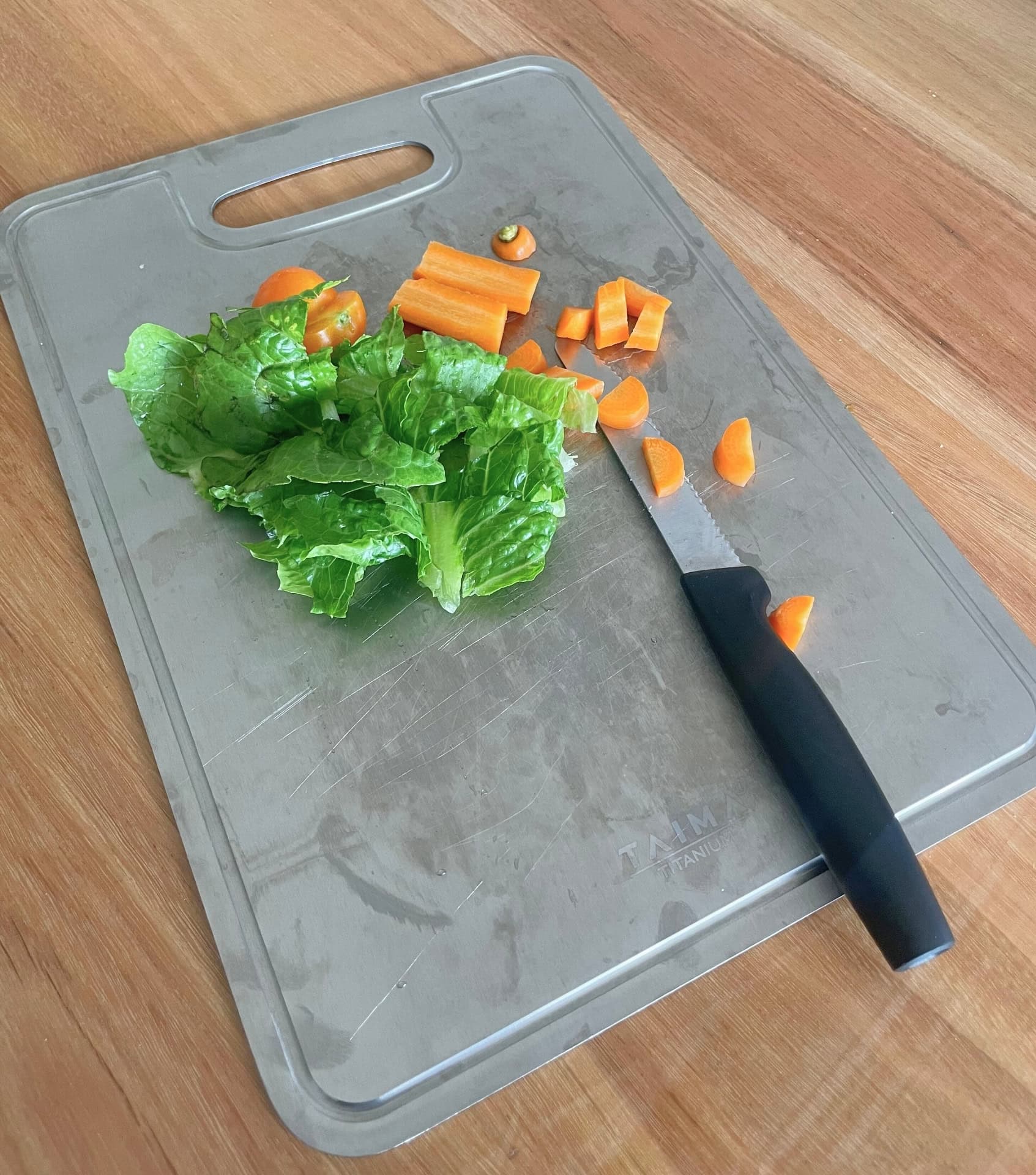
Taima Titanium Cutting Board
- Material: Grade 1 titanium (99.89% pure)
- Sizes: Small (12″ x 8″), Medium (14″ x 10″), Large (18″ x 12″)
- Made in: China
- Sustainability: Lifetime durability, fully recyclable, eliminates replacement waste. No detailed information on ethical manufacturing.
- What makes it safe & non-toxic: Pure titanium is biocompatible and inert. It doesn’t react with foods, doesn’t leach chemicals, and doesn’t harbor bacteria in its non-porous surface.
- Care: Dishwasher safe, requires no oiling or special maintenance
- Price: $238 (single) or $769 (set of 3: small, medium and large) – though these often seem to be on sale (at the time of writing they were 50% off)
Performance Review of Taima’s Titanium Cutting Board
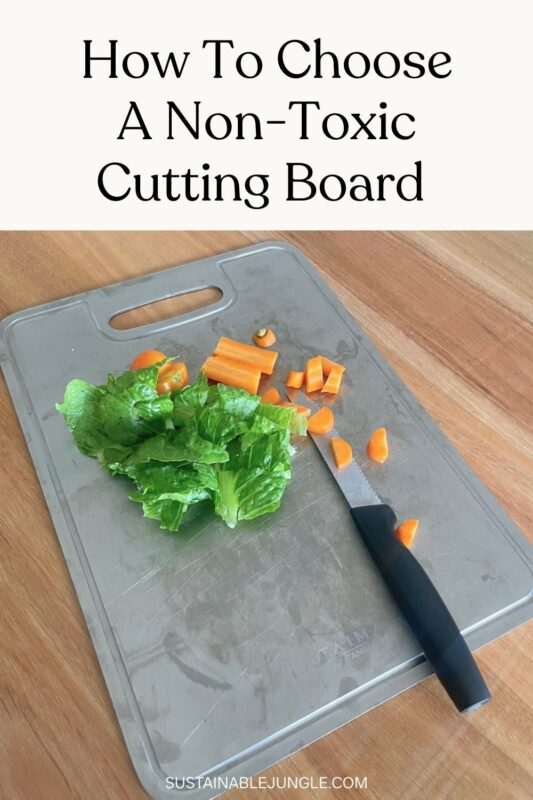
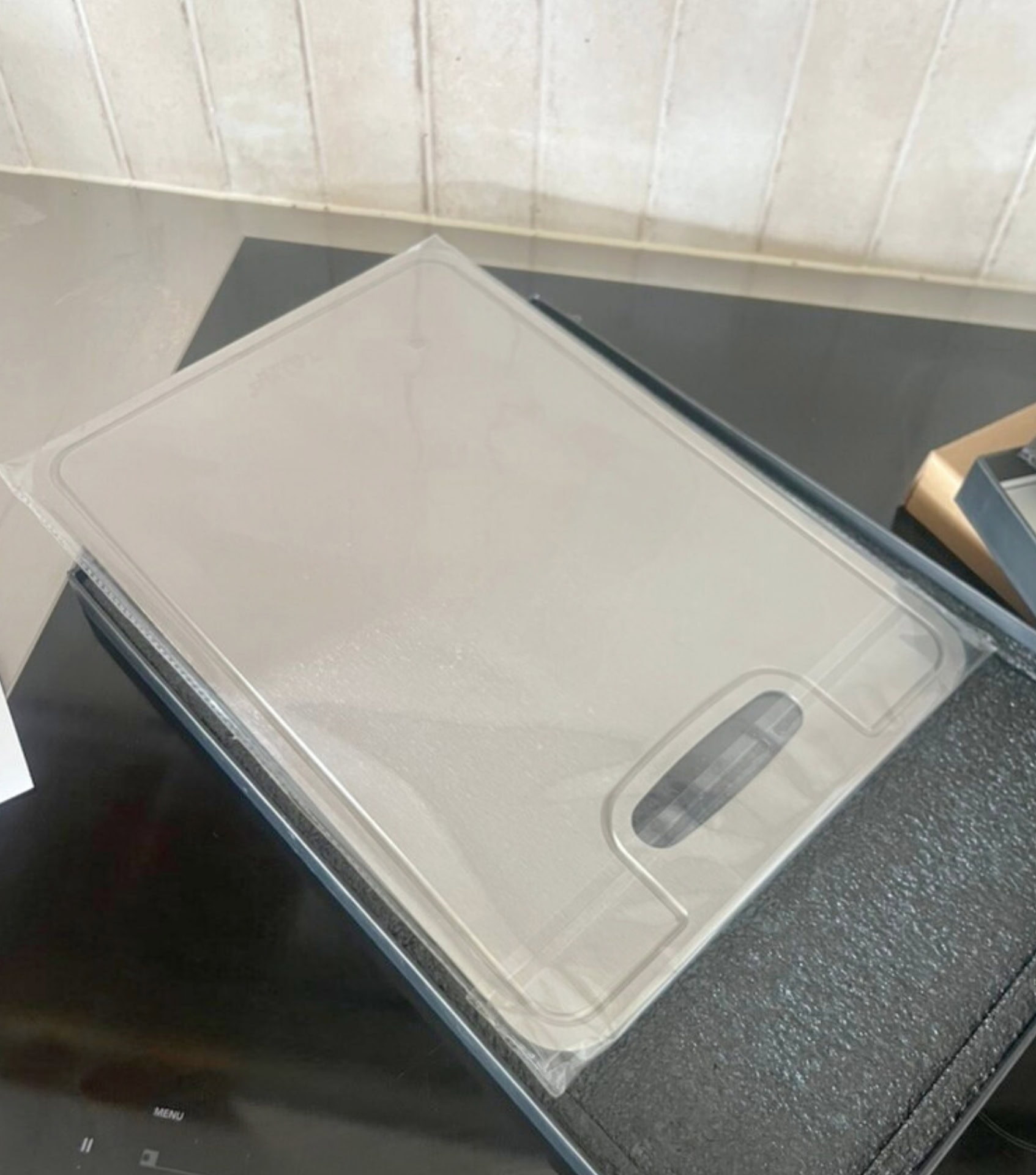
“Taima’s cutting board has been a daily feature in our kitchen since the day we received it. I’d say my favorite thing about it is that it can go in the dishwasher! Chopping anything on it is a breeze, and I like that the metal won’t soak in substances like meat juice. The board sits very flat against the counter where I usually chop food, so I have to be careful to watch where I’m chopping so as not to cut the counter. Taima sells a non-slip mat to keep the board in place, but I have not found this to be necessary at all (my counter is wooden). Personally, I find the metal-on-metal feeling a little like chalk on a chalkboard, but that’s just me (no one else in my family seems to have this sensory issue). After a few months of use, the board is quite scratched, but I didn’t expect any different, and it gives the board a nice used feel. Overall, a super handy and helpful cutting board, and I would say the most non-toxic option available. Though personally, I like the experience of chopping on wood better. One thing to note on sustainability: the board came packaged in a ton of plastic that is not easily recyclable, so that may be a consideration for some trying to reduce their waste.”
Review By Joy McConnochie, SJ Co-founder (tested December 2025 to February 2026)
Adirondack Kitchen
Adirondack Kitchen has not been rated.
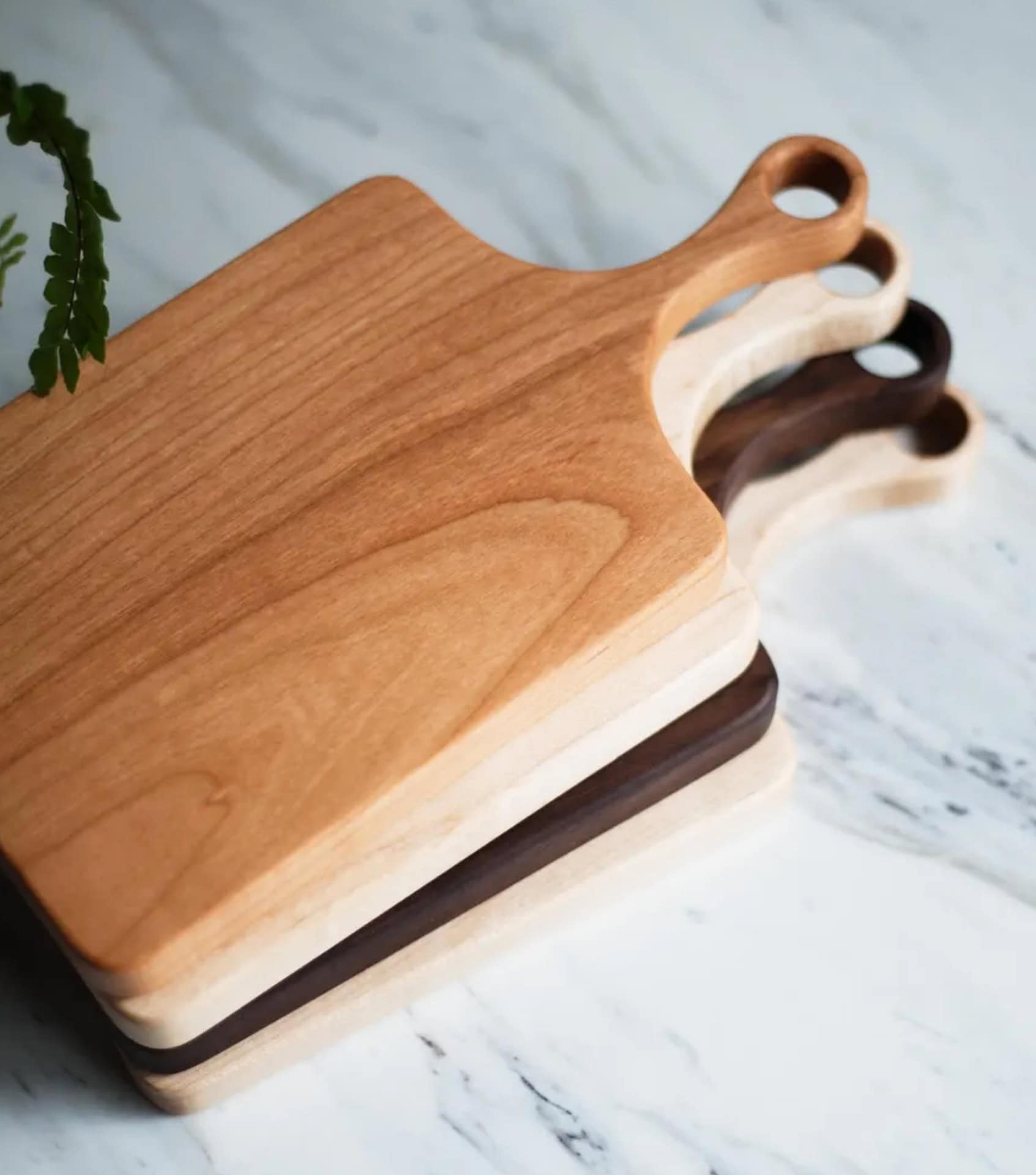
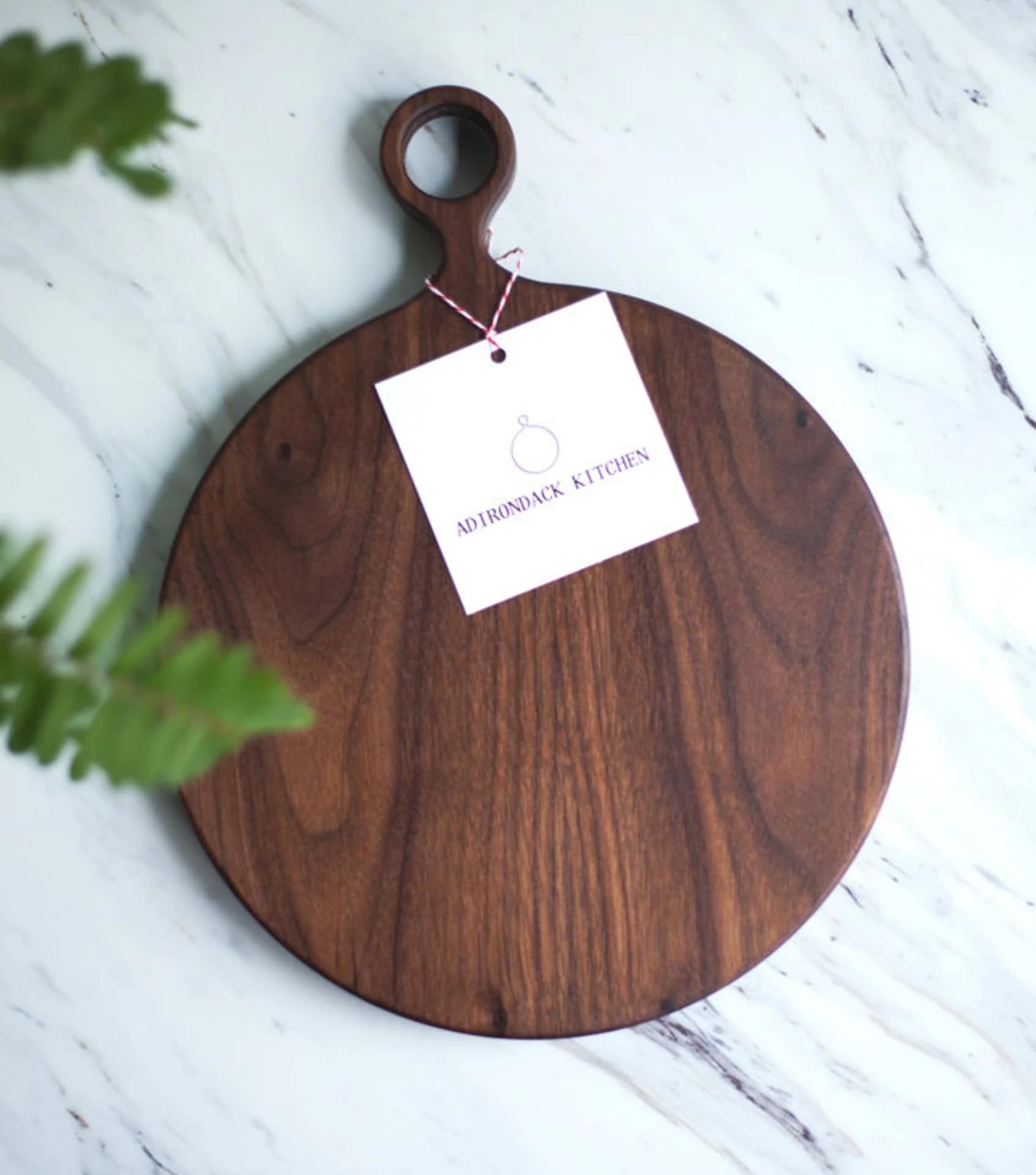
Adirondack Kitchen Solid Wood Cutting Board
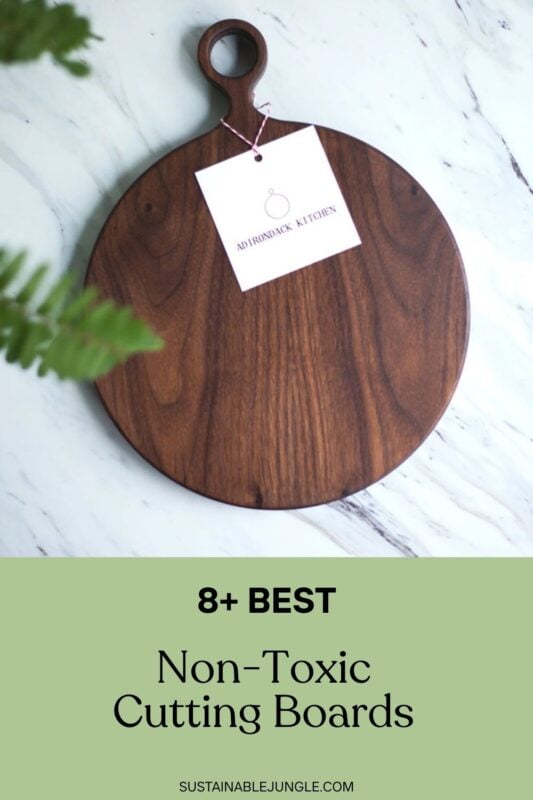
- Material: Single-slab cherry, maple, or walnut (no glue/adhesives)
- Finish: Homemade beeswax and organic coconut oil
- Made in: New York, USA
- Sizes & Styles: Multiple sizes, shapes, and styles available including personalization
- What makes it safe & non-toxic: Single-slab construction eliminates any glue concerns. Finished with only beeswax and coconut oil, no petroleum products or synthetic coatings.
- Sustainability: Locally sourced wood, small-batch handmade production, plastic-free packaging using kraft paper.
- Care: Hand wash, dry thoroughly, oil as needed
- Price: Starting around $25 for small sizes
Words with Boards
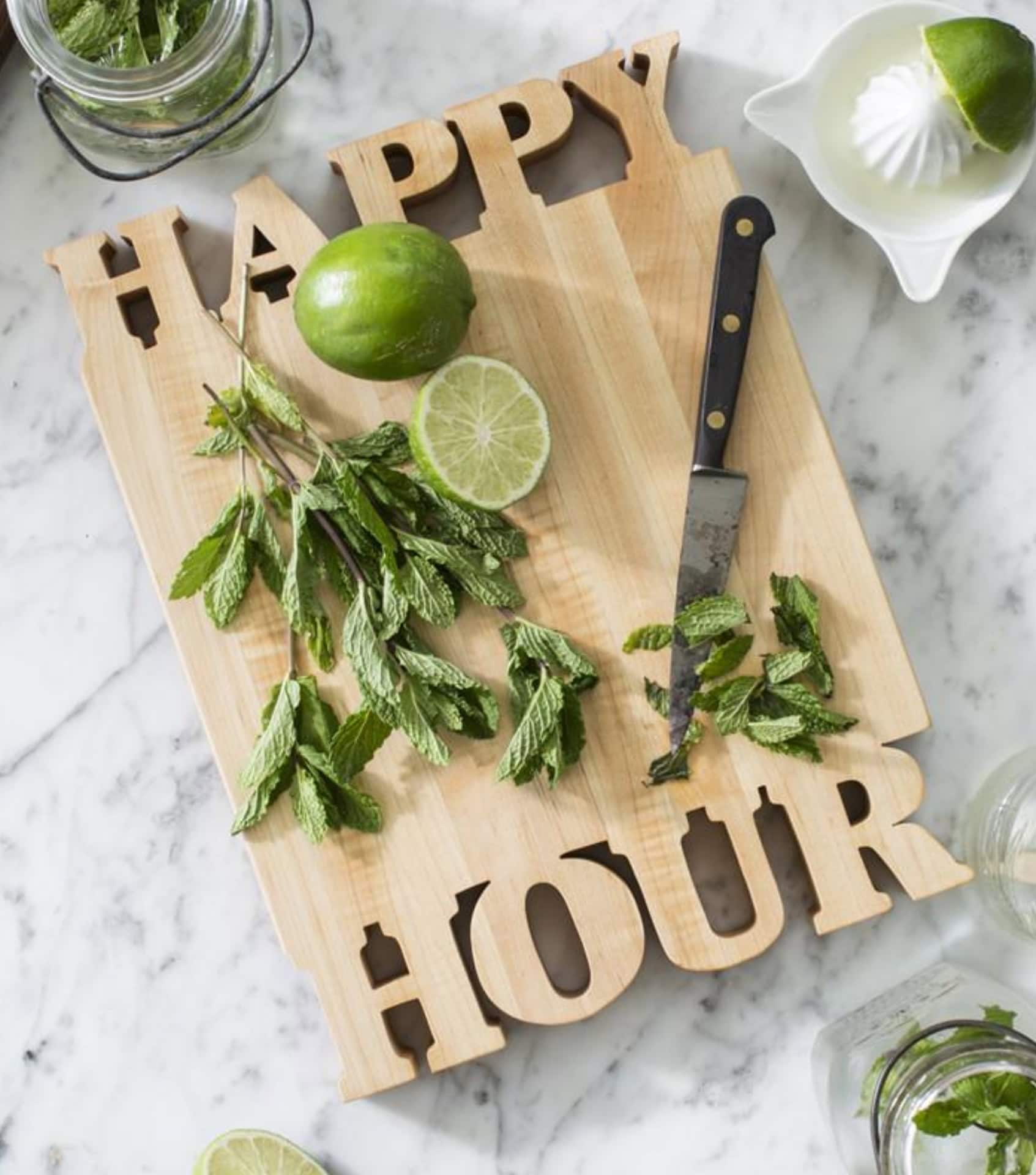
Words with Boards has not been rated.
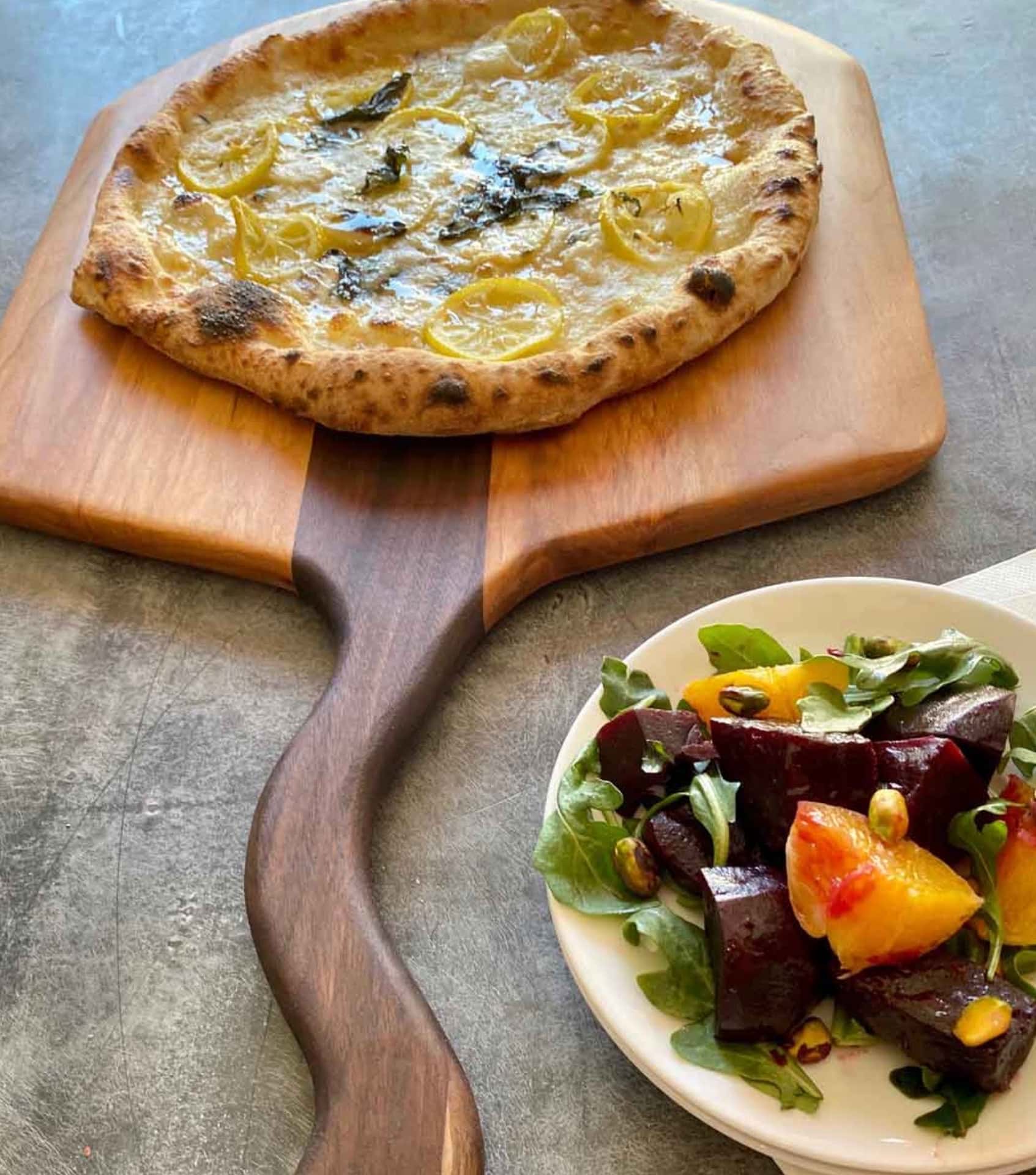
Words With Boards Wooden Cutting Boards
- Material: Most of the personalized cutting boards appear to be made with single-slab wood (various hardwoods)
- Made in: USA
- Sizes & Styles: Personalized boards in multiple shapes and sizes, pizza peels and meat carving boards
- What makes it safe & non-toxic: Single piece construction, custom ordering allows you to specify finish preferences. Finished with food grade kosher mineral oil.
- Sustainability: Wood is sourced sustainably from forests along the east coast of the US. No forestry certification is disclosed however. Words With Boards plants a tree for every wooden item sold through their website through their One Tree Planted partnership.
- Price: From $174 for meat cutting boards
Itza Wood
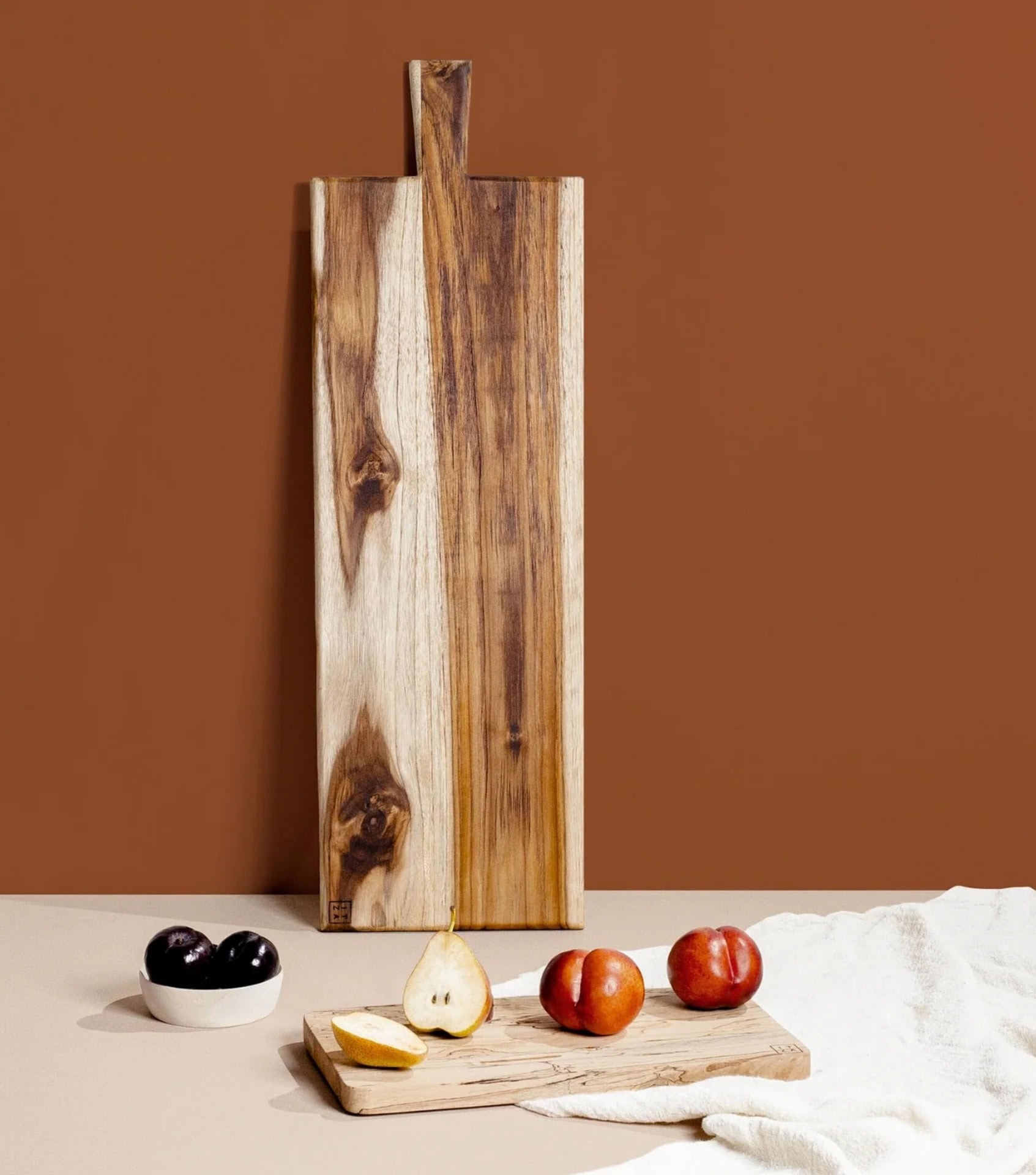
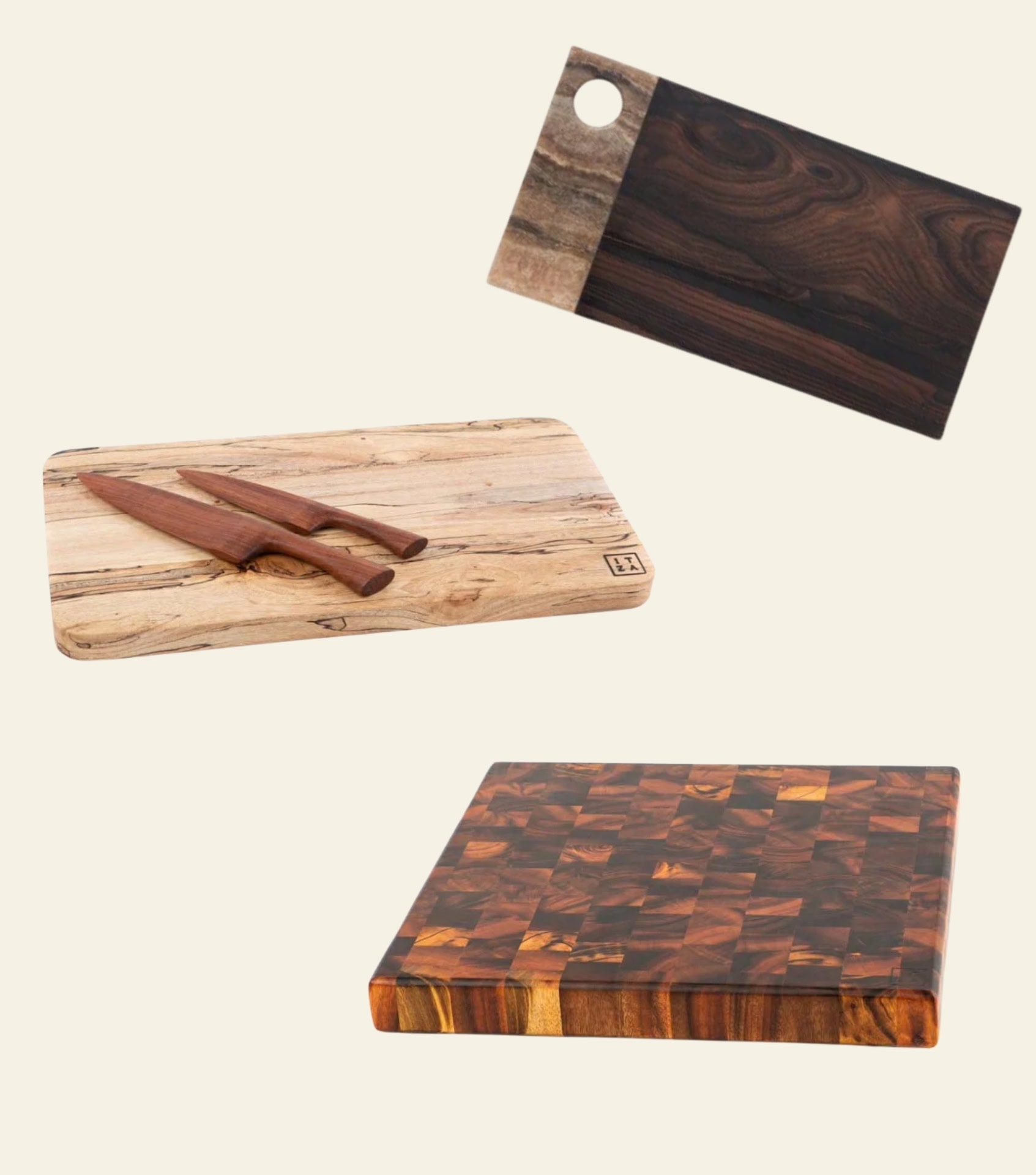
Itza Wood has not been rated.
Itza Wood Exotic Wood Cutting Boards
- Materials: Sustainably harvested exotic woods from the Petén jungle – Pixi (spalted with map-like patterns), Mahogany (warm reddish grain), Jobillo/Tigerwood (red-orange stripes), Teak (75-year lifespan), Ziricote, Granadillo.
- Available products: Charcuterie boards, dual-wood serving boards, butcher’s blocks
- Finish: Non-toxic, food-safe beeswax from local bees
- Made in: Petén, Guatemala (handmade by local artisans)
- What makes it safe & non-toxic: 100% solid exotic wood. Finished exclusively with food-safe beeswax paste. No synthetic finishes or chemicals though it’s not clear which adhesives are used.
- Sustainability: Operates from the Mayan Biosphere, the largest remaining tropical forest in the Americas. Reforested 45,000 trees before cutting a single one and continues active reforestation projects. Works exclusively with FSC-certified, community-organized lumber yards. Engages in programs supporting local families and artisans, including a jungle school for education.
- Manufacturing: Each piece is handcrafted through a 14-step process by native Guatemalan artisans. Tropical woods are kiln-dried to prevent warping in different climates, then hand-carved, extensively sanded, and finished with beeswax.
- Notable: We interviewed the founder, Eliza Babarczy, on our podcast about their sustainability practices when we visited their studio in Guatemala.
- Care Instructions: Hand wash with warm soapy water, dry promptly. Condition weekly for first month with beeswax and food-safe oil, then sporadically to maintain vibrancy.
- Price: $50-$100
Tree Board
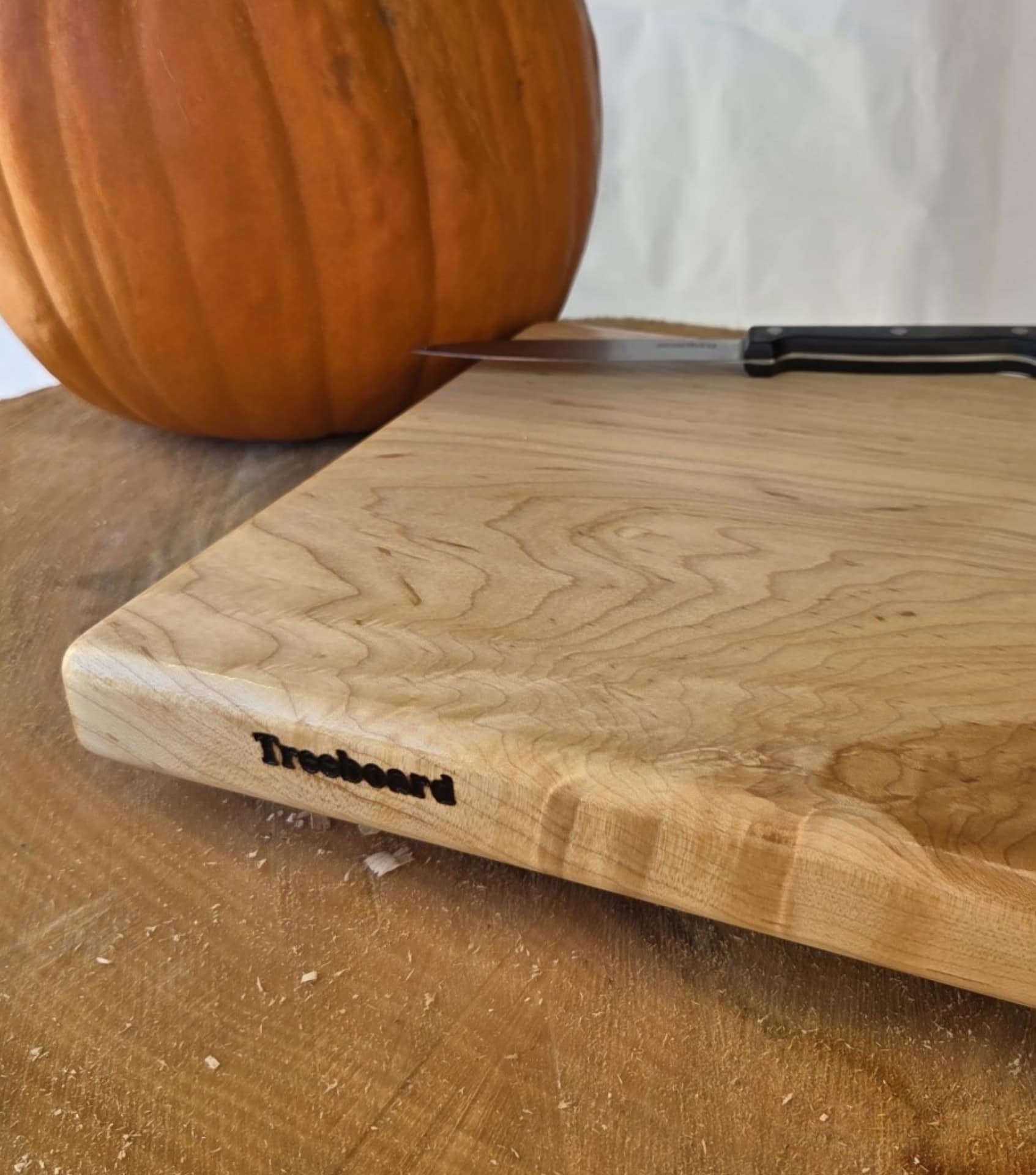
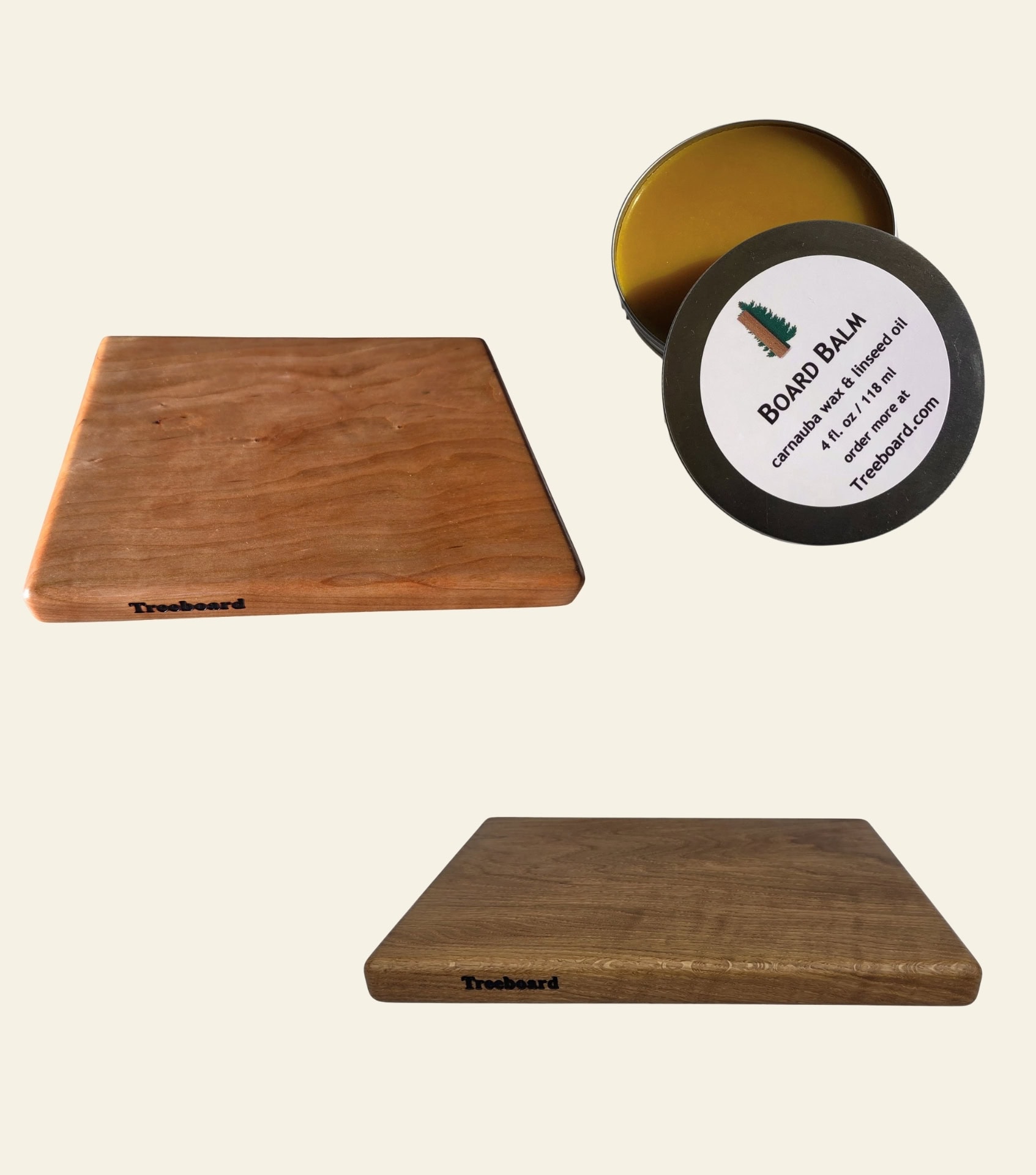
Tree Board has not been rated.
Tree Board’s Wooden Cutting Boards
- Material: Single-slab maple, cherry or oak solid wood. No glue.
- Finish: Organic raw linseed oil and proprietary board balm
- Made in: Maryland, USA
- What makes it non-toxic: Solid wood construction with plant-based finishes, no petroleum products
- Sustainability: Sustainably sourced wood, made in USA reduces transport emissions, small business
- Notable: Each board includes complimentary tin of plant-based board balm. Optional custom engraving and silicone feet add ons.
- Price: $79-$239
Additional Safe Cutting Board Options: Notable Mentions
Hinoki Express Cypress Cutting Board
Shop Hinoki Express Cutting Board
- What it is: Single-slab Japanese cypress (hinoki) board with no finish or glue. Naturally antimicrobial wood prized in traditional Japanese cooking.
- Why it’s non-toxic: Solid piece of naturally antimicrobial cypress with no finish, glue, or treatments applied. The wood’s natural oils provide protection.
- Care note: Traditional Japanese method involves wetting the board before each use. No oiling required.
- Trade-off: We don’t know anything about their sustainability credentials. Seems to only be available on Amazon.
- Price: From $18
Hacaroa Tempered Glass Cutting Board
- What it is: Set of four tempered glass cutting boards (two large 15.7″ x 11.8″, two small 11.8″ x 7.9″) with rubber feet for stability.
- Why it’s non-toxic: Glass is completely inert and non-reactive. Ideal for those with severe chemical sensitivities or who need maximum sanitization (dishwasher safe).
- Trade-off: Very hard on knife edges and can be slippery when wet. Best used for specific tasks rather than daily chopping. We don’t know much about their sustainability credentials. Only available on Amazon.
- Price: $24
Seed & Sprout Titanium Cutting Board (Australia)
- What it is: Pure titanium cutting board similar to Taima, offering the same ultra-durable, completely non-toxic benefits for Australian customers.
- Why it’s non-toxic: Pure titanium is one of the most inert materials available. Doesn’t harbor bacteria or retain odors. Dishwasher safe with zero maintenance required.
- Best for: Australian buyers seeking the ultimate non-toxic, zero-maintenance cutting board option.
- Price: AUD99
How We Chose These Non-Toxic Cutting Boards
Our cutting board selection criteria prioritized both health and sustainability considerations. While not all boards meet all of these criteria, we tried to build a balanced selection of options:
Material Safety
Every recommendation had to meet strict standards:
- No plastic or materials that shed microplastics
- No known formaldehyde-based adhesives – though often the adhesive makeup is not disclosed (for brands who use pieces of wood instead of one solid piece). If you are particularly sensitive, please reach out to the brand directly to confirm adhesive use.
- No petroleum-based finishes or synthetic coatings
- No antibacterial additives like Microban/triclosan
- Food-safe materials with transparent sourcing
Sustainability Standards
We prioritized brands who have been rated by us using our detailed sustainability assessment. We also looked for:
- FSC certification for wood products (ensures responsible forestry). See related guide on sustainable forestry certifications.
- B Corporation certification (comprehensive sustainability and ethics)
- Locally sourced materials when possible (reduces transport emissions)
- Durable construction that eliminates frequent replacement
- Recyclable or biodegradable end-of-life options
Ethical Manufacturing & Community Support
Cutting board brands don’t typically disclose much on their approach to manufacturing but as always, we looked out for:
- Fair labor practices
- Transparent supply chains and third party audits or certifications (e.g. SMETA or BSCI like Caraway have in place)
- Support for local communities and economies like Itza Wood’s model.
Performance and Durability
Where we conducted testing, we looked for:
- Knife-friendliness (doesn’t dull blades excessively)
- Stability during use
- Resistance to warping, staining, and damage
- Ease of cleaning and maintenance
- Real-world longevity
Value
While we included premium options, we also sought:
- Accessible price points for different budgets
- Long-term value (durability vs. cost)
Caring for Your Non-Toxic Cutting Board
Proper care extends the life of your cutting board (the ultimate sustainability hack) and maintains its safety. As you can see, wooden chopping boards need the most care (but they’re also the most delightful to chop with):
Wood Cutting Board Care
Daily Cleaning:
- Wash by hand with hot, soapy water immediately after use
- Never soak wooden boards or put them in the dishwasher
- Dry thoroughly with a clean towel
- Store upright or on edge to allow air circulation
Removing Stains and Odors:
- Sprinkle coarse salt or baking soda on the board
- Scrub with half a lemon in circular motions
- Rinse with warm water and dry thoroughly
How to Sanitize Your Cutting Board:
- For everyday use, hot soapy water is sufficient (wood has natural antimicrobial properties)
- For deep cleaning after raw meat: Use a 1:4 solution of white vinegar or hydrogen peroxide to water
- Let sit for several minutes, then rinse and dry
How To Oil Your Cutting Board:
- Oil wooden boards every 2-4 weeks or when the wood looks dry
- Apply food-safe oil (fractionated coconut oil, beeswax, linseed oil, walnut oil) and avoid petroleum-based mineral oil
- Pour small amount onto board, spread evenly with clean cloth
- Let soak in overnight, wipe away excess in the morning
When to Replace You Cutting Board:
- Deep grooves that can’t be sanded out
- Cracks or splits in the wood
- Warping that makes the board unstable
- Persistent odors that won’t come out
- Visible mold growth
Titanium and Stainless Steel Chopping Board Care
Daily Cleaning:
- Wash with hot, soapy water or place in dishwasher
- Dry with clean towel or air dry
- No oiling or special maintenance required
- For stuck-on food, soak briefly in hot soapy water and use a non-abrasive scrubber if needed
Glass Cutting Board Care
Daily Cleaning:
- Most are dishwasher safe (check manufacturer instructions)
- Can also hand wash with hot, soapy water
- Completely non-porous, won’t absorb stains or odors
Safety Note:
- Handle carefully to avoid dropping and shattering
- Inspect regularly for chips or cracks. Nothing more “toxic” than shreds of glass in your food!
Frequently Asked Questions On Non-Toxic & Sustainable Cutting Boards
Are bamboo cutting boards non-toxic?
Bamboo boards can be non-toxic if made with formaldehyde-free adhesives and finished with food-safe oils. Bamboo boards are made from strips glued together, and many manufacturers use formaldehyde-based glues. Look for brands that explicitly state they use water-based, formaldehyde-free adhesives (we haven’t found one that is explicit about this yet).
What glue is safe for cutting boards?
The safest adhesive for cutting boards is Titebond III Ultimate Wood Glue. It’s water-based, formaldehyde-free, and FDA-approved for food safety. According to its Safety Data Sheet, it contains no ingredients classified as hazardous under OSHA or GHS standards when fully cured. Avoid boards with unknown adhesives, formaldehyde-based glues, or epoxy resins that may contain BPA.
Can you safely use wooden cutting boards for raw meat?
Yes. Older research shows wooden cutting boards actually harbor less bacteria than plastic boards when properly cleaned and newer research shows there’s not much difference. Wood’s porous nature draws moisture and bacteria into the fibers where they die off, rather than remaining on the surface. However, best practice is to designate one board for raw meats and another for vegetables to prevent cross-contamination, regardless of board material.
How do you tell if a cutting board has formaldehyde?
Formaldehyde often has a strong, chemical odor when fresh, though this can dissipate. Check if the board is made from multiple pieces glued together (edge-grain, end-grain, or laminated bamboo). If yes, contact the manufacturer to ask specifically about adhesive type. Look for certifications like NSF or GREENGUARD that test for emissions. Single-slab boards eliminate this concern entirely.
Are glass cutting boards better than plastic?
From a toxicity standpoint, yes. Glass is completely inert and won’t shed microplastics or leach chemicals. However, glass is extremely hard on knives and will dull blades quickly. Glass can also be slippery and may shatter if dropped. For most home cooks, wood or titanium boards offer better performance while still being non-toxic.
Titanium vs stainless steel cutting boards: which is better?
Both are non-toxic and highly sanitary. Titanium is softer than stainless steel, making it slightly more gentle on knife edges. Pure titanium (Grade 1) is also more inert and won’t leach any metals, while stainless steel can release trace amounts of nickel and chromium. The main difference is cost as titanium is significantly more expensive. For most people, quality stainless steel is perfectly safe and more budget-friendly.
How often should you replace cutting boards?
Wood and titanium boards can last decades with proper care. Replace wooden boards when they develop deep grooves that can’t be sanded out, cracks, persistent odors, or visible mold. Plastic boards should be replaced when they show significant scarring and scratches (typically every 1-3 years). Glass and metal boards rarely need replacement unless damaged. The longer lifespan of quality boards makes them more sustainable despite higher upfront cost.
Are FSC-certified cutting boards worth the extra cost?
Yes, if sustainability matters to you (which we think it should). FSC (Forest Stewardship Council) certification ensures wood comes from responsibly managed forests that protect biodiversity, workers’ rights, and indigenous communities while allowing regeneration. It’s one of the most credible environmental certifications available. The extra cost is typically modest, and you’re supporting forestry practices that can continue long-term.
What’s the best cutting board material for knife preservation?
End-grain wood cutting boards are best for keeping knives sharp. The vertical grain structure allows knife edges to slip between wood fibers rather than cutting across them, which dulls blades less. Single-slab hardwoods and edge-grain boards are also quite knife-friendly. Avoid glass, stone, ceramic, and to a lesser extent, metal boards if knife preservation is a priority.
Can you use the same cutting board for vegetables and meat?
While you can safely use the same board if properly cleaned between uses, best practice is to use separate boards to prevent cross-contamination. This is especially important for people with compromised immune systems or when preparing food for young children. Color-coding (one board for produce, one for raw animal products) is a simple safety measure.
What are the most eco-friendly cutting board materials?
Single-slab hardwood from FSC-certified, locally sourced forests is most eco-friendly. These boards are biodegradable, renewable (if sustainably harvested), and eliminate adhesive concerns. Titanium ranks second for sustainability due to its lifetime durability and full recyclability, despite energy-intensive production. Bamboo has potential but loses points due to transport emissions from Asia and adhesive concerns in most products.
Are Epicurean cutting boards safe?
Epicurean boards are made from Richlite, a paper composite with phenol-formaldehyde resin. While formaldehyde sounds concerning, these boards are NSF-certified for food contact and GREENGUARD Gold certified for exceptionally low emissions. Testing shows formaldehyde at 0.001 ppm which is well below outdoor background levels. The fully cured resin creates a stable surface. However, some people with extreme chemical sensitivities may detect off-gassing, particularly when boards are new or heated. We’ve chosen not to include these boards on our list for now, given the range of other options.
What’s the safest cutting board for people with allergies?
Titanium or glass cutting boards are safest for severe allergies because they’re completely non-porous and easy to sanitize thoroughly at high temperatures. They won’t absorb allergens and can be cleaned more rigorously than wood. For wood options, designate separate boards for allergen-containing foods and use thorough cleaning protocols. Avoid boards with deep scratches where allergens could hide.
Final Thoughts On Safe, Eco-friendly Cutting Boards
Choosing a non-toxic AND sustainable cutting board is one of the simplest ways to reduce chemical exposure in your kitchen while supporting more sustainable manufacturing practices.
The best option depends on your priorities. For the most inert, maintenance-free surface, titanium can’t be beat. For traditional beauty, knife-friendliness, and sustainability, single-slab hardwood boards from responsibly managed forests are excellent.
Whatever you choose, avoiding plastic boards that shed microplastics and steering clear of formaldehyde-based adhesives and petroleum finishes will significantly reduce your chemical exposure during food preparation.
The brands we’ve highlighted here represent the best combination of material safety, environmental responsibility, and real-world performance we’ve found. We hope you found this helpful!
Editor’s Note: Joy McConnochie has been testing and researching sustainable kitchen products for 8+ years as part of Sustainable Jungle’s mission to help people make more informed, environmentally responsible choices. All products are independently tested, researched, and in some cases rated using our comprehensive sustainability rating methodology.

Joy has been a passionate advocate for the environment since she was a small child. She grew up in South Africa and has been lucky enough to be exposed to the wonders of nature not just in Africa but all over the world. She founded Sustainable Jungle (together with her husband Lyall) back in 2017 after becoming enraged by the devastating impact of palm oil. She then founded the Sustainable Jungle Podcast and together with Lyall interviewed remarkable people from all over the world who were finding ways to create positive impact. Outside of Sustainable Jungle, Joy has always worked in the corporate world, starting out as an auditor and later moving into management consulting. More recently she specialized in Climate Investing for the Asia Pacific region. Given her experience, her current passion is Brand Ratings. She is very much enjoying going deeper on what it really means to drive sustainability performance and true impact through business operations.