







As the third most popular textile in the world, rayon fabric is all the rage. It’s soft, it drapes like silk, and it’s made from plants, so it must be sustainable, right?
Let’s just say there’s a reason we left it off our list of sustainable fabrics.
Rayon borrows its other name, “viscose,” from the manufacturing process, at one point in which it becomes a viscous, honey-like liquid before it solidifies into fiber. Unlike honey though, things aren’t so sweet when it comes to sustainability or safety. Conventional viscose rayon is one of the most chemically intensive fabrics on the market, and the workers who make it have been paying the price for over a century.
We’re unraveling the ins and outs of this cellulosic fiber, from how it’s made and whether it’s toxic to how it shapes up against cotton, polyester, and greener alternatives like lyocell. By the end, you’ll know exactly what to look for on the label and what to avoid.
Related Guides: What Is Lyocell, What Is Modal Fabric, Bamboo Fabric, Vegan Fabrics
Rayon Fabric at a Glance:
- Rayon (also called viscose) is a semi-synthetic fabric made from wood pulp.
- It feels soft and silky, drapes beautifully, and biodegrades at end of life, but the conventional manufacturing process relies on carbon disulfide, a chemical with over 150 years of documented harm to factory workers, including cardiovascular disease, neurological damage, and vision loss.
- There are no rayon factories left in the US or most of Europe because the process couldn’t meet safety standards there, so production has shifted almost entirely to Asia.
- Closed-loop alternatives like TENCEL™ lyocell eliminate the most harmful chemicals and recover 99%+ of solvents.
- If you’re buying rayon, look for TENCEL™, ECOVERO™, or OEKO-TEX certification on the label.
- Generic “rayon” or “viscose” with no certifications is almost always conventional.
Watch our video on Rayon Fabric below for a visual snapshot:
Contents: Rayon Fabric
- What Is Rayon Fabric (Viscose)? Jump to section
- How Is Rayon Fabric Made? Jump to section
- Is Rayon Toxic? Safety, Chemicals & Health Risks Jump to section
- Is Rayon Sustainable? Jump to section
- Sustainable Alternatives: Better Types of Rayon Material Jump to section
- Rayon Fabric Properties Jump to section
- Rayon Pros and Cons Jump to section
- Rayon vs Cotton, Polyester & Other Fabrics Jump to section
- Key Players & Ecosystem In Viscose Manufacturing Jump to section
- What to Look for When Buying Rayon Jump to section
- How to Care for Rayon Fabric Jump to section
- FAQs: Viscose & Rayon Fabric Jump to section
What Is Rayon Fabric (Viscose)?
Rayon and viscose are essentially the same thing in everyday use. Technically, “rayon” is the umbrella term for all regenerated cellulosic fibers, and “viscose” refers to the specific manufacturing process used to make the most common type. But on clothing labels, the two terms are used interchangeably. You’re more likely to see “rayon” in the US (the FTC-mandated generic name), while “viscose” is the standard term in Europe. Some tags say “viscose rayon” just to cover both bases.
Rayon is a semi-synthetic fiber made from plant-based cellulose (usually wood pulp) that has been chemically processed into a wearable textile. It was first commercially produced in the early 1900s as an affordable alternative to silk, which is why it was originally known as “artificial silk.”
So is rayon a natural fabric or a synthetic one? Neither, exactly. It starts as a natural raw material (wood or plant cellulose), but the chemical processing it undergoes changes its structure so significantly that it can’t be called natural. And because it isn’t derived from petroleum like synthetic fabrics such as polyester and nylon, it isn’t fully synthetic either. That’s why rayon is classified as a semi-synthetic or regenerated cellulosic fiber.
Other members of the regenerated cellulosic family include lyocell, modal, cupro, and acetate. Rayon/viscose was the first of the group, and it remains the most widely produced, accounting for around 80% of all man-made cellulosic fibers (MMCFs), according to Textile Exchange.
While it might be tempting to call rayon a natural fiber (and plenty of brands do) because it’s plant-based, the process that natural raw material must undergo renders it into something considerably less than natural. Let’s look at how it’s made to understand why.
How Is Rayon Fabric Made?
Rayon’s other name, “viscose,” comes from the fact that it becomes a viscous liquid during manufacturing. The production process involves dissolving wood pulp in a series of harsh chemicals and then regenerating it into fiber. Here’s how it works:
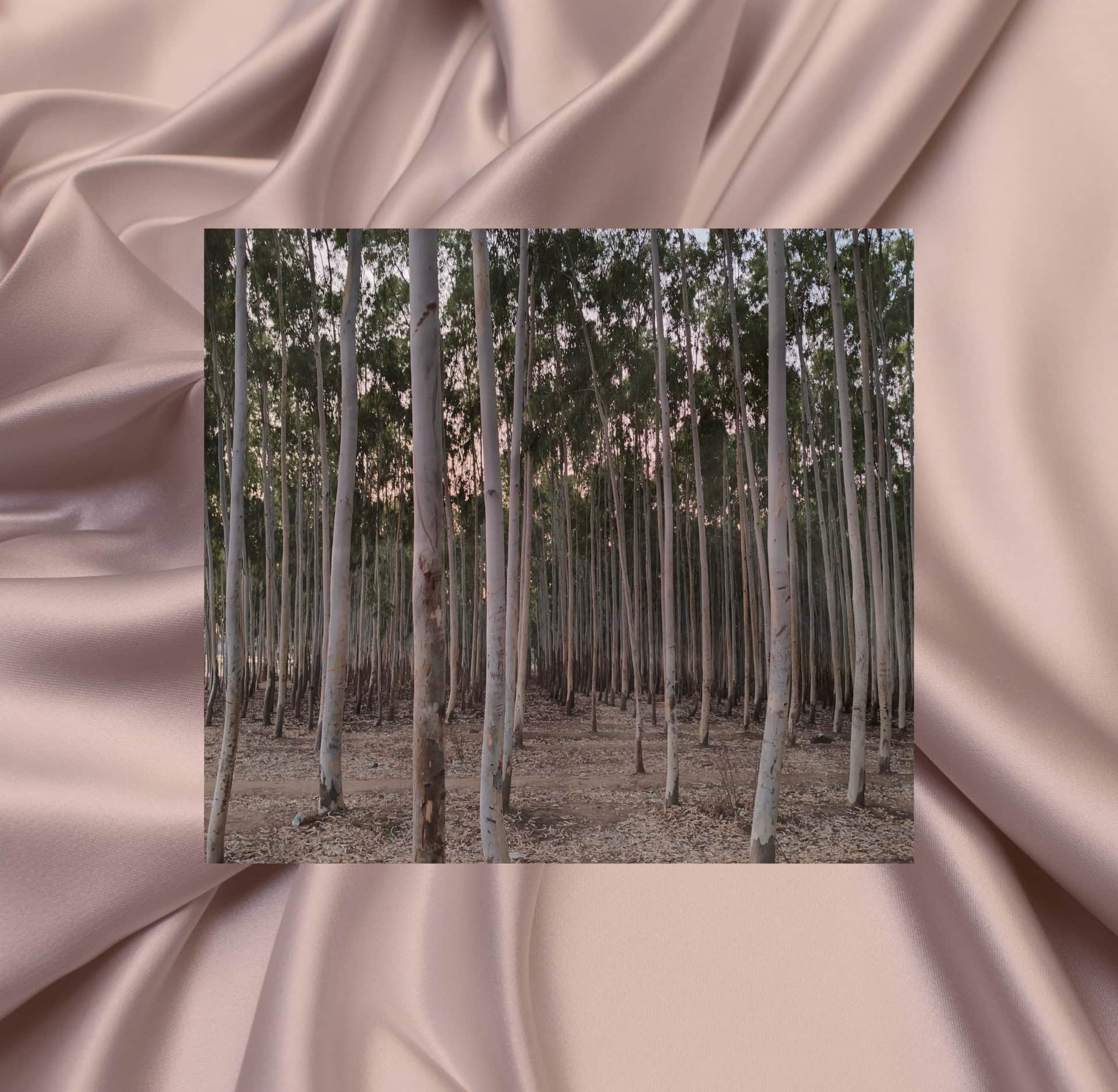
- Cellulose extraction: Wood pulp is harvested from trees (commonly spruce, pine, beech, eucalyptus, or bamboo) and processed to extract the cellulose, which needs to be at least 90% pure.
- Alkali steeping: The cellulose is steeped in caustic soda (sodium hydroxide) at around 18-25°C, which swells the fibers and converts the cellulose to alkali cellulose.
- Pressing and shredding: The alkali cellulose is pressed between rollers to remove excess liquid, then shredded into fluffy particles called “white crumb.”
- Aging: The crumbs are stored for around 48 hours at controlled temperatures to reduce the molecular weight of the cellulose, preparing it for the next chemical reaction.
- Xanthation: The aged crumb is treated with carbon disulfide (CS₂), a highly toxic and flammable chemical, which turns it into orange-yellow “cellulose xanthate.”
- Dissolving: The xanthate is dissolved in dilute sodium hydroxide to create the viscous solution.
- Spinning: After ripening, filtering, and degassing, the solution is forced through a spinneret (a showerhead-like device with tiny holes) into a bath of sulfuric acid, which regenerates the cellulose into solid filaments.
- Finishing: The filaments are washed, drawn, cut, and dried into usable fiber.
The whole process requires large volumes of water and energy, and the three key chemicals involved (sodium hydroxide, carbon disulfide, and sulfuric acid) are all classified as hazardous. This matters enormously for both worker safety and environmental impact.
Is Rayon Toxic? Safety, Chemicals & Health Risks
The chemicals used to make viscose rayon have a long and well-documented history of harming the workers who handle them.
Carbon Disulfide: The Big One
Carbon disulfide (CS₂) is the chemical at the heart of the viscose process, and its health effects have been studied for over 150 years. According to the Agency for Toxic Substances and Disease Registry (ATSDR), the most consistently documented health effects in viscose rayon workers include:
- Cardiovascular disease: Multiple occupational studies have found increased risk of coronary heart disease and cardiovascular mortality among CS₂-exposed workers, particularly those exposed at levels above 10 ppm over extended periods. A comprehensive review of the evidence found that coronary heart disease is among the most important health effects, supported by a meta-analysis of 11 occupational cohort studies showing a positive association between CS₂ exposure and cardiovascular disease.
- Neurological damage: Peripheral neuropathy (nerve damage in the hands and feet) is the most sensitive and consistent effect reported in viscose workers. Higher exposures have been linked to symptoms resembling Parkinsonism, psychosis, and progressive brain damage. One older study of workers at a Norwegian viscose plant found that 15 out of 16 long-term workers had clinical neurological abnormalities, and 13 showed cerebral atrophy on brain scans.
- Eye damage: Several cohorts of viscose workers from the US, Belgium, Korea, and Japan have shown increased prevalence of retinal microaneurysms (tiny swellings in the blood vessels of the eye) linked to CS₂ exposure.
- Reproductive effects: CS₂ exposure has also been associated with fertility and hormonal disruption in occupational studies.
The historical record is harrowing. In Fake Silk: The Lethal History of Viscose Rayon, physician and medical historian Paul David Blanc documented how the viscose industry systematically suppressed evidence of worker harm throughout the 20th century, including in concentration camp factories during World War II.
Where Is Rayon Made Today?
There are no rayon production facilities currently operating in the United States, and while some European producers remain (notably Lenzing in Austria and Kelheim Fibres in Germany), the bulk of global production has shifted to Asia over recent decades, driven by lower costs and less stringent environmental and worker protections.
The Changing Markets Foundation’s Dirty Fashion investigations into viscose factories across India, Indonesia, and China found evidence of untreated wastewater being dumped into waterways, toxic runoff destroying local agriculture, and communities reporting severe health problems from living near production sites.
Is Rayon Safe to Wear?
The important distinction is that the toxicity risks are concentrated in the manufacturing process, not so much in the finished garment. By the time rayon fabric reaches a consumer, the chemical residues from production are minimal.
That said, conventionally dyed and finished rayon (like most textiles) can carry residual chemicals from dyeing and finishing processes. If chemical sensitivity is a concern, look for rayon garments certified to OEKO-TEX Standard 100, which tests for harmful substances in the finished product.
The bigger question is an ethical one. How can it be acceptable to wear a fabric whose production causes this level of harm to workers and communities, even if the finished product is mostly safe on your skin? That’s a question each consumer needs to answer for themselves. See below for alternatives for more ethical applications of viscose rayon.
Is Rayon Sustainable?
Conventional viscose rayon is one of the least sustainable fabrics you can buy. It scores a Class E on the Made-By Environmental Benchmark for Fibres, the lowest possible rating, covering human toxicity, ecotoxicity, greenhouse gas emissions, and energy, land, and water use.
There are several interconnected reasons for this.
Deforestation and Forest Sourcing
Rayon starts with trees, and only a fraction of each tree (primarily the cellulose) ends up as usable fiber, with the rest discarded during pulping. Reports in the past have found that approximately 30% of the world’s rayon has historically been sourced from ancient and endangered forests, contributing to deforestation and biodiversity loss.
This is improving. According to the most recent Canopy Hot Button Report (2025), 70% of MMCF producers now hold green or dark green shirt ratings, meaning they have demonstrated leadership in eliminating ancient and endangered forests from their supply chains. The top-scoring producers in 2025 are Lenzing (Austria) and Tangshan Sanyou (China), closely followed by Aditya Birla (India).
Still, Canopy’s 2025 report notes that some producers continue to source from high-carbon forest regions, and capacity expansions by poorly rated producers have slightly reduced the share of global supply coming from green-rated sources.
Chemical Pollution
We covered the human health impacts above but the environmental side is just as concerning. The viscose process uses carbon disulfide at roughly 30-35% of the weight of the cellulose being processed, and in conventional facilities without adequate recovery systems, a significant portion of that is released into the air and waterways. Sodium hydroxide and sulfuric acid waste streams also require careful management to prevent water and soil contamination.
The Changing Markets Foundation’s Roadmap towards responsible viscose manufacturing calls on all producers to align with EU Best Available Techniques (BAT) standards, which set limits on chemical recovery rates, emissions, and wastewater treatment.
Some of the largest producers (Aditya Birla, Lenzing, Sateri, Asia Pacific Rayon, and Tangshan Sanyou) have committed to meeting these standards, but enforcement and verification remain ongoing challenges, particularly in regions with weaker regulatory oversight.
Is Rayon Biodegradable?
Viscose rayon is biodegradable, and research has shown it breaks down faster than cotton in soil because its cellulose structure (cellulose II) has lower crystallinity than cotton’s native cellulose I, which makes it more accessible to soil microorganisms. In aerobic soil conditions, the half-life of rayon is approximately 22 days, compared to 40 days for cotton.
However, biodegradable doesn’t mean clean. Commercially produced rayon has been dyed, treated, and finished with various synthetic substances, so composting any fabric in your backyard garden (especially if you grow food) isn’t advisable unless the garment carries an OEKO-TEX or GOTS certification confirming it’s free of harmful residues.
And if rayon ends up in a landfill, those anaerobic conditions slow decomposition dramatically (just like they do for food waste), and the breakdown process releases methane, a potent greenhouse gas.
Does Rayon Shed Microplastics?
Rayon does not shed microplastics because it isn’t made of plastic. It’s a cellulosic fiber. However, rayon does shed microfibers during washing, and it sheds more of them than polyester.
A 2019 study by Zambrano et al. published in Marine Pollution Bulletin found that cellulose-based fabrics (cotton and rayon) released more microfibers during laundering (0.2 to 4 mg per gram of fabric) than polyester (0.1 to 1 mg per gram). This is because rayon’s low wet strength makes it especially prone to fiber breakage in the washing machine.
The critical difference, though, is what happens to those fibers after they enter waterways. The same study found that cotton and rayon microfibers biodegraded in natural aquatic environments, while polyester microfibers persisted for long periods. So rayon sheds more fibers, but those fibers break down rather than accumulating in marine ecosystems the way plastic-based fibers do.
But rayon microfibers can still carry residual dye chemicals and processing agents into waterways before they biodegrade, and the sheer volume of cellulosic microfibers found in oceans (one study found cellulosic fibers made up 79.5% of all microfibers sampled across six ocean basins) means the issue deserves more research attention.
Sustainable Alternatives: Better Types of Rayon Material
The place for conventional rayON is OFF of our bodies. But there are alternatives to rayon that you’ll find in eco-conscious wardrobes (though they’re usually not called rayon).
Lyocell (TENCEL™)
Lyocell is the third generation of cellulosic fibers, and the most sustainable of the rayon family. TENCEL™ lyocell, made by Austrian company Lenzing from sustainably harvested eucalyptus, uses a closed-loop manufacturing process that recovers upwards of 99% of the solvent (NMMO, an organic compound that replaces the toxic carbon disulfide used in conventional viscose). It scores a Class B on the Made-By Environmental Benchmark, three classes above conventional viscose.
Beyond sustainability, lyocell is also a stronger, more durable fiber than conventional rayon, with better moisture management and a silky drape.
Modal (TENCEL™ Modal)
Modal is sometimes called a “second generation” cellulosic fiber. Generic modal still uses the same CS₂-based process as conventional viscose, but Lenzing’s TENCEL™ Modal uses FSC-certified beech wood and a closed-loop system, generating around 70% less greenhouse gas emissions compared to generic modal.
Modal sits in Class D of the Made-By benchmark, ahead of cotton, wool, conventional viscose, and bamboo viscose, but behind lyocell.
Lenzing ECOVERO™
ECOVERO™ is Lenzing’s branded viscose that still uses the viscose process (not the lyocell solvent process) but with sustainably sourced wood and significantly lower emissions and water use than generic viscose. It’s a “better but not best” option for brands that want viscose’s drape properties with a smaller footprint.
What About Bamboo Rayon?
Without wishing to rain on the sustainable material parade, bamboo rayon needs a mention here. Bamboo certainly starts out eco-friendly because it grows quickly, needs little water, and sequesters carbon effectively. But when that bamboo is processed into rayon through the conventional viscose method, it requires the same harsh chemicals and carries the same environmental and worker safety problems.
There is bamboo lyocell made using a closed-loop process, and that’s a far better option. But if a label just says “bamboo rayon” or “bamboo viscose,” it was very likely made using the conventional process, and the FTC in the US has cracked down on brands that market conventional bamboo rayon as “bamboo” without disclosing the processing method.
Rayon Fabric Properties
Here’s a quick rundown of the properties that make rayon popular (and the ones that make it frustrating).
Is Rayon Breathable?
Rayon is lightweight and very breathable, which makes it a popular choice for warm-weather clothing. It absorbs moisture well and doesn’t trap heat against the skin, which is why you’ll find it in summer dresses, activewear, and bedding.
Is Rayon Stretchy?
On its own, no. Rayon has no inherent stretch, which means it can bag out at elbows and knees with wear. When blended with elastane or spandex, though, it picks up stretch and recovery. That’s why you’ll often see “95% rayon, 5% elastane” on fitted garment labels.
Does Rayon Shrink?
Yes, and this is another practical downside of rayon. Rayon fibers weaken significantly when wet, with standard viscose losing anywhere from 40 to 70% of its dry tensile strength. This means rayon can shrink, distort, or pill in the washing machine. See the care section below for how to handle this.
Does Rayon Wrinkle?
It does, especially if not dried and stored carefully. If you’ve ever pulled a rayon blouse out of a suitcase looking like a crumpled newspaper, you already know this.
Rayon Pros and Cons
Here are some of rayon’s advantages and disadvantages:
Pros:
- Soft, smooth, and feels similar to silk
- Excellent drape for flowy garments and home textiles
- Breathable and moisture-absorbent, which is great for hot weather
- Blends well with other fibers to enhance performance
- Takes dye well, producing vibrant colours
- Biodegradable at end of life
- More affordable than silk or cotton
Cons:
- Conventional production is chemically intensive and harmful to workers
- Low wet strength (weakens and can shrink when washed)
- Wrinkles easily
- Can fade or bleed colour with washing, particularly in cheaply dyed fast fashion garments (though well-dyed rayon with reactive dyes can hold colour well)
- Not as durable as cotton, linen, or hemp
- Requires careful washing and is often dry clean or hand wash only
- Frequently linked to deforestation if irresponsibly sourced
Rayon vs Cotton, Polyester & Other Fabrics
Rayon vs Cotton
Cotton and rayon can look and feel similar, but they’re made very differently. Cotton is a natural fiber grown from the cotton plant, while rayon is a semi-synthetic made from chemically processed wood pulp.
For durability, cotton wins easily because it’s much stronger than rayon and gets even stronger when wet. Rayon, by contrast, is easily damaged when wet, which makes it harder to care for. Cotton is also more resistant to pilling and holds up better to repeated washing.
Where rayon has the edge is drape and cost. It hangs more fluidly than cotton, which is why designers use it for garments that need movement. It’s also cheaper to produce, which is one reason fast fashion brands use so much of it.
Sustainability-wise, there’s no blanket answer because it depends entirely on which type of each we’re comparing. Organic cotton is more sustainable than conventional viscose by a significant margin. But TENCEL™ lyocell is a better environmental performer than conventional cotton, which is notoriously water and pesticide-intensive.
Rayon vs Polyester
Rayon and polyester are both versatile, widely used, and often blended together, but they come from completely different worlds. Polyester is a fully synthetic fabric made from petroleum, while rayon is semi-synthetic and plant-derived.
Rayon is more breathable and absorbent, making it more comfortable in hot weather, while polyester can wick moisture along its surface but tends to trap heat because the fiber itself doesn’t absorb water.
Polyester is far more durable and easier to care for (it can handle a washing machine without batting an eye), but it sheds persistent plastic microfibers into waterways with every wash. Rayon sheds more microfibers overall, but those fibers biodegrade.
Polyester is also not biodegradable and is derived from fossil fuels, while rayon comes from a renewable resource (trees) and will break down at end of life.
If synthetic fabrics concern you from an environmental standpoint, responsibly produced rayon (lyocell or ECOVERO™) is the stronger choice.
Rayon vs Linen and Hemp
Both linen and hemp are natural fibers that share some of rayon’s best qualities including breathability and moisture absorption, in a far more sustainable package. Flax (linen) and hemp require minimal water and chemical inputs to grow, and the fiber extraction process is far simpler than the viscose method.
Both are significantly more durable than rayon and can be composted at the end of life. The trade-off is that they’re pricier, don’t drape as fluidly as rayon (hemp in particular starts out quite stiff), and can feel rougher until broken in, though high-quality linen and hemp soften beautifully with wear and washing.
Key Players & Ecosystem In Viscose Manufacturing
The viscose rayon industry has seen significant consolidation and sustainability commitments in recent years. Here’s who’s shaping the landscape.
Major Manufacturers
- Aditya Birla Group / Birla Cellulose (India): One of the world’s largest MMCF producers and the second-largest sustainably produced MMCF player. Earned the #1 ranking in Canopy’s Hot Button Report with a dark green shirt for six consecutive years (2020-2025). Operates 11 pulp and fiber manufacturing sites with closed-loop technology.
- Lenzing AG (Austria): Producer of TENCEL™ lyocell, TENCEL™ Modal, and ECOVERO™ viscose. Consistently rated dark green in the Hot Button Report and one of the three top-ranked MMCF producers globally.
- Tangshan Sanyou (China): One of China’s largest viscose producers. Also earned a top-tier ranking in the 2024 Hot Button Report alongside Aditya Birla and Lenzing.
- Sateri (China, part of Royal Golden Eagle group): One of the largest viscose staple fiber producers globally. Has committed to EU BAT alignment.
- Asia Pacific Rayon / APR (Indonesia): Significant producer in Southeast Asia. Has committed to responsible sourcing through the CanopyStyle initiative.
- Yibin Grace (China): Produces viscose staple fiber and filament yarn. Makes ReGracell®, a viscose product containing 30 to 50% recycled cotton pulp.
Key Initiatives and Certifications
- Canopy’s Hot Button Report: The fashion sector’s primary tool for assessing MMCF producer performance on forest sourcing and next-gen fiber innovation. The 2025 edition now assesses 98% of global MMCF production across 30 producers.
- ZDHC (Zero Discharge of Hazardous Chemicals): Developing frameworks for wastewater, air emissions, and chemical management at MMCF facilities. The 2025 Hot Button Report now includes chemical management assessments aligned with ZDHC MMCF guidelines.
- Changing Markets Foundation Roadmap: A blueprint for responsible viscose production that 14 major brands (including H&M, Inditex, ASOS, and Levi’s) signed, committing to closed-loop manufacturing by 2023 to 2025. Those deadlines have now passed, and progress has been uneven across signatories.
- FSC (Forest Stewardship Council): Certifies that wood pulp used in MMCF production comes from responsibly managed forests. FSC or equivalent certification is increasingly standard among green-rated MMCF producers.
- OEKO-TEX Standard 100: Tests the finished textile product for harmful chemical residues, providing consumer-facing assurance that the garment is safe to wear.
Emerging Innovations
The next frontier for rayon is circularity. Several producers are developing textile-to-textile recycling technology for cellulosic fibers:
- Circulose (formerly Renewcell, Sweden) produces dissolving pulp from recycled cotton and viscose garments. The company filed for bankruptcy in February 2024 after brands failed to honour offtake agreements at scale, but was acquired by Swedish investment firm Altor and has since restarted commercial production. Brands including H&M, Levi’s, and Zara have used Circulose in collections.
- Circ launched Fiber Club in 2025, a collaboration with Fashion for Good and Canopy to push circular MMCF production with partners including Birla Cellulose, Eileen Fisher, and Everlane.
- Yibin Grace opened the first recycled dissolving pulp mill in China, while Xinxiang Chemical Fiber (Bailu Group) launched a direct textile-to-textile MMCF facility.
Despite these advances, recycled feedstock still accounts for just 1.1% of MMCF production as of 2024, up from 0.7% the year before, so scaling up is a meaningful challenge for these innovations.
What to Look for When Buying Rayon
If you choose to buy rayon products, here’s how to find the more responsible options:
Look for these on the label:
- TENCEL™ Lyocell or TENCEL™ Modal: Lenzing’s branded fibers are produced using closed-loop processes with FSC-certified wood.
- ECOVERO™: Lenzing’s improved viscose with lower environmental impact than generic viscose.
- OEKO-TEX Standard 100: Confirms the finished product has been tested for harmful chemical residues.
- FSC-certified: Indicates the wood pulp was sourced from responsibly managed forests.
- GOTS (Global Organic Textile Standard): Primarily certifies organic natural fibers (a GOTS product must be at least 70% certified organic fiber). Regenerated cellulosic fibers like viscose or lyocell are only permitted as a minor additional fiber, so a GOTS label on a blended garment indicates the organic component meets strict processing and social criteria.
Red flags:
- A label that says only “rayon” or “viscose” with no brand or certification attached is very likely conventional viscose with no sustainability commitments.
- “Bamboo” used as a fabric descriptor without “lyocell” is almost certainly bamboo viscose processed with conventional toxic methods.
- Vague sustainability claims (“eco-friendly rayon,” “green viscose”) without specific certifications are greenwashing territory.
- Very cheap rayon garments from fast fashion brands are overwhelmingly sourced from the least sustainable producers.
How to Care for Rayon Fabric
Rayon’s biggest weakness is water. Here’s how to keep it in shape:
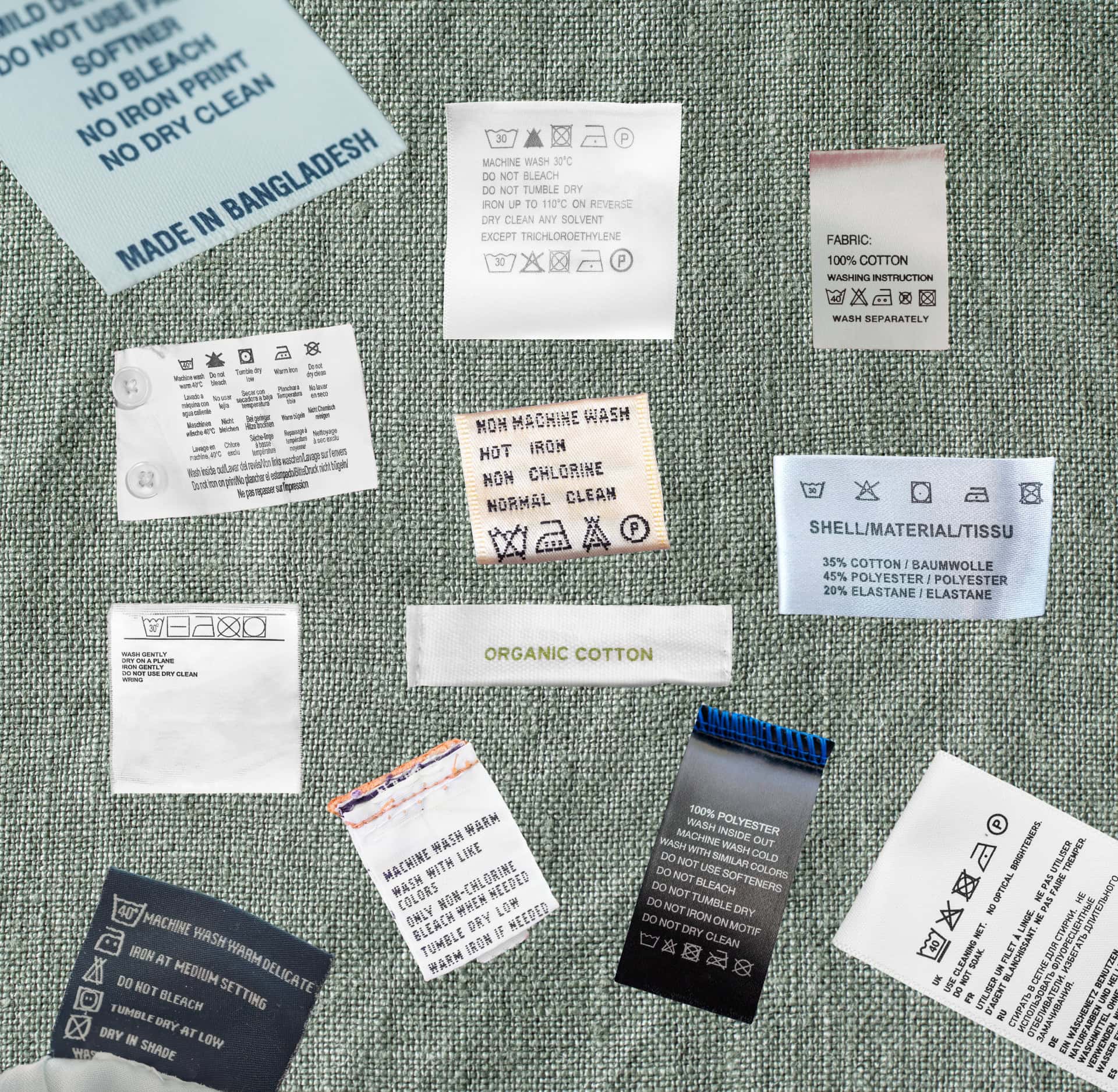
- Check the label first. Many rayon garments are labeled dry clean only because the fabric weakens dramatically when wet.
- Hand wash when possible using cool water and a gentle detergent. Don’t wring or twist the fabric because it’s at its most fragile when wet.
- If machine washing, use a mesh laundry bag, the delicate cycle, and cold water. Skip the dryer entirely.
- Lay flat to dry because hanging wet rayon can stretch it out of shape. Lay it on a clean towel and reshape while damp.
- Iron on low. Rayon can handle a low iron setting, but use steam or a pressing cloth to avoid scorch marks. Iron while slightly damp for best results.
- Store on hangers or folded but never bunched because rayon wrinkles easily and those wrinkles can set if left crumpled.
FAQs: Viscose & Rayon Fabric
Is rayon the same as viscose?
Yes. Rayon and viscose refer to the same semi-synthetic fiber made from chemically processed wood pulp. “Rayon” is more common in the US, while “viscose” is the standard term in Europe. You may also see “viscose rayon” on some labels, but it’s all the same material.
Is rayon plastic?
No. Rayon is made from cellulose (a natural plant polymer), not from petroleum-based polymers like polyester or nylon. This means rayon is biodegradable and will break down in the environment, unlike plastic-based fabrics.
Is rayon vegan?
Yes. Rayon is derived from plant cellulose (wood pulp), so it contains no animal products. It’s a popular choice for those seeking vegan fabrics with a silky feel, though vegan doesn’t automatically mean sustainable.
Is rayon good for summer and hot weather?
Very much so. Rayon is lightweight, breathable, and absorbent, making it one of the better fabric choices for warm climates. It doesn’t trap heat against the skin the way polyester can.
Does bamboo viscose have microplastics?
No. Bamboo viscose, like all rayon, is a cellulosic fiber, not a plastic. It does shed cellulosic microfibers during washing, but these biodegrade in aquatic environments, unlike the persistent plastic microfibers shed by polyester or nylon. That said, bamboo viscose still carries the same environmental and worker safety concerns as conventional rayon unless it’s specifically bamboo lyocell made with a closed-loop process.
Can rayon be recycled?
Recycling infrastructure for rayon and other cellulosic textiles is still in its early stages, but emerging technologies from companies like Circulose and Circ are making textile-to-textile recycling possible. Some brand takeback programs (H&M, for example) accept rayon garments for recycling, though the vast majority are currently downcycled into rags or insulation rather than new fiber.
Is rayon good for sensitive skin?
Rayon is generally soft and non-irritating, which makes it comfortable for most people. However, if you have chemical sensitivities, choose OEKO-TEX certified rayon to ensure the finished garment has been tested for harmful residues from the dyeing and finishing process.
Is rayon better than cotton?
It depends which rayon and which cotton you’re comparing. Organic cotton outperforms conventional viscose on nearly every sustainability metric. But TENCEL™ lyocell outperforms conventional cotton, which is heavily water and pesticide-intensive. For fabric performance, cotton is more durable and easier to wash, while rayon offers better drape and a silkier hand feel.
Final Thoughts on Rayon Fabric
Rayon’s story is one of contradiction. It comes from trees, yet conventional production poisons the people who make it. It biodegrades in soil, yet its manufacturing contaminates rivers. It feels like silk on your skin, yet it falls apart in the washing machine.
Conventional viscose rayon, as it’s still produced by many manufacturers around the world, is a fabric with major problems. The documented harm to workers from carbon disulfide exposure alone should give any conscious consumer pause.
But the rayon family isn’t monolithic. TENCEL™ lyocell proves that plant-based cellulosic fibers can be produced responsibly, with closed-loop chemistry, sustainably sourced wood, and significantly lower environmental impact. Modal and ECOVERO™ viscose sit somewhere in between, and the rapid growth of circular feedstock initiatives suggests the whole sector is (slowly) moving in a better direction.
If you’re shopping for rayon material, vote with your wallet, choose the certified, closed-loop versions and skip the unnamed generic viscose. If more consumers demand better, the 30% of MMCF producers still lagging behind on Canopy’s scorecard will have to catch up or lose market share.
And if you’re looking for breathable, flowy fabrics that skip the viscose process entirely, linen and hemp are right there waiting.
Editor’s Note: Originally published as two separate articles (“What Is Rayon Fabric?” published in January 2021 and “What Is Viscose Fabric?” published in May 2022), with a companion “Rayon vs Cotton” article first published in November 2022. Consolidated and fully rewritten April 2026 into this comprehensive guide with all-new research on toxicity, microplastics/microfiber analysis, and more.

Joy has been a passionate advocate for the environment since she was a small child. She grew up in South Africa and has been lucky enough to be exposed to the wonders of nature not just in Africa but all over the world. She founded Sustainable Jungle (together with her husband Lyall) back in 2017 after becoming enraged by the devastating impact of palm oil. She then founded the Sustainable Jungle Podcast and together with Lyall interviewed remarkable people from all over the world who were finding ways to create positive impact. Outside of Sustainable Jungle, Joy has always worked in the corporate world, starting out as an auditor and later moving into management consulting. More recently she specialized in Climate Investing for the Asia Pacific region. Given her experience, her current passion is Brand Ratings. She is very much enjoying going deeper on what it really means to drive sustainability performance and true impact through business operations.



Does sunlight have a negative effect on curtains made of rayon? Do household
bugs eat rayon causing it to degenerate? Does heat from a household furnace have an affect on rayon. What might cause rayon to delaminate and cause shredding of the material?
How scary is all that!! I knew there was another reason I didn’t like it, as if being heat retaining wasn’t enough. I get very hot wearing viscose by any name, so no viscose/rayon for me. Thanks!
Wow, really eye-opening information! Thank you.