











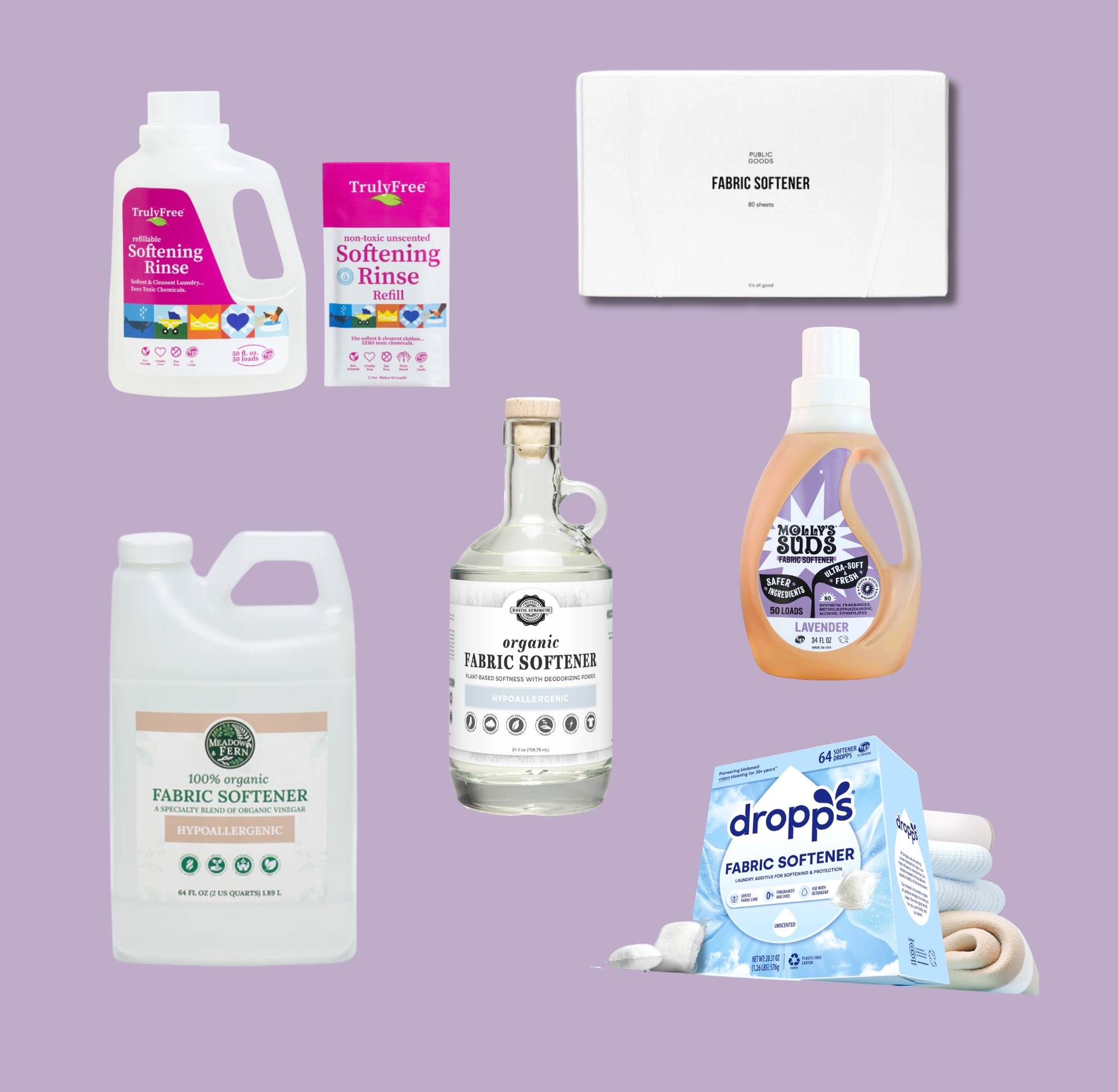
Let’s be honest: you probably don’t need fabric softener. Most eco-friendly laundry detergents and modern dryers are already designed to soften your clothes.
But if you absolutely must buy fabric softener, this guide covers the best non-toxic and eco-friendly fabric softener brands that won’t coat your clothes in harmful chemicals or contribute to unnecessary plastic waste.
The conventional fabric softener industry is forecast to be worth an estimated ~$23 billion globally by 2031, but most of those products contain quaternary ammonium compounds (“quats”), synthetic fragrances hiding undisclosed chemicals, and come in single-use plastic jugs. There are better options and that’s what we’ve set out to find for you.
What We Looked For
In evaluating eco-friendly fabric softeners for this guide, we prioritized the following (as much as possible):
- Formulas free from quats, synthetic fragrances, phthalates, parabens, optical brighteners, and other harmful chemicals
- Plant-based or naturally derived ingredients that are gentle on skin and effective at softening
- Thoughtful packaging (refillable, recyclable, or compostable options)
- Transparency about ingredient lists and sourcing
Our Research
We haven’t personally tested these fabric softeners in our own homes (unlike many of our other product guides) because we don’t really use any fabric softener, so this article is based on thorough research rather than hands-on reviews. For brands we work with through our sustainability rating system, we evaluated their initiatives across 22 criteria including supply chain, labor practices, and environmental commitments. See rated brands in our sustainable brand directory.
Note: This article focuses specifically on fabric softener products you can buy. If you’re looking for DIY options, alternatives, or other natural approaches, head to our fabric softener alternatives guide where we share our testing of different substitutions.
Related Guides: Non-Toxic Living Guide, Non-Toxic Laundry Detergent, Dryer Sheet Alternatives, Zero Waste Laundry Detergent, Sustainable Laundry Baskets, Eco-friendly Washing Machines, Eco-friendly Dryer Balls
We independently research all featured brands, and we ask them to confirm their claims. In many cases we personally review recommended products. This post contains affiliate links which means we may earn a commission if you buy something. We explain this further in our Terms of Use.
The Best Eco-Friendly Fabric Softeners
Best Plant-Based Pods: Dropps Fabric Softener | Mineral-based formula, compostable packaging, Certified B Corp | ~53c per pod
Best Vinegar-Based Liquid: Molly’s Suds Liquid Fabric Softener | Simple ingredients, Leaping Bunny certified, made in USA | ~34c per load
Best for Sensitive Skin: Truly Free Home Softening Rinse (Unscented) | Citric acid-based, refillable, safe for babies | ~$20 for starter kit (40c per load on the starter)
Best Organic (Vinegar-Based): Rustic Strength Organic Fabric Softener | Certified organic vinegar, certified Non-GMO, unscented | ~$32 for a 24 oz
Best Plant-Based Sheets: Public Goods Fabric Softener Sheets | 100% plant-based ingredients, fragrance-free, compostable and biodegradable | ~14c per sheet
Best Natural & Organic: Meadow & Fern Organic Fabric Softener | Certified organic, non-GMO, small-batch in USA | ~$37 for a gallon
Here are our top picks for non-toxic, eco-friendly fabric softeners:
Table of Contents: Best Non-Toxic Fabric Softeners
- Dropps Jump to brand
- Public Goods Jump to brand
- Molly's Suds Jump to brand
- Truly Free Home Jump to brand
- Rustic Strength Jump to brand
- Meadow & Fern Jump to brand
Dropps
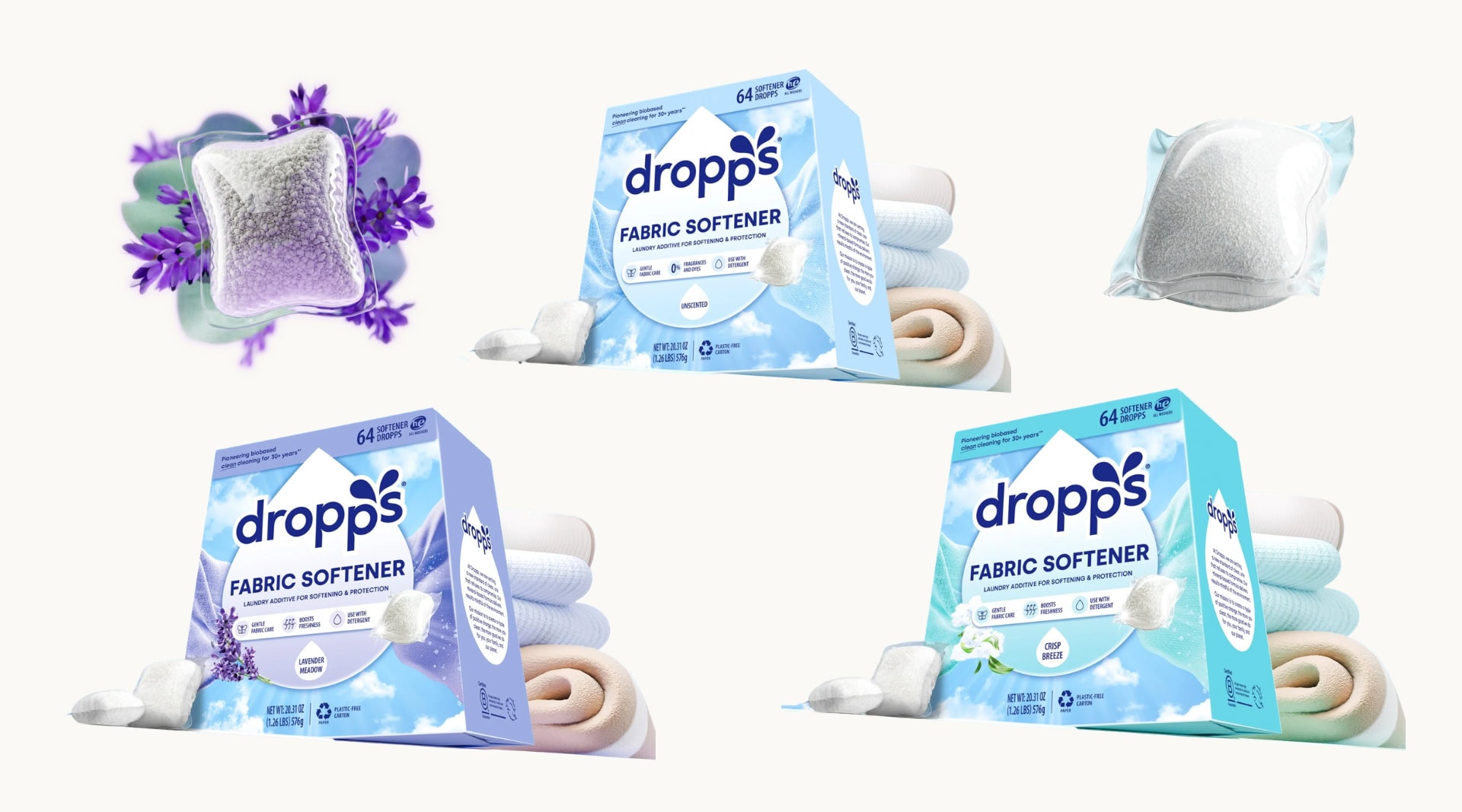
Dropps Eco-Friendly Fabric Softener Pods
- Format: Pre-measured dissolvable pods
- Scents: Lavender Meadow, Unscented, and others
- Key Ingredients: Sodium chloride (processing aid), bentonite (mineral softening agent), natural essential oils for scented variants (e.g. clove, eucalyptus, lavender, cornmint), polyvinyl alcohol (dissolvable pod film). The unscented formula contains just three ingredients: sodium chloride, bentonite, and PVA film.
- Made in: USA
- What makes it non-toxic: Free from synthetic fragrances, dyes, chlorine, and optical brighteners. The mineral-based formula softens without coating fabrics in waxy chemical residue.
- What makes it eco-friendly: Certified B Corp. Compostable and recyclable cardboard packaging. Carbon-neutral shipping. Supports Oceana for ocean conservation.
- Packaging note: While the cardboard packaging is plastic-free, the pods themselves are made of dissolvable polyvinyl alcohol (PVOH/PVA), which is biodegradable and septic-safe but technically not plastic-free. Read more about PVA concerns
- What we like: Pre-measured pods eliminate waste from overpouring. The formula maintains the wicking performance of athletic wear and keeps towels absorbent, which is a common issue with conventional softeners.
- Price: ~53c per pod (or 40c per pod if you subscribe and further savings if you buy in bulk)
Public Goods
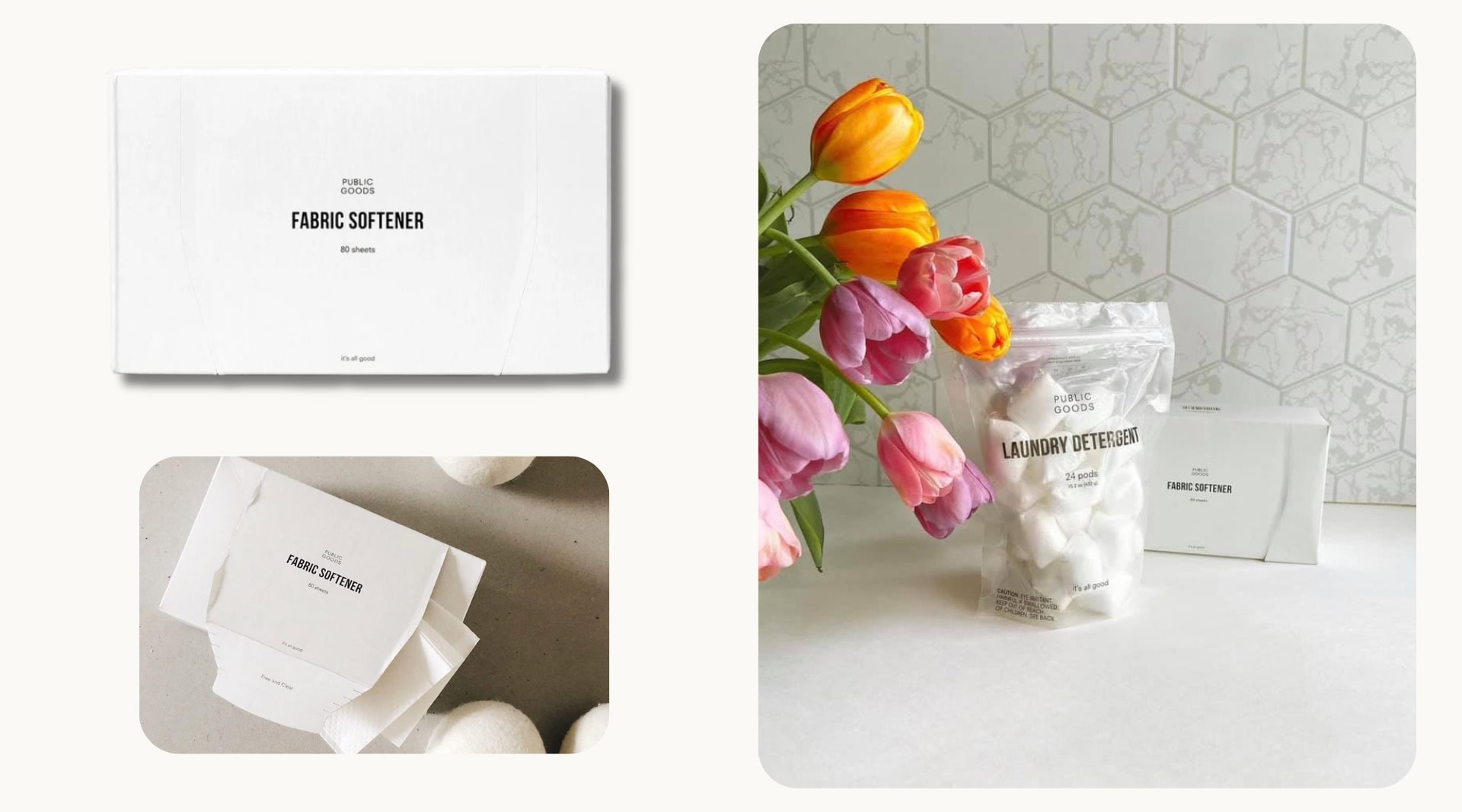
Public Goods Fabric Softener Sheets
- Format: Fabric softener sheets (80 per box)
- Scent: Fragrance-free
- Key Ingredients: C16-18 glycer (plant-derived softener), di-(palm carboxyethyl) hydroxyethyl methylammonium methyl sulfates (plant-based softener), C16-18 fatty acids (plant-derived softener)
- Made in: Wisconsin, USA
- What makes it non-toxic: Free from benzyl acetate, benzyl alcohol, ethanol, limonene, chloroform, parabens, synthetic fragrances, sodium lauryl sulfates, phthalates, and formaldehyde. Fragrance-free, gluten-free, and phosphate-free. Dermatologist-tested and hypoallergenic. Though the active softening ingredient (di-(palm carboxyethyl) hydroxyethyl methylammonium methyl sulfates) is a plant-derived quaternary ammonium compound, or “quat.” While it’s considered a safer, biodegradable alternative to the traditional quats used in conventional softeners (like DHTDMAC, which was banned in the EU), it is still structurally a quat. If you’re looking to avoid all quaternary compounds entirely, the vinegar-based options on this list (Rustic Strength, Meadow & Fern, Molly’s Suds) are better choices.
- What makes it eco-friendly: Compostable and biodegradable. Non-bioaccumulative (meaning the ingredients don’t build up in the environment over time). Public Goods ships carbon-neutral in recycled paper or compostable packaging and plants a tree for every order. They also donate to Feeding America and partner with Clean the World to repurpose old personal care packaging.
- What we like: These are a good transitional option for anyone switching from conventional fabric softeners who wants to keep the familiar sheet format. Being fragrance-free makes them suitable for sensitive skin and baby laundry. The fully plant-based formula is a significant improvement over conventional sheets.
- Note: Public Goods claims these sheets are also compostable, but they are not certified home compostable. The sheets use a rayon base, which is plant-derived but goes through chemical processing. These are added to the dryer with wet clothes (not to the wash cycle).
- Price: ~14c per sheet ($10.95 for a pack of 80, save 5% if your subscribe)
Molly's Suds
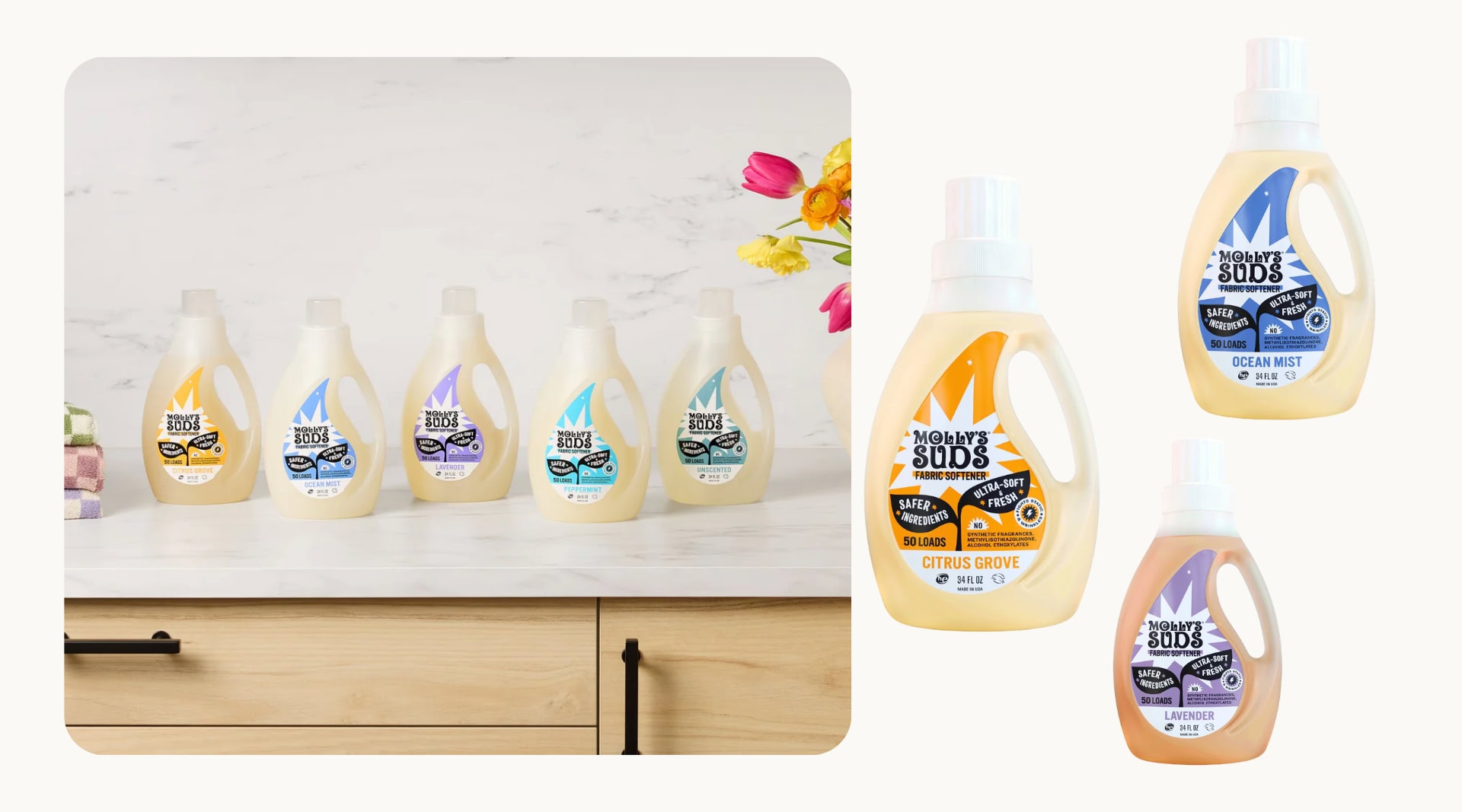
Molly’s Suds Liquid Fabric Softener
- Format: Liquid in bottle (50 loads)
- Scents: Citrus Grove, Lavender, Ocean Mist, Peppermint, Unscented
- Key Ingredients: Water, white vinegar, glycerin (vegetable-derived), sodium bicarbonate, xanthan gum, polyglyceryl-4 laurate/sebacate, polyglyceryl-6 caprylate/caprate, potassium sorbate, sodium benzoate, natural fragrance (derived from plant essences and oils; only in scented versions)
- Made in: USA (with domestic and imported clean ingredients)
- What makes it non-toxic: Vinegar-powered formula that softens by removing residue and buildup from fibers rather than coating them with chemicals. Free from quats, synthetic fragrances, dyes, formaldehyde, 1,4-dioxane, optical brighteners, phosphates, chlorine, phthalates, parabens, methylisothiazolinone, and cocamide DEA.
- What makes it eco-friendly: Leaping Bunny certified cruelty-free. Vegan. Made in the USA.
- What we like: The vinegar-based approach is a clever middle ground. Rather than coating fabrics with softening agents, vinegar naturally removes soap residue and mineral deposits, which is what makes clothes feel stiff in the first place. The glycerin draws moisture into fabrics to reduce static and wrinkles. It’s a more honest approach to softening.
- Note: Comes in a plastic bottle. Molly’s Suds does not currently offer a refill system for the fabric softener.
- Price: ~34c per load (50 loads for $16.99, save 5% if you subscribe)
Truly Free Home
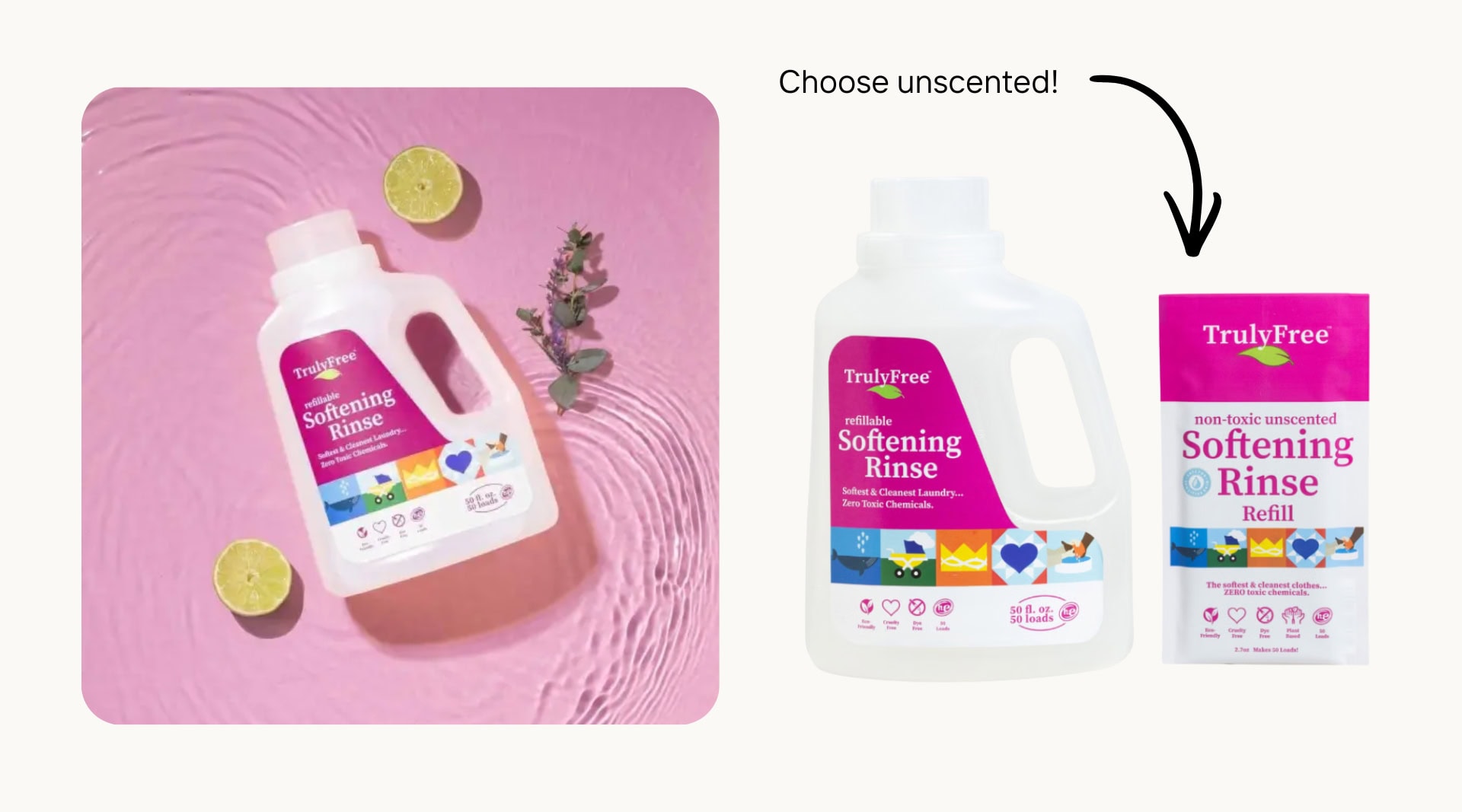
Truly Free Home Softening Rinse
- Format: Liquid softening rinse in refillable “Forever Jug” with mix-at-home refill packets
- Scents: Unscented (recommended) and Signature Scent
- Key Ingredients (Unscented): Citric acid (plant-based cleaning agent), sodium chloride (salt), Sodium Benzoate, Sodium Gluconate
- Made in: Williamsburg, Michigan, USA
- What makes it non-toxic: The unscented formula received an EWG “A” rating with just three simple ingredients. The Signature Scent received a B rating from EWG. Works by softening the water itself rather than coating fabrics in chemical residue. Safe for sensitive skin, babies, and pets.
- What makes it eco-friendly: Refillable system reduces plastic waste. Your first order includes a “Forever Jug” that you reuse by mixing in refill pouches with hot water. Biodegradable formula. Septic-safe.
- What we like: The refill system is well thought out and genuinely reduces plastic waste. The citric acid approach is different from most softeners, and the EWG ratings provide third-party validation of ingredient safety.
- Note: The Signature Scent formula contains a cationic surfactant (lauryl trimethyl ammonium chloride), which is a gentler alternative to traditional quats but is still a chemical softening agent. If you want the simplest formula, opt for the Unscented version.
- Price: ~40c per load for the starter kit (jug + refills), ~$18 for refill packs (each refill makes 50 loads so ~36c per load for the refills on subscription)
Rustic Strength
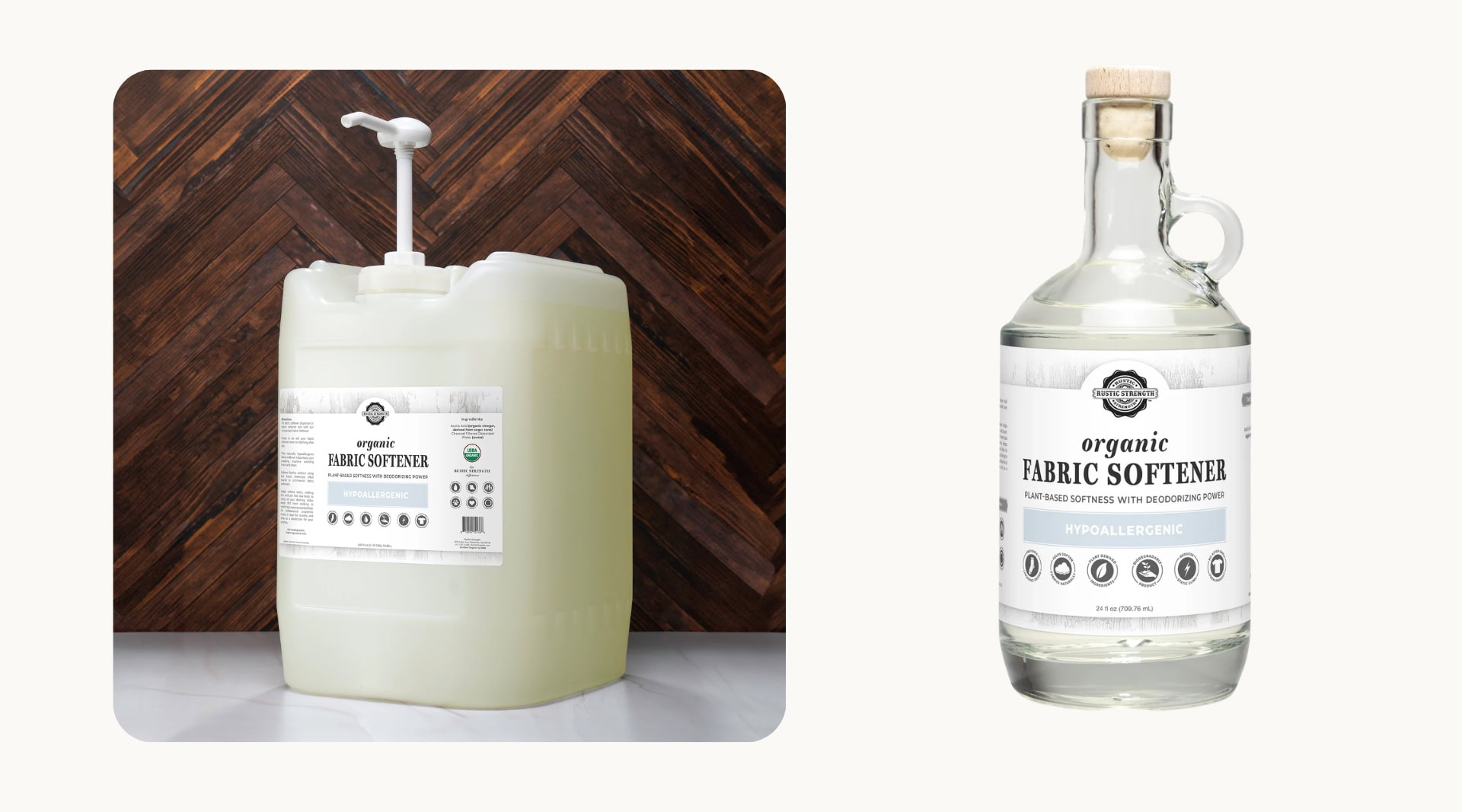
Rustic Strength Organic Fabric Softener
- Format: Liquid (essentially organic vinegar)
- Scent: Unscented
- Key Ingredients: Organic acetic acid, charcoal filtered deionized water
- Made in: Mansfield, Missouri, USA
- What makes it non-toxic: This is, at its core, certified organic vinegar repackaged for laundry use. The ingredient list is as simple as it gets: just organic acetic acid and purified water. No additives, fragrances or preservatives.
- What makes it eco-friendly: Certified organic by Quality Assurance International. Certified Non-GMO by the Non-GMO Project. 100% biodegradable. Rustic Strength offers a container return and reuse program where you can earn credits by shipping back your containers for them to sanitize, refill, and reuse.
- What we like: If you want vinegar as a fabric softener but don’t want to figure out the right concentration or worry about sourcing food-grade vinegar, this takes the guesswork out of it. The organic and Non-GMO certifications add assurance. And the container return program is a nice circular economy touch.
- Note: This is essentially vinegar. If you already use vinegar in your laundry as a softener (which we recommend), you may not see the need to buy a branded version. That said, the concentration is optimized for laundry use and the certifications provide peace of mind for those who want them.
- Price: ~$32 for a 24 oz glass bottle (though various sizes are available and it’s cheaper to buy bigger volumes)
Meadow & Fern
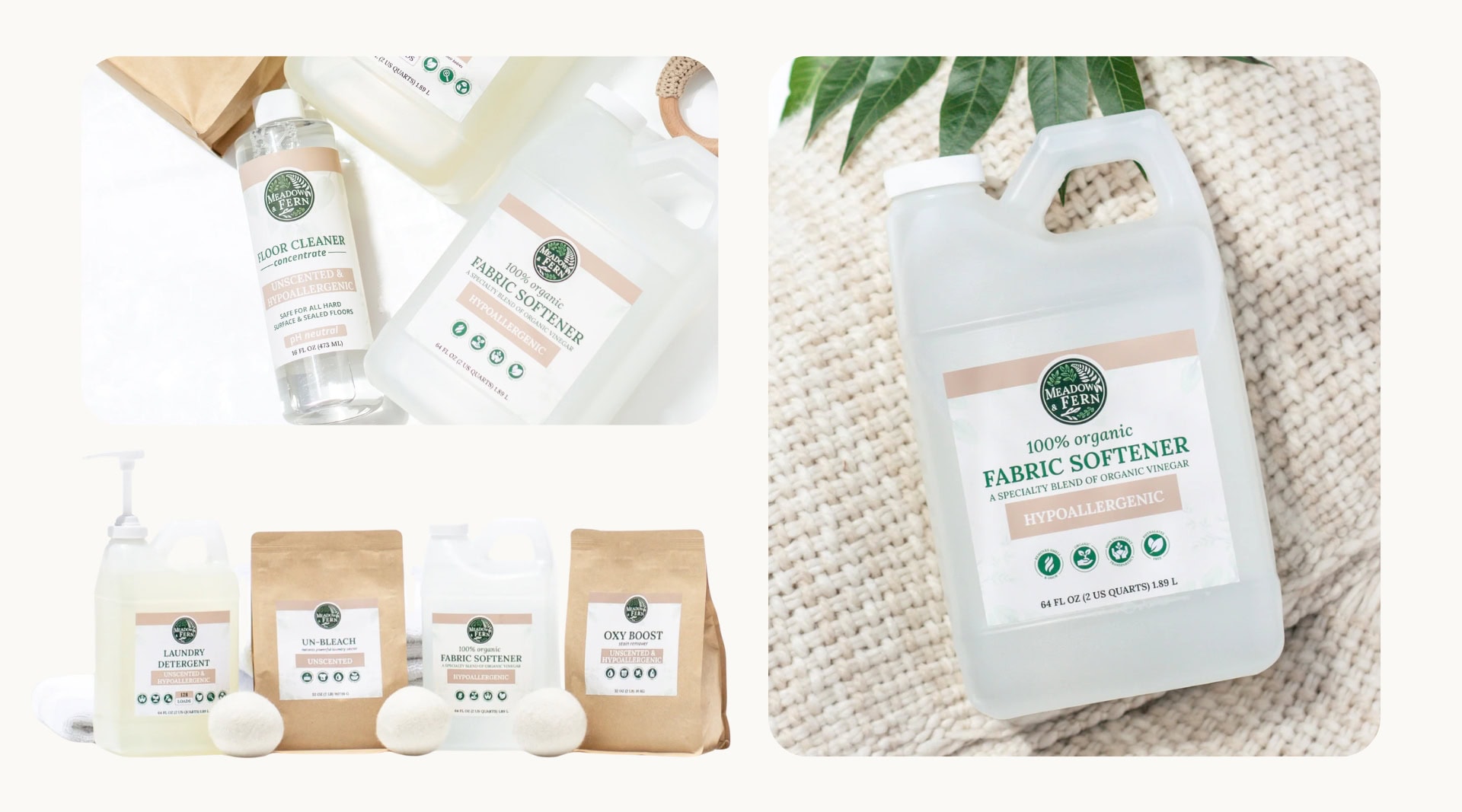
Meadow & Fern Organic & Natural Fabric Softener
- Format: Liquid (organic vinegar-based)
- Scent: Unscented
- Key Ingredients: Organic acetic acid, charcoal filtered deionized water
- Made in: USA (small-batch, produced daily)
- What makes it non-toxic: Like Rustic Strength, this is a certified organic vinegar formula with no added chemicals, fragrances, or preservatives. Hypoallergenic. Safe for babies, pregnancy, and sensitive skin.
- What makes it eco-friendly: Certified organic by Quality Assurance International. Certified Non-GMO by the Non-GMO Project. 100% biodegradable. Septic-safe and greywater-safe. Small-batch production in the USA.
- What we like: Meadow & Fern is a family-run business focused on non-toxic home cleaning. Their fabric softener is produced in small batches daily, which means freshness. Like Rustic Strength, this is a vinegar-based solution, but Meadow & Fern’s broader product range (including laundry detergent, stain remover, and dishwasher soap) means you can build a complete non-toxic laundry routine from one brand.
- Note: Same caveat as Rustic Strength: this is essentially organic vinegar formulated for laundry. If you’re already using vinegar, you may not need a separate product, but the certifications and optimized formulation are worth considering.
- Price: ~$37 for a gallon
Why Switch to a Non-Toxic Fabric Softener (Or Skip It Altogether)?
Before we dive into the health and environmental concerns with conventional fabric softeners, we want to reiterate: the best eco-friendly fabric softener might be no fabric softener at all. Modern laundry detergents are formulated to clean and soften, and there are plenty of simple alternatives (like vinegar or dryer balls) that work without the chemical cocktail.
That said, here’s why conventional fabric softeners are worth avoiding.
Health Concerns with Conventional Fabric Softeners
Conventional fabric softeners work by coating fabrics in a thin film of chemical lubricants. These chemicals then sit against your skin all day, potentially being absorbed. According to the Environmental Working Group (EWG), fabric softeners commonly contain:
- Quaternary ammonium compounds (“quats”) are the primary active ingredient in most conventional fabric softeners. These cationic surfactants coat fibers to create a slippery feel, but they’re associated with asthma and respiratory issues, skin irritation, and have been found to be toxic to aquatic life. Research published in the journal Air Quality, Atmosphere & Health found that dryer vents emitting fabric softener chemicals released more than 25 volatile organic compounds, including seven classified as hazardous air pollutants.
- Synthetic fragrances in fabric softeners can represent dozens of undisclosed chemicals. In the US, companies are not required to disclose the individual ingredients hidden behind the term “fragrance”, which can include phthalates (endocrine disruptors linked to reproductive issues), allergens, and sensitizers.
- Other concerning ingredients commonly found in conventional fabric softeners include benzyl acetate (loosely linked to pancreatic cancer), chloroform (a neurotoxin and carcinogen), and preservatives like methylisothiazolinone.
Many conventional fabric softeners also contain animal-derived ingredients such as dihydrogenated tallow dimethyl ammonium chloride, derived from animal fat.
Environmental Impact of Conventional Fabric Softeners
The environmental concerns with fabric softeners extend beyond the ingredients inside the bottle.
Plastic packaging is a major issue. Most fabric softener bottles are single-use plastic that is technically recyclable but often not recycled in practice.
Chemical runoff from fabric softeners enters waterways when washed down the drain. Quats and other surfactants are poorly biodegradable and toxic to aquatic organisms. These chemicals can disrupt biodiversity in waterways and accumulate in the environment.
Do You Actually Need Fabric Softener?
The short answer is probably not.
Fabric softeners were originally developed in the 1950s when harsh detergents left clothes scratchy and stiff. Today’s detergents are formulated to clean effectively without leaving that stiff residue.
Fabric softeners don’t actually soften your clothes in a traditional sense. They coat fibers in a chemical film that makes clothes feel soft and reduces static. But this coating can actually cause problems over time, including reduced absorbency in towels, decreased moisture-wicking in athletic wear, and buildup that makes fabrics less breathable. For items like activewear that need to remain breathable, fabric softener can actually reduce performance.
If you’re experiencing stiff or scratchy laundry, the culprit is more likely hard water, detergent residue, or overdrying. Solutions include adding half a cup of white vinegar to the rinse cycle, using wool dryer balls to physically soften fabrics in the dryer, or simply air-drying your clothes.
What to Look For (and Avoid) in Non-Toxic & Natural Fabric Softeners
Ingredients to Avoid
- Quaternary ammonium compounds (quats): The primary softening agent in most conventional brands. Associated with respiratory issues, skin irritation, and aquatic toxicity.
- Synthetic fragrances: Can hide dozens of undisclosed chemicals including phthalates and allergens. Look for “fragrance-free” or products scented only with essential oils.
- Phthalates: Endocrine disruptors often hidden within fragrance formulations.
- Benzyl acetate and benzyl alcohol: Linked to irritation and potential carcinogenicity.
- Chloroform: A neurotoxin and carcinogen found in some formulations.
- Optical brighteners: Chemicals that stay on fabric and can cause skin irritation.
- Methylisothiazolinone (MIT): A preservative that is a known skin sensitizer.
- Animal-derived tallow: Used as a softening agent in many conventional brands.
Safer Alternatives to Look For
- Vinegar (acetic acid): Naturally removes soap residue and mineral deposits, leaving clothes softer. The most natural approach to softening.
- Citric acid: A plant-derived acid that softens water and helps reduce mineral buildup on fabrics.
- Plant-based glycerin: A vegetable-derived humectant that draws moisture into fabrics, reducing static and wrinkles.
- Mineral-based formulas: Ingredients like bentonite (used by Dropps) can soften fabrics without chemical coatings.
- Plant-derived surfactants: Gentler alternatives to traditional quats, derived from coconut or palm oil. Look for brands that use RSPO-certified palm oil if applicable.
- Essential oils: Provide natural scent without synthetic fragrances. Not all essential oils are skin-safe, so look for brands that use tested, skin-safe blends.
How We Chose The Best Non-Toxic & Sustainable Fabric Softeners
Ingredient Safety
Every recommendation had to meet our core standards: no traditional quats, no synthetic fragrances, no phthalates, no parabens, no optical brighteners, no chlorine, and transparent ingredient lists. We prioritized brands that disclose all ingredients and, where possible, have third-party verification like EWG ratings.
Effectiveness
A non-toxic fabric softener still needs to work. We looked for brands with strong customer reviews confirming effectiveness at reducing static, softening fabrics, and (for scented options) providing a pleasant, natural fragrance that doesn’t linger excessively.
Sustainability Considerations
Given our focus on sustainability, we also considered packaging (refillable and plastic-free options preferred), certifications (B Corp, Leaping Bunny, organic, Non-GMO), manufacturing location and transparency, and end-of-life considerations for packaging.
Value
We included options across various price points, from budget-friendly vinegar-based options to more premium refillable systems.
Frequently Asked Questions on Non-Toxic & Eco-Friendly Fabric Softeners
Is fabric softener necessary? No. Most modern laundry detergents are formulated to clean without leaving clothes stiff. If you’re looking for softness, vinegar in the rinse cycle, wool dryer balls, and air-drying are effective, chemical-free alternatives.
Is fabric softener bad for your washing machine? Conventional fabric softeners can leave waxy residue that builds up inside your washing machine over time, potentially leading to mold growth and reduced function. Vinegar-based softeners, by contrast, actually help clean your machine.
Is vinegar a good fabric softener? Yes. White vinegar is one of the best natural fabric softeners. It works by dissolving soap residue and mineral deposits that make clothes feel stiff. Add half a cup to the rinse cycle. The vinegar smell dissipates during drying. Several brands on our list (Molly’s Suds, Rustic Strength, and Meadow & Fern) use vinegar as their primary softening ingredient.
Are fabric softeners bad for the environment? Conventional ones, yes. They contain non-biodegradable quats that are toxic to aquatic life, and the plastic packaging contributes to landfill waste. The eco-friendly fabric softeners on our list use biodegradable ingredients and more sustainable packaging.
What about fabric softener and babies? Babies have sensitive skin that is particularly vulnerable to chemical irritants. If you must use a softener on baby clothes, choose an unscented, hypoallergenic option like Truly Free Home’s unscented rinse or Rustic Strength’s organic formula. Better yet, skip fabric softener entirely for baby laundry and use a gentle detergent instead.
What’s the difference between fabric softener and dryer sheets? Liquid fabric softener is added during the wash cycle’s rinse phase, while dryer sheets are tossed in the dryer. Both serve a similar purpose (softening, reducing static), but they work differently.
Can I use fabric softener on all fabrics? No. Avoid using fabric softener (even eco-friendly versions) on towels (it reduces absorbency), athletic and moisture-wicking fabrics, wool, cashmere, silk, and flame-retardant clothing (especially children’s sleepwear). These fabrics either don’t need it or can be damaged by the coating.
Is Downy fabric softener non-toxic? No. Downy, like most conventional fabric softeners, contains quats, synthetic fragrances, dyes, and other chemicals that don’t meet non-toxic standards. The same applies to most mainstream brands like Snuggle, Gain, and Bounce.
What is the most eco-friendly way to soften clothes? Skip the product altogether and use one of these methods: add half a cup of white vinegar to the rinse cycle, use wool dryer balls in the dryer, wash in cold water with a gentle detergent, or air-dry your clothes (the sun naturally softens fabrics).
Final Thoughts on The Best Eco-Friendly Fabric Softeners
We’ll say it one more time: the most sustainable fabric softener is the one you don’t buy. A splash of vinegar in the rinse cycle or a set of wool dryer balls will do the job for most people without any environmental or health concerns.
But if you want a dedicated product, the brands on this list offer safer alternatives to conventional fabric softeners. For the simplest, most natural option, Molly’s Suds, Rustic Strength, and Meadow & Fern all use vinegar-based formulas with transparent ingredient lists. For a more traditional softening experience without the toxic chemicals, Dropps’ mineral-based pods are a solid choice. And for families with sensitive skin or young children, Truly Free Home’s citric acid-based unscented rinse offers a gentle, EWG-validated approach.
Whatever you choose, ditching conventional fabric softeners means fewer quats, synthetic fragrances, and plastic jugs in your life and in our waterways. And that’s a win for everyone.
Editor’s Note: This article was first published in March 2023 and has been significantly updated in March 2026 to include new brands, updated product information, expanded health and environmental context, and more comprehensive ingredient guidance. Joy McConnochie has been researching sustainable home products for 8+ years as part of Sustainable Jungle’s mission to help people make more informed, environmentally responsible choices.

Joy has been a passionate advocate for the environment since she was a small child. She grew up in South Africa and has been lucky enough to be exposed to the wonders of nature not just in Africa but all over the world. She founded Sustainable Jungle (together with her husband Lyall) back in 2017 after becoming enraged by the devastating impact of palm oil. She then founded the Sustainable Jungle Podcast and together with Lyall interviewed remarkable people from all over the world who were finding ways to create positive impact. Outside of Sustainable Jungle, Joy has always worked in the corporate world, starting out as an auditor and later moving into management consulting. More recently she specialized in Climate Investing for the Asia Pacific region. Given her experience, her current passion is Brand Ratings. She is very much enjoying going deeper on what it really means to drive sustainability performance and true impact through business operations.