













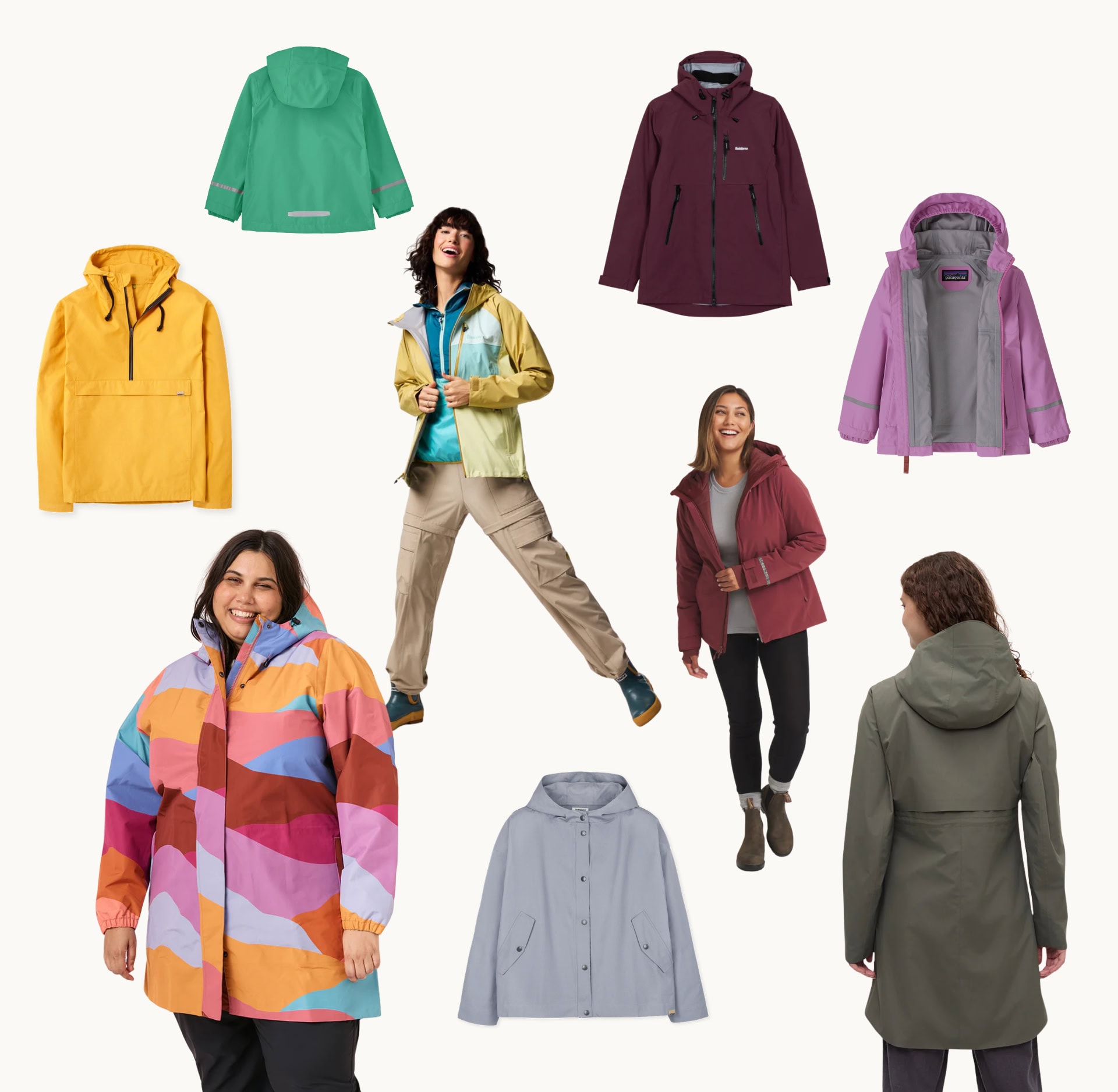
Love ’em or hate ’em, our changing climate means more rainy days, making a good rain jacket a wardrobe essential. But the forecast most people miss is that traditional rainwear is almost always made from microplastic-shedding virgin synthetic fabrics and coated in toxic PFAS “forever chemicals” that never break down in the environment.
Not to rain on your parade, but a recent Danish study found PFAS in 13 out of 17 rain jackets tested from popular online retailers, while an international study by IPEN detected these chemicals in nearly 64% of jackets across 13 countries.
With that in mind, we’ve weather-proofed our wardrobe considerations to find the best sustainable raincoat brands that keep you dry without the toxic baggage.
What We Looked For
In evaluating the best sustainable rain jackets for this guide, we prioritized the following (as much as possible):
- PFAS-free (PFC-free) waterproofing and DWR treatments (DWR stands for Durable Water Repellent, a coating applied to the outer fabric that causes rain to bead up and roll off rather than soaking in)
- Use of recycled, organic, or responsibly sourced materials
- Ethical supply chains with fair labor practices and third-party audits
- Certifications that back up sustainability claims (B Corp, bluesign, Fair Trade, GRS, GOTS, OEKO-TEX)
- Real waterproof performance suitable for everyday and outdoor use
Our Testing, Ratings & Research
While we haven’t personally tested every rain jacket on this list (it’s hard to test them all when you live in climates that don’t rain year-round!), we’ve conducted thorough research on each brand’s materials, supply chain practices, and sustainability credentials. For brands we work with through our sustainability rating system, we evaluated their initiatives across 22 criteria including supply chain, labor practices, and environmental commitments. See other rated brands in our sustainable brand directory.
For all brands, we researched waterproofing technologies, PFAS status, certifications, and ethical practices to bring you the most responsible options available.
Related Guides: Sustainable Rain Boots, Sustainable Clothing Brands, Sustainable Outdoor Clothing, Sustainable Winter Coats, Sustainable Activewear, Sustainable Hiking Boots, What Are Forever Chemicals (PFAS)?
We independently research all featured brands, and we ask them to confirm their claims. In many cases we personally review recommended products. This post contains affiliate links which means we may earn a commission if you buy something. We explain this further in our Terms of Use.
The Best Sustainable Rain Jackets & Raincoats
Best Rated Brand: Paka Apu Parka | Rated by Sustainable Jungle, PFAS-free, PAKAFILL alpaca insulation, 10,000mm waterproof, B Corp | ~$399
Best Overall: Patagonia Torrentshell 3L | 100% recycled, fully PFAS-free, Fair Trade Certified, lifetime repair guarantee | ~$189
Best Everyday Wear: tentree Nimbus Rain Jacket | 100% recycled polyester, PFC-free DWR, B Corp, 10 trees planted per purchase | ~$200-$280
Best Technical Shell: Cotopaxi Impermeo 3L | 100% post-consumer recycled, PFAS-free, Fair Wear, two-way stretch, 10K/10K rated | ~$225
Best UK Brand: Finisterre Stormbird Jacket | 100% recycled nylon, 20K waterproof, PFC-free DWR, B Corp | ~$320
Best Natural Fabric (mostly): Rapanui | GOTS-certified cotton canvas with PFC-free coating, made on the Isle of Wight, circular model | ~£60-£150
Best Inclusive Sizing: Amble Refuge Jacket | 100% GRS-certified recycled polyester, PFC-free DWR, sizes XS-4XL, BSCI-certified, women-owned | ~$219
Here are our top picks for sustainable rain jackets, based on thorough research into materials, ethics, and environmental impact. Pricing is approximate and current at the time of writing. Sprinkle your way to the end of the article for our deep dive into why PFAS-free matters, a rain jacket materials guide, and FAQs.
Table of Contents: Best Sustainable Rain Jackets
- Paka Jump to brand
- Patagonia Jump to brand
- tentree Jump to brand
- Cotopaxi Jump to brand
- Finisterre Jump to brand
- Rapanui Jump to brand
- Amble Jump to brand
- Additional Eco-Friendly Rain Jacket Options: Notable Mentions Jump to brand
Paka

Compostable
All or some products are compostable, either in an industrial facility or at home
Ethical Sourcing
Raw materials have been sourced ethically with people and planet in mind.
Handcrafted
Products have been made by hand, typically by an artisan or group of artisans.
Locally Made
Products are made local to the brand's headquarters.
Recycled materials
Some or all products are made with recycled materials
Thoughtful packaging
Product packaging has been designed and created with the end of life outcome in mind and can be easily recycled or composted.
B Corp
GOTS
OEKO-TEX®
B Corp
The B Corp Certification, administered by the nonprofit B Lab, recognizes companies that meet high standards of verified social and environmental performance, transparency, and accountability. Certified B Corps balance profit with purpose, committing to responsible practices that benefit workers, communities, customers, and the planet while embedding sustainability into their business model.GOTS
The GOTS (Global Organic Textile Standard) certification is the world’s leading standard for organic fibers. It covers every step of production, from harvesting raw fibers to environmentally and socially responsible manufacturing, and prohibits toxic dyes, GMOs, and harmful chemicals. GOTS also enforces fair labor practices.OEKO-TEX®
The OEKO-TEX® Standard 100 certification ensures that every component of a textile product (threads, buttons, zippers, and fabrics) has been independently tested for harmful substances. Managed by the International Association for Research and Testing in the Field of Textile and Leather Ecology, it guarantees products are safe for human health, meeting strict global limits for chemicals such as pesticides, heavy metals, formaldehyde, and PFAS.Paka Apu Parka
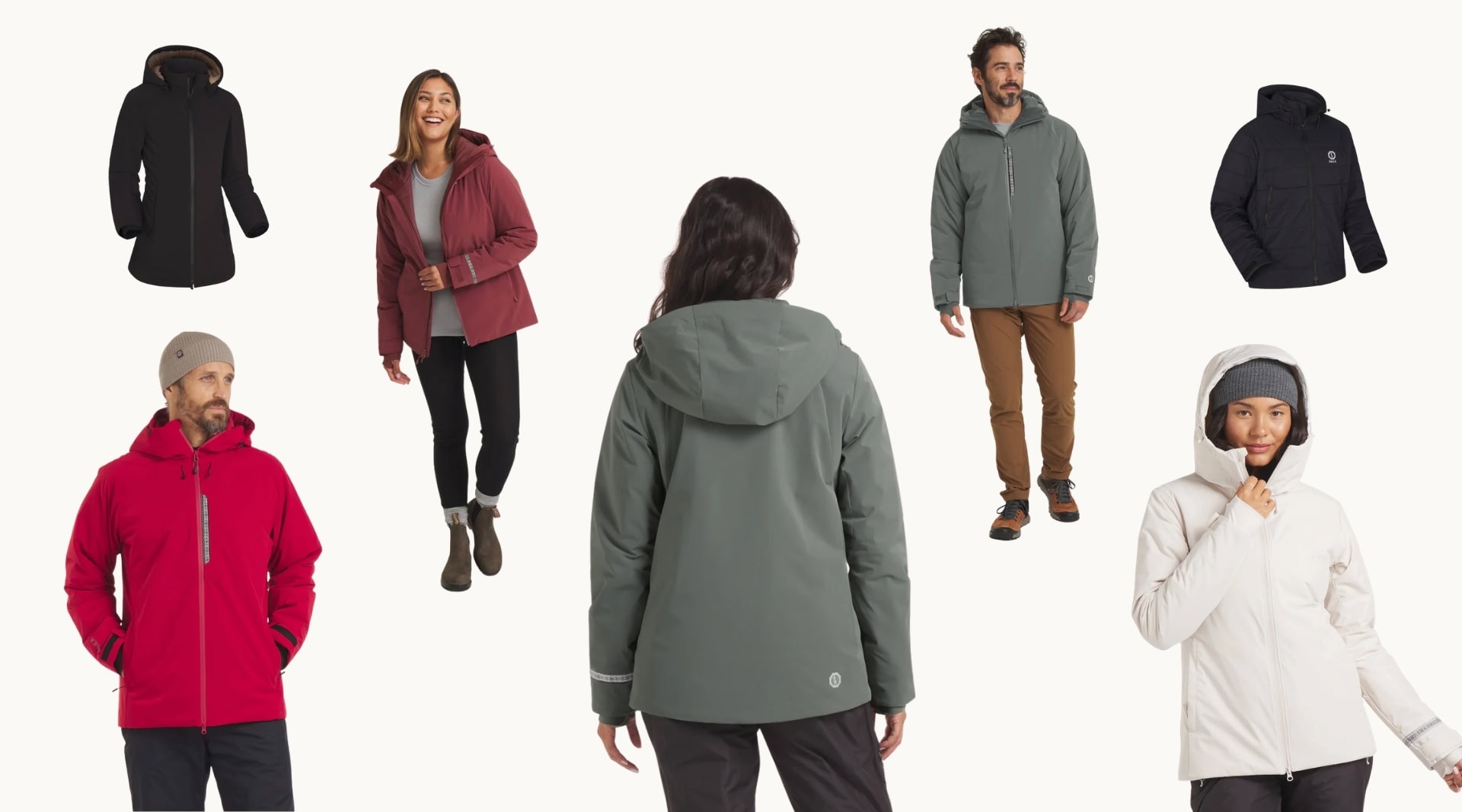
- Recommended jacket: Apu Parka (men’s and women’s). For a lighter option: Huascaran Jacket (retro mountaineering-inspired, Pertex shell with NetPlus recycled nylon from ocean fishing nets)
- Waterproof rating: 10,000mm waterproof stretch shell (Apu Parka)
- Materials: 100% recycled, bluesign-certified, PFAS-free 4-way stretch shell. Insulated with PAKAFILL, Paka’s patented alpaca fiber insulation sourced from free-roaming alpacas in Peru.
- PFAS status: Fully PFAS-free. Shell fabric uses an eco durable water repellent finish with no intentionally added PFAS.
- Key features (Apu Parka): Helmet-compatible hood with stiffened brim, pit zips, drop-back hem with dual adjustable drawcords, internal cuffs with thumbholes, draft collar, two-way zipper, large interior pockets
- Made in: Garments manufactured in Vietnam. Shell fabric made in Taiwan; PAKAFILL insulation sourced and initially processed in Peru. Paka employs 200+ Quechua weavers at 4x the living wage.
- Certifications: Certified B Corp, bluesign certified, OEKO-TEX 100 certified
- Sustainability highlights: Fully traceable supply chain (each jacket includes a QR code linking to the exact farm coordinates where the alpaca fiber was sourced). ISPO Award 2023 winner. PAKAFILL insulation requires no fossil fuels to produce (unlike synthetic insulation) and is cruelty-free (sourced from annual shearing, not harming animals). Supports 300+ women artisans in Peru. 1% of revenue donated to Peruvian Hearts NGO.
- Inclusivity: Women’s XS-XL; Men’s S-XXL
- What we love: Paka is one of our rated brands and is doing something different in the outerwear space. The Apu Parka is a seriously warm, waterproof parka designed for extreme conditions (rated to -20F). But for anyone who needs a sustainable winter coat that also handles rain, it’s an exceptional choice. The traceable alpaca insulation, the community impact in Peru, and the PFAS-free waterproof shell make this a standout. PAKAFILL has been tested warmer than any synthetic insulation on the market, and unlike down, it stays warm when wet. If you want a lighter, more packable option from Paka, the Huascaran Jacket uses Pertex fabrics with NetPlus recycled nylon made from discarded fishing nets.
- Note: This is a premium insulated parka rather than a lightweight rain shell. If you need a packable everyday rain jacket, other options on this list may suit better.
- Price: ~$399 (Apu Parka & Huascaran Jacket)
Paka has been rated by Sustainable Jungle. See the full rating.
Patagonia
Patagonia has not been rated.
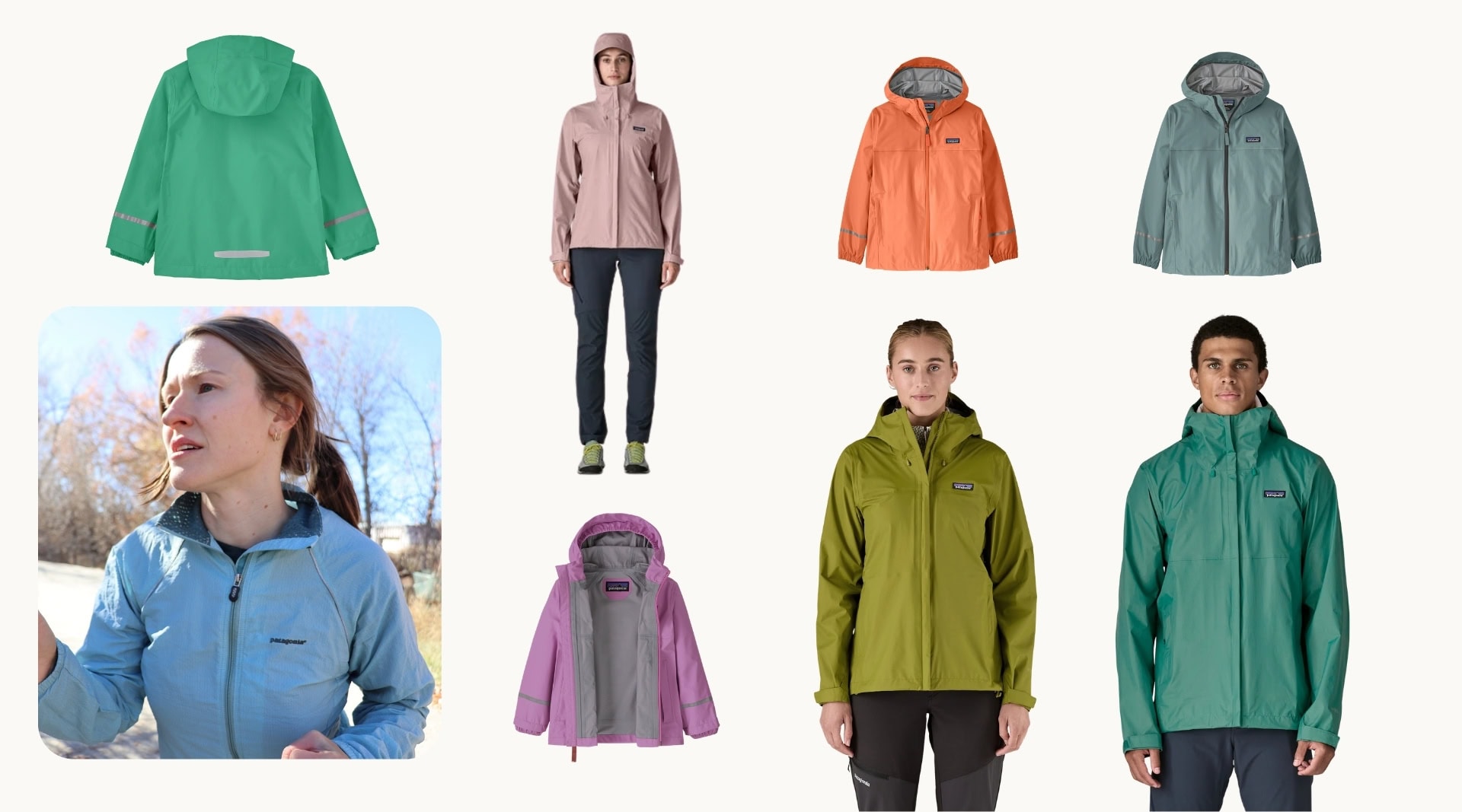
Patagonia Torrentshell 3L Rain Jacket
- Recommended jacket: Torrentshell 3L Rain Jacket (men’s and women’s). Also available: Torrentshell 3L Rain Parka (women’s, trench-inspired longer length) and kids’ styles. Though note Amber, our Head of Content, has reviewed one of their other rain jackets below – the Houdini.
- Waterproof rating: 3-layer H2No Performance Standard
- Materials: 100% recycled nylon (ECONYL) ripstop face, polycarbonate PU membrane with 13% biobased content, tricot backer
- PFAS status: Fully PFAS-free. Fabric, membrane, and DWR finish are all made without intentionally added PFAS. As of spring 2025, 100% of Patagonia’s new waterproof products are PFAS-free.
- Key features: Adjustable hood with laminated visor, pit zips for ventilation, microfleece-lined neck, Velcro cuff closures, adjustable drawcord hem, packs into its own pocket
- Made in: Fair Trade Certified factory
- Certifications: Fair Trade Certified, 1% for the Planet (founding member), B Corp
- Sustainability highlights: 95% of polyester is recycled (by weight), 84% of nylon contains recycled content. Ironclad Guarantee offers lifetime repairs. Worn Wear program for resale and recycling. Packaging made from FSC/SFI-certified recycled content. Net zero target by 2040.
- Inclusivity: Women’s XS-XXL; Men’s XS-3XL. Kids’ rain jacket styles also available.
- What we love: This is the benchmark sustainable rain jacket. The Torrentshell combines waterproof performance with industry-leading sustainability credentials at a price that won’t soak your wallet. The fact that Patagonia has achieved fully PFAS-free waterproofing across their entire range, while maintaining Fair Trade production and offering lifetime repairs is impressive.
- Price: ~$189
My Personal Review of Patagonia’s Houdini Jacket:
“As a long-time Patagonia fan, I own more of their stuff than I should probably admit (in my defense, almost all was procured secondhand!), but one absolute essential for my workout routine is the Houdini Wind Jacket. This ultralight 100% recycled nylon windbreak is a favorite for an early morning run or hike in the mountains. Especially if I’m going out on a longer outing where I’m likely to get too hot, I love that this packs down into its own pocket, so I don’t even have to break stride to shed layers.”
Review by Amber McDaniel, SJ’s Head of Content
tentree
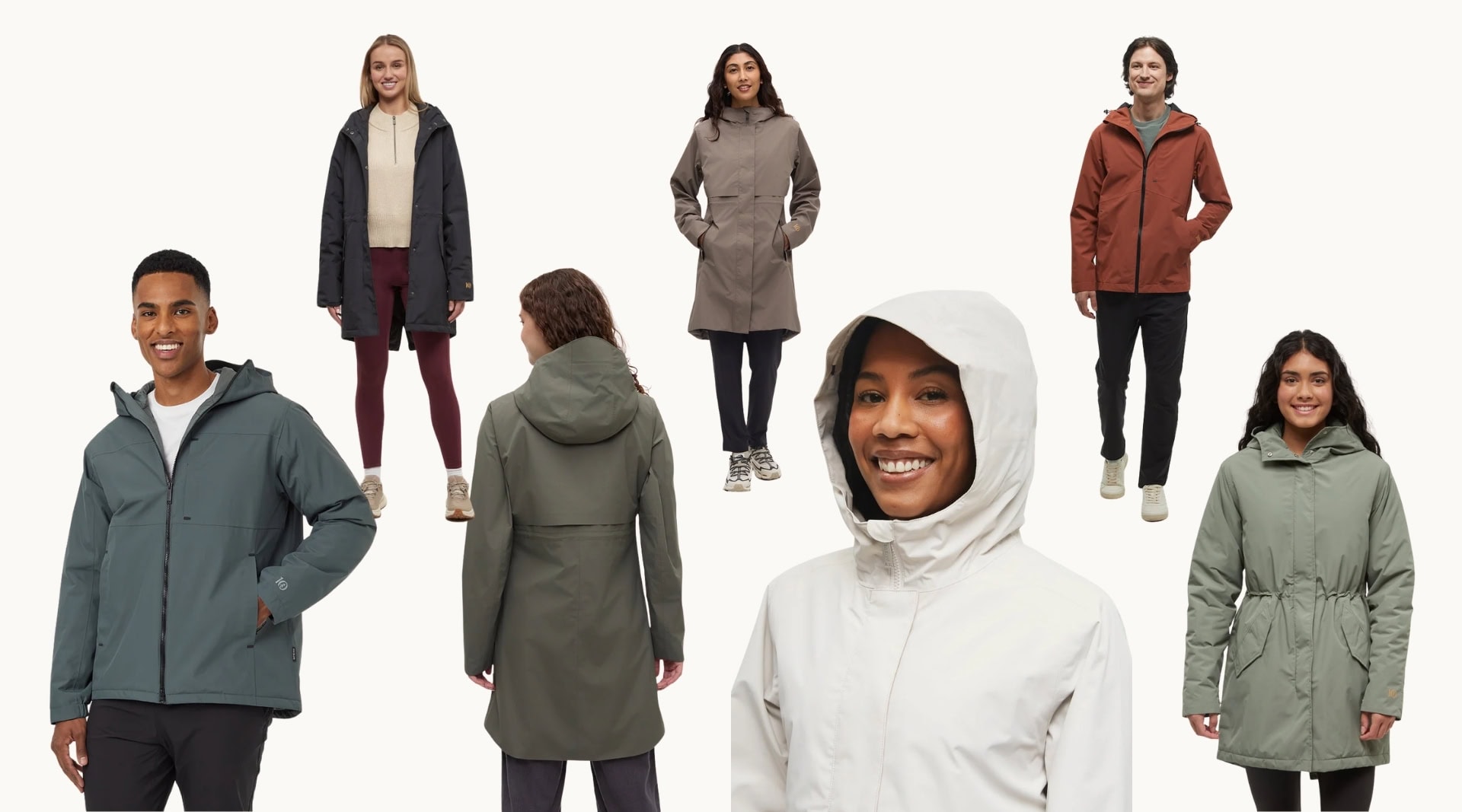
tentree has not been rated.
tentree Nimbus Rain Jacket
- Recommended jacket: Nimbus Long Rain Jacket (women’s) and Nimbus Rain Jacket (men’s)
- Waterproof rating: 10,000mm waterproof
- Materials: 100% recycled polyester fabric with bluesign-approved, PFC-free DWR finish. Some styles feature a 75% recycled TPU membrane for additional waterproof protection.
- PFAS status: PFC-free DWR finish across rain jacket line
- Key features: Fully lined with fully taped seams, adjustable hem and hood, zippered hand pockets. The long rain jacket version offers extended coverage.
- Made in: Factories regularly audited by Fair Wear Foundation, GOTS, SMETA, and WRAP. All suppliers must adhere to tentree’s Supplier Code of Conduct.
- Certifications: Certified B Corp, Climate Label Certified
- Sustainability highlights: 10 trees planted for every purchase (over 100 million planted to date across global reforestation projects, verified by Veritree). FSC-certified and mostly recycled paper tags. Compostable paper twine replaces polybags. 100% recyclable shipping mailers. Circularity program for buying and selling used tentree garments.
- Inclusivity: Women’s XS-XL; Men’s S-XXL
- What we love: tentree offers everyday rain protection at a mid-range price point, all while planting 10 trees with your purchase. This is one of the most well-rounded eco-friendly rain jackets available. The Nimbus Long Rain Jacket is a particularly strong choice for women looking for more coverage.
- Price: ~$200-$280
Cotopaxi
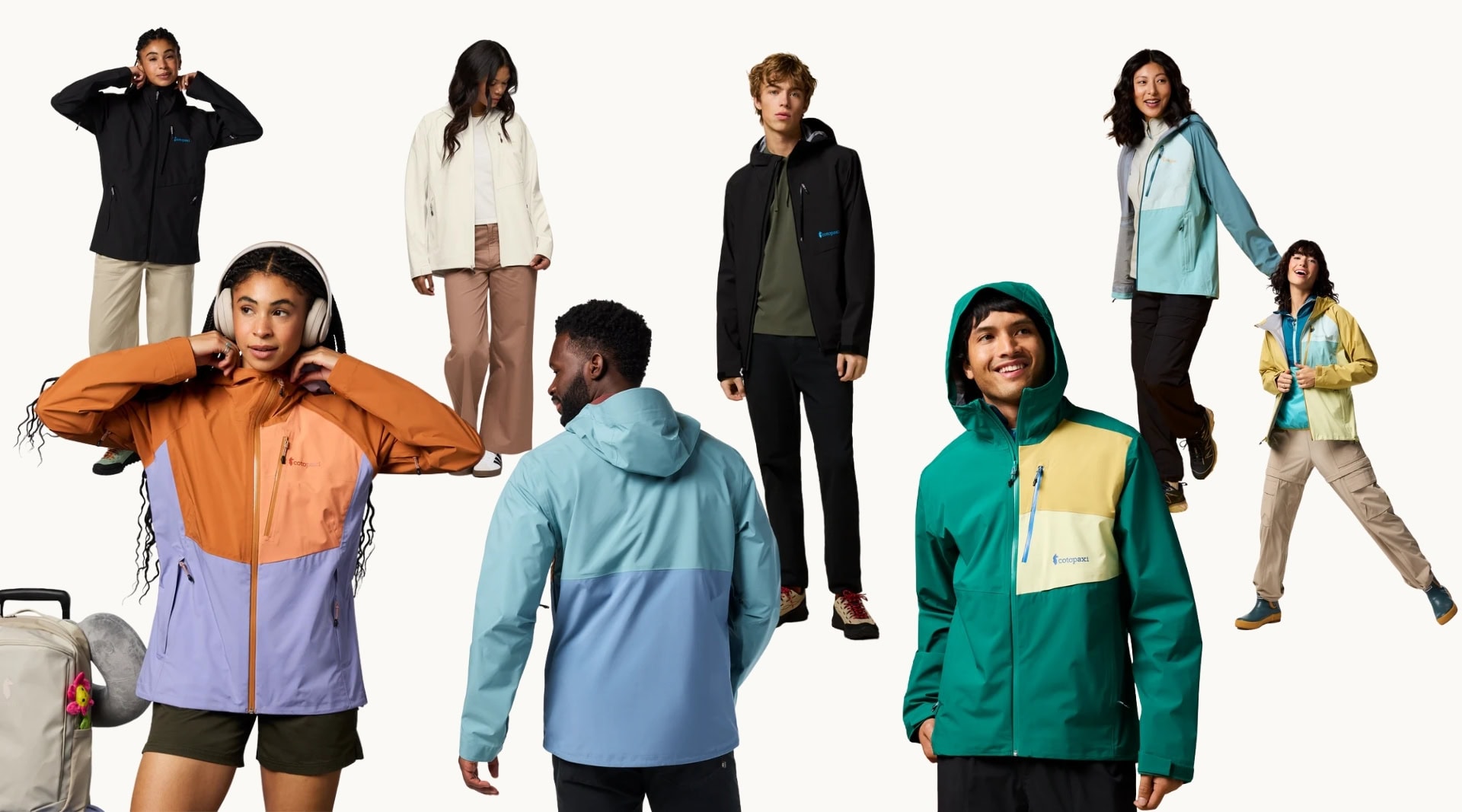
Cotopaxi has not been rated.
Cotopaxi Impermeo 3L Rain Jacket
- Recommended jacket: Impermeo 3L Rain Jacket (men’s and women’s)
- Waterproof rating: 10,000mm waterproof / 10,000g breathability (10K/10K)
- Materials: 100% post-consumer recycled polyester (rPET), 3-layer construction with two-way stretch
- PFAS status: PFAS-free (no PFAS intentionally added)
- Key features: Two-way stretch fabric for comfortable movement on the trail, pit zips, adjustable hood with laminated visor, two zippered hand pockets and one zippered chest pocket, internal storm flap, bungee hem, Velcro cuffs, packs into its own pocket
- Made in: Fair Wear certified factory
- Certifications: Fair Trade Certified™ factories, 1% for the Planet member, B Corp
- Sustainability highlights: All materials are 100% post-consumer recycled. Cotopaxi’s Gear for Good program supports global poverty alleviation through grants to community organizations. 1% of annual revenue goes to the Cotopaxi Foundation. Guaranteed for Good warranty covers lifetime repairs, replacements, and trade-ins. 94% of products are made with non-virgin materials.
- Inclusivity: Women’s XS-XL; Men’s S-XXL
- What we love: The Impermeo stands out for comfort. The two-way stretch fabric moves with you in a way that stiff, crinkly rain shells simply can’t match. Multiple independent reviewers rate it among the most comfortable sustainable rain jackets available.
- Price: ~$225
Finisterre
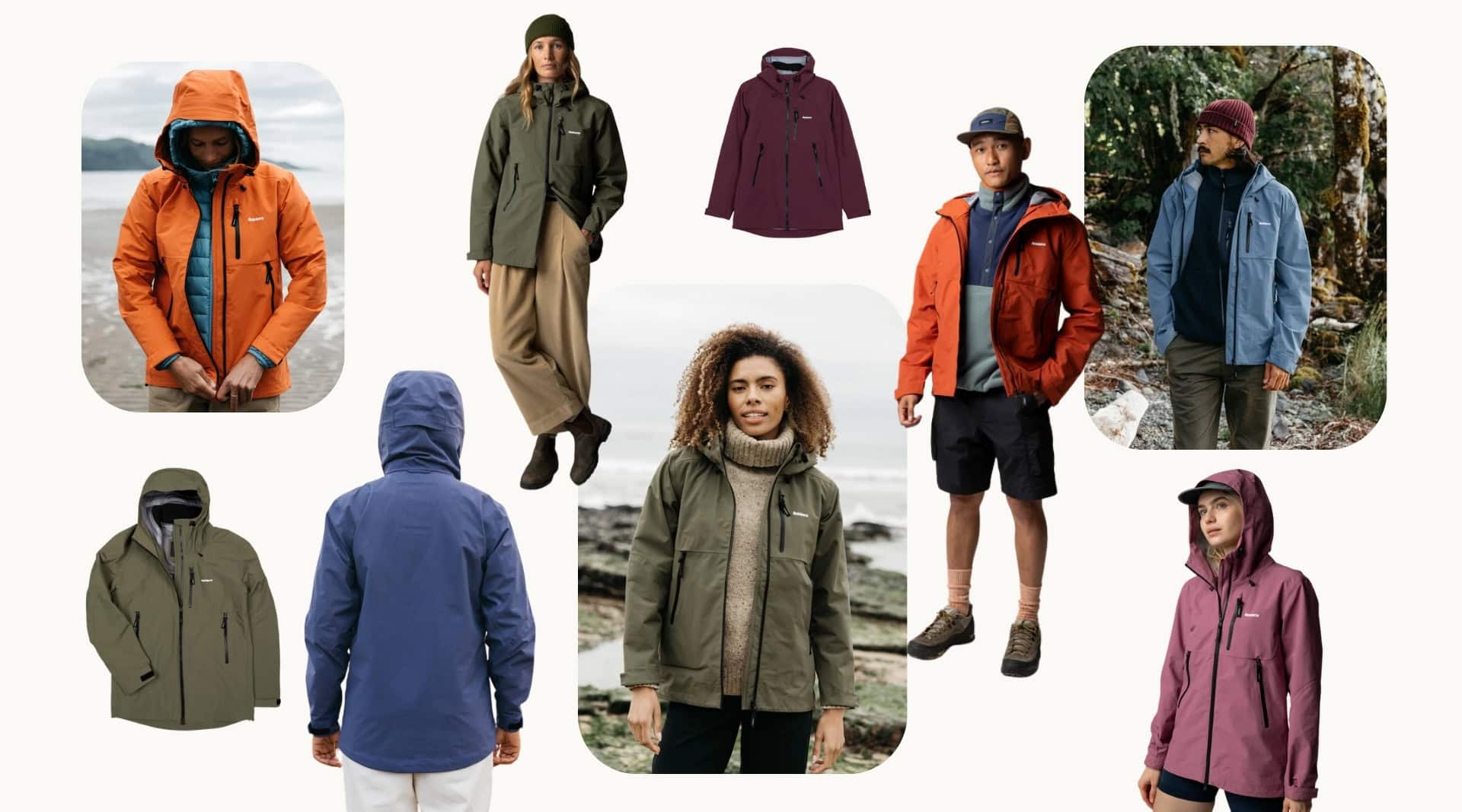
Finisterre has not been rated.
Finisterre Stormbird Waterproof Jacket
- Recommended jacket: Stormbird Waterproof Jacket (men’s and women’s). Also available: Stormbird Longline for extra coverage, and the full range of waterproof jackets.
- Waterproof rating: 20,000mm hydrostatic head / 15,000g breathability (Stormbird). 100% recycled 3-layer construction.
- Materials: 100% recycled nylon (Stormbird). Across the wider range: recycled polyester, recycled nylon, and recycled polyester/organic cotton blends. REPREVE recycled fill (100% recycled, from ocean-bound plastic) for insulated styles.
- PFAS status: 100% PFC-free. Finisterre eliminated fluorocarbon chemicals from all waterproofs in 2017. They use fluorocarbon-free DWRs that break down naturally in the environment.
- Key features (Stormbird): 3-layer waterproof shell, adjustable hood with peak, two-way waterproof zip, taped seams, multiple zippered pockets, longer back for extra coverage. Lightweight (~629g).
- Made in: Works with suppliers globally. All must adhere to Finisterre’s Code of Conduct (no child or forced labor, no discrimination, fair wages). 96% of Tier 1 suppliers underwent external social welfare audits.
- Certifications: Certified B Corp. GRS-certified fabric.
- Sustainability highlights: Avoids air freight entirely, shipping products by land and sea. Products packaged in “Leave No Trace” mailers that are water soluble and ocean safe. Only uses synthetic insulation (no animal-derived materials). Finisterre Foundation supports charitable projects helping individuals access the sea.
- Inclusivity: Women’s UK 6-18; Men’s XS-XXL
- What we love: Based in Cornwall (one of the UK’s wettest regions), they’ve built high-performance waterproofs with a 20K hydrostatic head that rivals much pricier technical brands. The Stormbird is their flagship, and reviewers consistently praise its ability to handle heavy rain and wind. Finisterre is a strong choice for UK and international customers alike. The Longline version offers extra coverage for those who want it.
- Price: ~$320
Rapanui
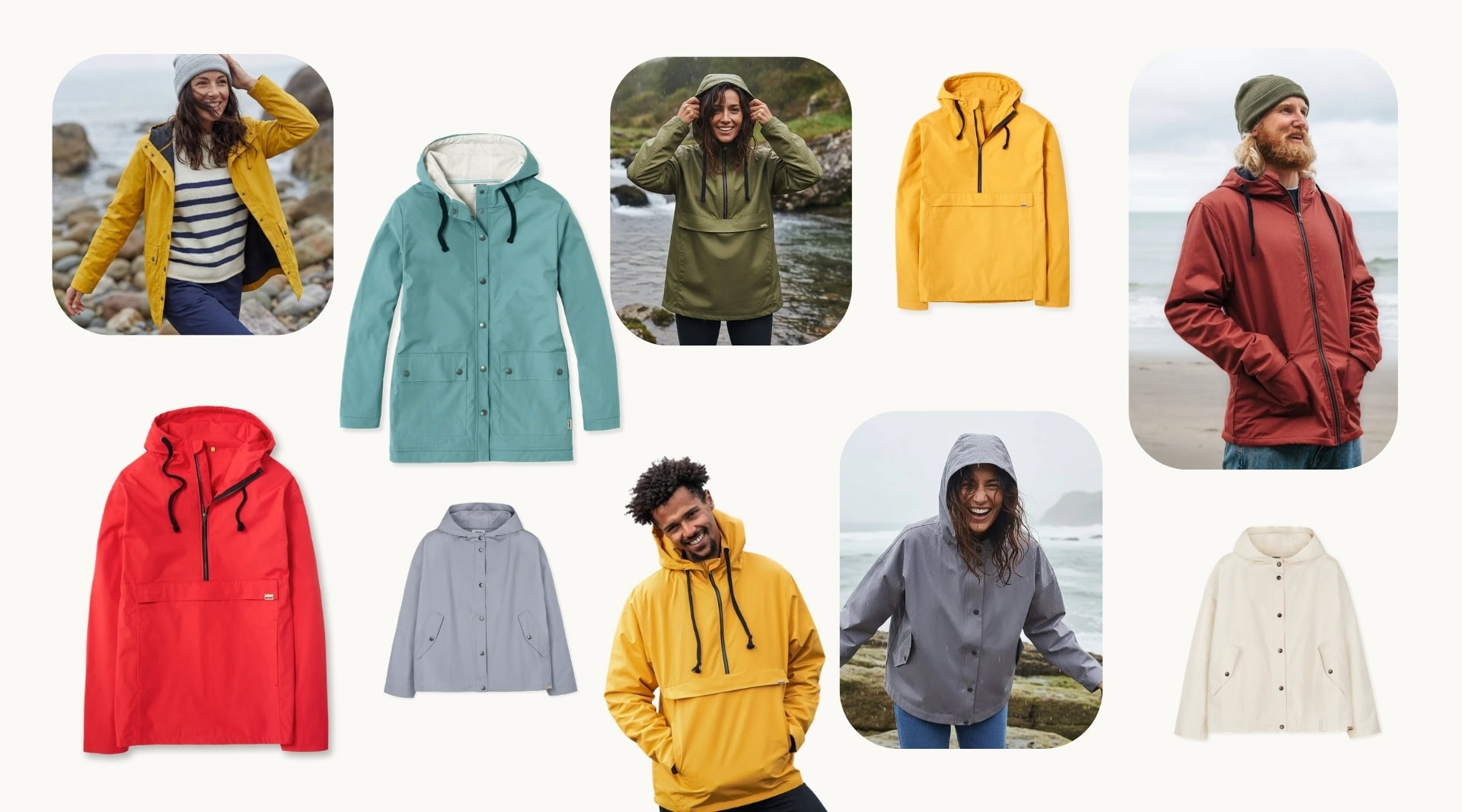
Rapanui has not been rated.
Rapanui Sustainable Raincoat
- Recommended styles: Fleece Lined Jacket (maritime style, organic cotton canvas outer with cotton fleece lining), Lightweight Raincoat, Smock Jacket (also available lined). Also: Shorebreak Changing Robe (for swimmers and surfers, organic cotton towel lining). Men’s versions available.
- Waterproof rating: Water-resistant (coated cotton canvas; not fully waterproof like synthetic alternatives)
- Materials: GOTS-certified organic cotton canvas with PFC-free water-resistant coating. The Shorebreak Changing Robe features an organic cotton quick-drying towel lining.
- PFAS status: PFC-free water-resistant coating
- Key features: Timeless designs, QR code on every product for easy return and recycling, natural fabric feel
- Made in: Isle of Wight, UK (locally manufactured). Indian partner is SA8000-certified for products not made on-site.
- Certifications: GOTS-certified
- Sustainability highlights: Every product has a QR code for returns. Discount for returning worn items. Old products get a second life via Remill. They accept 100% cotton clothing from other brands too. All UK manufacturing uses renewable energy. Eco-packaging including green tape and inks.
- Inclusivity: Women’s UK 8-18 (US 6-16); Men’s XS-XXL
- What we love: If you’re looking for a natural fiber rain jacket (a popular search term for good reason), Rapanui is the standout. GOTS-certified organic cotton canvas is a refreshing alternative to recycled synthetics, and the PFC-free SmartRepel Hydro coating provides decent water resistance for light rain and everyday city wear. The Fleece Lined Jacket is particularly nice for cooler months with its cotton fleece lining, while the Lightweight Raincoat and Smock Jacket are great packable options. The fully circular business model (return, remill, renew) is one of the most complete we’ve encountered.
- Note: Best suited for light to moderate rain and everyday wear rather than technical outdoor use. Cotton canvas is water-resistant, not fully waterproof. If you need serious storm protection, a 3-layer synthetic shell (like the Patagonia Torrentshell or Cotopaxi Impermeo above) is the better choice.
- Price: ~£60-£150
Amble
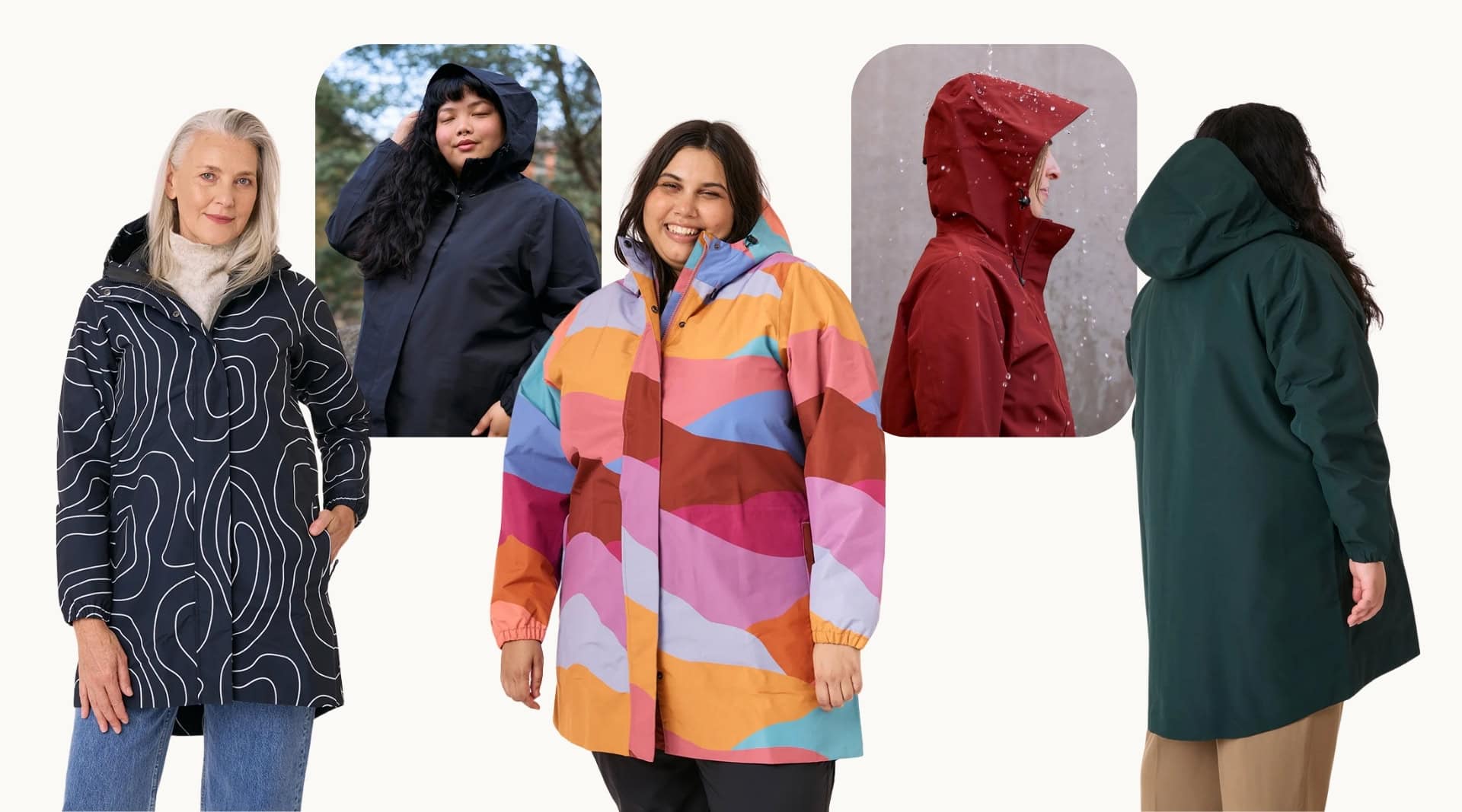
Amble has not been rated.
Amble Refuge Waterproof Jacket
- Recommended jacket: Refuge Long Waterproof Jacket (available in five colors and two prints)
- Waterproof rating: 10,000mm-15,000mm waterproof (varies by style), windproof with taped seams, breathable
- Materials: 100% GRS-certified recycled polyester (made from 31-36 recycled plastic bottles per jacket). PFC-free DWR finish.
- PFAS status: Confirmed PFC-free DWR across all products
- Key features: A-line cut with women’s specific fit, adjustable hood, zippered front pockets, snap button front, dipped back for extra coverage, packs into its own hood, lightweight (~510-620g depending on style)
- Made in: Fabric made in Taiwan, garments made in Xiamen, China in a fair-wage, BSCI-certified factory. SEDEX auditing also in place.
- Certifications: GRS (Global Recycle Standard), BSCI-certified factory
- Sustainability highlights: Carbon footprint calculated and offset for every product (in partnership with Green Story). No air freight. Plastic-free shipping (recyclable cardboard boxes and home-compostable garment bags made from corn starch). A tree planted for every jacket made. Regular donations to ASRC and Thread Together. Published annual sustainability report.
- Inclusivity: XS-4XL (AU 8-22 / US 4-18). Women-owned brand with A-line cut designed for curves.
- What we love: Amble stands out on two fronts: more inclusive sizing up to 4XL and strong performance at a competitive price point. As a women-owned, Melbourne-based brand, they offer the kind of everyday rain jacket that works equally well on the morning commute and weekend bushwalk.
- Note: Currently based in Australia though they ship internationally.
- Price: ~$219
Additional Eco-Friendly Rain Jacket Options: Notable Mentions
Wuxly
- What it is: Canadian-made waterproof coats and shells featuring recycled polyester (from post-consumer plastic) and recycled nylon (from fishing nets). All textiles from OEKO-TEX certified and bluesign approved mills.
- Why it’s sustainable: Designed and manufactured in Toronto. Zero waste manufacturing. Trade Up Program redistributes winter coats to those in need. Low carbon shipping via land and sea.
- Note: PFAS status not explicitly disclosed. These lean more toward cold-weather waterproof coats than lightweight rain shells.
- Price: ~$450-$540
Seasalt
- What it is: Cornwall-based brand offering a wide range of raincoats for men and women, including the Tin Cloth fabric (organic cotton and linen blend). Standout inclusive sizing for women: UK 6-28 (US 2-24) with petite, regular, and tall fits.
- Why it’s sustainable: Member of the Ethical Trading Initiative. Best styles feature recycled fabrics and organic cotton. GuppyFriend wash bags available. £5 donated to mental health charity Mind for every full-price raincoat.
- Note: PFAS status varies by style (REACH-compliant but not all confirmed PFC-free). Not all styles use recycled or sustainable materials. Confirm PFC-free status before purchasing.
- Price: ~$128-358
Fjallraven Eco-Shell Jackets
- What it is: Swedish outdoor brand offering premium waterproof jackets using their proprietary Eco-Shell technology (PFAS-free since 2012) and now also PFAS-free Gore-Tex ePE membrane jackets. Fjallraven has been working to eliminate PFAS across all products since 2009.
- Why it’s sustainable: Eco-Shell uses recycled polyester face fabric. All Eco-Shell emissions are climate compensated. Strong animal welfare standards. Repair services available. Some styles are made with organic cotton (G-1000 Eco range). Extremely durable, built to last decades.
- Note: Premium pricing reflects durability-focused design philosophy.
- Price: ~$175-$550
Picture Organic Clothing
- What it is: French outdoor brand offering waterproof jackets from recycled polyester and bio-sourced materials. Certified B Corp with bluesign approved materials and PFAS-free DWR across their range.
- Why it’s sustainable: One of the few brands using bio-sourced waterproof membranes in addition to recycled materials. Published impact reports. Strong environmental commitment.
- Price: ~$100-$150
Why Choose PFAS-Free Sustainable Rain Jackets
The Problem with PFAS (Forever Chemicals) in Rainwear
If you’ve ever wondered what makes your rain jacket repel water so effectively, the answer has historically been PFAS (per- and polyfluoroalkyl substances). These synthetic chemicals, often called “forever chemicals,” create the durable water-repellent (DWR) coatings that cause rain to bead and roll off fabric surfaces.
But PFAS don’t break down. They persist in the environment indefinitely, accumulating in soil, waterways, and living organisms, including us. A family of over 10,000 chemicals, PFAS are likely already in the blood of nearly all Americans (and presumably everyone else too).
How widespread is the problem in rainwear specifically? A Danish study published by CHEM Trust testing rain jackets from Temu, Shein, and Amazon found PFAS in 13 out of 17 jackets tested, with 12 containing PFAS that are illegal in the EU. A broader international study by IPEN tested 72 clothing samples across 13 countries and found PFAS in nearly 64% of them, including 35 out of 56 jackets. And testing by Toxic-Free Future found PFAS in 9 out of 13 jackets tested, including products with Gore-Tex labeling that contained older-generation PFAS chemicals banned in Europe.
Recent research published in ScienceDirect has also shown that PFAS in jacket fabrics don’t just stay put. Through aging, wear, and washing, these chemicals migrate through fabric layers and are released into the environment via microfibers, creating exposure pathways through both skin contact and environmental contamination.
Health Concerns Associated with PFAS Exposure
Research has linked chronic PFAS exposure to a range of health concerns. A report from the European Journal of Epidemiology as well as other studies noted likely associations between PFAS exposure and elevated blood cholesterol levels, dyslipidemias related to cardiovascular disease, slightly lowered birth weight, and reduced antibody response to certain vaccines and infections.
It should be noted that direct transdermal exposure from wearing a PFAS-treated jacket is considered lower risk than exposure through contaminated drinking water or food. However, the primary concern is twofold: the manufacturing process (where PFAS can contaminate local water systems and affect factory workers) and the cumulative environmental impact of wearing, washing, and eventually disposing of PFAS-treated clothing. As TIME has reported, PFAS are harmful across their entire lifecycle.
We chatted with outdoor and environmental journalist Meg Carney on Episode 72 of our podcast to dig deeper into forever chemicals in the outdoor industry. Meg, whose work has appeared in Field and Stream, Popular Mechanics, and GearJunkie, explained that PFAS bioaccumulate in our fatty tissues and can persist in the body for 6-8 years before being expelled, and that this bioaccumulation is what drives long-term health effects.
The Regulatory Landscape
Governments are beginning to catch up. California passed legislation restricting PFAS in clothing from 2025, with extreme weather apparel included from 2028. New York has followed with similar regulations. Denmark will ban PFAS in clothing, shoes, and impregnation sprays from July 2026. And the EU is considering a broad restriction on the entire class of PFAS chemicals.
Given the importance of this issue, every brand on our main list has either confirmed PFAS-free status or is in the process of transitioning. Effective, non-toxic raincoat waterproofing without forever chemicals is not only possible but increasingly the industry standard.
Environmental Impact of Conventional Rain Jackets
Beyond PFAS, conventional rain jackets raise several environmental concerns. Virgin synthetic fabrics like polyester and nylon are derived from petroleum and contribute to microplastic pollution every time they’re washed. Fast fashion rainwear, particularly cheap ponchos and disposable rain jackets, creates enormous waste. And opaque supply chains mean poor labor practices, excessive carbon emissions, and limited accountability.
The sustainable clothing brands making eco-friendly rain jackets address these issues through recycled materials, transparent supply chains, PFAS-free waterproofing, durability-focused design, and circular programs for repair, resale, and recycling.
Though note that many of these rain jackets are still made from synthetic fabrics (even if recycled). This means they should be washed with a microfiber filter of some sort. Read more in our guide to microfiber filters.
Understanding Rain Jacket Materials & Waterproofing
Recycled Polyester and Recycled Nylon
Most sustainable rain jackets are made from recycled polyester (often from post-consumer plastic bottles) or recycled nylon (sometimes from discarded fishing nets, as with ECONYL). These materials perform identically to their virgin counterparts in terms of waterproofing and durability but significantly reduce reliance on new petroleum extraction. Look for GRS (Global Recycled Standard) certification, which verifies recycled content through the supply chain. To learn more, see our guide on sustainable fabrics.
Waxed Cotton and Natural Fibers
Brands like Rapanui use GOTS-certified organic cotton canvas with water-resistant coatings. This offers a more natural feel and avoids synthetic microplastic shedding, but cotton canvas provides water resistance rather than full waterproofing and is heavier than synthetic alternatives.
DWR (Durable Water Repellent) Explained
DWR is the coating applied to the outer fabric of a rain jacket that causes water to bead and roll off. Traditionally, DWR has been made using PFAS chemicals. PFAS-free (also called PFC-free) alternatives include silicone-based treatments, plant-based and botanical formulations (like Finisterre uses), and wax-based coatings. These alternatives provide effective water repellency, though they may require more frequent reactivation through washing and tumble drying.
Waterproof Ratings Explained
Rain jackets are often rated in millimeters (mm), indicating how much water pressure the fabric can withstand. 5,000mm handles light rain and is suitable for everyday city use. 10,000mm handles moderate to heavy rain and is the most common rating for sustainable rain jackets (and what most people need). 20,000mm handles extreme, sustained downpours and is best for mountaineering, though higher ratings often reduce breathability. A 10,000mm/10,000g rating (often written as “10K/10K”) offers a good balance of waterproofing and breathability for most activities.
Certifications to Look For
Several certifications help verify a sustainable rain jacket’s claims:
- bluesign ensures materials meet strict environmental, chemical, and worker safety standards.
- GRS (Global Recycled Standard) verifies recycled content.
- Fair Trade Certified ensures fair wages, safe conditions, and community investment.
- B Corp covers a company’s entire social and environmental impact.
- GOTS is the leading standard for organic fibers.
- OEKO-TEX Standard 100 tests textiles for harmful substances.
- REACH is an EU regulation ensuring chemicals are safely managed.
How We Chose These Sustainable Rain Jackets
Our selection criteria prioritized both health and sustainability considerations, guided by our sustainable fashion criteria.
Material Safety & PFAS Status
Every main recommendation had to meet our core standard: either confirmed PFAS-free/PFC-free waterproofing or a clear commitment to transitioning. Brands where PFAS status remains unclear were moved to notable mentions. We also prioritized recycled, organic, or responsibly sourced materials over virgin synthetics.
Sustainability Standards
We looked for B Corp or equivalent certifications, recycled and responsibly sourced materials, transparent supply chains, carbon reduction commitments, circular programs (repair, resale, recycling), and reduced-waste packaging.
Ethical Manufacturing & Fair Labor
We prioritized brands with third-party audited factories (Fair Trade, BSCI, SMETA, SA8000, Fair Wear Foundation), transparent supply chain reporting, and fair wage commitments.
Performance & Durability
We evaluated waterproof ratings, breathability, construction quality, and versatility. Choosing durable gear that lasts is one of the most impactful sustainability decisions you can make.
Value
We included options from mid-range everyday jackets (Amble ~$219, Rapanui ~£60) to premium, buy-it-for-life pieces (Paka ~$399). Long-term durability and repairability matter as much as the sticker price.
Frequently Asked Questions About Sustainable Rain Jackets
Do sustainable rain jackets actually keep you dry? Yes. The recycled materials used in most sustainable rain jackets perform identically to virgin synthetics. A 3-layer recycled nylon jacket like the Patagonia Torrentshell provides the same waterproof protection as any conventional equivalent. The key is the waterproof membrane and DWR coating, not whether the base fabric is virgin or recycled.
What are raincoats made of? Conventional raincoats are typically made from polyester, nylon, or PVC (vinyl), all derived from petroleum. The waterproof layer usually comes from a membrane (like Gore-Tex or PU) and a DWR coating on the outer fabric. Sustainable alternatives use recycled versions of these synthetics, organic waxed cotton, or bio-sourced materials, with PFAS-free waterproofing treatments.
Are rain jackets toxic? Do they contain PFAS? Many conventional rain jackets do contain PFAS “forever chemicals” in their DWR coatings and sometimes in waterproof membranes. Studies have found PFAS in roughly 60-75% of rain jackets tested. However, PFAS-free alternatives are increasingly available, and every brand on our main list has either confirmed PFAS-free status or is transitioning. Look for labels stating “PFC-free,” “PFAS-free,” or “fluorocarbon-free.”
What is DWR and is it safe? DWR stands for Durable Water Repellent, a coating applied to the outer fabric of rain jackets that causes water to bead and roll off. Traditional DWR uses PFAS chemicals, which are not safe for the environment or human health long-term. PFAS-free DWR alternatives (silicone-based, plant-based, or wax-based) are safe and increasingly effective, though they may need reactivation more frequently.
Is there a natural fiber rain jacket? Yes, though with caveats. Rapanui makes rain jackets from GOTS-certified organic cotton canvas with a PFC-free water-resistant coating. Waxed cotton is a traditional waterproofing method that works well for moderate rain. However, natural fiber jackets are heavier, provide water resistance rather than full waterproofing, and may not perform as well in sustained heavy rain compared to synthetic 3-layer shells.
Are recycled polyester rain jackets really sustainable? Recycled polyester is a significant improvement over virgin polyester: it diverts plastic waste and requires less energy to produce. However, recycled synthetic jackets still shed microplastics when washed. To minimize this, use a microfiber-catching wash bag (like GuppyFriend), wash less frequently, and invest in higher-quality jackets that last longer. Ultimately, reducing consumption and extending the life of your gear has the greatest impact.
How do I wash a sustainable rain jacket? Most sustainable rain jackets can be machine washed on a cold or warm gentle cycle with a technical wash (like Nikwax Tech Wash) rather than regular detergent, which can clog the DWR coating. Tumble dry on low heat afterward, as heat helps reactivate the DWR finish. Never use fabric softener, and avoid dry cleaning. Washing your rain jacket actually improves its performance by clearing dirt that interferes with the DWR.
What waterproof rating do I need? For everyday city use, 5,000-10,000mm is sufficient. For regular outdoor activities in moderate to heavy rain, 10,000mm is the sweet spot. For mountaineering or sustained extreme weather, 20,000mm+ is recommended. Most of the sustainable rain jackets on our list are rated around 10,000mm, which is enough for the vast majority of people and activities.
Is Gore-Tex sustainable or PFAS-free? Gore-Tex has historically used PFAS in both its ePTFE membrane and DWR coating. However, W.L. Gore has introduced a new ePE (expanded polyethylene) membrane and committed to transitioning the “vast majority” of its consumer portfolio away from PFAS. If you’re specifically avoiding PFAS, check individual product descriptions carefully, as the transition is still ongoing.
Can sustainable rain jackets handle heavy rain? Absolutely. Brands like Patagonia, Cotopaxi, and Finisterre use 3-layer waterproof construction that handles sustained heavy rain as well as conventional alternatives. The Patagonia Torrentshell has been field-tested in everything from Scottish highlands to actual Patagonian storms. The key is choosing a jacket with a proper waterproof membrane (PU, TPU, or Gore-Tex ePE) rather than relying on DWR coating alone.
Final Thoughts on the Best Sustainable Rain Jackets
You can’t predict the weather, but you can turn a dreary day cheery by choosing to support one of these brands.
Whether you need a premium waterproof parka insulated with traceable alpaca fiber (Paka’s Apu Parka), a trusty all-rounder that sets the gold standard for sustainable outdoor clothing (Patagonia’s Torrentshell 3L), a comfortable stretch shell for hiking and travel (Cotopaxi’s Impermeo), or a GOTS-certified cotton canvas jacket for rain-light city days (Rapanui), there’s a PFAS-free, planet-friendlier option for every budget, body, and rainy-day scenario.
Remember to shine some light on your closet before purchasing something new. Secondhand stores and resale platforms like Patagonia’s Worn Wear and tentree’s Circularity program have a wealth of affordable eco-friendly raincoats. Thrifting is always the most sustainable option.
And when you do invest in a new piece, look for the details that matter most: PFAS-free waterproofing, recycled or natural materials, and transparent, audited supply chains. Your skin, the environment, and the workers who made your jacket will thank you.
Do you know someone who needs a bit of cover? Share this article with them so we can all turn gray days green.
Editor’s Note: Joy McConnochie has been researching sustainable fashion and outdoor brands for 8+ years as part of Sustainable Jungle’s mission to help people make more informed, environmentally responsible choices. All products are independently researched, and in some cases rated using our comprehensive sustainability rating methodology. This article was first published in January 2022 and has been updated several times since. This March 2026 update includes new brands, updated product recommendations, fresh PFAS research, and more contextual information about waterproofing and sustainability in rain jackets.

Joy has been a passionate advocate for the environment since she was a small child. She grew up in South Africa and has been lucky enough to be exposed to the wonders of nature not just in Africa but all over the world. She founded Sustainable Jungle (together with her husband Lyall) back in 2017 after becoming enraged by the devastating impact of palm oil. She then founded the Sustainable Jungle Podcast and together with Lyall interviewed remarkable people from all over the world who were finding ways to create positive impact. Outside of Sustainable Jungle, Joy has always worked in the corporate world, starting out as an auditor and later moving into management consulting. More recently she specialized in Climate Investing for the Asia Pacific region. Given her experience, her current passion is Brand Ratings. She is very much enjoying going deeper on what it really means to drive sustainability performance and true impact through business operations.











“Thought” does not list raincoats on there sight.
Thanks for the feedback Joni, the brands on our lists change stock regularly. We aim to do annual refreshes to adjust for these but haven’t got to this one just yet.