













Long before the unsustainable model of production became a global paradigm, the term “fast fashion” was initially created to describe this particular brand’s business model. Zara and fast fashion are quite literally the same thing.
That’s right, the New York Times coined the term “fast fashion” in the 1990s to describe the way Zara could take a garment from design to stores in less than two weeks and sell it for affordable prices.
Today, the retailer has more than three thousand stores in ninety-six countries, and while accurate statistics of volume sold are tricky, it’s believed that around 450–800 million units get moved every year by the brand.
They may be iconic, but is Zara ethical or unethical? And exactly why is Zara fast fashion?
Contents: Is Zara Sustainable?
- Uncovering Why Zara Is Fast Fashion Jump to section
- Zara Controversy Roundup Jump to section
- Zara Ethical Issues Are Grim Jump to section
- Zara Sustainability Issues Are Actually Improving Jump to section
Uncovering Why Zara Is Fast Fashion
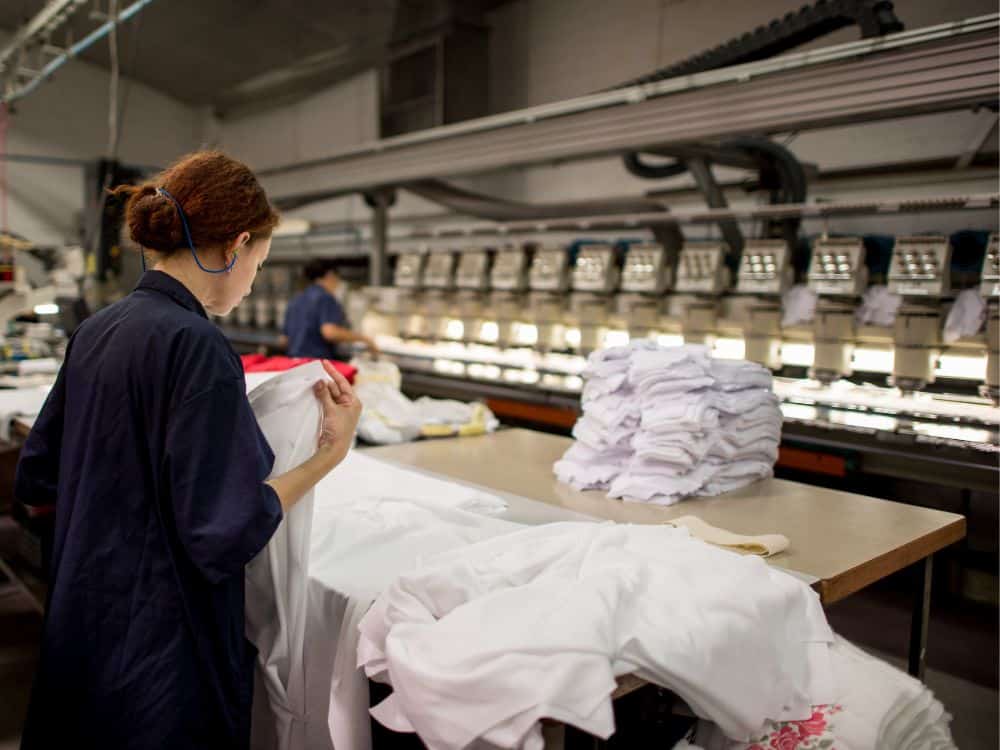
The Zara brand features all the usual hallmarks of the problematic fast fashion model: obscene amounts of clothes made, unrealistically low prices, ripping off designers, toxic materials for the planet and human health, abusive clothing production lines, below-living wages, unsafe conditions, harassment, even workers sewing pleas in their clothing and more…
Zara’s parent company Inditex, for whom it provides 70% of all earnings, is the sixth largest fashion company in the world, surpassed only by LVMH, Nike, Hermes, Christian Dior, and TJ Maxx’s parent company TJX. Zara’s presence is so… Well, omnipresent, that Zara gets away with very little marketing—especially when the likes of Kate Middleton and Selena Gomez regularly don their designs.
In 2022 alone, the brand grew fiscally by 23%, with sales reaching $35.2 billion.
Sheer volume and growth aside, Fashion Revolution, the biggest fashion activism movement worldwide, gave Zara a 90% score for Policies & Commitments, but a mere 1% for Traceability in their yearly Fashion Transparency Index report. What isn’t adding up here?
While clothing retailers like Zara provide great lip service to pledges and commitments for their ethics and sustainability, the actual traceable proof isn’t so clear. We need tangible results that detail progress and proper monitoring to understand any kind of true Zara sustainability rating.
Zara Controversy Roundup

Zara has gathered quite a few controversies under its belt since it began 48 years ago. A quick Internet search of their various scandals reveals a number of both “classic” fast fashion blunders and seriously eyebrow-raising controversies, with their most recent being perhaps their most damning yet.
Gaza Controversy
#BoycottZara has dominated mainstream media, along with global protests and discussions around fashion, marketing, ethics, activism, and genocide, with Zara accused of mocking the crisis in Palestine with a truly disturbing ad campaign. A model is seen holding what looks like a white body bag over her shoulder reminiscent of those in images of devastated Gaza, with the model standing amidst rubble, destroyed plaster, and mannequins with missing limbs.
While Zara claims the campaign was created in the summer long before the violence in Gaza dramatically escalated in mid-October, the general public worldwide was not convinced.
Among the massive protests sweeping the world about Palestine, a number of the protests targeted Zara specifically, with some of their stores being vandalized or forced to shut. Zara pulled the controversial ad campaign and the fashion giant said it “regretted” a misunderstanding about the photographs being so comparable to pictures coming from a devastated Gaza, but the damage was done already.
While mainstream media is tight-lipped on the success of the ongoing Zara boycott, insiders say the brand (and others facing similar boycotts) faces serious financial setbacks.
It’s also not the first time Zara faced calls for a boycott over Israel-Palestine tensions. Vanessa Perilman, Zara’s head designer, sent Palestinian model Qaher Harhash racist anti-Palestinian comments in 2021 via direct message on Instagram. Perilman later apologized when she feared losing her job and her children’s safety.
Stolen Wages
Why is Zara so cheap?
Well, they’ve been accused of unpaid wages in a number of instances, including a staggering $50 million wage theft via a shady Indian supply chain (also used by H&M, Nike, and Abercrombie). If true, it would be the largest wage theft in fashion history, along with unpaid wages in Turkey in 2017 that resulted in Zara workers sewing desperate notes for help into clothing.
Zara initially responded by expressing their commitment to rectify the situation; however, at the time of this writing, it appears that none of the wages were ever paid.
As of August 2023, according to the Clean Clothes Campaign, pressure from workers and advocates resulted in some of the wages being paid to Turkish workers, but not all. As for the jaw-dropping $50 million owed in India to garment workers, they’ve also only received half.
Child & Modern Slave Labor
In 2011, Zara made global headlines for an investigation by Brazil’s labor ministry after a São Paulo factory used employees under slave-like conditions to make clothes.
Brazil’s government listed 52 charges against Zara’s parent company Inditex—despite their “zero tolerance policy” towards forced labor—after it rescued 15 workers from a factory. One worker was found to be fourteen years old. After the scandal, Zara promised due diligence to monitor its global supply chains, but reports indicate Zara has done very little to hold up its end of the promise.
Remake, a reputed registered nonprofit disrupting the fashion industry, says Zara continues to use Uyghur slave labor out of China.
Workers Fired For Unionizing
In 2020, a number of Myanmar’s supply chain workers were fired for unionizing and the military junta in Myanmar charged workers with possible prison time for demanding higher wages and better working conditions.
Zara’s initial response? To simply wipe its hand clean of the ordeal, stating it was a matter between the factory and workers and they had little to do with mediation.
The latest in the ordeal is that in 2023, international condemnation of the Myanmar junta’s treatment of garment workers meant that Inditex announced their exit from working in Myanmar.
Zara Greenwashing
A 2021 report by fashion advocacy group Changing Markets Foundation found that 60% of claims made by European fast fashion companies, including Zara, were unsubstantiated “greenwashing” made merely to mislead shoppers.
This was echoed in 2023 by Greenpeace, when the environmental advocacy group accused one of Zara’s commitment to sustainability and their “Join Life” line of greenwashing in the following ways:
- Confusing labeling, including false ‘certifications’ which are named after company sustainability programs
- No in-house or even third-party verification for environmental, social and human rights measures.
- No chain of production info is made properly transparent and public
- No minimizing large volume production
- Misleading ‘‘circularity’ claims with polyester made from plastic bottles.
- The use of ‘responsible’ or ‘sustainable’ materials that are just slightly better.
- Heavy use of blends like polycotton, which is unrecyclable and won’t biodegrade
- discredited measurement tools such as the Higgs Index on Materials Sustainability still being used.
- No materials breakdown made for public
- Small scale “prototype” efforts are made, when huge sweeping shifts are required.
Design Theft
It seems to be a common low-blow by the fast fashion industry, but big brands like YesStyle and Shein commonly stealing indie designers’ creations is not okay.
One quick Google search of “Zara design theft” pulls up literally decades of reports of them stealing designs. Between 2015–2017, 40 artists and designers accused them of plagiarism, and Zara never had to pay a dime. Pursuing the court cases is simply too pricey for indie designers up against huge multinational corporations.
Offensive Merchandise
Other fast fashion brands are busted for this, too, which further indicates an industry-wide lack of rigorous ethics or quality control. Amongst various instances of offensive clothes that somehow skirted quality control, in 2014, Zara launched a children’s outfit resembling a concentration camp uniform that got them in some seriously hot water.
Previously, in 2005, the store had to pull a line of handbags featuring swastikas from stores.
Hazardous Chemicals In Zara Clothes
A decade ago, a Greenpeace investigation revealed the true extent to which Zara clothing had hazardous chemicals, including certain dyes which can break down into cancer-causing amines.
Fortunately, Zara pledged to go toxic-free by 2020 after intense public scrutiny and pressure, but for the record, Zara still cannot prove they’ve removed all hazardous chemicals as of publishing this.
Racial Profiling
In 2015, Zara was exposed from chronically racially profiling customers, with Black people disproportionately labeled as thieves, denied exchanges or returns, and Black employees were given worse shifts and stricter surveillance from managers than their white counterparts.
Meanwhile, Zara completely denied the allegations and said it does not tolerate any form of discrimination.
Sexist Hiring
According to the Clean Clothes Campaign, Zara purposefully hires female employees by design since they’re easier to oppress. Inditex-Zara’s Global footprint and key data in 2021 report shows 76% of their 165,000+ employees are women.
Zara Ethical Issues Are Grim

Now turning to the supply chain side of the brand: is Zara ethical?
Zara Labor Practices
While Inditex offers a comprehensive Code of Conduct for Manufacturers and Suppliers that clearly outlines no child or forced labor, fair wages, safe and hygienic working conditions, no employee discrimination, and more, the flagship brand doesn’t appear to walk their talk.
In a number of countries including Spain, Argentina, Myanmar, and Brazil, Zara’s backlash for its harsh labor practices indicates they’re far from fair.
As previously mentioned in our controversies section, a Brazilian Labor Ministry report found that garment workers worked in unsafe, slave-like conditions, with sixteen hour workdays and not a single day off. This is because while Zara is somewhat transparent by publishing information about supplier remediation, audits and policies, it has made almost zero progress on ensuring a living wage across its supply chain.
Fashionchecker, a reputable online database for consumers to see data from the supply chains of the worlds’ biggest brands, Zara was graded their lowest for ‘living wage paid’. They also rated Zara’s supply chain the lowest rating possible for transparency, since Zara does not disclose supplier information, so we don’t truly know where Zara clothes are made.
Animal Welfare
Unfortunately, Zara does use wool, down, leather, and exotic animal hair, and there is not enough evidence they trace animal products to the first stage of production. Fortunately, they have some animal welfare policies like:
- Animal products must come from animals treated responsibly and ethically, as per the internationally recognized ”Five Freedoms” of animal welfare.
- Animal products from slaughtered animals must come from animals raised for their meat consumption.
- Animal products must never come from animals slaughtered only for their skin, shell, horn, bone, feather, or down.
That said, without any proper certification requirements or traceability, it’s really hard for us to be sure these animal welfare policies are actually upheld and to ensure ethical wool and other animal fabrics.
Zara Sustainability Issues Are Actually Improving

Accompanied by the hashtag #JOINLIFE to denote their sustainability line, Zara’s website features a timeline of actions toward carbon neutrality and sustainability listed on the Join Life section of their page.
This includes benchmarks and Zara sustainability goals met, like green packaging, supplier and manufacturer code of conducts since 2005, 100% eco-efficient stores (albeit what this means is murky,) zero hazardous chemicals discharge, a Zara pre-owned collection, and renewable energy entirely in proprietary facilities.
Materials
In 2012, they pledged to remove all hazardous chemicals from their clothes by 2020. In 2016, they launched their eco-friendly line “Join Life”, which they pledged 50% of their entire collection would meet the standards of by 2022—which was two years ago, and yet, no dice.
In 2019, they announced they would use only sustainable materials by 2025. Yet Zara’s FY 2020 Statement on Non-Financial Information provides zero concrete proof that they’ve actually removed hazardous chemicals from their supply chain as per their Zero Discharge of Hazardous Chemicals program.
It’s also important to note they still use predominantly cheap synthetic fabrics like polyester and nylon instead of opting for truly sustainable fabrics such as organic cotton or even recycled synthetics. Virgin synthetic materials are made from fossil fuels that are not only a major contributor to climate change, but also the microplastics crisis, of which almost half a million tons make their way into our waterways yearly.
Circularity & Waste
In 2022, the brand introduced the Zara Pre-Owned platform “Closing the Loop”, which provides repair services and allows customers to drop off old Zara items for reuse and recycling in partnership with non-profit organizations.
Except that there is still no proof Zara does anything to minimize textile waste when making garments.
They also hide the truth about other waste management practices, such as water disposal—an important factor considering the fashion industry accounts for nearly 20% of all water pollution worldwide.
Commitments
The company has obviously taken to heart the many calls for ethics and sustainability, by making a truly impressive list of commitments and pledges over the past number of years, but what difference do these pledges make if they’re never met or even monitored by third-party auditing organizations?
For instance, they’ve set a greenhouse gas emissions reduction target, but they provide nothing traceable or transparent to actually see if they’re on track to meet their target.
These promises seem more targeting at soothing the eco-anxiety of their clientele, while they continue to churn out more than 450 million items of clothing per year, because when it comes down to it, Zara is fast fashion and promotes overconsumption which each rapid-fire design.

Molly Willows is a Thailand-based writer for sustainability and purpose-driven publications and brands. She has a BA in Philosophy from the University of King’s College and an MA in Anthropology from Freie Universität Berlin. With a strong background in TV and advertising, she’s held top-tier roles such as Director and Executive Producer. Really, Molly loves being a semi-nomadic writer most of all. Today, she happily spends her days writing, researching, teaching yoga, meditating, and attempting to surf. Molly’s words are published by Huffington Post and The Guardian, and some of her previous film projects can be seen on Hulu, Apple TV, or at the iconic Onassis Stegi in Athens.