













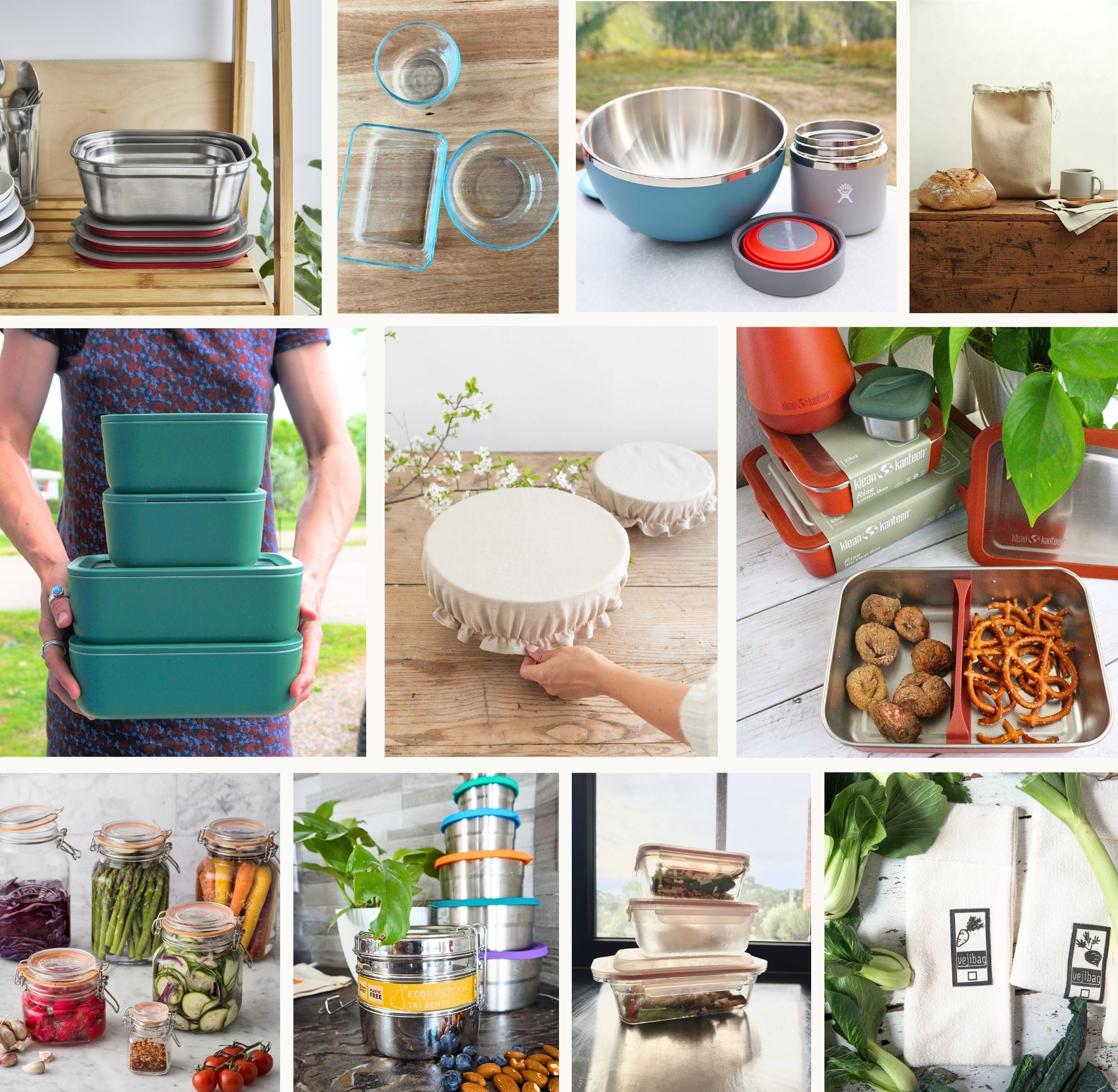
Have you heard the news? Plastic is out, and safe storage is in. We have all watched the movement toward more sustainable food brands grow over the years, which is promising, but what we keep our food in matters just as much as the food itself.
Traditional plastic tupperware is often full of chemicals we would rather not have anywhere near our leftovers, and even “BPA-free” plastic is not the clean swap it sounds like (more on that further down). So we went looking for the safest non-toxic food storage containers we could find, the kind that seal the deal in every sense, focusing on glass and stainless steel with reusable wraps and bags rounding things out. Good containers also make meal planning easier, since you can batch-cook on the weekend, portion out the week, and store it all without a scrap of plastic.
While every storage body on this list is plastic-free, the lids are a little more varied. Some brands pair their glass or steel bodies with a glass or stainless lid while others use a BPA-free plastic lid with a silicone seal. We have flagged the lid and seal for every brand so you can choose your comfort level (and we promise to keep a lid on the chemistry lectures), and we have noted which picks go fully plastic-free.
What We Looked For
- Non-toxic materials in both the body and the lid (as much as possible), with glass and stainless steel leading the way
- Third-party testing or certifications for chemical safety where brands offer them
- Proven sustainability credentials because that’s our thing here at SJ
- Versatility across meal planning, leftovers, lunch, pantry, and produce
- Transparency around trade-offs (no product, material, or brand is perfect)
Our Testing, Ratings & Research
We have personally used many of these food storage containers for years, so these recommendations come from experience. For brands we work with through our sustainability rating system, we evaluate their initiatives across 22 criteria covering chemical use, climate action, labor, and end of life. We have now rated some of the brands here, including MagicLinen and Butterfly & Bee, and you can find more in our sustainable brand directory.
Related Guides: Non-Toxic Cookware, Non-Toxic Cooking Utensils, Non-Toxic Cutting Boards, Non-Toxic Bakeware, Eco-Friendly Kitchen Products, Non-Toxic Living Guide, Is Ceramic Cookware Non-Toxic?
We independently research all featured brands, and we ask them to confirm their claims. In many cases we personally review recommended products. This post contains affiliate links which means we may earn a commission if you buy something. We explain this further in our Terms of Use.
The Best Non-Toxic Food Storage Containers
Best Linen Food Storage (Rated) | MagicLinen | OEKO-TEX certified linen bowl covers, bread bags, and produce bags.
Best Bread Storage (Rated) | Butterfly & Bee | Beeswax-lined linen bread bags crafted in small batches in Massachusetts, made for artisan loaves and sourdough.
Best Glass Tupperware Alternative Overall | Caraway | Borosilicate glass sets that look good enough to leave on the counter, with a strong third-party-tested chemical profile.
Best Plastic-Free Glass Lid | Pyrex | The new Ultimate line gives you a glass lid and silicone seal. Their Glass Canisters also have glass lids.
Best For Leftovers & Locking Lids | Glasslock | Tempered glass that locks down tight. These handle the oven, microwave, and freezer well.
Best For Pantry & Dry Goods | Kilner | Heritage glass jars for grains, preserves, and the prettiest shelf in the house.
Best Stainless Steel | Klean Kanteen | Recycled stainless steel from an employee-owned B Corp.
Best For Lunch On The Go | ECOlunchbox | Nesting stainless boxes that can survive a backpack.
Best Silicone Bags | Stasher | A reusable alternative to single-use plastic sandwich bags.
Best Beeswax Wraps | SuperBee | Certified B Corp beeswax wraps, sandwich bags, and bread bags from a woman-owned company.
Best For Fresh Produce | Vejibag | Organic cotton that keeps greens crisp for two weeks or more.
Best Free Option | Reused Glass Jars | Any excuse to start a bigger collection of pretty jars.
Contents: Non-Toxic Food Storage Containers
- Caraway Jump to brand
- Pyrex Jump to brand
- Glasslock Jump to brand
- Kilner Jars Jump to brand
- Reused Glass Jars: The Free, Zero-Waste Option Jump to brand
- Klean Kanteen Jump to brand
- Hydro Flask Jump to brand
- ECOlunchbox Jump to brand
- U Konserve Jump to brand
- Black + Blum Jump to brand
- MagicLinen Jump to brand
- Butterfly & Bee Jump to brand
- SuperBee Jump to brand
- Stasher Jump to brand
- Vejibag Jump to brand
Best Non-Toxic Glass Food Storage Containers
Glass is the gold standard for safe food storage, because it is non-porous, does not leach, and does not hold onto stains, odors, or flavors. It is our preferred food storage material. We provide more detail on the types of glass used at the bottom of the article (borosilicate, tempered, and soda-lime glass behave differently in the oven and freezer).
Caraway
Caraway has not been rated.
Caraway Glass Food Storage Containers
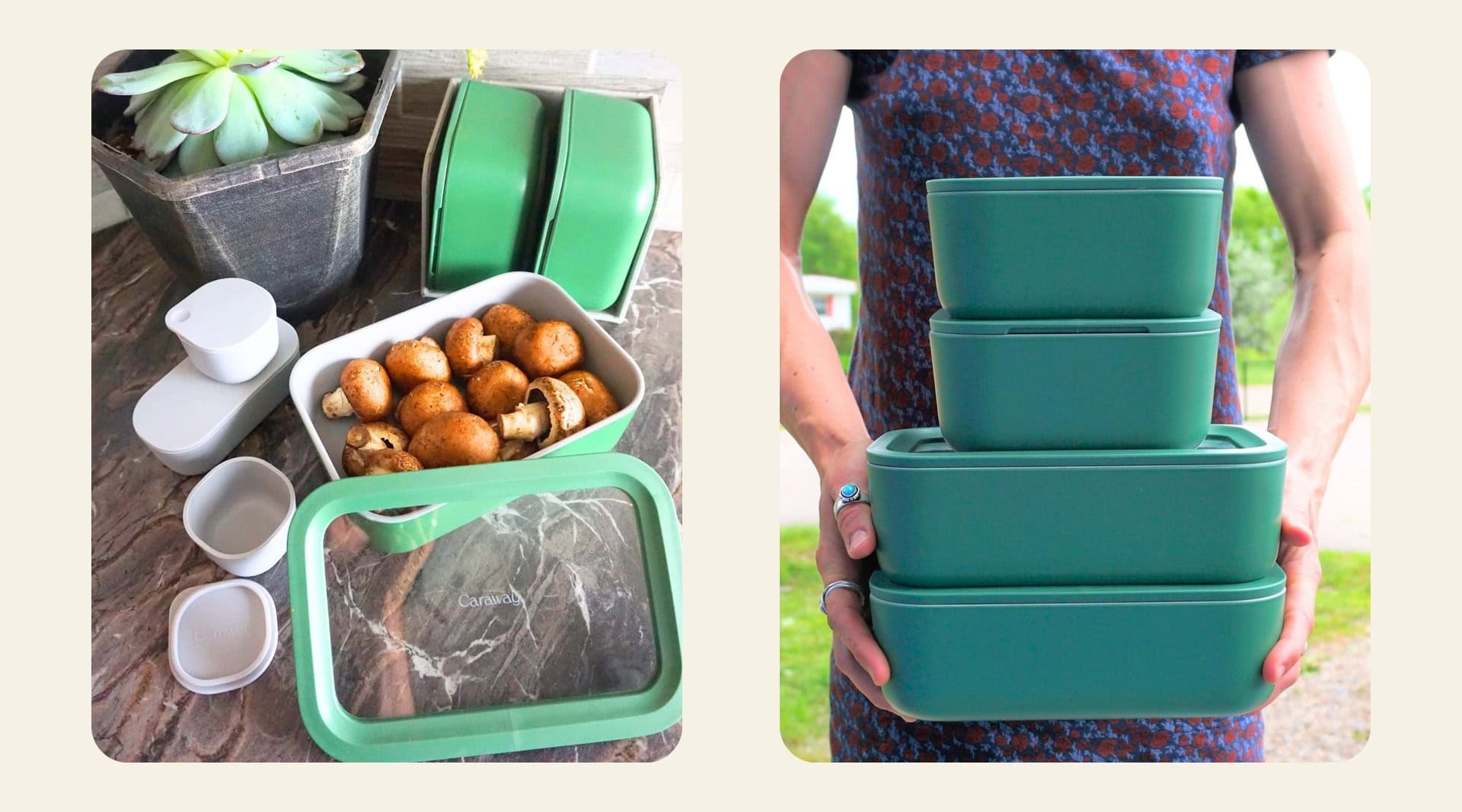
Caraway makes some of the best-looking non-toxic food storage on the market, and it has kept our fridge tidy and our leftovers fresh for years. The brand is best known for its ceramic-coated glass storage set, and it has since added an all-glass airtight line for the pantry.
- Food Storage Range: Ceramic-coated glass storage set in small, medium, and large (sold separately or as a set), plus Dot and Dash mini containers for sauces and snacks. The newer Glass Airtight Container Set is built for dry goods like pasta, flour, and coffee.
- Key Materials: The storage set is borosilicate glass with a non-stick ceramic coating, finished with glass lids and silicone gaskets. The Glass Airtight line is pure borosilicate glass with BPA-free lids, a silicone gasket, and a toggle Airtight Switch.
- Where It’s Made: China, with BSCI and SMETA production partners.
- What Makes It Non-Toxic: Free of BPA, BPS, PFOA, PTFE, PFAS, lead, cadmium, and heavy metals. Caraway third-party tests for more than 200 PFAS and 20-plus heavy metals, and the range complies with California AB1200.
- What We Love: The ceramic coating produces up to 60% less CO2 than conventional non-stick coatings, the included magnetic organizers cut cabinet clutter, and the range now spans both fridge and pantry.
- Worth Knowing: On the original storage set, food contacts the ceramic coating, which can scratch if you use metal utensils, so stick to wood or silicone. You should know that there is an ongoing debate about ceramic-coating safety, and exposure is lower for cold storage than for high-heat cooking. If you want zero coating contact, the all-glass Airtight line, or a plain-glass pick like Pyrex or Glasslock below are good choices.
- Price Range: $$-$$$
Our Review of Caraway’s Ceramic Food Storage Set
“I’ve tested Caraway’s containers and can say they are some of the best available. Not only are they safely stackable thanks to the slightly nested lids (which keep our fridge neat), but the non-stick coating really works. No more scrubbing out last week’s crusted-on leftovers that we forgot about… The set also comes with a magic cleaning eraser to remove tough stains. We’ve also tested them in the freezer, dishwasher, and microwave, and we’re happy to announce they perform well in each, but we do follow Caraway’s advice to keep the Dot and Dash containers out of the microwave.”
Review by Amber McDaniel, SJ’s Head of Content
Pyrex
Pyrex has not been rated.
Pyrex Glass & Plastic-Free Storage & Canisters
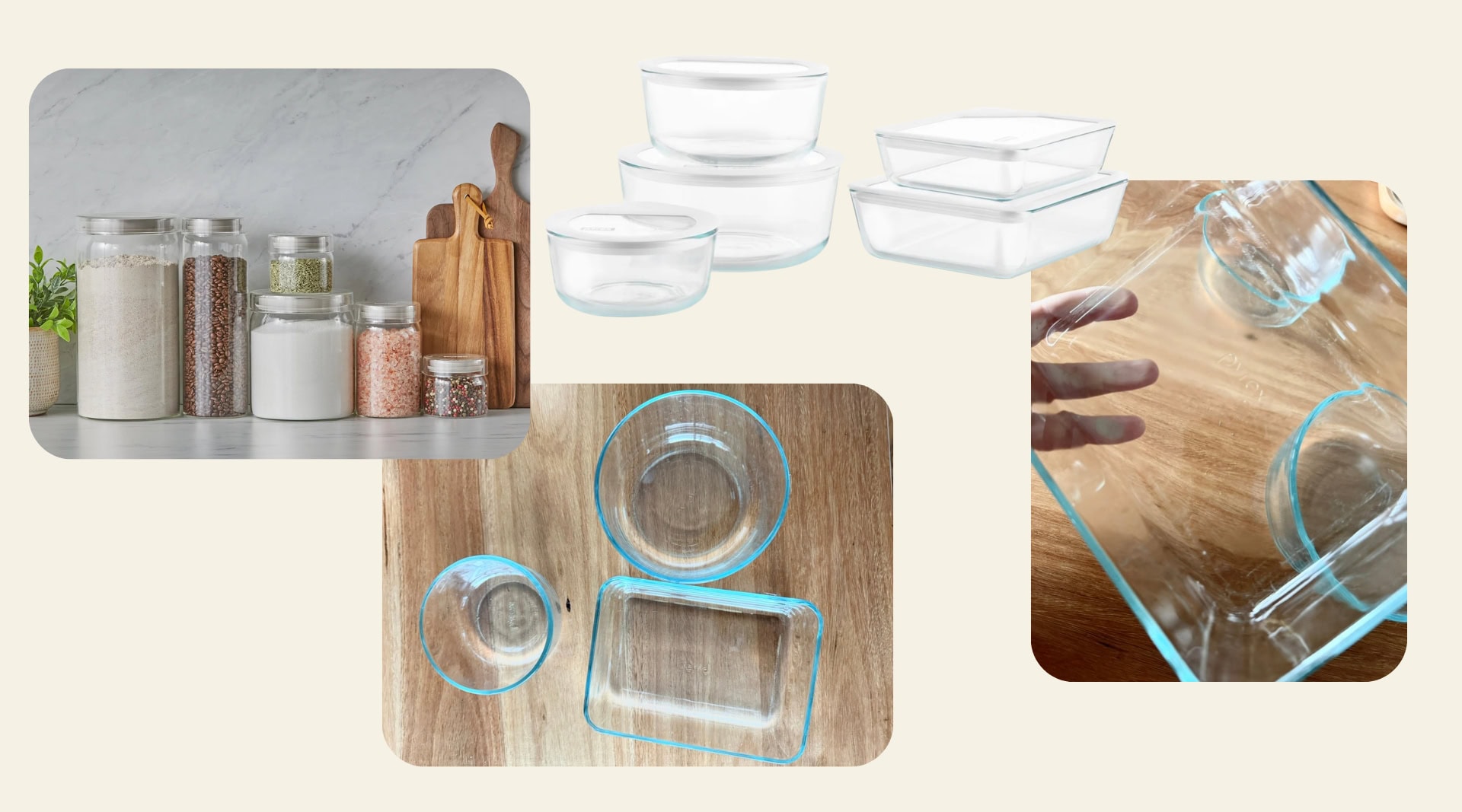
Pyrex has been a kitchen staple for generations, and a couple of its newer lines are some of the most plastic-free options out there. While we don’t have the newer range with plastic-free lids, we reach for our older set constantly for leftovers (see review below).
- Food Storage Range: The Ultimate Glass Storage Set covers leftovers and meal prep in five sizes, and the Glass Canister Set handles dry pantry goods like pasta, rice, oats, and flour.
- Key Materials: Durable Pyrex glass bodies. The new Ultimate line uses a glass lid with a silicone seal, so it is fully plastic-free, and the canisters use a glass lid with a food-grade silicone seal.
- Where It’s Made: Glass containers are made in the U.S., and the glass lids are made in China or Cambodia.
- What Makes It Non-Toxic: Intentionally made without lead, cadmium, or BPA.
- What We Love: A glass lid is rare! The Ultimate containers and lids are both safe in a preheated oven and the microwave. The canisters carry a two-year limited warranty, and the whole range is affordable and built to last.
- Worth Knowing: Pyrex also sells lines with plastic lids (Simply Store, FreshLock) and the plastic Snapware brand, so double check if you are buying the Ultimate or glass-canister line if a glass lid is what you are after.
- Price Range: $ to $$
Our Review of Pyrex Glass Storage
“I haven’t tried either of the new fully plastic-free ranges but I have a wide collection of Tupperware-like food storage containers from Pyrex and find them to be well designed in terms of size and durability. With the exception of the plastic lids which are rubbish (and have not held up well from hundreds of dishwasher loads over the years) so I’m delighted to see new glass lid alternatives.”
Review by Joy McConnochie, SJ Co-founder
Glasslock
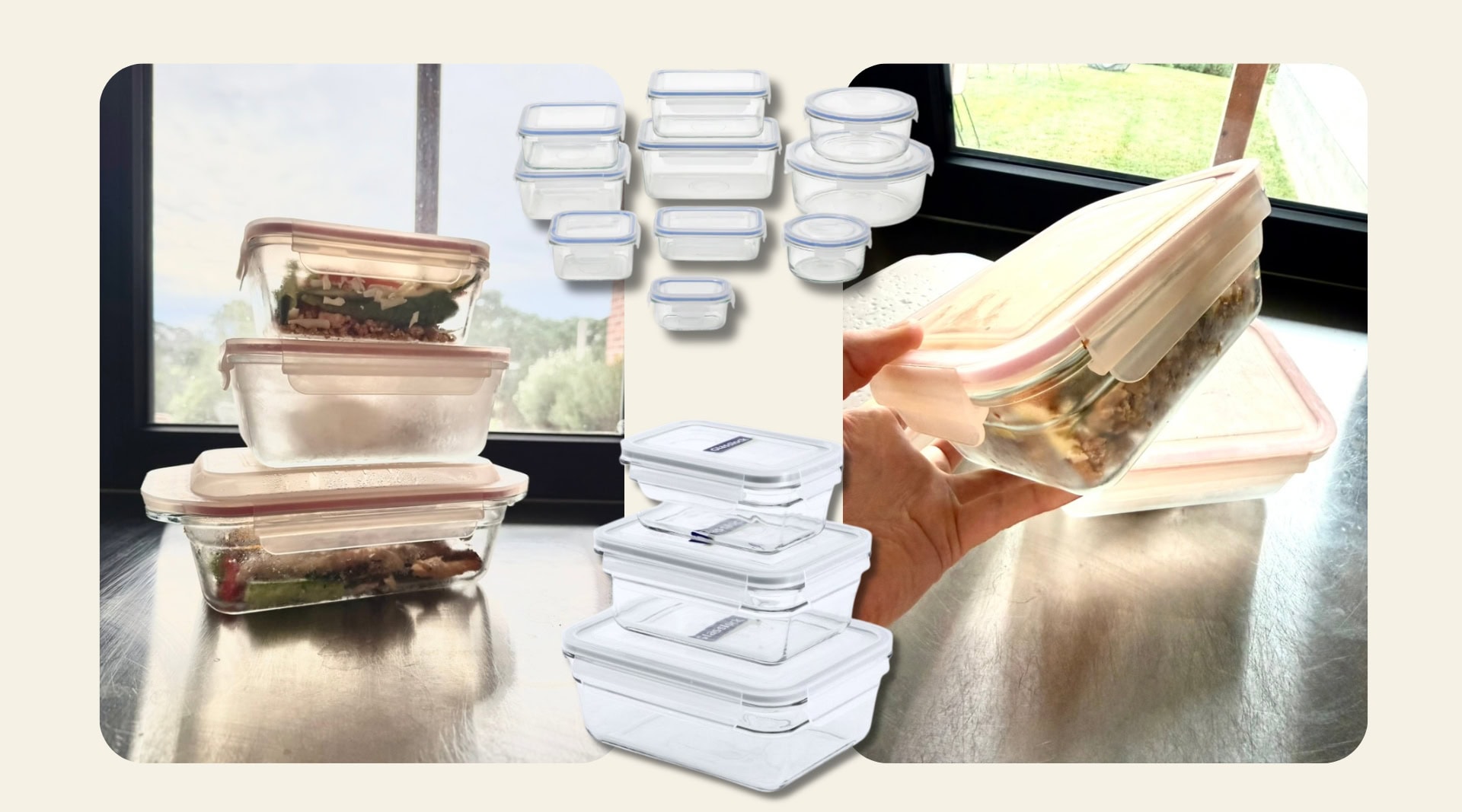
Glasslock has not been rated.
Glasslock Glass Food Storage Containers
Glasslock has been our reliable, everyday workhorse for years, and it covers the leftovers and meal-prep jobs without any fuss. The tempered glass is tough, and the locking lids mean we can move a full container without a leak.
- Food Storage Range: Tempered glass containers in circular and rectangular shapes, suited to leftovers, lunch, and baking.
- Key Materials: Tempered glass body with a BPA-free plastic snap lid and a silicone seal. This is the one pick here with a plastic (though BPA-free) lid, which is the trade-off for that locking, leakproof grip.
- Where It’s Made: South Korea.
- What Makes It Non-Toxic: Made from FDA-compliant, BPA-free materials.
- What We Love: The tempered glass is durable enough for the oven (within reason), it is microwave and freezer safe, and the four-clip lids lock down tight, which makes these a great choice for carrying a packed lunch (albeit a bit heavy).
- Price Range: $$
Our Review of Glasslock’s Glass Containers
“I have owned a range of Glasslock containers in different sizes for several years now and I love them. I bought them when I became aware of the toxin risk in old Tupperware and similar storage containers, and they have been used for everything from lunch transport to leftover storage to freezing meat and other food. I really can’t fault them but given what I know now about plastic, I’d love to see Glasslock add glass lids in future ranges. The other downside is that they are easier to break than stainless steel (we chipped one in the dishwasher).”
Review by Joy McConnochie, SJ Co-founder
Kilner Jars
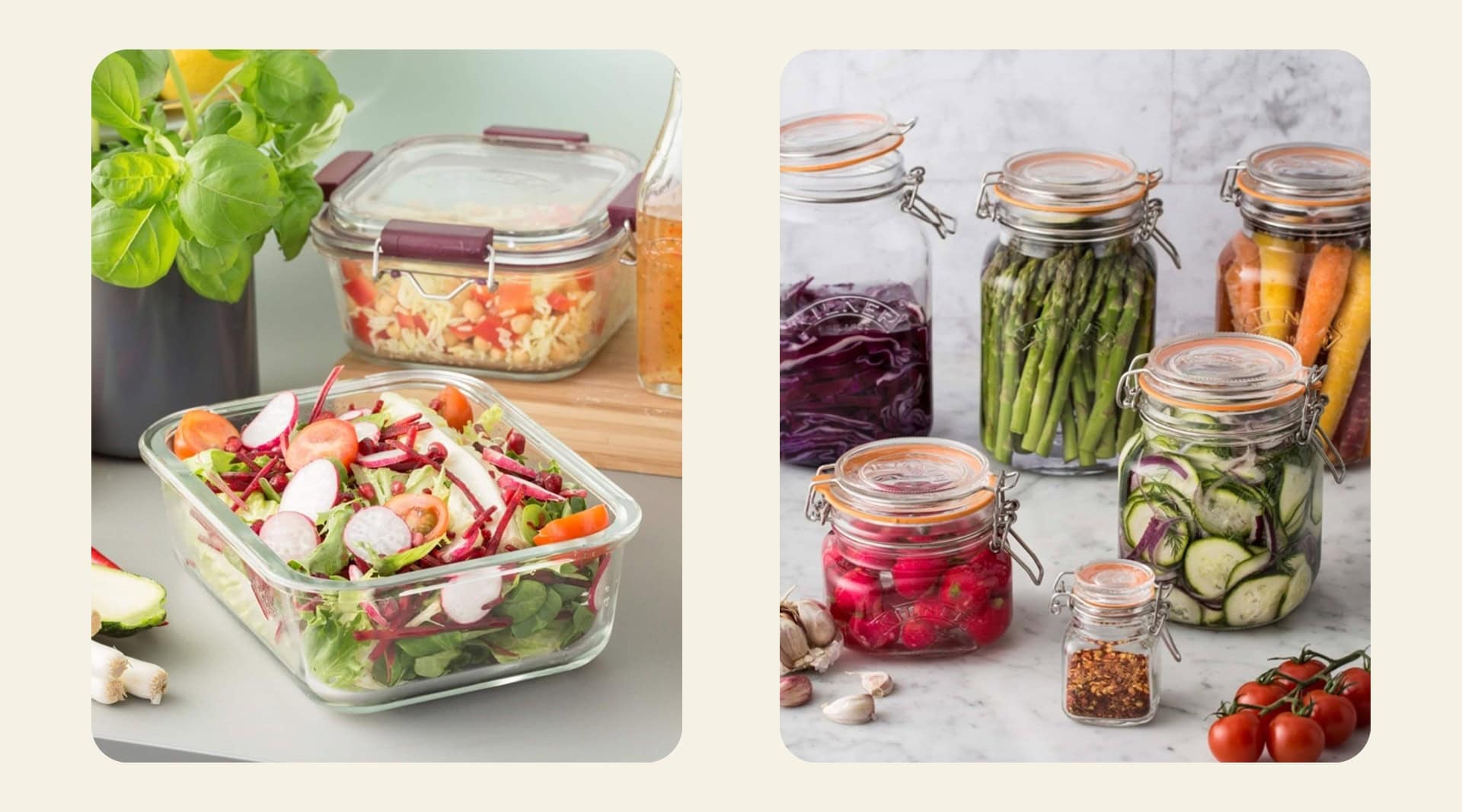
Kilner Jars has not been rated.
Kilner Glass Jars & Fresh Storage
Kilner has been making glass jars in England since 1842, and the range now reaches well beyond preserving. For the pantry, the dry-goods shelf, and the odd batch of jam, Kilner is the best option, and we link our full food preservation guide for anyone going down the canning route.
- Food Storage Range: Clip Top jars for the pantry, preserving, and pickling, the Fresh Storage range of stackable cook-store-freeze containers, and Preserve jars for canning.
- Key Materials: Clip Top jars are soda-lime glass with a glass lid, a stainless steel clip, and a rubber seal. The Fresh Storage range pairs a borosilicate base with a tempered soda-lime lid and a silicone steam valve. Preserve jars use soda-lime glass with a two-piece metal screw lid.
- Where It’s Made: Designed in England, where the brand was founded in 1842.
- What Makes It Non-Toxic: Glass is naturally BPA-free, and nothing migrates from it into food. We’re less sure about the non-glass lids though.
- What We Love: A heritage that stretches past 180 years, a REUSE, REFILL, RECYCLE ethos, and replaceable seals that keep a jar going for years.
- Worth Knowing: The Clip Top jars are soda-lime glass, so they are not built for the oven or thermal shock. If you want a Kilner you can take from freezer to oven, the borosilicate Fresh Storage base is the way to go.
- Price Range: $ to $$
Reused Glass Jars: The Free, Zero-Waste Option
The cheapest non-toxic food storage is the jar already sitting in your recycling bin. We do this constantly, because a clean pasta-sauce, pickle, or jam jar is inert and food-safe. And we love that reusing one keeps a perfectly good container in service instead of the waste stream. It pairs neatly with shopping from online bulk stores and the rest of a zero waste kitchen.
- Food Storage Range: Whatever you already have. Wide-mouth jars suit grains and leftovers, taller jars suit pasta and oils, and small jars are ideal for spices and sauces.
- Key Materials: Glass body, and an existing metal lid (see the note below).
- What Makes It Non-Toxic: The glass itself is inert and safe. Lids are worth considering further though, see below.
- Worth Knowing: The original metal lids on store-bought jars are usually lined with a BPA-based epoxy coating, and that coating can migrate BPA into food, more so when it is heated or washed in hot water. For dry or cold storage this is less of an issue. For anything heated, acidic, or stored long term, swap in a BPA-free or stainless replacement lid, or use a clip-top jar like Kilner above.
- Price Range: Free
Our Take On Reused Jars
“I’ve reused glass jars for as long as I can remember. I have an embarrassingly sized collection of jars of all shapes and sizes. They’re great for smoothies, storing food in the pantry, freezing food (be sure to leave space at the top) and bulk shopping at zero waste stores. ”
By Joy McConnochie, SJ Co-founder
Best Stainless Steel Food Storage Containers & Lunch Boxes
Stainless steel is the other safe-storage heavyweight, because like glass it is non-porous and will not absorb bacteria or leach chemicals into your food. They are also what we reach for when meal planning, because they stack neatly in the fridge and go straight from prep to lunch bag. It also survives drops that would shatter glass, which makes it the better pick for lunches, kids, and life on the move. If you want the full picture on the material, our guide on whether stainless steel is non-toxic digs in.
Klean Kanteen
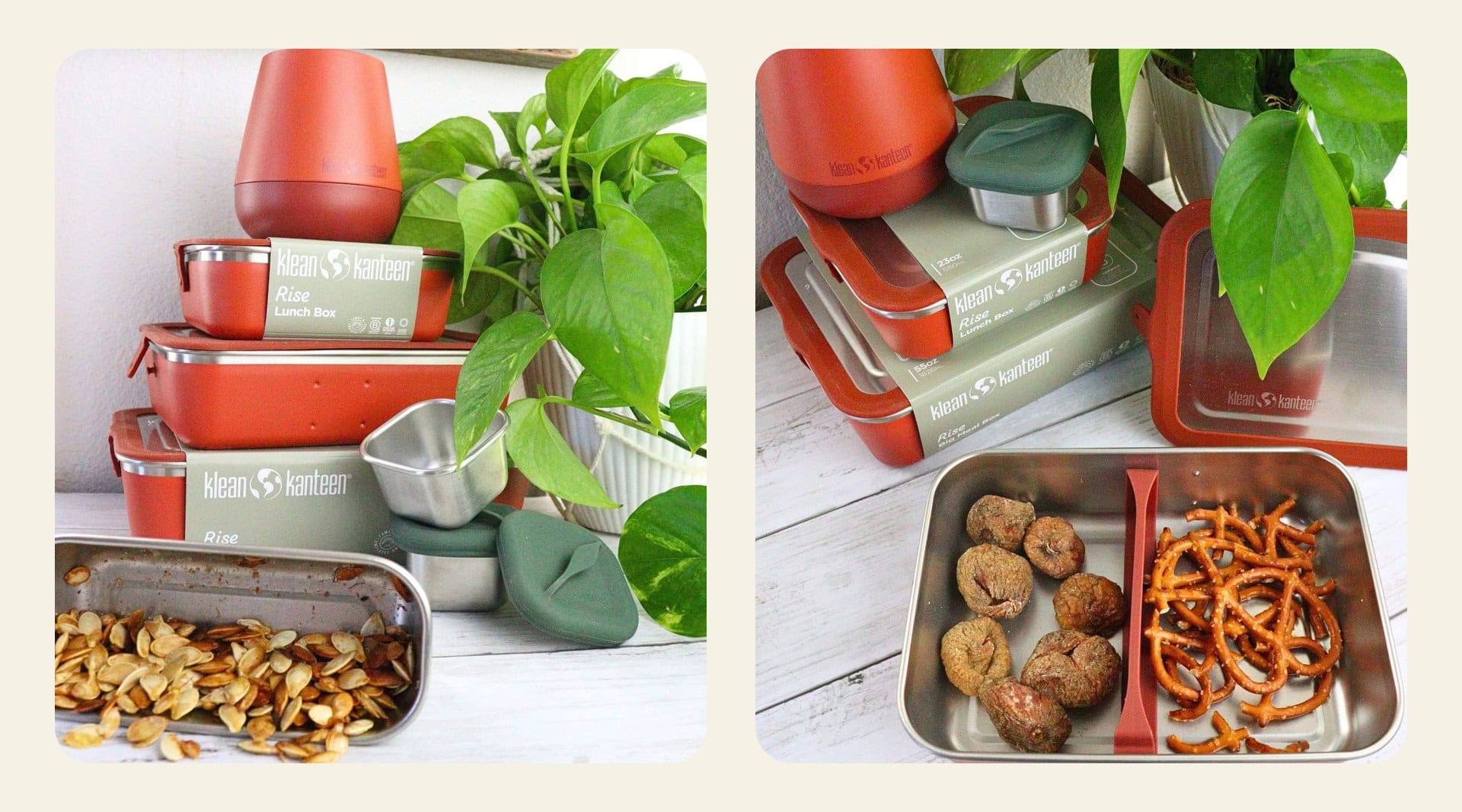
Klean Kanteen has not been rated.
Klean Kanteen Stainless Steel Food Containers
Klean Kanteen’s post-consumer recycled stainless steel containers never let us down, and we have put plenty of them through their paces. The brand carries the same plastic-free thinking from its well-known plastic-free water bottles straight into food storage.
- Food Storage Range: The Food Box for fridge leftovers and lunches, larger boxes with removable dividers, and the insulated TKCanister for hot meals.
- Key Materials: Post-consumer recycled 18/8 stainless steel, with a leak-proof food-grade silicone lid on the Food Box.
- Where It’s Made: China.
- What Makes It Non-Toxic: Free of plastic, epoxy linings, BPA, and other harmful chemicals.
- What We Love: This is an employee-owned Certified B Corp that is Climate Label Certified and a member of 1% for the Planet.
- Price Range: $$
Our Review of Klean Kanteen’s Stainless Steel Food Storage
“Because the Food Box is so lightweight, it is ideal as a packable container, and I like to keep it on hand when I eat out so I can box up leftovers sustainably. The larger versions with removable dividers are perfect for that, especially if, like me, you are picky about food touching. The insulated TKCanister is the one I reach for when I want a hot lunch but cannot heat it myself, like on a road trip or out climbing, because its vacuum-tight seal keeps my food hot almost all day. The 32oz size holds the perfect amount for two, which makes it our go-to picnic pal.”
Review by Amber McDaniel, SJ’s Head of Content
Hydro Flask
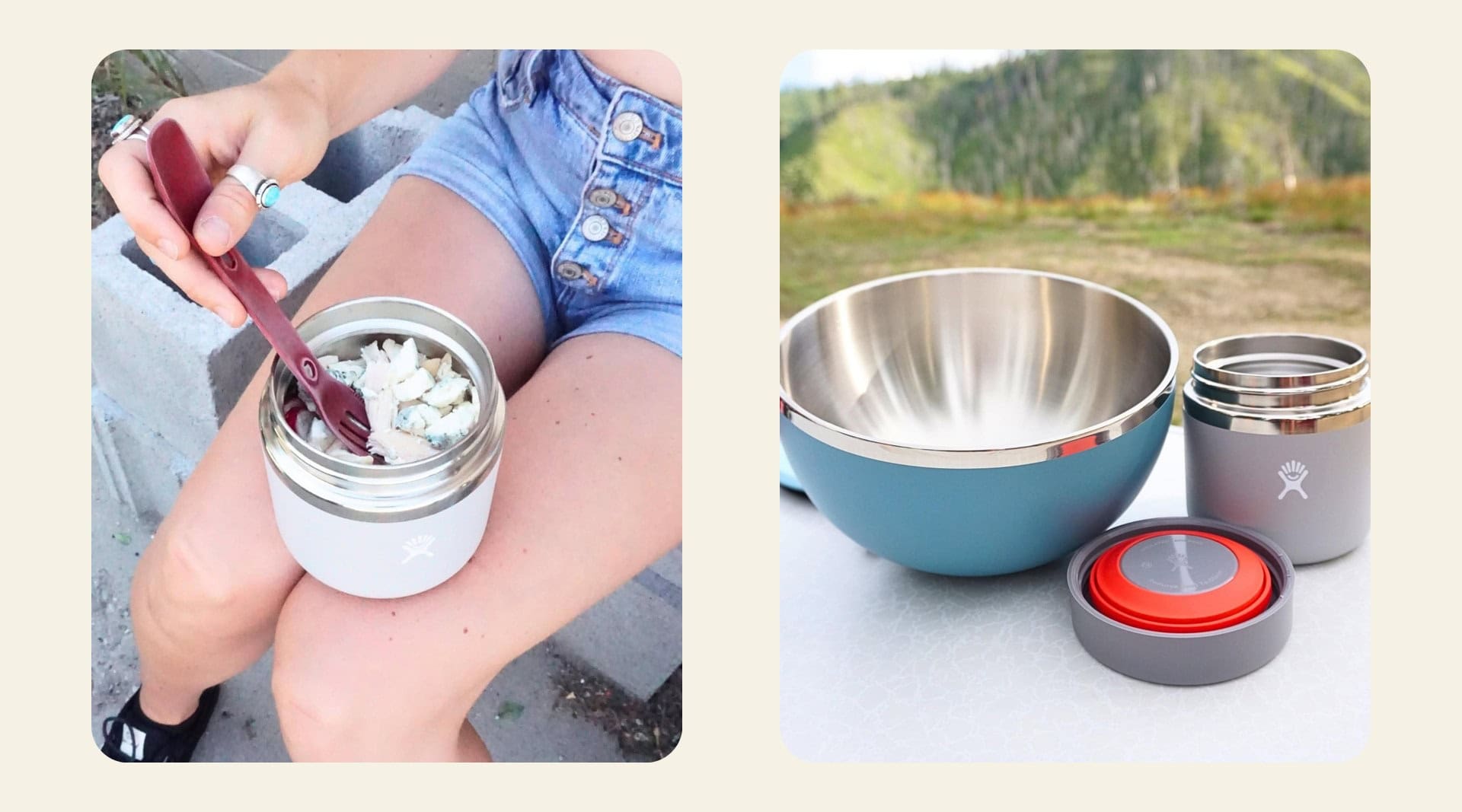
Hydro Flask has not been rated.
Hydro Flask Stainless Steel Food Jars
Most people know Hydro Flask for its colorful insulated bottles, but the brand’s food jars carry the same durable build, and they have become a regular in our lunch rotation.
- Food Storage Range: Insulated food jars in 8, 12, 20, and 28oz sizes, built for hot meals and soups on the go.
- Key Materials: 18/8 pro-grade stainless steel with a leak-proof seal and a powder-coat finish, topped with a BPA-free polypropylene (PP#5) lid.
- Where It’s Made: China.
- What Makes It Non-Toxic: Pro-grade stainless steel means zero flavor transfer and no leaching.
- What We Love: A lifetime warranty against defects, FSC-certified paper packaging, and the brand’s Parks For All program, which funds green spaces and outdoor access.
- Worth Knowing: These are built for insulation, so they are not oven, microwave, or freezer safe.
- Price Range: $$
Our Review of Hydro Flask’s Insulated Food Jar
“I tested the 20oz food jar and it quickly became a favorite for packing lunches to go. We are big fans of soup and hot meal prep, so this is perfect for packing up a hot stew, hitting the road, and still having it warm by the time lunch rolls around. Just like the bottles we have used for years, it is so durable I would be surprised if it does not last a couple of decades.”
Review by Amber McDaniel, SJ’s Head of Content
ECOlunchbox
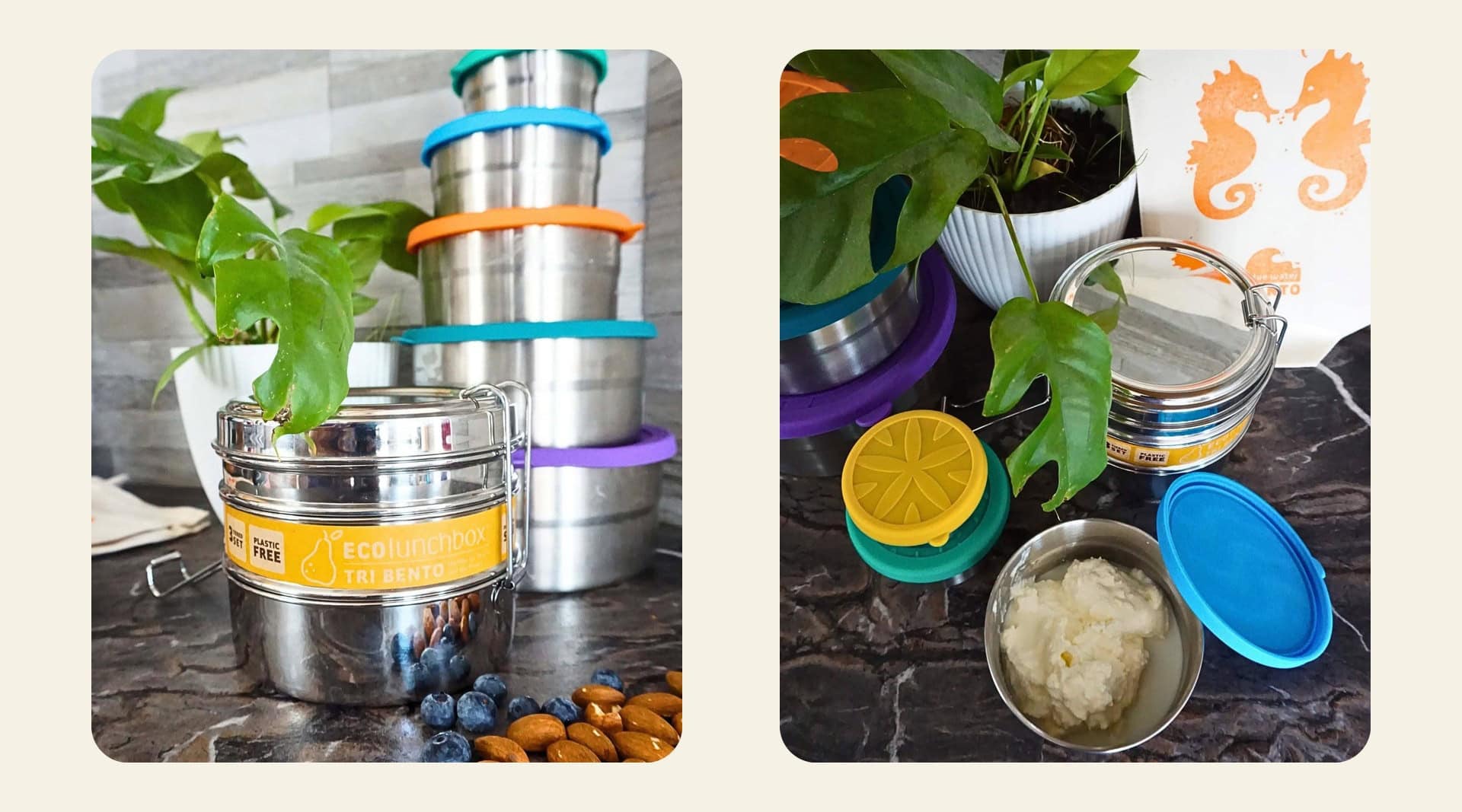
ECOlunchbox has not been rated.
ECOlunchbox Stainless Steel Lunch Containers
ECOlunchbox offers a whole spread of shapes and sizes built from a single material, which is part of what makes its containers so easy to recycle at the very end of their long life. For more on packing lunch without plastic, see our eco-friendly lunch boxes and bags guide.
- Food Storage Range: The nesting Seal Cup sets, the Tri Bento for on-the-go meals, and a range of stainless boxes.
- Key Materials: 100% food-grade stainless steel, with food-grade silicone lids on models like the Seal Cup Trio.
- Where It’s Made: India, Thailand, and China
- What Makes It Non-Toxic: No BPA, BPS, or phthalates, and the brand avoids mixing in non-recyclable resins or linings.
- What We Love: A female-owned company that offsets a substantial volume of CO2 each year and etches the weight onto each container, which makes bulk-store shopping painless.
- Price Range: $ to $$$
Our Review of ECOlunchbox’s Seal Cup Set
“These are my go-to on-the-go containers because they are lightweight, easy to clean, and will not break if they get tossed around in a bag or dropped. I also love that all six sizes and their lids nest neatly within each other, so they take up almost no storage space, which I really appreciate in my tiny-house kitchen.”
Review by Amber McDaniel, SJ’s Head of Content
U Konserve
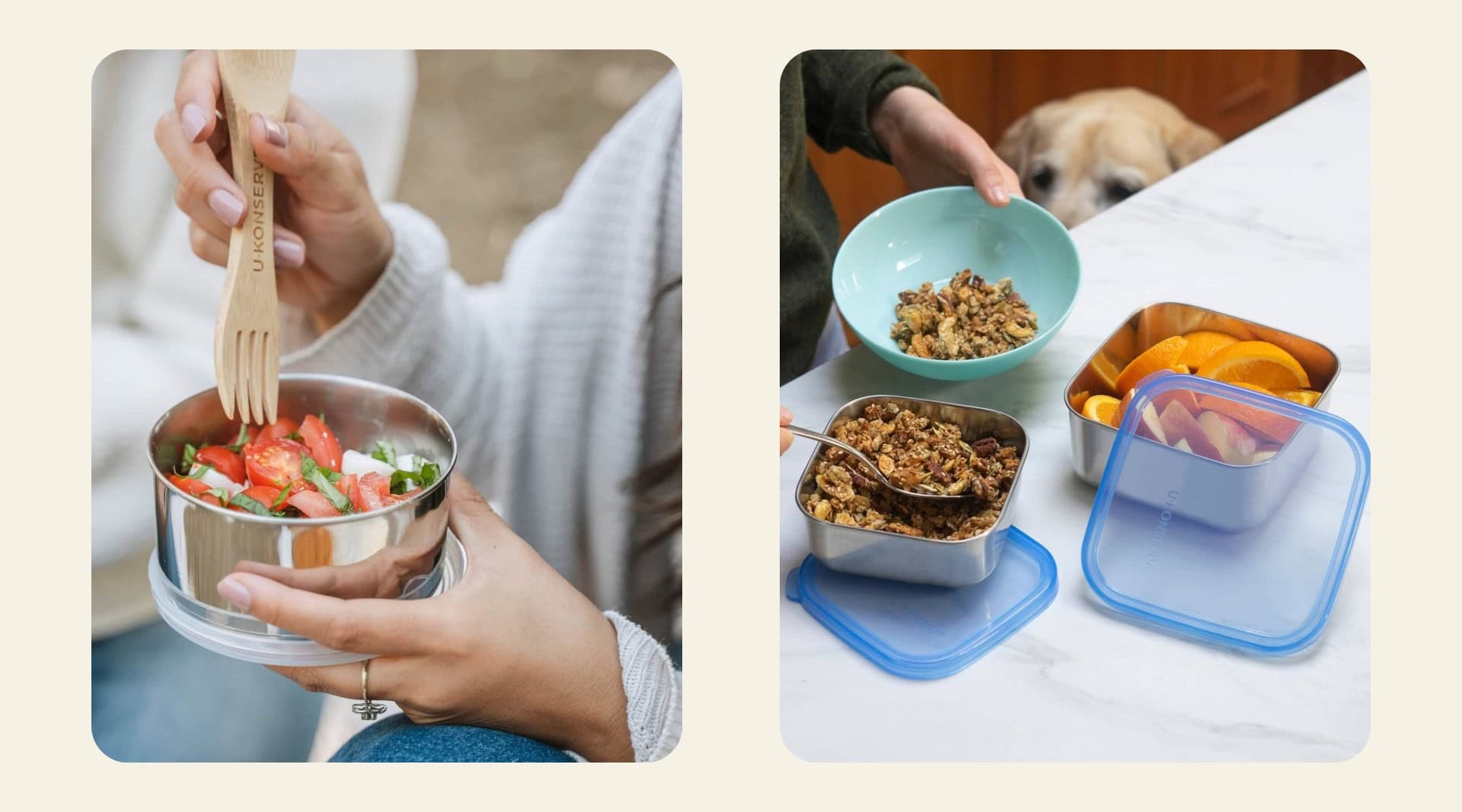
U Konserve has not been rated.
U Konserve Stainless Steel & Silicone Containers
Sometimes simple, unpainted stainless steel is all you need, and U Konserve keeps things conservative with premium steel and silicone storage that holds up to daily use.
- Food Storage Range: Circular and rectangular nesting storage, to-go containers, and 100% silicone options like the leakproof BounceBox.
- Key Materials: Stainless steel paired with food-grade silicone lids, having moved away from the brand’s former plastic lids. The silicone containers are oven, freezer, and dishwasher safe.
- Where It’s Made: Made in China, with a focus on ethical production.
- What Makes It Non-Toxic: Tested by CPSIA-accredited independent labs for lead, BPA, and phthalates.
- What We Love: A family-owned company and a member of 1% for the Planet.
- Price Range: $ to $$
Black + Blum
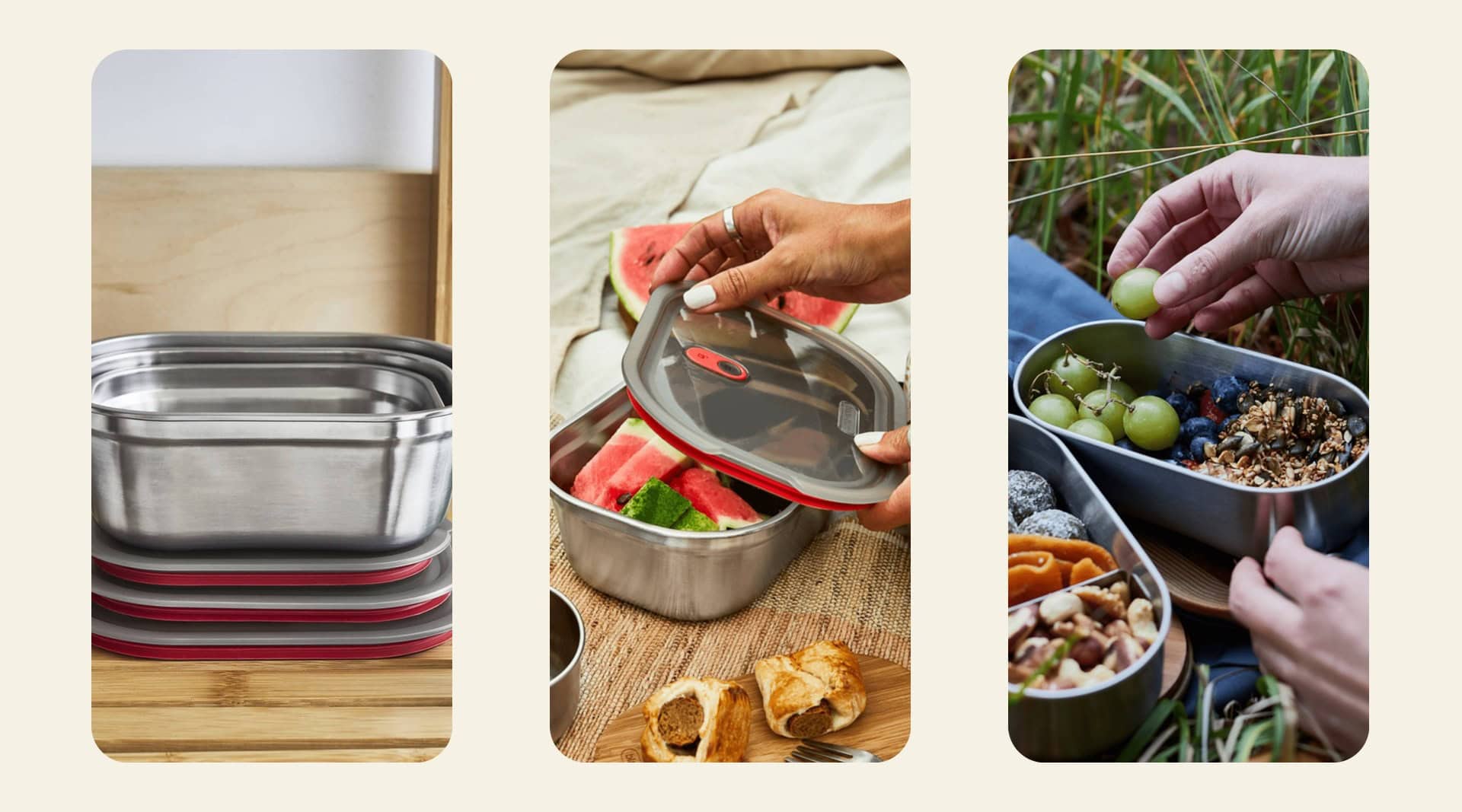
Black + Blum has not been rated.
Black + Blum Stainless Steel Food Storage
UK-based and available in the US, Black + Blum makes meal prep both sleek and safe, with stainless containers that keep plastic well away from your food.
- Food Storage Range: Leak-proof, airtight meal prep boxes and bowls, bento boxes, and 100% stainless lunch boxes that double as storage.
- Key Materials: 18/8 (304) stainless steel throughout, including a stainless lid with a silicone overmould for a leakproof seal.
- Where It’s Made: UK-based brand, available in the US.
- What Makes It Non-Toxic: Solid stainless construction keeps plastic out of contact with food.
- What We Love: A member of 1% for the Planet, and each purchase helps fund food donations through City Harvest in London.
- Price Range: $$
Best Reusable Wraps, Bread Bags & Produce Storage
Not every storage job calls for a rigid container, because bread, cheese, half an avocado, and a bunch of kale all keep better wrapped or bagged in something breathable. These reusable wraps, bread bags, and produce bags cover the food a tupperware-style storage container cannot.
MagicLinen

Compostable
All or some products are compostable, either in an industrial facility or at home
Ethical Sourcing
Raw materials have been sourced ethically with people and planet in mind.
Handcrafted
Products have been made by hand, typically by an artisan or group of artisans.
Made To Order
Products can be made to order, thus limiting unnecessary production
Non-toxic
All products are made with ingredients or materials that are currently considered non-toxic
Plastic-free
All products are entirely plastic-free
Sustainable Materials or Ingredients
Either all or most products are made with sustainable materials or ingredients.
Thoughtful packaging
Product packaging has been designed and created with the end of life outcome in mind and can be easily recycled or composted.
Vegan
This brand does not use any animal products or by-products in their products
Woman Owned
This brand is owned by a woman or a group of women.
OEKO-TEX®
OEKO-TEX®
The OEKO-TEX® Standard 100 certification ensures that every component of a textile product (threads, buttons, zippers, and fabrics) has been independently tested for harmful substances. Managed by the International Association for Research and Testing in the Field of Textile and Leather Ecology, it guarantees products are safe for human health, meeting strict global limits for chemicals such as pesticides, heavy metals, formaldehyde, and PFAS.MagicLinen Linen Bowl Covers & Bread Bags
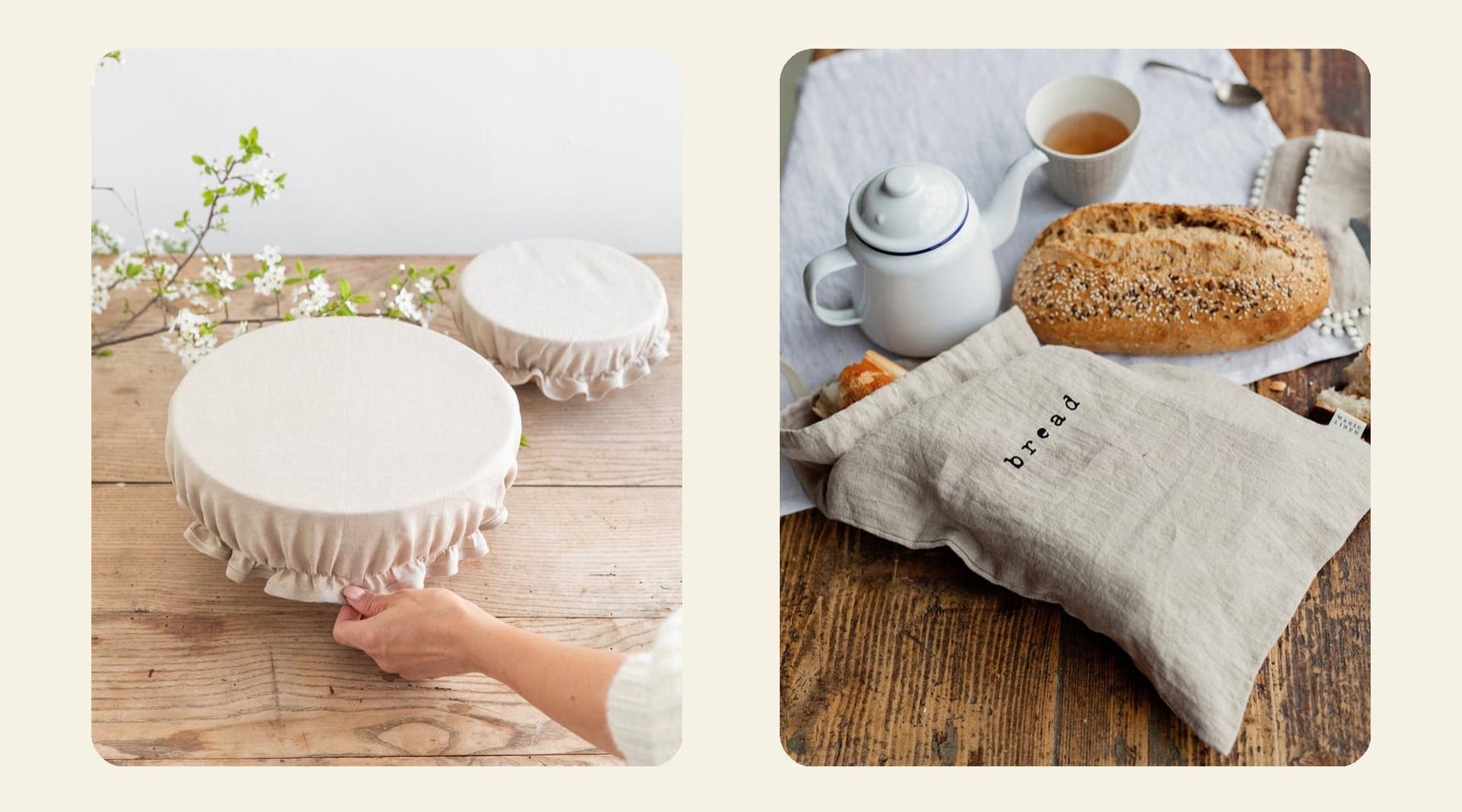
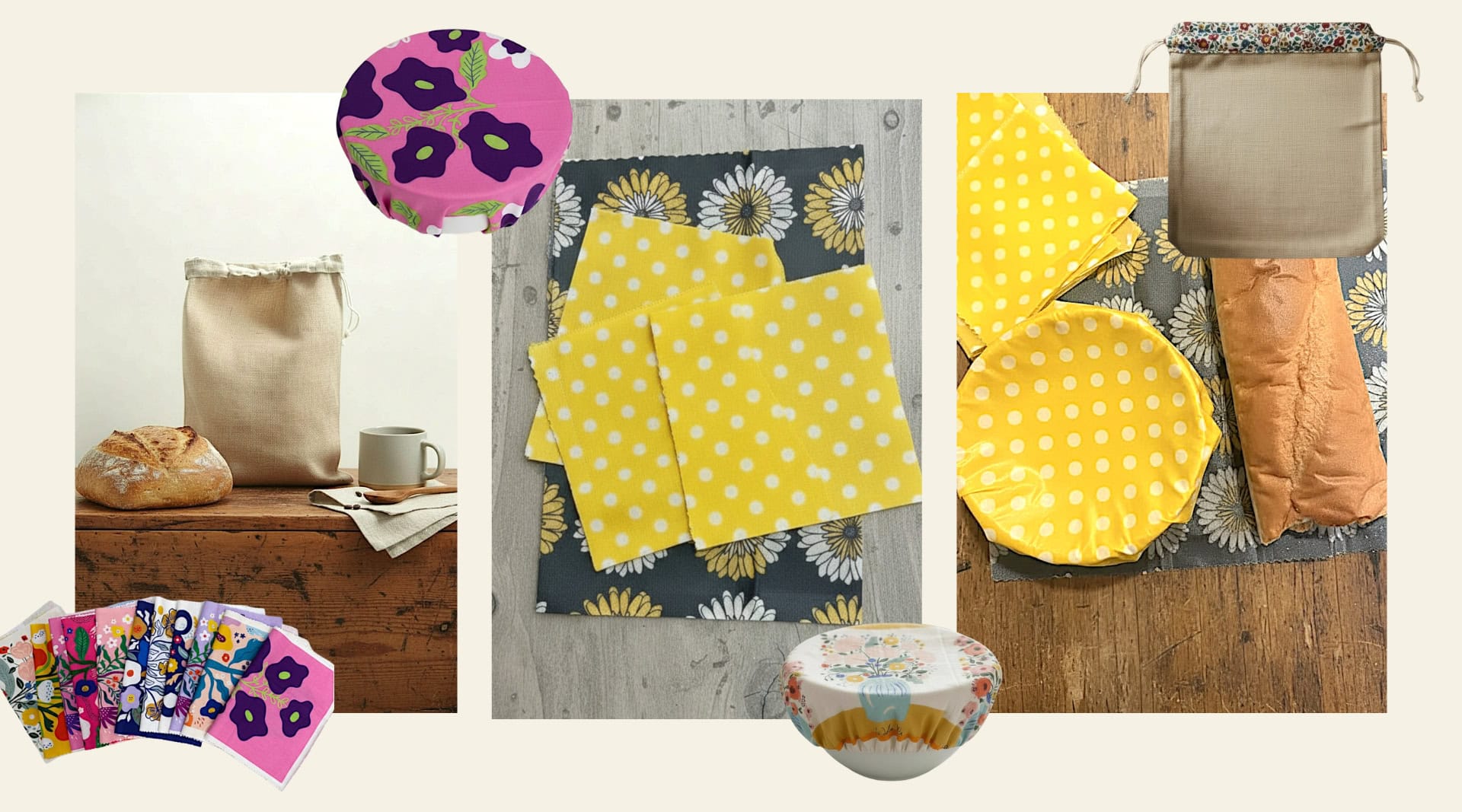
MagicLinen focuses on one material, linen, and does it beautifully. Its kitchen range is a lovely plastic-free way to cover, carry, and store food that does not belong in a sealed box, and the brand has been rated by Sustainable Jungle.
- Food Storage Range: Linen bowl covers (set of two), drawstring bread bags, and zero-waste produce bags.
- Key Materials: 100% European flax linen.
- Where It’s Made: Lithuania.
- What Makes It Non-Toxic: OEKO-TEX certified (Standard 100, cert 2019OK0776), which means it is tested to be free of harmful chemicals, with undyed natural options available.
- What We Love: The single-material focus, the breathability that suits rising dough and fresh bread, and the fact that everything is machine washable for daily use.
- Worth Knowing: Linen can shrink slightly after washing, so follow the care guidance.
- Price Range: $ to $$
MagicLinen has been rated by Sustainable Jungle. See the full rating.
Butterfly & Bee

Cruelty-free
Products are not test on animals at any stage in their production.Ethical Sourcing
Raw materials have been sourced ethically with people and planet in mind.Handcrafted
Products have been made by hand, typically by an artisan or group of artisans.
Locally Made
Products are made local to the brand's headquarters.Non-toxic
All products are made with ingredients or materials that are currently considered non-toxic
Organic
Products are made from organic materials.
Palm Oil Free
Products contain no palm oil or palm oil derivatives.
Recycled materials
Some or all products are made with recycled materials
Refillable
Product packaging can be refilled with more product, either at a physical store or via a return program.
Small business
This brand is a small business run by less than 15 peopleSustainable Materials or Ingredients
Either all or most products are made with sustainable materials or ingredients.Thoughtful packaging
Product packaging has been designed and created with the end of life outcome in mind and can be easily recycled or composted.Woman Owned
This brand is owned by a woman or a group of women.
Zero Waste
Products are made with a low or zero waste approach where ideally no or limited waste is created throughout the production process or at the end of life.
ECOCERT Cosmos
Fair Trade
Leaping Bunny
USDA Organic
ECOCERT Cosmos
The ECOCERT COSMOS certification is an internationally recognized standard for natural and organic cosmetics. Overseen by ECOCERT, it ensures that products are made with sustainably sourced, biodegradable ingredients, use environmentally friendly manufacturing and packaging, and avoid GMOs, parabens, phenoxyethanol, and synthetic fragrances or dyes. The COSMOS label (either Organic or Natural) guarantees transparency and integrity throughout the entire production process.Fair Trade
The Fair Trade certification ensures that products are made according to rigorous social, environmental, and economic standards that protect workers and the planet. Overseen by organizations such as Fair Trade USA and Fairtrade International, it guarantees fair wages, safe working conditions, environmental sustainability, and community development funds, helping producers build more equitable and resilient supply chains.Leaping Bunny
The Leaping Bunny certification, managed by the Coalition for Consumer Information on Cosmetics (CCIC), is the globally recognized gold standard for cruelty-free products. It ensures that neither a company’s finished products nor their ingredients are tested on animals at any stage of development. Brands must also agree to independent audits and supplier monitoring, guaranteeing genuine cruelty-free commitment across their entire supply chain.USDA Organic
The USDA Organic certification, regulated by the U.S. Department of Agriculture’s National Organic Program (NOP), verifies that products are made with ingredients grown and processed according to strict organic standards. It prohibits synthetic pesticides, fertilizers, GMOs, and harmful additives, while requiring practices that promote soil health, biodiversity, and animal welfare.Butterfly & Bee Beeswax Bread Bags & Wraps
Butterfly & Bee makes reusable, plastic-free bread storage and wraps for the low-waste kitchen, and like MagicLinen, the brand has been rated by Sustainable Jungle.
- Food Storage Range: Beeswax-lined bread bags built for artisan loaves and sourdough, plus beeswax wraps.
- Key Materials: Linen and cotton lined with a natural beeswax coating.
- Where It’s Made: Newburyport, Massachusetts, USA, crafted in small batches.
- What Makes It Non-Toxic: A natural beeswax coating over natural fibers, with no plastic.
- What We Love: SJ Rated, fully reusable, and designed for the kind of zero-waste bread storage that keeps a loaf fresh without a plastic bag.
- Price Range: $$
Butterfly & Bee has been rated by Sustainable Jungle. See the full rating.
SuperBee
SuperBee has not been rated.
SuperBee Beeswax Wraps & Bread Bags
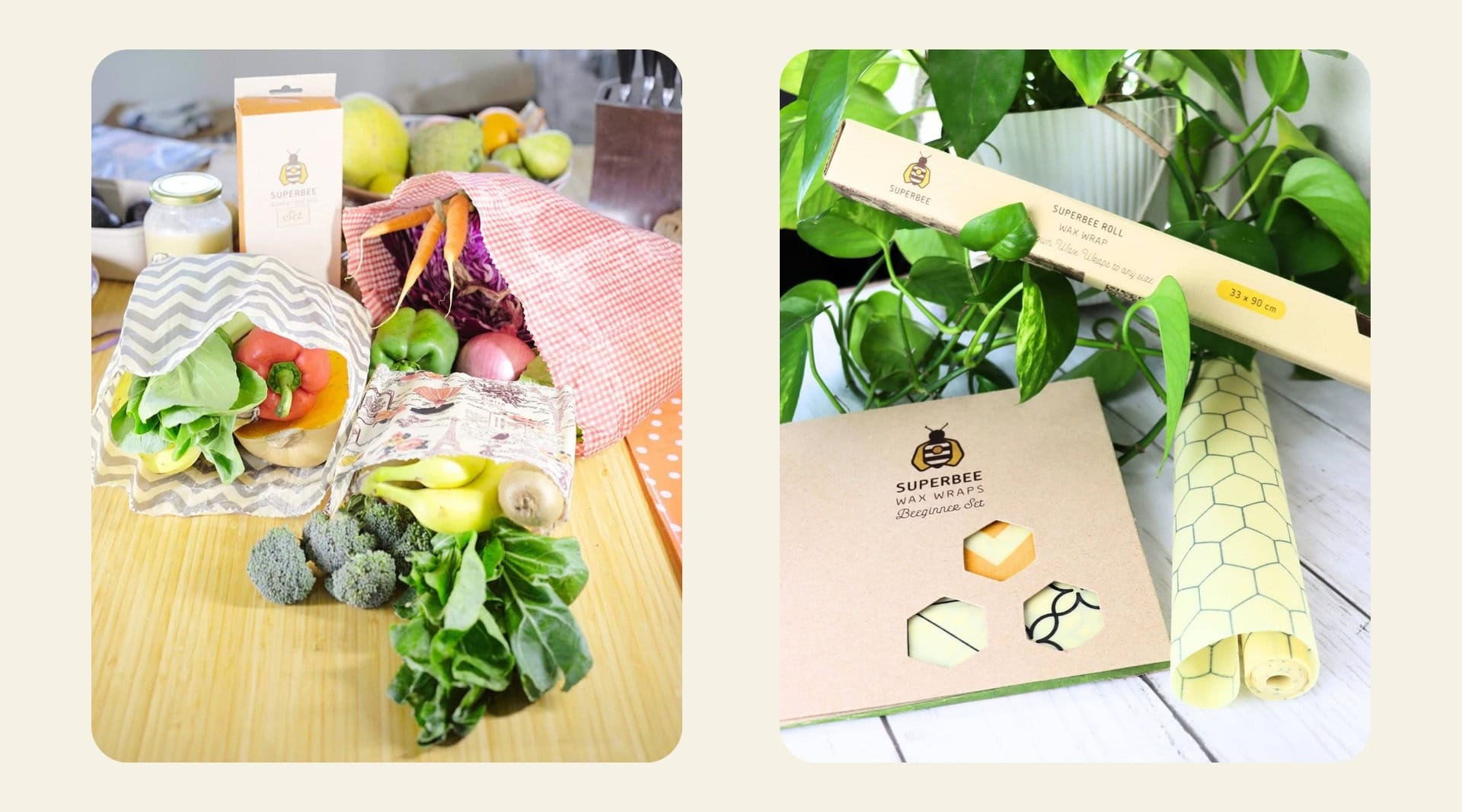
Food storage does not need to be a container at all. In SuperBee’s case it takes the form of wraps, sandwich bags, and bread bags, and we are big fans. If you are new to them, our guides on beeswax wraps and how to use beeswax wraps will get you started.
- Food Storage Range: Beeswax wraps, sandwich bags, and bread bags, sold individually or in combo packs.
- Key Materials: GOTS-certified organic cotton coated in responsibly harvested, pesticide-free beeswax, organic coconut oil, and tree resin.
- Where It’s Made: Thailand.
- What Makes It Non-Toxic: Natural, food-safe ingredients with no plastic.
- What We Love: A Certified B Corp and woman-owned company that pays its makers in Thailand 20% above the living wage suggested by the Fair Trade Association.
- Price Range: $ to $$
Our Reviews of SuperBee’s Beeswax Wraps
“I’ve been using a few of Superbee’s wraps for about a year now, and they are still performing well. The coating is going strong and is not noticeably thinner than when I first got it. Because they are designed to last around two years with good care, I expect to get at least another year out of them.”
Review by Amber McDaniel, SJ’s Head of Content
“We’re buzzing about these wraps after having tried them ourselves, and we’re particularly impressed with how well they seal and keep food fresh. Even things like bread, which we’ve found can go stale because of small air gaps in a beeswax wrap’s seal, stay soft and fresh in these for days. I do find beeswax wraps trickier to clean than glass or stainless food storage so tend to use these for things that are not too messy like dry snacks. I also don’t put anything hot in them as I learned the hard way that the wax melts a tiny bit (duh).”
Review by Joy McConnochie, SJ’s Co-founder
Stasher
Stasher has not been rated.
Stasher Silicone Food Storage Bags
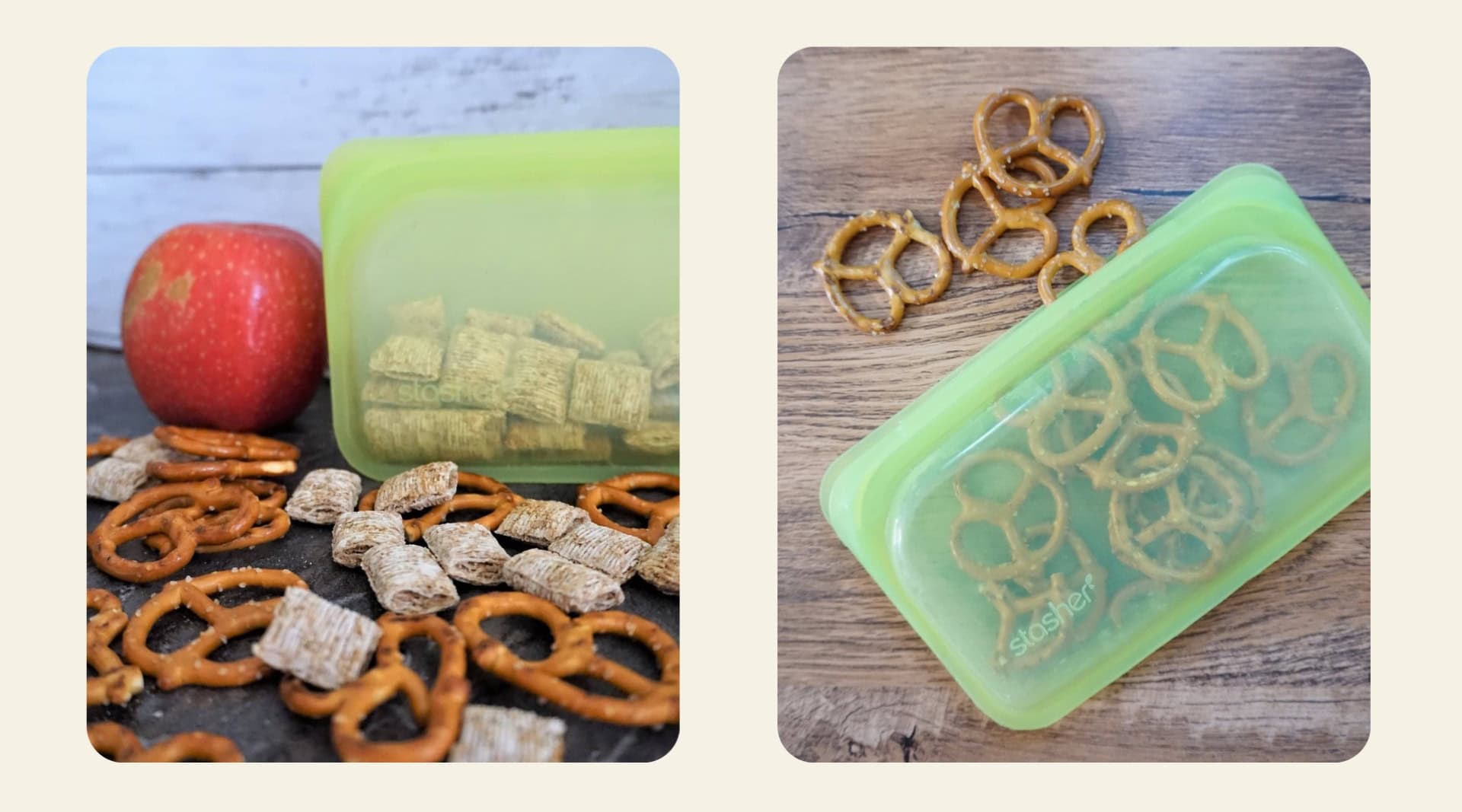
If you are looking for a reusable answer to single-use sandwich bags, Stasher has the stash for you, and we have leaned on ours for years.
- Food Storage Range: Reusable snack, sandwich, and freezer bags.
- Key Materials: 100% pure platinum-grade silicone in a one-piece, self-sealing design, so there is no separate lid or seal to fail.
- Where It’s Made: China.
- What Makes It Non-Toxic: Free of BPS, BPA, lead, phthalates, and latex.
- What We Love: A TerraCycle partnership for recycling old or damaged bags, SA8000-certified manufacturing, and a 1% donation to environmental non-profits.
- Worth Knowing: Silicone is not biodegradable, and while it is recyclable, widespread options are still scarce, which is why that TerraCycle program is in place.
- Price Range: $ to $$
Our Review of Stasher’s Silicone Food Storage Bags
“I have used Stasher’s alternative to Ziploc bags for years, and I love the self-sealing that keeps snacks and sandwiches fresh, especially on the go. My favorite part is that they are 100% silicone, unlike some silicone bags that use a press zipper made from other materials that melt in the dishwasher (ask me how I know). I have used these in the freezer, oven, dishwasher, and sous vide machine with no issues. Just be sure to let the inside dry fully to prevent any mildew.”
Review by Amber McDaniel, SJ’s Head of Content
Vejibag
Vejibag has not been rated.
Vejibag Organic Cotton Produce Storage
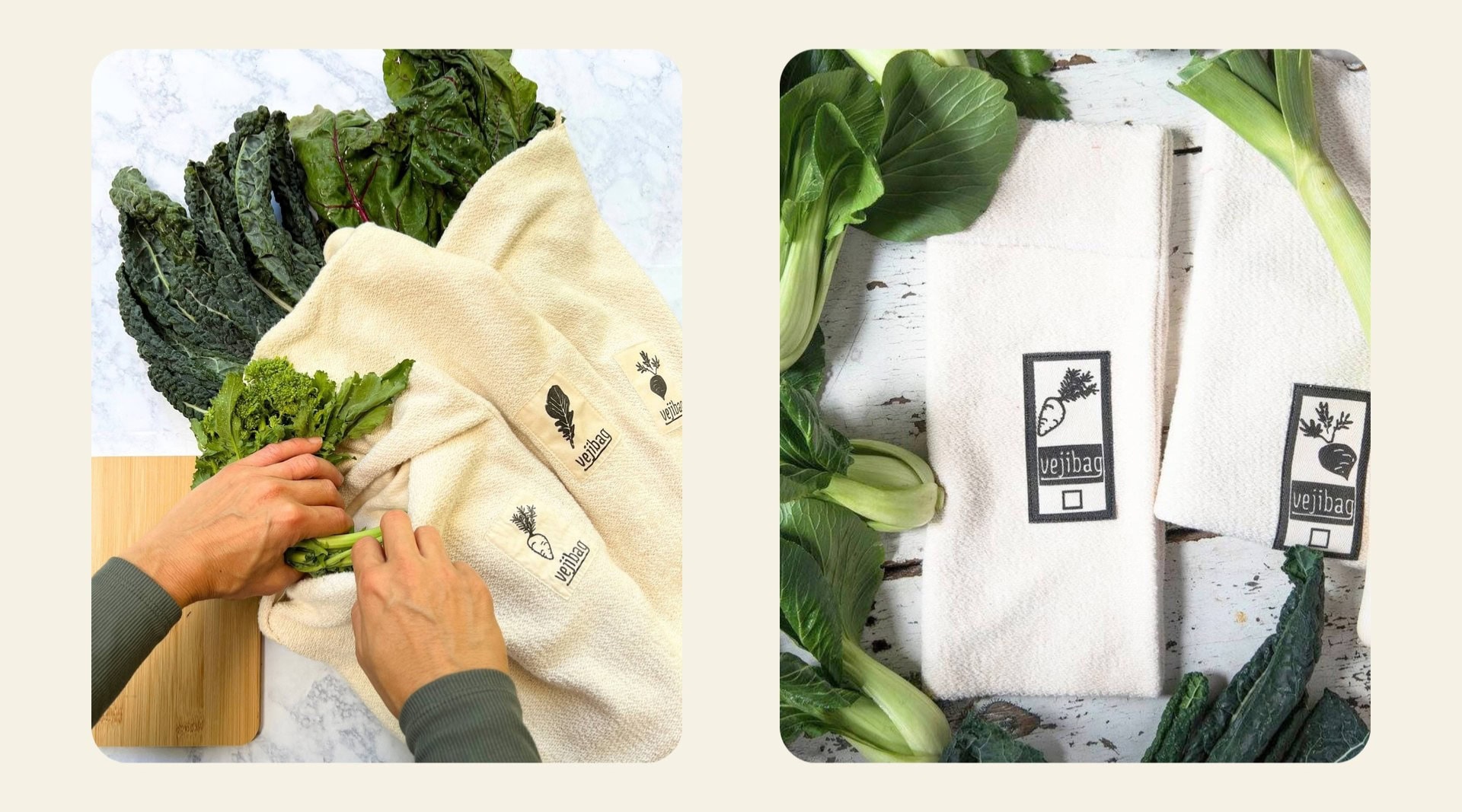
For something so simple, the cloth Vejibag is a revelation, because it keeps fruit and vegetables crisp for far longer than a plastic bag using nothing but damp organic cotton. For more on this, our guide on how to store produce covers the wider approach.
- Food Storage Range: Produce storage bags in small, standard, large, and extra-large sizes.
- Key Materials: Undyed 100% French terry organic cotton, grown, milled, and produced in the USA.
- Where It’s Made: USA.
- What Makes It Non-Toxic: Undyed organic cotton with nothing added.
- What We Love: It keeps greens fresh for two weeks or more by holding the right level of moisture, and at the end of its life the cotton is compostable.
- Price Range: $
Our Review of Similar Produce Storage
“While we do not own this exact Vejibag, we own a similar cotton produce bag and can say it works wonders, keeping our greens crisp and fresh for far longer than they last loose in the crisper drawer.”
Review by Amber McDaniel, SJ’s Head of Content
Why Choose Non-Toxic Food Storage Containers?
Plastic food containers do not keep their ingredients to themselves, and that is a good reason to switch.
The Trouble With Plastic
Hard plastics typically contain bisphenols like BPA and BPS, while softer plastics and storage bags rely on phthalates, and both classes of chemical leach out of food packaging into the food itself, especially when the container is heated, acidic, or fatty.
BPA is a well-documented endocrine disruptor, and reviews of its food exposure link it to hormonal disruption, infertility, and cancer, with further research connecting it to reproductive and fertility problems. It is not a fringe exposure either, because BPA has been measured releasing from everyday food and beverage containers.
Phthalates raise their own set of concerns, since a systematic review of the evidence ties them to endocrine disruption and reproductive harm. And then there are the particles themselves, because microplastics and nanoplastics migrate from plastic containers into food, with microwave heating and acidic foods causing by far the biggest release. Many older plastics also carry PFAS, the forever chemicals that persist in the body and are linked to certain cancers, immune effects, and developmental delays. Our deeper dives on how to avoid microplastics and what forever chemicals are go further on both.
Why BPA-Free Is Not All You Need To Consider
Hang on, isn’t BPA-free plastic the fix? We wish, because the common replacement chemicals are not a clean break, and BPS and BPF show similar endocrine-disrupting and obesogenic activity to the BPA they stand in for. Our guide on glass vs plastic lays out the comparison.
How To Choose: Material, Lid, And Glass Type
A few rules of thumb:
- Material: Glass and stainless steel are the safest bets, because neither leaches into food. Platinum-grade silicone is a better-than-plastic third option for bags and flexible storage.
- Lid and seal: Unfortunately, lids on Tupperware-style containers are usually plastic. A glass body with a plastic lid can still keep food off the plastic, which is fine (if you’re careful), but if you want a fully plastic-free container, look for a glass or stainless lid with a silicone seal, like the Pyrex Ultimate line above.
- Glass type: Borosilicate glass resists thermal shock, so it can move from freezer to oven. Tempered glass is tough and oven-tolerant within limits. Soda-lime glass, common in jars, is best kept away from sudden temperature changes and the oven.
Storage Is Also About Less Waste
How we store food is one of our best defenses against waste, and the stakes are high, because roughly 1.3 billion tonnes of food is lost or wasted each year, and the methane it generates in landfill adds to the problem. Better storage keeps food edible for longer, and our roundup of food waste solutions has more ways to cut it down.
For more, watch our video below about containers, materials, and more.
Non-Toxic Food Storage FAQs
Is Tupperware non-toxic?
It depends on the material. Traditional plastic Tupperware or similar containers can contain bisphenols and phthalates that leach into food, so it is not the safest choice. Tupperware made from glass or stainless steel is non-toxic, because those materials do not release chemicals into your food.
Is BPA-free plastic safe for food storage?
Not entirely. BPA-free plastic avoids one specific chemical, but the common substitutes, BPS and BPF, show similar hormone-disrupting effects, so BPA-free is a half-measure rather than a clean fix.
Which is safer, glass or stainless steel?
Both are excellent and neither leaches, so it comes down to use. Glass is best for reheating, baking, and seeing what is inside, while stainless steel wins for lunches, kids, and anywhere a drop would shatter glass, so many of us keep both on hand.
Are silicone food storage bags safe?
Food-grade and platinum-grade silicone is considered safe and stable for food storage, and it does not contain BPA, phthalates, or PFAS. The main trade-offs are environmental rather than health-related, because silicone is hard to recycle. Our guide on whether silicone is safe is worth a read though as there are some nuances when it comes to silicone safety.
What is the safest material for food storage containers?
Glass is the safest all-rounder, because it is non-porous, does not leach, and handles heat well. Stainless steel is a close second and far more durable. For a fully plastic-free setup, choose a glass or stainless body paired with a glass or stainless lid and a silicone seal.
Can you put glass food storage containers in the oven?
Some, but not all. Borosilicate glass handles thermal shock and can go from freezer to oven, and tempered glass tolerates oven heat within limits. Soda-lime glass, which most jars are made from, should be kept out of the oven. Always check the lid too, because many lids are not oven safe even when the body is.
What should I do with my old plastic tupperware?
Rather than tossing it, repurpose plastic containers for non-food storage like craft supplies, screws, or garden seeds, and recycle what your local program accepts. Our guide on what to do with old tupperware has more ideas.
Are ceramic-coated containers like Caraway non-toxic?
Caraway’s ceramic coating is free of PTFE, PFOA, PFAS, BPA, lead, and cadmium, and the brand third-party tests for these, which puts it well ahead of conventional non-stick. Food does contact the coating on the storage set, so use wood or silicone utensils to avoid scratching it. If you prefer no coating at all, Caraway’s all-glass airtight line or a plain-glass pick like Pyrex or Glasslock are a safer storage option.
Are these containers good for meal planning?
Yes. Glass and stainless steel sets are ideal for meal planning, since you can batch-cook, portion into matching sizes, and reheat or freeze without plastic.
Final Thoughts on Non-Toxic Food Storage Containers
Plastic may be out, but fresher leftovers, crisper greens, and a tidier fridge are very much in. Whether you go all-in on a glass set, build a stainless lunch kit, or simply start washing out the jars already in your recycling, every swap here keeps a few more chemicals away from your food and a little more plastic out of the bin.
If you are not sure where to begin, we would start with one glass set for leftovers and a couple of reused jars for the pantry, because that covers most of a kitchen for very little money. From there, you can suss out the wraps, bags, and stainless steel options that fit how and when you eat.
Your future self, reaching into a fridge of crisp greens and plastic-free leftovers, will thank you.
And if someone you love is still microwaving lunch in a decade-old plastic tub, share this guide with them, because nobody needs a side of microplastics, BPA, and phthalates with their leftovers.
Editor’s Note: This article was originally published in June 2023 and has been updated several times since. This June 2026 update merges our plastic-free food storage guide into this article and refreshes brand ranges, reviews, and research sources. All products are independently researched and in some cases tested by us (real people) and rated using our comprehensive sustainability rating methodology.

Joy has been a passionate advocate for the environment since she was a small child. She grew up in South Africa and has been lucky enough to be exposed to the wonders of nature not just in Africa but all over the world. She founded Sustainable Jungle (together with her husband Lyall) back in 2017 after becoming enraged by the devastating impact of palm oil. She then founded the Sustainable Jungle Podcast and together with Lyall interviewed remarkable people from all over the world who were finding ways to create positive impact. Outside of Sustainable Jungle, Joy has always worked in the corporate world, starting out as an auditor and later moving into management consulting. More recently she specialized in Climate Investing for the Asia Pacific region. Given her experience, her current passion is Brand Ratings. She is very much enjoying going deeper on what it really means to drive sustainability performance and true impact through business operations.








What food storage type would you recommend for someone looking for something that is both easy to stack, semi small, can be used for multiple pantry items, and light weight? I live in an RV, so my pantry space is limited and weight capacity even moreso when it comes to food storage needs. I recently purchased some random plastic stackable containers… but got to wondering about what is in them and then started searching online – that’s how I came across your youtube video. Preferably I’d use glass for all my pantry items storage/organization, but its just too heavy. Ceramic, I’m not sure on weight, but too fragile and not stackable enough for this unique situation. Any ideas for like a total pantry organization rehaul, but in an RV with limited space, weight capacity, and need for extra durability?