












Sweet tooths beware: conventional candy comes with more than just a sugar rush. Behind the bright wrappers lurk problems like exploitative cocoa supply chains, mountains of single-use packaging, and additives that aren’t so sweet for our health.
That doesn’t mean you need to give up treats altogether. From chewy gummies to rich, stone-ground chocolate, there’s a growing number of eco-friendly candy brands proving sweets can be fun, delicious, and better for both people and planet.
We’ve rounded up some of the best sustainable candy brands. These include those made with organic, regenerative, non-GMO, and vegan ingredients (where possible), and brands committed to fairer supply chains. Many also offer bite-sized and individually wrapped options, making them perfect not just for everyday indulgence, but also for holidays and celebrations. If you are hunting specifically for greener Halloween inspiration, check out our freshly updated guide to sustainable Halloween ideas where we also cover candy alternatives.
So whether you’re stocking up for trick-or-treaters, sharing at the office, or keeping a secret stash at home, here are the eco-friendly candy brands worth craving.
We independently research all featured brands, and we ask them to confirm their claims. In many cases we personally review recommended products. This post contains affiliate links which means we may earn a commission if you buy something. We explain this further in our Terms of Use.
Our Top Picks: The Best Sustainable Candy Brands
If you’re looking for pure classic candy, we’d recommend a taste of Candy Kittens who make plant-based, gelatine-free and palm oil free gummies. They’re a Certified B Corp and release an annual impact report.
For truffles and chocolate bars, Alter Eco is a creator of the cleanest and greenest organic truffles that come in compostable and biodegradable candy wrappers and boxes. They’re made with Fair Trade and USDA certified ingredients, and they’re totally palm oil free. They also sell a large box of 60 truffles so are an ideal option for sustainable Halloween candy or treats.
Personally we’re consumers of Tony’s Chocolonely’s delightful chocolate and we can’t get enough of Equal Exchange’s creamy melt-in-the-mouth dark chocolate, which also pairs well with a cup of their coffee. Both of these brands we’ve tested are also palm oil free.
Index: Eco-Friendly Candy Brands
- Alter Eco Jump to brand
- Candy Kittens Jump to brand
- Taza Chocolate Jump to brand
- Tony’s Chocolonely Jump to brand
- Unreal Candy Jump to brand
- Equal Exchange Jump to brand
- YumEarth Jump to brand
- Beyond Good Jump to brand
- Lovely Candy Jump to brand
- Zero Waste or Plastic-Free Candy Jump to brand
Alter Eco


Price Range: $55 (for 60 truffles) or ~$5 per bar
Truffles with a sweet alter ego are what you get with Alter Eco’s delicious range of organic chocolate truffles. Each one is made with 100% pure coconut oil and other USDA Organic and Fair Trade ingredients. All their chocolate is palm oil free. While they’re not paper candies, per se, each individual truffle wrapper is 100% compostable.
You can purchase them in FSC-certified recyclable eco-friendly candy boxes that are ideal for all those trick-or-treaters knocking on your door. Alter Eco is a Certified B Corp and one of the first registered Public Benefit Corporations, thanks to their dedication to full-circle sustainability throughout their operations and supply chain.
They focus on four pillars: sourcing using Fair Trade principles, producing only organic and non-GMO foods, creating minimal waste, and reducing carbon emissions. Read more in their latest sustainability report.
Candy Kittens


Price Range: ~$3–$4 (~£2.50–£3.00) per 140g pouch, ~$18–$25 (~£15–£20) for multipacks or gifting options, and ~$36–$50 (£30–£40) for larger bundles.
Candy Kittens is a gourmet UK based sustainable sweets brand (available in the US) offering a range of plant-based, gelatine-free and palm oil free gummies in flavors like Wild Strawberry, Sour Watermelon, and Eton Mess. Their range includes resealable pouches, multipacks, gifting jars, and seasonal collections such as eco-friendly advent calendars and charity collaboration packs.
Since 2018, the entire Candy Kittens range has been 100% plant powered. This means they’re made without animal gelatine and instead use vegetable proteins and starches for their signature chewy texture. In 2022, they became the first B Corp-certified sweets brand.
Candy Kittens partners with charities like akt (supporting LGBTQ+ youth) and Asda’s Tickled Pink (raising funds for breast cancer charities). See their latest impact report to learn more.
Taza Chocolate


Price Range: ~$7 per chocolate bar, ~$30–$95 for gift boxes or bulk packs.
Taza Chocolate is a Massachusetts-based company known for its stone ground, organic chocolate made using a unique traditional milling process. Their range includes candy bars, discs, snacks, and bulk options, all made with USDA Organic cacao.
Taza pioneered the chocolate industry’s first third-party certified Direct Trade cacao sourcing program, which pays farmers at least $500 above market price and never less than $2,800 per metric ton. This means their partners (co-ops and processors across the Dominican Republic, Haiti, Ghana, and Uganda) earn significantly more than Fair Trade minimums. Relationships are direct and personal, with Taza aiming for in-person or video meetings with each producer annually.
Every cacao bean used is palm oil free and certified organic. And Taza’s Direct Trade program is independently verified each year by Baystate Organic Certifiers. Their latest 2024 Transparency Report details challenges and wins in the face of global cacao price volatility, underscoring their commitment to farmer resilience, long-term partnerships, and supply chain transparency.
Tony’s Chocolonely


Price Range: ~$7 for a bar (~$21 for 4), ~$7 for a 4.44 oz pouch of minis
Tony’s Chocolonely is a Dutch chocolate manufacturer that produces wildly exotic chocolate with flavors like “dark milk pretzel toffee”, “white raspberry popping candy”, and “milk caramel sea salt.” As well as big bars, you can also buy tasting packs, 1.8oz small bars, and individually-wrapped Tiny Tony variety pouches, which are an affordable way to dish out the eco-candy on Halloween night.
While the bite-sized options don’t use entirely sustainable candy packaging, this ethical chocolate brand prioritizes the sustainability of their ingredients and sourcing. Tony’s Chocolonely is on a mission to make all chocolate worldwide 100% free from exploitation.
All cocoa and sugar in Tony’s sustainable candy are Fair Trade certified and all their chocolate is palm oil free. The cocoa is purchased directly from cocoa farmers in West Africa and the company works with 11 cooperatives to source its cocoa. Wrappers for their full-size bars were changed in 2012 to uncoated, recycled FSC-certified paper. The foil used contains as much recycled material as possible and is also made as thin as possible.
Hot tip: If you have an ALDI near you, check out their Choco Changer bars which have been developed as part of Tony’s Chocolonely’s Open Chain Program. It’s become a staple for us, being just as delicious but a way more affordable choice.
My Personal Review of Tony’s Chocolonely Candy:
“Tony’s Chocolonely is a favorite in our house for a bit of a treat. We love the milk caramel sea salt which is truly heavenly. Their bars are also our go-to for gifting to friends or for taking along to a bbq or a meal with friends. We have recently discovered ALDI’s Choco Changer chocolate bars which are half the price and just as delicious (but a lot thinner).”
Review by Joy McConnochie, SJ Co-founder
Unreal Candy


Price Range: $31 for 2 Halloween Boxes of Candy, Candy Bars start at ~$30 for 2 x value sized bags (11 oz)
Unreal was created with the mission to create chocolate snacks that you can eat and feel good about. They’ve managed to reinvent all your favorites, such as the caramel peanut nougat bars, using only real, simple ingredients with way less sugar.
Using organic, sustainable, non-GMO project-verified ingredients, and using up to 51% less sugar than many leading brands, their Grab & Go Boxes make it so you can hand out sustainable Halloween candy and sleep more soundly at night. The packaging is plastic which is tricky to avoid when it comes to Halloween.
Every product in Grab and Go’s lines uses Fair Trade-certified chocolate complete with sustainably-sourced palm oil (RSPO Certified) for their individually wrapped candies. The Fair Trade certification means farmers are guaranteed to receive a minimum price for their cocoa beans, have safe working conditions, and have fair wages.
The products are made in the USA and Canada and meet local environmental and working standards.
Equal Exchange


Price Range: $42 (box of 150 minis), ~$40 for a 12 pack of bars
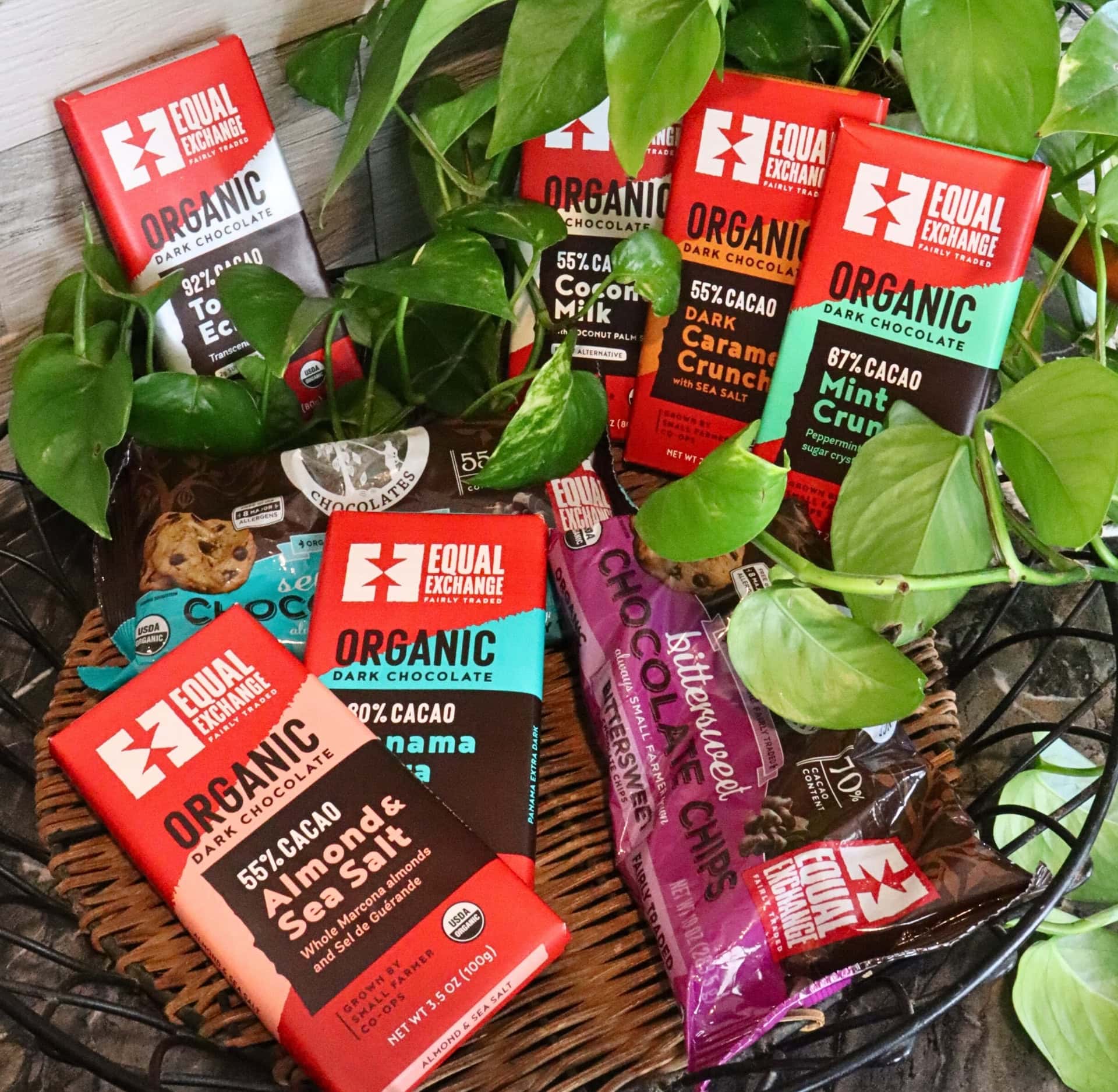
Equal Exchange makes Fair Trade and palm oil free chocolate using organic ingredients. Their sustainable candy range includes chocolate bars (in packs of 12) and a large box of Chocolate Minis that are the perfect size for eco-friendly Halloween treats.
Bite-sized and individually wrapped, these milk or dark chocolate minis are certified organic by Oregon Tilth and Kosher Pareve Certified by Rabbi Marcel Yair Ebel. As for their candy packaging, the inner wrappers are foil and paper combined while the outer wrappers are paper. The bulk packaging is made using plastic.
Equal Exchange is a for-profit fair trade company that partners with farmer cooperatives that are democratically organized, sharing resources and decision-making among employees. As well as fair trade chocolates, they also distribute organic, gourmet Fair Trade Coffee, tea, sugar, bananas, avocados, and cocoa.
Ingredients are sourced from over 40 small farmer organizations around the world. Equal Exchange is also co-op owned using an alternative business model based on democratic principles.
My Personal Review of Equal Exchange’s Extreme Dark Chocolate:
“I recently indulged in several of Equal Exchange’s chocolate bars, and while I could eat all of them in one sitting, I have to say, their 88% cacao Extreme Dark is an absolute delight! I love bold, dark chocolates, but I was really struck by the creaminess of this one, melting smoothly on my tongue. The rich cocoa flavor is perfectly balanced, with just the right amount of bitterness that doesn’t leave my mouth feeling dry or chalky. It’s not overly sweet, allowing the deep, complex flavors to shine through.”
Review by Amber McDaniel, SJ’s Head of Content
YumEarth


Price Range: $31 for a box of 50 Halloween Candies, ~$5-$60 for other packs (ranging from individual packs to multipacks)
With so many kids suffering from a range of allergies, it’s hard to find allergen-free sustainable candy companies, especially for Halloween (or any other holiday or occasion). With YumEarth’s organic candy, your kids and their spooky pals can enjoy a host of delicious allergy-friendly treats.
Take the Halloween Variety Pack—it contains YumEarth gummy fruits, giggles, and pops. These treats are free from peanuts, gluten, tree nuts, milk, fish, shellfish, egg, soy, and sesame. There is no high fructose corn syrup, artificial sweeteners, or artificial dyes, and they are made with organic ingredients that are non-GMO, and gluten-free. Some of their candy includes organic palm oil (grown without synthetic chemicals but doesn’t address deforestation concerns).
At the moment, their vegan, organic Halloween candy does not use sustainable or biodegradable eco-friendly candy paper or packaging.
Beyond Good


Price Range: ~$9 per bar, ~$13.50 for a 3-bar pure dark collection, ~$30 for microbatch sets.
Beyond Good (formerly Madécasse) creates single-origin chocolate made at the source in Madagascar and Uganda. Their chocolate and vanilla products are 100% traceable from farmer to finished bar. They use organic cocoa beans, organic cocoa butter, and organic cane sugar in all their chocolate. Most bars are vegan (except the 73% Salted Caramel, which contains dairy) and all are palm oil free.
By processing much of their chocolate in Madagascar, Beyond Good pays farmers more than industry averages, creates local jobs, and retains quality control. They also test annually for heavy metals to ensure their non-toxic candy is safe and complies with U.S. food regulations, including Proposition 65.
In 2025, Beyond Good earned a Good Egg Award in the Chocolate Scorecard with top scores in categories like farmer pay, traceability, child labor, deforestation, and climate.
Lovely Candy


Price Range: ~$20.99 for 3 x 5 oz bag of caramels, with similar pricing across their bestselling range.
Lovely Candy makes consciously crafted, gluten-free candy and snacks in small batches. They focus on pure and simple ingredients with no artificial colors, artificial flavors, high fructose corn syrup, and gluten. They’re also non-GMO.
Their eco candy range includes organic candy, fruit chews, caramels, ginger chews, hard candy, and lollipops. Many products are offered in organic and vegan varieties, in addition to their gluten-free core line.
All Lovely Candy products are made with health in mind and avoid HFCS, artificial ingredients, and gluten. Their individually wrapped caramels are one of their most popular items and are easy to share or use for holiday treats.
Lovely Candy Company stands out for offering clean, minimal-ingredient candy options, though they do not provide detailed information on packaging sustainability or sourcing. Their candy is also made with organic palm oil (read more on what this means below).
Zero Waste or Plastic-Free Candy
Looking for plastic free candy? The reality is most individually wrapped treats still come in single-use packaging. A few brands, like Alter Eco, are taking steps with compostable truffle wrappers (see them featured above) but if you want to go completely zero waste, the best option is to skip packaged sweets altogether.
That’s where bulk shopping comes in. Many zero waste bulk stores (and even some mainstream supermarkets) now stock candy, gummies, or chocolate buttons in dispensers. All you need is a good-sized jar. We’d recommend something between a peanut butter jar and a pasta sauce jar, big enough to scoop a satisfying haul but not so huge that your candy goes stale.
Simply have your jar weighed at the counter, fill it with your favorite sweets, and pay by weight. No wrappers, no plastic, and no waste!
To find a zero waste or bulk store near you, you may want to look through our zero waste store guides.
Why Choose Eco-Friendly Candy?
Candy may be sweet, but its impact on people and planet often isn’t. Conventional candy supply chains are plagued by issues like unfair farmer pay, exploitative labor, and opaque sourcing (especially when it comes to chocolate).
Then there’s the mountains of single-use plastic wrappers that end up in landfills (or worse, the ocean), and the fact that most candy is loaded with excessive sugar, artificial colors, and additives. Around Halloween, these problems multiply, with billions of individually wrapped treats consumed in just a few weeks. Choosing eco-friendly candy helps cut down on waste, supports fairer supply chains, and offers healthier, cleaner options that are kinder to both people and planet.

How We Chose These Sustainable Candy Brands
We looked for two types of brands when pulling together this list of candy:
- Chocolate brands: In particular, those that go beyond Fair Trade, working with single-source or direct trade cacao. This means buying directly from cooperatives or farmer groups, paying well above market rates, and committing to traceable, slave-free cocoa. Many of these brands also focus on Fair Trade, regenerative or organic ingredients and transparency through annual impact or sourcing reports.
- Classic candy brands: Think gummies, chews, caramels, and lollipops. We looked for candy that is ideally organic, non-GMO, lower in sugar, and often vegan to avoid animal gelatine. We prioritized brands using plant-based formulations and simpler, cleaner ingredient lists that avoid artificial sweeteners, colors or preservatives.
For both chocolate and candy, we considered packaging. While some Halloween-ready options still rely on single-use wrappers, we’ve highlighted better alternatives when available. For example, compostable truffle wrappers or recyclable paper or foil packs. If you’re not handing out treats this Halloween, it’s worth choosing the brands or specific products with more sustainable food packaging options.
We also prioritized palm oil free candy, since palm oil production is one of the leading drivers of deforestation and biodiversity loss. That said, a handful of sustainable candy brands do still use palm oil. When we included them, it’s because they use RSPO-certified palm oil, which means the palm oil is traceable, produced with stronger safeguards against deforestation, and comes with commitments to better labor and community practices. We’ve featured a couple of brands that use organic palm oil, which guarantees it’s grown without synthetic chemicals or GMOs (though it doesn’t fully address the wider deforestation concerns). To learn more about palm oil, read our guide on sustainable palm oil.
Finally, we gave extra credit to companies taking broader action, like pursuing B Corp certification, supporting climate action, investing in reforestation, or funding community initiatives. These are the brands not just making candy, but working to make the industry better.
Certifications to Look For
When it comes to candy, labels and certifications can help separate marketing spin from genuine progress. Here are a few worth paying attention to:
- Fair Trade / Direct Trade: Ensures cocoa and sugar farmers are paid fairly, work under safe conditions, and aren’t subject to exploitative labor practices. Direct Trade goes further by cutting out middlemen and creating transparent, long-term partnerships with farmers.
- USDA Organic: Indicates the ingredients are grown without synthetic pesticides, fertilizers, or genetically modified organisms (GMOs). For candy, this often means cleaner, less processed sugars and flavorings.
- Non-GMO Project Verified: Confirms that ingredients are not genetically engineered (an extra layer of assurance on top of organic).
- B Corp Certification: Shows that the company meets rigorous standards for social and environmental performance, governance, and transparency.
- Rainforest Alliance / UTZ: Found mainly on chocolate products, these certifications focus on sustainable agriculture, better farmer livelihoods, and protecting ecosystems.
- Vegan Certification: Confirms a candy is free from animal products, especially gelatine, which is still common in conventional gummies and chews.
- RSPO Certified: Confirms that palm oil is produced following the Roundtable on Sustainable Palm Oil’s standards, which aim to reduce deforestation, protect biodiversity, and improve labor and community practices in palm-growing regions.
- FSC Certified: Ensures that paper or cardboard used in candy wrappers and boxes comes from responsibly managed forests that protect biodiversity, workers’ rights, and local communities.
While no certification is perfect, they’re useful markers when hunting for eco-friendly candy brands that are trying to improve the industry’s impact on people and the natural environment.
What to Do With Old Candy & Wrappers?
Most conventional candy wrappers are not recyclable due to their mixed materials and small size. Fear not! TerraCycle—the wizards of hard-to-recycle waste—can come to the rescue. They offer special recycling programs for candy wrappers and other tricky-to-recycle items. With TerraCycle’s assistance, you can collect and ship your candy wrappers to be properly processed and repurposed, keeping them out of landfills.
As for leftover candy, whether it’s from the bottom of your trick-or-treat bag or an overzealous candy stash, consider sharing the sweetness to reduce food waste. You can donate unopened candy to local shelters, food banks, or community centers to bring smiles to others’ faces. Or get creative with your leftover candy by using it in baking or making fun DIY treats to share with friends and family.
Can You Compost Candy?
If the candy has seen better days and can’t be salvaged, check if it’s compostable (it should be!). Some organic candies are designed to break down naturally, making them a tasty treat for your compost pile. Just remember to remove any non-compostable elements like plastic or foil before tossing them in.
FAQs About Sustainable & Eco Friendly Candy
What makes candy eco-friendly?
Among many other attributes, eco-friendly candy is predominantly made with organic, regenerative or non-GMO ingredients, often vegan to avoid animal gelatine, and produced using fair trade or direct trade supply chains. Many brands also work to reduce waste through compostable or recyclable packaging.
Is palm oil free candy better for the planet?
Yes. Palm oil free candy avoids one of the biggest drivers of deforestation and biodiversity loss. Some sustainable candy brands do still use palm oil, choosing RSPO certified or organic palm oil, meaning it’s grown with stronger safeguards and without synthetic chemicals.
Can candy wrappers be recycled or composted?
Most conventional candy wrappers can’t be recycled at home because they’re made from mixed materials. However, some eco friendly candy brands like Alter Eco use compostable truffle wrappers, and programs like TerraCycle accept candy wrappers for proper recycling.
Where can I find plastic-free candy?
Completely plastic-free candy is rare, but you can opt for options with compostable wrappers or buy from zero waste bulk stores. Bring your own jar or container, have it weighed, and fill it with your favorite sweets for a plastic-free candy option.
Is sustainable candy healthier than regular candy?
Not always lower in calories, but sustainable candy often uses organic cane sugar, natural colors and flavors, and avoids artificial additives or high fructose corn syrup. Some brands also offer reduced-sugar or allergen-free candy. Much like regular candy, we’d only recommend consumption in moderation (though we’re not doctors or nutrition experts).
Final Thoughts On Sustainable Candy
From gummy worms that wiggle in your hand, not in a landfill, to chocolates that make your taste buds dance with delight, not your carbon footprint, these eco-friendly candy treats are not just delicious but also conscious of our Earthly home.
When you’re doling out goodies to little monsters at your doorstep or sharing the eerie-sistible news of sustainable sweets with your friends, remember that every wrapper saved, every organic ingredient chosen, and every ethical brand supported is a step towards a brighter, greener future.
Don’t keep these treats; share the sustainably sweet love with both trick-or-treaters and your friends.

Joy has been a passionate advocate for the environment since she was a small child. She grew up in South Africa and has been lucky enough to be exposed to the wonders of nature not just in Africa but all over the world. She founded Sustainable Jungle (together with her husband Lyall) back in 2017 after becoming enraged by the devastating impact of palm oil. She then founded the Sustainable Jungle Podcast and together with Lyall interviewed remarkable people from all over the world who were finding ways to create positive impact. Outside of Sustainable Jungle, Joy has always worked in the corporate world, starting out as an auditor and later moving into management consulting. More recently she specialized in Climate Investing for the Asia Pacific region. Given her experience, her current passion is Brand Ratings. She is very much enjoying going deeper on what it really means to drive sustainability performance and true impact through business operations.