











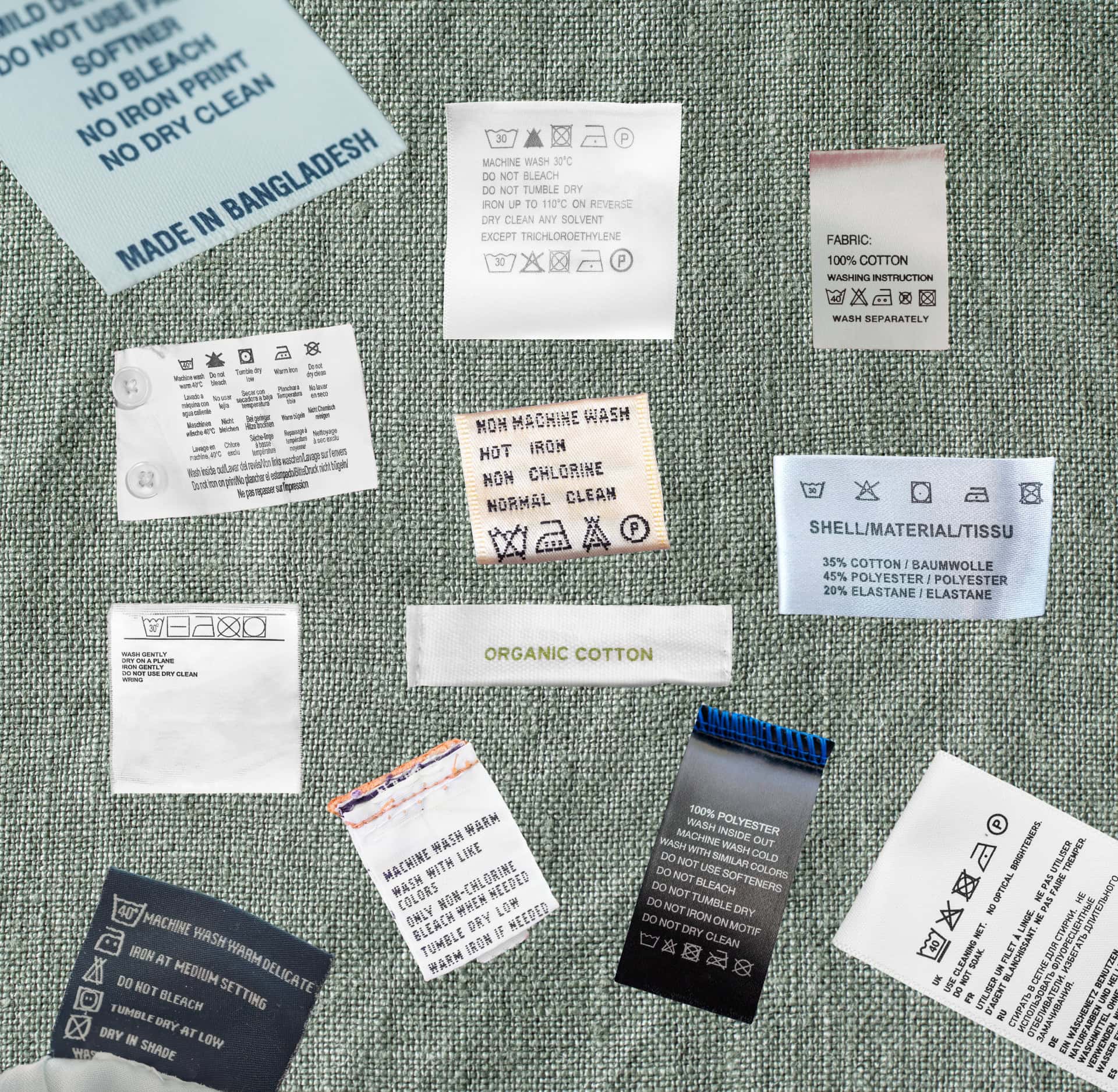
That little tag you’re tempted to snip off? It’s basically a sustainability cheat sheet hiding in plain sight. Learning how to read clothing tags, including all those hieroglyphic looking symbols can score some massive savings for our planet.
Most of us glance at the care symbols (if we look at all), shrug, and hope for the best. But your clothing tag tells you far more than just how to wash a shirt. It reveals what your garment is actually made of, where it was manufactured, and whether it carries any meaningful sustainability certifications. Together, those details can help you take better care of what you own, shop smarter (new or secondhand), keep textiles out of landfill, and buy from responsible brands
WRAP’s research found that extending the active life of clothing by just nine months could reduce its carbon, water, and waste footprints by up to 20-30%. . A financial and environmental win-win, if you like and reading the tag is step one.
Related Guides: Sustainable Fabrics, What Is Sustainable Fashion?, Sustainable Clothing Brands, How To Recycle Old Clothes, Microfiber Filters For Washing Machines, Sustainable Brand Directory
In this guide: Reading Clothing Labels
- What's Included On A Clothing Tag? Jump to section
- How To Read Clothing Care Symbols Jump to section
- How To Read Fiber Content Labels & Why It Matters For Sustainability Jump to section
- What Do The Numbers On Clothing Tags Mean? Jump to section
- Sustainability Considerations On Clothing Labels Jump to section
- How To Use Your Clothing Tags To Make Clothes Last Longer Jump to section
- FAQs On Reading Clothing Labels Jump to section
What's Included On A Clothing Tag?
Before we get into symbols, it helps to know what information clothing labels are supposed to carry.
A typical tag includes some combination of:
- Fiber content covering what the garment is made of
- Care symbols showing how to wash, dry, and iron it
- Country of origin disclosing where it was manufactured
- Manufacturer identification through a registered number linking back to the company
- Size of the item
- Certification logos like GOTS or OEKO-TEX, which signal that the garment meets specific environmental or safety standards.
Labeling requirements vary by region. In the US, the Federal Trade Commission requires fiber content, country of origin, care instructions, and a manufacturer ID (called an RN number). The EU only mandates fiber composition, though care labels and origin are recommended. In Australia, country of origin and care instructions are required, but fiber content labeling is no longer mandatory (though it’s still common practice).
The two common lines most relevant to sustainability are fiber content and care symbols. One tells you what you’re wearing and the other tells you how to keep wearing it.
How To Read Clothing Care Symbols
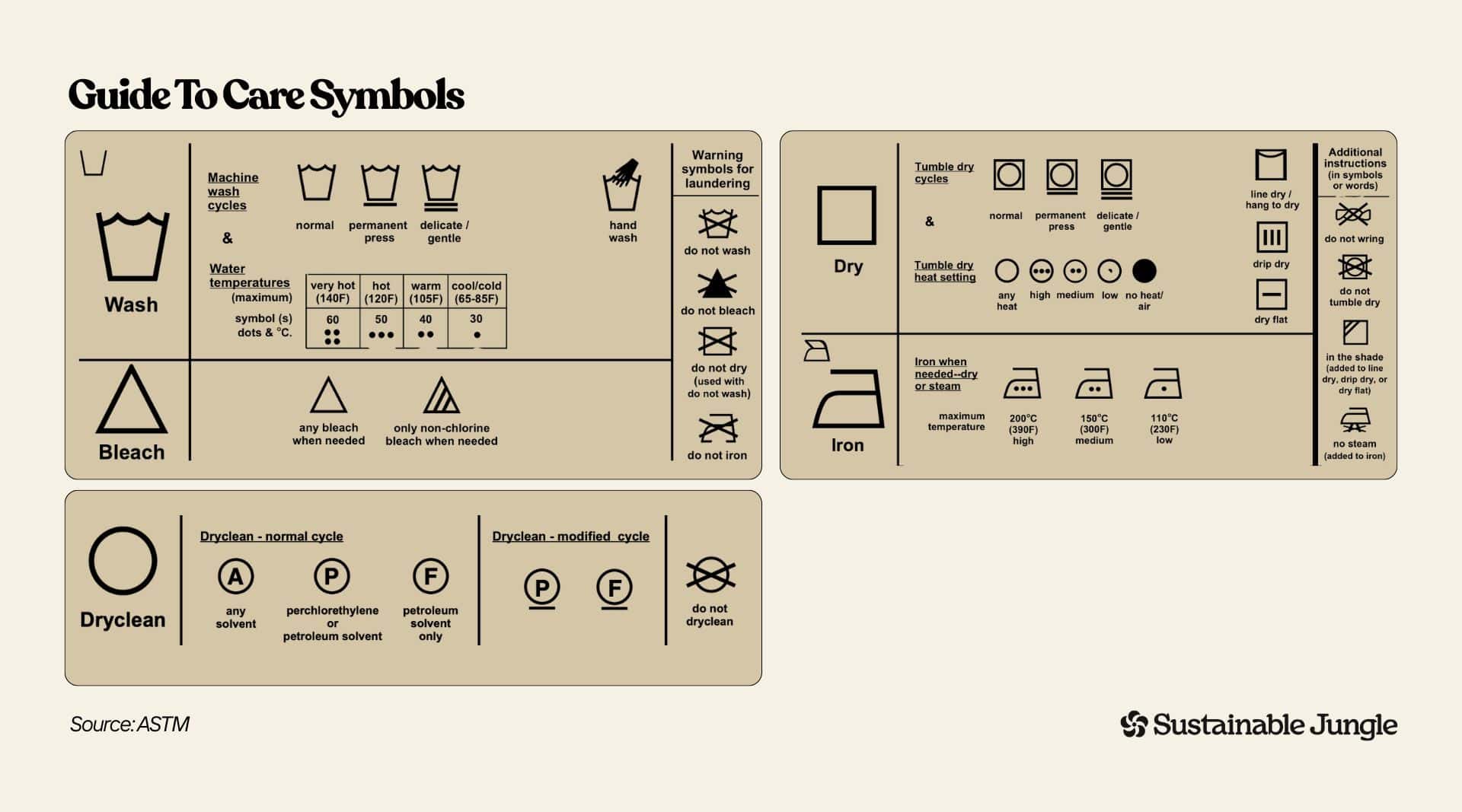
Those tiny pictograms are a universal language built around five base shapes:
- Washtub (washing),
- Triangle (bleaching)
- Square (drying)
- Iron (ironing)
- Circle (professional cleaning)
Once you learn the shapes, you can read any tag in any country. Note that an X through any symbol means don’t do that thing.
Washing Symbols
The washtub symbol tells you how to wash the garment:
- A plain washtub means machine wash is safe. A hand inside the washtub means hand wash only. An X through the washtub means do not wash (take it to a professional cleaner instead).
- Dots or numbers inside indicate temperature: one dot means cold, two dots warm, three dots hot. If you see a number (like 30 or 40), that’s the maximum temperature in Celsius.
- Lines underneath indicate the cycle: one line for permanent press, two lines for the gentle/delicate cycle.
SJ sustainability tip: Default to cold washing whenever possible. It’s gentler on fibers, prevents color fading, uses less energy, and is almost always sufficient for everyday clothes. Your garments (and your electricity bill) will thank you. Also pay particular attention to clothing made from fibers that shrink easily. Don’t learn the hard way that wool shrinks, even with the tiniest amount of heat (we’ve learned this lesson multiple times and it’s so upsetting!).
Drying Symbols
The square is your drying guide, and this is where the most garment damage happens. Machine drying causes more wear and tear than actual wearing does (that overflowing lint trap is full of fibers your clothes will never get back).
- A circle inside a square means tumble drying is safe. Dots inside indicate heat: one dot for low, two for medium, three for high. A filled black circle means no heat.
- An X through the tumble dry symbol means keep it out of the dryer.
- A plain square (no circle inside) means natural drying, with variations: a curved line at the top means line dry, a horizontal line means dry flat (common for knitwear), and three vertical lines mean drip dry. Diagonal lines in the corner mean dry in shade.
SJ sustainability tip: Air drying is the single best thing you can do for garment longevity. It also eliminates the energy use from machine drying, which accounts for a significant portion of a garment’s lifetime environmental footprint. And saves quite substantial amounts of money.
Bleaching, Ironing & Dry Cleaning Symbols
Bleach (triangle): A plain triangle means any bleach is fine. Two diagonal lines inside mean non-chlorine bleach only. An X through the triangle means do not bleach. Chlorine bleach can create harmful disinfection by-products in wastewater, so oxygen-based alternatives are the better call for both your clothes and the planet.
Ironing (iron shape): Dots indicate temperature (one for low/synthetics, two for medium/wool and silk, three for high/cotton and linen). An X means do not iron. Lines beneath the iron refer to steam settings. In general, steaming is gentler on fibers than a hot iron.
Dry cleaning (circle): A plain circle means dry clean. Letters inside (P, F, W) indicate which solvents can be used (those are instructions for the cleaner, not for you). An X through the circle means do not dry clean. Conventional dry cleaning uses perchloroethylene, a chemical the EPA classifies as a likely carcinogen and a hazardous air pollutant. If you need professional cleaning, look for wet cleaning or GreenEarth alternatives. And worth noting that many “dry clean only” garments can actually be carefully hand washed in cold water with a gentle detergent. Test an inconspicuous spot first.
How To Read Fiber Content Labels & Why It Matters For Sustainability
In our view, fiber content is arguably the most important line on your tag. It determines how to wash your garment, whether it sheds microplastics, whether it will biodegrade at the end of life, and what its environmental footprint looks like.
It’s also the first thing to check when you’re shopping, whether you’re browsing for new clothes or sorting through a thrift store rack. If you’re shopping online, you can usually find this information in the “materials” (or equivalent) section on the product page.
Natural Fibers On Your Label
If your tag says cotton, organic cotton, linen, hemp, wool, or silk, you’re looking at a natural fiber. These are derived from plants or animals with relatively minimal chemical processing.
Natural fibers are generally biodegradable, don’t shed plastic microfibers when washed, and (depending on how they’re farmed) can have lower environmental footprints than synthetics.
Organic cotton uses up to 91% less water than conventional cotton and eliminates synthetic pesticides. Linen and hemp are particularly low-impact crops. Ethical wool can be sustainable when sourced from certified farms.
Natural fibers generally do well with cold or warm washing, respond well to air drying, and can handle most gentle detergents. They’re also easier to recycle and compost at end of life.
However, it’s important to know that this is only the case if the fibers are not blended with synthetics. For example, a 60% organic cotton cotton and 40% polyester T-shirt would still shed microplastics and not be compostable or biodegradable.
Semi-Synthetic Fibers On Your Label
Tags listing viscose, rayon, modal, lyocell, or bamboo indicate semi-synthetic fibers. These start as plant-based cellulose (usually wood pulp) but undergo chemical processing to become fabric.
The sustainability range here is wide. Traditional viscose/rayon uses harsh chemicals like carbon disulfide. Lyocell (including branded TENCEL) uses a closed-loop process that recycles 99% of its solvents, making it significantly cleaner and modal falls somewhere in between.
When it comes to bamboo, the FTC requires that textiles made from bamboo through a chemical process be labeled as “rayon made from bamboo” rather than simply “bamboo,” because the manufacturing transforms the plant so completely. If you see a tag saying just “bamboo fabric,” be skeptical. The FTC has fined major retailers millions for mislabeling rayon products as bamboo. Our bamboo fabric guide breaks this down in full.
Synthetic Fibers On Your Label
Polyester, nylon, acrylic, spandex/elastane, and polypropylene are petroleum-derived synthetic fabrics. They dominate the global textile market (polyester alone accounts for over half of all fiber production).
This is a major sustainability issue because every time you wash synthetic clothing, it releases microplastic fibers into waterways. A University of Plymouth study published in Marine Pollution Bulletin found that a single 6kg wash load of acrylic fabric could release over 700,000 microfibers. These are too small for most wastewater treatment plants to catch, and they end up in rivers, oceans, and eventually, the food chain.
A tag that shows any synthetic content (even small amounts) means the garment won’t fully biodegrade and will shed some microfibers with every wash.
If you own synthetic or blended garments (and most of us do), wash them in a microfiber-catching laundry bag or install a washing machine filter. It won’t eliminate the problem, but it significantly reduces fiber release.
Reading fiber content when thrifting
One of our top thrift shopping tips is to always check the fiber content tag before buying. It helps you assess quality, anticipate care needs, and make more sustainable choices. 100% natural fibers are generally a better long-term bet. High synthetic content in a secondhand item means it’s already shed microfibers through previous washes and will continue to do so.
And if you’re browsing vintage clothing, the vintage label can help you date the garment and identify its manufacturer.
What Do The Numbers On Clothing Tags Mean?
In the US, clothing labels include a registered identification number (RN), a five-digit code assigned by the FTC to the business responsible for manufacturing or importing the garment. Canadian labels use a similar CA number.
These numbers won’t tell you who stitched your shirt or under what conditions, but they do link back to the company. You can look up any RN in the FTC’s database to find the business name, address, and website. The Government of Canada maintains a similar database for CA numbers.
For vintage finds, these numbers are especially useful. You can use an RN dating method to estimate roughly when a garment was produced, which is handy when the brand name is missing or unfamiliar.
Sustainability Considerations On Clothing Labels
Certifications On Clothing Labels
Some clothing tags carry certification logos that indicate the garment (or its materials) meets specific environmental, social, or safety standards. These are the most common ones you’ll encounter:
- GOTS (Global Organic Textile Standard): The gold standard for organic textiles. Covers the full supply chain from raw fiber to finished product, including environmental and social criteria.
- OEKO-TEX Standard 100: Tests the fabric or finished product for harmful substances (pesticides, heavy metals, formaldehyde). OEKO-TEX also offers MADE IN GREEN, which adds supply chain transparency. Both are solid indicators that the garment is safe to wear.
- bluesign: Focuses on clean, resource-efficient production processes, covering water use, chemical safety, and worker exposure.
- Fair Trade: Certifies that workers received fair wages and safe working conditions.
- GRS (Global Recycled Standard): Verifies a minimum of 50% recycled content in the product.
- BCI (Better Cotton Initiative): A large-scale cotton sustainability program, though it has faced criticism for limited traceability.
Certifications aren’t perfect, and even respected ones have faced greenwashing concerns. But they remain the best shorthand consumers have for verifying sustainability claims. For a deeper look, see our full guide to sustainability certifications.
Country of Origin
The “Made in…” line tells you where the garment was assembled, and it’s worth paying attention to. Clothing manufactured in countries with weak labor protections (Bangladesh, Cambodia, Myanmar, Ethiopia, China) carries a higher risk of exploitative working conditions, unlivable wages, and unsafe factories.
That doesn’t mean every garment from those countries is unethical, but it does mean it’s worth looking further. Check whether the brand is transparent about its supply chain, whether it names its factories, and whether it carries labor certifications like Fair Trade or WRAP. Or if it’s audited by a third party. See our guide to the SMETA audit to give you an idea.
For more on why this matters, the Fashion Revolution movement’s core question remains as relevant as ever: #WhoMadeMyClothes?
How To Use Your Clothing Tags To Make Clothes Last Longer
Reading the tag is easy but the payoff comes from acting on what it tells you. Here’s how to translate label knowledge into a longer-lasting, more sustainable wardrobe:
Follow the care label
This sounds obvious, but most laundry mishaps (shrinkage, fading, pilling) happen because the instructions were ignored. The manufacturer tested the fabric so we should trust their guidance.
Default to cold wash and air dry
Unless the tag specifically calls for warm or hot water, cold is almost always sufficient and dramatically reduces both energy use and fiber damage. And skip the dryer when you can. Air drying is the single most impactful thing you can do for garment longevity and to conserve energy!
Wash less often
Most clothes don’t need laundering after every wear. Jeans, sweaters, jackets, and outerwear can usually go several wears between washes. Underwear, socks, and workout gear should be washed every time. Everything else? Use your judgment (and nose).
Wash synthetics in a microfiber-catching bag
If your tag says polyester, nylon, acrylic, or fleece, a microfiber filter or laundry bag can capture the plastic fibers before they reach the drain.
Use gentle, eco-friendly detergent
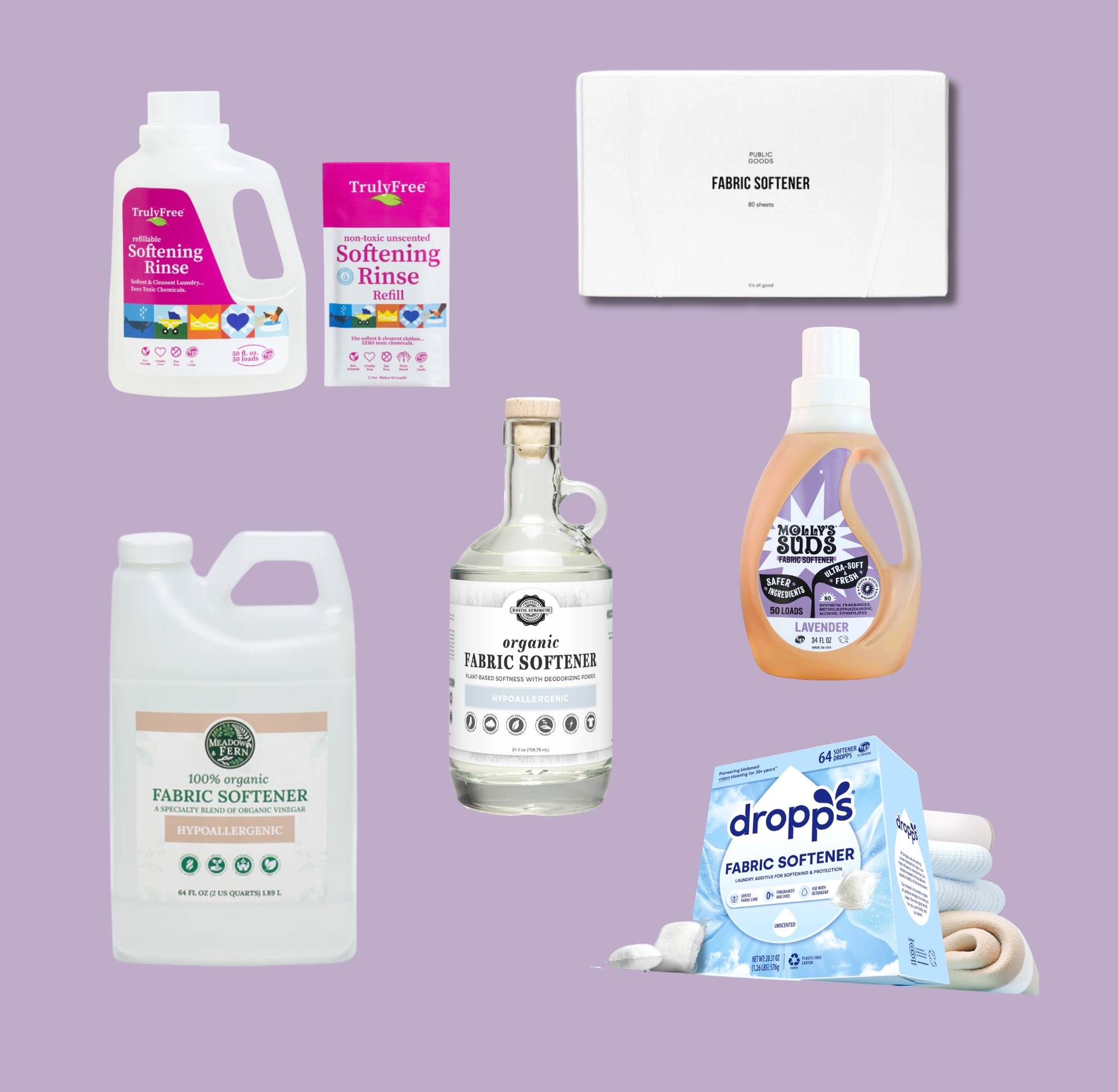
Harsh chemicals break down fibers faster. Use non-toxic fabric softener too, or try natural alternatives that won’t coat fibers in synthetic residue. Or ditch softener altogether.
Repair before replacing
A loose button, small tear, or broken zipper doesn’t mean it’s time for the bin. Clothing alteration services can fix most issues, and basic repairs are surprisingly easy to learn.
When it’s truly done, recycle or resell
Textile recycling options are growing, and well-cared-for garments in good condition can find a second life through resale platforms or thrift stores.
FAQs On Reading Clothing Labels
What Do The Five Basic Clothing Care Symbols Mean?
The five shapes cover: washing (washtub shape), bleaching (triangle), drying (square, or square with circle for tumble drying), ironing (iron shape), and professional cleaning (circle). Dots inside any symbol indicate heat level (more dots = higher heat), lines underneath mean gentler treatment, and an X through any symbol means don’t do that.
Can You Wash “Dry Clean Only” Clothes At Home?
Often, yes, with caution. Many fabrics labeled “dry clean only” (like wool, silk, and cashmere) can be carefully hand washed in cold water with a very gentle detergent. The label indicates what the manufacturer tested and recommends, but it’s usually the safest method rather than the only option.
Always test on an inconspicuous area first and never wring delicate fabrics. Structured garments (like tailored blazers or garments with interfacing) are better left to professionals. If you do need professional cleaning, look for cleaners using wet cleaning or GreenEarth methods rather than conventional perchloroethylene.
How Do You Tell If A Garment Is Sustainable From The Label?
Check the fiber content, certifications and location of production. Natural fibers (organic cotton, linen, hemp) or responsibly produced semi-synthetics (lyocell/TENCEL) generally have lower environmental footprints than virgin synthetics.
Certifications like GOTS, OEKO-TEX, bluesign, or Fair Trade provide third-party verification of sustainability claims. No label will tell you the whole story, but fiber content + certifications is the best shorthand available.
Where it’s made can give you a clue as to the likelihood of ethical production. If a garment is made in a country with weak labor protections and the brand offers no transparency about its factories or working conditions, that’s a red flag worth weighing alongside the fiber content and certifications.
What Does The Triangle Symbol Mean On A Clothing Tag?
The triangle indicates bleaching instructions. A plain triangle means any bleach can be used. Two diagonal lines inside the triangle mean use non-chlorine (oxygen-based) bleach only. An X through the triangle means do not bleach at all. For sustainability, oxygen-based bleach is the better option in all cases, since chlorine bleach produces harmful by-products in wastewater.
Why Do Some Tags Say “Rayon Made From Bamboo” Instead Of Just “Bamboo”?
Because the FTC requires it. When bamboo is chemically processed into rayon (which is how the vast majority of “bamboo fabric” is made), the resulting fiber is rayon, not bamboo.
The FTC has fined multiple major retailers for mislabeling rayon as “bamboo” and making unsubstantiated environmental claims about it. If a tag says simply “bamboo,” the fabric should be made from mechanically processed bamboo fiber (which is rare and expensive). If it says “rayon made from bamboo” or “viscose from bamboo,” it went through a chemical conversion process.
How Can Clothing Tags Help You Shop More Sustainably?
By telling you what the garment is actually made of. Before you buy (new or secondhand), flip to the fiber content tag. Prioritize natural fibers, look for certifications, and watch out for high synthetic content (which means microplastic shedding and limited end-of-life options).
When thrifting, the tag helps you distinguish quality pieces from fast fashion and assess how a garment will age and how it needs to be cared for. A minimalist wardrobe built from well-chosen, properly cared-for pieces will always outperform a closet full of fast fashion you didn’t read the label on.
Final Thoughts On How To Read Clothing Labels
We get it. Clothing tags are itchy, tiny, and easy to ignore. But those two inches of fabric carry a surprising amount of power. They tell you how to keep your garment out of landfill, whether it’s shedding microplastics every time you do laundry, where it was made, and whether the brand behind it holds key certifications.
Learning to read the full tag (not just the “machine wash cold” part) is one of the simplest sustainability habits you can build. It takes seconds, costs nothing, and pays off every time you wash, wear, donate, or shop.
So next time you grab the scissors to cut that tag out, maybe give it a read first. Your clothes, your wallet, and the planet will appreciate it.
Editor’s Note:This article was originally written by Amber McDaniel in August 2022 and has been updated several times since. This April 2026 update significantly expanded the guide to cover fiber content labels, sustainability certifications, microplastics, and how to use your clothing tags to make garments last longer.

Joy has been a passionate advocate for the environment since she was a small child. She grew up in South Africa and has been lucky enough to be exposed to the wonders of nature not just in Africa but all over the world. She founded Sustainable Jungle (together with her husband Lyall) back in 2017 after becoming enraged by the devastating impact of palm oil. She then founded the Sustainable Jungle Podcast and together with Lyall interviewed remarkable people from all over the world who were finding ways to create positive impact. Outside of Sustainable Jungle, Joy has always worked in the corporate world, starting out as an auditor and later moving into management consulting. More recently she specialized in Climate Investing for the Asia Pacific region. Given her experience, her current passion is Brand Ratings. She is very much enjoying going deeper on what it really means to drive sustainability performance and true impact through business operations.






It would be great to make this article available to download! Thanks!
Good idea thanks Fran!
Hello,FTC requires all wearing apparel/labels in garments that are sold in the US be in English & legible? And Globally adhere to countries Labeling regulations as set by FTC. Did that change??
thank you for your information it gives me a new outlook on how to spend budget and depend on clothing in this new day of time we are living in.