











Newsflash: fabric softeners are bad for the environment, our health, our clothing, and our machines.
So why do so many people still think they need them for soft, static-free laundry? And if you don’t, what can you use instead of fabric softener?
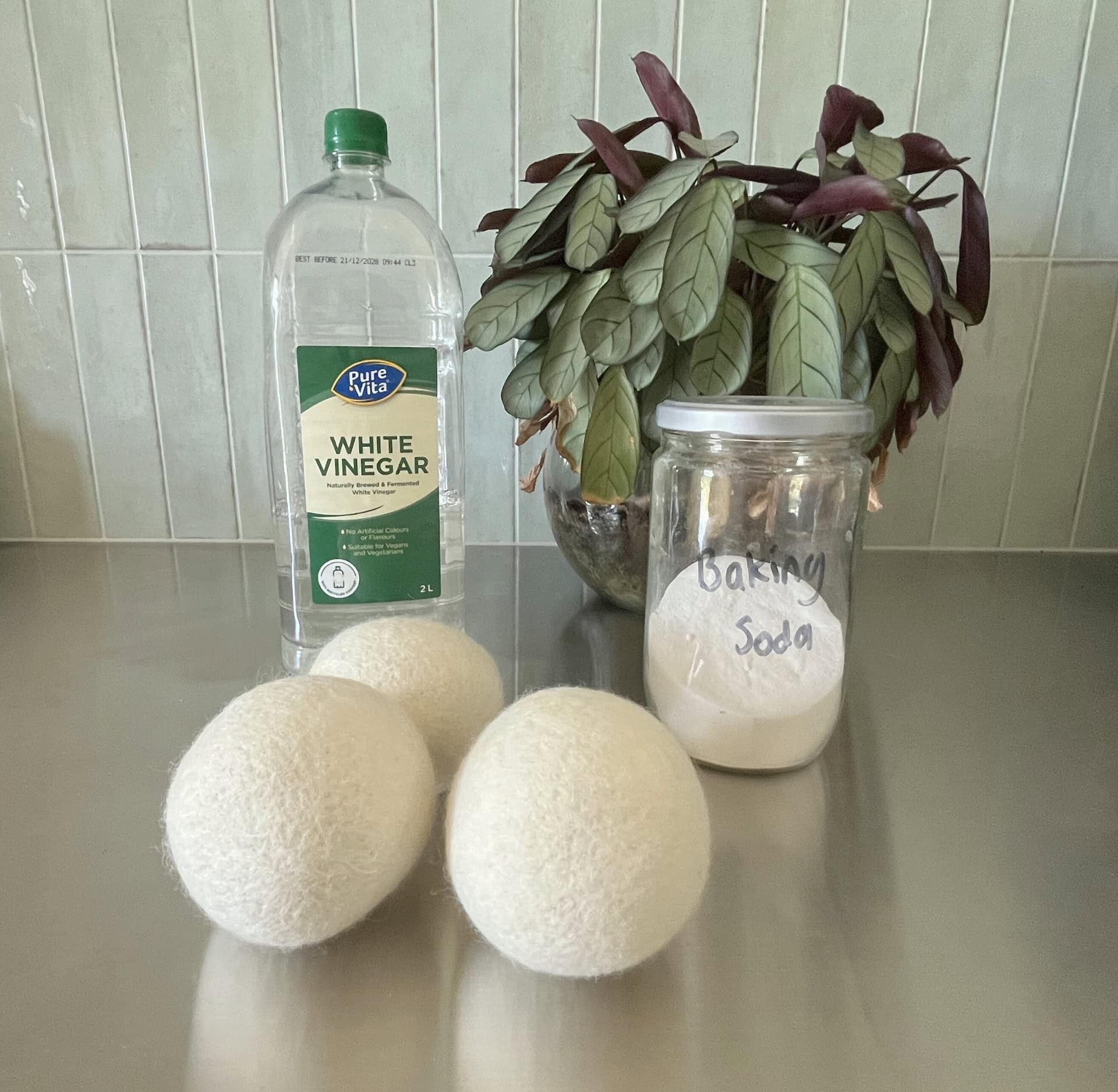
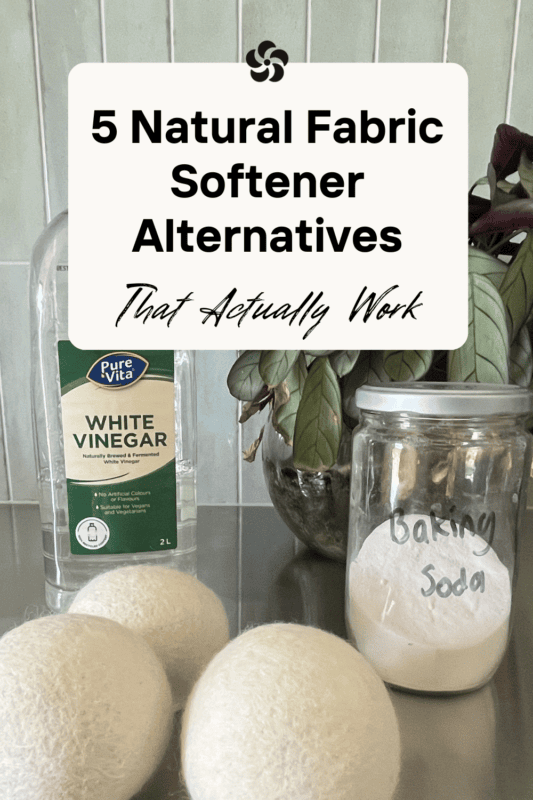
The good news is there are plenty of natural fabric softener alternatives that actually work. Some are simple DIY solutions using ingredients you already have. Others are reusable products that’ll save you money over time. And all of them skip the cocktail of harmful chemicals that comes with conventional fabric softeners.
We’re hoping these natural alternatives help curb the enthusiasm for harsh chemicals and plastic overload in favor of something kinder to your body and the planet.
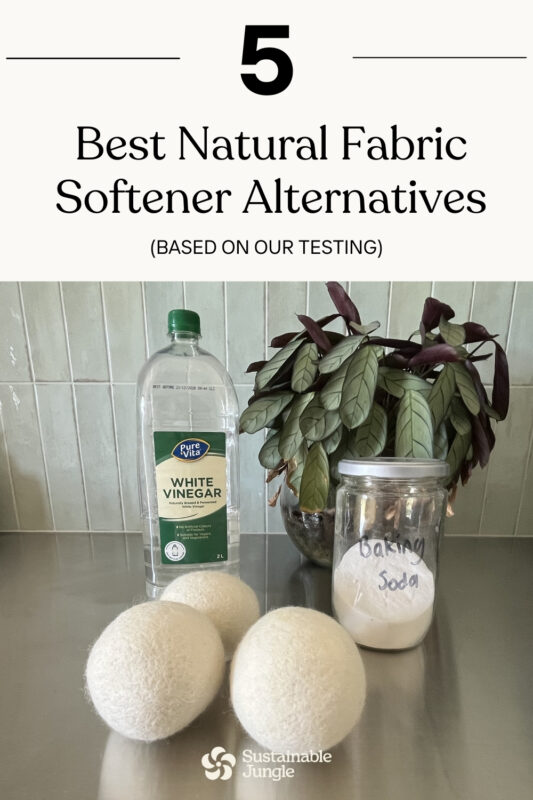
We’ve personally tested and used many of these methods ourselves, and here’s our complete guide to the best fabric softener alternatives for naturally soft, fresh-smelling laundry. We’ve ranked these recommendations and listed them in order of effectiveness with the exception of the DIY fabric softener which is listed last despite being a fantastic alternative to conventional fabric softeners.
Related Guides: Eco-Friendly Fabric Softeners, Non-Toxic Laundry Detergent, Zero Waste Laundry Detergent, Natural Dryer Sheet Alternatives, Sustainable Laundry Baskets, Eco-friendly Washing Machines
Table of Contents: Natural Fabric Softener Alternatives
- White Vinegar (Best Overall & Most Proven) Jump to section
- Baking Soda (Best for Odor Removal & Hard Water) Jump to section
- Wool Dryer Balls (Best Dryer Sheet Replacement) Jump to section
- Air Drying (Best Zero-Cost & Low Energy Use Option) Jump to section
- DIY Fabric Softener Recipe (Best Homemade Fabric Softener) Jump to section
White Vinegar (Best Overall & Most Proven)
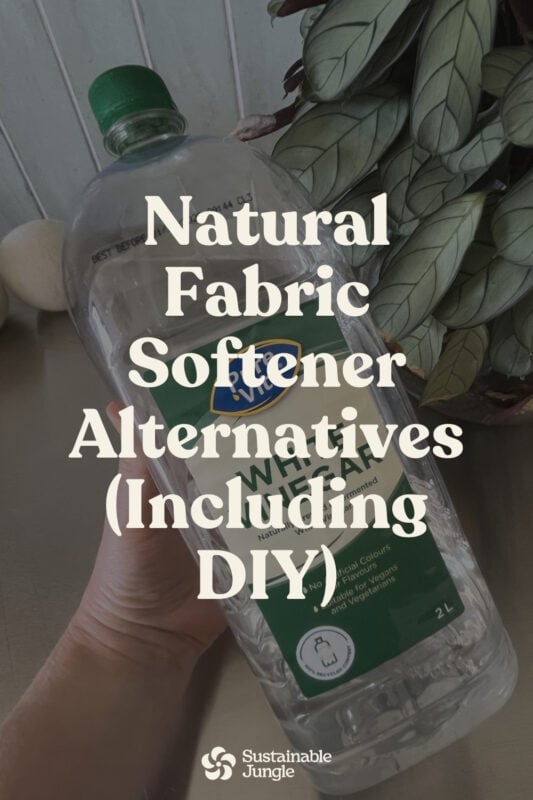
Whether you’re making your own non-toxic cleaning products or looking for an affordable fabric softener alternative, vinegar is a workhorse solution for just about everything around the house, including laundry.
White vinegar is the most evidence-backed natural fabric softener alternative available. It softens fabrics by breaking down detergent residue that stiffens fibers, reduces static cling, neutralizes odors, and even helps brighten colors. Plus, regular use of vinegar helps maintain your washing machine by preventing buildup and odor-causing bacteria.
We’ve found it works quite well and Whirlpool, appliance repair experts, and independent testers all endorse it. Healthline highlights vinegar as a fabric softener, deodorizer, and stain remover that loosens residue and leaves clothes odorless, and cleaning experts quoted by Bob Vila confirm that half a cup of white vinegar in the rinse cycle softens fabrics, reduces static, and enhances freshness.
And don’t worry, the vinegar scent disappears completely in the wash, so your clothes won’t emerge smelling like salad!
How To Use Vinegar As A Natural Fabric Softener
How to use: Add 1/2 cup of white vinegar to the fabric softener dispenser in your washing machine just before the final rinse cycle. For a mild fresh scent, add 3-5 drops of essential oils into the fabric softener compartment at the same time.
Why it works: Vinegar is acidic, which helps dissolve the alkaline residue left behind by laundry detergent. This residue is what makes fabrics feel stiff. By neutralizing it, vinegar leaves fibers relaxed and soft.
Best for: Softening towels (vinegar is particularly effective at restoring towel absorbency that fabric softeners actually reduce), eliminating odors, brightening clothes, and maintaining your washing machine.
Warning: Don’t use with with bleached garments. Vinegar and bleach produce dangerous chlorine gas if combined, which defeats the point of your non-toxic fabric softener alternative. Never mix these two.
A note on long-term use: While vinegar is safe for occasional and regular use, some sources (including Tide and appliance manufacturers) note that frequent, heavy use of vinegar can weaken certain fibers over time, particularly cotton, linen, rayon, and nylon. It can also gradually wear rubber seals in some washing machines. Using 1/2 cup per load is widely considered safe, but we’d suggest not using it on every single load if you want to be cautious with delicate fabrics. Rotating between vinegar washes and plain washes is a reasonable approach.
Cost: At roughly $2-4 for a large bottle available at virtually any grocery store, white vinegar is one of the most affordable fabric softener alternatives you can buy. A single bottle lasts dozens of loads, making it significantly cheaper per load than any commercial softener on the market.
Baking Soda (Best for Odor Removal & Hard Water)
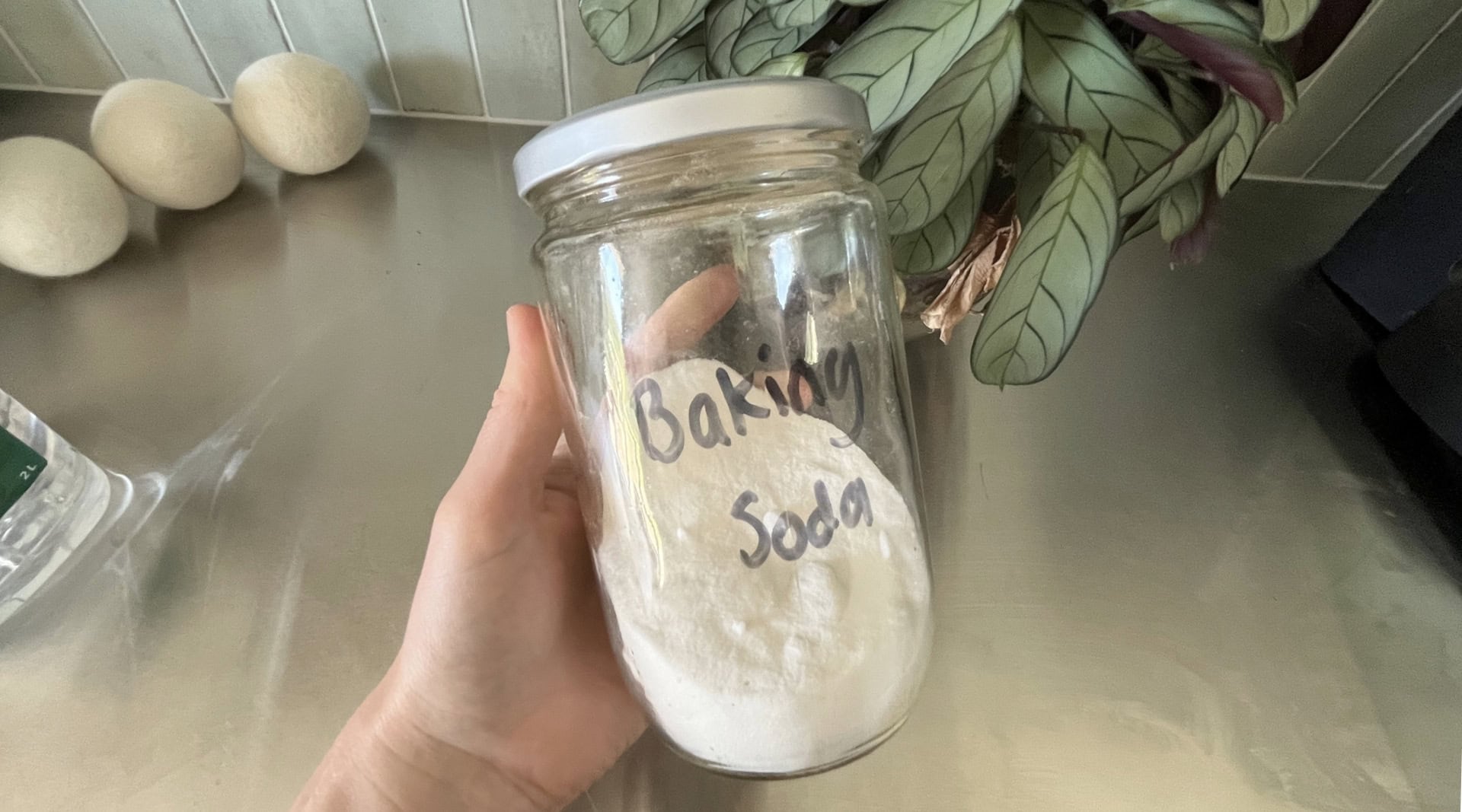
Baking soda has more uses than whipping up some treats in your non-toxic bakeware and eating up bad smells in the back of the fridge. It’s also a surprisingly effective natural fabric softener that actually works really well.
As an alkaline substance, baking soda corrects water’s pH levels, which helps reduce bacteria, eliminate funky smells, and lift dirt from deep in fibers. In turn, this softens fabric. It’s particularly effective in areas with hard water, where mineral buildup can leave clothes feeling crunchy and stiff. Whirlpool recommends it as a natural softener, and multiple independent testers have confirmed it delivers soft results with noticeably less static. We’ve personally found similar results.
How To Use Baking Soda As A Natural Fabric Softener Alternative
How to use: Add 1/4 to 1/2 cup of baking soda directly into the drum of your washing machine before adding clothes and your laundry detergent. Run on your normal settings. Important: don’t put baking soda in the detergent or fabric softener dispenser, as it can clog your machine. For extra freshness, add 3-5 drops of essential oils with your baking soda.
Why it works: Baking soda softens water by neutralizing mineral deposits (especially calcium) that cling to fabric fibers and make them feel stiff. It also deodorizes by neutralizing acidic odor compounds rather than just masking them.
Best for: Hard water areas, removing stubborn odors from gym clothes and towels, and pre-treating stained items (make a paste with water and apply directly to stains before washing).
Not ideal for: Delicate fabrics like silk, wool, or cashmere, which can be damaged by alkaline substances. Baking soda’s high pH can also fade some pH-sensitive dyes in colored fabrics over time, so use sparingly on bright colors.
Cost: A standard box of baking soda costs around $1-2 and lasts for many loads at 1/4 to 1/2 cup per wash, making it one of the cheapest fabric softener alternatives available. Even bulk-sized bags rarely exceed $5-10 and will last months.
Wool Dryer Balls (Best Dryer Sheet Replacement)
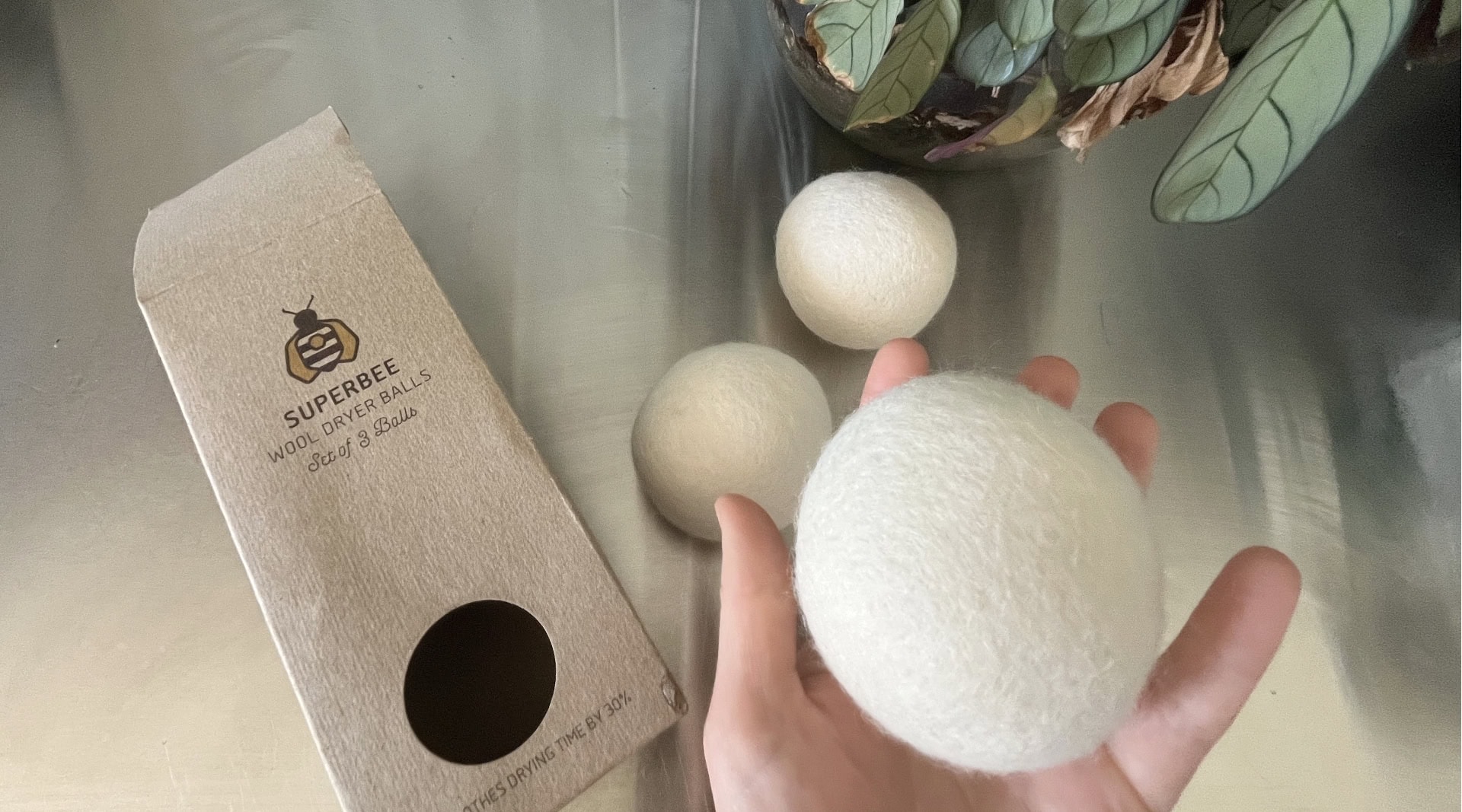
Wool dryer balls are the most popular natural fabric softener alternative for the dryer and for good reason: they’re reusable, chemical-free, and compostable at end of life.
Made from materials like wool (and in some cases, bamboo or hemp for a vegan option), these balls bounce around in your dryer separating fabrics, improving airflow, and helping clothes dry more evenly.
A note on the evidence: Wool dryer balls work mechanically, bouncing around the dryer to agitate and separate fibers, which prevents the clumping and stiffening that happens when wet fabrics dry pressed together. The natural lanolin in wool also provides mild conditioning. Expert Reviews UK’s hands-on testing found all three types of dryer balls they tested had a noticeable effect on softness and fluffiness, particularly for towels. And Reviewed.com’s 2024 dryer ball roundup found that quality wool balls (like Budieggs and Friendsheep) left laundry feeling genuinely soft to the touch. That said, an earlier Reviewed.com lab test of a single brand (Woolzies) found no measurable softness difference, suggesting that ball quality, quantity, and load size all matter. Most manufacturers recommend using 3-6 balls per load for best results, and our own experience backs that up.
Our take: we use wool dryer balls ourselves and find they make a noticeable difference to how laundry feels and dries. The benefits may not be as dramatic as some marketing claims suggest, but as a chemical-free, reusable alternative to dryer sheets, they’re still the best option for the dryer by far.
How To Use Wool Dryer Balls As A Natural Fabric Softener Alternative
How to use: Toss 3-6 wool dryer balls into the dryer with your wet clothes. That’s it. For added scent, add 2-3 drops of your favorite essential oil (lavender, eucalyptus, and lemon are our go-to choices) to each ball before drying. When shopping for essential oils, buy organic oils free of synthetic chemicals. A word of caution: essential oils are flammable, so only add them to dryer balls on a low or medium heat setting, and use just a few drops.
Pro tip: For the softest results, avoid over-drying your clothes. Remove them while still very slightly damp. Over-drying is the number one cause of static cling and stiff-feeling fabric. Since dryer balls can speed up drying somewhat, it’s easy to accidentally overdo it.
How long they last: A good set of wool dryer balls lasts about 1,000 loads, making them far more economical (and far less wasteful) than single-use dryer sheets.
Best for: Naturally softening clothes without chemicals, replacing dryer sheets, and reducing wrinkles. Particularly effective at softening towels and bulky items like bedding, where the mechanical agitation makes the biggest difference. Also great for adding natural scent via essential oils.
Not ideal for: The wash cycle (these are dryer-only) and they won’t soften clothes that are air dried. For a complete natural fabric softener system, pair wool dryer balls in the dryer with vinegar or baking soda in the wash.
See our guide to the best eco-friendly dryer balls for our favorite brand recommendations.
Air Drying (Best Zero-Cost & Low Energy Use Option)
Sometimes the simplest fabric softener alternative is no product at all. Line drying or hanging clothes to dry naturally is the most eco-friendly option on this list, and it costs absolutely nothing.
When clothes are tumble dried, the mechanical action can stiffen fibers and generate static electricity. Air drying avoids both of these issues entirely. Hanging clothes outdoors in a breeze naturally softens fabrics as the wind gently moves fibers, and sunlight acts as a natural whitener and sanitizer.
Line Drying As A Free, Natural Fabric Softener
How to get the best results with air drying:
- Give clothes a good shake before hanging to loosen fibers and reduce stiffness.
- Hang in a breezy spot if possible, as air movement is what softens the fabric.
- If line drying indoors, use a fan or open window to get air circulating.
- For towels, which can feel stiff when air dried, try adding vinegar to the rinse cycle before hanging. Or pop them in the dryer for just 5-10 minutes after they’re mostly dry to fluff them up.
A note on stiffness: We should mention that air-dried clothes can feel stiffer than machine-dried clothes, especially towels and jeans. This is the main trade-off. Using vinegar in the rinse cycle before air drying helps significantly, and giving garments a good shake loosens fibers. But if you need pillow-soft towels, a short tumble in the dryer with wool dryer balls after air drying gives you the best of both worlds while still saving most of the energy.
Best for: Reducing energy use, extending clothing lifespan (dryers cause significant wear on fabrics), naturally sanitizing in sunlight, and anyone looking for a completely zero-waste, zero-cost option.
Not ideal for: Humid climates where clothes take forever to dry, or anyone short on space. Also not great for towels if you prefer them fluffy (though the vinegar trick helps considerably).
DIY Fabric Softener Recipe (Best Homemade Fabric Softener)
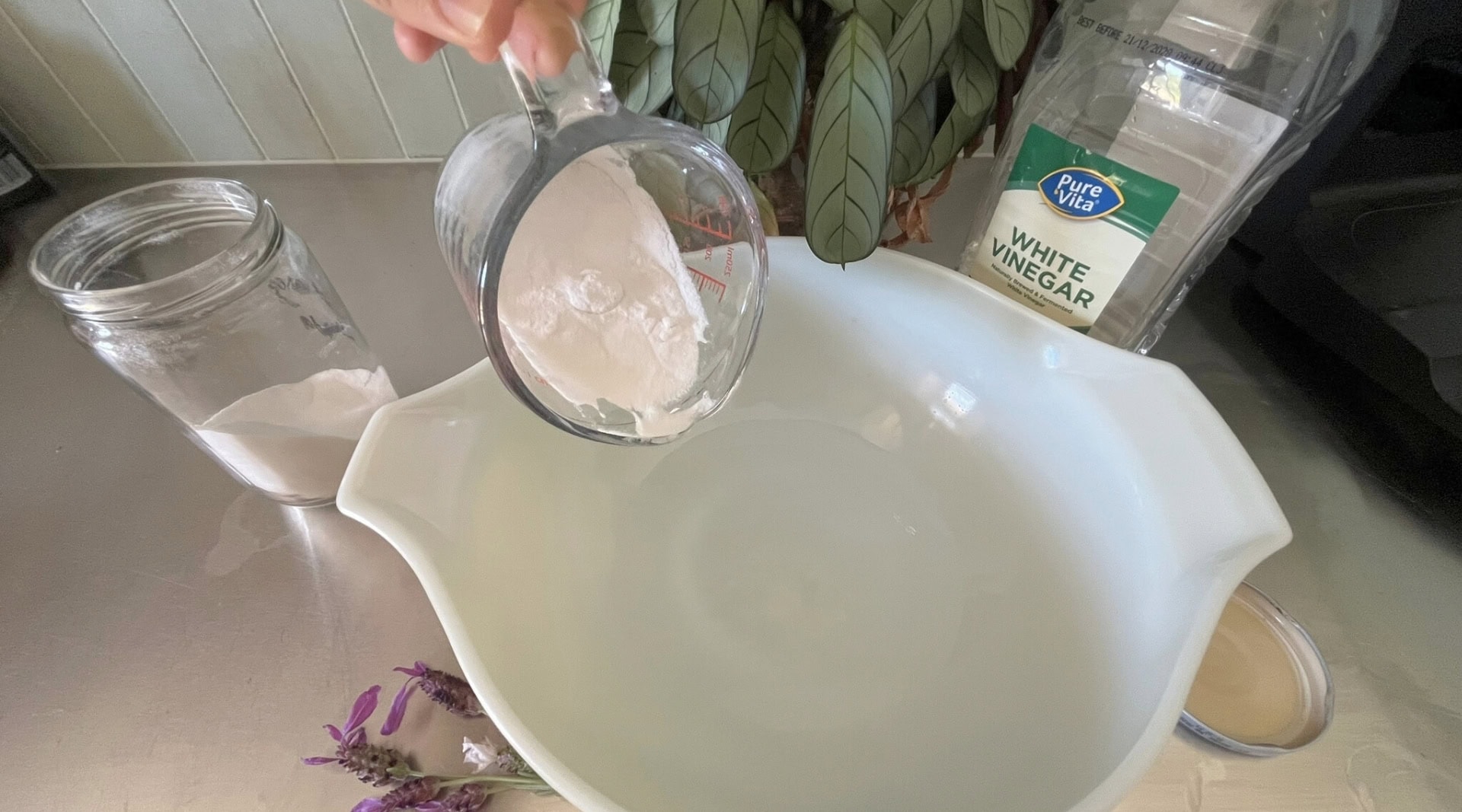
The best natural fabric softener probably already lives in your kitchen pantry. Not only is the DIY approach easy on the environment, your skin, and your health, it’s also just plain easy! This homemade fabric softener recipe combines the softening power of baking soda with the residue-busting action of vinegar for a one-two punch that rivals anything you’d find in a plastic jug at the store.
A note on expectations: This recipe works because baking soda and vinegar each do their thing well (as explained above). When combined directly, they do neutralize each other somewhat due to their opposing pH levels, which means the mixed solution is milder than using each ingredient separately in different parts of the wash cycle. One blogger who rigorously tested this recipe rated it 7 out of 10 for softness, noting it worked well but not quite as dramatically as store-bought softener. For maximum effectiveness, we’d actually suggest using baking soda in the wash cycle and vinegar in the rinse cycle as separate additions. But if you prefer the convenience of a single pre-mixed solution, this recipe still delivers good results and is far better than conventional fabric softener.
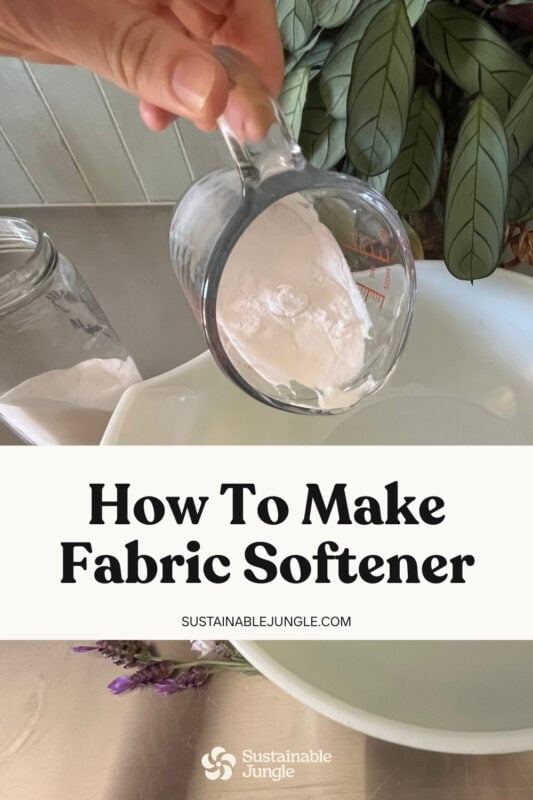
How To Make Natural Fabric Softener At Home: A DIY Natural Fabric Softener Recipe
What you’ll need:
- 2 cups warm water
- 1 cup baking soda
- 1 cup white vinegar
- 2-5 drops essential oils (optional, for scent)
- A reusable container for storage
Instructions:
- Mix two parts warm water to one part baking soda in a bowl.
- Stir until dissolved and then slowly add one part vinegar. (It will fizz, so add gradually!)
- Add 2-5 drops of essential oils, or until your mixture is scented as desired. Lavender is lovely for bedsheets, while lemon or eucalyptus gives a clean, fresh scent.
- Pour into a reusable glass jar or bottle.
- Use 1/4 cup of your mixture per laundry load, added to the fabric softener dispenser or directly to the rinse cycle.
This recipe makes enough for approximately 16 loads of laundry. You can easily double or triple the batch as needed.
Why Choose Natural Fabric Softener Alternatives?
So, do you really need fabric softener? Nope. Not even a little bit.
The best alternative to fabric softener is honestly no softener at all. Your clothes don’t need chemical coatings to feel comfortable. But if you want softer fabrics, reduced static, or fresh-smelling laundry, the natural alternatives above deliver all of that without the downsides.
Here’s why conventional fabric softener deserves to be ditched entirely.
Health Concerns With Conventional Fabric Softeners
- Quats (quaternary ammonium compounds) are the primary softening agents in most fabric softeners. They work by coating fibers with a thin layer of chemicals. Quats are known respiratory irritants and are associated with triggering asthma. Research has also raised concerns about their potential reproductive toxicity.
- Synthetic fragrances in fabric softeners can represent dozens of undisclosed chemicals hidden behind the single word “fragrance” on ingredient lists. These are associated with allergies, skin irritation, dermatitis, respiratory issues, and headaches. Studies indicate they may also contribute to outdoor air pollution when vented from dryers, particularly problematic for people with asthma.
- Phthalates are often used to help fragrances last longer and are known endocrine disruptors associated with reproductive health concerns.
- Preservatives like methylisothiazolinone are strong skin irritants and allergens, while glutaral is known to trigger both skin allergies and asthma. Both are common in liquid fabric softeners and are toxic to aquatic life when washed down the drain.
- Artificial colors like D&C violet are added to fabric softeners for no functional reason and are potentially carcinogenic.
Damage To Your Clothes and Washing Machine
Ironically, the product designed to make your clothes feel better actually damages them. Fabric softener coats fibers with a waxy residue that:
- Reduces absorbency in towels and activewear: That “soft” feeling is a chemical coating that prevents fibers from doing their job. This is why towels become less absorbent over time when washed with fabric softener.
- Gums up technical fabrics: Moisture-wicking properties in your activewear and lingerie are compromised by softener buildup.
- Builds up in your machine: The same slippery residue coats the inside of your washing machine, leading to mold, odor, and eventually mechanical issues.
- Can interfere with flame retardancy: For children’s sleepwear and safety garments, fabric softener can compromise flame-retardant properties.
As one laundry expert told Consumer Reports, their number one tip for laundry was to ditch fabric softeners entirely, along with disposable dryer sheets.
Environmental Impact
Every bottle of fabric softener represents plastic that will persist in landfills for hundreds of years. Most softener bottles aren’t recycled, and even those that are still contribute to a system of single-use plastic that the planet simply doesn’t need, especially for a product that isn’t necessary in the first place.
The chemicals inside those bottles don’t stay in your clothes. Quats, synthetic fragrances, and preservatives wash down your drain and enter waterways, where they’re harmful to aquatic life. Studies have found quaternary ammonium compounds persisting through wastewater treatment systems, meaning they end up in rivers and oceans.
And then there’s who you’re supporting with your purchase. The fabric softener market is dominated by major corporations whose track records on environmental responsibility and ethical labor practices don’t always align with the values of conscious consumers. Choosing natural alternatives means opting out of that system entirely.
Natural Fabric Softener Alternatives By Situation
- For Towels: Vinegar is your best friend for towels. Conventional fabric softener actually makes towels less absorbent by coating the fibers. Add 1/2 cup of white vinegar to the rinse cycle to strip residue and restore absorbency. If your towels have years of softener buildup, you may need a few washes with vinegar to fully restore them.
- For Baby Clothes: Baking soda and vinegar are the safest fabric softener alternatives for baby clothes. They’re completely non-toxic, fragrance-free (skip the essential oils for little ones), and gentle on sensitive baby skin.
- For Activewear and Technical Fabrics: Skip any fabric softener entirely for activewear, as even natural oils can interfere with moisture-wicking properties. If clothes feel stiff, a splash of vinegar in the rinse cycle is the gentlest option. Wool dryer balls in the dryer will soften without leaving residue.
- For Static Cling: If static is your primary concern, wool dryer balls in the dryer are your most effective option. But the biggest tip is actually simpler than any product: over-drying is the main cause of static, so try removing clothes while they’re still slightly damp. This eliminates most static naturally without needing any additives at all.
- For Sensitive Skin: Stick with vinegar, baking soda, or fragrance-free wool dryer balls. Avoid essential oils and any scented additions if your skin is reactive.
- For Hard Water: Areas Baking soda is particularly effective in hard water areas. It helps counteract the mineral deposits that make fabrics feel stiff and crunchy. Add 1/2 cup to the drum before each wash. Vinegar in the rinse cycle also helps strip mineral buildup from fibers.
- For Getting That “Fresh Laundry” Smell Without Chemicals: Add a few drops of essential oils (lavender, eucalyptus, and lemon are great starting points) to your wool dryer balls, or mix them into your vinegar rinse. This delivers a natural scent that’s just as satisfying as synthetic fragrances without any of the health concerns. Just note that essential oils provide fragrance only, not softening. The actual softening comes from the vinegar, baking soda, or dryer balls they’re paired with.
Frequently Asked Questions About Natural Fabric Softener Alternatives
Do natural fabric softener alternatives actually work? Yes. In our experience, wool dryer balls combined with vinegar in the wash cycle delivers results that are comparable to (and in some ways better than) conventional fabric softener. Your clothes will feel soft, smell fresh if you add essential oils to your dryer balls, and won’t have static. The main difference is you won’t have that slippery chemical coating, which is actually a good thing since it means your towels will be more absorbent and your activewear will actually wick moisture properly.
Do aluminum foil balls actually work as a fabric softener alternative? This is a popular internet hack, and we want to be upfront: the evidence is mixed. In theory, aluminum acts as a conductor that absorbs and discharges the static electricity that builds up as clothes tumble in the dryer. Some laundry experts swear by it. However, when Good Housekeeping’s product testing team ran identical loads with and without aluminum foil balls, they found the loads had equal amounts of static (you can read The Kitchn’s write-up on that test). Other testers have reported modest improvements. The foil balls can also degrade with use and potentially leave small aluminum fragments on clothes. We haven’t tested this ourselves, so we can’t vouch for it. If static is your main concern, we’d point you toward wool dryer balls as a more reliable (and better tested) solution.
Can essential oils replace fabric softener? Not quite. Essential oils add natural fragrance and some (like tea tree and eucalyptus) have antibacterial properties that help with odor, but they don’t actually soften fabric. The softening in most “essential oil fabric softener” recipes comes from the vinegar or baking soda they’re mixed with, not the oils themselves. That said, essential oils are a fantastic add-on to other methods in this guide: a few drops on wool dryer balls or combined with vinegar in the rinse cycle. They’re a much healthier way to get that “fresh laundry” scent than synthetic fragrances. Just be mindful that essential oils are flammable, so use only a few drops and avoid high dryer heat. Some colored oils (like tangerine, patchouli, and blue tansy) can also stain light fabrics, so stick to clear oils like lavender, lemon, and eucalyptus.
Can I use hair conditioner as fabric softener? It will soften your clothes, yes, but we chose not to include it as a recommended alternative because conventional hair conditioner contains cationic surfactants, which are actually the same class of chemicals used in conventional fabric softeners. So while you’re making a DIY version, you’re essentially recreating a chemical fabric softener with a different product. It can also leave residue on fibers (reducing towel absorbency just like regular softener) and may contain silicones that build up on fabric over time. If you’re switching away from fabric softener for health or environmental reasons, conditioner doesn’t fully align with that goal. Vinegar and baking soda are cleaner alternatives that soften through different (and more genuinely natural) mechanisms.
Can I use tennis balls as a fabric softener? Tennis balls work in a pinch for fluffing, but because they’re made of synthetic materials, they won’t absorb water (canceling out the energy-saving benefits) and will shed microplastics. So we don’t recommend tennis balls for laundry. Stick with wool, hemp, or bamboo dryer balls if you can. Read our guide to washing machine filters if you’re interested in microfiber prevention.
Is vinegar safe for my washing machine? Absolutely. In fact, vinegar helps keep your washing machine clean by preventing mold and mineral buildup. Some machine manufacturers caution against excessive vinegar use on rubber seals over very long periods, but using 1/2 cup in the rinse cycle is widely considered safe and beneficial for both front-load and top-load machines.
Can I use vinegar and baking soda together in laundry? Not in the same cycle at the same time. Vinegar is acidic and baking soda is alkaline, so when combined directly they neutralize each other (and fizz). Use baking soda in the wash cycle and vinegar in the rinse cycle, or use our DIY fabric softener recipe where they’re pre-mixed and stabilized for use.
What is the best natural fabric softener that smells good? For the best-smelling natural laundry, we recommend adding a few drops of lavender or eucalyptus essential oil to wool dryer balls before each dryer cycle. This gives a subtle, natural fragrance without synthetic chemicals. You can also add a few drops of essential oil to your vinegar rinse for scent in the wash cycle.
What can I use instead of fabric softener for static? Wool dryer balls are the most effective natural anti-static solution for the dryer. The biggest tip for reducing static naturally is to avoid over-drying your clothes. Removing them while still slightly damp eliminates most static. If you’re in a pinch, some people use aluminum foil balls in the dryer (see above), though results vary.
Is there a natural fabric softener for the dryer? Wool dryer balls are the best natural fabric softener for the dryer. They physically separate and fluff fabrics as they tumble, softening clothes and reducing drying time. Add a couple of drops of essential oils for scent.
Can I use these natural alternatives in a front-load washer? Yes! Vinegar, baking soda, and the DIY recipes all work in front-load washers. Add vinegar to the fabric softener dispenser. Add baking soda directly to the drum before loading clothes. For scent, add essential oils to wool dryer balls rather than directly to the wash cycle (since you can’t open a front-loader mid-cycle).
Are these alternatives safe for a septic system? Yes. Vinegar, baking soda, and essential oils are all septic-safe and far gentler on septic systems than conventional fabric softeners, whose chemical residues can disrupt the bacterial balance in septic tanks.
Why do my clothes feel stiff without fabric softener? Stiff laundry is usually caused by hard water mineral deposits, detergent residue, or over-drying. Adding vinegar to the rinse cycle addresses the first two causes, while removing clothes from the dryer while slightly damp handles the third. Once you break the fabric softener habit, you’ll likely find your clothes feel naturally comfortable without any additives.
How do I make the switch from fabric softener to natural alternatives? Start by simply stopping fabric softener use and adding 1/2 cup of white vinegar to your rinse cycle. You may notice your clothes feel slightly different for the first few washes as the chemical coating left by previous fabric softener use washes away. After 3-4 washes, your clothes will actually feel cleaner and more natural. From there, experiment with dryer balls, baking soda, or DIY recipes to find the combination that works best for you.
How We Evaluated These Fabric Softener Alternatives
In recommending these natural alternatives to fabric softener, we prioritized:
- Substantiated effectiveness: Does independent testing or expert consensus support the claims? We cross-referenced our own experience with lab tests, appliance manufacturer guidance (like Whirlpool), expert-backed outlets like Bob Vila and Healthline, and product testing from Reviewed.com and Good Housekeeping. Where the evidence was mixed or weak, we say so honestly. Methods that didn’t hold up to scrutiny (like aluminum foil balls and DIY salt crystals) were moved to the FAQ or removed rather than presented as proven alternatives.
- Personal testing: We personally tested or used each recommended method ourselves, and our ordering reflects both the evidence base and our own experience.
- Safety: We only include alternatives that are non-toxic and safe for skin contact, even for sensitive skin. No synthetic chemicals, no hidden ingredients.
- Environmental impact: We prioritized alternatives that are zero-waste or low-waste, biodegradable, and don’t contribute to water pollution.
- Accessibility and cost: Every alternative on this list is affordable and readily available. Many use ingredients most people already have at home.
- Machine safety: We confirmed that each alternative is safe for use in standard washing machines and dryers (both front-load and top-load where applicable) and won’t damage your machine when used as directed.
Final Thoughts On Natural Alternatives To Fabric Softener
We’ve already overloaded the planet with plastic and toxic chemicals to the point that our home cleaning routines have become part of the problem. But don’t get down(y) because these natural fabric softener alternatives give you the option to make every load of dirty laundry a little bit cleaner, for your personal home and our collective one.
For most people, the simplest starting point is just to stop using fabric softener and add a splash of vinegar to the rinse cycle. It’s the most proven method, it costs pennies, and it works. From there, a set of wool dryer balls in the dryer rounds out a complete natural fabric care system that’s better for your health, your clothes, your machine, and the planet.
We deliberately kept this list of fabric softener substitutes short and focused on methods with evidence behind them. There’s no shortage of fabric softener “hacks” floating around the internet, but we’d rather recommend a few things that work than nine that sound good on Pinterest.
And anything that helps us stay on top of those piles of dirty laundry without dirtying the planet in the process is surely a very good thing.
The next time friends or family ask “What can I use instead of fabric softener?” be sure to share this article for a lighter environmental load on laundry days far and wide.
Editor’s Note: Joy McConnochie has been testing and researching sustainable home care products for 8+ years as part of Sustainable Jungle’s mission to help people make more informed, environmentally responsible choices. All recommendations are independently researched and tested. This article was first published in March 2023 and has been comprehensively updated in March 2026 with an expanded DIY recipe, additional alternatives, fabric-specific guidance, and more contextual information about the health and environmental concerns with conventional fabric softeners.

Joy has been a passionate advocate for the environment since she was a small child. She grew up in South Africa and has been lucky enough to be exposed to the wonders of nature not just in Africa but all over the world. She founded Sustainable Jungle (together with her husband Lyall) back in 2017 after becoming enraged by the devastating impact of palm oil. She then founded the Sustainable Jungle Podcast and together with Lyall interviewed remarkable people from all over the world who were finding ways to create positive impact. Outside of Sustainable Jungle, Joy has always worked in the corporate world, starting out as an auditor and later moving into management consulting. More recently she specialized in Climate Investing for the Asia Pacific region. Given her experience, her current passion is Brand Ratings. She is very much enjoying going deeper on what it really means to drive sustainability performance and true impact through business operations.










Thank you. I have been avoiding anything in plastic. So I buy all spices and herbs in glass containers. I use a totally eco-friendly laundry detergent (It really works well.) And I have been trying to find a good natural substance for “fabric softener.” I will begin to use this beginning tomorrow morning.