













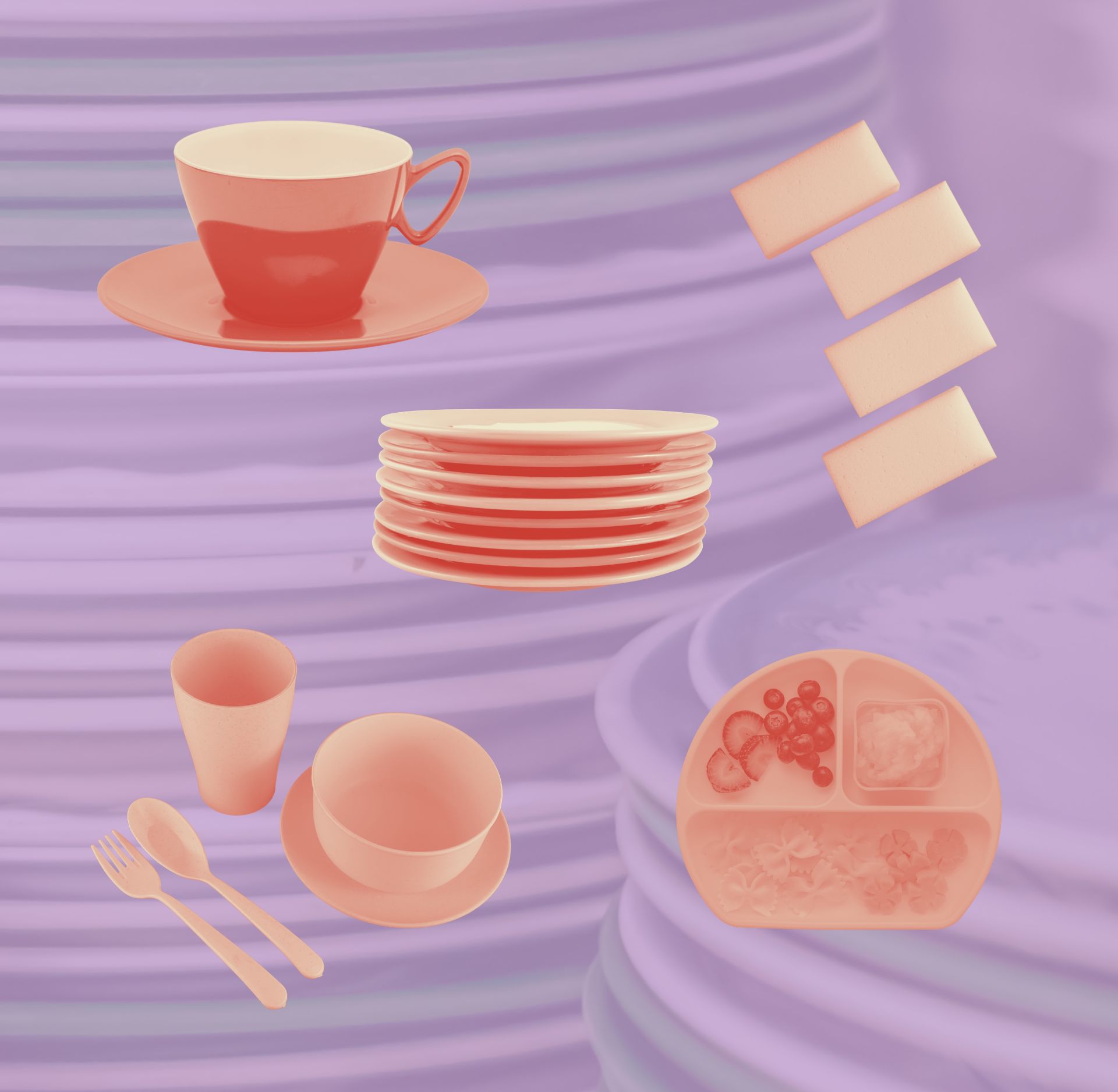
If you own a set of brightly colored plates that survive being dropped on a tile floor, a stack of kids’ bowls, or one of those white “magic” cleaning sponges, you already own melamine. It’s one of the most common materials in the kitchen.
So is melamine toxic? Is it plastic? And can you microwave it (asking for the leftovers)? Well, melamine is fine for some jobs and a poor idea for others (mainly those involving heat).
This guide covers what melamine is, where it’s hiding in your house, how safe it is, and what to replace it with (where necessary).
Related Guides: Eco-Friendly Dinnerware | Non-Toxic Cookware | Non-Toxic Food Storage | Is Silicone Safe? | How to Avoid Microplastics
Melamine at a Glance
- Melamine is a nitrogen-rich compound, usually hardened with formaldehyde into a tough resin, so melamine dishes are a type of plastic.
- Melamine tableware is fine for cold and room-temperature food, but you should not microwave it or use it for hot, acidic foods, because heat makes it release small amounts of melamine and formaldehyde into what you’re eating.
- As a thermoset plastic it cannot be melted down and recycled or composted, and melamine-foam sponges shed microplastics as they crumble.
- For hot food, kids, and everyday use, stainless steel, glass, and real bamboo are safer, longer-lasting choices.
Table of Contents: Melamine
- What Is Melamine? Jump to section
- Where You’ll Find Melamine Jump to section
- Is Melamine Safe? Jump to section
- Is Melamine Bad for the Environment? Jump to section
- Safer, More Sustainable Alternatives To Melamine Jump to section
- FAQs: Melamine Jump to section
What Is Melamine?
Melamine is an organic compound made mostly of nitrogen and carbon. On its own it is a white, odorless powder, and it is not very useful as a powder. To make it useful, manufacturers react it with formaldehyde to create melamine-formaldehyde resin, a hard, heat-resistant plastic.
That resin is what is used to make “melamine” plates, bowls, and trays. The powder is mixed with a filler (often paper pulp), pressed under heat, and cured into a solid that feels almost like ceramic but won’t shatter when it hits the ground.
Is Melamine a Plastic?
Melamine dinnerware is a plastic, specifically a thermoset plastic. Thermosets are cured once into a permanent shape and cannot be re-melted, which is the opposite of the thermoplastics (like the polyester in your clothes) that soften with heat and can be reshaped.
This is also why melamine feels so sturdy. The chemistry that makes it durable and shatter-resistant also makes it impossible to recycle through normal channels, which we get into below.
Where You’ll Find Melamine
Melamine is popular because it is cheap, hard, and resistant to scratches and stains. Here’s some of the most common uses for melamine:
- Dinnerware: plates, bowls, mugs, serving trays, and most “unbreakable” camping, picnic, and kids’ tableware.
- Cleaning sponges: the white melamine-foam erasers sold as “magic” sponges are melamine resin whipped into a fine, sandpaper-like foam.
- Laminate and board: melamine-faced chipboard in flat-pack furniture, kitchen cabinets, shelving, and whiteboards.
- Adhesives and coatings: melamine resin binds many wood glues, laminate countertops, and even some flame retardants.
Given we focus a lot on consumer products here at SJ, we’re going to focus mainly on dinnerware.
Is Melamine Safe?
Melamine tableware and dinnerware is considered safe for serving cold and room-temperature food. But, in a similar way to leaching plastics, when melamine dishes are heated, the resin can break down slightly and migrate small amounts of melamine and formaldehyde into the food they hold.
According to the U.S. Food and Drug Administration’s guidance on melamine tableware, melamine dishes are fine for everyday serving but should never go in the microwave, and migration increases when highly acidic foods are heated to high temperatures (around 160°F or above). The FDA has set a tolerable daily intake for melamine of 0.063 milligrams per kilogram of body weight. Ordinary use of tableware typically means daily intake is under this threshold.
Germany’s Federal Institute for Risk Assessment found in testing of melamine dishes and kitchen utensils that release of both melamine and formaldehyde climbed with heat and repeated use, and recommended against using melamine articles for cooking or microwaving. A crossover study of noodle soup found that people who ate hot soup from melamine bowls had measurably higher melamine in their urine than those who ate from ceramic.
Why is this a problem?
The International Agency for Research on Cancer classifies formaldehyde as a known human carcinogen, and melamine itself is associated with kidney stones and kidney damage at high doses.
Is Melamine Microwave Safe?
Melamine is definitely not microwave safe. Microwaving concentrates the conditions (high heat plus often moist, acidic food) that cause the resin to leach. Many melamine products rightly carry a “not for microwave use” stamp on the base. If a dish isn’t labeled, assume it isn’t safe to microwave. And even if a melamine product is marked as microwave safe, we’d still recommend avoiding the microwave.
The same goes for other heat applications like:
- Pouring boiling water into a melamine mug
- Serving fresh-off-the-stove food
- Running dishes through a very hot dishwasher cycle repeatedly over years
Is Melamine Safe for Kids?
Parents will be pricking up their ears because melamine is everywhere in kids’ tableware (it doesn’t break) and children are more vulnerable to chemical exposures relative to their body weight. As with adults, the material is safe for cold and room-temperature food but not for hot food.
Hot pasta, reheated leftovers, and warm milk are common on kids’ plates, so for everyday meals we’d serve hot food on stainless steel or glass and keep melamine for cold snacks and picnics.
The 2008 Melamine Scandal
If melamine rings an alarm bell, you might recall that in 2008, melamine was deliberately added to infant formula and milk products in China to fake a higher protein reading on quality tests. Per the WHO outbreak report, tens of thousands of babies were hospitalized with kidney damage, and several died.
That was a case of large quantities of melamine being eaten directly, which is a vastly different situation from the trace amounts that migrate from a dinner plate. But to us, this tragic story makes a pretty clear case for avoiding melamine where you can.
Is Melamine Bad for the Environment?
We think so. Because it’s a thermoset plastic, it can’t be melted and reformed in the same way a yogurt tub can. That means melamine dishes, sponges, and laminate board are not recyclable in any normal curbside system, and they are not biodegradable either. A cracked melamine plate has to go straight to landfill for hundreds of years.
Melamine-foam sponges add a second problem. As that “magic” eraser wears down (which is how it cleans, by sloughing off abrasive foam) it sheds microplastics. A 2024 study estimated that a worn melamine sponge sheds millions of microplastic fibers per gram as it breaks apart in use, washing tiny plastic particles straight down the drain. So if you’ve been working hard to cut microplastics elsewhere, don’t let the magic sponges let you down!
“Bamboo Melamine” Greenwashing
Watch out for tableware sold as “bamboo” that is melamine with some bamboo powder mixed in as filler. It gets marketed as an eco-friendly, natural alternative, but it is still a melamine-formaldehyde plastic, and the bamboo filler can make leaching worse when heated.
EU authorities have pulled numerous “bamboo-ware” products from the market for releasing melamine and formaldehyde above legal limits, because bamboo is not an authorized additive in plastic food-contact items.
If you want the real thing, look for solid bamboo, not “bamboo melamine.” See our guide to bamboo as a material for more on bamboo and the risk of greenwashing.
Safer, More Sustainable Alternatives To Melamine
Melamine has its place (camping and toddlers come to mind), but for daily use and anything hot, longer-lasting and lower-tox materials are what we would recommend. A few suggestions:
- Stainless steel for kids’ plates, camping, and hot food. It’s effectively unbreakable, doesn’t leach, and lasts decades. See our take on stainless steel safety and carbon steel.
- Glass or tempered glass for plates, bowls, and food storage. It’s microwave-safe, inert, and endlessly recyclable.
- Solid bamboo or wood for serving boards and cutting boards, not bamboo-melamine composite.
- Cellulose, loofah, or coconut-fiber sponges in place of melamine foam. Our eco-friendly sponge guide has plastic-free picks.
- For reusable lunches and picnics, stainless and glass lunch container.
And if you keep your melamine, keep it cold. Use it for crackers and salads, not soup or reheating leftovers (never put it in the microwave). For more on building a lower-tox kitchen, our non-toxic cooking utensils, non-toxic bakeware, and non-toxic living guides will be helpful.
FAQs: Melamine
Is melamine toxic?
Melamine tableware is safe for cold and room-temperature food. It becomes a concern with heat, which causes it to release small amounts of melamine and formaldehyde. Eaten in large quantities (as in the 2008 milk adulteration scandal) melamine can cause kidney damage. If you’re considering buying melamine products, we’d suggest some safer materials instead (see above for recommendations).
Is melamine microwave safe?
No melamine is not microwave safe. Heat makes melamine resin leach melamine and formaldehyde into food. Most melamine dishes are stamped “not for microwave use.” We would strongly suggest moving food to a glass or ceramic dish before reheating.
Is melamine dishwasher safe?
Most melamine dinnerware is labeled top-rack dishwasher safe. Very hot, repeated cycles can degrade the surface and increase leaching over time, so a cooler cycle or hand-washing extends its life and keeps it safer.
Is melamine plastic?
Melamine dishes are melamine-formaldehyde resin, which is a hard thermoset plastic. It looks and feels more like ceramic than a typical soft plastic, but it is plastic, and it isn’t recyclable or biodegradable.
Is melamine BPA-free?
Melamine does not contain BPA, so products are often marketed as “BPA-free.” That is a little misleading, because melamine has its own migration concerns (melamine and formaldehyde) that have nothing to do with BPA.
Is bamboo melamine safe?
“Bamboo melamine” is melamine plastic with bamboo powder added as filler, and it carries the same heat-related issues as regular melamine, sometimes even worse. It has been recalled across the EU for excessive chemical migration.
Final Thoughts on Melamine
Those shatterproof plates are handy for camping trips and tiny humans, and there’s no need to panic if you’ve been eating cold lunches off them for years.
The trouble starts when melamine meets heat. So keep it cold and keep it out of the microwave. And then, when something cracks or your “magic” sponge starts crumbling into the sink, swap it for safer alternatives instead of buying more plastic that you can’t easily recycle. Future-you, and the fish downstream of your kitchen sink, will both be glad.
If this cleared a few things up, send it to the friend whose entire dish cupboard rattles when it falls but never breaks. They’ll want to know.

Joy has been a passionate advocate for the environment since she was a small child. She grew up in South Africa and has been lucky enough to be exposed to the wonders of nature not just in Africa but all over the world. She founded Sustainable Jungle (together with her husband Lyall) back in 2017 after becoming enraged by the devastating impact of palm oil. She then founded the Sustainable Jungle Podcast and together with Lyall interviewed remarkable people from all over the world who were finding ways to create positive impact. Outside of Sustainable Jungle, Joy has always worked in the corporate world, starting out as an auditor and later moving into management consulting. More recently she specialized in Climate Investing for the Asia Pacific region. Given her experience, her current passion is Brand Ratings. She is very much enjoying going deeper on what it really means to drive sustainability performance and true impact through business operations.