













You might wanna sit down for this one…because we’re going (beyond) skin-deep to peel back all the less-than-ideal ingredients to avoid in skincare, many of which are commonly used in every beauty and personal care product.
Did you know that the average person applies around a dozen personal care products daily, exposing themselves to over 100 unique chemical ingredients before they even leave the house. While many of these are perfectly safe, some common skincare ingredients have been linked to hormone disruption, cancer risk, organ toxicity, and environmental harm.
In the US, the FDA has restricted fewer than 30 chemicals in cosmetics. The EU, by comparison, has banned or restricted over 1,600. The Modernization of Cosmetics Regulation Act (MoCRA), signed into law in 2022, is the most significant expansion of FDA authority over cosmetics since 1938, but it’s still early days. As of early 2026, 11 US states have now passed laws banning PFAS (“forever chemicals”) in cosmetics, and the FDA itself flagged significant safety data gaps in its December 2025 assessment of PFAS in personal care products.
That regulatory gap means we as consumers are still largely responsible for reading labels and knowing what to avoid.
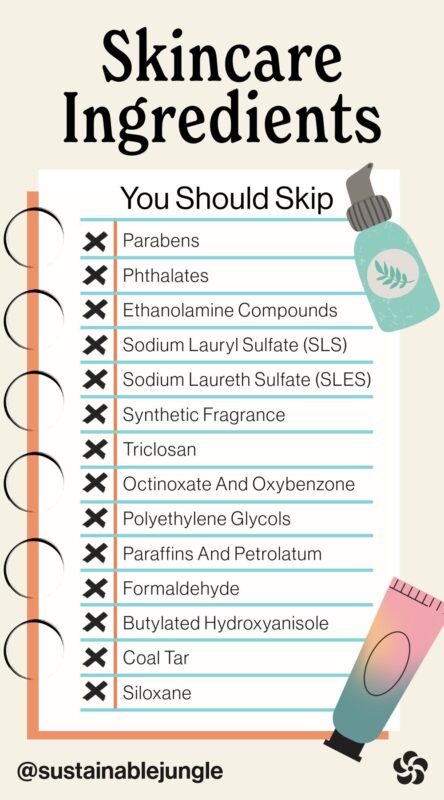
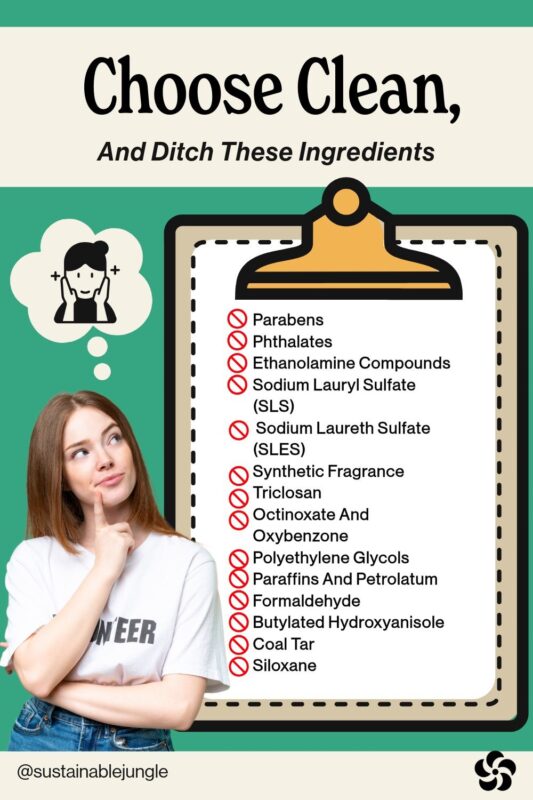
To help, we’ve compiled 20 of the most concerning ingredients to avoid in skincare, moisturizers, shampoo, cosmetics, body wash, and other personal care products. For each one, we cover what it is, why it’s used, what the evidence says about its risks, and exactly what to look for on the label.
If you’re looking for brands that already avoid these ingredients, our brand directory rates beauty and personal care companies on ingredient safety, sustainability, and ethics. And for a deeper understanding of what’s actually good for your skin, see our guide to natural skin care ingredients.
Other related guides: Natural Skincare Brands, Organic Face Washes, Natural Eye Creams
Table Of Contents: Skincare Ingredients To Avoid
- Parabens Jump to section
- PFAS (Forever Chemicals) Jump to section
- Phthalates Jump to section
- Ethanolamine Compounds (Mea, Dea, Tea) Jump to section
- Sodium Lauryl Sulfate (SLS) And Sodium Laureth Sulfate (SLES) Jump to section
- Synthetic Fragrance Or Parfum Jump to section
- Synthetic Colors Jump to section
- Triclosan Jump to section
- Chemical UV Filters (Octinoxate And Oxybenzone) Jump to section
- Polyethylene Glycols (PEGS) Jump to section
- Paraffins And Petrolatum (Petroleum Jelly) Jump to section
- Formaldehyde And Formaldehyde-Releasing Preservatives Jump to section
- Benzalkonium Chloride Jump to section
- Butylated Hydroxyanisole (BHA) And Butylated Hydroxytoluene (BHT) Jump to section
- Methylisothiazolinone And Methylchloroisothiazolinone Jump to section
- Coal Tar Jump to section
- Ethylenediaminetetraacetic Acid (EDTA) Jump to section
- Siloxane Jump to section
- Talc Jump to section
Parabens
In use for over a century, parabens have only recently received attention for the potential side effects of long-term exposure.
Not only are more sustainable beauty brands avoiding this ingredient, but even more mainstream traditional beauty brands are following suit. And that’s saying something.
What Products Contain Parabens
- Shampoo and conditioner
- Soaps
- Skincare products (lotion, sunscreen, petroleum jelly, shaving cream, moisturizing face cream)
- Beauty products (foundation, BB cream, moisturizer, blush, lipstick, lip balm)
Why Parabens Are Used
A category of chemical preservatives, parabens extend the shelf life for personal products and household goods.
Why Parabens Are Potentially Dangerous
Parabens top this list because of how they mimic estrogen.
Studies have linked this filler to hormone disruption, which may impact reproductive systems in our bodies (menstruation and pregnancy).
Applied directly to skin, parabens are quick to absorb and can accumulate in both humans and marine animals.
Regular exposure has also been associated with breast cancer but even occasional exposure may cause hives, irritation, itchiness, redness, and flaking.
What to Watch for on the Label
Methylparaben, ethylparaben, propylparaben, and butylparaben.
PFAS (Forever Chemicals)
Per- and polyfluoroalkyl substances, known as PFAS or “forever chemicals,” are among the most significant emerging concerns in cosmetic safety. These synthetic chemicals earned their nickname because they don’t break down in the body or the environment.
What Products Contain PFAS
According to a December 2025 FDA report, 51 different PFAS are intentionally added to at least 1,744 cosmetic products sold in the US. They’re most commonly found in:
- Eye shadow (the most common product category, at over 20% of PFAS-containing products)
- Face and neck skincare (leave-on products)
- Eyeliner
- Face powder and foundation
- Moisturizers and lotions
- Nail polish
Why PFAS Are Used
PFAS provide water and oil resistance, durability, and a smooth texture. In cosmetics, they’re used to condition skin, create a shiny finish, and improve product consistency.
Why PFAS Are Potentially Dangerous
PFAS are linked to suppression of the immune system, reduced vaccine effectiveness, increased cancer risk, and harm to fetal development, even at very low doses. They also build up in the body and the environment over time, which is why the scientific community has increasingly called for regulating them as a class and ending all non-essential uses.
The FDA’s own December 2025 assessment found “significant data gaps” for PFAS used in cosmetics. For 19 of the 25 most common PFAS in cosmetics, the FDA could not definitively determine safety due to missing toxicological data. One PFAS (perfluorohexylethyl triethoxysilane) was flagged as a potential safety concern in body lotions.
The EWG’s Skin Deep database rates all PFAS compounds a 10 out of 10 (highest hazard).
Despite federal inaction, 11 US states (including California, Colorado, Washington, and Minnesota) have now banned intentionally added PFAS in cosmetics, with bans taking effect between 2025 and 2028. The EU and Canada also restrict or prohibit PFAS in cosmetics.
What to Watch for on the Label
PTFE (polytetrafluoroethylene, the most common), polyfluoroalkyl substances, perfluoroalkyl substances, and any ingredient containing “fluoro” or “perfluoro” in the name. That said, PFAS aren’t always listed on labels, which is part of the problem.
Related: What Are Forever Chemicals (PFAS)?; Listen to our podcast episode on Forever Chemicals
Phthalates
Pronounced THAL-ates, these carcinogenic chemicals have been banned from use in cosmetics in the European Union, but are still commonly found in products sold in the US.
What Products Contain Phthalates
- Body wash
- Shampoo and conditioner
- Fragranced lotions
- Color cosmetics
- Nail polish (hence our insistence on non-toxic nail polish)
- Perfume
- Deodorant
Why Phthalates Are Used
In household goods, phthalates are used to make plastics more flexible (specifically PVC,). They’re commonly found in food packaging which is why we personally opt for plastic free food storage.
In skincare products, they’re used to lubricate other compounds in the formula and also help to carry fragrance.
Why Phthalates Are Potentially Dangerous
One of the most harmful ingredients in skincare, the ubiquitous use of phthalates has been linked to DNA damage in sperm, adverse effects on organs (specifically the kidneys, liver, and thyroid), immune system, reproductive functioning.
Prenatal and postnatal exposure has been linked to neurodevelopmental effects in children. While human studies are limited, phthalates are considered carcinogens (cancer-causing) in animal studies.
There is also evidence to suggest phthalates act as endocrine disruptors (AKA the hormone system (in humans, especially women).
What to Watch for on the Label
Phthalate, DEP, DEHP, DBP, and fragrance.
Ethanolamine Compounds (Mea, Dea, Tea)
Ethanolamines are common emulsifying ingredients in cleansing agents, for both the home and body, but are nonetheless chemicals to avoid.
What Products Contain Ethanolamines
Between personal care products, household cleaners, and cosmetics, ethanolamines are found in many products, but the following beauty products specifically:
- Soap
- Hair products (shampoo, conditioner, hair dye)
- Lotion and sunscreen
- Shaving cream
- Makeup (eyeliner, eye shadow, blush, mascara, foundation)
Why Ethanolamines Are Used
Ethanolamines are surfactants, meaning they reduce the surface tension of a liquid in which it is dissolved; and help remove dirt and grease.
They also help adjust the pH of a product to prolong degradation and extend shelf-life.
Why Ethanolamines Are Potentially Dangerous
While ethanolamines are generally considered safe when used briefly in rinse-off products, there is strong evidence to suggest that they have an adverse effect during prolonged exposure on human skin, immunity, and the respiratory system.
Cocamide DEA (derived from coconut oil) specifically has also been linked to cancer.
What to Watch for on the Label
Monoethanolamine (MEA), diethanolamine (DEA), and triethanolamine (TEA).
Sodium Lauryl Sulfate (SLS) And Sodium Laureth Sulfate (SLES)
No list of toxic skincare ingredients would be complete without SLS, SLES, and ammonium laureth sulfate (ALS)—another one to look out for, for risk of skin, eye, and lung irritation.
What Products Contain SLS
These cleaning agents can be found in many personal care and cleaning products, namely:
- Shampoo
- Body and hand wash
- Toothpaste
Why SLS Is Used
SLS is used as a surfactant to help remove dirt and oil from surfaces, while also producing a foamy lather.
Why SLS Is Potentially Dangerous
While SLS and SLES have received a lot of hype for their toxicity to marine animals the jury’s still out regarding their human safety.
Research suggests both those and ALS are somewhat safe in products that are rinsed off after short applications, but higher concentrations (greater than 1%) may cause skin and eye irritation.
They themselves are not considered carcinogens, but SLES manufacturing is subject to potential contamination of ethylene oxide (a known human carcinogen, nervous system disrupter, and developmental toxin) and 1,4-dioxane (a possible human carcinogen and environmental pollutant that does not degrade easily).
1,4 dioxane can be removed from cosmetics via vacuum stripping but there is virtually no way to know whether the SLS and SLES in your shampoo have undergone that process.
What to Watch for on the Label
Sodium lauryl sulfate, sodium laureth sulfate, ammonium laureth sulfate, sodium dodecyl sulfate, dodecyl sulfate, sodium salt, and sodium n-dodecyl sulfate.
Synthetic Fragrance Or Parfum
Fragrance or parfum refers to the various natural materials or one of the 3,059 chemicals that can be used in fragrance compounds.
This is the most pervasive ingredient to avoid.
A 2016 study found 99.1% of U.S. participants were exposed to fragranced products at least once a week.
What Products Contain Fragrance
You might see fragrance, perfume, or aroma in household goods and beauty products such as:
- Lotion and sunscreen
- Soap and body wash
- Deodorant
- Exfoliating scrubs and shaving creams
- Perfume, cologne, and aftershave
- Cosmetics
- Serums, skin toner, and facial cream
- Candles
- Literally anything and everything
Why Fragrance Is Used
Here’s an obvious one: to add fragrance to a product, or to mask its scent!
While the same thing could be achieved with plant-based oils, synthetic fragrances are far cheaper and easier to create than sourcing those found in nature.
While essential oils are often better; the term “essential oils” is not regulated in the US and may still cause the same allergies and harmful effects.
Why Fragrance Is Potentially Dangerous
In addition to possibly containing phthalates, fragrance may also contain or emit a range of pollutants—including other names on this list like formaldehyde, ethanolamines, and phthalates.
Many of these are also known as potential carcinogens and associated with endocrine, respiratory, reproductive, and nervous system disruption.
In many cases, these toxins are restricted or require labeling in Canada and the European Union, but not so in the U.S.
Despite these concerns, some brands do create synthetic non toxic fragrances where they believe sourcing the equivalent natural scent is unethical or harmful to animals.
What to Watch for on the Label
Fragrance, perfume, parfum, aroma, and essential oils.
Unfortunately, that’s about as specific as it gets. Due to allowances for proprietary formulas, the specific chemicals in fragrances need not legally be disclosed on the label.
Synthetic Colors
Generally labeled FD&C or D&C, synthetic—or “organic”—dyes indicate colorants that include a carbon atom. Organic color additives include synthetic dyes, lakes, and botanicals—often derived from coal tar or petroleum.
The F, D, and C refer to approval for use in food, drugs, and cosmetics (FD&C), or just in drugs and cosmetics (D&C)—but that doesn’t necessarily mean they’re safe.
Inorganic color, on the other hand, comes from mineral compounds like zinc oxide, iron oxide, and mica. These are generally regarded as healthier alternatives but are associated with mining and human rights abuses.
What Products Contain Synthetic Colors
The more “exotic” the color, the better it is to avoid it. Look out for these products:
- Lotions and skincare products
- Soaps and liquid cleansers
- Shampoos and conditioners
- Facial treatments and toners (hence why we make our own DIY facial toner)
- Mouthwash and toothpaste
- Deodorant
- Cosmetics
Why Synthetic Colors Are Used
These are used to make cosmetics and skincare products look “pretty” or cover up the color produced during manufacturing.
Why Synthetic Colors Are Potentially Dangerous
Even FD&C dyes are toxic, with legally-permissible levels of heavy metals like lead.
Over time, heavy metal accumulation can lead to cancer, developmental and reproductive problems, allergies, muscle disorders, organ damage, and neuropsychiatric disorders, to name just a few.
Several of these dyes have been banned in the EU.
What to Watch for on the Label
FD&C or D&C
Triclosan
Triclosan (TSC) and triclocarban (TCC) have been used for decades, but if we’ve learned anything so far it’s that that counts for naught.
What Products Contain Triclosan
Triclosan is found in a wide range of consumer goods, including skincare products like:
- Antibacterial soaps and lotions
- Toothpaste
- Deodorant
- Color cosmetics and creams
- Shaving products
Why Triclosan Is Used
Initially used in a scrub for surgeons, triclosan has antibacterial properties and is used to minimize odors and kill bacteria and mold.
Why Triclosan Is Potentially Dangerous
Not only has it been found to provide no additional bacterial protection than plain soap, but triclosan has also been associated with antimicrobial resistance (including that of E. coli and salmonella), hormone disruption, and developmental complications.
The latter is especially concerning in light of studies that have found triclosan in plasma and milk of nursing mothers; so pregnant women are especially advised to steer clear of this ingredient.
Although designed to kill microbes, triclosan is far more likely to kill fish, crustaceans, and algae—in which they accumulate at high levels. When concentrated in biosolids (organic matter extracted from sewage sludge), they can also cause harm to crops.
What to Watch for on the Label
Triclosan (TSC) and triclocarban (TCC)
Chemical UV Filters (Octinoxate And Oxybenzone)
Chemical UV (ultraviolet) filters—commonly octinoxate, oxybenzone, octocrylene, avobenzone, and homosalate—often occur at concentrations significantly higher than those recommended in the EU. Though the FDA is expected to publish updated sunscreen rules in 2026, with substantive reviews of UV filters so watch this space.
While there are still some concerns regarding inhalation, titanium dioxide and zinc oxide are safer alternatives. Buying those that specify non-nano particles helps mitigate that risk.
What Products Contain Chemical UV Filters
These toxic skincare ingredients are found most notoriously in sunscreen, as well as:
- Shampoo and conditioner
- Hair spray
- Lipstick
- Foundation and bronzer
- Day cream and face serum
- Body wash
- Insect repellent
Why Chemical UV Filters Are Used
UV filters are used to either block or absorb UVA and UVB radiation from the sun.
Why Chemical UV Are Potentially Dangerous
While almost always considered safe (outside the tendency to cause rashes), UV filters have been detected in blood, plasma, and on the skin weeks after being used.
Many agree that more research should be done.
Octinoxate has been associated with hormone disruption, and one study found potential reproductive and developmental toxicants produced by the metabolism of octinoxate in rats.
What we do know for sure is that UV filters are problematic for the environment.
Found in waterways and discharged by wastewater treatment facilities, they can lead to coral bleaching and death/harm for symbiotic algae, as well as bioaccumulation, toxicity, and endocrine disruption for marine life.
What to Watch for on the Label
Avobenzone, cinoxate, dioxybenzone, ensulizole, homosalate, meradimate, octinoxate (octyl methoxycinnamate), octisalate, octocrylene, oxybenzone (Benzophenone-3), pedimate O, sulisobenzone (Benzophenone-4), and trolamine salicylate.
Polyethylene Glycols (PEGS)
Polyethylene glycols (PEGs) are petroleum-based, although they may be made from natural gas or coal-derived raw materials, too.
What Products Contain Polyethylene Glycols
From food to face cream, these are found in many products:
- Body wash and soap
- Skin creams and lotions
- Hair products (color, sprays, gels)
- Cosmetics
- Sunless tanning products
Why Polyethylene Glycols Are Used
Considered penetration enhancers, PEGs make it easier for other ingredients to pass through the surface of the skin. This means you then need to be extra careful about what other toxic compounds accompany this filler, since they’ll be more readily absorbed.
PEG-2 and PEG-9 stearate are shown to have the most skin penetrating effects.
PEGs can also be used as surfactants, moisture-carrying agents, softeners, and thickeners.
Why Polyethylene Glycols Are Potentially Dangerous
First things first, polyethylene glycol is a by-product of petroleum, natural gas, and/or coal, so we know where it stands from an environmental perspective.
While some PEG compounds have been deemed safe for cosmetics, certain forms—specifically PEG-4, PEG-7, PEG4-dilaurate, and PEG 100—require ethylene oxide (a toxic nerve gas from WWI that’s lethal in even small doses) during manufacturing.
Other forms—PEG-6, PEG-8, PEG-32, PEG-75, PEG-150, PEG-14M, and PEG-20M—can be contaminated with 1,4-dioxane, not only a known carcinogen but found to form explosive peroxides when combined with oxygen.
Yikes.
Heavy metal contamination is yet another concern for PEGs
Additionally, there has been some evidence linking them to organ toxicity, especially in large IV doses and for those with underlying problems.
Because we as consumers have little way of knowing offhand which forms are safe, PEGs should be avoided in general.
What to Watch for on the Label
PEG, followed by a number and sometimes another ingredient to denote the compound it forms (i.e. PEG-20 glyceryl triisostearate, PEG-40 hydrogenated castor oil).
Paraffins And Petrolatum (Petroleum Jelly)
Distilled from petroleum, paraffins are a mixture of saturated hydrocarbons that form a wax-like solid.
While generally safe for cosmetic use, it is only considered so in a highly refined state, which increases its environmental impact.
What Products Contain Paraffins
These mineral oils are commonly found in:
- Lotion, face cream, and other moisturizing products
- Mascara (which is why we recommend DIY mascara)
- Lipstick, lip balm, and chapstick
- Concealer
- Hair styling wax
Why Paraffins Are Used
Paraffins are used as an emollient to smooth and soften skin, and are cheaper than other ingredients.
Why Paraffins Are Potentially Dangerous
While not known to penetrate the dermis, paraffin still qualifies as a bad ingredient for skin, causing irritation, collagen breakdown (hello wrinkles!), and contact dermatitis.
Some evidence suggests that it leads to estrogen dominance in women, especially since it accumulates in fatty tissue. In turn, this may lead to infertility and menstrual problems, accelerated aging, allergies, autoimmune disorders, nutrient deficiencies, and sleep problems.
If applied too near the nose, it’s even been thought to cause lipid pneumonia.
What to Watch for on the Label
Paraffin, paraffin wax, liquid paraffin, mineral oil, petroleum, and petrolatum.
Formaldehyde And Formaldehyde-Releasing Preservatives
Formaldehyde and formaldehyde-releasing preservatives (FRPs) are used in many products—even when not listed as so.
What Products Contain Formaldehyde
FRPs are found in:
- Shampoo and hair gel
- Lotion and sunscreen
- Nail and eyelash glue
- Nail polish
- Cosmetics and makeup remover
- Body wash and soap
Why Formaldehyde Is Used
Both formaldehyde and FRPs are used to maintain a product’s integrity and prevent the growth of bacteria and mold.
Why Formaldehyde Is Potentially Dangerous
The International Agency for Research on Cancer (IARC) has classified formaldehyde as a carcinogen—not to mention flammable. Washington State’s Toxic-Free Cosmetics Act specifically targets formaldehyde-releasing ingredients too.
As one of the worst ingredients for the skin, it’s also been shown to induce dermatitis, even from short-term use.
Worse still, when used in personal care products, it can potentially be absorbed through the skin and may cause irritation and other adverse effects, with increased risk for children because of their larger surface area to body weight ratio.
What to Watch for on the Label
Formaldehyde, quaternium-15, sodium hydroxymethylglycinate, DMDM hydantoin, 2-bromo-2-nitropropane-1,3-diol, glyoxal, bromopol, imidazolidinyl urea, diazolidinyl urea, and polyoxymethylene urea.
Benzalkonium Chloride
An organic salt, benzalkonium chloride is used in skincare and cosmetics for a few reasons.
What Products Contain Benzalkonium Chloride
Serving multiple purposes, this ingredient can be found in:
- Body wash and soap
- Shampoo
- Eye makeup
- Antibacterial products and spermicides
- Contact lens solution
- Eye drops
- Skincare products
Why Benzalkonium Chloride Is Used
Benzalkonium chloride is used as a surfactant (foaming and cleansing ingredient), stabilizer, and preservative, and for its antibacterial properties.
Why Benzalkonium Chloride Is Potentially Dangerous
The ingredient is restricted in Canadian cosmetics and in some types of Japanese cosmetics.
There is strong evidence demonstrating that it is a human skin toxicant and allergen, and some evidence suggests it is toxic to the immune system, respiratory system, and humans’ reproductive ability.
However, it is considered to be safe at concentrations below 0.1%.
What to Watch for on the Label
Benzalkonium chloride, BZK, BKC, BAC, BAK, and alkyldimethylbenzylammonium chloride (ADBAC)—never mind first place for the most unpronounceable compound on this list, those acronyms are enough of a warning!
Butylated Hydroxyanisole (BHA) And Butylated Hydroxytoluene (BHT)
These two man-made compounds and down right bad skincare ingredients are found in many products.
Notice that the latter contains toluene, part of the “toxic trio” in nail polish, along with formaldehyde and dibutyl phthalate.
What Products Contain BHA/BHT
In addition to nail polish, you may see BHT and BHA in personal care products like:
- Shampoo
- Sunscreen
- Hair products
- Lip products
- Cosmetics
- Fragrance
- Deodorant
- Creams and moisturizers
Why BHA/BHT Is Used
BHA and BHT are synthetic antioxidants and are used as preservatives.
Why BHA/BHT Is Potentially Dangerous
These so-called “chemical cousins” have been linked to organ toxicity, skin irritation, and other health concerns.
BHA has also been classified as a potential human carcinogen, endocrine disruptor, and “high human health priority” by the Environment Canada Domestic Substance List.
While not recognized as a carcinogen, BHT has been linked to cancer, endocrine disruption, and developmental and thyroid changes.
What to Watch for on the Label
Butylated hydroxyanisole (BHA) and butylated hydroxytoluene (BHT).
Methylisothiazolinone And Methylchloroisothiazolinone
Methylisothiazolinone and methylchloroisothiazolinone are mouthfuls, and you definitely don’t want these harmful ingredients anywhere near your mouth.
What Products Contain Methylisothiazolinone
These ingredients often make their way into cleaning and industrial products, as well as:
- Shampoo and hair dye
- Baby soap and shampoo
- Soap
- Nail polish
- Makeup remover
- Cosmetics
- Sunscreen
Why Methylisothiazolinone Is Used
Used as preservatives, they’re used to stop the growth of bacteria, fungi, and yeast.
Why Methylisothiazolinone Is Potentially Dangerous
While stopping bacteria and fungi may sound like a good thing, methylisothiazolinone and its cohort are pesticides.
That means they’re corrosive, allergenic, and potentially toxic to the organs and brain when ingested orally, inhaled, or applied dermally—as well as toxic to aquatic life.
Both are considered unsafe and are restricted in many countries.
What to Watch for on the Label
Methylisothiazolinone (MIT), 2-methyl-4-isothiazolin-3-one, Neolone 950 preservative, MI, OriStar MIT, and Microcare MT.
Methylchloroisothiazolinone (CMIT), 5-Chloro-2-methyl-4-isothiazolin-3-one, and MCI.
Coal Tar
Coal tar, as the name suggests, is derived from burning coal. According to the FDA, only levels 0.5% to 5% are permitted and the concentration must be listed.
What Products Contain Coal Tar
In addition to textiles, personal care products, and food, coal tar is also one to avoid and can be found in:
- Shampoo and scalp treatments (especially those designed for dandruff, eczema, or psoriasis)
- Hair dyes
- Soap
- Lotion
Why Coat Tar Is Used
Belonging to the class of drugs called keratoplastics, coal tar causes the skin to shed its dead cells and slow down the growth of skin cells. This works to decrease itchiness, scaling, and dryness.
It is also used in cosmetics and hair care as a colorant, specifically to achieve darker hair color dyes.
Why Coal Tar Is Potentially Dangerous
It’s understood that coal tar contains several carcinogenic compounds and is classified as a Group 1 carcinogen.
Various rodent studies have linked coal tar to increased liver weight, eating avoidance, respiratory difficulty, sneezing, and weight loss. Its P-Phenylenediamine form caused liver cancer in mice.
So far, research has not linked (with any statistical significance) coal tar with an increased likelihood of cancer in humans.
However, some of coal tar’s constituents (like benzopyrene and pyridine) have been linked to skin cancer, tingling in hands and feet, hyperpigmentation, neurological damage, and eye cancer (in cases of prolonged exposure).
Coal tar in hair dye specifically may cause blood and bladder cancer.
What to Watch for on the Label
Coal tar solution, estar, naphtha, benzin B70, and P-phenylenediamine—although there are many other names, often preceded by FD&C and D&C.
Ethylenediaminetetraacetic Acid (EDTA)
Ethylenediaminetetraacetic acid, which occurs in two forms, is a lower risk ingredient—rated “Fair” by the EWG’s Skin Deep database—but one we should still be wary of.
What Products Contain EDTA
One or both versions of EDTAs can oven be found in:
- Shampoo, conditioner, and hair dyes
- Facial moisturizers and cleansers
- Hand creams and lotions
- Tooth whitening products
- Cosmetics
- Face masks
- Baby lotion
- Hand creams, shaving cream, and muscle soreness cream
- Deodorant
Why EDTA Is Used
Helping to improve the foaming and shelf life, the preservative will keep bacteria, mold, and yeast out of many products.
Why EDTA Is Potentially Dangerous
At higher levels, EDTA has been deemed cytotoxic (toxic to living cells) and weakly genotoxic (toxic to living genes).
While it’s considered that most cosmetic formulations produce exposure levels below those considered to be toxic, inhalation and skin irritation may present a concern.
While itself not found to penetrate the skin, EDTA acts as a penetration enhancer, again meaning one must be even more cautious of the ingredients it is combined with.
What to Watch for on the Label
Disodium EDTA and tetrasodium EDTA.
Siloxane
Siloxane, or organosilicon, is the name given to a group of chemicals derived from silicone.
This member of the “dirty dozen” is another ingredient to avoid.
What Products Contain Siloxane
Commonly used in many personal care products, you’ll see siloxane in:
- Shaving cream
- Deodorant
- Cosmetics
- Sexual health products (like lubricant)
- Hair products
Why Siloxane Is Used
Silicone-based compounds are used to provide a silky smooth feeling. They make products softer and allow them to glide more easily.
Why Siloxane Is Potentially Dangerous
Some types of siloxanes (cyclotetrasiloxane and cyclopentasiloxane, specifically) are considered endocrine disruptors and potential reproductive toxicants.
At high doses, they have been linked to immune system harm and uterine tumors.
Definitely something you don’t want in your sexual health products!
Others have been known to persist and bioaccumulate in aquatic organisms, and cause harm to biological diversity.
They’ve also begun to appear in landfill gasses, river water, and wastewater, and little is known about long-term exposure to siloxanes as environmental pollutants.
What to Watch for on the Label
Silicone and suffixes of -siloxane, -ethicone, or -silane.
Talc
Talc is a naturally occurring mineral that’s been a staple of cosmetics and personal care products for decades. However, it’s come under increasing scrutiny due to the risk of contamination with asbestos, a known carcinogen.
What Products Contain Talc
- Face powder, blush, and bronzer
- Eye shadow
- Baby powder
- Body powder and dry shampoo
- Foundation
- Deodorant
Why Talc Is Used
Talc absorbs moisture, prevents caking, and gives products a silky, smooth texture. It’s inexpensive and has long been an industry standard.
Why Talc Is Potentially Dangerous
The core concern with talc is that it’s often mined in proximity to asbestos, and contamination can occur during extraction. Asbestos is a known human carcinogen. Johnson & Johnson faced lawsuits alleging their talc-based baby powder contained asbestos and contributed to ovarian cancer and mesothelioma, resulting in a multi-billion dollar settlement.
Even without asbestos contamination, some research suggests talc applied to the genital area may be associated with an increased risk of ovarian cancer, though the evidence is not conclusive. The International Agency for Research on Cancer classifies genital use of talc as “possibly carcinogenic.”
In 2024, the FDA proposed mandatory testing for asbestos in talc-containing cosmetics but subsequently withdrew the rule, citing the need for further review. The EU restricts certain forms of asbestos-contaminated talc in cosmetics.
What to Watch for on the Label
Talc, talcum, talcum powder, magnesium silicate, and cosmetic talc. Safer alternatives include cornstarch-based or arrowroot powder-based products.
How to Check Your Products For Toxic Ingredients
Reading ingredient labels is a skill worth developing, but you don’t have to do it alone. Here are practical tools to help you evaluate the products already in your bathroom cabinet (and avoid greenwashing):
- EWG’s Skin Deep Database: Search over 100,000 products by name and see safety ratings for every ingredient on a 1-10 scale.
- The EWG Healthy Living App: Scan product barcodes while shopping to see ratings instantly.
- Think Dirty App: Another barcode-scanning app that rates cosmetics and personal care products on ingredient safety.
- INCI Decoder: Paste an ingredient list and get a plain-language breakdown of what each ingredient does and any associated concerns.
- The Campaign for Safe Cosmetics: Makes it easy to search for ingredients based on product type, affected population, and health effect.
- The European Chemicals Agency: Has a list of prohibited cosmetic ingredients that’s available to the public.
- MADE SAFE’s Hazard List includes some of the most toxic chemicals, ingredients, and materials, based on both human and environmental health.
A few label-reading rules of thumb: ingredient lists are ordered by concentration (highest to lowest). If a concerning ingredient appears in the first five or so entries, it’s present in higher amounts. If it appears near the end, it may be in trace amounts. And be wary of the word “fragrance” or “parfum,” which can legally conceal dozens of undisclosed chemicals.
For brands that have already done this work for you, our brand directory rates beauty and personal care companies on ingredient transparency, among other sustainability criteria.
What Regulations Exist For Toxic Skincare Ingredients
Most governmental bodies haven’t exactly paved the way for safe cosmetic and personal care products.
While Japan, Canada, and the EU have banned or restricted more than 1,600 skincare chemicals, other regions, most notably the US, are lagging. The FDA has banned or restricted fewer than 30 chemicals for safety reasons in cosmetics, ever.
That’s beginning to change, slowly. The Modernization of Cosmetics Regulation Act of 2022 (MoCRA) gave the FDA its most significant new authority over cosmetics since 1938, including mandatory product listing, adverse event reporting, and the power to order recalls. The FDA’s December 2025 report on PFAS in cosmetics was a direct result of MoCRA, and it revealed how much remains unknown about the safety of chemicals in everyday products.
At the state level, movement has been faster. Eleven states have now passed laws banning PFAS in cosmetics (effective between 2025 and 2028), and Washington State’s Toxic-Free Cosmetics Act targets a broader group of concerning chemicals, including formaldehyde-releasing ingredients and certain heavy metals.
That said, consumers still need to look far beyond FDA approval (although their list of Prohibited & Restricted Ingredients is a good place to start).
FAQs: Ingredients To Avoid In Skincare
What are the top 5 most toxic ingredients to avoid in skincare?
While all 19 ingredients on this list warrant caution, the five with the strongest evidence for harm are: parabens (hormone disruption and links to breast cancer), phthalates (endocrine disruption and reproductive toxicity), formaldehyde and formaldehyde-releasing preservatives (classified as a known human carcinogen by IARC), PFAS or “forever chemicals” (immune suppression, cancer risk, and environmental persistence), and synthetic fragrance (which can contain any combination of thousands of undisclosed chemicals, including several others on this list).
What ingredients should I avoid in skincare during pregnancy?
Pregnant women should be particularly cautious about retinoids (vitamin A derivatives like retinol and tretinoin, which are linked to birth defects), chemical UV filters like oxybenzone and octinoxate (potential endocrine disruptors), phthalates (linked to reproductive and developmental toxicity), formaldehyde and formaldehyde-releasing preservatives, and high-dose salicylic acid (BHA). Triclosan is another ingredient to avoid during pregnancy, as studies have detected it in the plasma and breast milk of nursing mothers. When in doubt, check products against the EWG Skin Deep database or consult your healthcare provider.
What skincare ingredients should I avoid if I have sensitive skin?
If you have sensitive skin, the most common irritants to avoid are synthetic fragrances and parfum, sodium lauryl sulfate (SLS), ethanolamines (MEA, DEA, TEA), drying alcohols (like denatured alcohol or SD alcohol), and synthetic colors (FD&C and D&C dyes). Methylisothiazolinone is another frequent trigger for allergic reactions and contact dermatitis.
What skincare ingredients should I avoid for acne-prone skin?
For acne-prone skin, watch out for comedogenic (pore-clogging) ingredients like mineral oil, petrolatum, and certain silicones. SLS can strip the skin barrier and trigger rebound oil production. Synthetic fragrances can cause inflammation that worsens breakouts. And while “oil-free” labels sound promising, the specific formulation matters more than whether an ingredient is technically an oil.
What skincare ingredients should I avoid for rosacea?
Rosacea-prone skin is typically reactive to ingredients that cause vasodilation (widening of blood vessels) or inflammation. Key ingredients to avoid include synthetic fragrances, menthol, camphor, sodium lauryl sulfate, witch hazel (which often contains alcohol), and chemical UV filters like oxybenzone. Opt for mineral sunscreens with zinc oxide or titanium dioxide instead.
Are “natural” or “organic” skincare products always safe?
Not necessarily. “Natural” and “organic” are not regulated terms for cosmetics in the US, which means they can be used on labels regardless of what’s actually in the product. Some natural ingredients, like essential oils, can still cause allergic reactions or skin irritation. And “organic” labeling for cosmetics doesn’t follow the same USDA standards as food. The safest approach is to check the actual ingredient list rather than relying on front-of-pack marketing claims. Tools like EWG’s Skin Deep database can help.
How many chemicals has the US banned in cosmetics compared to the EU?
The US FDA has banned or restricted fewer than 30 chemicals in cosmetics. The EU, by comparison, has banned or restricted over 1,600. Japan and Canada also maintain more extensive restricted ingredient lists than the US. The Modernization of Cosmetics Regulation Act of 2022 (MoCRA) is beginning to close this gap by giving the FDA more authority, but meaningful change is still in early stages.
What is the EWG Skin Deep database and how do I use it?
The EWG Skin Deep database is a free, searchable resource maintained by the Environmental Working Group. It rates over 100,000 cosmetic and personal care products on a 1-10 safety scale based on ingredient hazards, with 10 being the highest concern. You can search by product name or brand, or use the companion Healthy Living App to scan product barcodes while shopping. Products that earn the EWG VERIFIED mark meet additional standards for ingredient transparency and safety.
What does “fragrance-free” mean vs “unscented”?
“Fragrance-free” means no synthetic or natural fragrance compounds have been added to the product. “Unscented” means the product doesn’t have a noticeable scent, but it may still contain fragrance chemicals that have been added specifically to mask the scent of other ingredients. If you’re trying to avoid fragrance-related chemicals, “fragrance-free” is the safer choice.
Are there skincare apps I can use to check products for toxic ingredients?
Yes. The EWG Healthy Living App lets you scan product barcodes to see Skin Deep ratings instantly. Think Dirty is another popular option that rates beauty products on ingredient safety. INCI Decoder allows you to paste a full ingredient list and get a breakdown of each ingredient. These tools make it much easier to make informed choices without memorizing every chemical name.
Final Thoughts On Ingredients To Avoid In Cosmetics & Skincare
We started Sustainable Jungle because we believe what you put on your body matters just as much as what you put in it, and that the environmental impact of those choices matters enormously too.
The reality is that cosmetics regulation in the US remains weak compared to most other developed countries. MoCRA is a step in the right direction, but the FDA’s own December 2025 PFAS report revealed just how much we still don’t know about the chemicals in products millions of people use daily. State-level action is moving faster but the regulatory patchwork means consumer vigilance is still essential.
The good news is that you don’t need a chemistry degree to make safer choices. Start by learning to spot the most concerning ingredients on this list, use free tools like EWG’s Skin Deep to check the products you already own, and gradually swap to brands that are transparent about what goes into their formulas.
For brands that have been vetted for ingredient safety, ethical practices, and environmental responsibility, our brand directory is a good place to start. Please share this article with anyone you think would find it helpful!
Editor’s note: This article was originally in February 2022 and has been updated and expanded in April 2026 to reflect the latest regulatory developments (including the FDA’s MoCRA-mandated PFAS report and state-level PFAS bans), add two additional ingredients of concern, and include an FAQ section and practical tools for checking your products. All research citations have been reviewed for accuracy. If you notice any information that needs updating, please contact us.

Amber obtained Bachelor of Arts degrees in English, Creative Writing, and Psychology from The University of Oxford and Arcadia University. She is an avid crafter, gardener, quail farmer, wannabe novelist, and self-proclaimed eco adventurer. From living in a camper van to living in a tiny house, she is enamored by the small and self-sufficient; and aspires to one day become an off-grid micro-farmer, bridging sustainability with non-toxic living and eating. With a passion for outdoor sports like rock climbing, skiing, and travel, having already backpacked across 30 countries, she is always up for the next big adventure while seeking ways to minimize her impact along the way.











Is Titanium dioxide in bar shampoo safe for dogs?
Hi Janet, I wouldn’t want to comment without doing some proper research on this. Certainly it seems to be an ingredient no longer considered safe for dogs to eat. It’s ok (depending on use) according to EWG for humans (see here: https://www.ewg.org/skindeep/ingredients/706561-TITANIUM_DIOXIDE/) but I’m not sure about applications for dogs specifically.
I am unsubscribing from this site, the reason is scare mongering unsubstantiated and radicalizing suggestions. They do not educate or inform anyone, other than the above.
Hi Virginia, sorry you didn’t find this article helpful. We aim to substantiate all our content through solid research but recognize that things change as new research becomes available. Please let me know which of these ingredients you are concerned about being on this list as unsubstantiated and we will investigate and update if we find the research doesn’t hold up.