












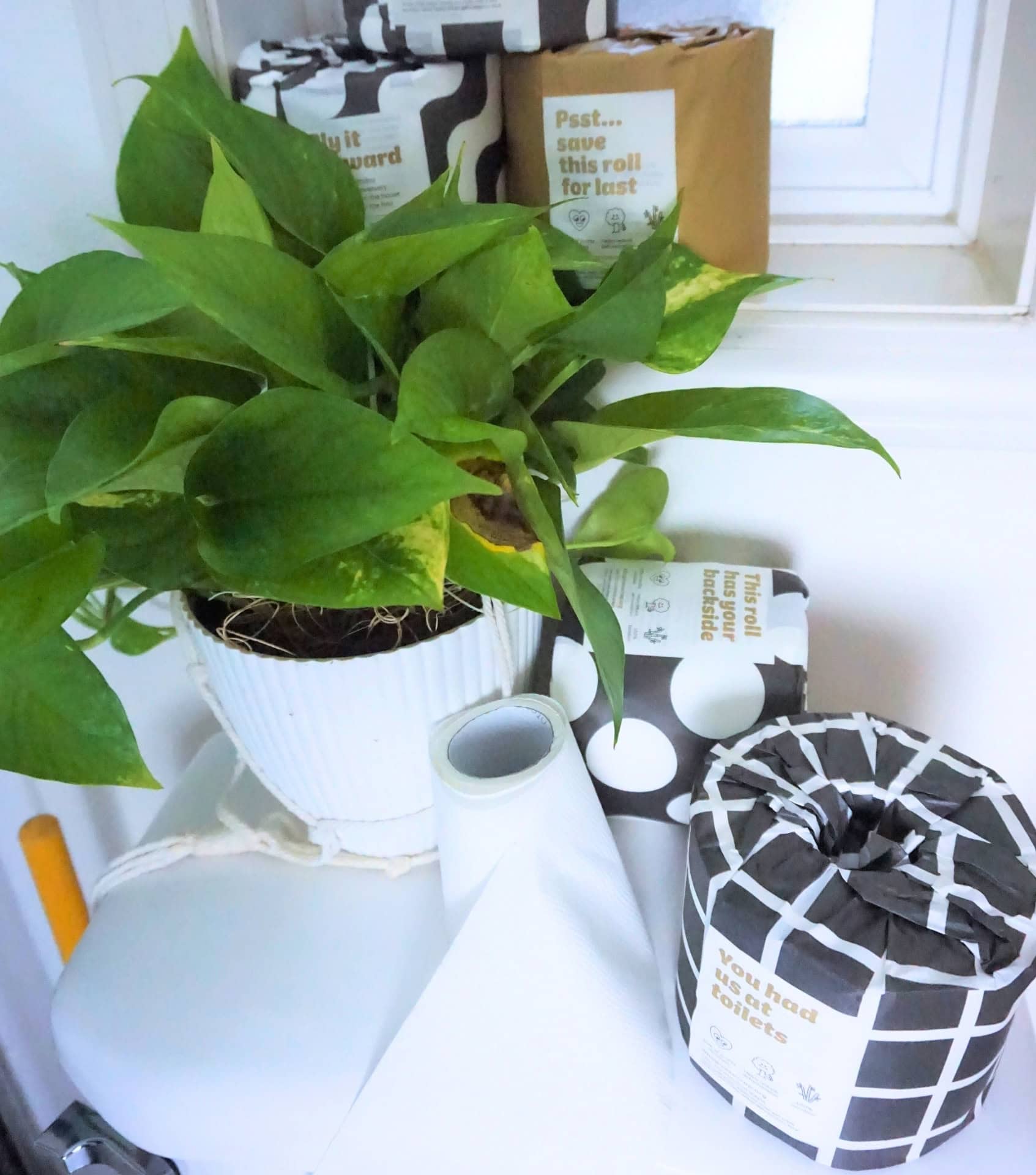
If you’re searching for the ‘poo-fect’ way to make your bathroom routine more eco-friendly (but love your soft toilet paper) then we suggest reaching for the best bamboo toilet paper. Like bamboo fabric, bamboo fibers can also be turned into ultra soft tissue that’s not only kinder to the planet than regular toilet paper, but also gentler on your posterior.
We’ve scoured the bamboo jungle (figuratively, of course) and wiped with (yep we’ve done a lot of physical testing) a number of rolls to find our favorite brands delivering a premium bathroom experience all the while reducing our environmental impact.
And these bamboo TP brands don’t just use low-impact materials but also prioritize ethical sourcing and low- or no-impact dyes.
Note: We now offer brand ratings that assess companies against 22 sustainability-related criteria, such as circularity, climate impact, and chemical use. Look out for the rated brands on the list below that have given us extra comfort when it comes to their eco credentials. You can find other rated brands in our directory.
Related Guides: What Are Forever Chemicals (PFAS)?, Non-toxic Toilet Paper
We independently research all featured brands, and we ask them to confirm their claims. In many cases we personally review recommended products. This post contains affiliate links which means we may earn a commission if you buy something. We explain this further in our Terms of Use.
Our Top Picks For The Best Bamboo Toilet Paper Brands
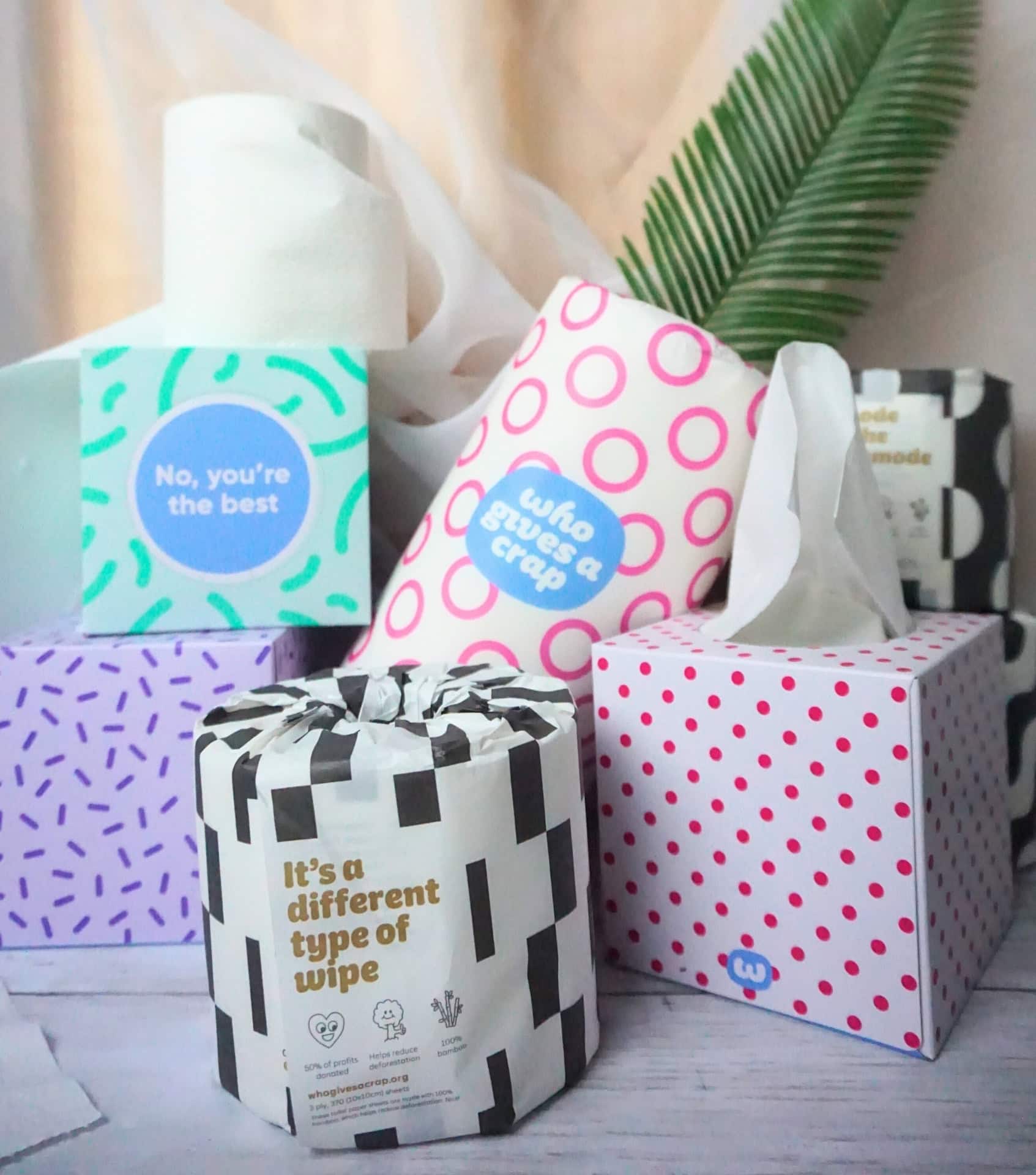
We’ve been using Who Gives a Crap’s bamboo toilet paper for years now and it never disappoints. Besides the fact that it’s one of the safest options on this list made without inks, dyes, or scents, this brand gives back 50% of its profits to help build toilets for those in need. Who Gives a Crap has been comprehensively rated by us – see the full rating.
Betterway’s 3-ply bamboo toilet rolls are made from FSC-certified and organically grown bamboo fibers. We’ve tested both their Classic White and Natural (unbleached) bamboo rolls and found them to be durable and strong. Betterway has been comprehensively rated by us – see the full rating.
Reel’s 100% organic bamboo toilet paper is the real deal. It comes individually wrapped in 100% recyclable or compostable paper and is certified “ready biodegradable.” Did we mention it’s one of the softest TP brands we’ve ever tried?
Index: Bamboo Toilet Paper Brands
- Who Gives A Crap Jump to brand
- Betterway Jump to brand
- Reel Jump to brand
- Save Trees Jump to brand
- Tushy Jump to brand
- Grove Collaborative Jump to brand
- ecoHiny Jump to brand
Who Gives A Crap

Compostable
All or some products are compostable, either in an industrial facility or at home
Ethical Sourcing
Raw materials have been sourced ethically with people and planet in mind.
Green Energy
Brand exclusively uses green energy to power their headquarters.
Plastic-free
All products are entirely plastic-free
Recycled materials
Some or all products are made with recycled materials
Thoughtful packaging
Product packaging has been designed and created with the end of life outcome in mind and can be easily recycled or composted.
B Corp
FSC®
B Corp
The B Corp Certification, administered by the nonprofit B Lab, recognizes companies that meet high standards of verified social and environmental performance, transparency, and accountability. Certified B Corps balance profit with purpose, committing to responsible practices that benefit workers, communities, customers, and the planet while embedding sustainability into their business model.FSC®
The FSC® (Forest Stewardship Council) certification ensures that wood, paper, and other forest-based materials come from responsibly managed forests that provide environmental, social, and economic benefits. Products bearing the FSC® label support biodiversity, protect the rights of forest communities and workers, and promote sustainable forestry practices.Price: $42 for 24 rolls
With Who Gives a Crap you never have to give a crap about your toilet paper containing any nasty stuff (other than your own). That’s because WGAC’s bamboo toilet paper doesn’t contain inks, dyes, or scents. What it does contain is sustainably-sourced bamboo from farmers who plant the bamboo on the borders of their small family farms to supplement their income.
Since its inception, this Certified B Corp has been donating 50% of its profits to improve sanitation and build toilets in the developing world with the help of several potty partners.
Their toilet paper is made in China by manufacturers who meet strict ethical and quality standards. Materials are also sourced nearby which means a smaller supply chain and shipping footprint. They also conducted a Life Cycle Analysis of their products to determine their total carbon output in order to plan how to reduce it, which they’re acting on by incorporating electric vehicles and renewable energy in their supply chain.
You can learn more about their mission in our podcast interview with founder Simon Griffiths.
Who Gives A Crap has been rated by Sustainable Jungle. See the full rating.
My Personal Review of Who Gives A Crap’s Bamboo Toilet Paper:
“I think WGAC makes some of the softest bamboo toilet paper I’ve tried—and I’ve tried a fair number!”
Review by Amber McDaniel, SJ’s Head of Content
For a more, see Amber’s detailed WGAC testing and review.
Betterway


Compostable
All or some products are compostable, either in an industrial facility or at homeEthical Sourcing
Raw materials have been sourced ethically with people and planet in mind.
Non-toxic
All products are made with ingredients or materials that are currently considered non-toxic
Organic
Products are made from organic materials.
PFAS Free
Products have been tested and verified to be free of PFASPlastic-free
All products are entirely plastic-free
Small business
This brand is a small business run by less than 15 people
Sustainable Materials or Ingredients
Either all or most products are made with sustainable materials or ingredients.Thoughtful packaging
Product packaging has been designed and created with the end of life outcome in mind and can be easily recycled or composted.
Woman Owned
This brand is owned by a woman or a group of women.
FSC®
FSC®
The FSC® (Forest Stewardship Council) certification ensures that wood, paper, and other forest-based materials come from responsibly managed forests that provide environmental, social, and economic benefits. Products bearing the FSC® label support biodiversity, protect the rights of forest communities and workers, and promote sustainable forestry practices.Price: $55 for 24 rolls
Betterway’s premium organic bamboo toilet rolls are made from FSC-certified 100% bamboo fibers. You’ll enjoy 3-ply sheets embossed for extra strength and a whopping 360 tree-free sheets per roll.
If you’re not convinced it’s the softest bamboo toilet paper, there’s a happy wiping guarantee with 100 days to decide whether you want to wipe the better way.
Betterway works with manufacturing partners who are BSCI-certified. The bamboo pulp for their bamboo toilet paper is sourced from organically grown and FSC-certified groves. They’re also owned by small farmers as a side crop to supplement their income.
Betterway has been rated by Sustainable Jungle. See the full rating.
My Personal Review of Betterway’s Classic White 3-ply Organic Bamboo Toilet Paper:
“The paper in these Classic White rolls is sturdy enough that I don’t burn through tons of sheets at once (especially if pairing it with a bidet, like I do), but it still breaks down easily and stays septic-safe. That balance matters to me since I grew up with so-called “septic safe” rolls that basically felt like wiping with tissue paper. While these are obviously not as soft as synthetic softened TPs that have taken the toilet paper aisle by storm, these are nothing like tissue paper. Plus, the white finish comes from a non-toxic, elemental chlorine-free process, which I love.”
Review by Amber McDaniel, SJ’s Head of Content
Reel
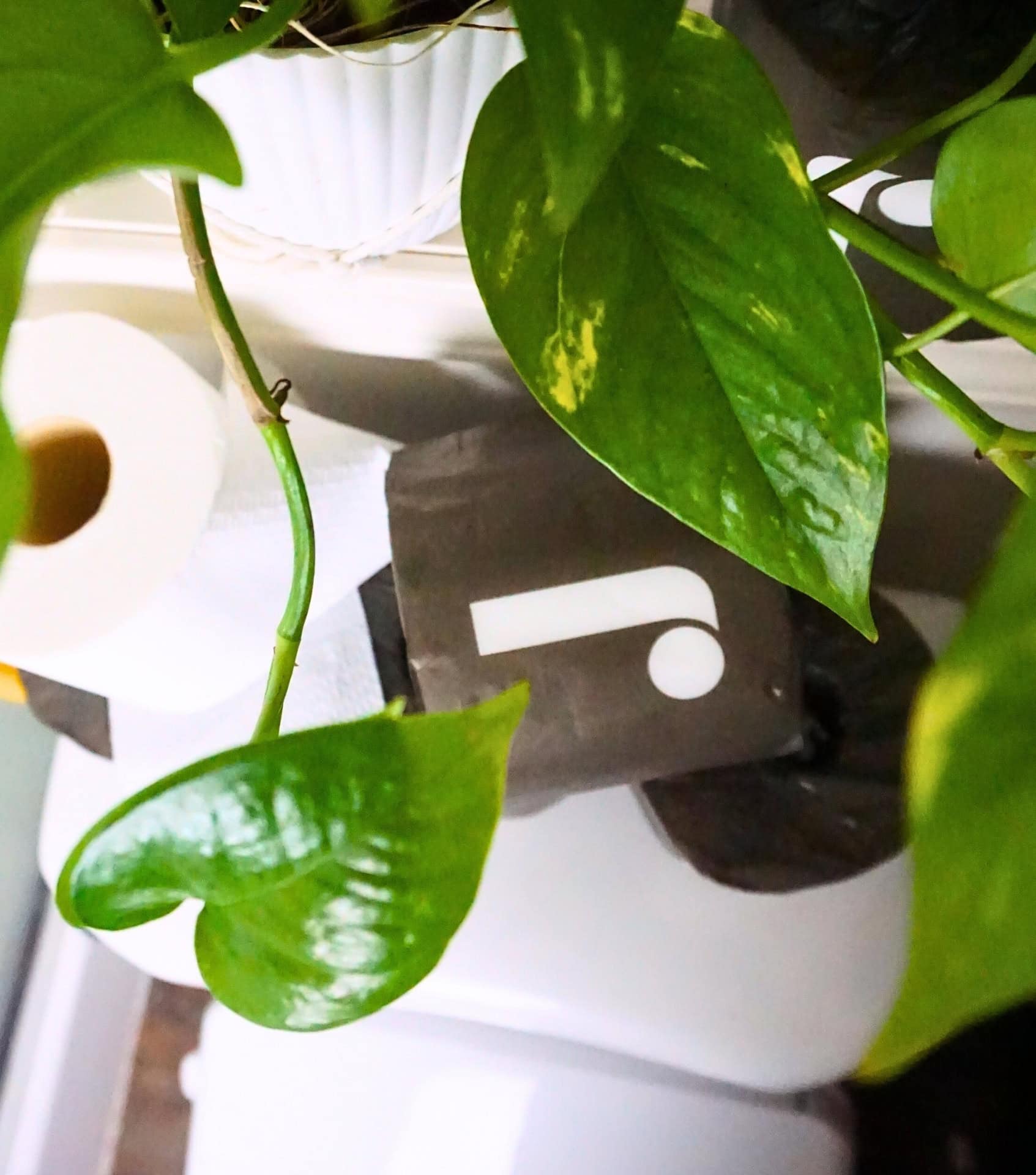
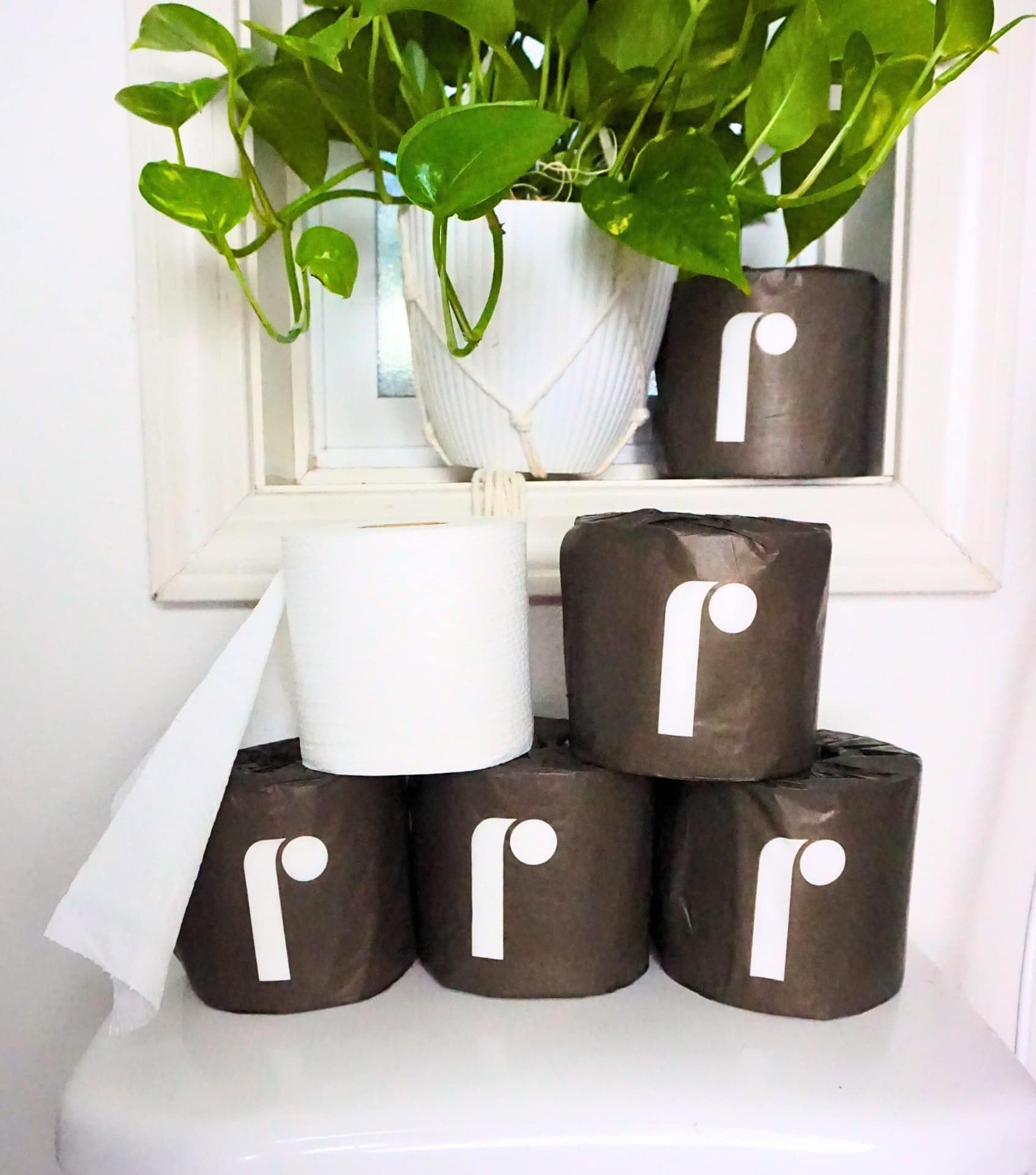
Reel has not been rated.
Price Range: $44 for 24 rolls
Reel’s 3-ply toilet paper has been certified “ready biodegradable”, meaning it can be broken down by microorganisms in an aerobic environment within a certain time frame and degree.
Their bamboo toilet paper is whitened using elemental chlorine-free (ECF) technology. This method is recognized by the EPA as one of the best available technologies for bleaching paper products. The rolls are also free from chlorine, BPA, inks, dyes, or fragrances, and they come individually wrapped in 100% compostable or recyclable tissue paper.
Reel is a US-based, Black-owned (co-owned) toilet paper brand. Their toilet paper manufacturers are based in China and have obtained the FSC (Forest Stewardship Council) chain of custody certification. With every box of bamboo toilet paper sold, Reel contributes to reforestation projects worldwide through One Tree Planted.
My Personal Review of Reel’s Toilet Paper:
“Reel ass-isted me in testing their bamboo rolls, and I found them to be some of the most durable bamboo toilet paper I’ve tried. Despite that strength, it doesn’t sacrifice softness and still delivers a comfortable, reliable wipe.”
Review by Amber McDaniel, SJ’s Head of Content
Save Trees
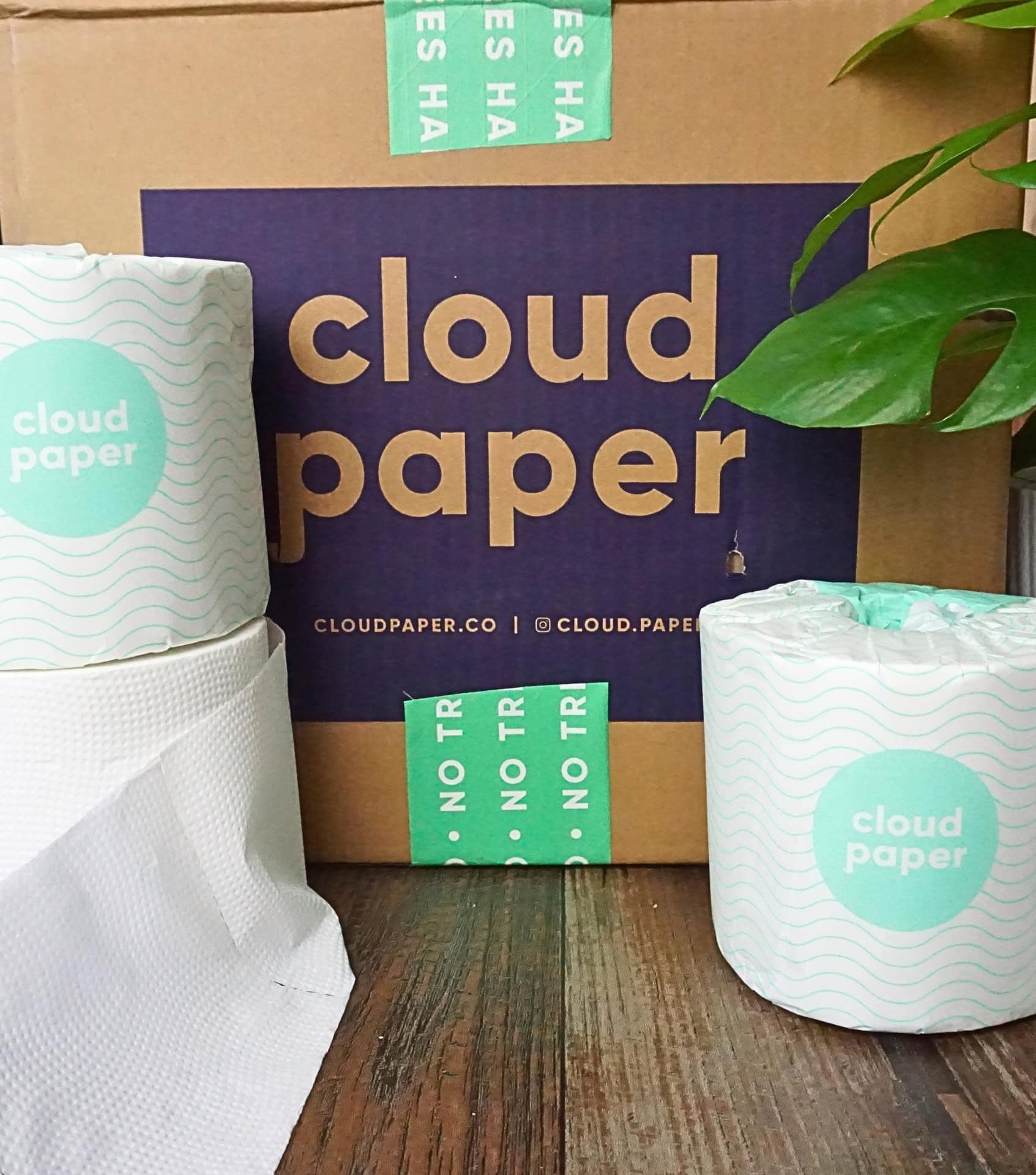
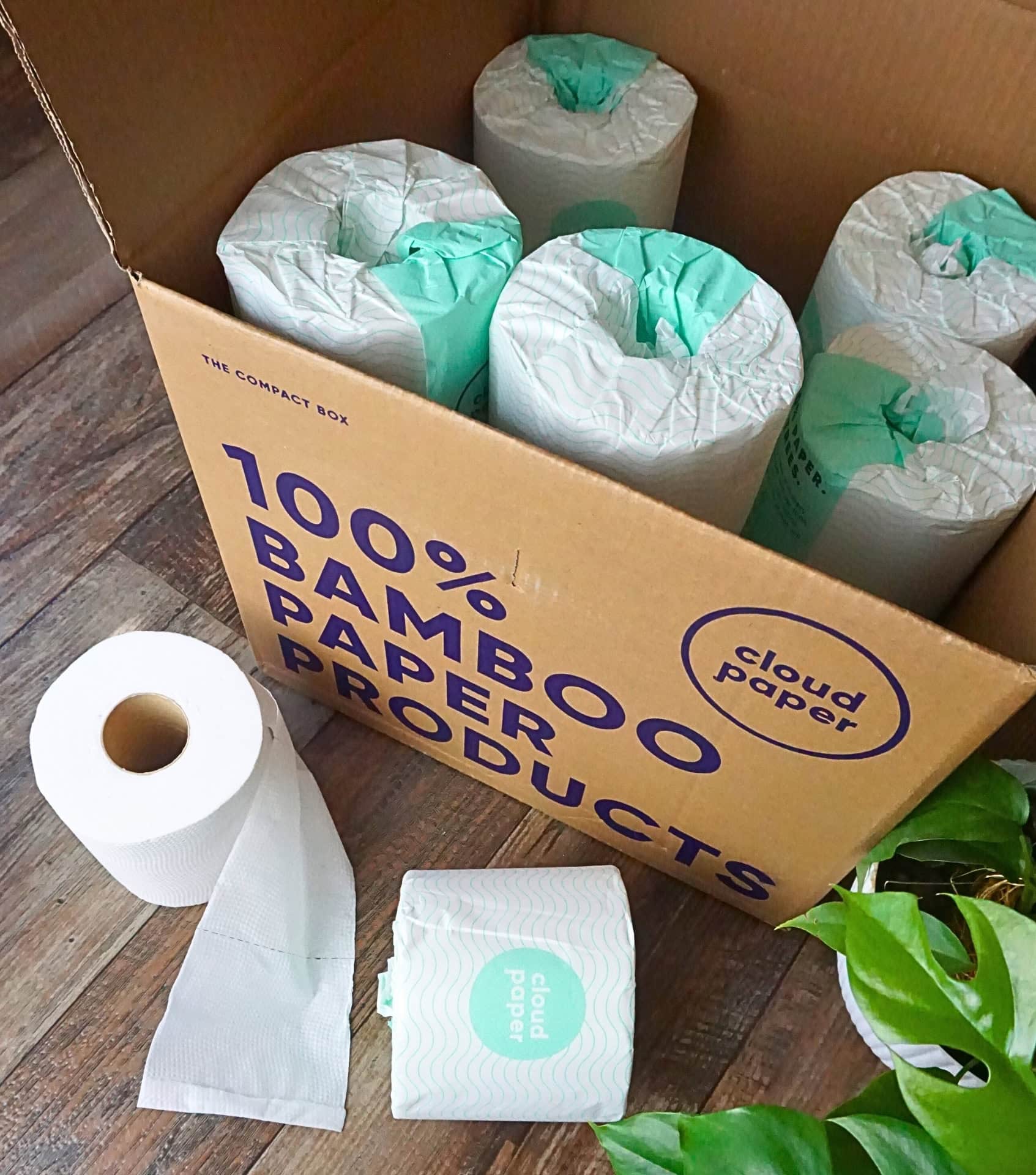
Save Trees has not been rated.
Price Range: $55 for 24 rolls
Seattle-based Save Trees (previously Cloud Paper) offers up one of the cheapest bamboo toilet papers (in price, but not in quality!) and it’s not afraid to make the comparison on its website. You can buy 3-ply 100% bamboo jumbo rolls of toilet paper in packs of 24 or 80.
But you’re not just saving money if you choose to shop from Save Trees. You’re saving your health and our planet’s. The rolls are made from 100% FSC-certified bamboo, free from scents, dyes, BPA, chlorine bleach, and pesticides. Apart from bamboo, the only other ingredient is a small amount of cornstarch adhesive which attaches the first sheet to the roll.
The bamboo is sourced from family-owned farms in Asia and manufactured in China. All recyclable packaging is entirely plastic-free. Instead, the rolls are individually wrapped in recycled paper, while the boxes are made of post-consumer recycled content.
Save Trees offsets shipping emissions through Carbonfund and plants a tree for every order. This best-value bamboo toilet paper brand also gives back to local communities via its partnership with Food Lifeline.
My Personal Review of Save Trees’ Toilet Paper:
“I tried these 3-ply rolls and I have to say, I’m seriously impressed! The softness is next-level—it’s like wiping with a fluffy cloud (or what I imagine it would feel like). What makes these stand out from the rest is the weave texture on each sheet. It gives them that extra soft feel, but they’re still safe for septic systems and totally free of any harsh chemicals.”
Review by Amber McDaniel, SJ’s Head of Content
Tushy
Tushy has not been rated.
Price Range: $39 for 16 rolls
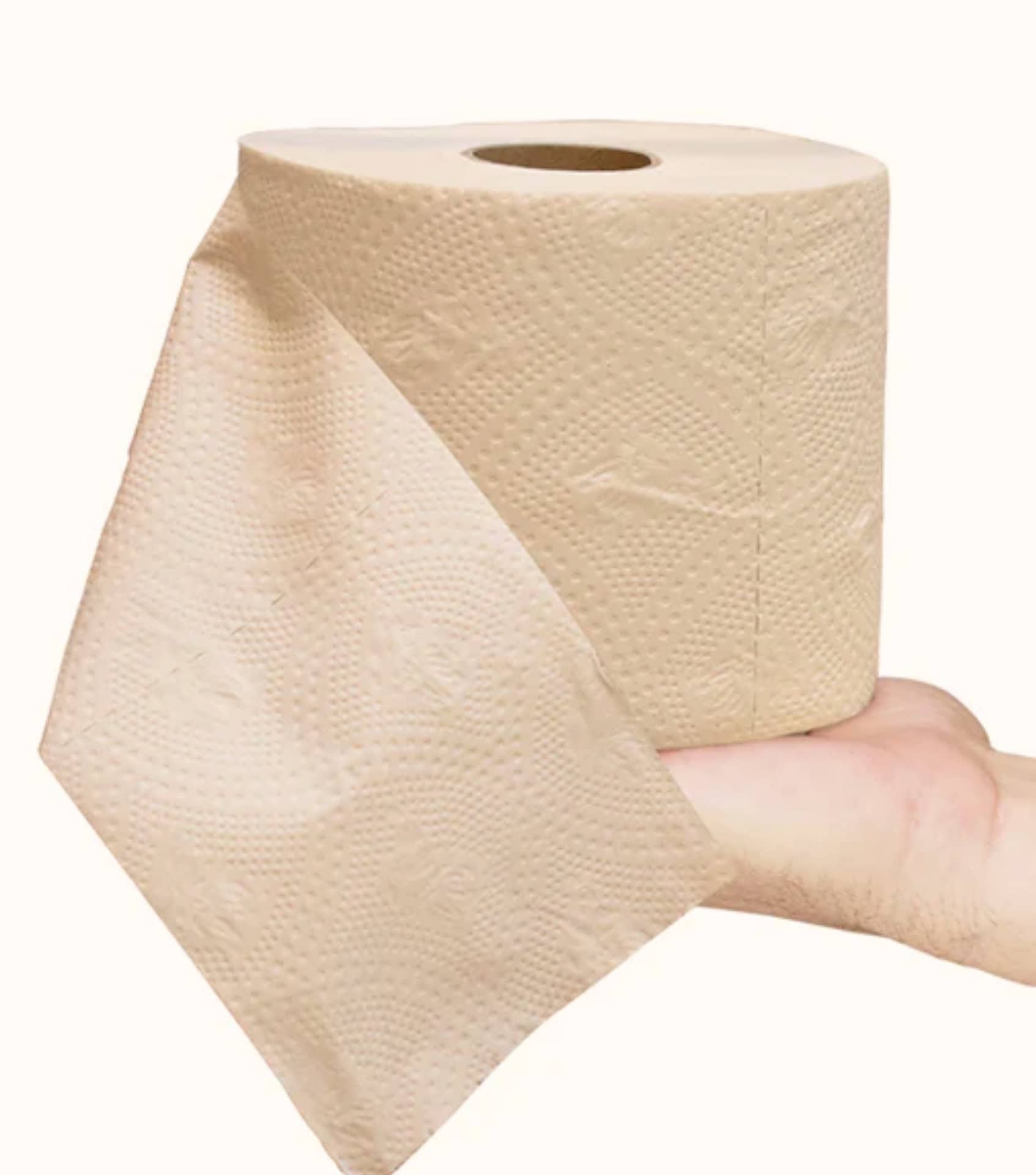
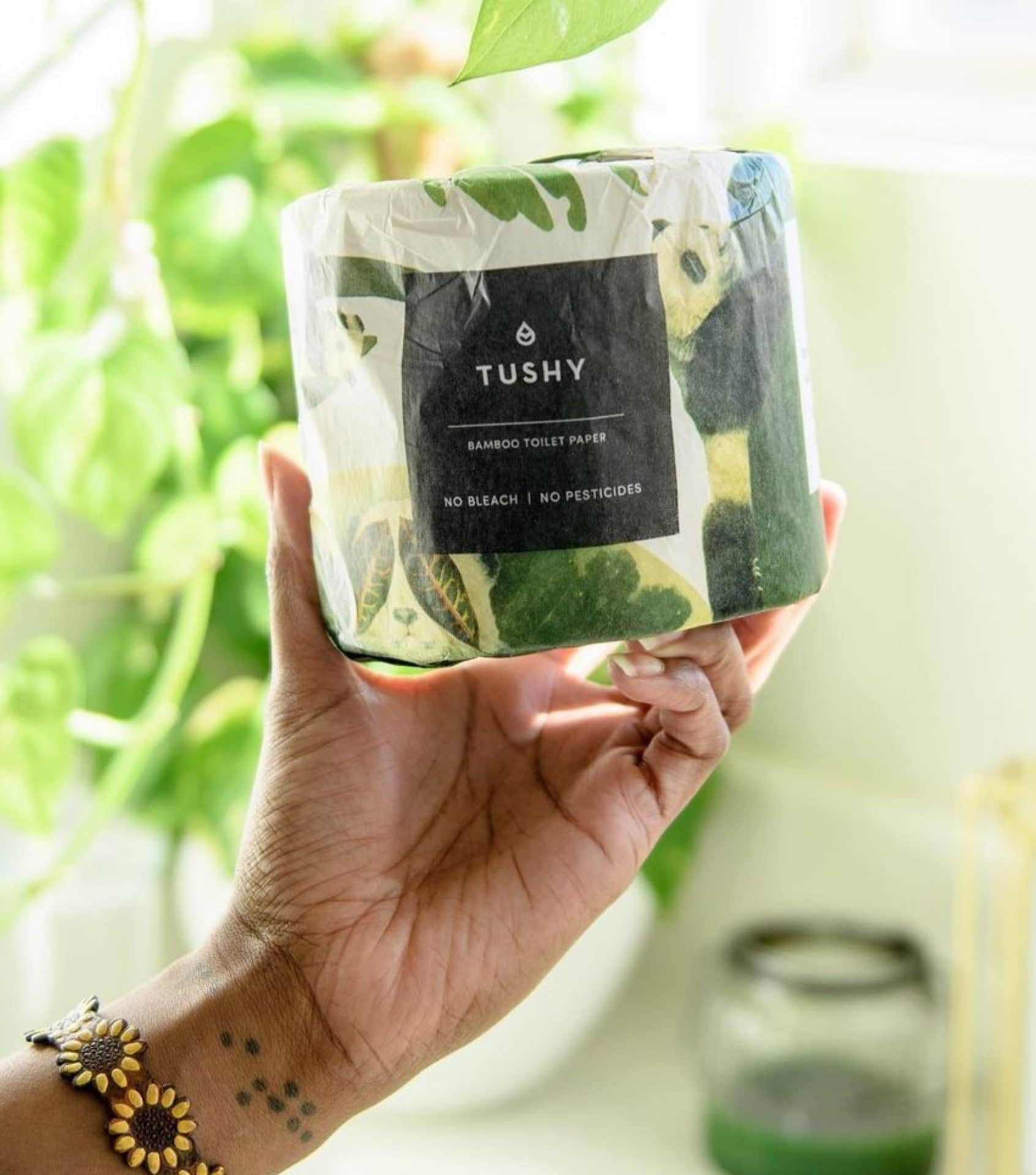
Tushy is best known for its bidets, but their soft bamboo toilet paper makes for a natural addition to their repertoire. Made from 100% bamboo, you get to dry your cheeks with the softest, 3-ply paper a butt can get. The rolls are naturally hypoallergenic and are sans irritating bleach, dyes, or BPA.
Depending on how quickly you go through toilet paper, you can choose whether you get a delivery every one, two, three, or four months. Each roll is hand-packaged in paper and shipped plastic-free. Production of Tushy’s unbleached bamboo toilet paper is produced in Chengdu, China. In the interest of transparency, Tushy published a factory tour.
Grove Collaborative
Grove Collaborative has not been rated.
Price Range: ~$24 for 18 rolls
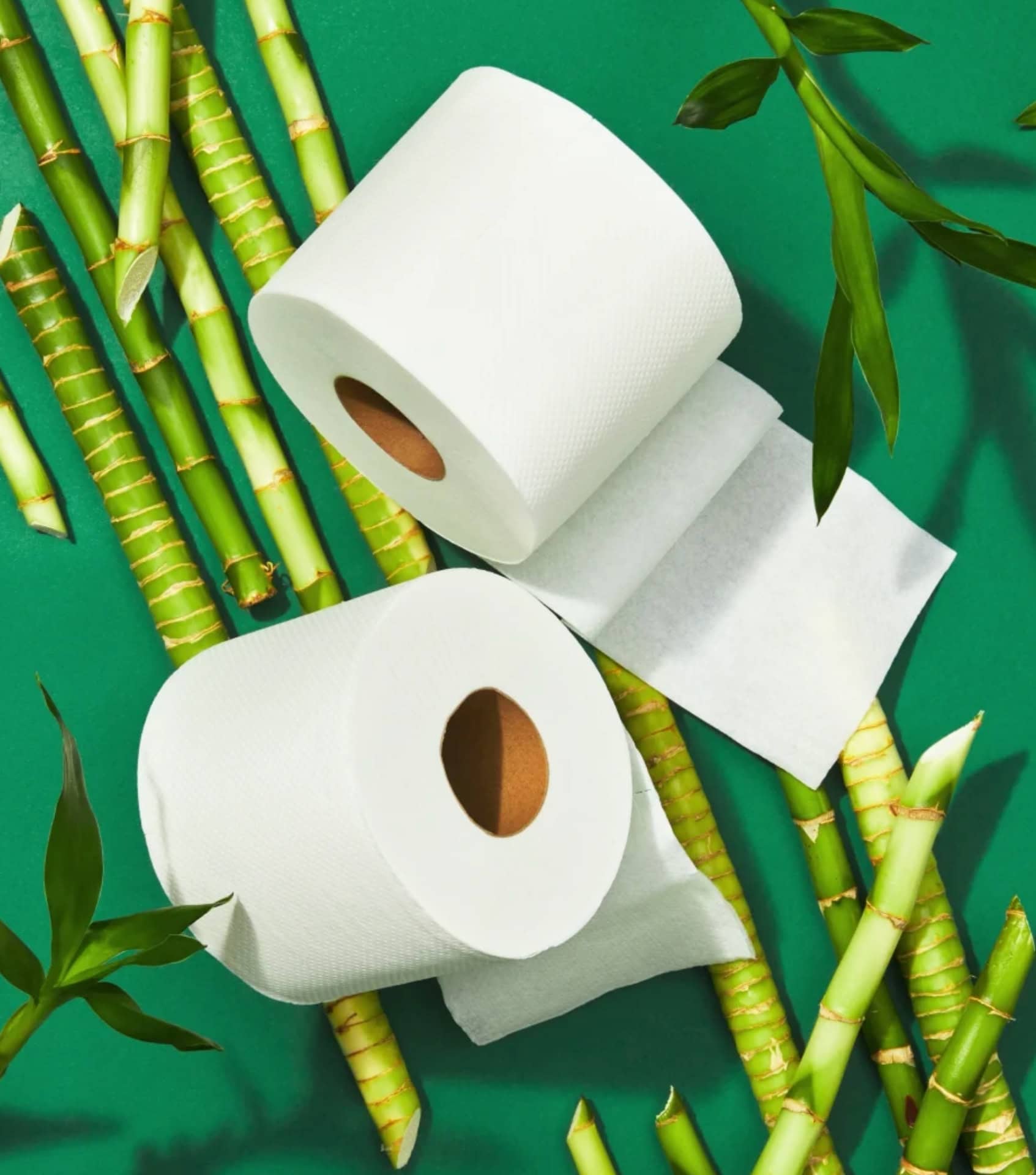
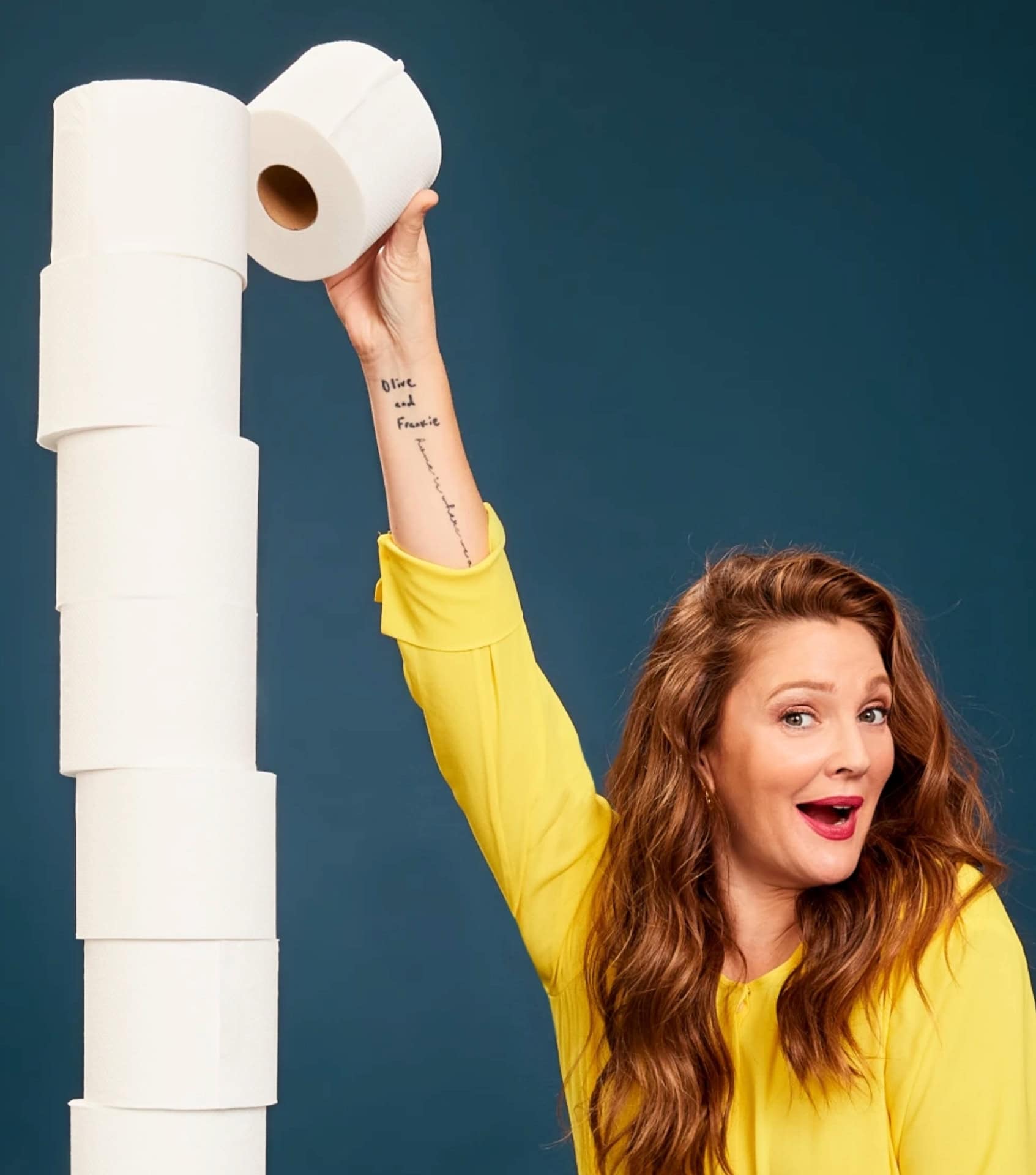
Grove Collaborative is a household name in the cleaning space. Aside from offering eco-friendly bathroom products, they also offer their own Grove-crafted brand of super soft bamboo toilet paper. Made from FSC-certified bamboo fibers, the TP comes in soft, strong, thick 3-ply sheets that are proven to be stronger than recycled-paper alternatives. Dyes, inks, or scents are all left out, with you and your family’s health in mind.
As a Certified B Corp and Public Benefit Corporation, Grove Collaborative is recognized as a business doing good. It ships all orders 100% carbon-neutral, uses plastic-free packaging, and supports a whole grove of nonprofits like The Nature Conservancy and rePurpose Global.
Transparency is at the core of what they do, and you can read their Impact Report to learn how they plan to drive meaningful change year over year.
ecoHiny
ecoHiny has not been rated.
Price Range: $58 for 24 rolls
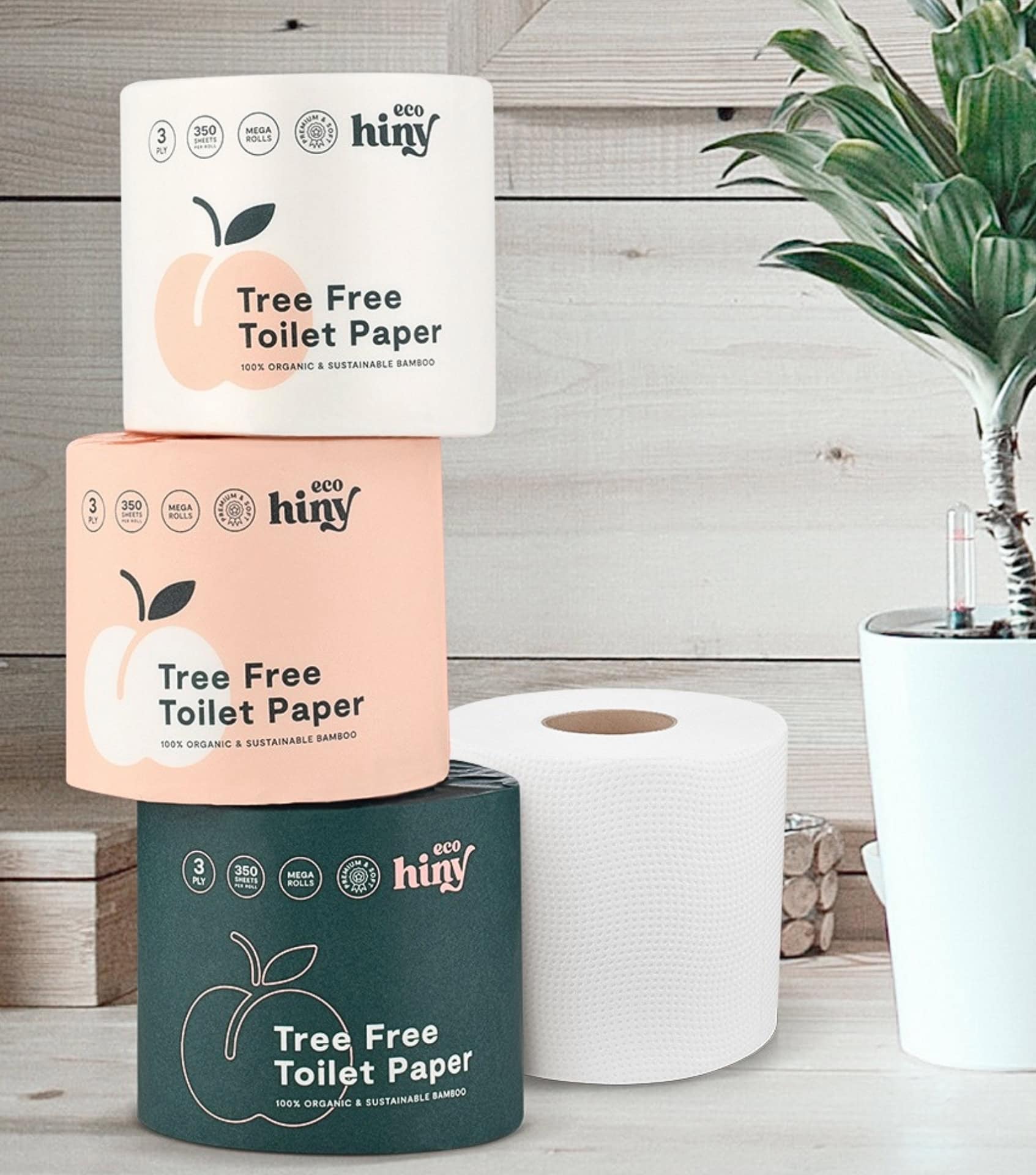
ecoHiny’s tree-free 3-ply toilet paper comes in mega rolls of 350 sheets (whereas other comparable brands only offer 300 sheet rolls, meaning 17% more tissue for the same price).
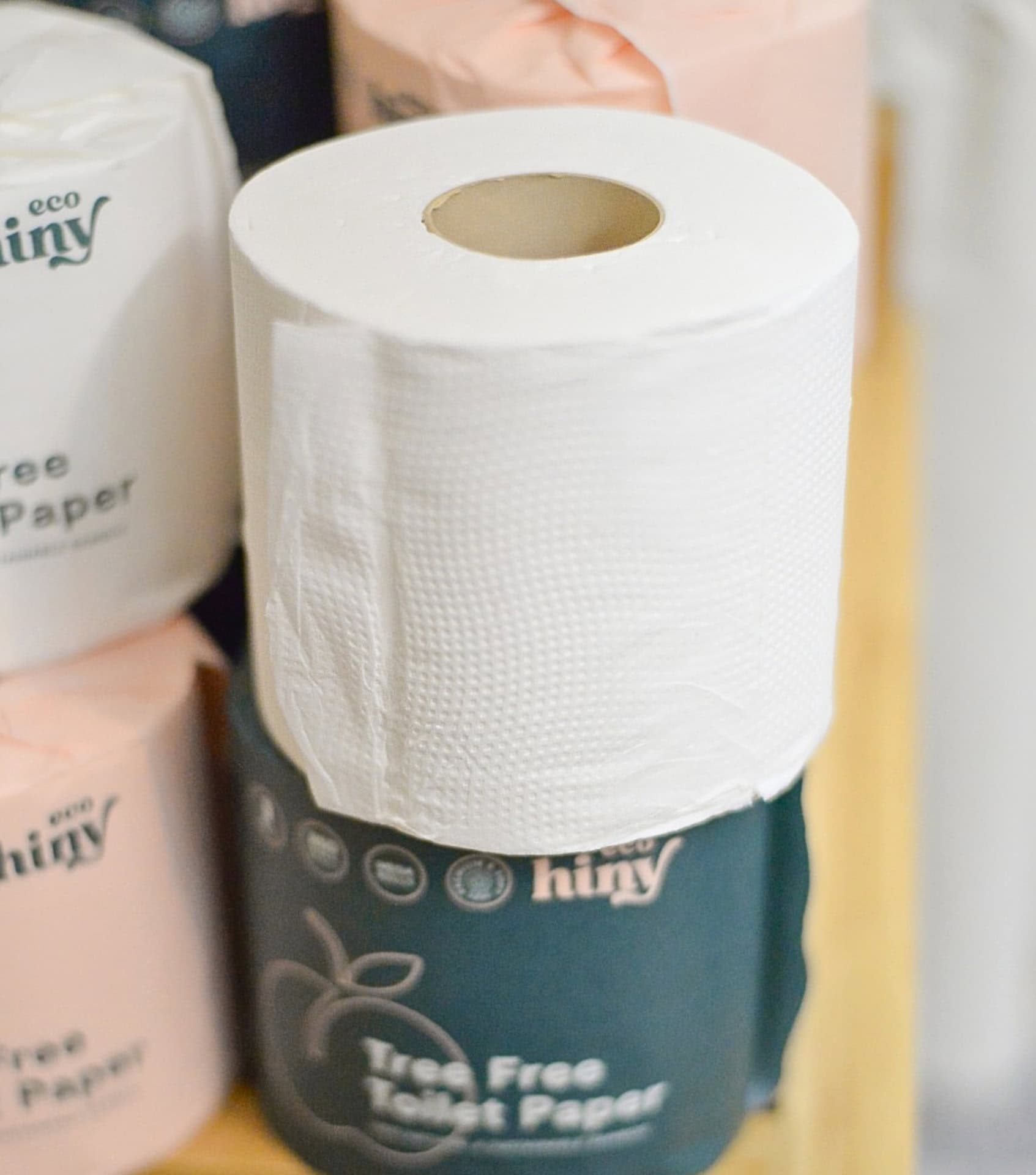
Even better than toilet paper that lasts, however, is toilet paper that’s hypoallergenic, BPA-free, elemental chlorine-free, fragrance-free, and dye-free. ecoHiny’s FSC-certified bamboo toilet tissue ticks these boxes, too. Each roll is individually wrapped with recycled materials to ensure freshness wherever you might roam. Even the core of each roll is made from bamboo.
They purchase carbon offsets for all product shopping emissions. While ecoHiny is an American company, they chose China for its resources and manufacturing base to keep production centralized.
Why Use Toilet Paper Made From Bamboo?
Generally bamboo toilet paper is considered a more sustainable alternative compared to traditional paper made from virgin wood pulp. However, it should be harvested from sustainably managed forests and must not contribute to deforestation. The most common certification is Forest Stewardship Council (FSC).
Additionally, bamboo offers:
- Rapid growth: Bamboo is one of the fastest-growing plants on Earth, with some species able to grow up to 35 inches in one day. The whole plant also doesn’t need to be killed to harvest it. This means it can be harvested more frequently with little regrowth time.
- Low environmental impact: Bamboo requires less water and fewer pesticides and fertilizers compared to many tree species. Its cultivation is often considered more environmentally friendly.
- Renewable resource: Bamboo is a renewable resource because it regrows from its root system after harvesting and doesn’t require replanting.
- Carbon sequestration: Bamboo can sequester more carbon dioxide from the atmosphere than other tree species in similar regions.
- Soil health: Bamboo can help improve soil health by preventing erosion and adding nutrients back into the soil.
One of the performance advantages of bamboo toilet paper is that it often has longer fibers, which can make it softer and more absorbent. Furthermore, tree-free toilet paper is often praised for its strength and durability. It doesn’t easily disintegrate when wet, which can be a common issue with some traditional toilet paper.
How We Chose The Best Bamboo Toilet Tissue
When choosing the top bamboo toilet paper brands, we focused on more than just softness and strength. Each brand was reviewed against environmental impact, material sourcing, certifications, and social responsibility.
Materials & Sourcing
Bamboo toilet paper should be made from sustainably grown bamboo (ideally organic and harvested without destroying the plant). We prioritized brands using FSC-certified bamboo, ensuring responsible forestry and biodiversity protection.
Supply Chain & Labor Practices
We looked for brands that support smallholder bamboo farmers or cooperatives and that uphold fair labor practices throughout production. Much of the best bamboo TP is produced in facilities audited under frameworks like BSCI (Business Social Compliance Initiative) or SEDEX, which verify worker safety, fair pay, and ethical manufacturing.
Carbon & Packaging Practices
The best brands also think beyond the roll. We favored companies actively reducing or offsetting carbon emissions, minimizing water use, and avoiding virgin plastics. All packaging used by our featured brands is plastic-free, typically made from recycled paper, cardboard, or compostable materials.
Community & Giving Back
Wiping guilt-free feels even better when brands give back. We prioritized companies that donate profits or products to improve sanitation access, fund tree planting, or support global clean water and hygiene initiatives.
We also included B Corp brands that are certified as balancing purpose and profit while maintaining high standards of transparency and accountability.
FAQs About Bamboo Toilet Paper
Is bamboo toilet paper septic safe?
Yes, most bamboo toilet paper is septic-safe and breaks down quickly in water. Because bamboo fibers are naturally long and strong yet biodegradable, they dissolve more easily than many recycled or ultra-soft tree-based rolls. Just make sure to choose brands that specify “septic safe” or “ready biodegradable” on their packaging (like Betterway and Reel, which we tested).
What is the best bamboo toilet paper?
The best bamboo toilet paper balances softness, strength, and sustainability. We rate Who Gives A Crap and Betterway among the top performers for their certified bamboo sourcing, comfort, and plastic-free packaging. Each brand has slightly different perks (from softness to charitable impact) so the “best” really depends on your personal priorities.
Is bamboo toilet paper sustainable?
Yes, when it’s FSC-certified, responsibly manufactured and uses a lower toxin approach to making the rolls white (unbleached is even better). Bamboo grows rapidly, requires minimal water and pesticides, and regenerates without replanting, all of which make it a renewable resource. The key is to buy from brands using ethically sourced bamboo and avoiding chlorine bleach or plastic packaging.
Why is bamboo toilet paper better than traditional toilet paper?
Traditional toilet paper often relies on virgin tree pulp, contributing to deforestation and higher carbon emissions. Bamboo toilet paper offers a far lower impact alternative: it’s tree-free, regenerates quickly, and can sequester more carbon per hectare than most trees. It’s also naturally hypoallergenic, making it better for both your skin and the planet.
Is bamboo toilet paper soft?
Surprisingly, yes! While bamboo toilet paper doesn’t feel exactly like ultra-soft supermarket brands that use chemical softeners, it’s still smooth, durable, and comfortable. Some brands (like Who Gives A Crap and Betterway) produce notably soft rolls without synthetic coatings, proving you can have both comfort and better sustainability performance.
Does bamboo toilet paper contain chemicals or bleach?
Many leading brands are unbleached or whitened using elemental chlorine-free (ECF) processes, which are much safer than traditional bleaching. Look for options labeled BPA-free, dye-free, and fragrance-free if you’re aiming for non-toxic or hypoallergenic rolls.
Final Thoughts On Bamboo Toilet Paper
As we wrap up this exploration of eco-friendly bamboo toilet paper, it’s clear that this alternative is more than just a trend. It’s a responsible choice that aligns with our growing awareness of the importance of sustainable living. While it may seem like a small change, collectively, these choices can have a significant impact on our planet’s health.
So, the next time you reach for a roll of toilet paper, consider making the switch to bamboo (or other eco-friendly, non-toxic, or reusable toilet paper alternatives).
Don’t forget to spread the word about the wonders of tree-free toilet paper by sharing this list with your fellow wipers!
Editor’s note: This article was originally published in September 2023 and updated in October 2025 to include new images, refreshed copy, and an expanded FAQ section.

Hailey is a full-time world traveler and a part-time content writer with a Bachelor’s Degree in Wildlife Ecology and Conservation from the University of Florida. She loves exploring the world by participating in local sustainability projects. Her project highlights include volunteering at a farm animal sanctuary in Hawaii, a butterfly biodiversity garden in Laos, and an ethical elephant sanctuary in Thailand. All experiences which have further developed her passion for universal animal welfare and advocacy. In her free time you might find her cuddling stray animals, hand crafting, café hopping, and literally hugging trees.