













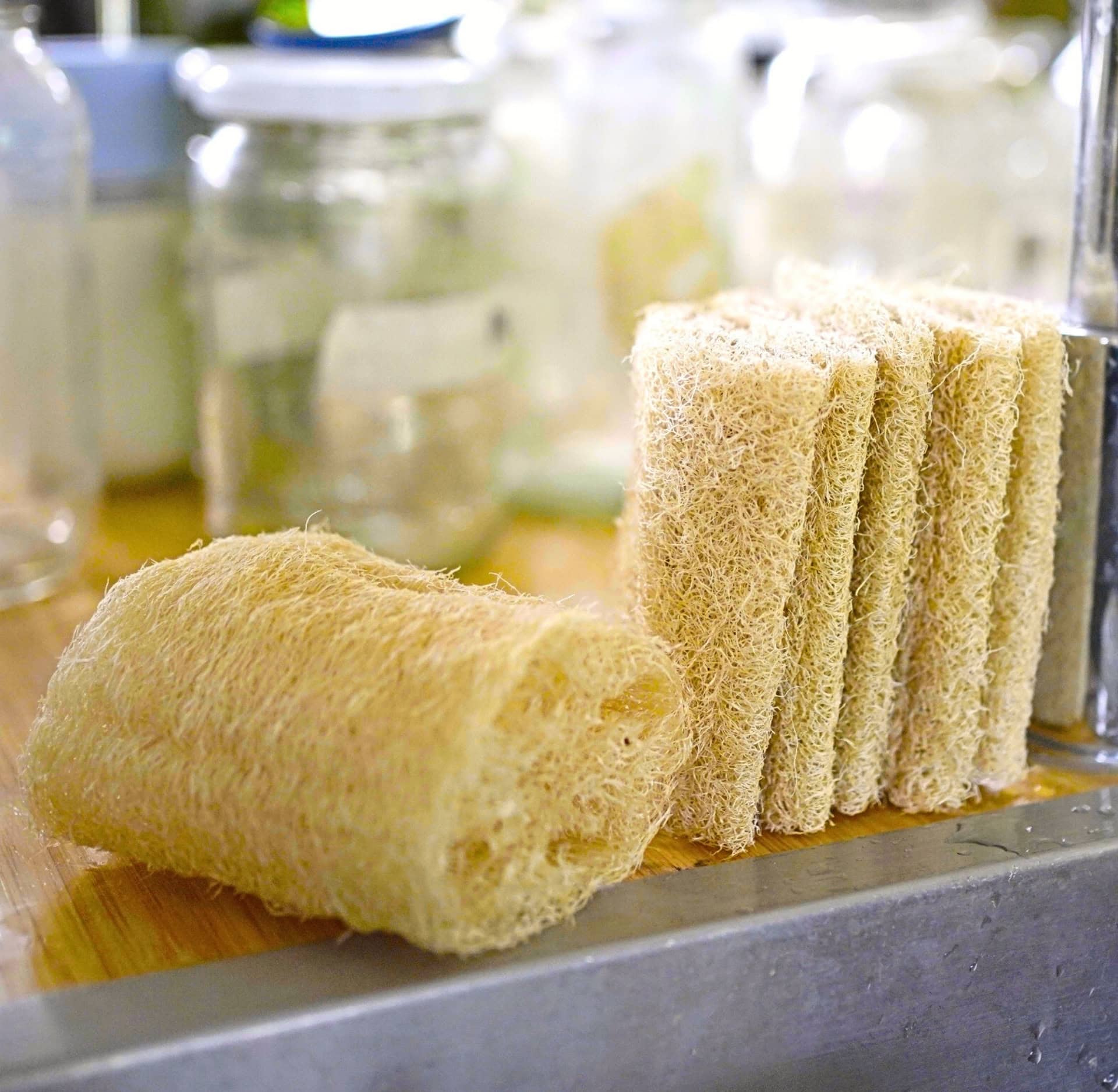
What image springs to mind when you think of a reusable loofah? Bright pink and purple poofs, maybe? You probably don’t think of a plant, but that’s actually what it is.
The original sustainable loofah (Luffa aegyptiaca) is a member of the gourd family that grows in tropical and subtropical regions. Its fibrous inner structure has been used for centuries as a body scrubber and more.
So when we talk about eco-friendly loofahs, we’re actually talking about the real deal—not those cheap plastic imitators.
Why scrub using synthetic materials when there are non plastic alternatives that are just as effective and affordable (and won’t result in microplastic pollution)?
We independently research all featured brands, and we ask them to confirm their claims. In many cases we personally review recommended products. This post contains affiliate links which means we may earn a commission if you buy something. We explain this further in our Terms of Use.
Our Shower Fresh Favorite Plastic Loofah Alternatives
Plastno’s Scrub Sponge is a kitchen essential made from natural loofah and plant-based cellulose. Durable, effective, and certified industrially compostable, each sponge is made in BSCI-certified facilities and ships plastic-free and carbon neutral.
The environmentally friendly loofahs from ZWS Essentials are tough enough to be used on grime while being gentle enough for the face. We found that they had all the exfoliating power we needed without leaving our skin red raw.
EcoRoots‘ natural loofah doesn’t just prevent further ocean microplastic pollution but helps clean up that which already exists.
Index: Eco-Friendly Body Scrubbers & Loofahs
- Plastno Jump to brand
- EcoRoots Jump to brand
- ZWS Essentials Jump to brand
- Brush With Bamboo Jump to brand
- etee Jump to brand
- Zefiro Jump to brand
Plastno



Circular
All or some products are circular in nature - such that no part of the product needs to end up in landfill at the end of its life
Compostable
All or some products are compostable, either in an industrial facility or at home
Ethical Sourcing
Raw materials have been sourced ethically with people and planet in mind.
Non-toxic
All products are made with ingredients or materials that are currently considered non-toxic
Refillable
Product packaging can be refilled with more product, either at a physical store or via a return program.
Small business
This brand is a small business run by less than 15 people
Sustainable Materials or Ingredients
Either all or most products are made with sustainable materials or ingredients.
Thoughtful packaging
Product packaging has been designed and created with the end of life outcome in mind and can be easily recycled or composted.
Vegan
This brand does not use any animal products or by-products in their products
Zero Waste
Products are made with a low or zero waste approach where ideally no or limited waste is created throughout the production process or at the end of life.
BPI
Leaping Bunny
TUV
BPI
The BPI Certification program is a third-party verification of ASTM standards for compostable products in North America, and the starting point for every company wishing to make compostability claims on products and packaging.Leaping Bunny
The Leaping Bunny certification, managed by the Coalition for Consumer Information on Cosmetics (CCIC), is the globally recognized gold standard for cruelty-free products. It ensures that neither a company’s finished products nor their ingredients are tested on animals at any stage of development. Brands must also agree to independent audits and supplier monitoring, guaranteeing genuine cruelty-free commitment across their entire supply chain.TUV
The TÜV certification is issued by independent TÜV organizations such as TÜV SÜD, TÜV Rheinland, or TÜV Nord. It verifies that products, systems, or manufacturing processes meet strict safety, quality, and environmental standards in line with national and international regulations. TÜV marks are widely recognized as symbols of tested safety, reliability, and compliance across industries ranging from electronics and textiles to sustainability and management systems.Price: $12 (3 loofah set)
Plastno’s Scrub Sponge combines natural loofah and plant-based cellulose to deliver a biodegradable, plastic-free alternative to conventional kitchen sponges. Tough on messes but gentle on the planet, it’s ideal for scrubbing dishes, countertops, and more—without leaving microplastics behind.
Crafted from renewable plant materials, this durable sponge offers effective cleaning power while safely breaking down in industrial composting facilities. The loofah layer provides scrubbing strength, while the cellulose core adds absorbency—making it both efficient and sustainable.
Made in BSCI-certified facilities and shipped using plastic-free, FSC-certified packaging with carbon-neutral delivery, the Scrub Sponge is part of Plastno’s mission to make everyday cleaning tools better for people and the planet.
Plastno has been rated by Sustainable Jungle. Find the full rating here.
EcoRoots


EcoRoots has not been rated.
Price Range: $4
EcoRoots’ natural loofahs are exactly that—a sustainable and effective cleaning product that is package-free, cruelty-free, zero waste, made from plant fibers, and 100% compostable and biodegradable.
It can be used as a heavy-duty dish sponge for about four to six weeks or longer in the bathroom for either dead skin exfoliation or removal of ingrown hairs. Once you’re done with it, just put it in your backyard compost or bury it, and it will decompose within 30 days.
Not only does EcoRoots have one of the best loofah alternatives, but the shop itself is also one of our favorite ethical alternatives to Amazon.
The Colorado-based brand combines affordability with sustainability to provide some of the eco-friendly versions (AKA made of natural materials) of most of our everyday essentials for the home and entire body.
They ship plastic-free and only use recyclable or compostable materials. Not only do they create products that protect our planet, but they also donate a portion of every sale to Ocean Conservancy through their membership with 1% for the Planet.
ZWS Essentials


ZWS Essentials has not been rated.
Price Range: $1–$22
As one of the best zero waste online stores, it’s no suprise ZWS Essentials offers non-plastic loofah sponges made from sustainably harvested loofah.
Soft enough to not scratch the non-stick coatings on your eco-friendly cookware, but tough enough to clean tubs and grout, it’s suitable for all your cleaning needs. If you specifically want to know what to use in the shower instead of a loofah, check out their exfoliating Loofah Facial Disc.
Both body and kitchen loofahs are available in singles or packs and are fully home compostable in 30 days along with the paper label that serves as its only packaging.
Everything ZWS Essentials offers is plastic-free, cruelty-free, palm oil-free, mostly vegan, and shipped carbon-neutral. ZWS is also a member of 1% for the Planet. If you find yourself looking for zero waste stores in LA, say hi to them in person.
My Personal Review of ZeroWasteStore.com’s Loofah Facial Disc:
“I love ZWS’ cotton rounds, but sometimes, I need a little bit more exfoliating power, so I also tried out their Loofah Facial Disc. Smaller and more flexible than their standard loofah, it’s ideal if you want to unclog pores, remove dead skin cells, and promote blood circulation. And while it is coarse, it’s not overly abrasive in such a way that leaves my skin feeling raw and uncomfortable.”
Review by Amber McDaniel, SJ’s Head of Content
Brush With Bamboo


Brush With Bamboo has not been rated.
Price Range: $20
Brush with Bamboo is one of our favorite bamboo toothbrush makers, but they’re out to clean more than just your chompers.
Their Heirloom Mayan Loofah Scrubbers are made of natural loofahs sourced from a single Mayan family farm in Guatemala that uses traditional, original farming methods. These chemical and plastic-free loofah sponges are sturdy enough to last months and are compostable at end-of-life.
It comes shipped in recycled and recyclable packaging. And all their products are vegan, cruelty-free, and USDA certified bio-based, and the company is Green America certified.
etee


etee has not been rated.
Price Range: $4–$20
etee has an alternative to plastic loofahs and sponges for both the kitchen and the bathroom. It comes from a family-owned Guatemalan farm and will last around three to four weeks until it can also be composted/buried.
For something a little more handy to use around the house, the Loofie Scrubbers combine the gentle abrasive power of the loofah plant with a spongy cellulose dishcloth. The 100% natural cellulose comes from wood and cotton. Expect this to last three to five weeks before it can join your garden compost to decompose within 30 days.
Down to the cotton thread, this is one of the best non-plastic loofahs for stains on dirty dishes. etee is also powered by renewable energy and is transparent with the ingredients they use (which are always non-toxic and cruelty-free).
Zefiro


Zefiro has not been rated.
Price Range: $3.50–$7.50
Brush and scrubber specialist, Zefiro offers a flat loofah scrubber which is an ideal multi-purpos eco-friendly cleaning product, whether you’re looking to polish up your bathtub or scrub the dishes.
The convenient hang cord makes proper storage easy, so you can prevent bacteria buildup. And pair their more puffed option with your favorite body wash and have a sustainably soothing shower. Both options are 100% natural loofahs that are compostable (down to the cotton thread). They’re responsibly made in China.
As a member of 1% for the Planet, Zefiro is committed to donating 1% of total annual sales to support environmental causes around the world. They use plastic-free, recycled, and recyclable packaging.

Jenny is a UK-based sustainability writer and tea-drinker extraordinaire who has a Masters in Social Anthropology from the University of Edinburgh. Her travels have taken her to organic permaculture farms in the UK and Nepal but you’ll mostly find her working on the veg patch with a garden fork in one hand and a cup of tea in the other. Jenny writes for ethical brands and purpose-powered publications on a broad range of sustainable living and conscious consumerism topics. She is passionate about organic and regenerative farming, nature reconnection, and the small things we can do each day to better care for our planet.









Love this article! I didn’t know there were so many zero waste businesses out there, and I love the structure of this article! Excited to try these products!