














Harnessing the benefits of composting is one of the most beneficial things you can do for our planet.
Some of us are lucky enough to have a food scraps collection service in our area, but thanks to indoor compost bins anyone, anywhere can sustainably break down food waste and organic matter at home.
If everyone composted instead of sending food waste to landfills, we would reduce and sequester up to 3.13 gigatons of greenhouse gasses by 2050. If we think of CO2 emissions as elephants, that’s equivalent to roughly 600 million elephants!
You don’t need 5.5 acres or an intricate outdoor composting setup to get in on the composting game, either. Just study up on what is and isn’t compostable at home and then look through the following options to see what sort of home composting setup best suits your needs.
If you’re not sure which type of composter you need, we have a brief explainer at the bottom of this article.
We independently research all featured brands and we ask them to confirm their claims. In many cases we personally review recommended products. This post contains affiliate links which means we may earn a commission if you buy something. Learn more here.
Our Picks For Indoor Caddies & Composters
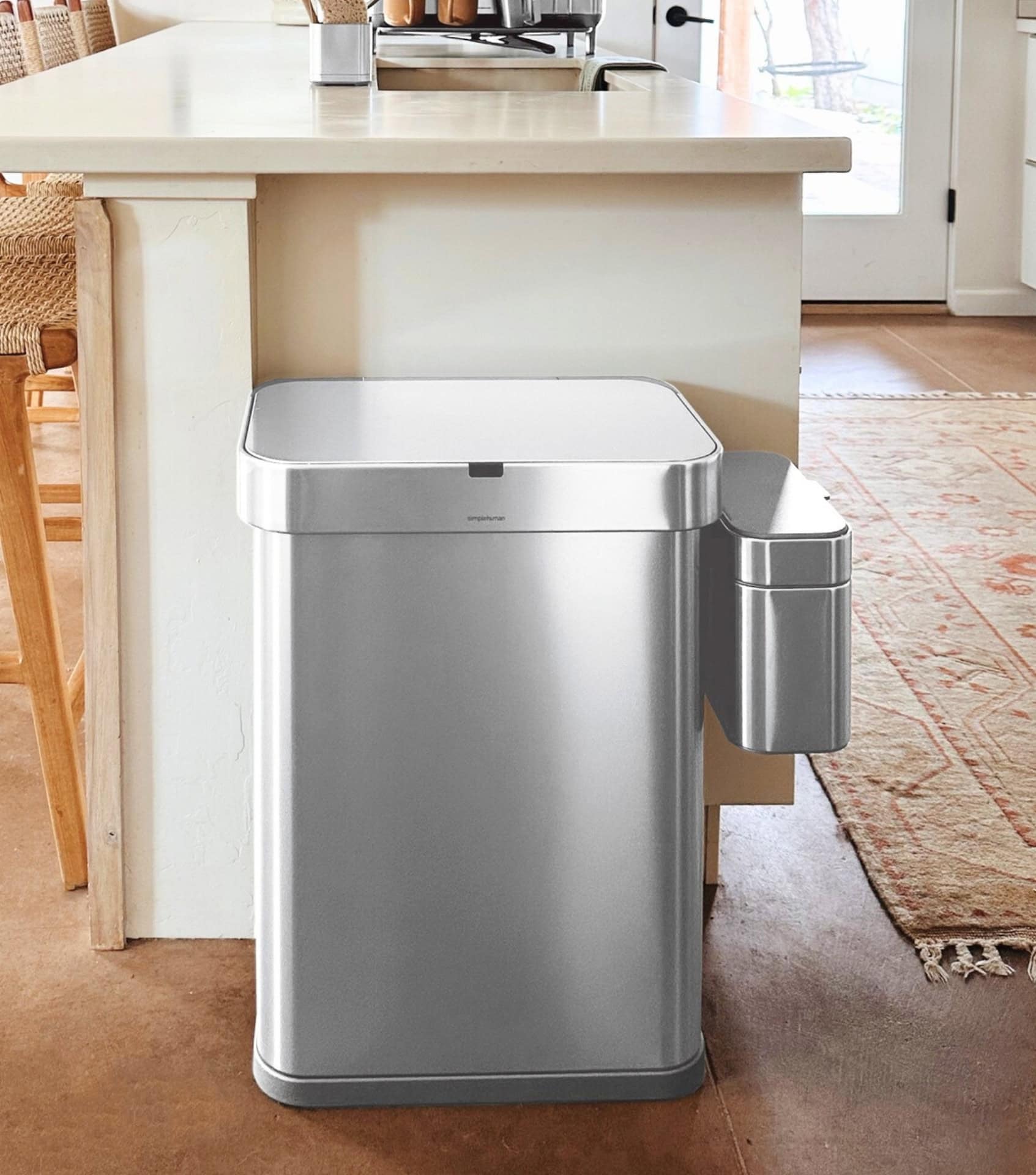
For a compost caddy, simplehuman’s bin is a good looking metal option with a magnetic docking system that holds the bin open.
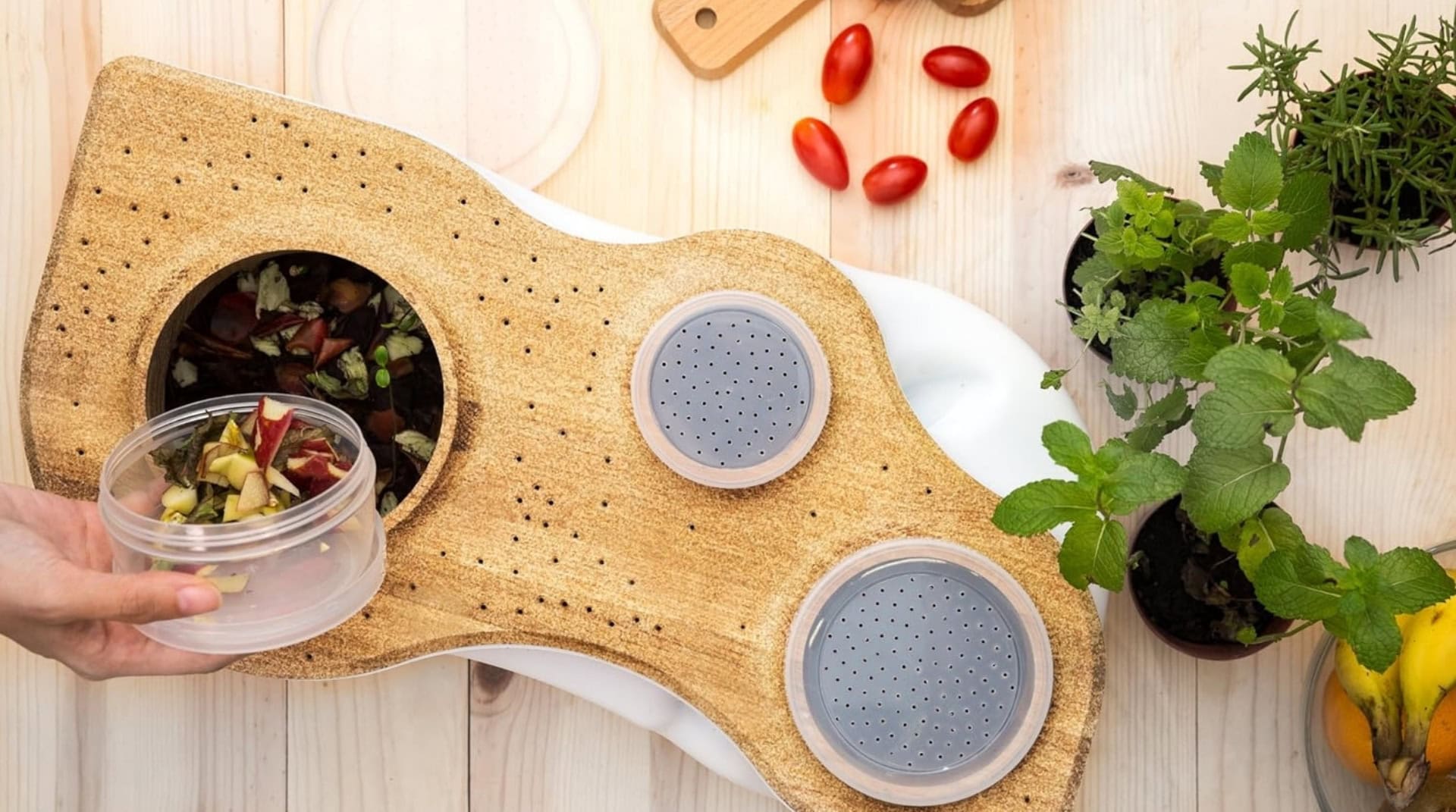
The compost bin from Biovessel brings worms into your home in the best way. It’s funky shape is so sleek and elegant that you would never guess there’s wiggling wonders chowing down on your food scraps inside.
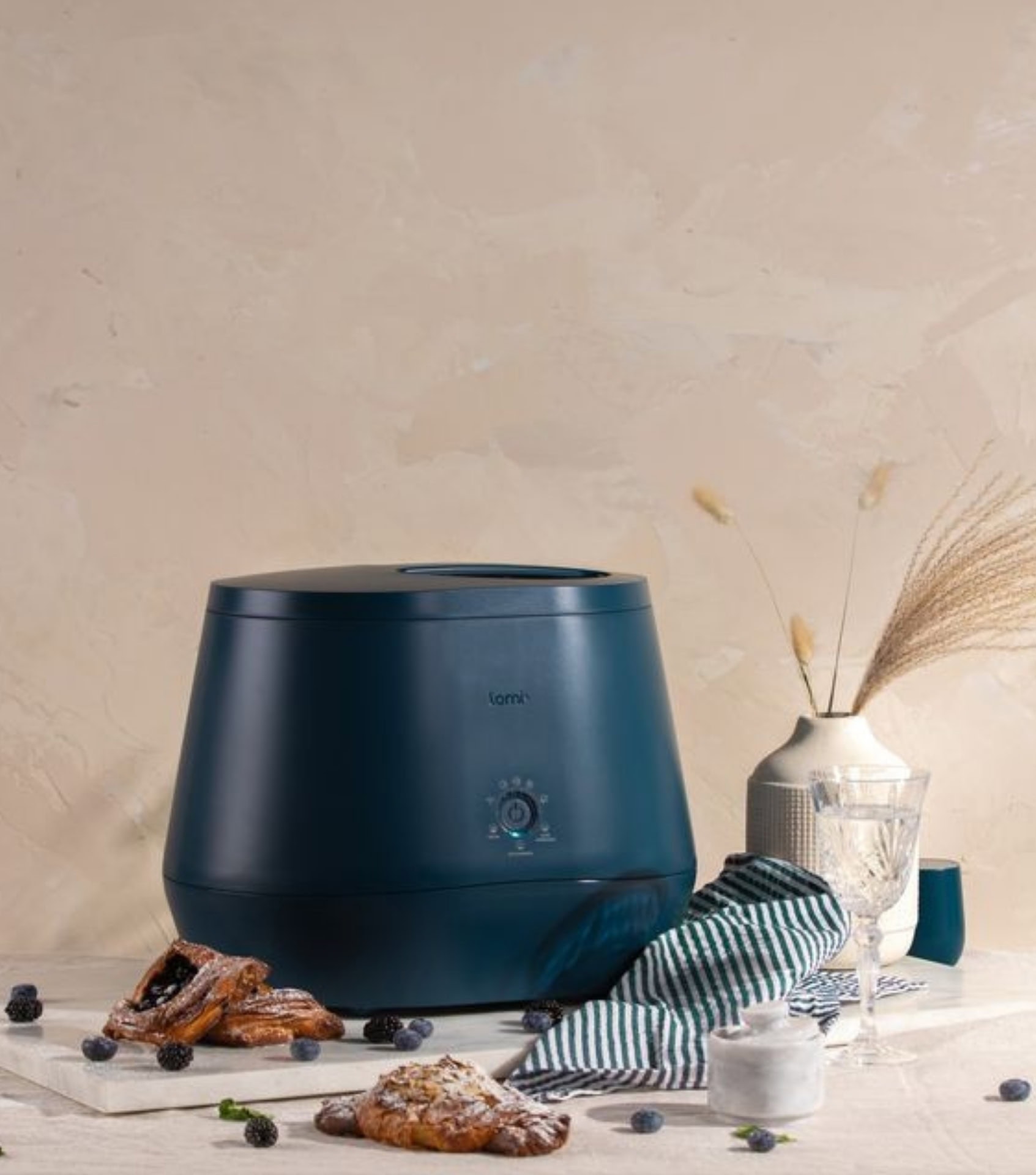
For an electronic wonder, the Lomi composts your waste on the countertop while you sleep, turning it into rich fertilizer for the garden.
Index: Best Indoor Compost Bin Brands
- Lomi Jump to section
- simplehuman Jump to section
- Vitamix Jump to section
- Bamboozle Jump to section
- Biovessel Jump to section
Lomi
Price range: $599 (or $399 with a monthly $20 membership)
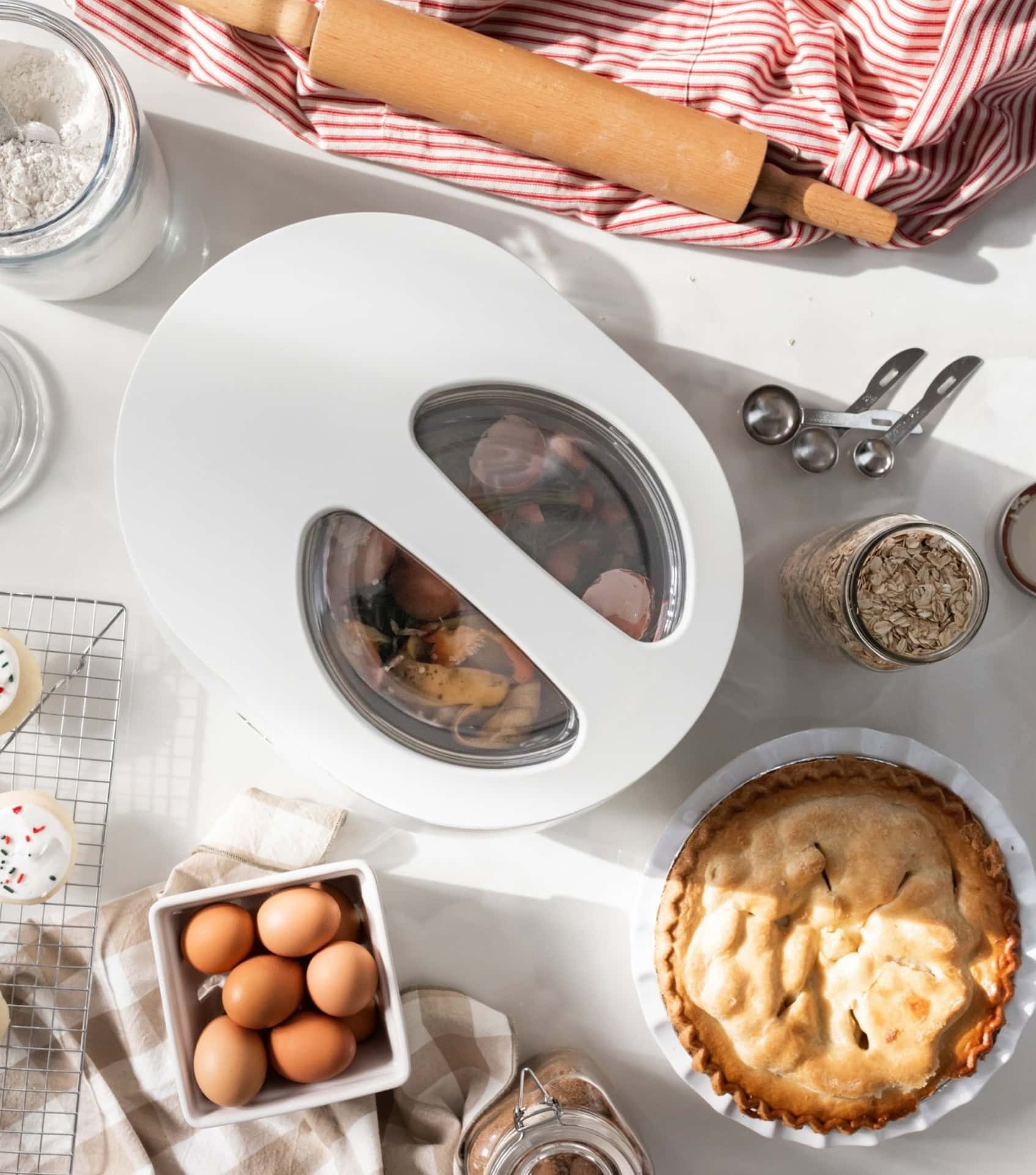
Lomi is an electronic indoor composter that effectively converts food waste into natural fertilizer.
The process is simple: fill the device with food scraps, let the machine do it’s thing (heats and grinds) and bam you have dirt for your own garden, your pots or your local community garden.
Created by Pela (the sustainable sunglasses and phone case brand), Lomi includes an app based experience and has a dishwasher-safe bucket for easy cleaning.
As anyone who has tried composting indoors knows, if you get it wrong, it can smell bad! So the big win with a device like this (aside from massively being able to reduce your household waste) is odor control.
The brand boasts 4.74/5 star reviews (at the time of writing) and 200K+ sales to date.
simplehuman
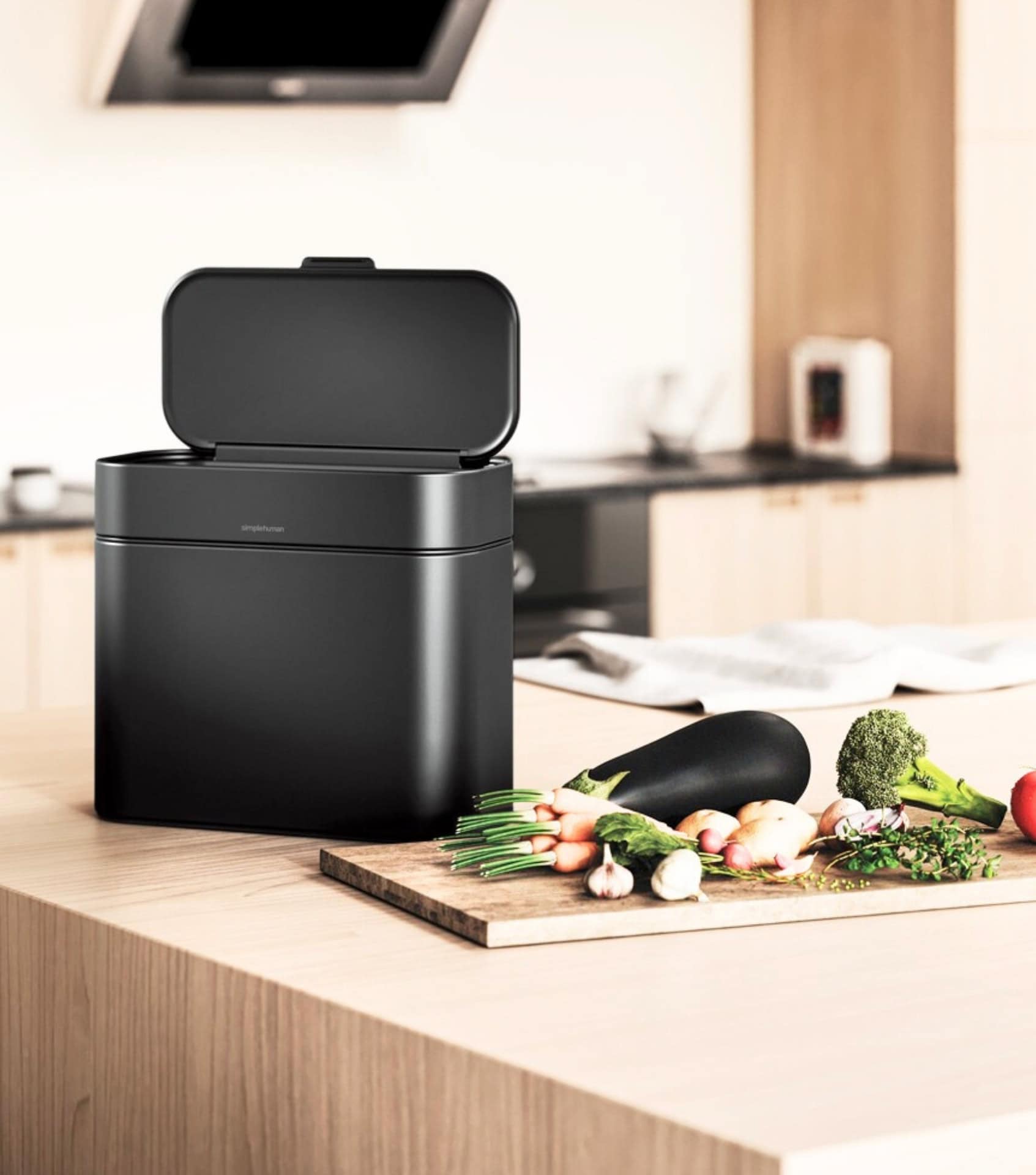
Price Range: $49
simplehuman provides an easy way to collect scraps before they go to a bin that actually breaks them down.
The best thing about this compost caddy is that, if you have a Simple Human trash can, it can be conveniently docked on the side. It can also be placed on the countertop, and has a magnetic docking system that can hold the lid open for convenient cutting, scraping, and peeling.
This is the ideal type of bin if you have access to commercial composting services or an outdoor compost bin. Just use this to easily collect your scraps as you cook, then empty it it into the curbside green bin or outdoor bin as needed.
Vitamix
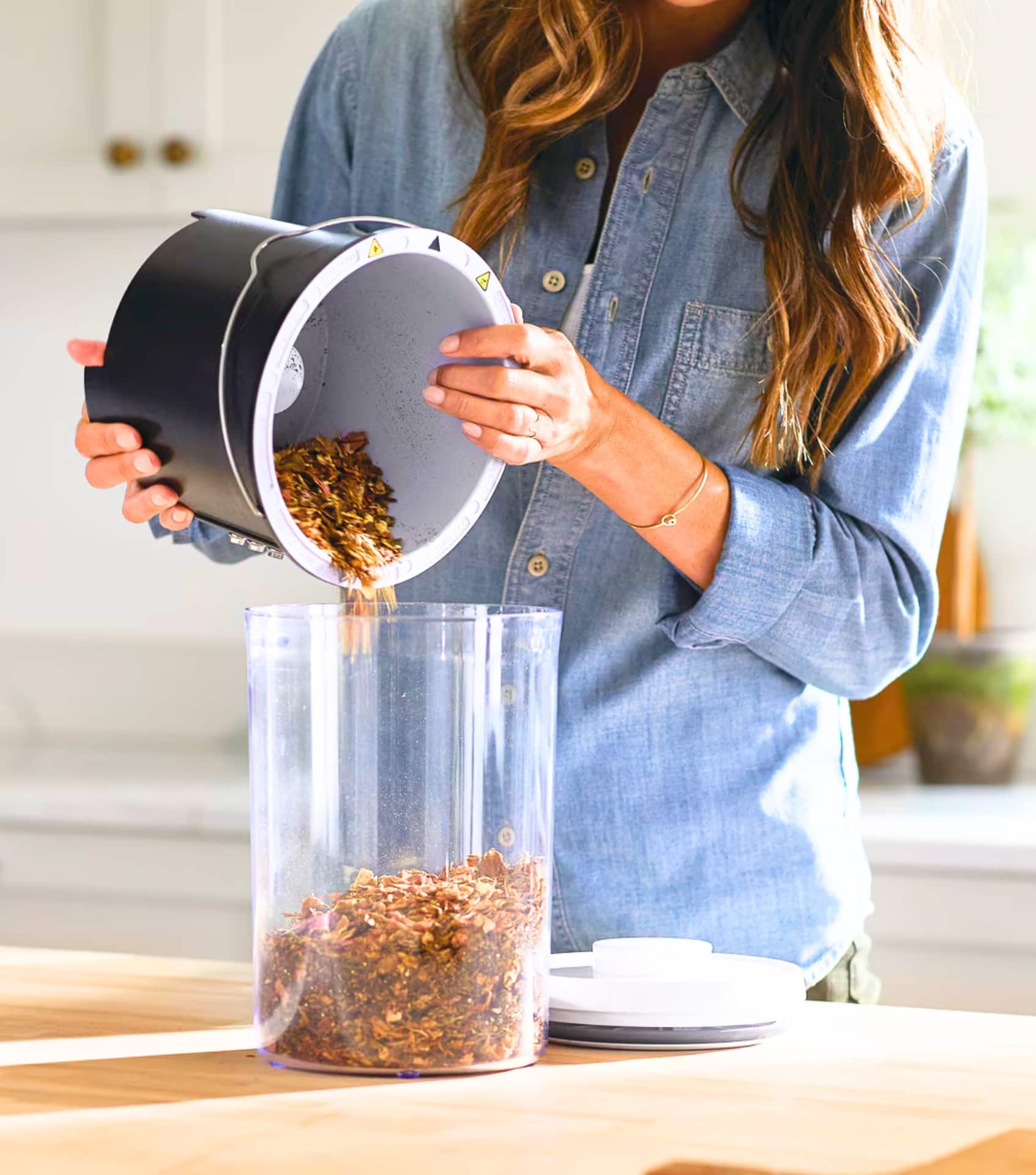
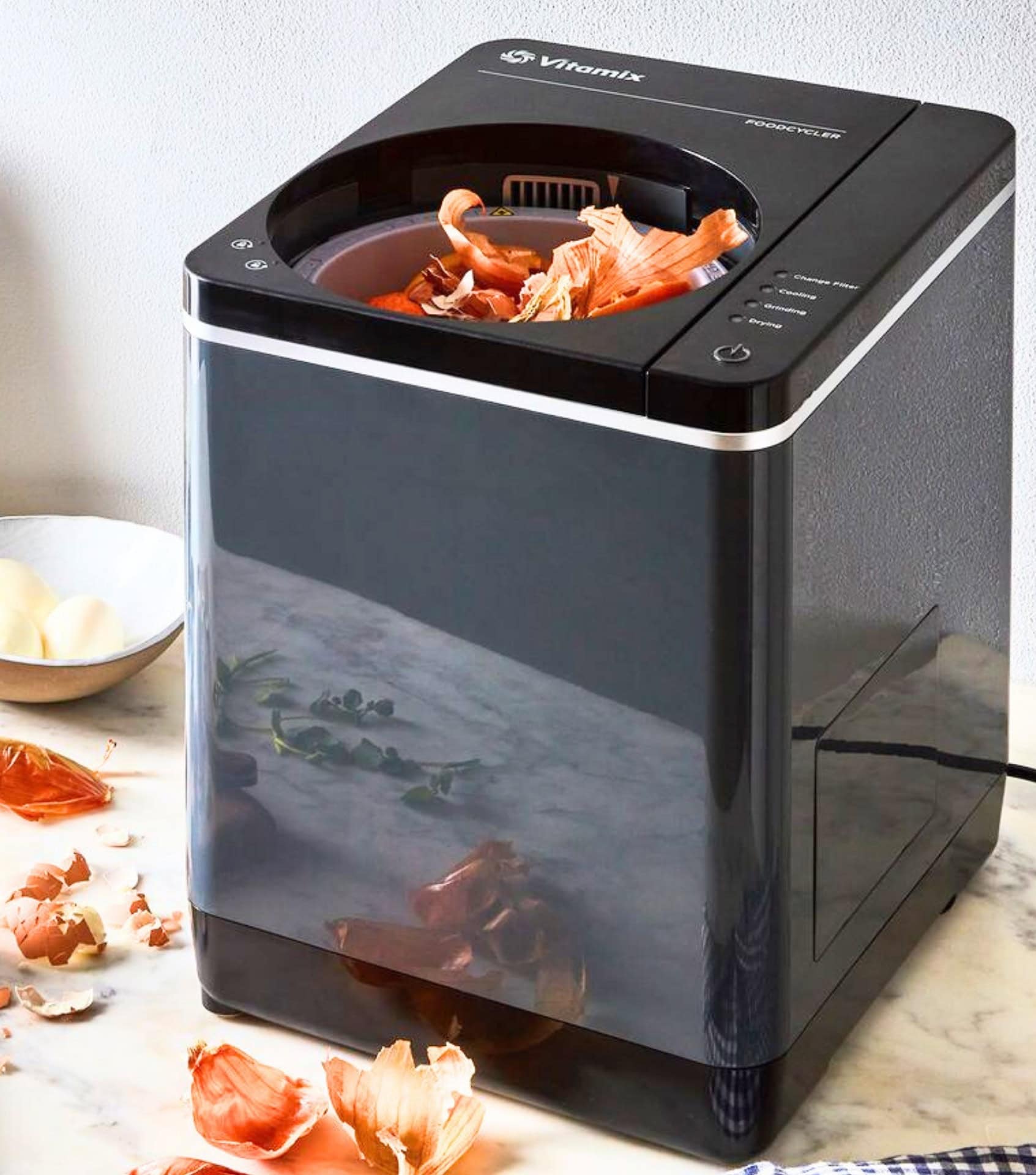
Price Range: $600
Vitamix may be known for their professional-quality blenders, but their FoodCycler FC-50 is just as essential for any foodie.
It’s an electric compost bin that reduces food waste to a fraction (around one-tenth) of its original size in the span of 7-8 hours. Mix the remnant food scraps directly into the soil or add them to another compost bin to fully become humus (in a much shorter period of time!).
It’s one of the few compact food recycling systems that can process fruit, veggies, dairy, and bones—and do so in an efficient, quiet, and odorless way.
Bamboozle
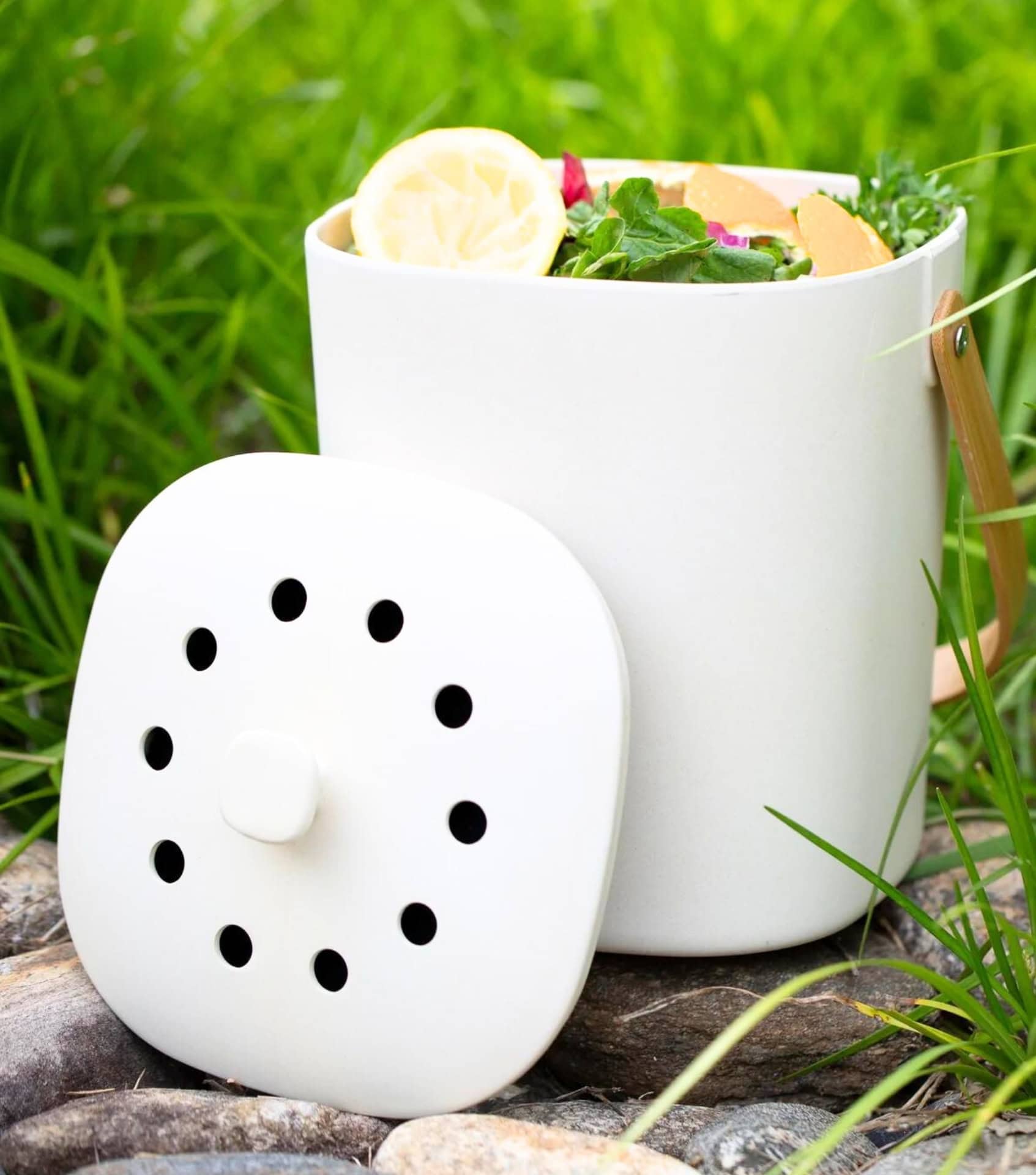
Price Range: $35–$50
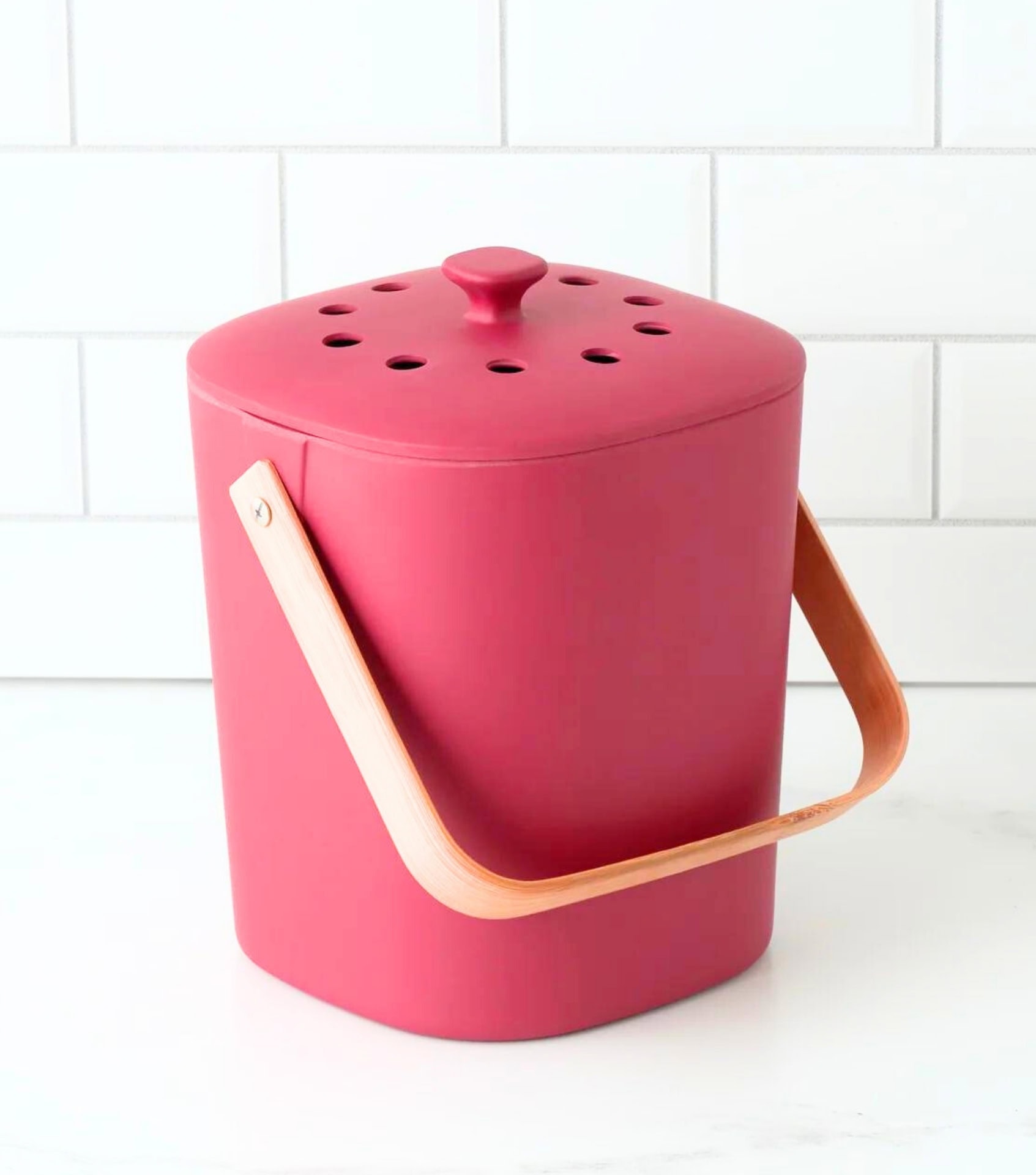
Bamboozle’s compost collection bin (or caddy) is ideal for storing and gathering food scraps in your kitchen before they go to compost. Perhaps the better term would be pre-composting bin).
It has a sleek modern design, and, being made with biodegradable bamboo fibers, can be composted itself. Just not in a home bin like this. It’s dishwasher safe, freezer-safe, and comes with a breathable lid and odor-blocking carbon filter.
Biovessel
Price Range: $199
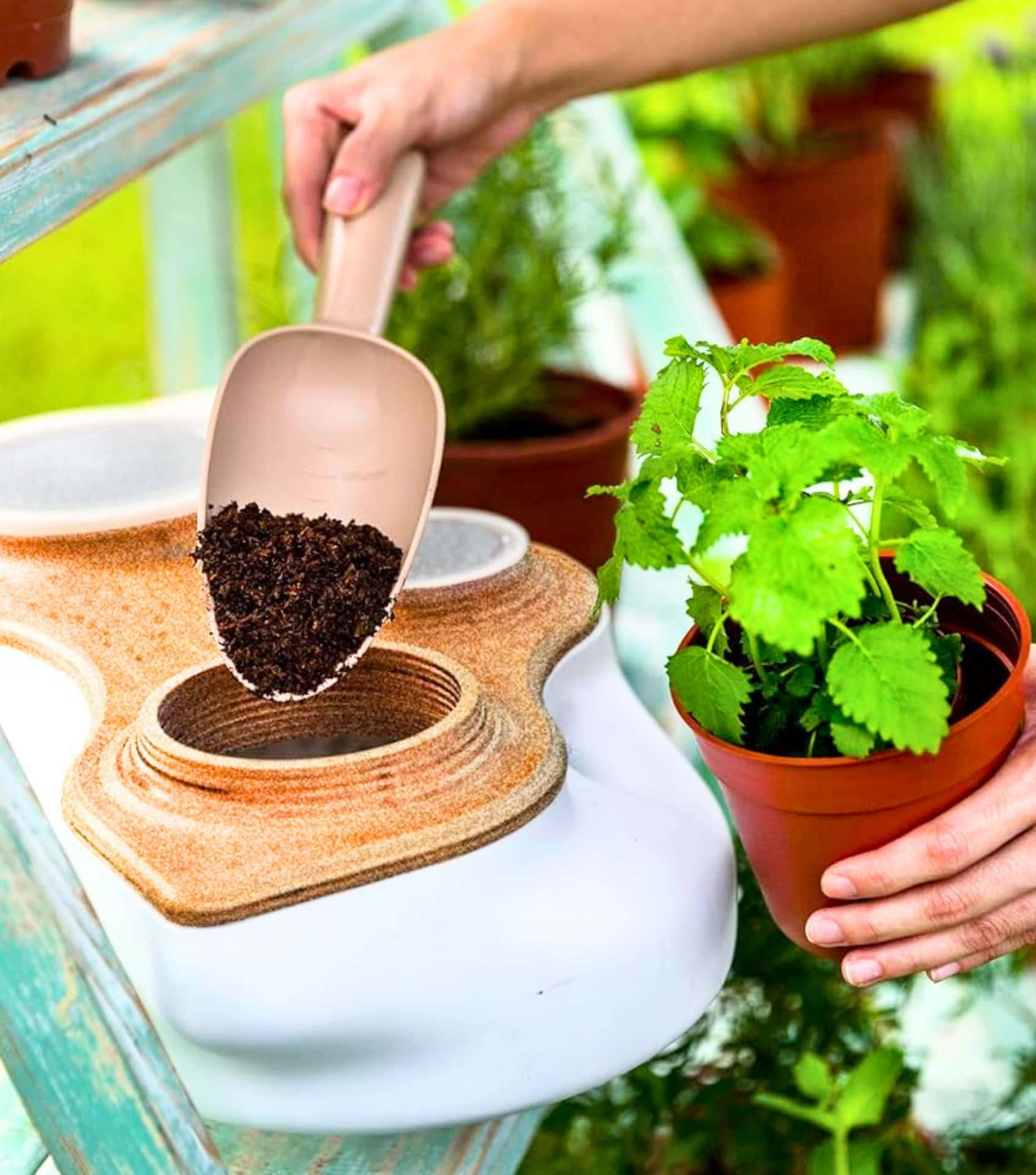
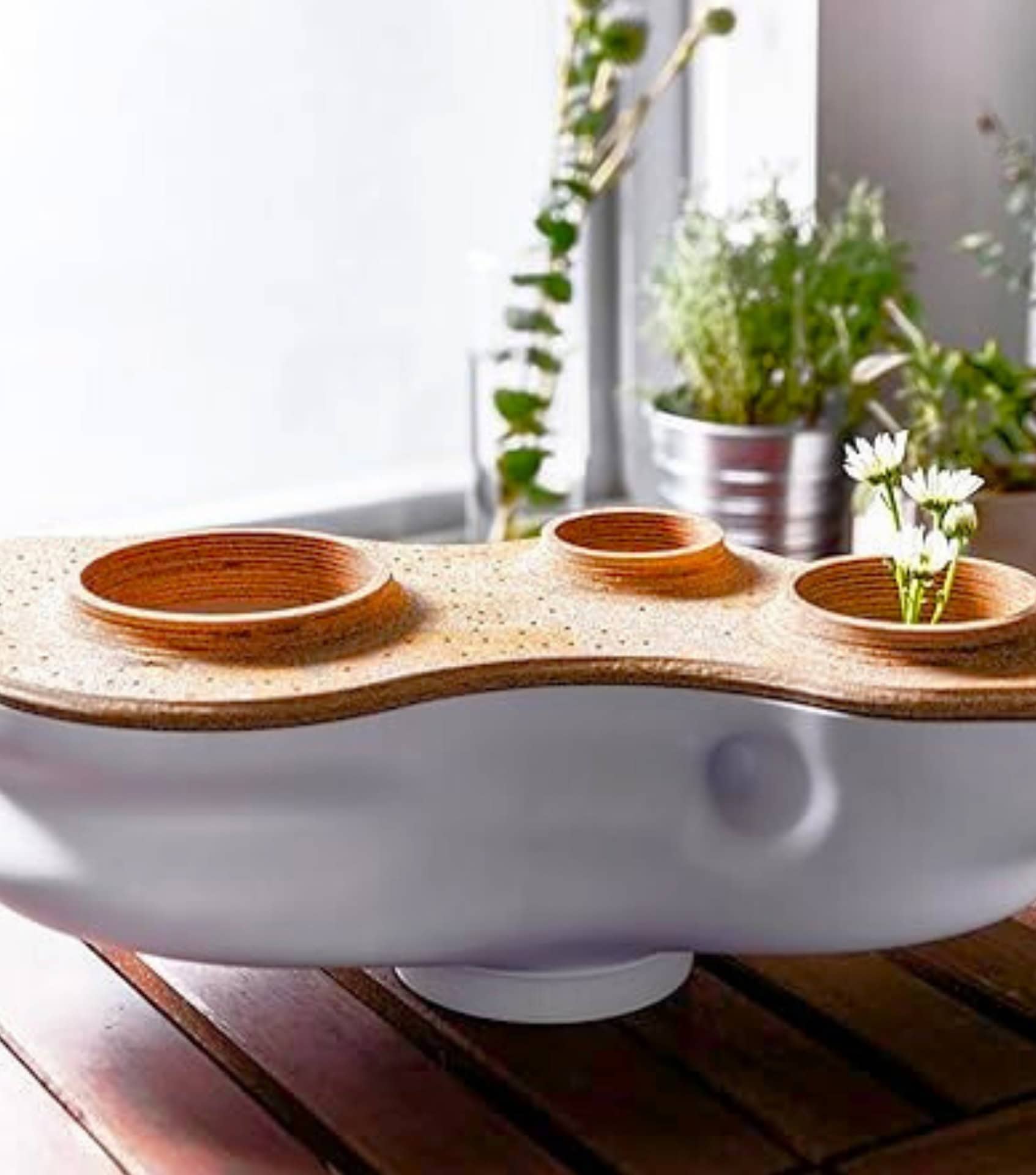
The odorless biomorphic indoor worm compost bin from Biovessel is uniquely shaped based on an algorithm, which explains why it can process up to two pounds of food a week.
With separate compartments for adding food scraps, worms, and removing soil, it makes it easy to use the finished compost (and the nutrient-rich worm castings it contains).
Plus, it’s made from sustainable materials like cork and recycled plastic.
How To Choose The Right Compost Bin For Your Home
If you need a guide on what to buy, this should help you figure out the best option for your indoor composting needs:
First, ask yourself:
- Do you have a food waste collection service? If yes and if you don’t need the dirt output for your garden, then a simple caddy is the way to go.
- How much space do you have? Take a look at your living space and determine where you might put one. On the counter? Beneath the sink? In a closet?
- How much work do you want to put in? If you live a busy life and don’t have time to compost or plan on doing a lot of composting, a more expensive electronic vessel is worth the investment. Plus, if you eat a lot of meat and dairy, you’ll likely need a more complete system that is as air-tight as possible.
Types Of Indoor Compost Bins
Simple Indoor Compost Collection Bins or Caddies
To clarify, not all “compost bins” on this list or anywhere actually compost. These just collect food waste and often have some sort of filter to minimize odors. These are designed to be used before one of the other types of compost bins or to collect food scraps in between weekly curbside composting pickups.
Indoor Worm Compost Bins
These use worms (typically red wrigglers) to break down food scraps into worm castings (AKA poop) that can be steeped into a concentrated liquid fertilizer and fed to your plants. This is called worm tea. Worms eat almost anything; they just need a little extra care (they’re living beings after all). The biggest benefit to these is they can be kept inside without smelling or attracting bugs.
Bokashi Style Indoor Composting Bins
The word “Bokashi” is Japanese for “shading off” derived from methods used centuries ago to ferment food. The method typically involves throwing food scraps into a bin, along with a mix of microorganisms (purchased separately).
The Bokashi method doesn’t entirely convert your food scraps into rich compost, but turns them into another form of waste that can go straight into the garden or into a worm farm/traditional composter for further breakdown.
We currently don’t have any of these on our list as they haven’t stood the test of time for us.
Electric Indoor Composting Bins
These are newer types of compost bins and are increasingly popular for obvious reasons. They eliminate odor and speed up the process of composting, making them better suited to indoor composting than bokashi or worm bins.
They typically use a combination of heat and grinding and the output is rich fertilizing dirt that can be added to any garden.
We hope we’ve been able to help in your search for the perfect indoor composter. Just by choosing to compost your organic waste, you’re choosing to reduce your own landfill waste by up to 50%. So go forth you good thing!


What about LOMI? Is this recommended as an indoor compost option in catagory of vitamix?
Hey skeeter, yea I saw these composters pop up on my radar the other day, we’ll take a look at them when we next update the article! Thanks for the note, super helpful!
Indoor compost bins though sound and smells nasty, I guess the smell can be handled with better installation I guess. Would not mind having my own compost pit and use it as fertilizer for my indoor plants and herb garden.
Yea, the indoor ones can be tricky, especially those that are not as well made. If you can do it outdoors, it is a better option!
I thought the foto was your foto! Do you compost? Was hoping to get a glimpse of what your composting schedule consists of.
Hi Jessica,
Thanks for visiting! No that’s not our photo! Our vermi-composter is black and not quite as photogenic as that nice green one 🙂 so we decided to use that instead.
But yes, we personally compost in 3 ways:
– We have a vermi-composter outside on our balcony which has worms in it. These little guys eat some of our food scraps but not all so we need other options too – we “feed” this worm bin once a week and drain the worm tea which we feed to our balcony garden – our plants love it! Read more about worm tea here . We could actually have this vermi-composter indoors in our apartment as it doesn’t smell and is pretty compact, but we’re lucky and have a big balcony so we keep it out there instead.
– We have 2 bokashi bins on the kitchen counter which we use for things like citrus peels and onions which worms don’t like to eat – one of these takes 2-3 weeks to fill up and then we use the other one, while the first Bokashi does it’s thing
– For everything else, we collect scraps in a bucket which we take to a local community garden (every 2 weeks or so) that composts a huge amount of food scraps. We found the community garden on ShareWaste – My Mom also used this site to find out that her Neighbour likes to collect food scraps for her compost so they now have quite a nice arrangement – so it doesn’t have to be a community garden that you deliver your scraps to,it could just be someone in the community.
We’re thinking about adding a more traditional composter to our collection but the above is working well for us right now. Do you compost? If not, what are you thinking about doing? We are HUGE fans of composting, we no longer have smelly bins and we feel good about not sending organic matter to landfill… plus as I said, the plants love it!
Thanks again for visiting!
Joy