













It’s always good to kick it footloose with your wardrobe (and your dance moves). But we shouldn’t play loose with our standards for sustainable shoes.
Shoes are a haven for plastics and other non-renewable materials. They’re often produced to be consumed, not repaired, resulting in billions of pairs heading to landfill each year.
Before you put away those dogs and go barefoot, we’ve collected some of the best sustainable shoes so you can dance the night away without worrying about your feet or the planet.
There’s a lot that goes into a sustainable shoe. To find those brands walking the talk, we considered materials, ethics in the supply chain, and what steps a brand is taking to reduce its environmental impact through using renewable energy, circularity initiatives, and more.
Note: We now offer brands a comprehensive sustainability rating assessment which considers 22 criteria, from biodiversity and chemical use to product performance and durability. Look out for the rated brands on the list below and find others in our sustainable brand directory.
Related Guides: Sustainable Hiking Boots, Sustainable Slippers, Sustainable Boots, Sustainable Flats, Sustainable Heels, Sustainable Sneakers, Vegan Shoe Brands
We independently research all featured brands, and we ask them to confirm their claims. In many cases we personally review recommended products. This post contains affiliate links which means we may earn a commission if you buy something. We explain this further in our Terms of Use.
The Best Sustainable Shoe Brands
Best Overall (Rated & Tested): 8000Kicks | Hemp sneakers, waterproof, algae soles, tested for 3+ years | $129–$199
Comfiest Casual Shoe: Allbirds | Wool and tree-based materials, B Corp certified, carbon labeling | $50–$170
Best Circular Design: Thousand Fell | Closed-loop recycling, vegan, $20 deposit returned when you recycle | $125–$135
Best Wool Shoe: Baabuk | B Corp, mulesing-free wool, made in Nepal & Portugal, machine washable | $99–$159
Best Vegan Women’s Shoe: Bhava | REACH-certified vegan leather, handmade in Spain & Mumbai, repairable soles | $195–$345
Most Transparent: VEJA | B Corp, publishes carbon footprint per model, Amazonian natural rubber | $70–$245
Best Sustainable Street Shoe: Cariuma | B Corp, WRAP GOLD facility, plants 2 trees per pair | $79–$169
Best Recycled & Outdoor Boot: Thesus | 95–100% recycled materials, BIPOC & woman-owned, made in Portugal | $138–$220
Index: The Most Sustainable Shoe Brands
- 8000Kicks Jump to brand
- Allbirds Jump to brand
- Thousand Fell Jump to brand
- Baabuk Jump to brand
- Bhava Jump to brand
- VEJA Jump to brand
- Cariuma Jump to brand
- Thesus Jump to brand
8000Kicks

Compostable
All or some products are compostable, either in an industrial facility or at home
Ethical Sourcing
Raw materials have been sourced ethically with people and planet in mind.
Organic
Products are made from organic materials.
Recycled materials
Some or all products are made with recycled materials
Repairs Offered
Product can be easily repaired directly by the brand.
Thoughtful packaging
Product packaging has been designed and created with the end of life outcome in mind and can be easily recycled or composted.
Upcycled
Products have been upcycled from an unusable or undesirable form into new products.
Vegan
This brand does not use any animal products or by-products in their products
OEKO-TEX®
PETA
OEKO-TEX®
The OEKO-TEX® Standard 100 certification ensures that every component of a textile product (threads, buttons, zippers, and fabrics) has been independently tested for harmful substances. Managed by the International Association for Research and Testing in the Field of Textile and Leather Ecology, it guarantees products are safe for human health, meeting strict global limits for chemicals such as pesticides, heavy metals, formaldehyde, and PFAS.PETA
The PETA-Approved Vegan certification verifies that a brand’s certified products are completely free from animal-derived materials and that no animal testing is conducted at any stage of production. Managed by People for the Ethical Treatment of Animals (PETA), the label helps consumers easily identify fashion, beauty, and lifestyle products that align with a fully vegan and cruelty-free standard.Price Range: $129-$199
About 8000Kicks
Portugal-based 8000Kicks can’t hemp but be sustainable.
With hemp as their signature material, they’ve created plant-based, eco-friendly walking shoes that help you run lightly, both in your mile and in your carbon footprint.
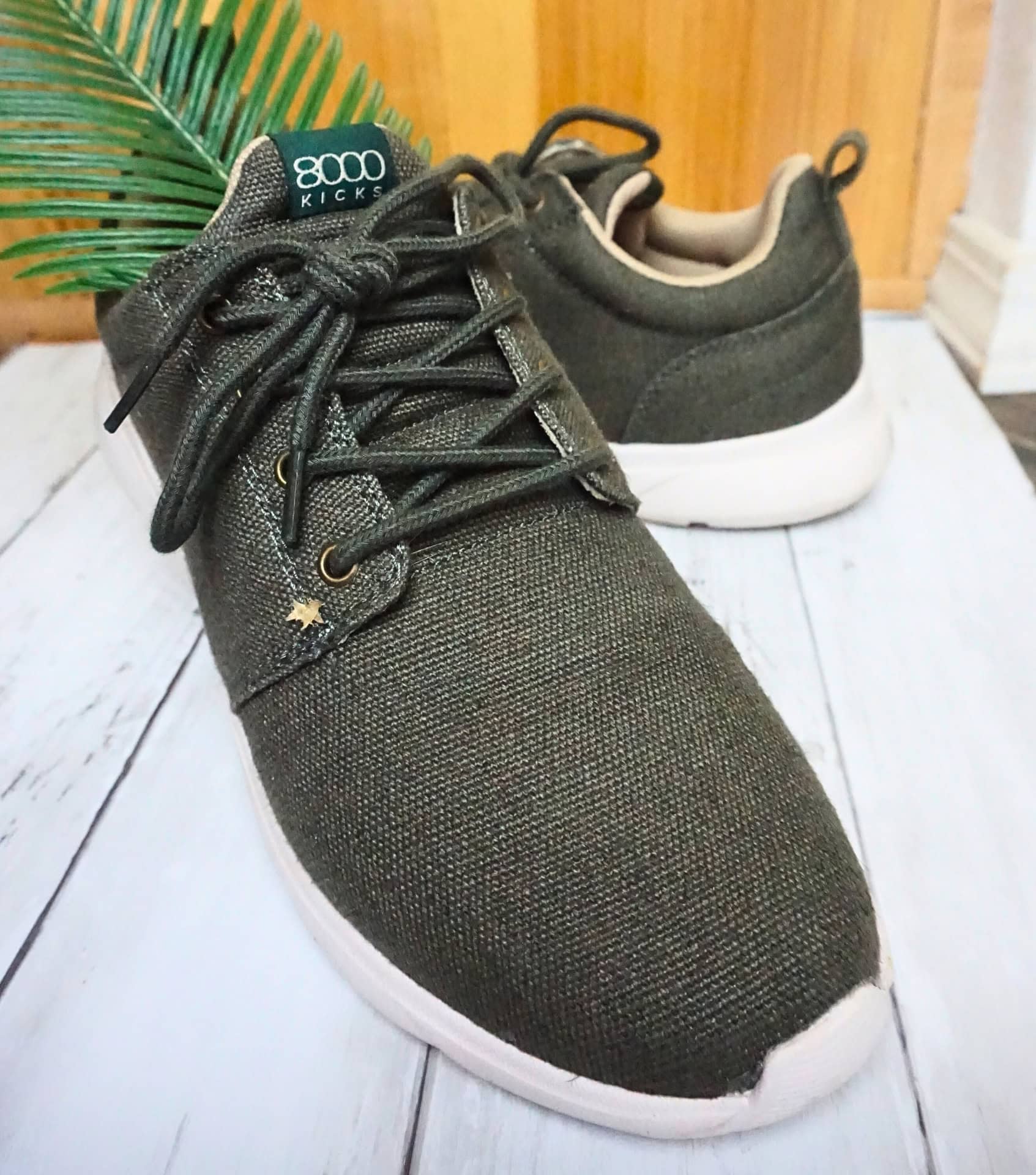
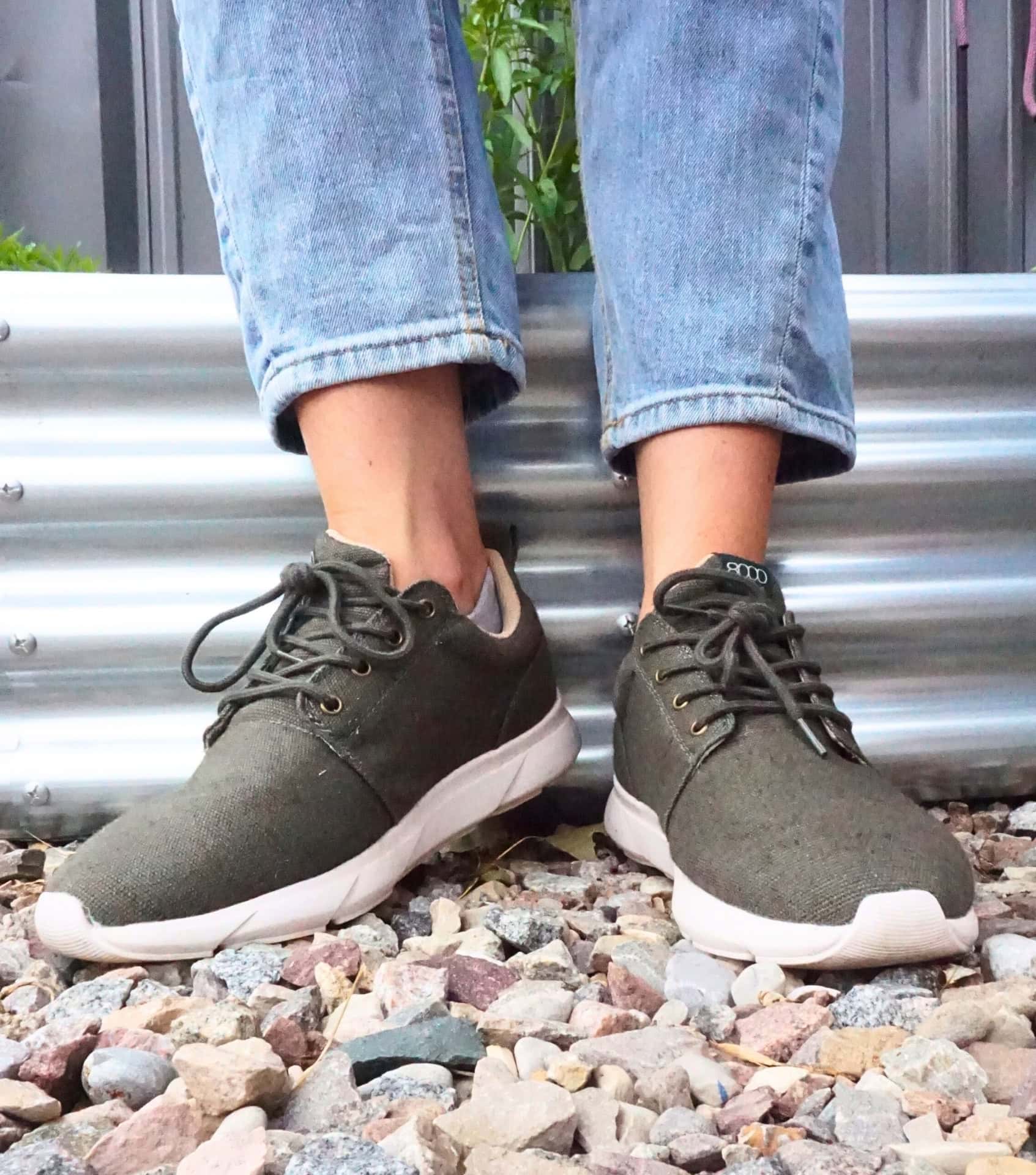
Their signature Explorer V2 vegan sneakers are breathable, lightweight, and waterproof and come in various colors and sizes for both men and women.
The hemp insole is particularly standout with about as much give as a cork sole, it moulds to your foot. And with a wider toe box your foot can expand as you get more active.
8000Kicks’ Ethical & Sustainability Practices
Materials:
As eco-friendly materials go, hemp fabric is one of the best, and it’s what 8000Kicks uses for its uppers and insoles.
The outer soles are made from algae harvested from algal blooms, helping clean-up marine ecosystems.
Supply chain & labor practices:
8000Kicks partners with factories in Portugal and China, for which they share the average salary in their FAQs.
Regular factory inspections ensure high standards of worker welfare.
Carbon commitments & green practices:
8000Kicks uses renewable energy, carbon offsets, and recycled cardboard and cornstarch mail bags.
My Personal Review of 8000Kicks’ Explorer V2:
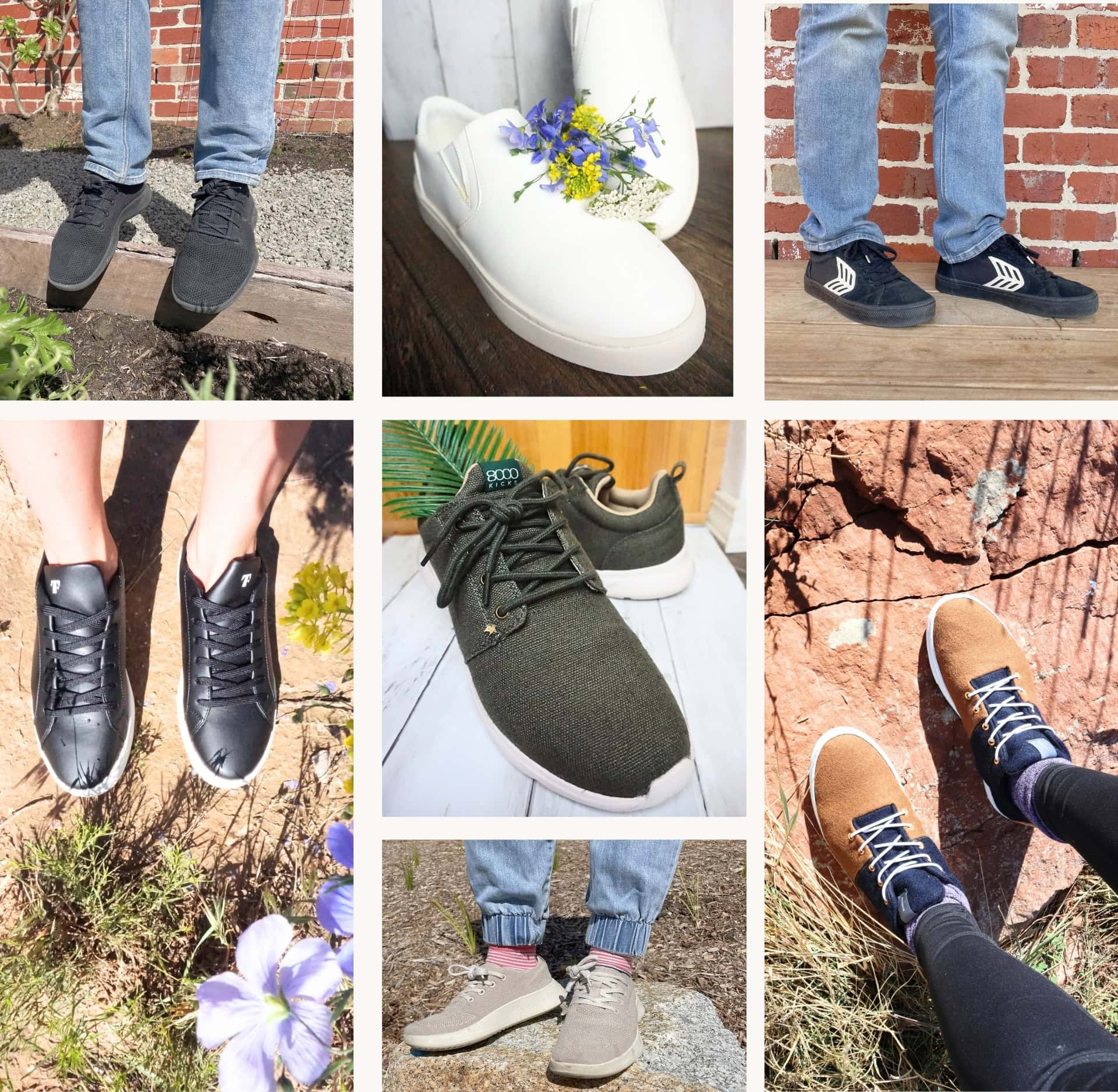
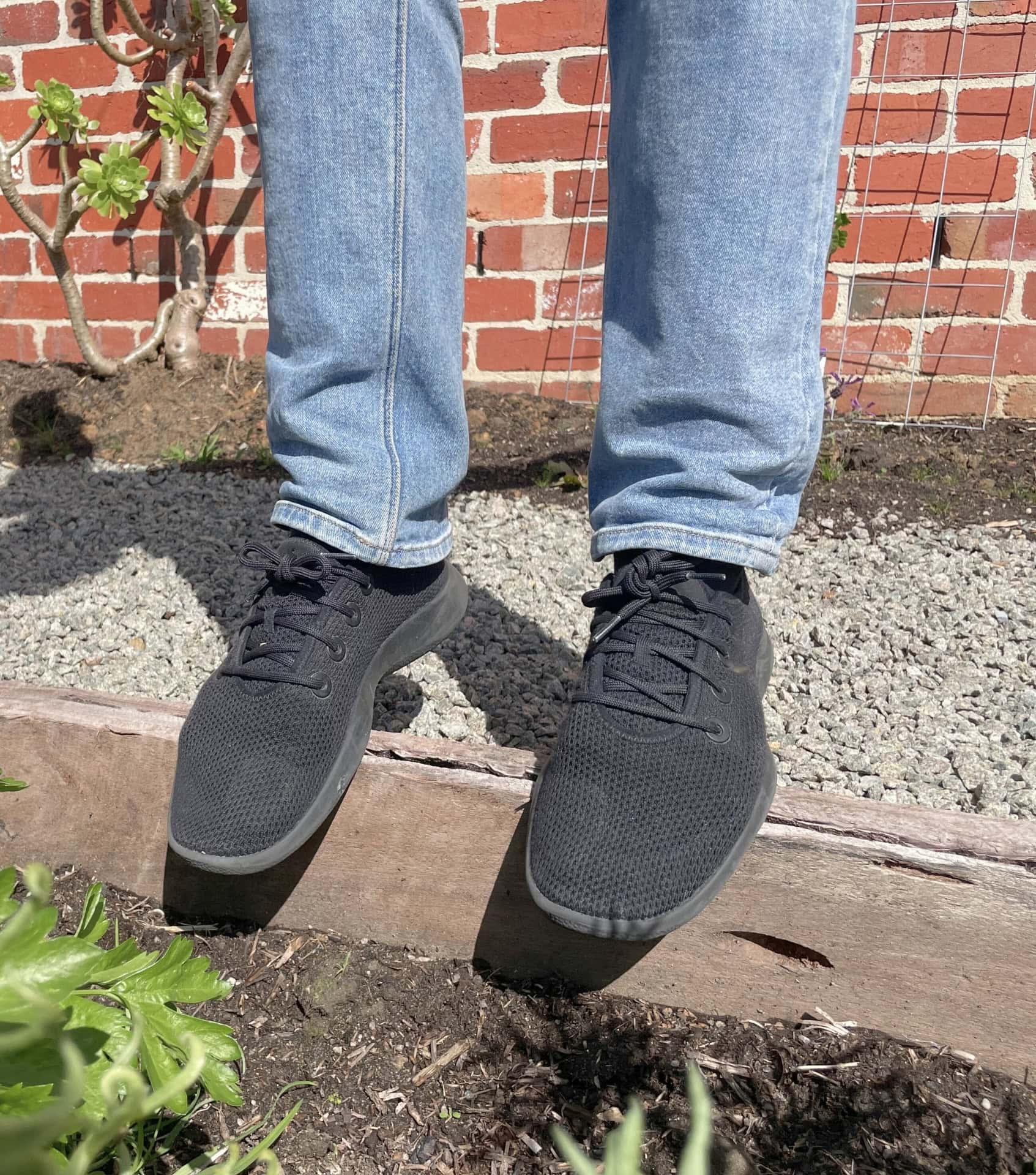
“The Explorer V2 Allblack’s have been my go-to kicks for three years now. I wear them daily. They’ve handled everything from regular wear to five-mile runs and longer rocky, hilly hikes. The soles are beginning to wear down, but the uppers remain in great shape. The fit is spacious but not overly wide, which works well for my narrow feet, though I do find them to run slightly larger than expected. The waterproof feature, which I originally dismissed, has turned out to be a great bonus—especially in my rainy climate—eliminating the need for boots on quick outings in light rain. I also love the all-black color scheme, which effectively conceals dirt, something I appreciate given how much use these shoes get.”
Review by Lyall Mabin, SJ’s Co-founder
My Personal Review of 8000Kicks’ Explorer V2:
“I’ve been wearing the Explorer V2 for women for the past 18 months, and I’m really impressed. The waterproof feature is a total game changer. I wear them while walking my dog, playing outside with my son, and running errands, and even on rainy days, my feet stay perfectly dry. I did find the sizing a bit on the large side, so I wouldn’t go for a run in these. However, they’re fantastic for various other activities. I truly appreciate the innovative design behind these shoes, and I can’t wait to see what Bernardo and his team do next.”
Review by Joy McConnochie, SJ’s Co-founder
Allbirds
Allbirds has not been rated.
Price Range: $50–$170
About Allbirds
We talk about Allbirds a lot on Sustainable Jungle—and for a good reason.
This Certified B Corp uses sustainable materials to make durable, high-quality shoes that are good for your feet and the planet.
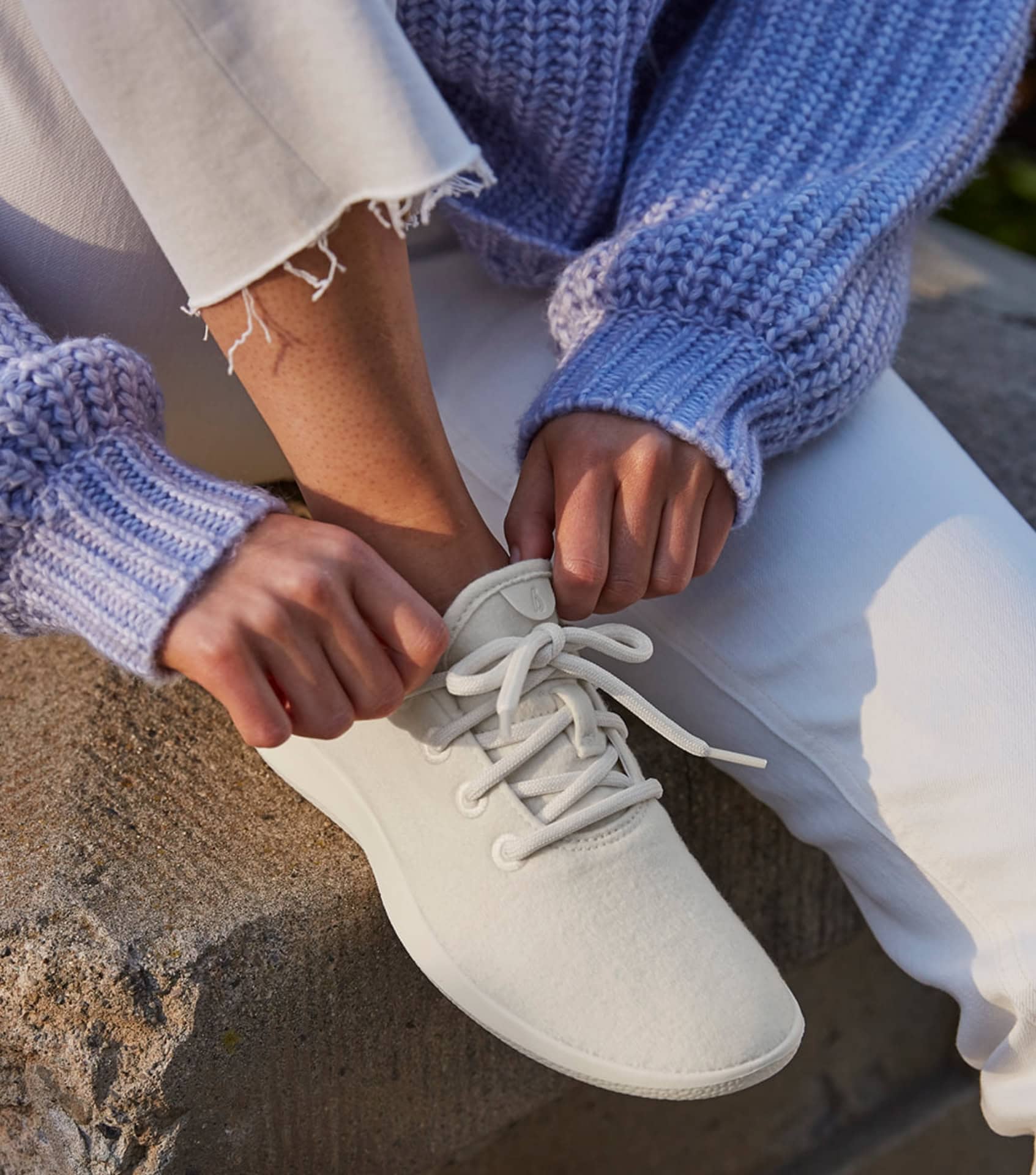
Check out their Wool Runner Mizzles for rain-friendly, water-repellent sneakers, and their sustainable kid’s shoes for little tootsies. We’ve worn their runners and sneakers for years and for slipper comfort levels, you don’t get much better than this.
Allbirds’ Ethical & Sustainability Practices
Materials:
Allbirds’ sustainable training shoes and casual sneakers use two primary powerhouse materials: wool and trees (and sometimes both together with their signature Trino® fabric).
Their merino wool is ZQ-certified to ensure the highest standards of animal welfare and sustainable farming and the trees used to create their TENCEL™ lyocell comes from an FSC-certified source in South Africa.
Those wonderfully soft, cushy insoles are sugarcane-based SweetFoam® made from FSC-certified natural rubber.
To tie it all up, every pair of Allbirds laces equals one recycled plastic bottle.
Supply chain & labor practices:
Each product description lists where their shoes and sustainable basics are made: North Carolina, Guatemala, Peru, South Korea, China, or Vietnam.
They establish healthy, long-term partnerships with factories and provide details about their evaluation, auditing, and remediation processes.
Carbon commitments & green practices:
A member of the Sustainable Apparel Coalition, Allbirds seeks to continually assess its sustainability and drive change in the industry.
Every product description lists the total estimated carbon output over each product’s lifecycle.
Going beyond carbon offsetting (though they still do that), they want to reduce carbon to begin with, and they’re doing that through regenerative agriculture, renewable materials, and green energy.
Shoes are shipped in 90% post-consumer recyclable cardboard and their ReRun resale program helps keep shoes in circulation for longer.
Community & charitable giving:
Partnering with Soles4Souls, Allbirds helps their lightly used shoes find new homes with people who need them most.
Here’s our deeper dive into Allbirds’ sustainability if you want to look at the minutiae of how we evaluated this brand.
Thousand Fell
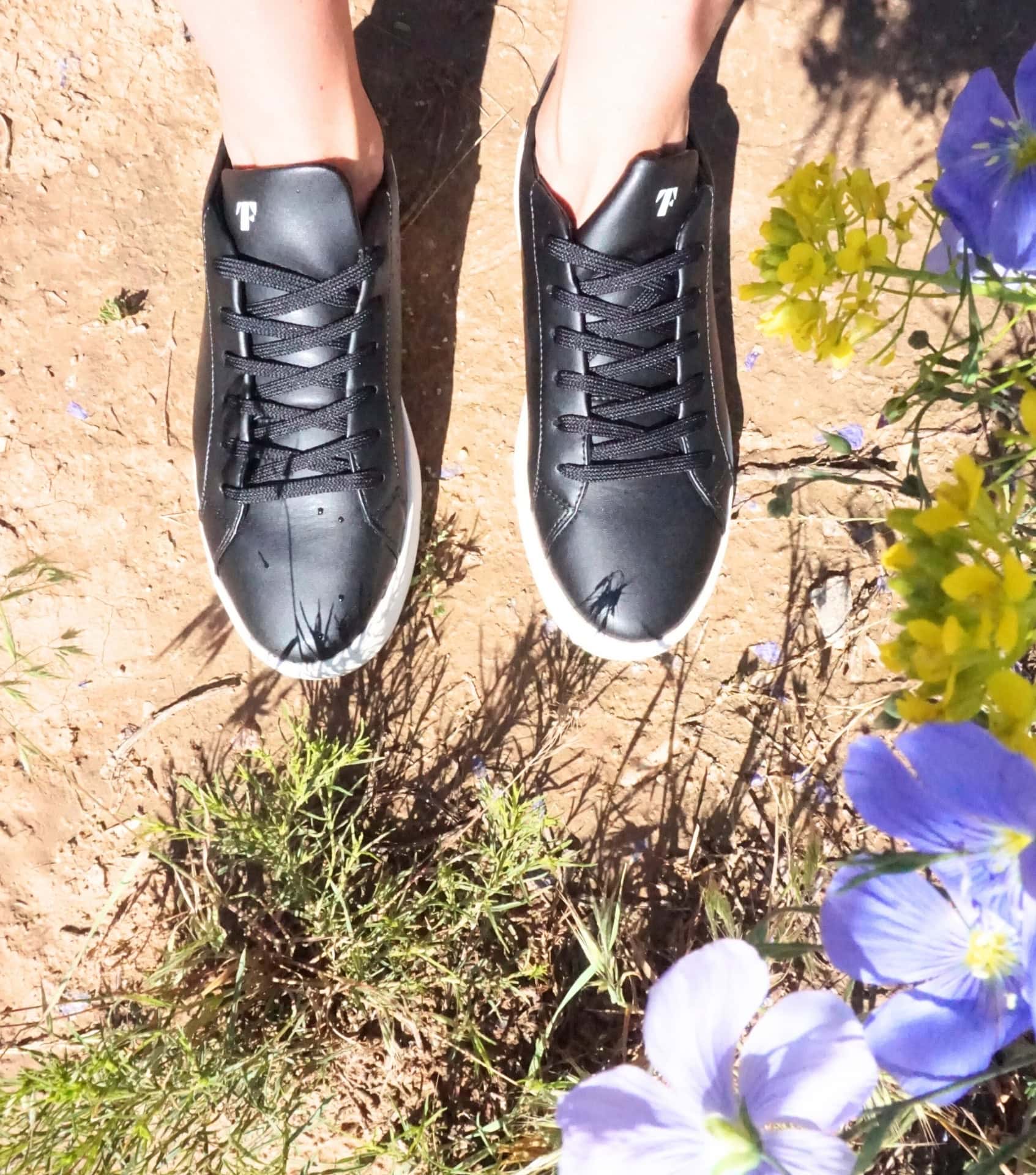
Thousand Fell has not been rated.
Price Range: $125–$135 (+$20 recycling deposit)
About Thousand Fell
Thousand Fell was founded with the idea that sneakers shouldn’t end up in landfills.
This NYC-based brand creates closed-loop vegan eco-friendly shoes that are repairable and recyclable.
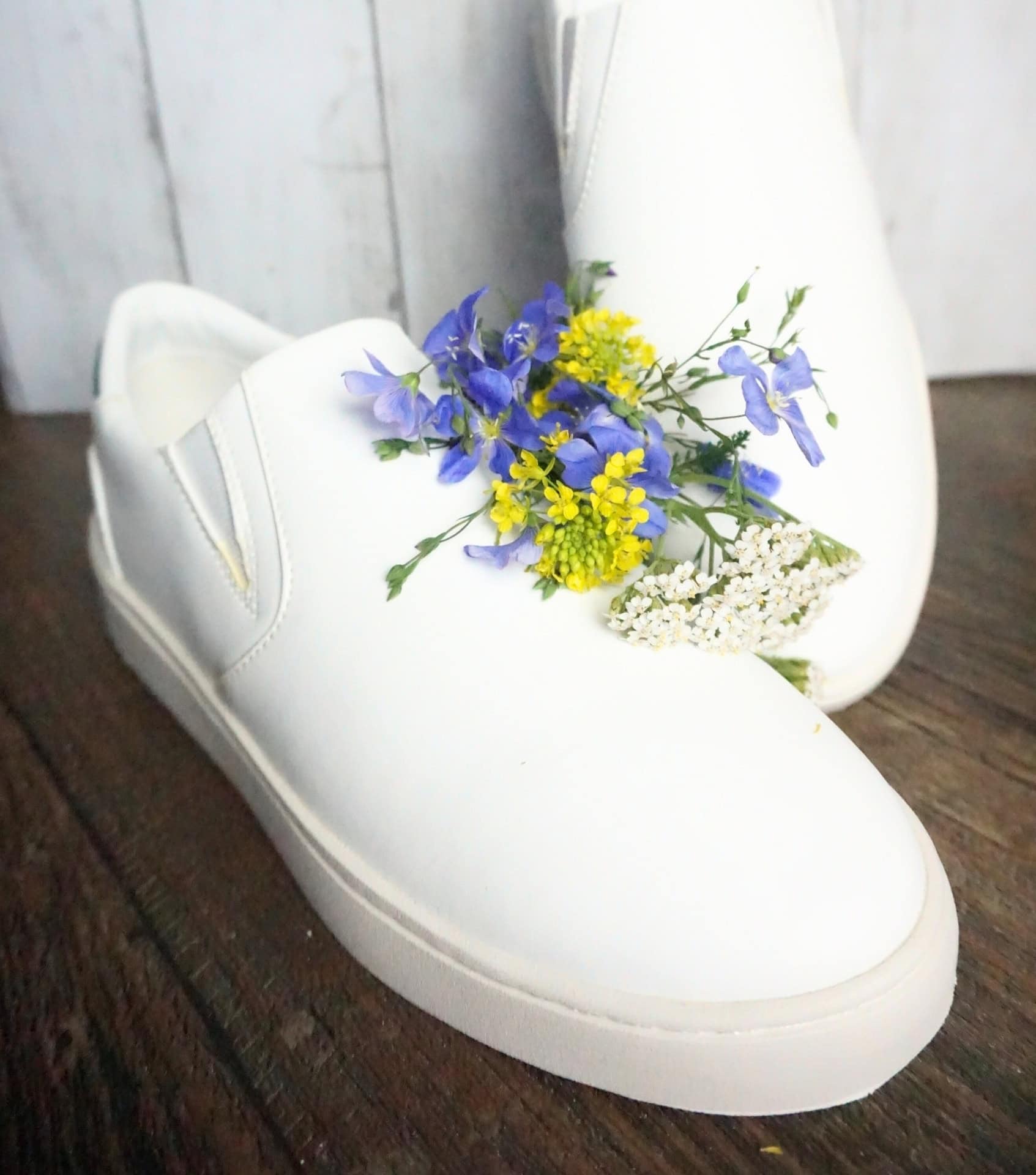
Choose from classic styles like eco-friendly slip-on shoes and retro-inspired Court shoes.
You pay a $20 recycling deposit, and when they finally wear out, you can send them back to Thousand Fell and receive $20 towards your next pair.
Thousand Fell’s Ethical & Sustainability Practices
Materials:
The main material for the body is a vegan leather made from recycled plastic bottles coated with a corn waste resin and a natural quartz barrier making it stain and water-resistant.
Outsoles are made from natural rubber and insoles from recycled rubber yoga mats.
Cushioning is thanks to castor bean oil, and you can say goodbye to stinky feet (and socks) with the aloe vera-coated sock liner.
Supply chain & labor practices:
This brand’s eco-friendly skate shoes are designed in New York City and made in Brazil in a family-owned factory.
Carbon commitments & green practices:
The brand’s circular process means that their women’s and men’s eco-friendly shoes are taken back and either refurbished for donation or reclaimed for raw materials. These materials are then upcycled into new shoes or recycled by third party-partners.
Each pair comes wrapped in a reusable organic tote bag and an FSC-certified shoebox that doubles as a shipping box.
Thousand Fell uses micro-warehouses and bikes to reduce the carbon output of NYC-area deliveries.
Community & charitable giving:
A member of 1% for the Planet, they also partner with Soles4Souls to donate refurbished shoes to those in need.
My Personal Review of Thousand Fells’ Slip-On & Lace-Up:
“I own the Women’s Slip-On and Women’s Lace-Up and love how comfortable they are. The lace-ups are a classically styled sneaker that I’ve worn all day long with no complaints, thanks to the super comfy cushioned insoles. They seem well-made, so I reckon Thousand Fell’s claim that they’re good for 2.4 million steps is to be believed. I also love that I can send them back for recycling when they eventually wear out.”
Review by Amber McDaniel, SJ’s Head of Content
My Personal Review of Thousand Fells’ Slip-Ons:
“I’m a big fan of the Men’s Slip-Ons, which have an impressive amount of cushion and comfort for a minimalist-style shoe. They’re super easy to clean (which is fortunate as I went for the all-white version) and are a really versatile style. The fit is great, too, no issues with the heels slipping or sliding off when I’m walking around, and the slip-on style is just really convenient”.
Review by Christopher Ryan, SJ’s Menswear Tester
Baabuk
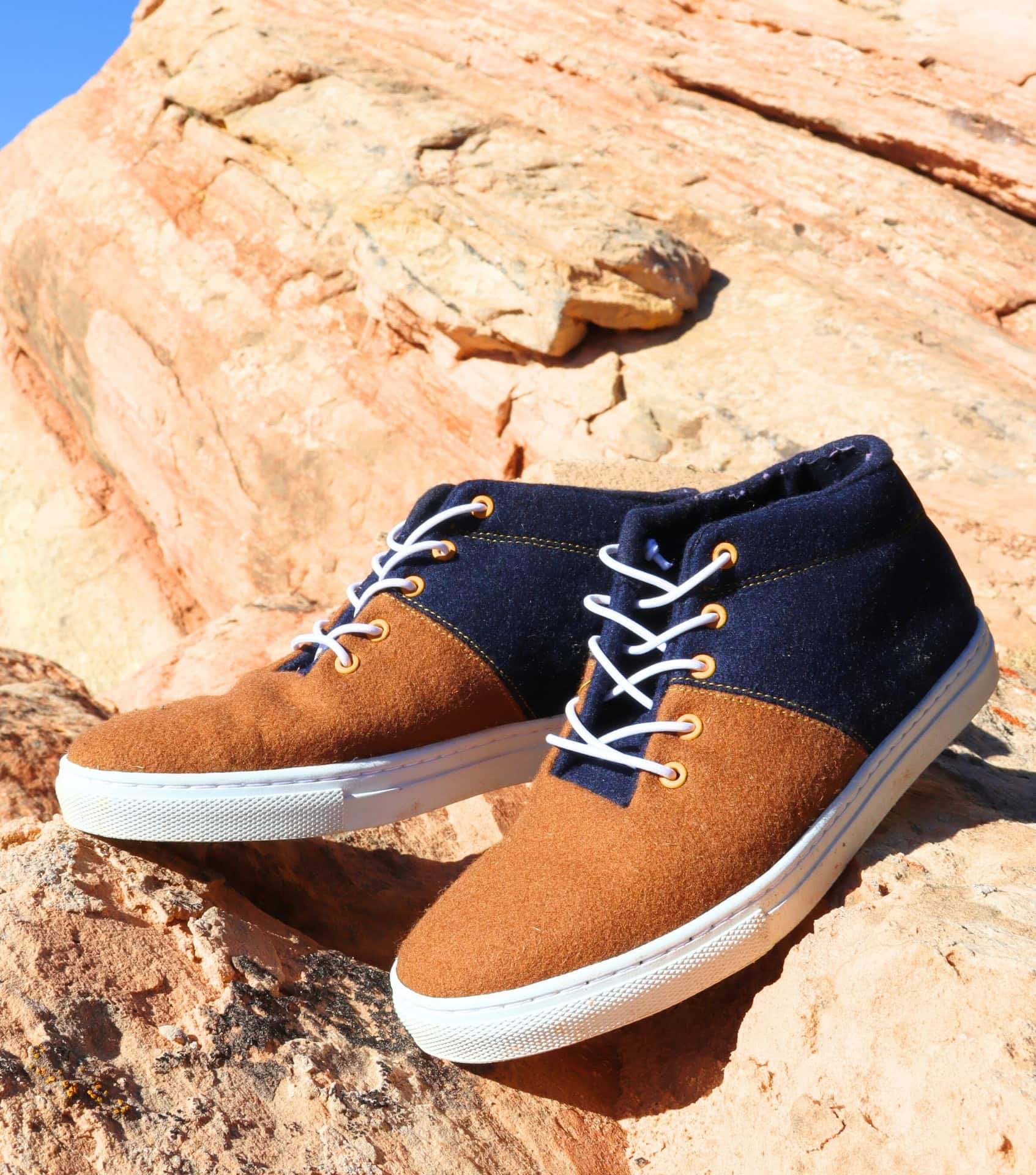
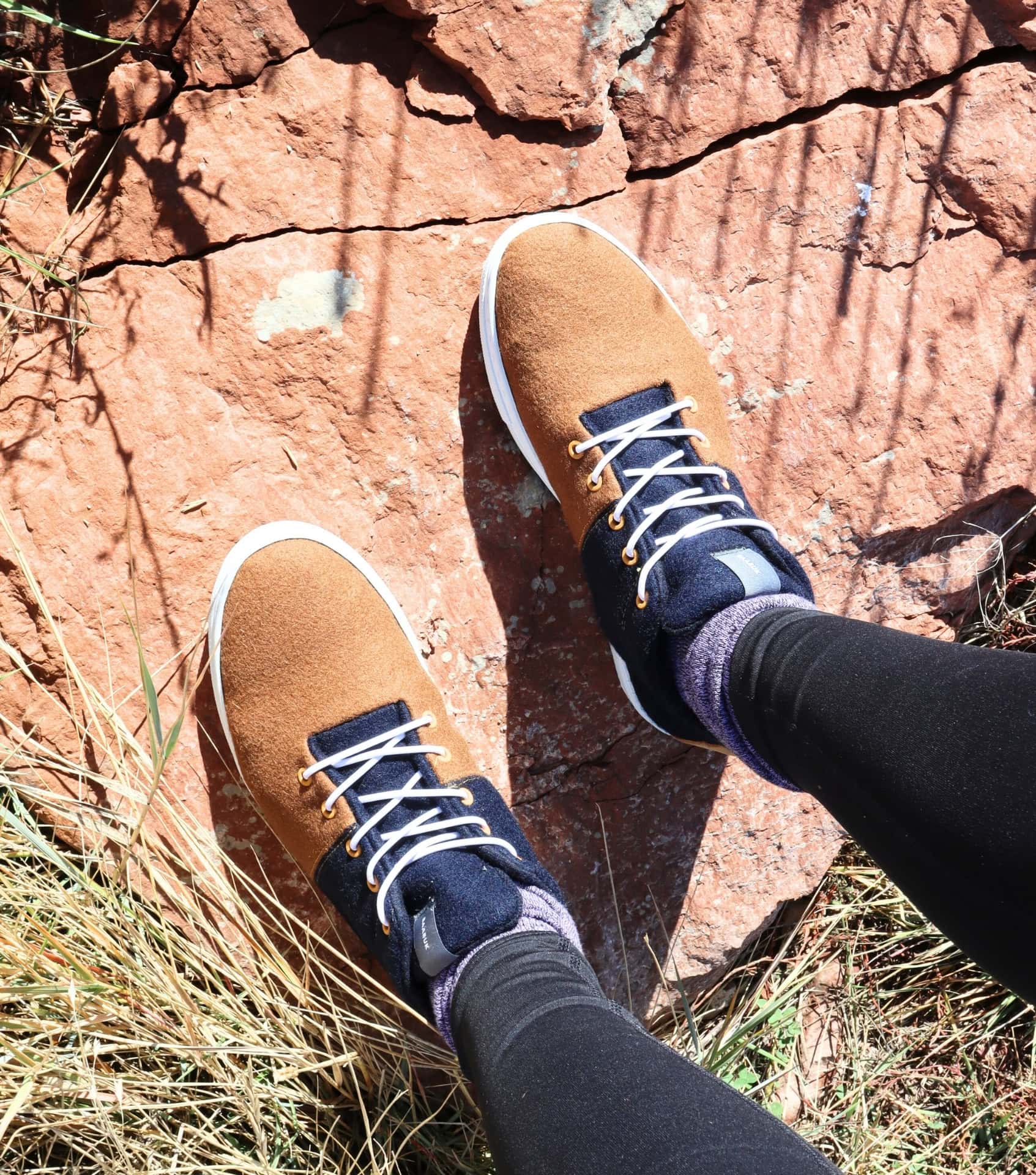
Baabuk has not been rated.
Price Range: $99–$159
About Baabuk
Baabuk started with a family trip and a love for wool. Then the first Baabuk slipper was born.
The Swiss brand has since extended its range to include wool sneakers and boots in several unisex and gender neutral designs and, in our opinion, the best selection of colors. Some of the two tones seriously pop.
Check out their wool Ballerina Flats for cute and comfortable sustainable shoes. And their Blacknose Sky Woolers for an ultra-comfortable merino lining, with a snug toe box and narrow fit. This one’s a winner for cold climates while you do some urban hiking.
Baabuk’s Ethical & Sustainability Practices
Materials:
Baabuk’s star material is mulesing-free, ethical wool, which they source from Portugal and New Zealand.
The soles of the slippers are made from natural latex, and their sneakers have TPU and natural rubber soles.
The Portuguese workshop uses REACH-certified dyes.
Supply chain & labor practices:
Baabuk is a Certified B Corp, and provides a breakdown of its score on their website.
Their shoes are made in workshops in Nepal and Portugal, both of which provide safe working conditions, support female employment, and pay 25% above the national average wage.
In the logistics center in Switzerland, Baabuk has partnered with the BVA Foundation to help employ people with mental and physical disabilities.
Carbon commitments & green practices:
Their wool sustainable winter shoes are machine washable, and you can buy replacement insoles and a repair kit to keep them going for longer.
You can also send old shoes back to Baabuk where they’ll be donated or recycled for their raw materials.
Community & charitable giving:
Baabuka partners with ProSpecieRara to help protect six native endangered sheep breeds in Switzerland—they even have a sheep named after them called Miss Baabuka.
My Personal Review of Baabuk’s Sky Wooler:
“I own the high-rise Sky Woolers in Navy Moka, and they’re hands down one of my favorite everyday shoes, no matter the season, thanks to the water-repellant wool upper and a merino lining that keeps my feet at the perfect temperature. They’re not really built for exercising in (the sole is flat and not very cushioned), but they’re super comfy for everyday casual wear, especially in winter when I want warmth without the heaviness of winter boots.”
Review by Amber McDaniel, SJ’s Head of Content
My Personal Review of Baabuk’s Urban Woolers:
“Don’t you love it when you get a compliment while waiting in the supermarket queue? I was wearing my Urban Woolers from Baabuk in Honey Grey and received a “cute shoes” compliment from the much cooler women behind me. Made my day! Aside from the style kudos, these are extraordinarily comfortable and the ease with which they can be slipped on thanks to the stretchy laces is so handy. They’re warm and surprisingly go with so many things. I’m a big fan of these gems!”
Review by Joy McConnochie, SJ’s Co-founder
Bhava
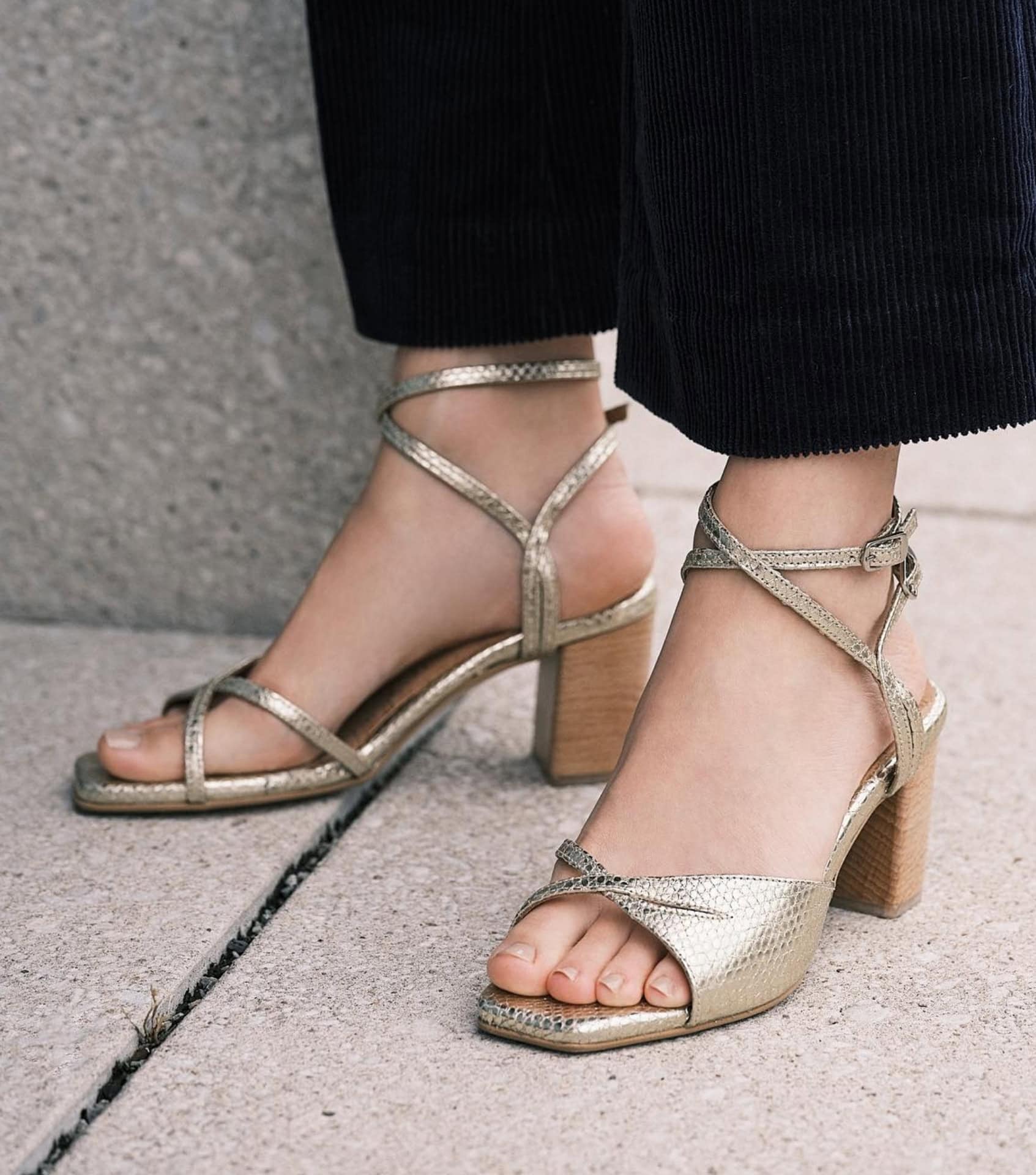
Bhava has not been rated.
Price Range: $195–$345
About Bhava
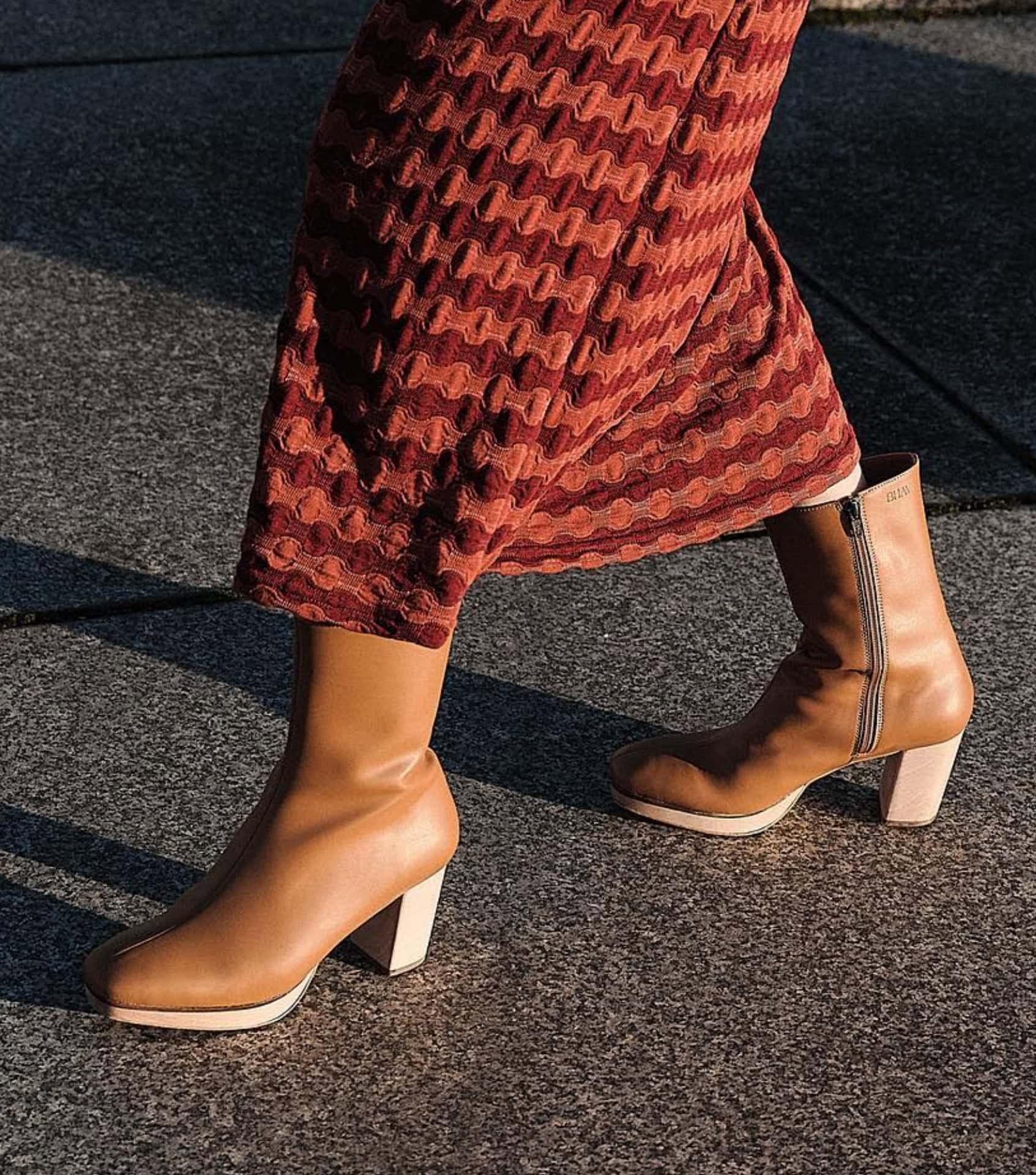
Bhava is ethical, vegan, and here to help you hit the town in good-for-you, sustainable women’s shoes.
Test-driven in NYC, each fashion-forward design is made to be kind to your feet regardless of the urban terrain you’re traversing.
The Gaia sandal is a summer essential for minimalist wardrobes. Available in beige, black, or white, the style features a minimal toe loop and cross-over ankle strap for support.
Bhava also sells knee-high boot uppers. Pair them with one of their compatible models of ankle boots for the ultimate piece of flexible footwear.
Bhava’s Ethical & Sustainability Practices
Materials:
Bhava uses REACH-certified Italian vegan leather that does not contain PCP, formaldehyde, PVC, phthalates, azo dyes, or chrome.
Other materials include cork fabric, organic cotton, eco Ultrasuede, wood and natural rubber.
Supply chain & labor practices:
From boots to sandals, everything is handmade in either Spain or Mumbai (which is 100% female owned and operated).
Carbon commitments & green practices:
The soles on each pair of Bhava’s vegan sustainable shoes are repairable.
They also offer an eco-friendly shoe care kit containing gentle, non-toxic products to help keep your shoes in tip-top shape.
VEJA
VEJA has not been rated.
Price Range: $70–$245
About VEJA
Are VEJA shoes sustainable?
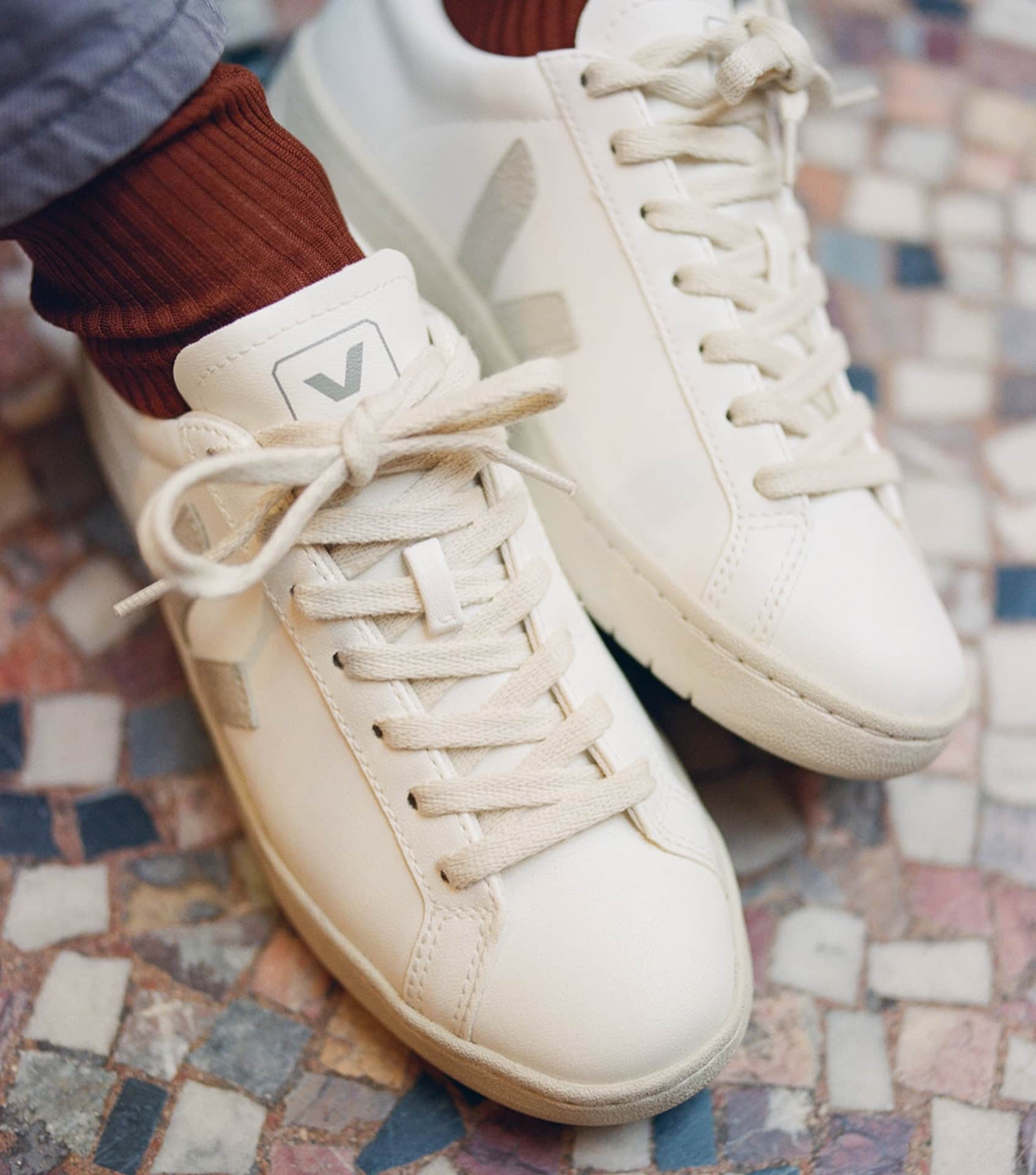
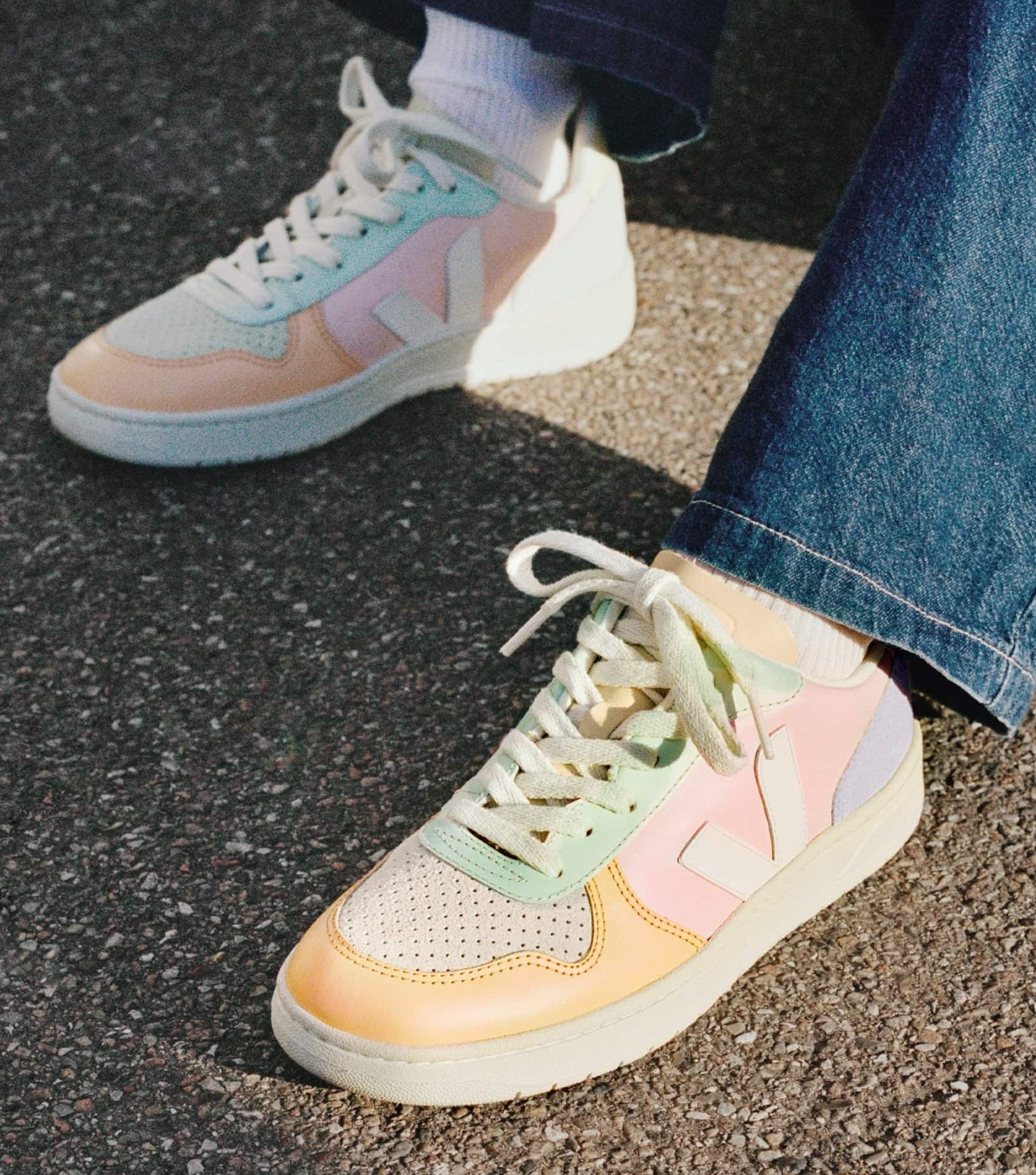
Yes! French-brand VEJA has been making sustainable athletic shoes for nearly 20 years and its industry-defying business model is as transparent as the holes in your old running shoes (read: you can see right through them).
You’ll find high-performance footwear for men and women, as well as those for your mini-me.
VEJA also has plenty of vegan-friendly options, like the Urca CWL Low Top Sneaker. These eco-friendly canvas shoes are made from a coated organic cotton canvas.
VEJA’s Ethical & Sustainability Practices
Materials:
VEJA’s preferred sustainable materials (which account for 85% of those used) are recycled PET, and natural materials including organic cotton, chrome-free leather, organic jute, and CWL (a coated organic cotton leather alternative).
The coating for the CWL is a 54% bio-based resin made from P.U., cornstarch, and castor bean oil.
They also use bio-based materials for cushioning and Amazonian natural rubber for outsoles.
All are regularly tested for toxins, evidenced by required supplier reports.
Supply chain & labor practices:
Produced in Brazil, VEJA ensures safe, equitable working conditions and fair wages for everyone involved in the production process.
The Certified B Corp also sets the price for the cotton they purchase for the entire year, to encourage financial security and better ecological practices among suppliers.
Carbon commitments & green practices:
Using renewable energy and carbon reduction practices, VEJA publishes its exact carbon footprint, as well as the emissions for each sneaker model.
You can drop off your old VEJA shoes to stores in New York and France, where they’ll be cleaned and refurbished or recycled.
Community & charitable giving:
To staff its Parisian warehouse, VEJA partners with Log’ins, a social inclusion company that provides job opportunities, professional development, and social support to disabled people.
Cariuma
Cariuma has not been rated.
Price Range: $79–$169
About Cariuma
Cariuma came into being when two guys from Brazil decided that sneakers could be better—both for the consumer and the planet.
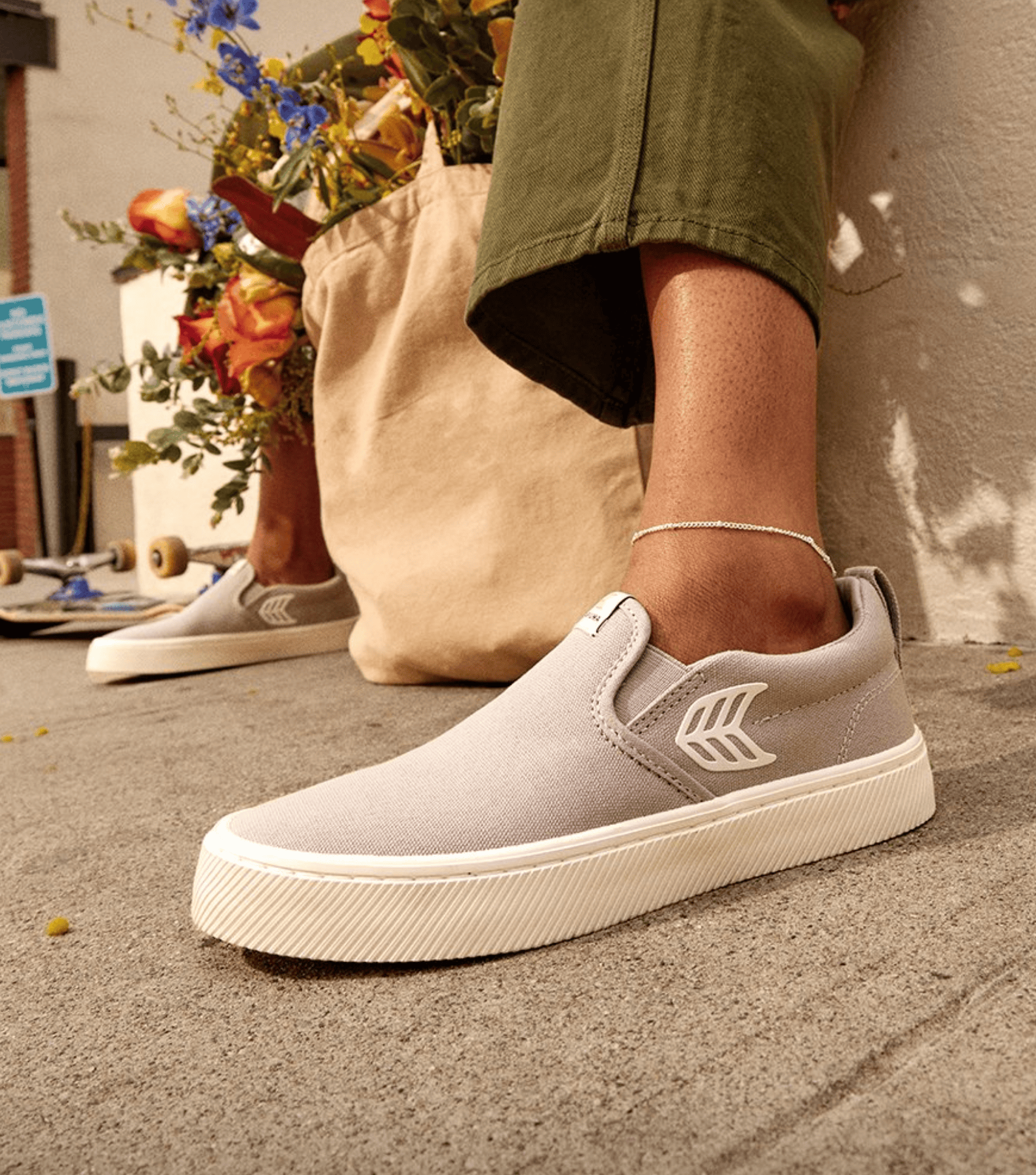
Their vintage-inspired, eco-friendly shoes for men and women include vegan sneakers and sustainable skate shoes, carefully designed for comfort and durability.
Check out their collaboration with National Geographic for some nature-inspired footwear.
Cariuma’s Ethical & Sustainability Practices
Materials:
Cariuma uses several natural materials including GOTS-certified organic cotton, BCI cotton, natural rubber, OEKO-TEX-certified bamboo, sustainable cork, and leather and suede from LWG Gold-Rated tanneries.
They also use recycled materials including nylon and rPET, and mamona oil, a plant-based alternative to petroleum.
All materials are dyed using bluesign® approved dye chemicals.
Supply chain & labor practices:
This Certified B Corp’s sustainable men’s shoes and women’s shoes are made in a WRAP GOLD-certified facility. Workers receive living wages and benefit from a safe and respectful working environment.
Annual audits ensure compliance with Cariuma’s Code of Conduct and the brand shares the level of traceability it has across the different tiers of its supply chain.
Carbon commitments & green practices:
Featuring protective toe caps and fully stitched outsoles, these eco-friendly skate shoes are made to last.
Each pair ships carbon-neutral in recyclable and recycled materials, printed with soy-based ink.
Community & charitable giving:
For every pair sold, two trees are planted in the Brazilian rainforest.
Our Personal Review of Cariuma Catiba Pros:
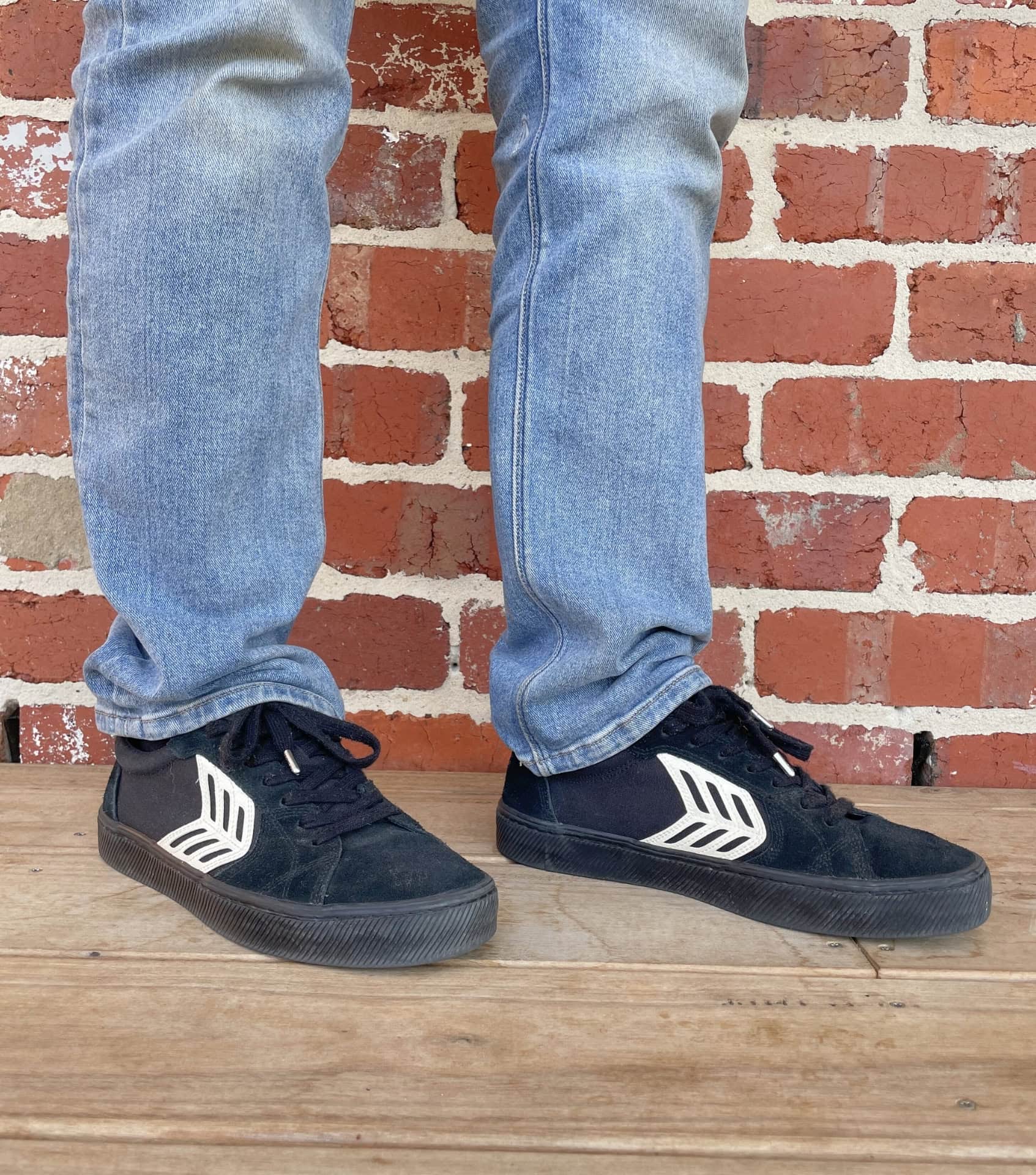
“Lyall and I both bought a pair of the Catiba Pros which we’ve worn for about 18months – 2 years. We’re also both 90s nostalgia tragics so the style of these and how they look with almost any outfit is definitely our thing. I am super impressed with how hard wearing they are (with all the added protection for actual skaters, unlike me) and how comfortable high tops can be (I don’t remember them being this comfy). They are a little harder to get on, they are high tops I guess but that’s also partly me being lazy and trying to squeeze in without adjusting the laces. The white suede does mark easily so I try not to wear these if I’m doing anything off the beaten track…“
Review by Joy McConnochie, SJ’s Co-founder
Thesus
Thesus has not been rated.
Price Range: $138–$220
About Thesus
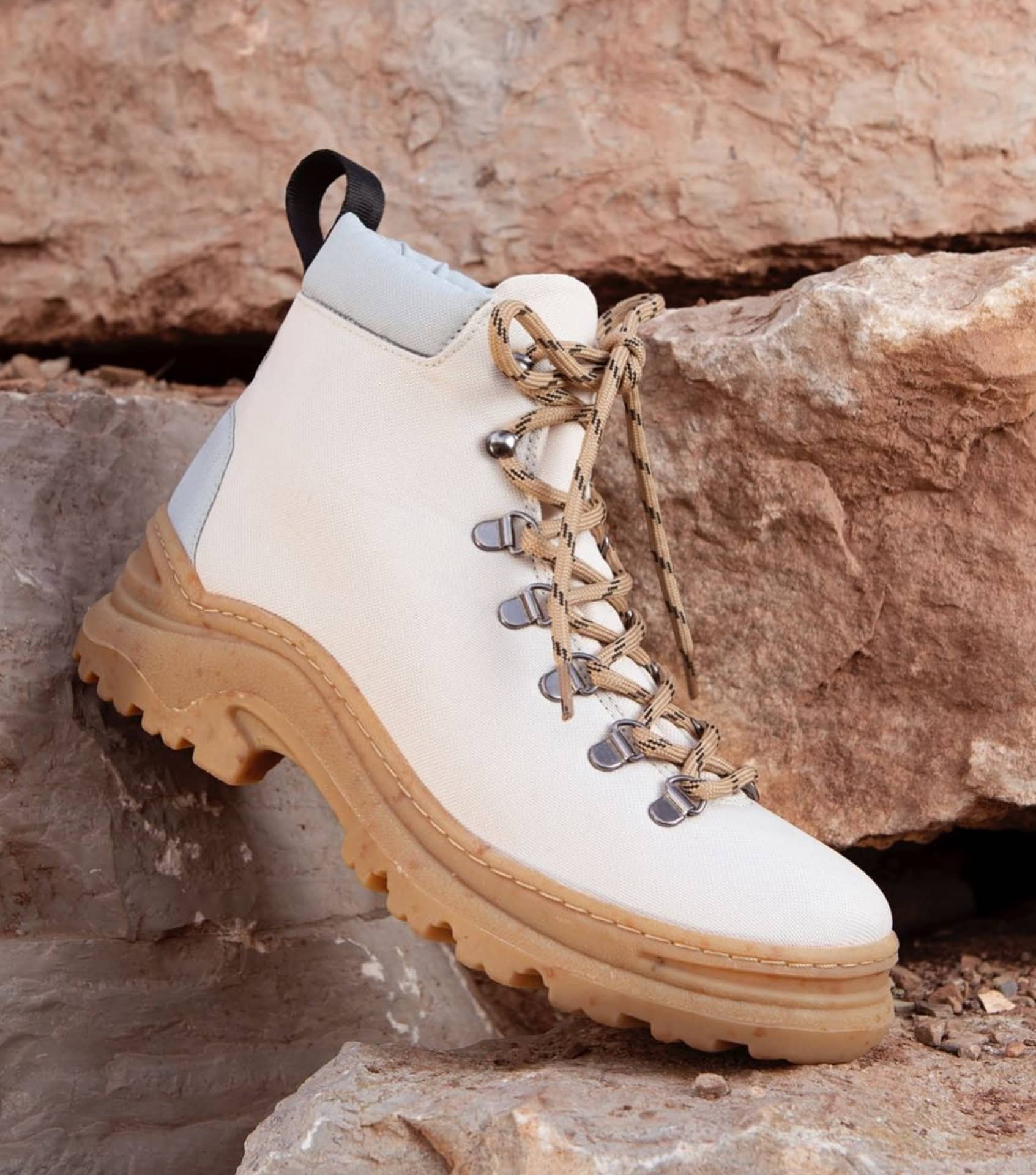
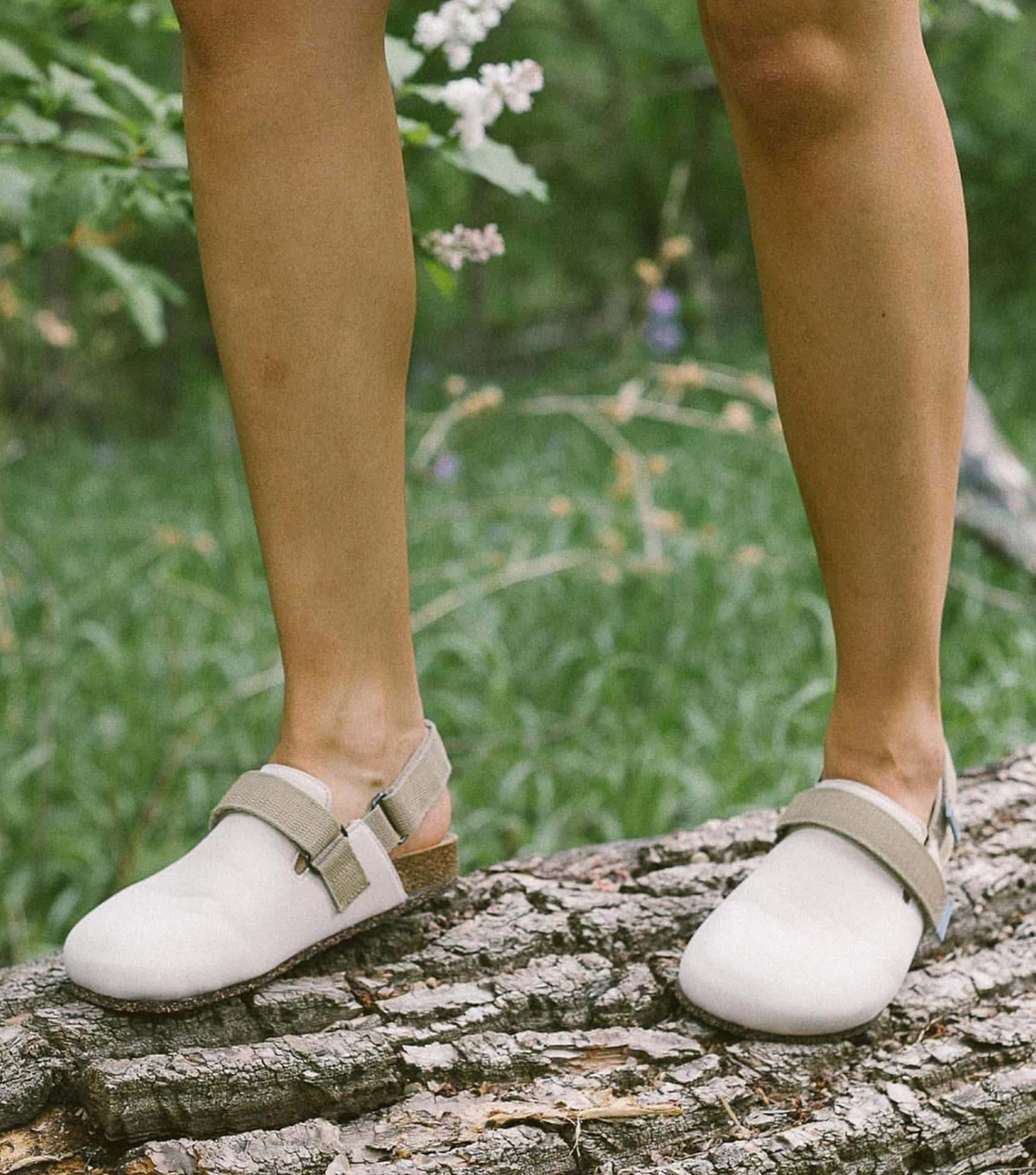
For sustainable shoes that outdoor enthusiasts will love, Toronto-based Thesus offers unisex, functional designs in a great range of colors.
This BIPOC and woman-owned sustainable footwear brand is focused on getting people outside, and its collection of boots and clogs is designed to do just that.
Thesus’ Ethical & Sustainability Practices
Materials:
Thesus’ shoes are created from 95–100% recycled materials, including recycled plastic bottles, recycled marine plastic, recycled synthetic wool, and recycled natural rubber.
Both The Weekend Boot and the Terrus Clogs are 100% vegan.
Supply chain & labor practices:
100% of production takes place in Portugal.
All of Thesus’ staff and the staff of their direct partners are paid a living wage. They are also working to ensure that living wages are paid by the material suppliers.
Carbon commitments & green practices:
The brand is in the process of becoming a Climate Neutral Certified company, but ultimately aims to be Climate Positive and regenerative.
How We Found The Best Eco-Friendly Shoe Brands
Due to its multiple components and materials, there’s a lot that goes into a sustainable shoe. We used our sustainable fashion criteria to evaluate these brands across four key areas. For brands we’ve rated through our sustainability rating system, we evaluated their initiatives across 22 criteria. See other rated brands in our sustainable brand directory.
Materials
Materials can make or break a shoe’s sustainability, so we looked for brands that prioritized eco-friendly materials: responsibly sourced, natural materials (cotton, hemp, wood, natural rubber, and cork) and recycled materials (recycled polyester, rubber, and nylon). It’s also heartening to see increased use of innovative sustainable materials, including sustainable vegan leather and bio-based materials like those made from algae and sugarcane. We don’t want any greenwashing, so third-party certifications are key.
Certifications to look for: ZQ Merino, Leather Working Group (LWG), FSC, REACH, OEKO-TEX, Global Organic Textile Standard (GOTS), Better Cotton Initiative (BCI), bluesign®, PETA Approved Vegan
Supply Chain & Labor Practices
A transparent supply chain is a must for any ethical shoe brand. We look for fair trade brands that transparently share where their products are produced and the mechanisms they have in place to ensure that workers are paid a living wage and have safe and fair working conditions. Third-party certifications are ideal, but given that they may not be 100% reliable (see: B Corp greenwashing), we’d also recommend doing your own research into a brand’s practices.
Certifications to look for: B Corporation (B Corp), Fair Trade, Worldwide Responsible Accredited Production (WRAP)
Carbon Commitments & Green Practices
Carbon-related sustainability goals are crucial. The best eco-friendly shoe brands are taking actionable, proven steps towards reducing their carbon footprint. We also look for sustainable packaging made from recycled, recyclable, and biodegradable materials, as well as circularity initiatives like repair programs, take-back schemes, and resale platforms.
Community & Charitable Giving
Brands that give back and make a positive impact in their communities through social initiatives and nonprofit partnerships give us an extra spring in our step.
Frequently Asked Questions On Sustainable Shoes
What makes a shoe sustainable?
A sustainable shoe considers its impact across its entire lifecycle. This includes the materials used (natural, recycled, or innovative bio-based alternatives), how and where it’s made (fair wages, safe conditions, transparent supply chains), its carbon footprint (renewable energy, carbon offsets, efficient shipping), and what happens at end of life (repair programs, recycling, composting). The most sustainable shoe brands address all of these factors.
Are sustainable shoes more expensive?
They can be, but not always. Brands like Allbirds start at $50 and VEJA at $70, which is comparable to many conventional brands. The higher price point on some sustainable shoes reflects fair wages, quality materials, and responsible manufacturing. They also tend to last longer, so the cost-per-wear often works out better than cheaper fast fashion alternatives. Buying secondhand or taking advantage of resale programs (like Allbirds’ ReRun) is another way to access sustainable shoes at lower prices.
What are the most eco-friendly shoe materials?
Some of the most sustainable shoe materials include hemp (fast-growing, requires minimal water and pesticides), organic cotton (GOTS-certified), natural rubber (especially Amazonian rubber that supports forest preservation), recycled PET and marine plastic, cork, and innovative materials like algae-based foam and sugarcane EVA. For leather shoes, look for Leather Working Group (LWG) certification and chrome-free tanning processes. For vegan alternatives, REACH-certified vegan leathers and bio-based options are preferable to petroleum-based synthetics.
Are vegan options more sustainable than leather shoes?
Not necessarily. It depends on the specific materials and production methods. Some vegan shoes use petroleum-based synthetics that aren’t biodegradable and have significant environmental impact. However, brands like Bhava and Thousand Fell use innovative vegan materials (REACH-certified vegan leather, recycled plastics, plant-based alternatives) that minimize harm. On the other hand, responsibly sourced leather from LWG-certified tanneries (like VEJA use) can be durable and long-lasting. The most sustainable option depends on the specific brand’s practices rather than a blanket leather vs. vegan distinction.
How can I make my shoes last longer?
Taking care of your shoes is one of the best sustainability moves you can make. Rotate between pairs to reduce daily wear, clean them regularly according to the material (many wool shoes like Baabuk’s are machine washable), store them properly away from direct heat and sunlight, and repair them when possible rather than replacing. Several brands on our list offer repair services (Bhava, Baabuk) or take-back programs (Allbirds, Thousand Fell, VEJA, Cariuma). A well-maintained pair of quality shoes can last years.
What certifications should I look for in sustainable shoes?
Key certifications include: B Corp (comprehensive sustainability and ethics assessment), Leather Working Group (LWG) for responsible leather, FSC for sustainably sourced wood and rubber, GOTS for organic textiles, OEKO-TEX for chemical safety, REACH for restricted substance compliance, bluesign® for safe dye chemicals, WRAP for ethical manufacturing, ZQ Merino for responsible wool, and PETA Approved Vegan for animal-free products. No single certification covers everything, so look for brands with multiple certifications across different aspects of their operations.
Can I recycle old shoes?
Yes, but it depends on the brand and where you live. Several brands on our list have dedicated take-back or recycling programs: Thousand Fell offers a full circular recycling program (with a $20 deposit returned), Allbirds partners with Soles4Souls and runs a ReRun resale program, VEJA accepts old shoes at their stores in New York and France, Baabuk will take back old shoes for donation or recycling, and Cariuma plants two trees for every pair sold. If your shoe brand doesn’t offer recycling, organizations like Soles4Souls accept gently used shoes for donation. Finding shoes in good condition at online thrift stores can be tricky, but it’s always worth a peek. See our guide on What To Do With Old Shoes for more ideas.
Final Thoughts On The Best Sustainable Shoes
The game is afoot with ethical and sustainable shoes!
Outfitting your feet can be a headache, especially since shoes are one of the hardest items in your wardrobe to make sustainable. These eco-friendly shoe brands have made big steps in making better shoes, from hemp sneakers and wool boots to closed-loop recycling and fair trade manufacturing.
As always, only consider purchasing shoes when you really need to. Taking care of your shoes and repairing them helps tread a little lighter on the planet — hence why durability and repairability are important considerations when shopping for new shoes.
While finding those in good condition and in the right size via online thrift stores can be tricky, it’s always worth a peek. You might get lucky!
Editor’s Note: This article was originally published in May 2023 and has been updated several times since. This February 2026 update includes updated brand selections, Thesus as an additional recommendation, refreshed end sections and FAQs. All products are independently tested, researched, and in some cases rated using our comprehensive sustainability rating methodology.

Joy has been a passionate advocate for the environment since she was a small child. She grew up in South Africa and has been lucky enough to be exposed to the wonders of nature not just in Africa but all over the world. She founded Sustainable Jungle (together with her husband Lyall) back in 2017 after becoming enraged by the devastating impact of palm oil. She then founded the Sustainable Jungle Podcast and together with Lyall interviewed remarkable people from all over the world who were finding ways to create positive impact. Outside of Sustainable Jungle, Joy has always worked in the corporate world, starting out as an auditor and later moving into management consulting. More recently she specialized in Climate Investing for the Asia Pacific region. Given her experience, her current passion is Brand Ratings. She is very much enjoying going deeper on what it really means to drive sustainability performance and true impact through business operations.