














It’s high (tea) time we pay more attention to our environment before it starts boiling.
We can start sipping away at our most used products and switch to more sustainable alternatives like eco kettles.
Think: better materials, designed to minimise water and energy usage, and created by a company conscious of that cuppa’s carbon footprint.
Now, care to know which are our favourite sustainable kettles?
Note: Our brand rating system assesses brands based on multiple sustainability-related criteria, including things like climate action, biodiversity impact, and ethics in the supply chain. Brands need to opt in to be rated. You can find rated brands in our directory.
Related Guides: Non-Toxic Cutting Boards, Non-Toxic Cookware
We independently research all featured brands, and we ask them to confirm their claims. In many cases we personally review recommended products. This post contains affiliate links which means we may earn a commission if you buy something. We explain this further in our Terms of Use.
Spilling The Tea On The Top Eco Kettles
Made from surgical stainless steel with a cool touch ergonomic handle and push-button technology that makes pouring a breeze, any tea lover will get carried away by Caraway’s durable kettle. We use this as our daily kettle and can’t say enough about its good looks and durable, highly functional design.
Take your sustainable tea and coffee moments up a notch with xtrema’s pure ceramic kettles that are sustainably manufactured with natural materials free of toxins.
If retro is more your style, SMEG’s color-popping eco-friendly kettle features a removable stainless steel limescale filter so there are no compromises in the quality of your brew.
Index: Eco-Friendly Kettles
- Caraway Jump to brand
- Hario Jump to brand
- Xtrema Jump to brand
- Alessi Jump to brand
- Etsy Jump to brand
- Smeg Jump to brand
- Great Jones Jump to brand
- Dualit Jump to brand
- Used Electric Kettles Jump to brand
Sustainable Non-Electric Kettles
Caraway

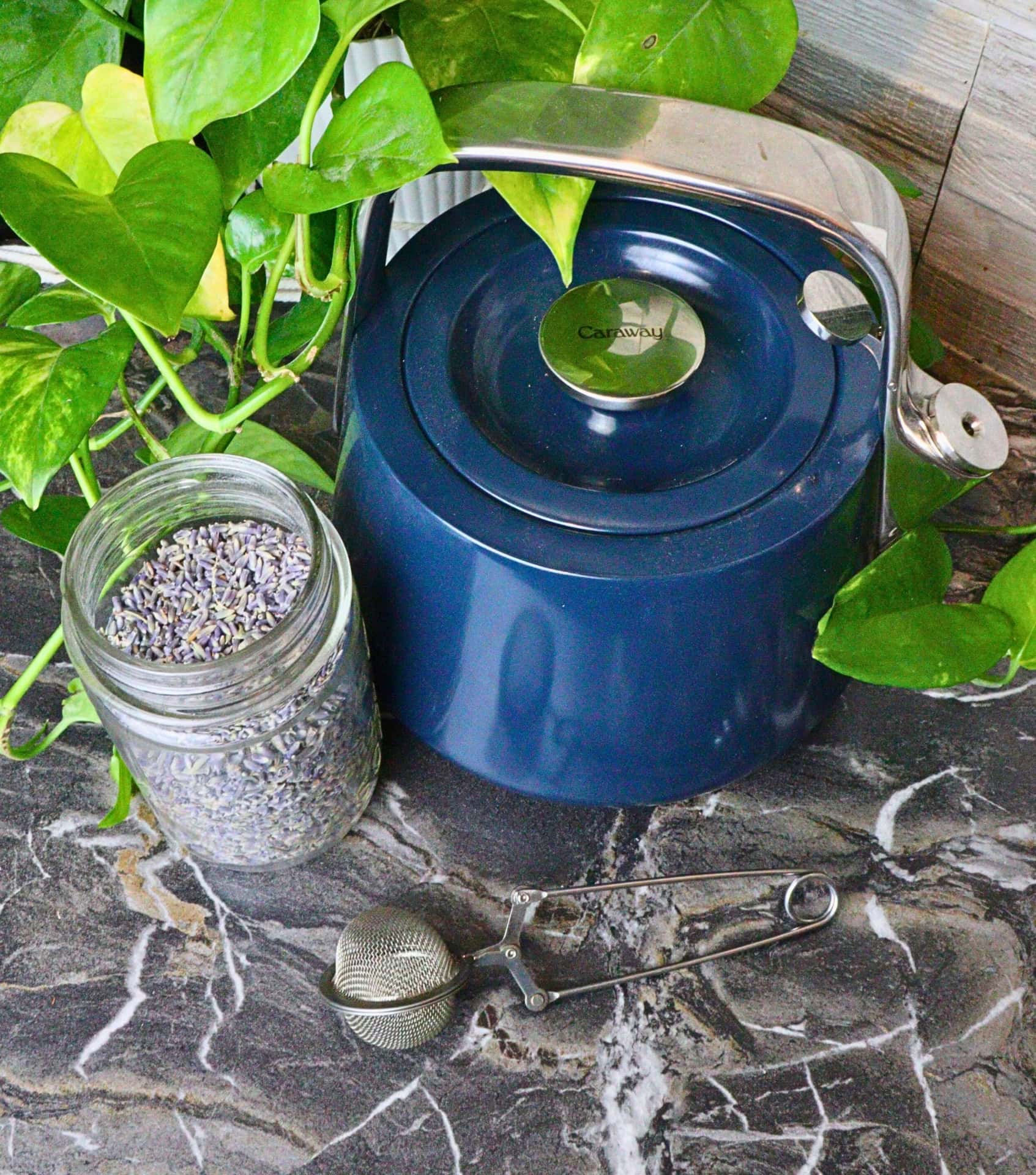
Caraway’s Kettle
Price Range: $245
Caraway introduces their modern take on a classic kitchen essential, the Whistling Kettle.
Their beautifully constructed non-toxic stovetop tea kettles will keep your boiled water clean and free from harmful chemicals.
Available in seven modern colors—from bright marigold to the deep, calming navy blue of the kettle we own—they come with a complimentary potholder, making your kettle easier to handle after boiling water.
Like all of Caraway’s non-toxic cookware, the kettle’s stainless steel body is coated in non-toxic ceramic that’s free of PFOAs and can be used on any type of stovetop including induction, electric, and gas.
It releases up to 50% less CO2 when produced compared to traditional non-stick coatings.
Its design is also highly heat conductive and boils water more efficiently.
About Caraway
Caraway produces planet-approved products.
Their plastic-free kettles and cookware are designed with ethically produced materials that don’t lead to any toxic run-off.
Caraway also supports BSCI and SMETA-certified manufacturing partners where employees are safe, paid fairly, given benefits, and work regulated hours.
All orders are shipped in packaging made of recycled materials, free of any single-use plastics, and using low-impact print dyes.
My Personal Review of Caraway’s Kettle:
“The Caraway Tea Kettle is as functional as it is beautiful, with a thick and sturdy design that feels durable and high-quality. It heats up quickly on my gas range and especially retains heat well, making it perfect for frequent use. We actually timed how long it took to boil the same amount of water in this kettle and our old one, and Caraway came out on top by nearly two minutes. The sleek, modern look also adds a stylish touch to my kitchen, especially since I matched all my Caraway tea towels to its color!”
Review by Amber McDaniel, SJ’s Head of Content
Hario
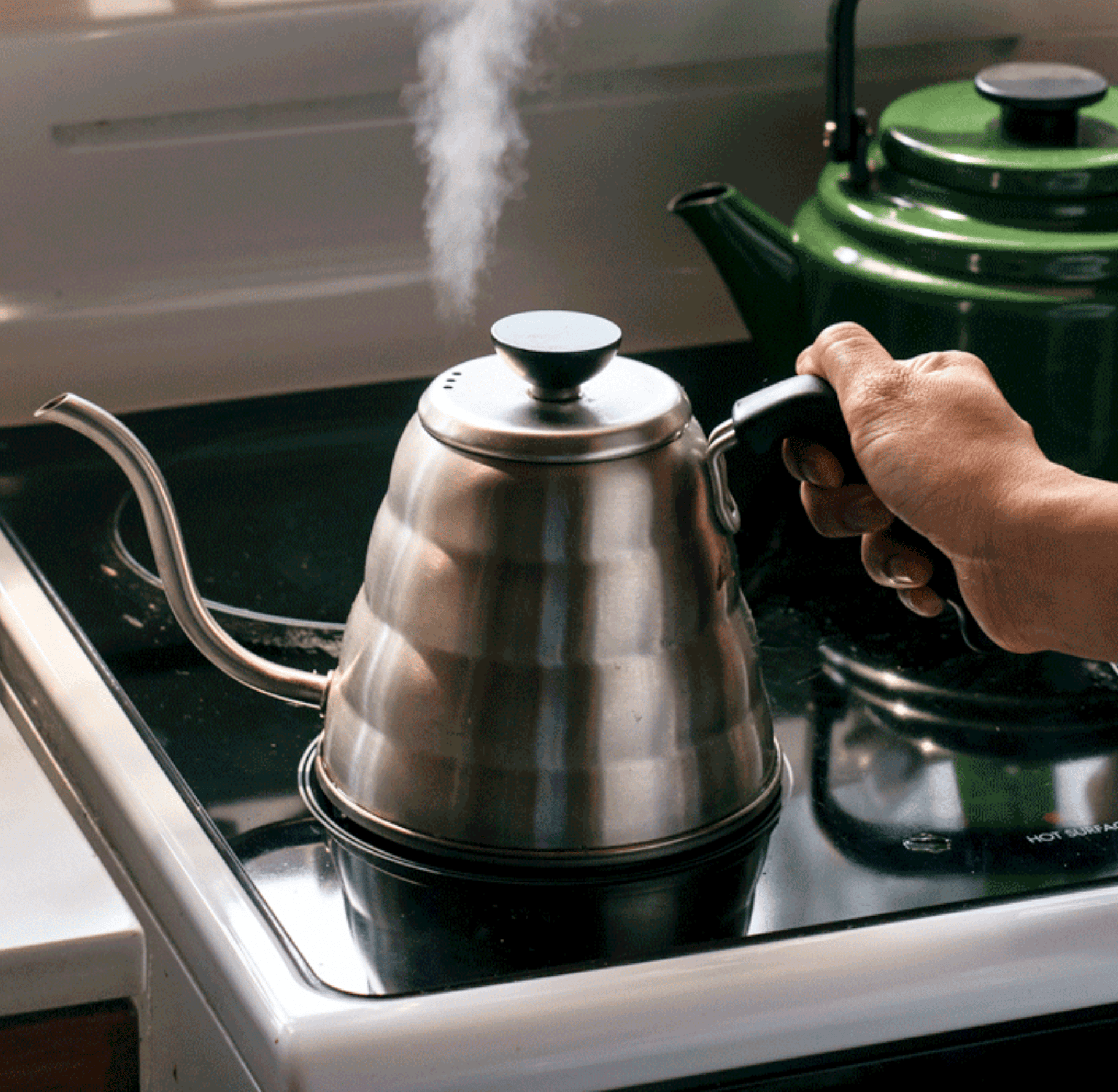

Hario’s Kettles
Price Range: $39–$84
Japanese for “King of Glass”, Hario designs and makes eco-friendly kettles in Japan.
Their drip kettles and stainless steel stovetop kettles boast an ergonomic design that might look a little unusual at first.
Once you start using it, you’ll appreciate how the Hario V60 “Buono” Drip Kettle and similar models feature a thin spout for easy pouring.
The gooseneck spout allows for a slow, steady, and controlled pour, making it perfect for pour-over, drip, manual coffee brewing, boiling water for tea or cooking.
Hario also has an electric kettle.
About Hario
While we’re not very familiar with Hario kettle manufacturing practices, we do know a little more about Hario’s factory in Japan which has been making its plastic-free coffee makers since 1972.
It makes their glass with electricity, as an environmentally friendly alternative to combustion smokestacks. Any excess glass material is returned to the furnace for reuse.
This Japanese company is also known to be working to increase the number of women in managerial positions and regularly participates in local philanthropic clean-ups.
We’ll be reaching out to ask some questions about their supply chain.
Xtrema


Xtrema’s Tea Kettle
Price Range: $183
Xtrema’s trio of non-toxic tea kettles are made using 100% pure ceramic, making them safe and free from metals or harmful chemicals.
Each piece, whether it’s the Retro, Swirl, or Asiana tea kettle is handcrafted by specialty Chinese ceramic artists.
As pure ceramic tea kettles, they won’t change the taste of the water you use for your precious cup of tea or ethical coffee, or leach chemicals, lead, cadmium, or metal.
Their 100% mineral clay construction means they won’t get scratched and reveal toxic chemicals underneath, a common problem with ceramic-coated products.
They withstand extreme temperatures so feel free to throw them on the BBQ grill, over a fire, in the microwave, or stovetop.
They’re also California Prop 65 compliant.
About Xtrema
Xtrema is a family-owned and operated company with decades of experience in providing uncomplicated, non-toxic bakeware and cookware.
Xtrema’s kettles are handmade in China because of the country’s reputation for producing ceramic products of the highest quality.
We’ll be touching base with Xtrema to find out more about working conditions, living wages, and the brand’s carbon commitment.
Alessi

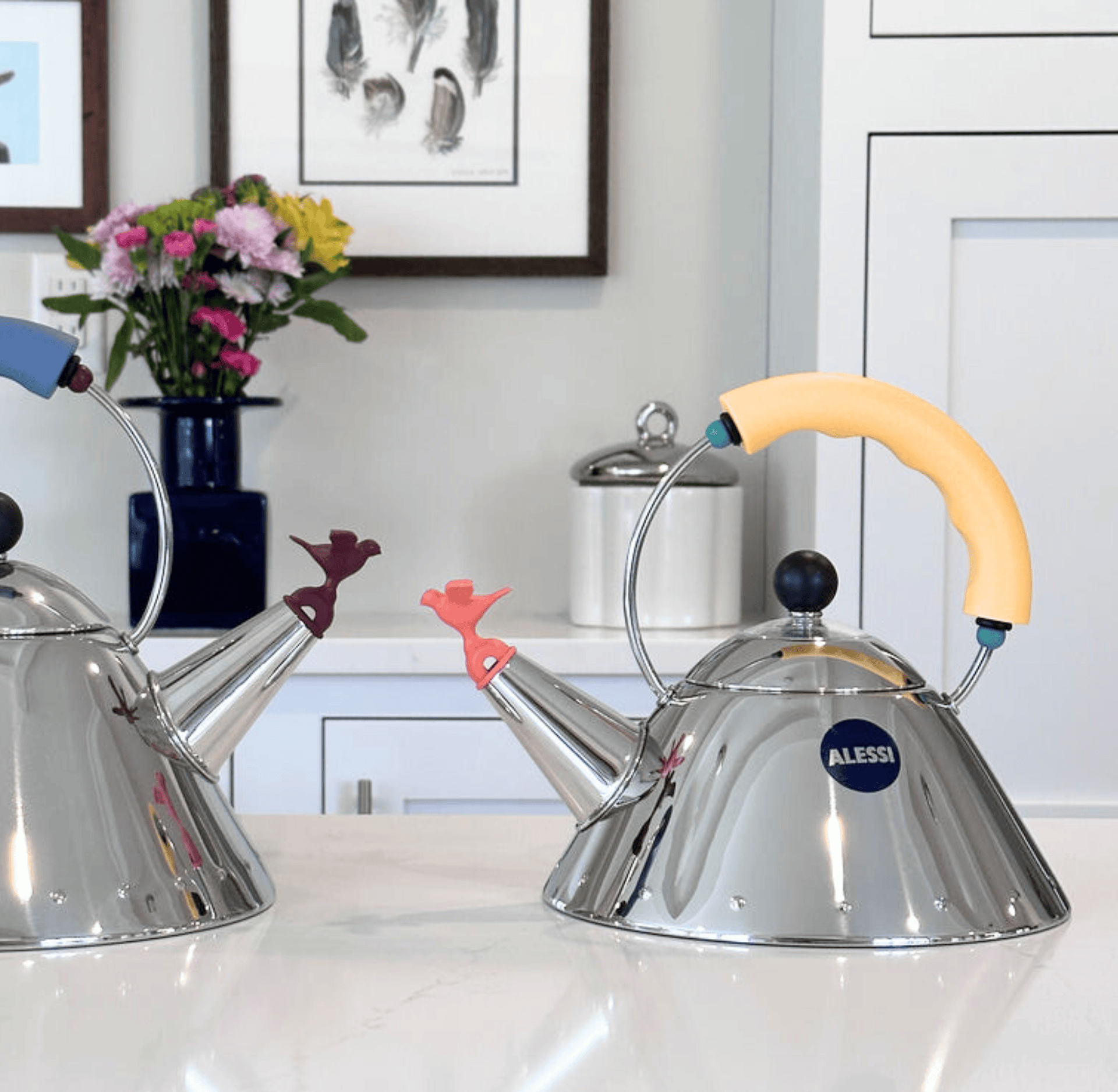
Alessi’s Induction Hob Kettles
Price Range: $86–$250
The Alessi sustainable tea kettle range may feature novel designs (dragon, dinosaur, and bird-shaped whistles, anyone?), but they’re all made of classic stainless steel.
This includes their “designer boilers”, which feature a magnetic heat-diffusing bottom.
They also offer an electric kettle made with a thermoplastic resin, making it highly responsive to temperature without requiring toxic chemicals.
About Alessi
The Certified B Corp has taken an impressive approach to corporate social responsibility, including charitable contributions for orphans and striving to reduce environmental impact.
Most of their tea kettles and other sustainable kitchen products are made by skilled workers in Omegna, Italy.
Etsy

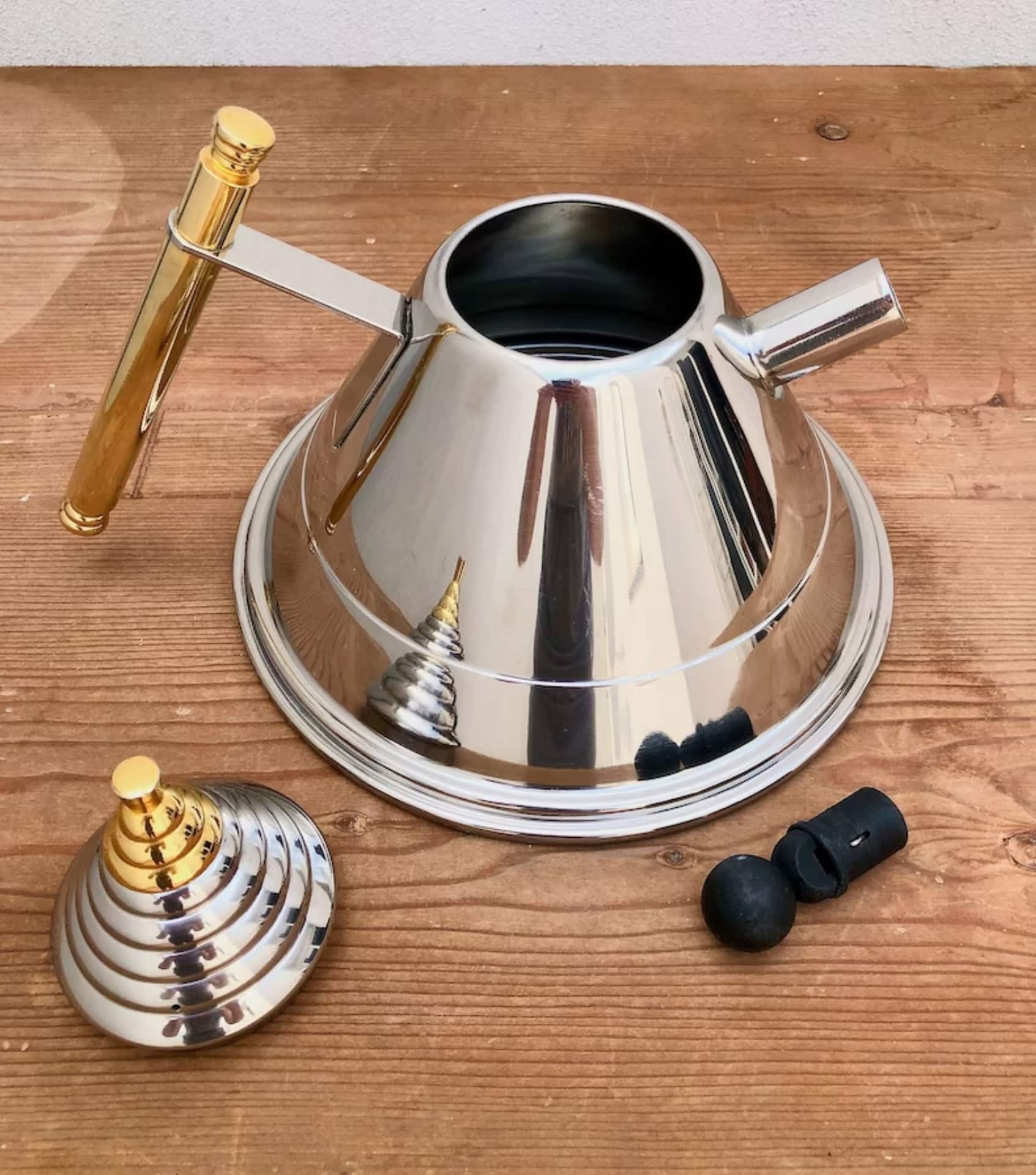
Etsy’s Vintage Kettles
Price Range: $5–$11,909
Vintage kettles are not only unique but they also do away with the manufacturing footprint of a new kettle.
Are you looking for a tea kettle for a particular aesthetic and budget?
Etsy has them all: splatter-ware, stoneware, and even kettles dating back to the 1700s.
Just be sure to steer clear of those older models that have potential toxin leaching—like those made of plastic, aluminum, copper, colour coatings (unless external only), and enameled cast iron kettles.
About Etsy
Invite Etsy over for a cuppa and you’ll be supporting small, independent businesses.
You can search for kettle sellers in the UK to minimise shipping impact, but regardless, you’ll receive it with carbon offset shipping.
Their data centers, website, global offices, and even work-from-home employees are powered by renewable energy.
Sustainable Electric Kettles
Smeg

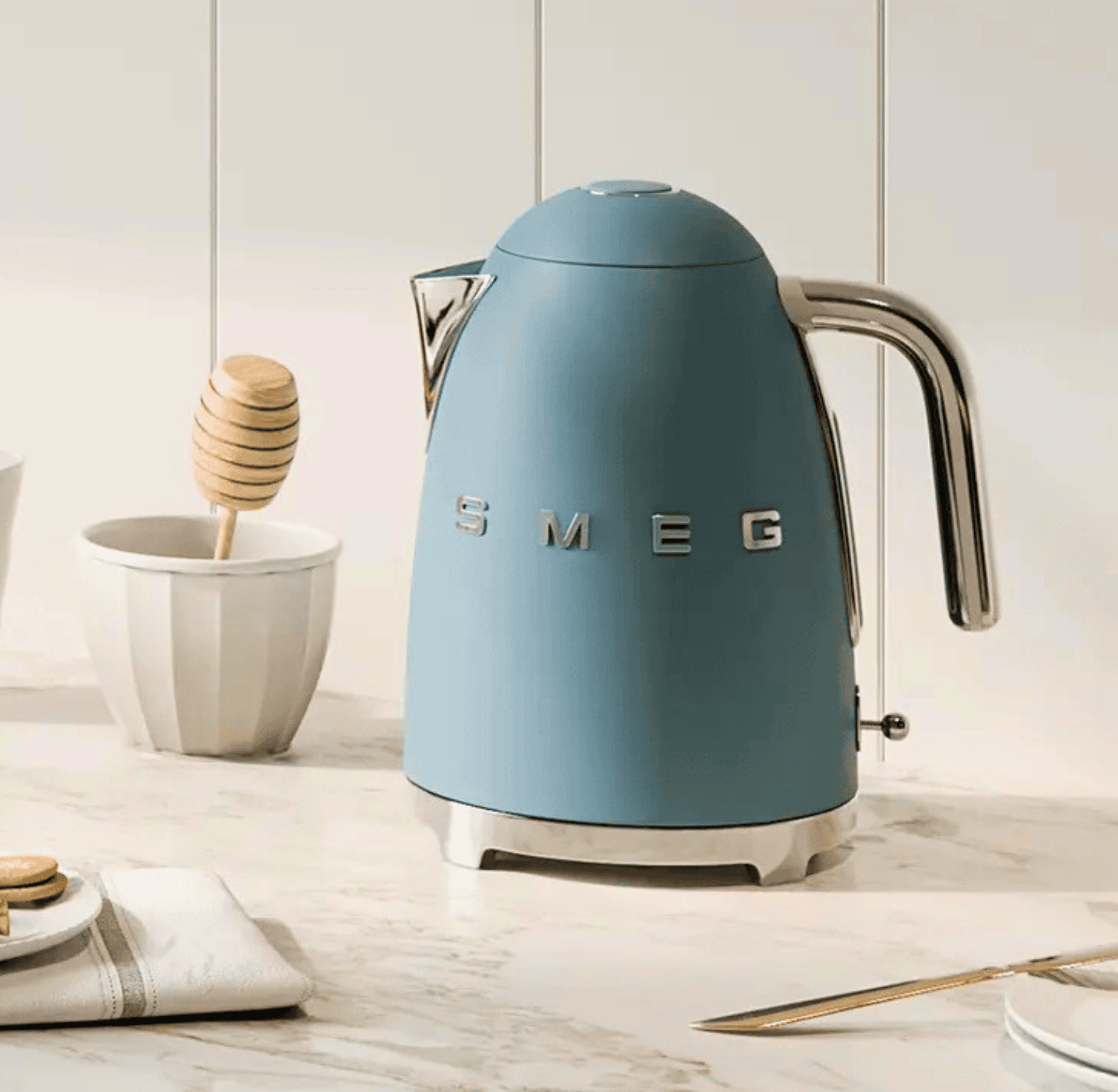
SMEG’s Electric Kettles
Price Range: $119–$448
They may look like something out of that 70s show, but SMEG’s retro kettles feature all the modern tea tech.
On top of a keep warm function, the temperature settings allow for customisation for your favourite tea type and an auto shut-off feature.
Their enameled stainless steel surface (available in several colours) and uncoated stainless steel interior provides for the most efficient heat conduction, making them one of the best eco-friendly tea kettles.
Each kettle has an in-built but removable stainless steel limescale filter for cleaner cuppas.
About SMEG
A well-known eco-friendly appliance brand, SMEG combines high performance and energy efficiency in its range of kitchen and laundry products.
They prioritise easy-to-recycle materials such as steel, glass, aluminum, and brass.
As an Italian company, they adhere to REACH and RoHS standards set by the EU, which restrict hazardous chemicals and materials in their supply chain.
Great Jones


Great Jones’ Tea Kettle
Price Range: $165
Great Jones has collaborated with fellow coffee-lovers, Fellow, for their take on the best energy-efficient kettles.
Their custom Stagg EKG electric kettle includes a precision-pour spot specifically designed for pour-over coffee—though we’re pleased to tell you it’s very tea-friendly too.
The Great Jones x Fellow kettle features a built-in temperature control system and boil-dry protection, which ensures you don’t waste energy and harm your kettle by accidentally leaving it on and empty.
Great Jones Ethical & Sustainability Practises
Great Jones is a women-run, New York-based small business eco-friendly cookware brand that uses three main materials in its products: enameled cast iron, stainless steel, and ceramic nonstick.
Pieces made with stainless steel contain trace amounts of nickel, but they’re free of Teflon, using a non-toxic ceramic coating instead.
The products are made in vetted cookware factories all over the world, including Guangdong, Tianjin, and the US. We will be contacting Great Jones for more details about specific labour practices and worker protections.
Any returned cookware is recycled or donated via their partnership with Hot Bread Kitchen in New York.
Dualit


Dualit’s Tea Kettle
Price Range: $59–$129
Tea time equals green time with Dualit’s range of non-toxic electric tea kettles, all stainless steel designed to minimise limescale build up, and automatic shut-off functions.
At just 2300 watts, the Architect Kettle is an ideal low-watt kettle.
Their Classic Kettle has a one-cup setting for a quick cup on the go. Unlike others, it comes with a replaceable 3KW heating element to extend its lifespan.
About Dualit
Dualit values sustainability and ethical sourcing, which is why they offer reparable toasters and kettles and industrial compostable coffee capsules.
These coffee capsules are mostly Fairtrade certified, too.
Used Electric Kettles

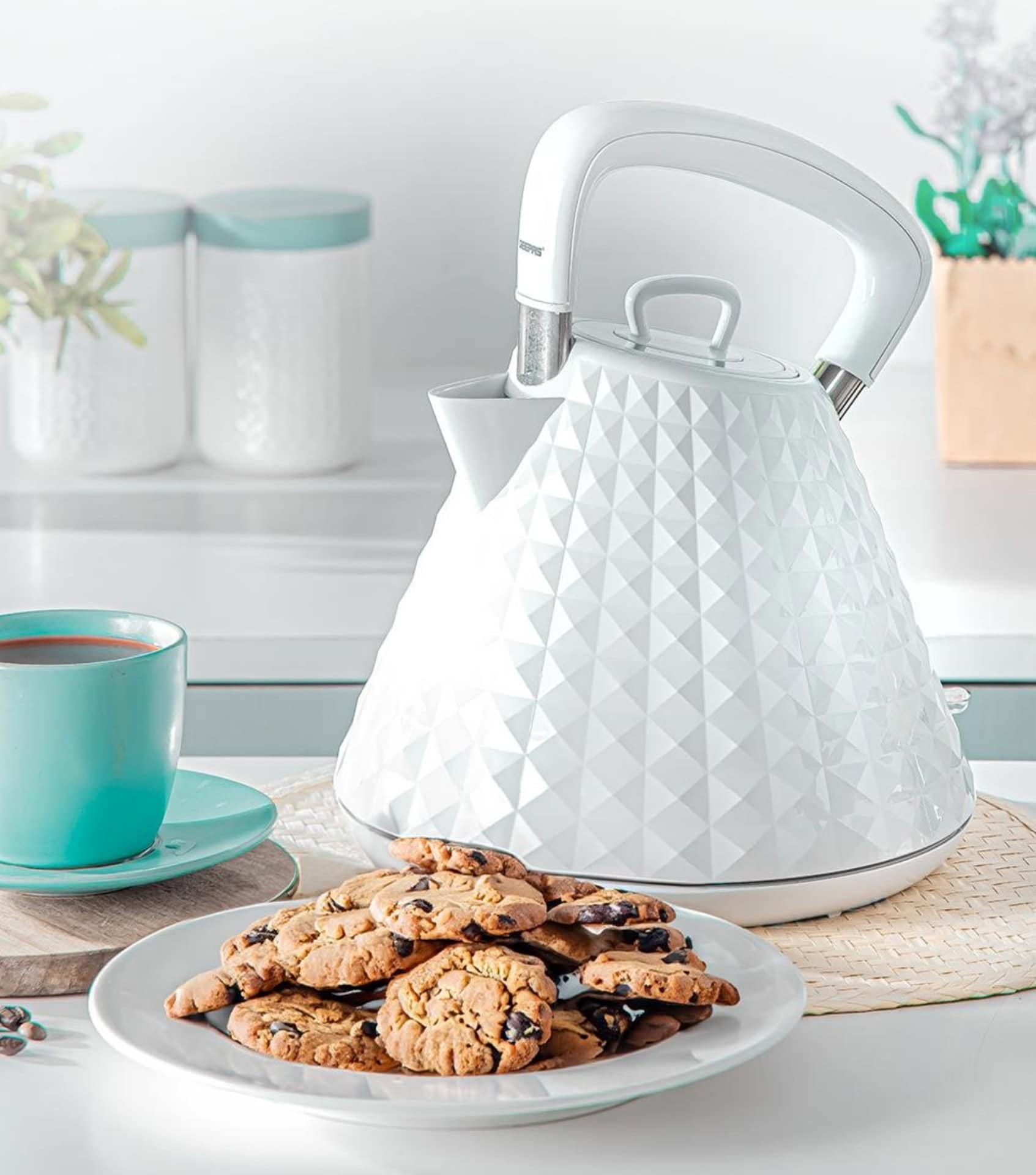
Are electric kettles eco-friendly?
Typically not, however, used electronics are the most ethical electronics—and eco-electric kettles are no different.
There are many options when it comes to sourcing used kettles. They’re a common find at thrift stores, Facebook Marketplace, Craigslist, or Gumtree.
To have a sip-worthy kettle shipped directly to your door, consider:
- eBay: eBay has a range of certified refurbished, seller refurbished, and used tea kettles. Many are made with stainless steel and some come with warranties.
- Amazon Renewed: You can find refurbished, open-box, and pre-owned kettles that are professionally inspected and tested and come with at least a 90-day guarantee. Many on offer are the best energy-efficient kettles, too.
If you’re wondering what type of kettle is more sustainable, we’d recommend looking for fully stainless steel kettles, as these are the most durable as well as the most non-toxic.
Be sure to check that the heating coils and brass fittings aren’t exposed, as they may leach nickel, lead, and heavy metals.
Electric Tea Kettle Vs. Eco Stove Top Kettle
If you’re wondering what type of kettle is more sustainable between hob kettles and electric kettles, the jury’s still out.
Choosing the most economical kettle is also somewhat confusing. Some suggest it takes the same amount of energy to heat the same amount of water—regardless of how you do it (unless the forgotten hob kettle is left to whistle away, of course).
Others recognize the potential energy wasted on the body of the kettle and the stove itself. The main drawback to electric kettles, however, is that all the electronic components and mixed materials make them difficult to recycle and tricky to dispose of.
Electronics in general have this problem, which we think makes hob kettles arguably more of a sustainable tea kettle and a little greener than their counterpart.
How To Dispose Of Old Kettles
Kettles contain components that can be toxic when they end up in a landfill.
We recommend not contributing to the UK’s annual 378,200 tonnes of electrical waste by taking it to a local recycling centre.
While the recycled components aren’t valuable, the process will yield low-value metals that can be upcycled into other products.
Because recycling is far from the solution we thought it was, the best thing you can do is to look after your kettle for as long as possible. To prevent limescale, regularly wash it with a 1:1 water and white vinegar solution by letting it soak for an hour then boiling it with plain water.
And don’t leave water sitting inside the kettle as this too will result in limescale.
How We Found The Best Eco Kettles
The world of technology is rapidly advancing. The world of sustainable technology, on the other hand, is not quite heating up at the same rate.
While truly ethical electronics are a long way off, there are things we can do to minimise e-waste and energy consumption.
Materials:
Materials for the best energy-saving kettles include mostly stainless steel, glass, and sometimes recycled plastic. Stainless steel is the most popular choice for good reason. It’s durable, heat resistant, elegant, and leaves no flavours or smells.
Glass kettles are elegant and won’t impart flavours or smells, but they can be quite fragile.
While plastic would have been avoided previously, BPA is generally no longer a concern as most manufacturers have phased it out (still something to keep in mind with used kettles).
Recycled plastic or biobased plastic are better options for the planet, but they do still produce a risk of toxicity, especially when repeatedly heated, so consider those with stainless steel linings. While plastic kettles are cheaper and lightweight, they can leave smells or odours and won’t last as long as stainless steel.
It’s also best to avoid exposed heating elements as they may be a source of nickel leaching, not to mention an obstacle to removing limescale.
Traditional hob kettles often feature materials like enamel, copper, and cast iron, which can leach metals and other toxins into your tea.
- Certifications: Restriction of Hazardous Substances in Electrical and Electronic Equipment (RoHS), Registration, Evaluation, Authorisation, and Restriction of Chemicals (REACH), Business Social Compliance Initiative (BSCI), Sedex Members Ethical Trade Audit (SMETA), CE
Energy Usage:
In British homes, a whopping 6% of electricity is used by the kettle. Continuous cuppas mean kettles use more electrical energy than kitchen hobs, ovens, and microwaves.
While electric kettle wattage ranges from 1500W to 3000W, this will influence the heating time (higher W = faster) and won’t have an impact on energy usage. The best energy-efficient kettle is not one with a certain wattage, but rather one equipped with insulated walls, auto shut-off, and one-cup water heating features.
The most important thing is to fill the kettle with only the amount of hot water you need!
It takes no time to measure a cup of water to heat or use the handy water level of your eco-friendly kettle if it has one. Simply doing this will save more than 3% on your electricity bill. Regularly descaling it (especially if it lacks a limescale filter) will also help, and be sure to unplug it after use to prevent phantom energy draws.
Recyclability & Repairability:
Fortunately, many eco-electric kettle brands are making a significant effort to help replace and repair kettles. Look for specific brands that back their products with extended warranties and offer options to recycle or repair the broken ones.
FAQ: Non-Toxic Kettles
What is the main purpose of the article?
We’re highlighting a selection of our favorite kettles that meet higher sustainability and health criteria — made with non-toxic and durable materials, designed to minimise energy and water waste, and produced by brands with more sustainable practices — so that tea and coffee lovers can choose better ones.
What defines an “eco-friendly kettle”?
In a nutshell, an eco-friendly kettle is one made from safe materials (like stainless steel, glass, or ceramic —not plastics or coated metals with toxic finishes), designed for efficient boiling and minimal waste, often with ethical manufacturing and transparent supply chains.
Why should someone consider switching to an eco-friendly kettle?
Because many conventional kettles contain plastic parts, coatings that may leach, or inefficient designs that waste electricity and water — switching to a well-designed, non-toxic kettle helps reduce your carbon footprint, exposure to harmful substances, and energy/water use.
What materials should a buyer look for in a sustainable kettle?
There are a few materials which you should prioritize, specifically these non-toxic options: food-grade stainless steel, borosilicate glass and pure ceramic. You also want to opt for minimal or no plastic, or ensure the plastic components of the kettle do not come into contact with boiling water. Also look out for energy-efficient boiling/insulation, eco-conscious packaging, and good manufacturing ethics (e.g., transparent supply chain).
Are electric kettles better than stovetop kettles?
We cover both formats (electric and stovetop) but emphasise that regardless of type, the material, design efficiency and production ethics matter most when evaluating sustainability and non-toxicity.
Final Thoughts On Eco-Friendly Tea Kettles
Are eco kettles worth it? Absolutely.
But for the greenest cup of green tea, the most eco-friendly kettle is one you already own. Then consider this guide to find the perfect sustainable or low watt kettle to help make each cup cleaner for you and our planet.
Feel free to spread the word to fellow cuppa-loving mates or those adventurers needing a kettle to help purify water!
Editor’s note: This article was originally published in February 2022 and updated in November 2025 to include new images, refreshed copy, and an expanded FAQ section.

Dawn is an avid animal lover and vegetarian currently living as self-sufficiently as is possible in the beautiful country of Bulgaria. She made this move from the UK ten years ago with the desire to better understand and experience living life sustainably and low-waste. Dawn is an ardent advocate for sustainability, using her writing as a platform to address critical issues and ignite a passion for impactful solutions in others.