














Sustainability is just as important as stretching—especially when both human health and the health of the planet are at risk. That’s why we want to get down (dog) with sustainable yoga mats.
Most yoga mats are made of PVC, which poses (pun intended) a health risk to any asana advocate. It exposes you to carcinogenic dioxins and heavy metals, not to mention its heavy carbon footprint. We don’t know about you, but that makes us feel pretty anti-zen.
Hot yoga ✔️; Hot planet ❌
Stand tall and take a deep, grounding breath in because we’re on the hunt for the best eco-friendly yoga mats.
Note: Our brand rating system assesses brands based on multiple sustainability-related criteria, including things like climate action, biodiversity impact, and ethics in the supply chain. Brands need to opt in to be rated. You can find rated brands in our directory.
We independently research all featured brands, and we ask them to confirm their claims. In many cases we personally review recommended products. This post contains affiliate links which means we may earn a commission if you buy something. We explain this further in our Terms of Use.
The Most Eco-Friendly Yoga Mats For Those (Eco) Warrior Poses
For artistic inspiration whilst doing your asanas, each stunning sustainable yoga mat from Scoria is naturally antimicrobial, thanks to the sustainably harvested cork yoga mat material. Our knees and sit bones are also very grateful for the cork’s cushiness.
Or practice your toxin-free tree pose on a non-stick eco-friendly yoga mat from Complete Unity Yoga. We found that their 4mm mat offered unrivaled grip both on the floor and on top.
Now get your ujjayi breath going, limber up in your favorite eco-friendly leggings, and let’s get down-dog to business.
Index: Sustainable Yoga Mat Brands
- Scoria Jump to brand
- Shakti Warrior Jump to brand
- Complete Unity Yoga ® Jump to brand
- Bean Products Jump to brand
- Mukha Yoga Jump to brand
- Yoga Design Lab Jump to brand
- Liforme Jump to brand
Scoria
Price Range: $89–$102
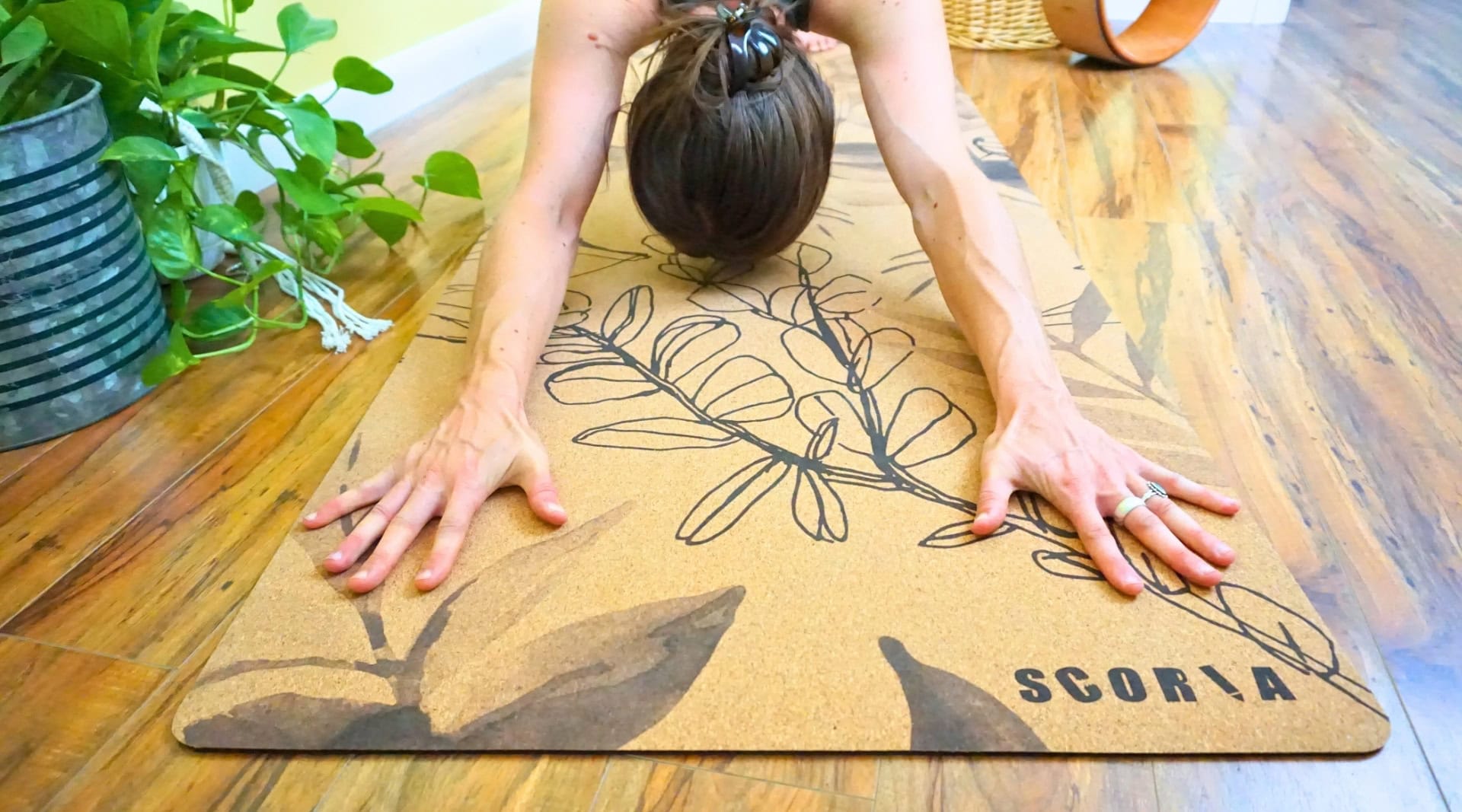
If you have your heart (chakra) set on a sustainable cork yoga mat, Canadian-based Scoria may just #SparkTheChildWithin. That’s because their mats are much more than just mats; they’re also works of art. Available in a selection of unique and beautiful designs and sizes—including eco-friendly kids yoga mats—you can pick the perfect vibe for your practice, whether it’s mushrooms or mountains.
Complete your practice tools with their range of sustainable yoga accessories, like cork blocks and our all-time-favorite yoga wheel.
Each eco-friendly cork yoga mat features a natural rubber grippy bottom and sustainably-harvested cork top, bonded together using heat and water-based eco adhesives. If you’re looking for something antimicrobial and sticky for your hot yoga practice, the natural properties of cork mean you don’t need to “fret the sweat”.
The beautiful designs are created using non-toxic water-based inks, resulting in REACH non-toxic certification. The natural cork is sourced from Portugal and the natural rubber is from Vietnam. Assembly and manufacturing take place in China, and designs are finished in Canada. Partners are scrutinized to ensure that working conditions and wages are ethical, fair, and safe. Cork is sustainably harvested from mature trees in Portugal every 9-12 years. The sustainable process allows the cork to regenerate and actually supports tree health. Everything comes in plastic-free packaging.
My Personal Review of Scoria’s Myco Forest Cork Yoga Mat:
“I obviously love a good plant theme, so I went with the Blossom yoga mat and love stretching out atop the minimalist floral etchings. The natural cork makes this eco-friendly yoga mat super cushy, so even though it’s only the standard 4.5mm thick, I think it cushions the knees and sit bones far more than other mats of the same thickness. Plus, I love that it comes with a simple carrying strap. While I mostly do yoga at home, if I do opt to go out to a class, it’s a nice added feature.”
Review by Amber McDaniel, SJ’s Head of Content
Shakti Warrior
Price Range: $59–$109
Women-owned and operated brand Shakti Warrior puts the “goddess” in Goddess Pose. This mother-daughter-founded company offers everything from props, bags, and mats to eco-friendly water bottles for staying hydrated during your Bikram yoga class.
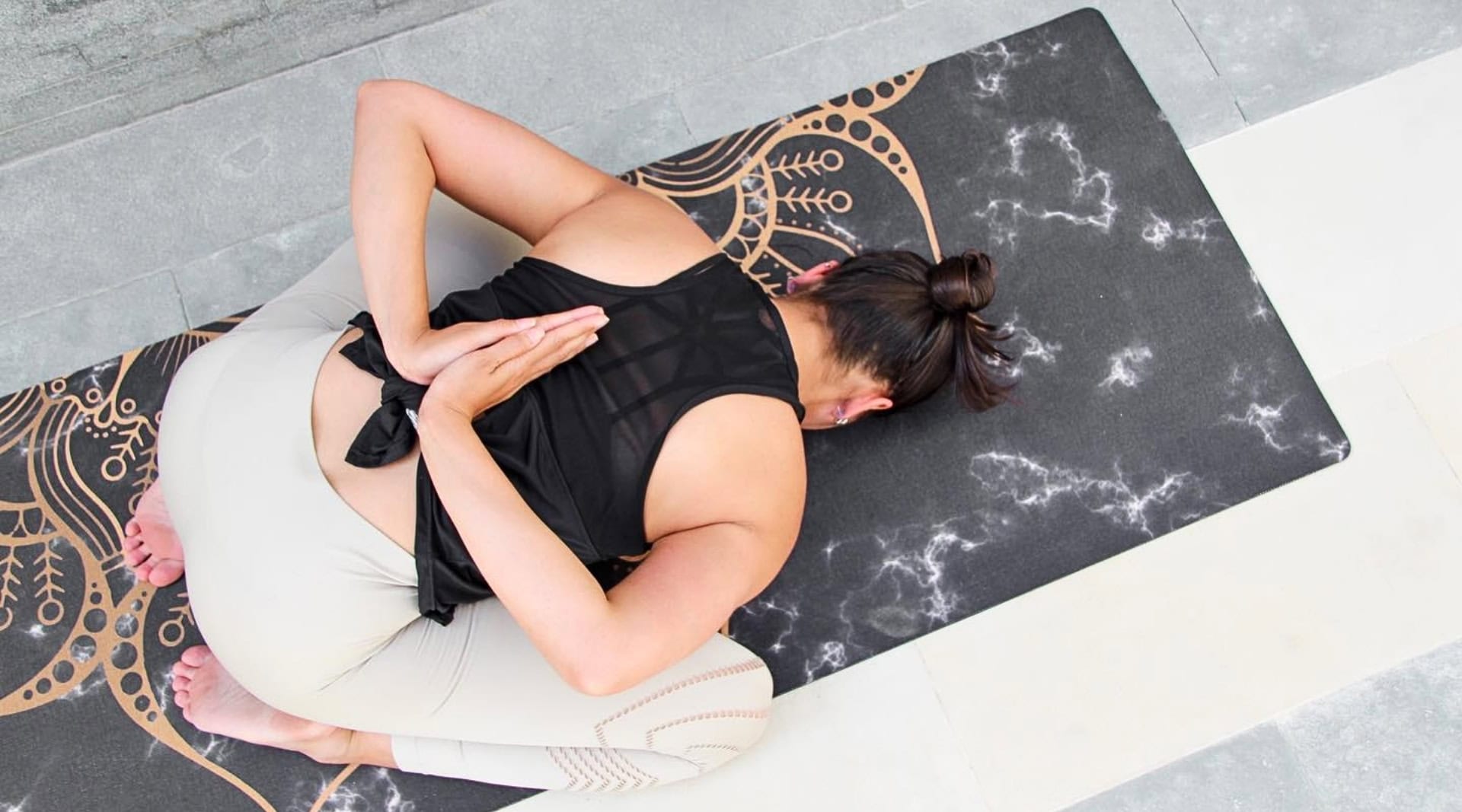
Whether you lean toward Buti bright or classic cat-cow cork with delicate drawings, these mats feature beautiful artwork printed in water-based inks to inspire your practice. Mats like the Ajna Pro make for some of the best natural rubber yoga mats—and not just because they feature a stunning paint pattern that will surely activate your Ajna (forehead) chakra. Worth noting that these mats are hyper-portable, foldable 1mm mats or fully supportive 5mm mats.
Shakti’s mostly biodegradable yoga mats all feature a natural rubber base for grip and cushioning. This tree rubber is either topped with hemp, cork, recycled PU leather, recycled plastic bottle microfiber suede, or a phthalate-free Eco PVC (which we’d recommend avoiding). Most, however, are free of harmful phthalates, latex, toxic glue, silicone, PVC and chlorine
Yoga mat bags are manufactured through the Samarpan Foundation’s Institute of Learning, Culture, and Art, which provides socially disadvantaged women with tailoring skills training, high wages, and health care. They’ve yet to answer our queries on where the mats themselves are manufactured. However, they are produced in a way that releases no toxic emissions into the atmosphere. Be sure to recycle your old yoga mats if you want 10% off your new one. It’ll get transformed into eco-friendly flip-flops that are then distributed to communities in need.
Complete Unity Yoga ®
Price Range: $87–$99
For eco-friendly yoga mats in the UK (and USA—hooray for the local warehouse!), readers can stretch out on and become one with Complete Unity Yoga.
Their CompleteGrip™ yoga mat is a non-slip, durable, eco-friendly yoga mat that comes in two thicknesses: a standard 4mm thickness and a 2mm version, ideal for use as a sustainable travel yoga mat. They offer a 100% money-back guarantee that these will be the best non-slip yoga mats you’ve ever tried. They also stock props like bolsters, blocks, blankets, bags, carrying straps, and meditation cushions.
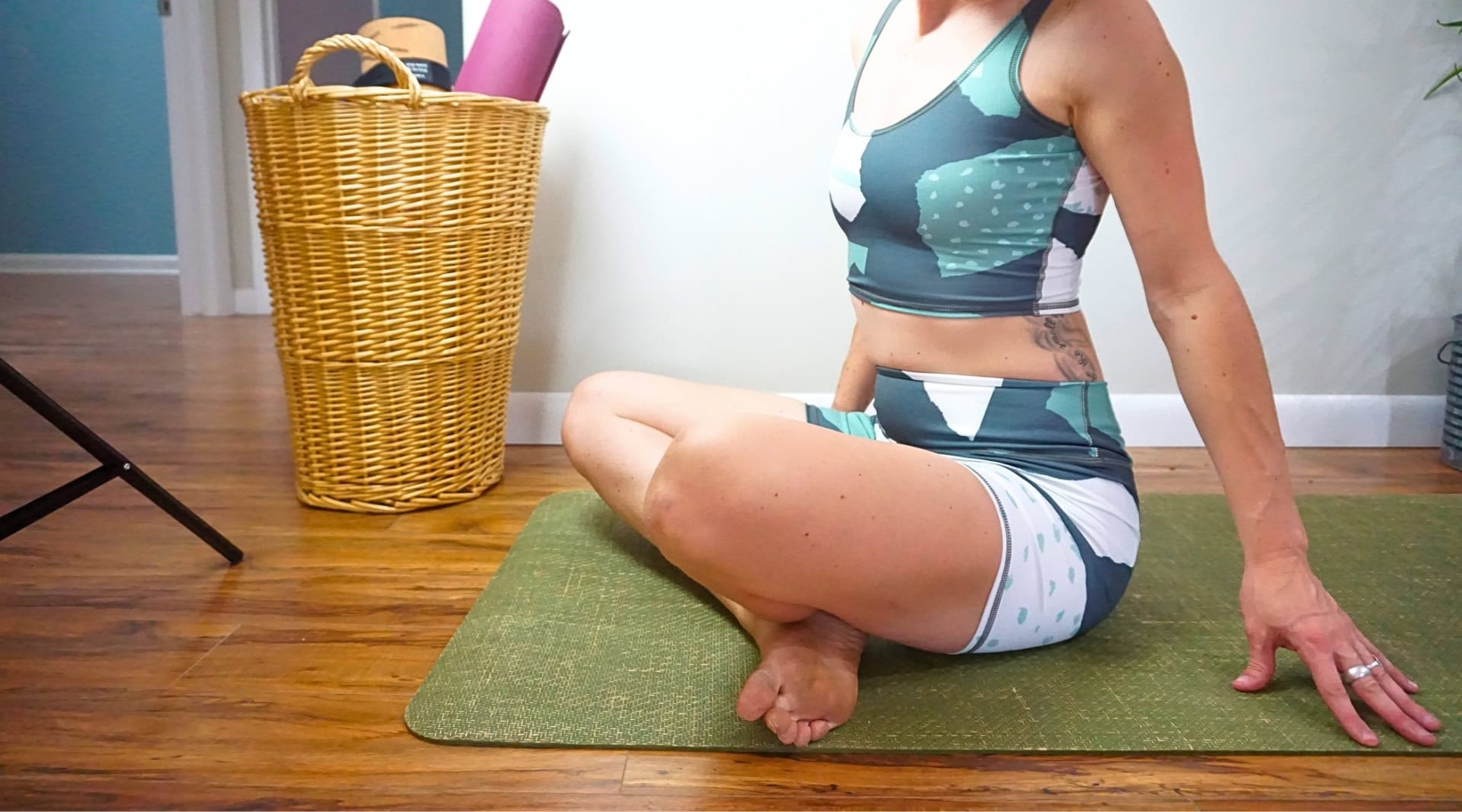
CompleteGrip™ Technology comprises sustainable jute fibers mixed with sustainably-harvested natural rubber for a yoga mat that doesn’t convert to a slippery-slide halfway into downward dog. If you’re looking for a BPA-free yoga mat that’s also plastic, PU, PE, and PVC-free, this is it. We couldn’t find any manufacturing details for these jute and natural rubber yoga mats, so we’ll be contacting Complete Unity Yoga to find out.
The CompleteGrip™mats are made using a zero waste manufacturing process and are packaged plastic-free using FSC-certified craft paper.
Complete Unity Yoga donates 5% of its net profit to Helping Hands for India, a charity providing free education to children in rural India.
My Personal Review of Complete Unity Yoga’s Non-Slip Yoga Mat:
“Complete Unity offers a 100% money-back guarantee that these will be the most non-slip yoga mats you’ve tried. I accepted that challenge with their 4mm mat, and Complete Unity won me over. The jute and natural rubber combo means it’s not only sticky on the bottom but provides utterly unmatched grip up top, no matter how sweaty I get.”
Review by Amber McDaniel, SJ’s Head of Content
Bean Products
Price Range: $25–$260
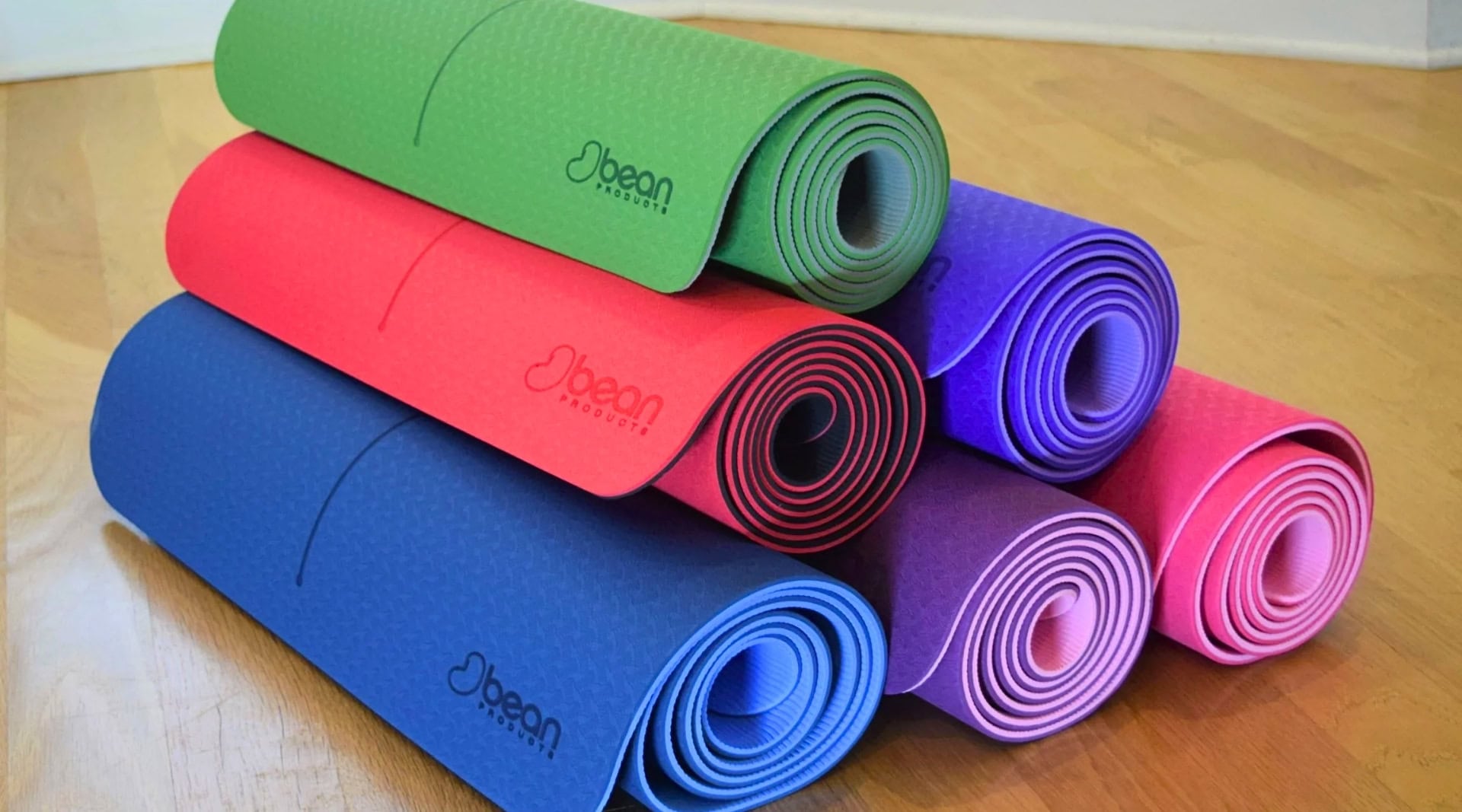
Chicago is famous for its Bean so it’s only fitting this next brand hails from the Windy City. Bean Products makes environmentally sustainable yoga mats, props, and bags, everything you might need for your pro-planet yoga practice. Not everything is plastic-free, but if you’re looking for a plastic-free yoga mat, check out the Natural Cotton Yoga, available with either a conventional cotton or organic cotton core and cover.
Otherwise their OMphibian mats feature a wet or dry grip (for hot yoga, of course) PU surface with a natural rubber core. Other recyclable yoga mats are made of a phthalate-free, recyclable TPE, or a blend of natural and synthetic rubber. Bean Products does have a PVC mat that is SGS-tested as free of toxic phthalates, dioxins, furans, phenol, and heavy metals, but we always urge you to opt for PVC-free yoga mats.
Bean Products’ manufacturing is in the United States, which is also where some of the hemp used in their props is grown. They take pre-consumer furniture scraps and post-consumer recycled polystyrene to stuff their bean bag chairs. Be sure to opt in to their carbon-neutral shipping.
For every product made, Bean plants one tree through Trees for the Future. They also donate to The Hemp Foundation, which funds hemp fabric research and supports farming families in Uttarakhand, India.
Mukha Yoga
Price Range: $30–$190
We think the advice from this brand’s founder is pretty sound: Do Yoga, Save the Planet. Mukha Yoga is your one-stop shop for a variety of brands making natural and/or recycled yoga mats, sustainable yoga clothes, props, and accessories.
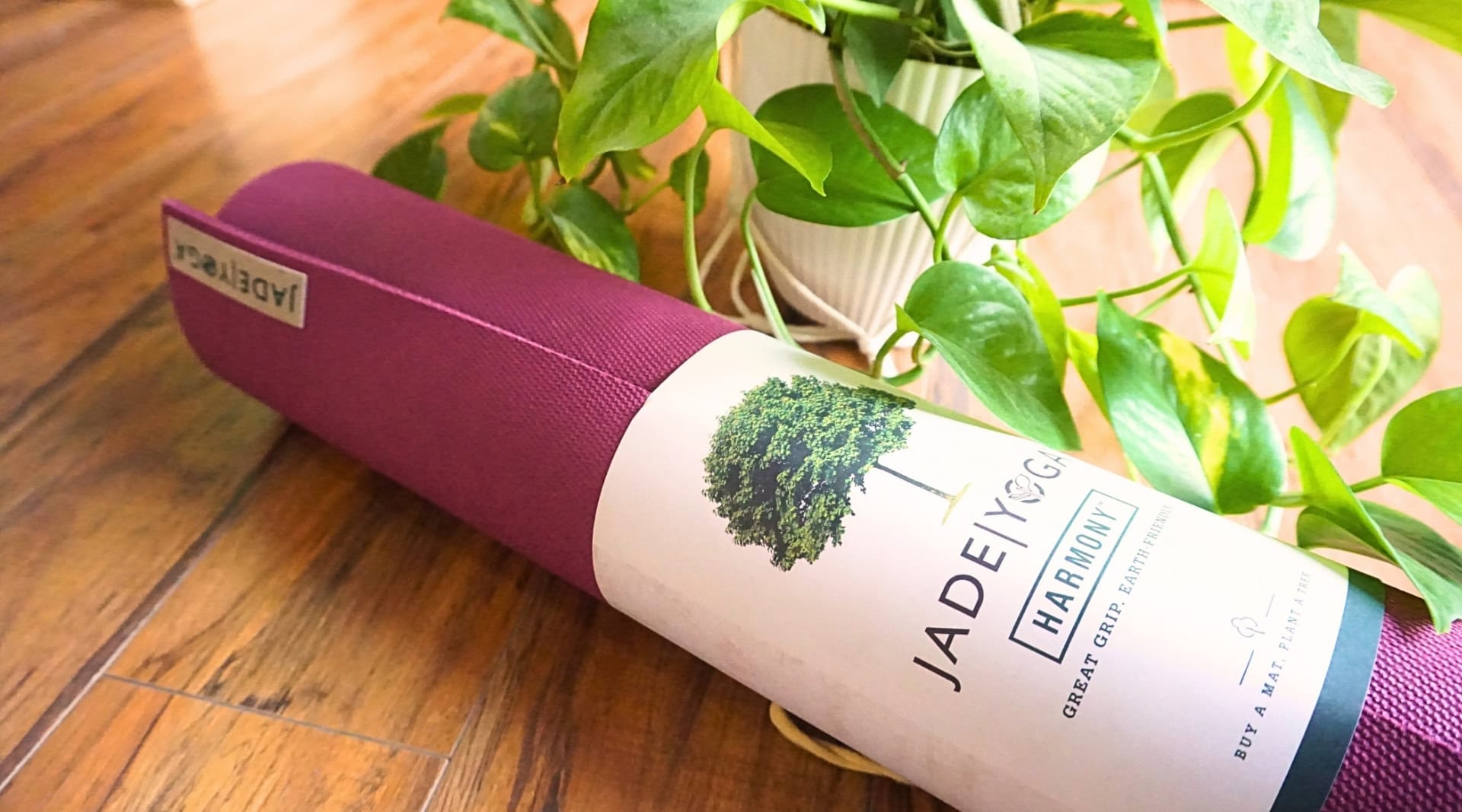
If you want to find and compare mats from the likes of Hugger Mugger, Jade Yoga (the mat we personally tried from Mukha), Alo, and more, this female-founded yoga e-emporium is the place to go. Given the sheer number of mats from a variety of brands, you’ll find many different materials. Their best eco-friendly yoga mats are those by Bennd Yoga—like the Harda & Turmeric Ayurvedic Yoga Mat—made of ethically sourced raw cotton that is medicinally dyed and blended with herbal formulas.
Unfortunately, alongside plenty of eco yoga mat materials like natural rubber, cork, and natural jute, you will find a few mats that are made of PVC. Even though Mukha’s own Flow mat is made of SGS certified “Eco-PVC” we would still recommend sticking to one of their non-PVC yoga mat options. You won’t find a recycled rubber yoga mat, but you will find natural rubber options with a microfiber top made of recycled plastic bottles.
Each sustainable yoga mat brand is handpicked for quality and ethics, but we’re not sure where Mukha’s in-house line is manufactured and will be reaching out to inquire. Most partner brands are based on the West Coast, which helps keep their supply chain localized. While they already ship plastic-free, Mukha Yoga joins one of its brands, prAna, in the Responsible Packaging Movement’s mission to eliminate excess packaging waste from its supply chain.
My Personal Review of Jade Yoga’s Harmony Yoga Mat:
“Jade Yoga, which is just one brand Muhka Yoga sells, offers a HUGE range of mats from various materials and for various needs. I personally prefer their ultra-classic Harmony Mat for its simple design, ultra-grippy texture, and cushy 4.5mm thickness. It’s absolutely one of the stickiest and most durable mats I’ve ever tried. It’s used not only as a yoga mat in my house but as a workout mat for both my partner and me several days a week. Despite that heavy use, there are absolutely no signs or wear to the rubber on this mat. Whether for intense fitness or relaxing flow, we agree this mat is a winner!”
Review by Amber McDaniel, SJ’s Head of Content
Yoga Design Lab

Price Range: $49–$105
We’re down for that downward dog with a Yoga Design Lab’s recycled yoga mats. The brand was born out of a trip to Bali and a desire to turn unoriginal, mass-produced mats into something more mindful.
Love staying limber when you travel? The ultra-thin 1.5mm Combo sustainable travel yoga mat is made from natural rubber and recycled PET microfiber. There are five materials in YDL’s large sustainable mat range: natural cork, tree rubber, PU, TPE, and recycled PET microfiber.
Their Combo Mat consists of a recycled plastic yoga mat top layer (made with ~19 plastic bottles) and a natural tree rubber base. Its prana-popping color comes from water-based inks. The eco-friendly cork yoga mat is made from biodegradable, antimicrobial natural cork, and natural rubber. The Infinity Mats are made from an open-cell PU and tree rubber, and the Flow Mats are made with a TPE recyclable yoga mat material
All of these Prop 65 and REACH-certified yoga mats are free of non-biodegradable silicone and phthalates. YDL’s products are manufactured in China by BSCI-compliant factories that promote ethical working conditions. By using recycled PET, YDL has diverted over 861,000 plastic bottles, and is working on switching to more sustainable packaging.
Liforme
Price Range: $49–$155
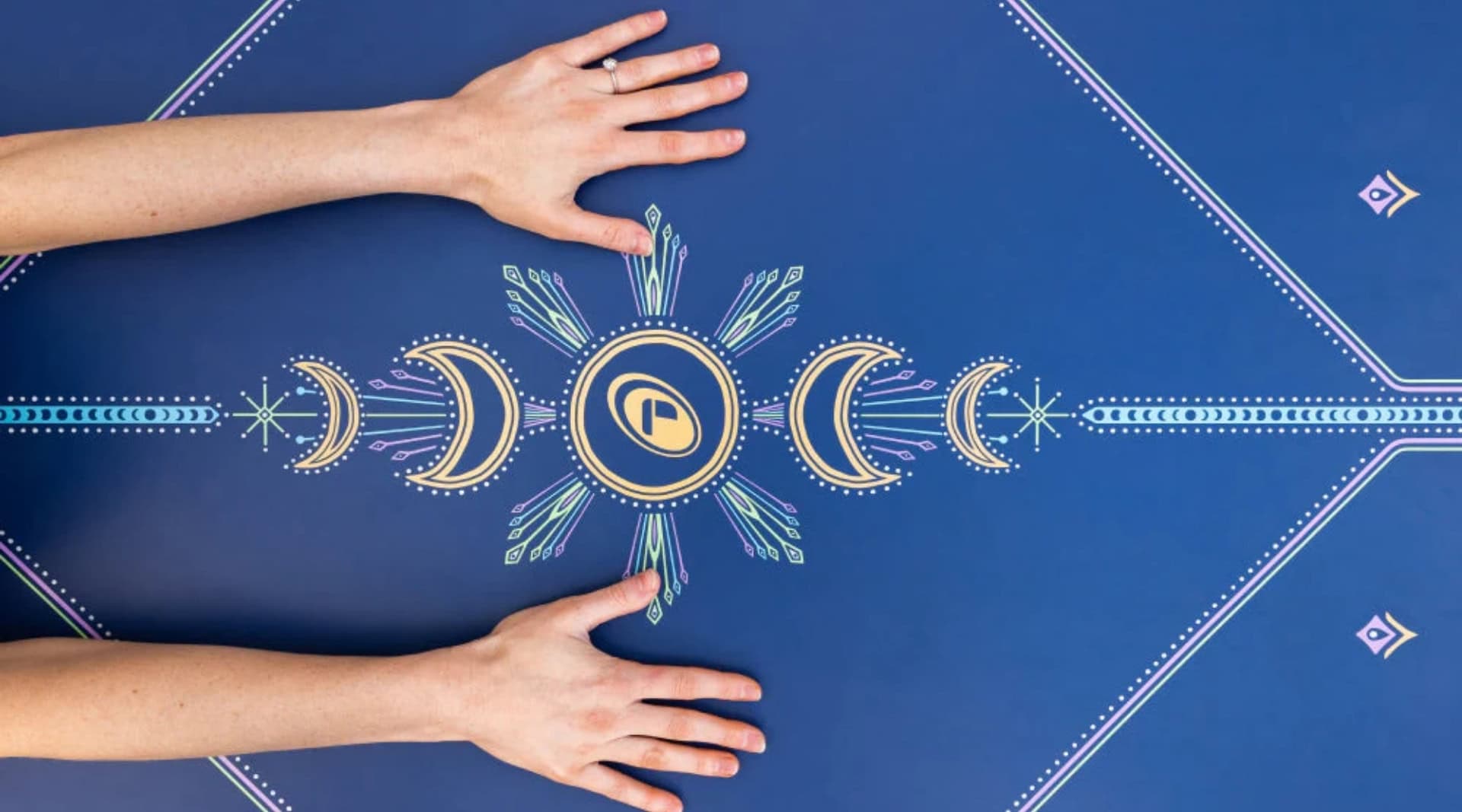
XL mats, travel mats, yoga pads… Liforme has it all. Gorgeous mats like the Cosmic Moon Mat aren’t just printed in non-toxic inks, but feature an alignment system designed to work for all bodies and styles of practice. Each one comes with a complimentary yoga mat bag.
Liforme’s unique yoga mats feature a natural rubber base and eco-polyurethane top surface. They’re PVC-free and the brand claims they’ll biodegrade in 1–5 years in normal landfill conditions.
As a Certified B Corp, Liforme is audited for their social performance across their supply chain. That said, we would still like to know where their products are made and will be reaching out for details. Liforme reduces their footprint by offsetting their shipping and planting additional trees. From factories to distribution warehouses, they ship 99% of goods by sea to reduce it further.
Liforme’s Live For More Foundation has given back more than $750,000 to various charity partners—like the World Wildlife Fund, GLAAD (an LGBTQ media advocacy organization), Yoga Gives Back, and more. Donations are allocated by sales of certain collections. For example, 1% of all sales from the Mother Earth Mat are donated to support the work of Friends of the Earth and five trees are planted with Tree-nation.
Why Choose Non-Plastic Yoga Mats?
Conventionally, yoga mats are made of PVC and PU. We get real close to our mats during practice (like in child’s pose) so it’s important to steer clear of any toxic materials—especially PVC.
Why is choosing a non-PVC yoga mat so important? PVC, or polyvinyl chloride, is made from petroleum and chemicals like vinyl chloride, which is known to cause cancer. Combine this with heavy metals and phthalates (endocrine/hormone disruptors and known carcinogens) and you’ve got a pretty anti-zen recipe for most yoga mats.
If you’re temporarily stuck with a PVC pad, fear not: cover it with a sustainable towel to reduce contact.
Plus, PVC yoga mat aare not recyclable. There’s no safe way to recycle or destroy PVC, so that pretty purple PVC mat of yours will exist forever. Instead of throwing it away, try upcycling—outside your home of course, like as a non-slip underlay for your home’s welcome mat.
How We Found The Best Sustainable Yoga Mats
Let’s breakdown our criteria we use to identify an eco friendly yoga mat.
Materials:
We’re going to stretch a little deeper here since it’s so important to this topic.
Unfortunately, we not only need to look out for PVC but also for the greenwashed assumption that PVC-free is the same thing as non-toxic.
Irena Webb’s (of I Read Labels for You) guidelines reveal that many supposedly non-toxic yoga mats are not nearly as non-toxic as they claim and can still contain carcinogens:
- Synthetic rubber: Still heavily petroleum-based and full of carcinogenic styrene. Avoid synthetic rubber as much as PVC.
- PER (Polymer Environmental Resin): Basically just PVC that’s been plasticized and stabilized with acetyl tributyl citrate, instead of phthalate-based plasticizers.
- TPE (Thermo Plastic Elastomer): Another petroleum-based product that often has undisclosed additives. While not all TPE mats are bad, it’s difficult to tell which ones are truly non-toxic.
- EVA (Ethylene Vinyl Acetate): Petroleum-based but chlorine free. However, it may still contain toxic chemicals like formaldehyde.
Are mats made of these less harmful than PVC? Considering PVC is the most dangerous type of plastic, yes; but the bar is pretty low.
So, what are eco-friendly yoga mats made of?
Since true plant foam is yet to exist, we need to turn instead to natural materials which, after all, is what the original yoga mats were made from.
- Natural tree rubber: It’s a renewable resource made by tapping rubber trees—a process similar to tapping for maple syrup. It’s biodegradable, non-toxic, and can be combined with other materials to provide a non-slip base.
- Cork: Cork makes for good yoga mats because cork fabric is natural, renewable, and non-toxic. It’s also naturally antimicrobial and gets grippier when wet. Plus, harvesting cork actually helps ensure the healthy growth of cork oak trees (a process that also sequesters a lot of carbon).
- Natural plant fibers: Jute fiber, organic cotton, and hemp fabric are other sustainable materials making an appearance in sustainable mats. They’re renewable, biodegradable, absorbent, and easy to clean.
We also check that natural eco dyes, non-toxic adhesives, and safe inks are used.
- Certifications: Global Organic Textile Standard (GOTS-certified), Prop 65, Registration, Evaluation, Authorisation, and Restriction of Chemicals (REACH), Vegan Action, OEKO-TEX 100
Supply chain & labor practices:
Ethical manufacturing makes us feel extra pumped for that 5 am ashtanga class. We look for brands that pay fair wages and ensure safe working conditions. We’ll reach out to confirm labor practices if the details aren’t clear.
Green business practices:
Brands that use zero waste manufacturing, renewable energy, eco-friendly packaging materials, and tips for recycling yoga mats are best in (yoga) class for us.
Community & charitable giving:
Brands that give back, whether it be through donations, events, or simply cultivating a caring community, help us feel extra zen.
FAQ: Sustainable Yoga Mats
What is the purpose of the article?
We are highlighting a selection of yoga mats that meet strict sustainability and health criteria — made with natural or recycled materials, non-toxic manufacturing, and ethical supply chains — to help eco-conscious yogis upgrade their practice.
What defines an “eco-friendly yoga mat”?
An eco-friendly yoga mat is one made from renewable, recycled or biodegradable materials (e.g., cork, natural rubber, organic cotton), free from harmful synthetic plastics like PVC, produced with minimal environmental impact and designed for long life.
Why should someone choose a sustainable yoga mat over standard ones?
Because many conventional mats contain toxic materials (like PVC and phthalates), off-gas chemicals, and often end up in landfill — choosing a sustainable mat supports health, durability and reduces environmental harm.
What should a buyer look for when selecting a sustainable yoga mat?
They should check: material composition (natural rubber, cork, jute, organic cotton), absence of PVC and harmful additives, certifications (e.g., OEKO-TEX), production and end-of-life impact (biodegradable or recyclable), grip and durability for the style of yoga practiced.
Are sustainable yoga mats suitable for all types of yoga practice?
Yes — many eco-friendly mats provide performance comparable to conventional mats (good grip, cushion, stability) while doing so with more sustainable materials and processes.
Final Thoughts On Sustainable Yoga Mats
When you hit the mat, the last thing you want on your mind is… well… anything. Concerns of toxins and off-gassing will mess with even the most focused flow.
Whether your goal through yoga is mindfulness and meditation, or a killer Paschimottanasana pose, you should be able to flow free from the worries of the environmental footprint of what’s underneath your feet.
We hope you found this article enlightening, no matter where you are in your yoga journey. But we can only stretch so far. Now we need the help of you yogis to deepen that stretch and spread the word about the most sustainable mats.
Share this list of yoga mat companies with your pro-planet peers and next time you bring your wild hemp or cork yoga mat to class, don’t be afraid to show it off!
Editor’s note: This article was originally published in January 2020 and updated in November 2025 to include new images, refreshed copy, and an expanded FAQ section.

Heather earned a Bachelor of Science in Human Nutrition from the The Ohio State University before completing a Masters in Environment at The University of Melbourne. She then went on to achieve a Permaculture Design Certificate at the Djanbung Gardens. Heather feels best when she is barefoot in a forest or has dirt under her fingernails. She’s constantly daydreaming about her homesteading future and has a rapidly-growing list of the best local (and not-so-local) hiking trails. When she’s not busy hoarding an embarrassing number of upcycled glass jars, experimenting with urban composting, or quelling her eco-anxiety on a long run, Heather spends her 9-5 working for a sustainable agriculture nonprofit, where she advocates for state and federal policies that support thriving farmers and a habitable future.











Great article! I was only familiar with Manduka from these five brands and buying an eco-friendly mat will definitely be something I’ll look at for my next purchase. One of the foundational principles in yoga is about non-harm – Ahimsa (https://elevatecalm.com/ahimsa/), which also involves not harming the environment. So I consider an eco-friendly yoga mat essential for every yogi!
Hi, if you are interested most of Yoloha’s mats are made with TPE, far away from this ECO sustainability and safety, here the link:
https://yolohayoga.com/inside-yoloha/about-cork-yoga-mats/
Good day
Great point, thanks Alejandro!
TPE is better than other materials, however. It will break down eventually and won’t off-gas harmful chemicals, like formaldehyde, like PVC mats will.