















There’s no denying sustainable fashion has taken a bold stride forward over the last decade, and it’s up to us to make sure things don’t flip-flop around. Enter eco-friendly flip-flops.
People have been wearing flip-flops for centuries, but lately, they’re doing less flippin’ and more floppin’ by washing up on beaches by the tons with other plastic waste.
By 2025, the global flip-flop market is expected to rise to $23.8 billion, making traditional flip-flops the most popular style of footwear around the world. These cheap plastic versions are generally so flimsy you’ll be lucky to make them last the summer. While it’s tempting to replace them with a $3 pair, consider investing in a pair of eco-friendly alternatives that will last a lot longer.
As we refresh our articles in the coming months, we’ll be employing our new Brand Rating System to extend what we look for to 22 criteria including waste action, materials and product performance. To learn more about this new system, flip through our explainer here.
In this article, we’re taking a look at the flippin’ good sustainable flip-flop brands and why they stand out among the flops.
We independently research all featured brands, and we ask them to confirm their claims. In many cases we personally review recommended products. This post contains affiliate links which means we may earn a commission if you buy something. We explain this further in our Terms of Use.
Our Top Ethical Flip-Flop Sole Mates
While we admire lots of brands, our top picks (er, kicks) come from B Corp Indosole, who specialize in recycled tire flip-flops.
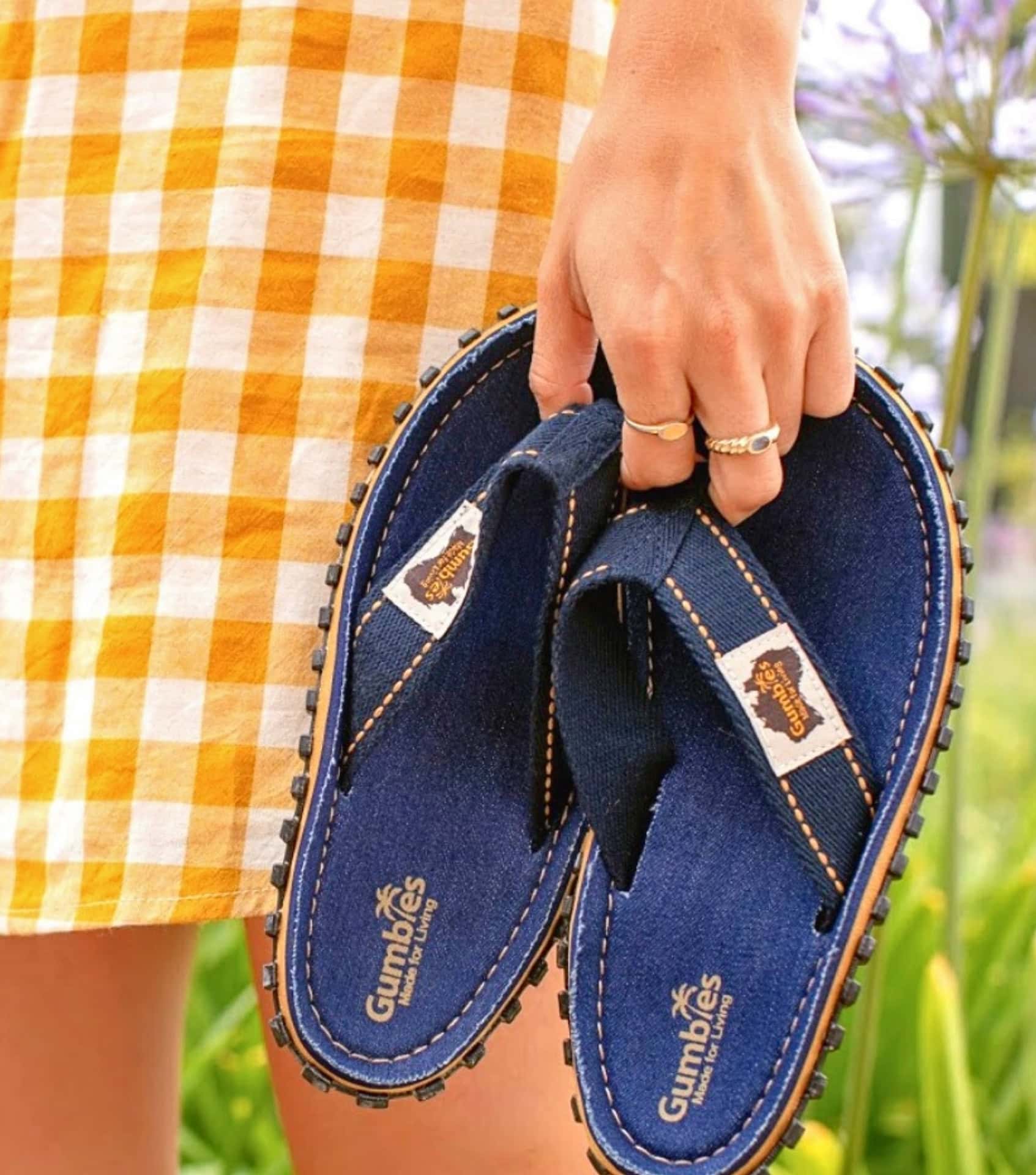
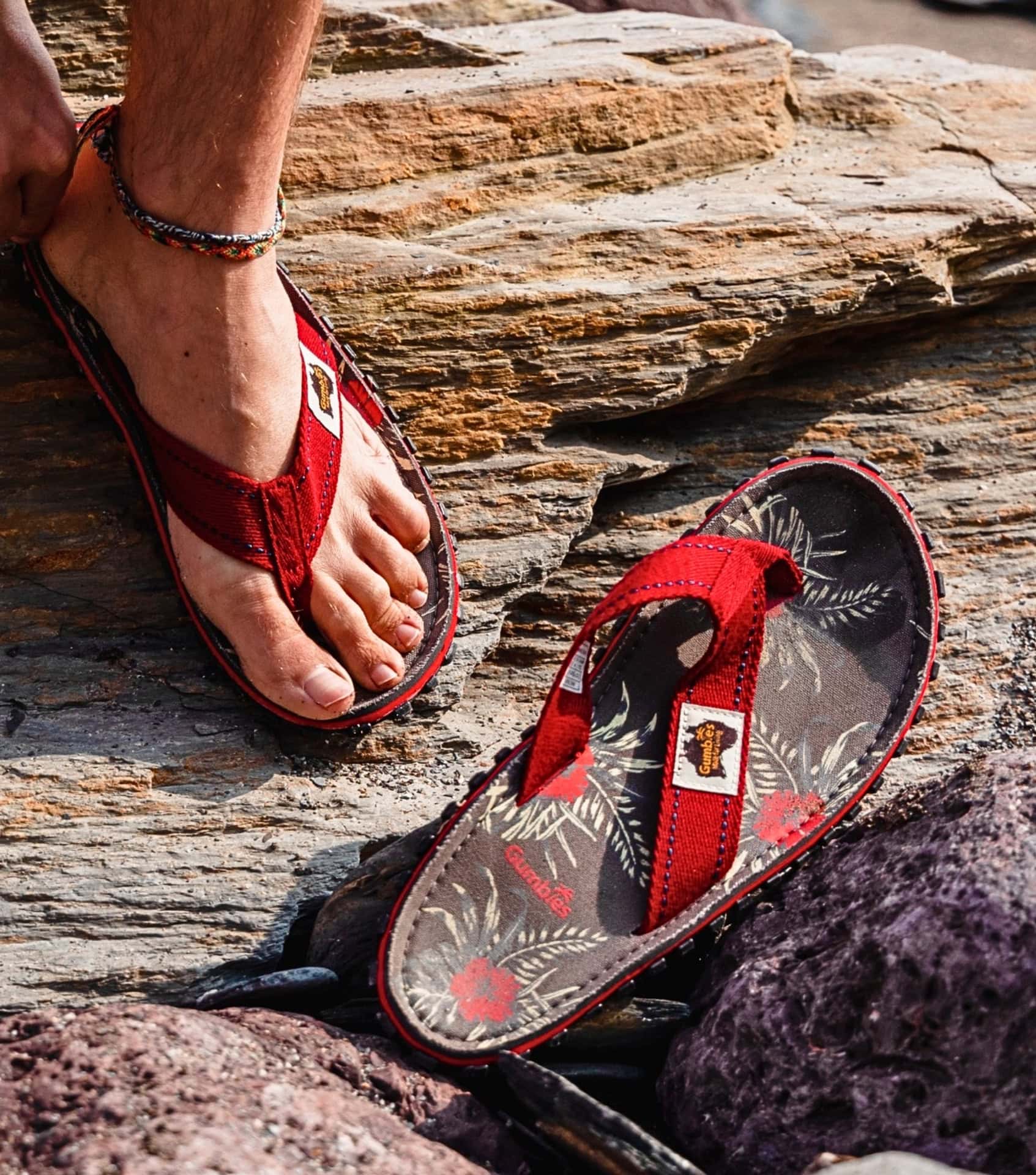
You won’t be a gumby by choosing Gumbies, whose non-slip flip-flops are tested to comfortably last 1,000 miles or more. That’s a lot of beach trips!
Native Shoes make innovative and comfortable eco-friendly men’s, women’s, and kids’ flip-flops from repurposed algae and Sugarlite™ (a blend of traditional EVA and a sugarcane-derived resin).
Index: Sustainable Flip-Flops For Men & Women
- Indosole Jump to brand
- Gumbies Jump to brand
- Native Shoes Jump to brand
- Waves Jump to brand
- Okabashi Jump to brand
Indosole


Indosole has not been rated.
About Indosole
Price Range: $30–$55
“Indosole represents a lifestyle of resourceful creation”.
We love this because that’s what it means to both create and consume sustainably.
It all started when founder Kyle Parsons visited Bali and purchased a pair of sandals made from recycled tires. He’s now taken that #TiresToSoles recycling model and turned them into some of the most ethical flip-flops in the world.
With arch support, waterproof quality, and a non-slip textured top sheet, both the slides and rubber flip-flops are designed for all-terrain use.
If recycled kids’ flip-flops are on your summer shopping list, the Toddler’s ESSNTLS feature an extra back strap to keep clumsy little legs from tripping on too much flop.
Indosole’s Ethical & Sustainability Practices
Materials:
These are recycled tire flip-flops, first and foremost. The outsole is made from tire tread, and the straps are made out of a material called “ENVRO” fiber which uses little water in the flip-flop manufacturing process and gives off a leather-like feel. Not only is it cruelty-free, but does not contain any types of plastic, and is also 100% waterproof.
Supply chain & labor practices:
As a Certified B Corp, Indosole maintains top-notch ethics throughout their manufacturing processes and supply chains. With yearly audits across a variety of impact areas, this certification ensures their workers are paid fairly and work in safe environments when producing non-toxic flip-flops.
For an extra step above the rest, most of their supply chain is within Indonesia – from the sourcing of tires from garages and tire brokers to the final manufacturing by local artisans.
Carbon commitments & green practices:
This flip-flop manufacturer keeps its carbon footprint to a minimum by sourcing materials locally. Their manufacturing processes also use less water and dye.
Community & charitable giving:
Indosole organizes and supports various charitable events to cultivate a community of Good Humans. These include charity basketball tournaments, Fashion Revolution Week events, and more. They will also launch a partnership with Soles4Souls to give back to displaced families through a disaster relief program.v
Gumbies
Gumbies has not been rated.
About Gumbies
Price Range: $25–$35
Australian-inspired Gumbies was founded by Michael Maurer under the belief that “life is too short for complication. Keep it simple. Ride a wave, climb a mountain, wear Gumbies.”
Their footwear line includes boat shoes, vegan sandals, slides, canvas slip-ons, and of course, three different types of upcycled cork and recycled rubber flip-flops.
We’re big fans of the look and antimicrobial benefits of natural cork flip-flops, so the Corker Unisex Flip Flops are our favorites, but all models boast the same shock-absorbing and slip-resistant qualities. After rugged testing and proven durability, they call the Islander their “1000-miler”.
Gumbies’ Ethical & Sustainability Practices
Materials:
The Corkers biodegradable flip-flops are the most sustainable, with an upcycled cork fabric top layer, salvaged cotton strap, and recycled rubber outsole reinforced with jute for strength.
The Islander Canvas line is a close sustainable second, featuring recycled rubber outsoles, recycled cotton canvas toe posts and strap linings, 100% cotton insole, and an EVA midsole (which is not biodegradable).
The Duck Bills sacrifice a little more sustainability for their waterproof quality, with a textured EVA top layer, recycled PET strap, and rubber outsole.
The Cairns non-slip flip-flops feature outsoles made from recycled rubber, while jersey textiles provide a super soft touch for the soles of your feet.
Supply chain & labor practices:
While they have manufacturing locations in the USA and UK, they do manufacture in China. We’re not certain if their factories have any ethical manufacturing certifications.
Carbon commitments & green practices:
Because Gumbies has distribution centers around the world, they can ship from areas closer to you than their base, which reduces the container and shipping emissions they use.
All orders come in resealable/reusable bags which are also 100% recyclable and reduce shipping volume by 50%. Outer shipping boxes are made of 100% recycled post-consumer waste.
Community & charitable giving:
Gumbies partners with VERDN. For every purchase, they plant a mangrove tree in Africa, providing jobs and income to local communities. Gumbies is also a proud member of the European Outdoor Conservation Association, giving its support towards their conservation projects.
Native Shoes


Compostable
All or some products are compostable, either in an industrial facility or at home
Cruelty-free
Products are not test on animals at any stage in their production.
Recycled materials
Some or all products are made with recycled materials
Sustainable Materials or Ingredients
Either all or most products are made with sustainable materials or ingredients.
Take Back Program
Brand offers a take back program for their products and responsibly manages returned items.
Vegan
This brand does not use any animal products or by-products in their products
PETA
PETA
The PETA-Approved Vegan certification verifies that a brand’s certified products are completely free from animal-derived materials and that no animal testing is conducted at any stage of production. Managed by People for the Ethical Treatment of Animals (PETA), the label helps consumers easily identify fashion, beauty, and lifestyle products that align with a fully vegan and cruelty-free standard.About Native Shoes
Price Range: $32–$55
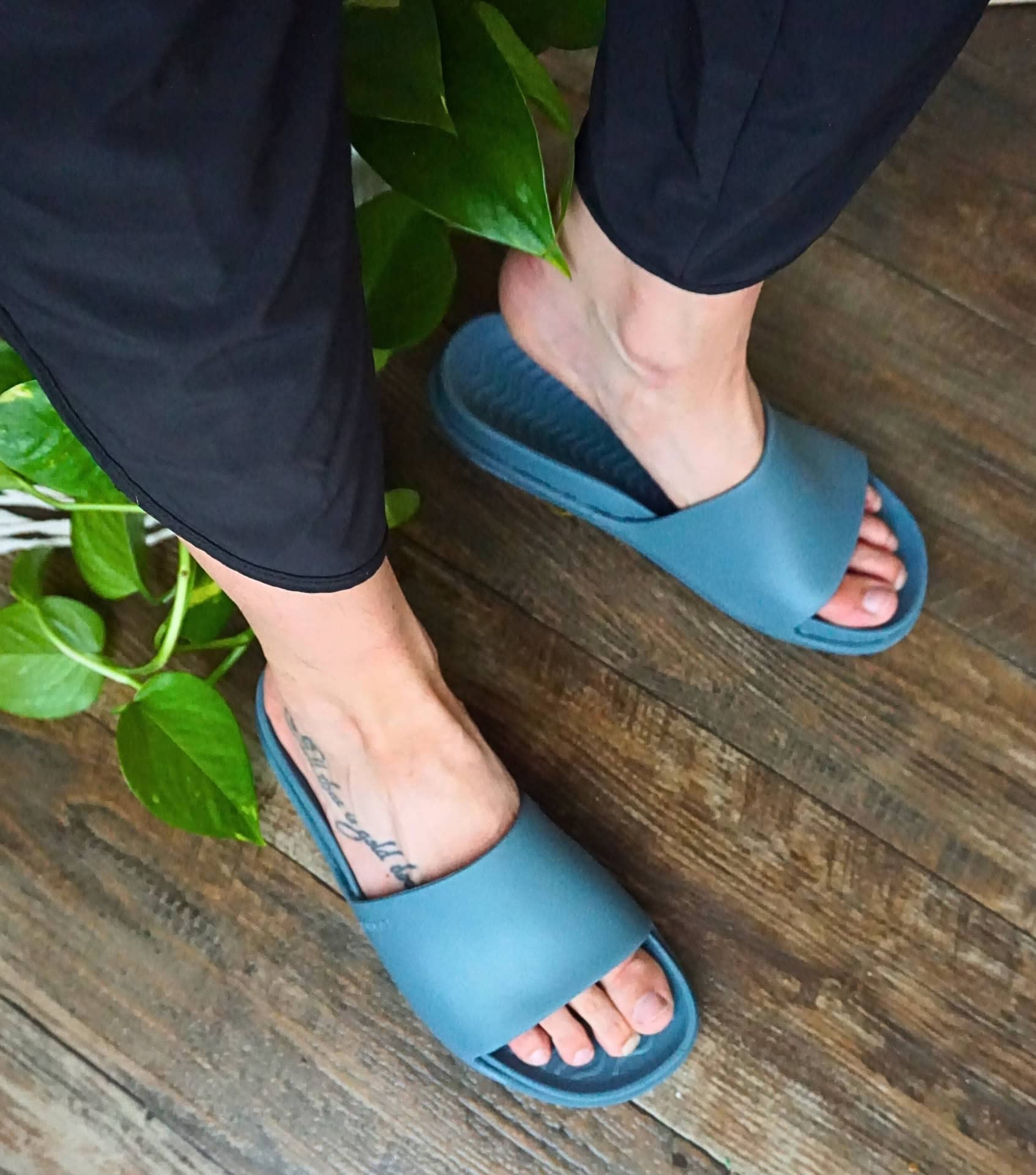
Native Shoes aims to introduce more lightness into your life. They do this with men’s, women’s, and kids’ shoes, boots, and flip-flop style slide sandals (just without the toe thong).
Native’s Ethical & Sustainability Practices
Materials:
Native Shoes has two different sustainable materials in their sandals: repurposed algae and Sugarlite™.
Rise by Bloom is an algae-blended resin containing a significant fraction of algae biomass and bio-based additives. Algae biomass doesn’t require fossil fuel or arable land to grow, making it a good resource for creating a useful material.
Sugarlite™ is a blend of traditional EVA and a sugarcane-derived resin and fewer greenhouse gas emissions are created during the production process.
EVA is also used in many of Native Shoe’s footwear, and while it may not be the most eco-friendly of materials, it is recyclable via the Native Remix Project. As a vegan shoe brand, no animal byproducts or glues are used anywhere in these vegan flip-flops.
Supply chain & labor practices:
Native shoes are made in factories in China and Vietnam and the brand ensures factory conditions include the prohibition of forced labor, regulation of wages, and monitoring of working hours. Brand representatives make several trips a year to develop new products and ensure proper conditions are being maintained.
Carbon commitments & green practices:
Once your eco-friendly flip-flops have reached the end of their life or your kids have grown out of them, send them to the Native Shoes Remix Project, the brand’s flagship recycling initiative.
Using science-based emission reduction targets, Native is incorporating renewable energy in their manufacturing to reduce emissions.
Community & charitable giving:
Your well-loved shoes are recycled in projects across the country including the creation of seating, playground flooring, insulation, and much more. Any other shoes you return to Native are sorted and donated to good causes.
My Personal Review of Native |Shoes’ Spencer LX Sugarlite™
“Anyone who knows me knows that I practically live in slides in the summer. After numerous duct tape repairs, my trusty old pair finally wore out, and I replaced them with Native’s Spencer LX vegan slides, which are just as light and comfortable as you can imagine. Now I’m sad I didn’t replace them sooner (sort of, because I still believe in wearing things as long as possible!). But the Spencer LX slides are oh-so comfortable, featuring a super contoured footbed molded from a light bio-foam that doesn’t make my feet sweat.”
Review by Amber McDaniel, SJ’s Head of Content
Waves


Waves has not been rated.
About Waves
Price Range: $14–$15
The colorful patterns and designs of Waves’ natural rubber flip-flops remind us that just because something is green, it doesn’t need to look so.
Their flip-flops and thong wedges are perfect for those who want to get wild with a two-toned color pattern or those who like to keep it straight and simple.
Waves’ Ethical & Sustainability Practices
Materials:
Waves use 100% premium-grade natural rubber for their flip-flops, making for a cushioned, grippy, and durable shoe.
Supply chain & labor practices:
This natural rubber is sourced in Sri Lanka, where it doesn’t need to travel far for manufacturing… because they’re made there, too!
Waves flip-flops are handcrafted under a “strict socially responsible manufacturing process” in exchange for fair wages. Waves is proud that their production supports communities in Sri Lanka by providing fair and stable job opportunities.
Okabashi
Okabashi has not been rated.
About Okabashi
Price Range: $25
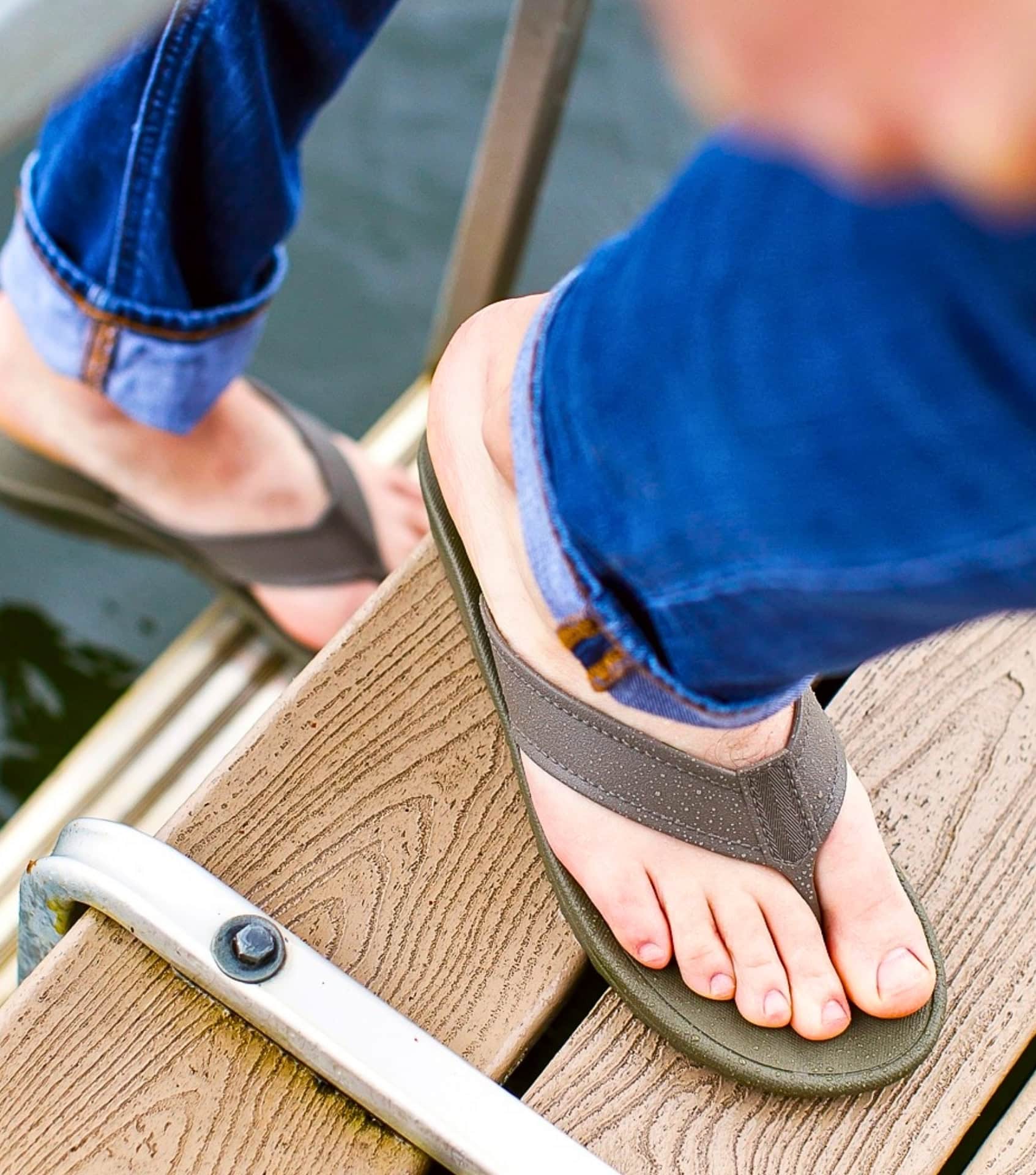
Okabashi’s latex-free flip-flops for men and women provide support for foot health. They feature a slip-resistant design, toe rest, and gentle massage beads.
Whether treating plantar fasciitis or post-fitness recovery, these winners of the Woman’s Day Health Great Value Awards may just help you.
The concept draws on Japanese reflexology and design, largely because Okabashi is the culmination of the Irvani family’s “true American dream story.”
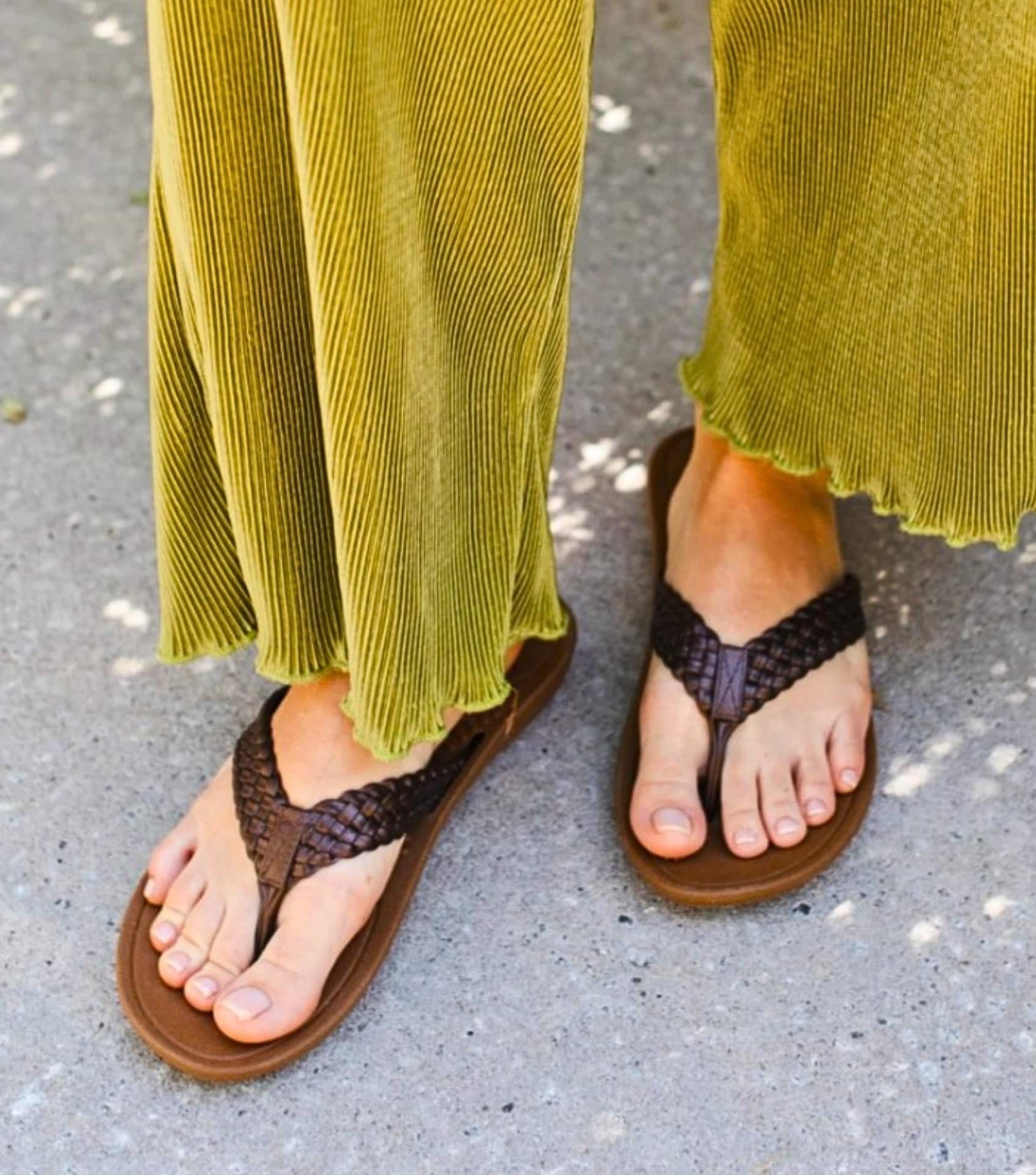
These flip-flops are made in the USA in every interpretation of the phrase. Styles like the Baha recycled flip-flops feature elegant braided straps, so you can seamlessly go from the beach to the streets.
Okabashi’s Ethical & Sustainability Practices
Materials:
Okabashi flip-flops are a combination of 25% recycled materials and bio-based soy material that are free from any BPAs, latex, and phthalates. They’re not biodegradable but are fully recyclable via Okabashi’s US-based recycling program.
Supply chain & labor practices:
Okabashi creates shoes from Buford, Georgia, which has a long history of footwear manufacturing since the days of World War II.
On average, their shoes only travel 7% as far as other shoes. Their manufacturing facility runs under the guidance of a mostly female team, and “goes above and beyond stringent US standards to create opportunity and community for our diverse 200 employees”.
Carbon commitments & green practices:
Okabashi saves an estimated 134,000 gallons of fuel per year by not shipping products from Asia to the USA.
Community & charitable giving:
The brand partners with US nonprofits Two Ten Footwear Foundation and Souls4Soles. Through them, they’ve donated over 8,000 pairs of shoes for people in disaster relief areas, veterans, and more
How We Chose The Best Natural Or Recycled Flip-Flops
So, other than looking to make sure they’re trying not to add to this plastic mess, how did we decide on the best eco-friendly flip-flops, US and worldwide?
Our sustainable fashion criteria, of course! It’s the core of all our fashion-related articles, from sustainable flats to sustainable heels. If you don’t have the time to have a read because you’re off to the beach (of course), here are our main considerations:
Materials:
What is the eco alternative to flip-flops? Ideally, we look for eco-friendly materials that can biodegrade (specifically via composting) at the end of their lives.
Natural fibers mean things like organic cotton, hemp, jute, bamboo fabric, linen, and cork flip-flops. Natural rubber is technically natural, too, but it won’t biodegrade fast enough to be considered compostable. Recycled materials (even if they are synthetic) are a close second because they make use of waste that already exists. This could mean recycled plastic flip-flops, recycled tire flip-flops, and even flip-flops made of recycled yoga mats!
Supply chain & labor practices:
This encompasses many things relating to corporate social responsibility and ethical sourcing of materials.
It’s pretty much non-negotiable that companies should treat and pay their workers fairly, and we love to see certifications to back that up.
- Certifications: B Corporation (B Corp), fair trade
Carbon commitments & green practices:
Environmentally, manufacturing and shipping methods matter almost as much as material, so we look for brands that use carbon offset programs, renewable energy, non-mechanized methods of production (handmade for life!), and minimal, responsible packaging.
Community & charitable giving:
It’s so great to see companies that give back to the communities they sell to, or the environment, or the world in general. Since new flip-flops can’t be priced astronomically, we understand this might leave these smaller companies with limited means to be proactive with their charitable work.
Final Thoughts On Eco Flip-Flops
Are flip-flops eco-friendly? They can be if you know where to look. And considering traditional flip-flops are can be made of really harmful types of plastic like PVC, the bar is pretty low.
Remember that repairing the ones you have or buying second-hand should be your first choice. You might even score some decent ones through online thrift stores. However, if nothing flips out at you, choosing to buy sustainably made flip-flops from ethical brands is the next best thong, err…thing.
Before you start looking for where to buy eco-friendly flip-flops, make sure you properly recycle your broken, plastic flip-flops. Terracycle offers recycle boxes in assorted sizes, so convince your friends and family to join in your flip-flop recycling journey.
While you’re at it, flip this article into their DMs, so they know what brands to replace them with.

Heather earned a Bachelor of Science in Human Nutrition from the The Ohio State University before completing a Masters in Environment at The University of Melbourne. She then went on to achieve a Permaculture Design Certificate at the Djanbung Gardens. Heather feels best when she is barefoot in a forest or has dirt under her fingernails. She’s constantly daydreaming about her homesteading future and has a rapidly-growing list of the best local (and not-so-local) hiking trails. When she’s not busy hoarding an embarrassing number of upcycled glass jars, experimenting with urban composting, or quelling her eco-anxiety on a long run, Heather spends her 9-5 working for a sustainable agriculture nonprofit, where she advocates for state and federal policies that support thriving farmers and a habitable future.













Most comprehensive list of brands and thanksnfor sharing all the details. So helpful.
Hey,
just wanted to let you know that original corks flip flops are not 100% cork! Neither the fabric that they use is 100% cork nor is the footbed …. there is actually a much better alternative out there, also all locally produced in Portugal but with a footbed that is 100% biodegradable (made from natural latex + cork) and doesn’t use a rubber-cork-mixture like original cork 🙂
they are cimasandals.com
It’s all well and good reading all this but where do I buy them, theres no product list
Hi Jamie, We provide links to retailers where you can buy them under each of the write ups about the brand – the the line that says “Available”