













We’d hazard a guess and say Vaseline (or petroleum jelly) is a staple in the majority of households in the US. It’s used for moisturizing dry skin to healing cuts and scrapes and a whole lot more. The funny thing is, none of those uses actually need the petroleum content.
We say, skip the crude oil and make your own DIY Vaseline at home using just a few natural ingredients.
Homemade Vaseline alternatives provide a petroleum-free moisturising agent that can be just as effective at soothing and hydrating your skin but without all the environmental drawbacks of petroleum byproducts.
This super simple, 3-ingredient recipe is not only more sustainable but can be used widely across the body, whether you’re looking for a DIY Vaseline lip balm, body balm or something to keep in your first aid kit.
Index: Homemade Vaseline
- DIY Natural Vaseline Recipe Jump to section
- Cost Savings of Making Your Own Vaseline Jump to section
- Why Make Your Own Vaseline? Jump to section
DIY Natural Vaseline Recipe
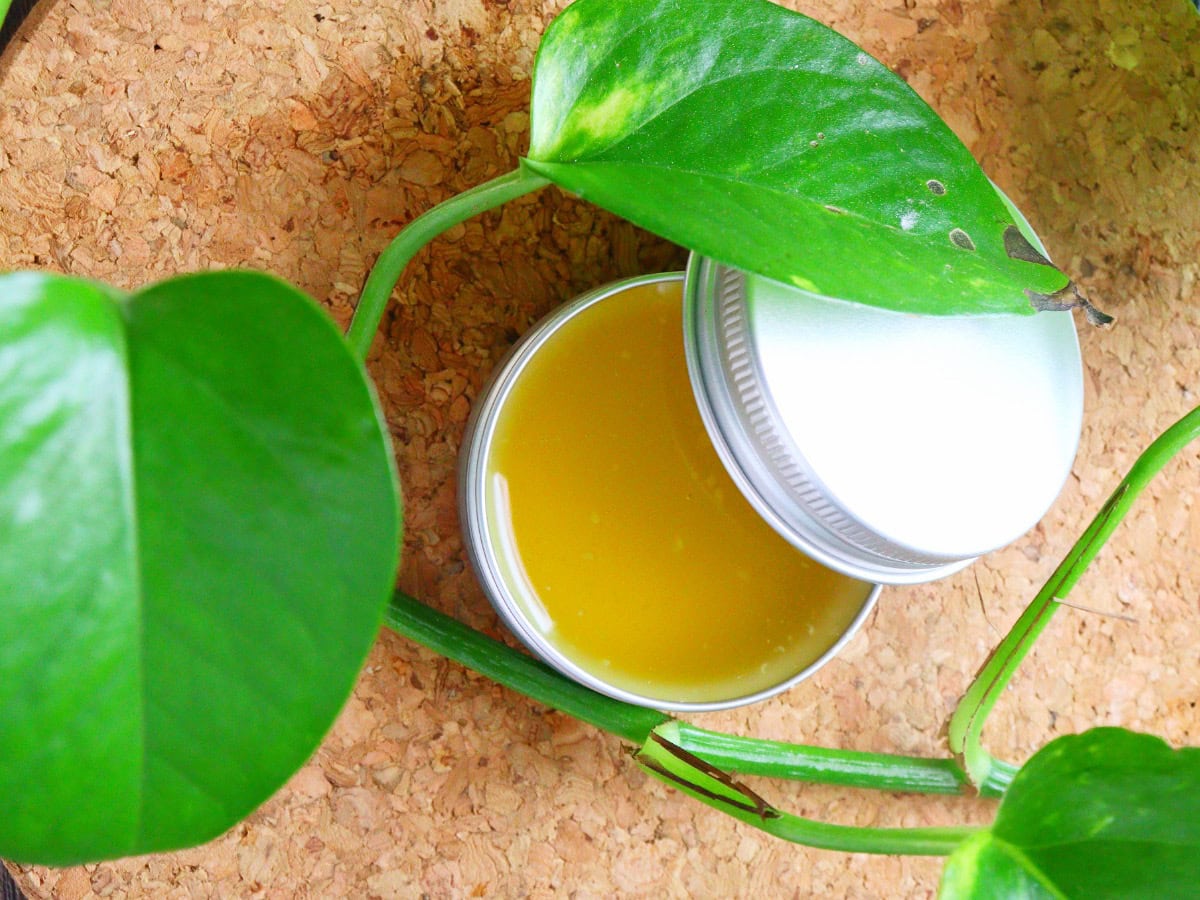
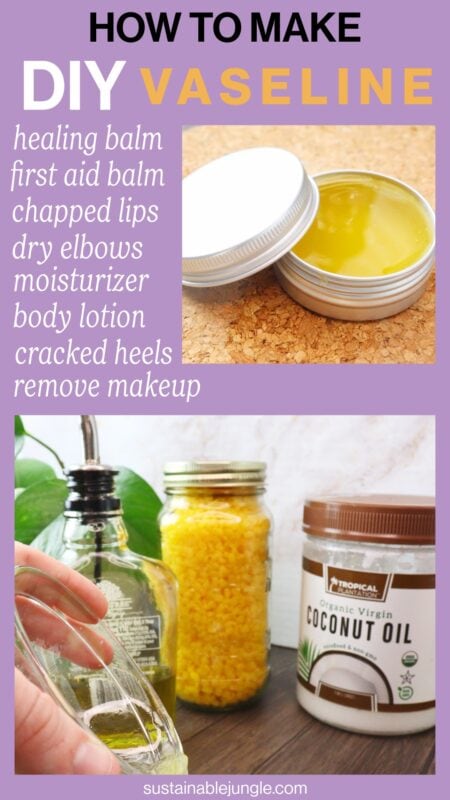
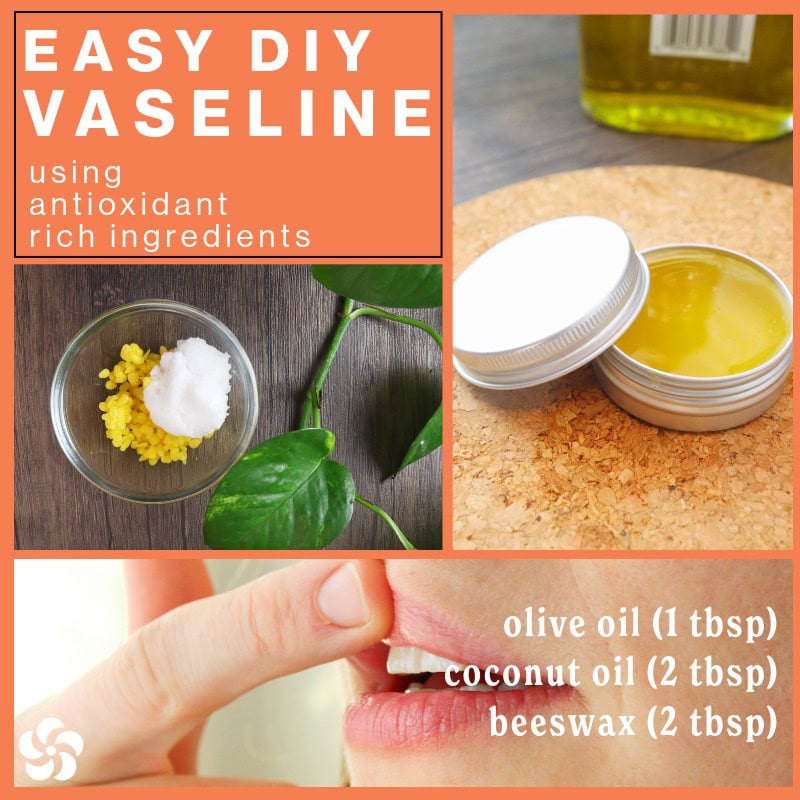
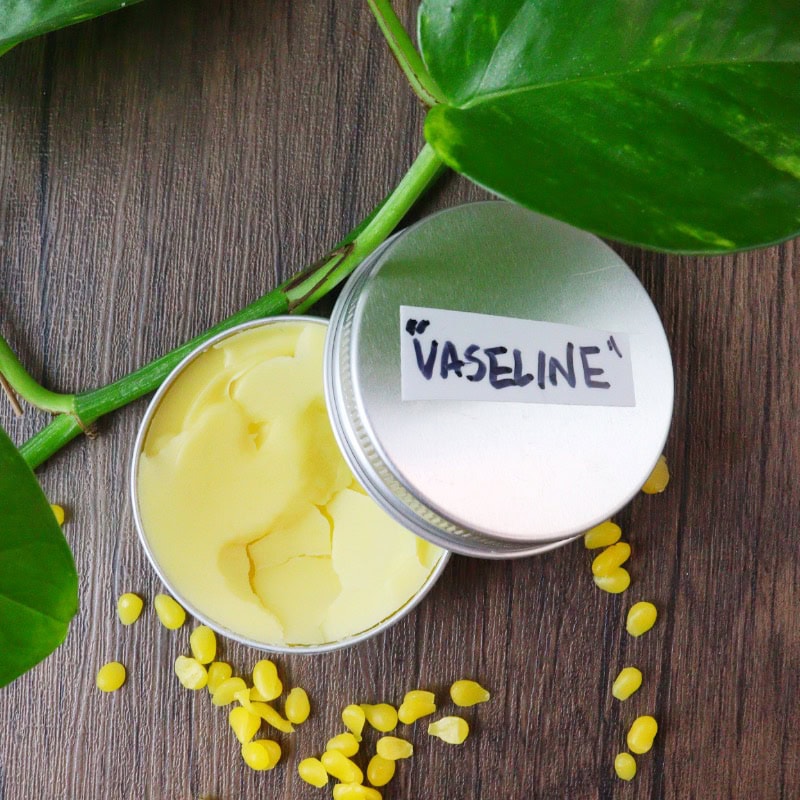
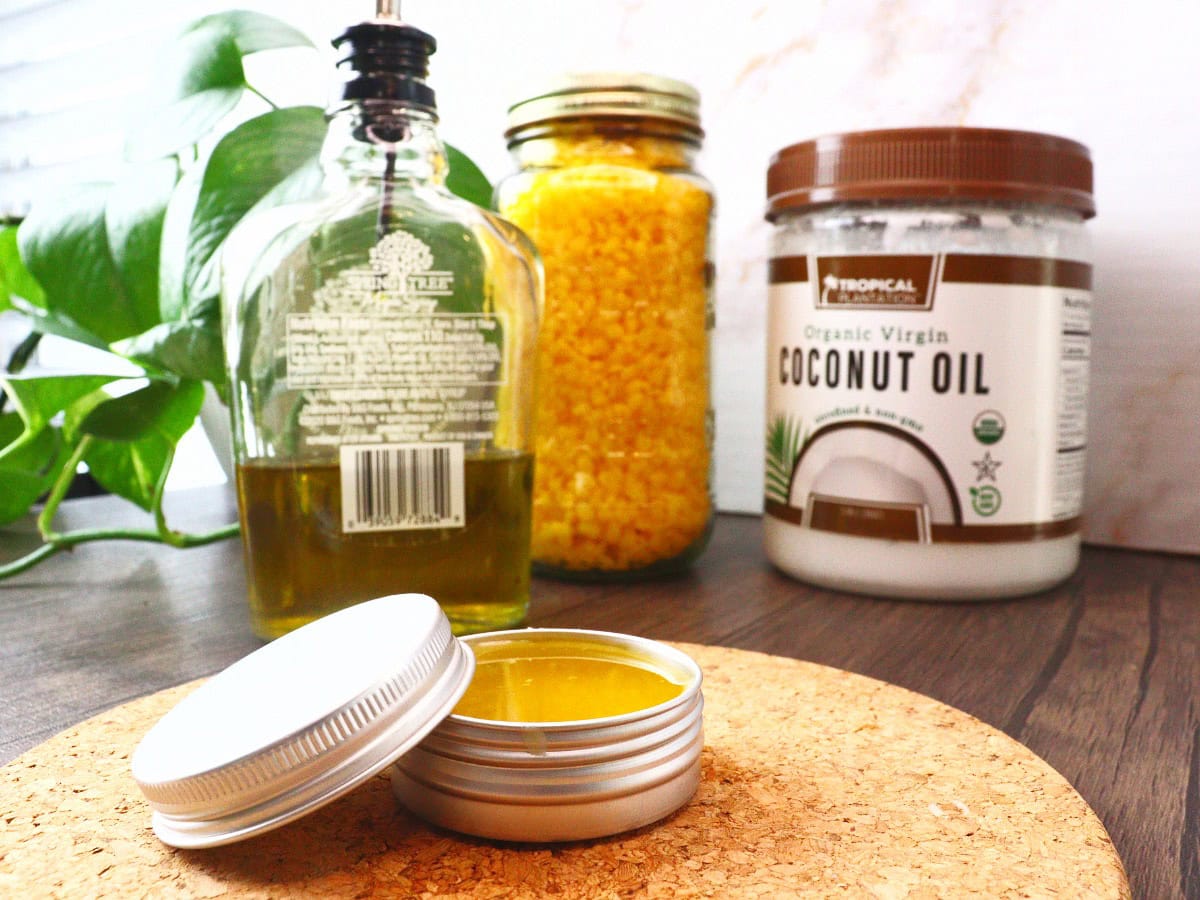
Our tried and tested recipe uses just a few ingredients, all of which have been specifically selected for their rich moisturizing and healing properties. The blend of beeswax, coconut oil, and olive oil creates a thick, creamy balm that you can use on dry spots, lips, knees, elbows, cracked heels, as a natural first aid balm, to remove makeup and even as a natural cuticle cream.
Ingredients:
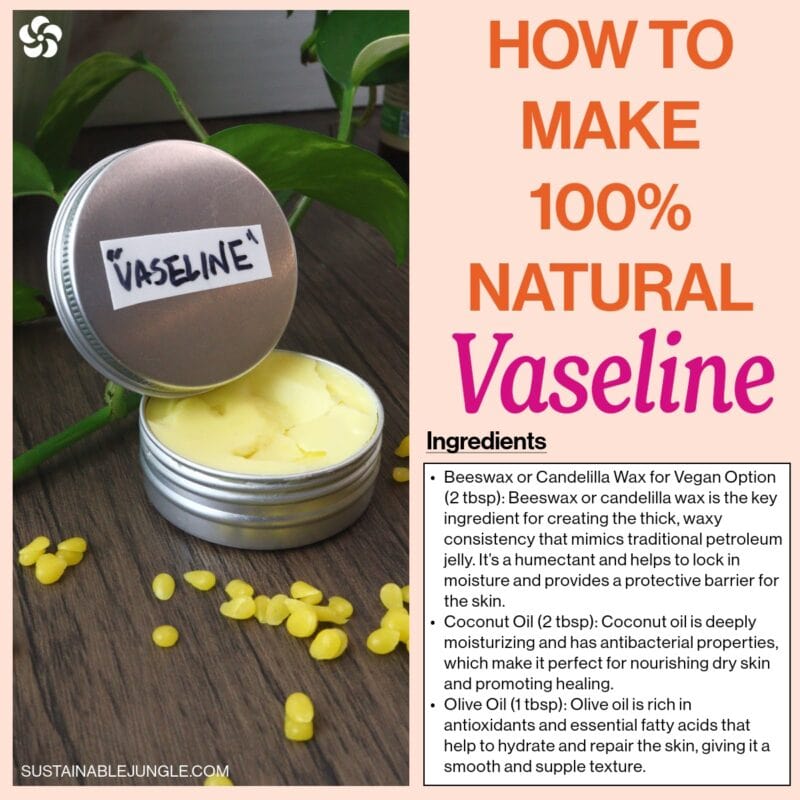
- Beeswax or Candelilla Wax for Vegan Option (2 tbsp): Beeswax or candelilla wax is the key ingredient for creating the thick, waxy consistency that mimics traditional petroleum jelly. It’s a humectant and helps to lock in moisture and provides a protective barrier for the skin.
- Coconut Oil (2 tbsp): Coconut oil is deeply moisturizing and has antibacterial properties, which make it perfect for nourishing dry skin and promoting healing.
- Olive Oil (1 tbsp): Olive oil is rich in antioxidants and essential fatty acids that help to hydrate and repair the skin, giving it a smooth and supple texture.
Instructions:
- In a double boiler or heatproof glass bowl, melt the beeswax and coconut oil together until fully melted.
- Once melted, remove from heat and stir in the olive oil.
- Allow the mixture to cool slightly before adding any essential oils (if using). Stir well to combine.
- Pour the mixture into a small glass jar or tin and let it cool completely until solidified.
- Once cooled, your homemade Vaseline is ready to use. Apply it to dry patches, lips, or anywhere else you need some extra hydration and protection.
Cost Savings of Making Your Own Vaseline
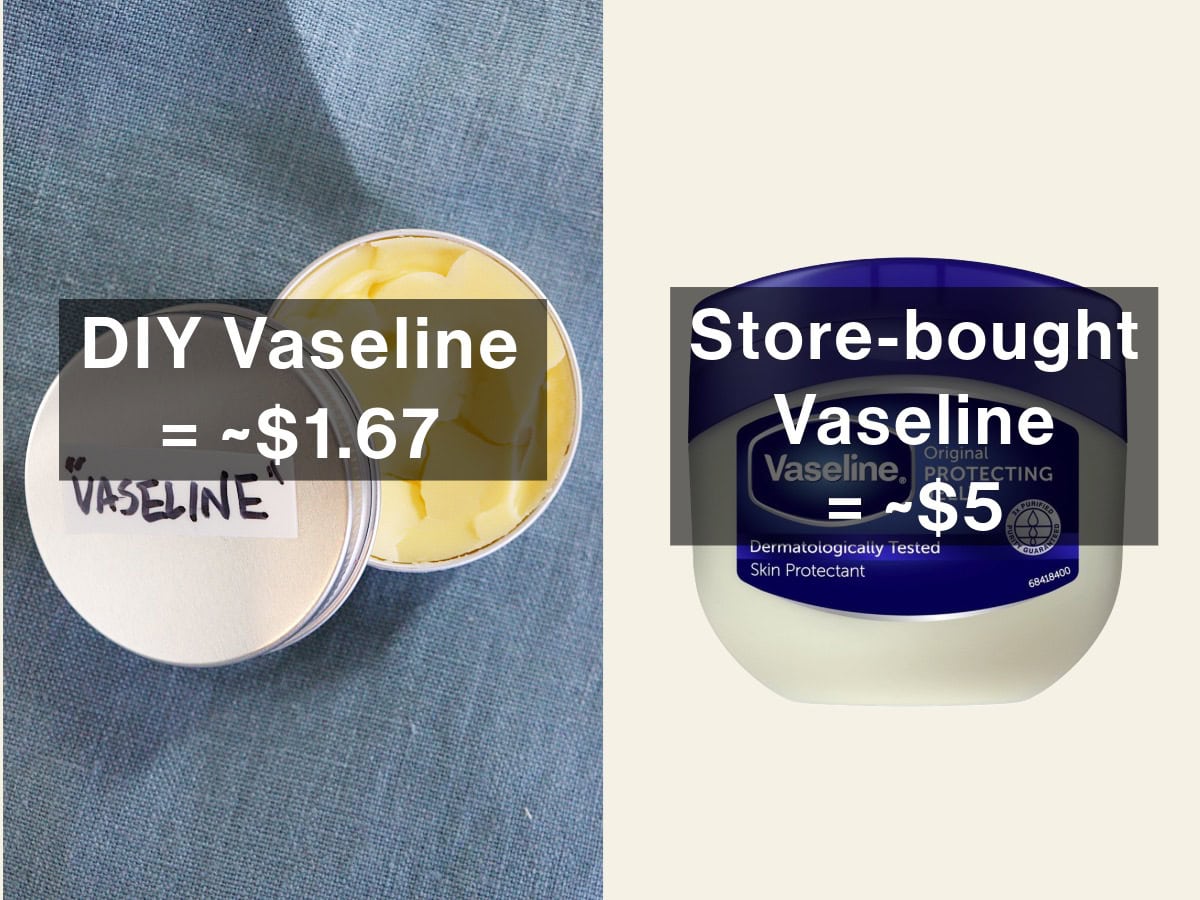
A store-bought jar of petroleum jelly typically costs around $4–$7, and a high-quality, natural vegan alternative can be anywhere from $15-$25 for a similar amount. Making your own version will save you a lot, and you’ll know exactly what’s in it. Plus, you get more for your money by avoiding the hidden costs of branding, packaging, and chemicals. Here’s the comparison.
Homemade Vaseline (cost per ingredient):
- Beeswax: $8 for a 15 oz bag (~$0.53 for 2 tbsp)
- Coconut Oil: $9 for an 16 fl oz tub (~$0.56 for 2 tbsp)
- Olive Oil: $20 for a 17 fl oz bottle (~$0.58 for 1 tbsp)
Cost per batch: ~$1.67 (recipe makes about 3 fl oz, comparable to average sizes of store-bought Vaseline containers)
Store-Bought Equivalent: ~$5+ for 3.4 oz tub (e.g., Vaseline brand)
Savings per Batch: $3.33
Why Make Your Own Vaseline?
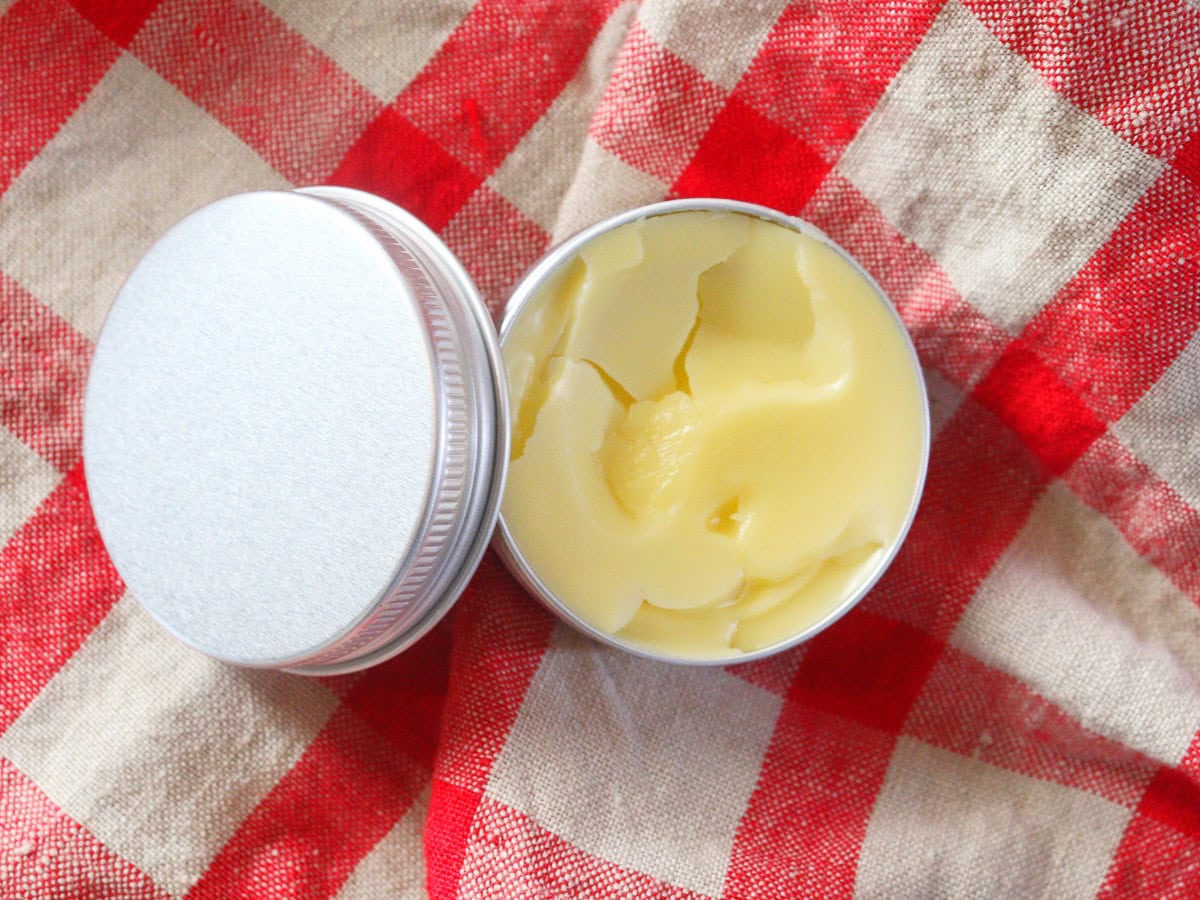
While petroleum-based products like Vaseline can be cheap and effective, they can come with a hefty environmental cost—namely that they are created using petroleum and thus perpetuate our reliance on fossil fuels.
Plus, many conventional petroleum jelly products, while effective, come with potential concerns, especially if you’re vegan or concerned about animal products. Here’s a look at the common ingredients found in standard vaseline:
- Petroleum (Petrolatum): Petroleum is a by-product of crude oil, and while it’s used for its moisture-sealing properties, it can clog pores and prevent the skin from breathing. The EWG also notes there is a risk of contamination from polycyclic aromatic hydrocarbons (PAHs), cancer-causing chemicals found in crude oil and its by-products.
- Fragrances: Some commercial petroleum jelly products contain synthetic fragrances and preservatives, which can irritate sensitive skin, cause headaches, and trigger allergies.
- Mineral Oil: Mineral oil is another petroleum-derived product that can trap bacteria and impurities on the skin’s surface, leading to breakouts and clogged pores.
- Lanolin: This ingredient, which comes from sheep’s wool, can cause allergic reactions for some individuals, particularly those with sensitive skin. It’s obviously also not vegan so should be avoided by those who are.
- Paraffin: A byproduct of petroleum, paraffin wax may contain impurities that irritate the skin and pose potential long-term health risks.
Feel like making your own homemade beauty products or maybe your own DIY makeup after reading that list? Yup us too!

Amber obtained Bachelor of Arts degrees in English, Creative Writing, and Psychology from The University of Oxford and Arcadia University. She is an avid crafter, gardener, quail farmer, wannabe novelist, and self-proclaimed eco adventurer. From living in a camper van to living in a tiny house, she is enamored by the small and self-sufficient; and aspires to one day become an off-grid micro-farmer, bridging sustainability with non-toxic living and eating. With a passion for outdoor sports like rock climbing, skiing, and travel, having already backpacked across 30 countries, she is always up for the next big adventure while seeking ways to minimize her impact along the way.