















Repairable shoes used to be commonplace, back when clothing and footwear were made with higher-quality materials and craftsmanship that allowed them to be repaired again and again. But as the saying goes, they don’t make ’em like they used to.
Today’s fast fashion industry has given rise to shoes designed for short-term wear and quick disposal, contributing to the millions of tons of textiles that end up in landfills each year. Once a pair wears out, most people toss them without realizing that many types of shoes can be repaired, resoled, or otherwise given a second life.
By choosing repairable and/or resoleable shoes, you not only extend the lifespan of your footwear but also reduce waste, cut down on the manufacturing impact of buying new, and support brands that are prioritizing sustainable materials, ethical supply chains, and eco-friendly packaging. That’s exactly what we’ve curated in this list. To learn more about what makes shoes repairable (and how to repair them) plus how we found the brands on this list, kick on to the end of this article.
Note: We use our Brand Rating System to assess brands (who opt in) against 22 sustainability-related criteria, including things like climate action, materials, chemical use, and water use. Look out for rated brands on the list below and find others in our brand directory.
Index: Resoleable & Repairable Shoe Brands
- Poppy Barley Jump to brand
- Vivobarefoot Jump to brand
- VEJA Jump to brand
- Bared Footwear Jump to brand
- Baabuk Jump to brand
- Vyn Jump to brand
- Goral Jump to brand
- Camper Jump to brand
Poppy Barley


Price Range: $216—$460
Poppy Barley is a Canadian, female-founded Certified B Corp offering luxury footwear, bags, and accessories. Their shoe collection spans boots, flats, sandals, loafers, heels, and sneakers.
The most easily repairable shoes are those made of leather due to its durability and malleability. Poppy Barley uses Leather Working Group (LWG) certified leathers, chrome-free vegetable-tanned linings, and cactus leather in their PB PLNT line. They prioritize repair and restoration to improve longevity of their products and have a care guide to improve leather care.
Packaging is FSC-certified, and factories are directly audited every two years to ensure ethical production standards. They further their impact through their Future Fund, supporting community initiatives.
Vivobarefoot


Price Range: $150—$280
Barefoot is the best, or so Vivobarefoot says. They sell sustainable running shoes and lifestyle shoes, all incorporating barefoot, feet-friendly technology that supports the natural shape and needs of feet.
Their shoes range from ballet flats to rain boots to repairable sneakers and running shoes. Currently, their Revivo repair service is only available to folks in the UK, Europe and the US (for some services), but they’re working on developing partnerships with Vivo-approved cobblers globally. Also note that whilst all new styles are designed to be repaired, several of their older styles (Kasana, Primus Lite, Primus Lite II, Primus Knit, Stealth, and the Ultra models) are not repairable. With the goal of eventually making entirely closed-loop footwear, they also recycle shoes that can’t be repaired.
Vivo is working to incorporate more sustainable fabrics into its designs, such as recycled polyester, recycled PU, plant-based TPU, algae foam, and natural rubber. Most of their leather is “wild hide” leather sourced from free-roaming cattle in Ethiopia and wool is sourced from Woolmark-certified farms in Australia.
As a Certified B Corp, Vivobarefoot has committed to transparent business practices, including sharing its supply chain and labor policies. Their shoes are made in ethically monitored factories in China, Vietnam, and Portugal.
Committed to developing a sustainable business (and acknowledging there is much work to be done), Vivobarefoot shares its aims and progress via its Unfinished Business sustainability reports.
VEJA

Price Range: $135–$280
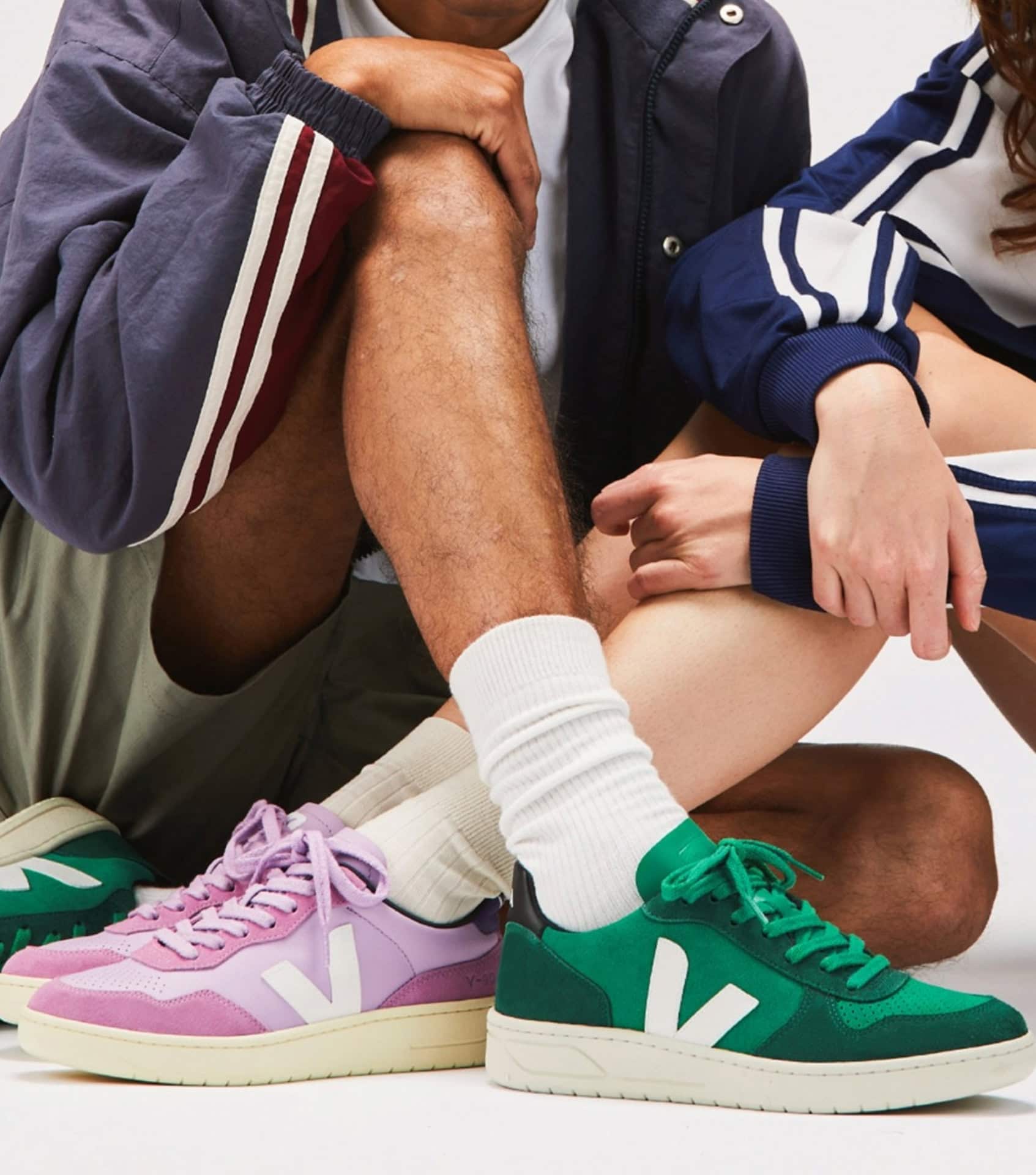
French brand VEJA has been making sustainable shoes for over two decades. They offer several active and casual designs, including running shoes, volley shoes, trekking shoes, retro-inspired skate shoes, and more. Believing that “change begins with repair“, the brand launched its Clean, Repair, and Collect program to keep shoes in circulation for longer.
They have repair stations in their Bordeaux, Paris, Berlin, Madrid, and Brooklyn stores. As well as an in-store cobbler, their Paris store also has a tailor, so you can take along your clothing for mending, too.
For shoe uppers, VEJA uses leather sourced from LWG Gold-certified tanneries, recycled polyester, organic and regeneratively grown cotton, and C.W.L. (Cotton Worked As Leather), which uses a 54% bio-based coating made from PU, corn starch, and ricinus oil. Other materials include castor bean oil, sugarcane, and Amazonian rubber.
The Certified B Corp works with a manufacturing partner in Brazil, where many of its materials are sourced. Organic cotton is sourced from Brazil and Peru, and VEJA goes the extra mile to support its suppliers by pre-financing harvests and paying double market prices.
VEJA has measured its Scope 1, 2, and 3 emissions and shares the details in its carbon emissions reporting. The majority of emissions come from the raw materials stage, namely leather. They are working to increase the amount of ecological leather they use and reduce the total amount of leather used across their collections.
They also use renewable energy, ship by boat rather than by plane, and extend the life of customer’s shoes via the Clean, Repair, and Collect program.
Bared Footwear


Price Range: $100–$350
Bared Footwear is an Australian based Certified B Corp (with availability in the US) that offers a leather-based shoe collection including repairable boots, sneakers, sandals, and dress shoes, all crafted from Leather Working Group (LWG) certified leather and built to last.
Leather shoes are generally more repairable and Bared also has a defined repair and faults policy. Minor defects like sole lifting or stitching issues are repaired free of charge within the first few months, while major faults are addressed with repair, replacement, or refund. Customers can also arrange repairs through local cobblers, making their shoes more resoleable and repairable in practice. To further extend product life, they sell a complete range of shoe care products.
Bared is pushing innovation with materials like B.plantfoam™ footbeds made from 72% biobased content, recycled textiles, and FSC-certified packaging. They publish transparent details about every component they use, from adhesives to fasteners, and prioritize certified materials like LWG leather, USDA Biobased foam, GRS recycled cotton and polyester, FSC rubber, and GOTS-certified textiles.
Their suppliers uphold the FLA Workplace Code of Conduct and they are working in collaboration with Intertek to develop a Living Wage Audit Program.
Baabuk


Price Range: $100–$290
Swiss brand Baabuk is known for its wool footwear, including sneakers, slippers, and boots. Their natural wool uppers are breathable, insulating, and biodegradable, making them a lower-impact choice compared to synthetic materials.
To extend product life, Baabuk offers a Repair & Replace kit, which allows customers to refresh or replace wool inserts and fix holes at home, helping to keep their shoes wearable for longer. They’ve also made a handy video explaining how to use their repair kit.
Baabuk emphasizes responsible sourcing and production. They use wool from Portugal and New Zealand, work with traditional artisans in Nepal to make their slippers, and manufacture sneakers in Portugal under ethical working conditions. The Certified B Corp prioritizes natural and renewable materials, minimizes chemical use in production, and ships in recyclable FSC-certified packaging.
Baabuk also offer a Resale Marketplace where customers can buy and sell secondhand Baabuk products.
Vyn


Price: $690
Swiss sneaker brand VYN has designed its repairable sneakers with components, namely the heel and the heel counter, that can be replaced at home. The replacement parts also come in different colors so you can customize your shoe to suit your style.
VYN has a core collection of Long-Luxe classic street sneakers perfect for jaunts around town or on your carbon-reducing transportation method of choice. The leather for their uppers is sourced from a LWG Gold-rated German tannery that works with regenerative farms and is carbon neutral and ECO₂L certified. VYN has full visibility into where this leather is sourced and how it is processed so they can follow a hide from the farm to the tannery. Italian leather is used for the shoe linings, and cork fabric for the insoles.
VYN sources materials and components from European-certified parters.
Goral


Price Range: $480—$1300
UK-based GORAL makes fully resoleable sneakers, shoes and boots for men and women in their Sheffield workshop, where every pair is overseen from start to finish. Built using their signature Blake Stitch construction, each shoe can be dismantled and resoled through the in-house REBUILD+ service. Goral offer a lifetime repair guarantee.
Their repairable range includes durable low-tops, high-tops, barefoot sneakers, and boots. Customers worldwide can access both the shoes and repair service, with duties and taxes covered on international orders.
GORAL works with some of the world’s most respected tanneries, including Horween and Seidel, to source premium leathers for uppers. Outsoles and other components are selected for longevity, and customers can replace worn laces or insoles themselves.
In addition to their core line, GORAL offers a Repurposed collection, turning leftover and scrap materials into new products. Shoes ship in locally sourced FSC-certified packaging, and the brand offsets associated emissions.
Camper


Founded in Spain in 1975, Camper has long combined traditional craftsmanship with forward-looking design. Their Lifetime Guarantee (LTG) collection is built on the promise of durability: select models like the Pelotas, Brutus Trek, Ground, and Peu Pista are made with robust materials and construction techniques.
To activate the guarantee, customers must register their LTG shoes within 30 days of purchase. While the program doesn’t cover unlimited free resoles, it commits Camper to repairing or replacing defective components for as long as the product is in production, ensuring eligible shoes can stay wearable far beyond the typical lifecycle.
The brand also runs ReCamper, a program offering cleaning, refurbishment, and recycling to extend shoe lifespans across their wider range. For those wanting to shop more responsibly, Camper has a Better Product collection, which highlights models made with lower-impact materials such as Leather Working Group (LWG) certified leathers, organic cotton, and natural or recycled components.
Customers should note that not all Camper shoes meet these higher standards, so focusing on this sub-collection is the more sustainable choice (and thankfully, there is an overlap with the LTG collection).
Resoleable and Repairable Shoes Explained: DIY Repairs, Cobblers, & Recycling
Are shoes repairable? Abso-boot-ly!
What is a repairable shoe?
Repairable shoes are exactly what they sound like: shoes that can be fixed to extend their lifespan. A simple way to identify a repairable shoe is to check whether the parts that wear out most quickly (like soles and heels) can be replaced. Shoes made from sturdy materials like leather or high-quality vegan leather alternatives are typically the best candidates for repair. Though some repairs can also be made to the actual body of the shoe.
What kinds of shoes can be repaired?
Commonly repairable types include loafers, high heels, flats, dress boots, work boots, and sandals. Leather shoes, in particular, are more durable and more conducive to resoling and repairing compared to synthetic options. While not every sneaker can be resoled, some brands now design repairable sneakers with replaceable soles, insoles, or heel pieces.
DIY shoe repairs
Some shoe repairs are surprisingly easy to handle yourself. If the sole of a sneaker starts separating, a little shoe glue and patience will reattach it. Replacing worn-out insoles or laces is another straightforward fix. Brands like Baabuk (on this list) even sell repair kits with insoles, laces, and patches so you can refresh your shoes at home.
When to see a cobbler
For more advanced fixes, a cobbler is your shoe’s best friend. Cobblers can resole or reheel, repair straps, re-stitch seams, replace linings, stretch tight leather, dye shoes, and even rescue pairs chewed by a puppy. Many now offer mail-in repair services like Cobblers Direct or Coblrshop, making it easy to keep your favorite shoes in circulation. Costs vary, but many basic repairs come in under $100 which is often far cheaper (and greener) than buying new.
What about shoes that can’t be repaired?
Sadly, not all shoes are salvageable. If your pair is truly beyond repair, don’t toss them in the trash. Instead, see if the brand has a take-back or recycling program, or check out our guide to what to do with old shoes for options like local textile recycling, donation bins, or TerraCycle boxes.
How We Found These Repairable and Resoleable Shoes
When hunting for brands suitable for this list, we looked for those that not only make repairable shoes but also uphold sustainable and ethical practices as much as possible. Specifically, we considered:
- Materials: Natural and durable materials (like leather, cork, wool, and natural rubber) are more easily resoled and repaired than synthetic alternatives. We prioritized Leather Working Group (LWG) certified leather, Global Recycled Standard (GRS) recycled fabrics, Global Organic Textile Standard (GOTS) -certified textiles, OEKO-TEX and other verified low-impact options.
- Design for repair: Shoes handmade with traditional or simple techniques, stitched rather than glued, or explicitly marketed as resoleable are ideal.
- Supply chain and labor practices: We favor brands that are transparent about their factories and suppliers, ideally with third-party certifications such as B Corp. While certifications aren’t foolproof, they add accountability.
- Green business practices: From carbon offsetting to regenerative materials, FSC-certified packaging, and take-back programs, we considered broader efforts to reduce environmental impact.
- Community contributions: We also value brands giving back through charitable programs or community initiatives.
While these aren’t the only repairable shoes available, they reflect the balance of durability, repairability, and sustainability that we look for. We also prioritized the feature of Poppy Barley which is a brand that has been rated by us on their sustainability related credentials.
Final Thoughts on Repairable Shoes
One of the core tenets of living sustainably means minimizing waste, and repairing your shoes is one way to do that. Not only that, but repairing a much-loved pair of shoes maximizes their longevity and your enjoyment from them.
Whether taking your favorite chukkas to a cobbler or utilizing an online clothes repair service, being mindful of what we own and properly caring for our stuff is a big step toward being a conscious consumer. And you can help keep this circular mindset moving in more ways than one by circulating this article among your fellow shoe enthusiasts.
Editor’s note: This article was originally published in November 2022 and has been updated multiple times since. It received a major update in September 2025 with new brands added and expanded sections on resoleable and repairable shoes.

Joy has been a passionate advocate for the environment since she was a small child. She grew up in South Africa and has been lucky enough to be exposed to the wonders of nature not just in Africa but all over the world. She founded Sustainable Jungle (together with her husband Lyall) back in 2017 after becoming enraged by the devastating impact of palm oil. She then founded the Sustainable Jungle Podcast and together with Lyall interviewed remarkable people from all over the world who were finding ways to create positive impact. Outside of Sustainable Jungle, Joy has always worked in the corporate world, starting out as an auditor and later moving into management consulting. More recently she specialized in Climate Investing for the Asia Pacific region. Given her experience, her current passion is Brand Ratings. She is very much enjoying going deeper on what it really means to drive sustainability performance and true impact through business operations.














Kid Skin ? (In the ABLE part)
Thanks Lois, I’m guessing this was relating to a product that used goat leather but I agree it could be interpreted in quite the wrong way! Plus I can’t see any reference to it on the ABLE website anymore so have removed that reference. Many thanks for the note on this.