














Making your windows crystal clear with chemical-laden cleaners? The irony couldn’t be cloudier.
Which is why we prefer to make our own all natural homemade window cleaner. With a simple and effective formula, you can achieve a streak-free shine while saving money, reducing your impact on the environment and exposure to toxins.
This DIY glass cleaner recipe that we’ve used for many a window cleaning job is not only super easy to make (with a total of four ingredients that you probably already have in your pantry) but also works wonders on outdoor and indoor glass surfaces alike.
Now that we’re all clear on why this is a no-brainer swap, here’s everything you need to know about making your own natural window cleaner.
Index: Best DIY Streak Free Natural Window Cleaner
- All Natural Window Cleaner Ingredients Jump to section
- DIY Window Cleaner Recipe Jump to section
- How Much Money Will You Save With Homemade Glass Cleaner Jump to section
- Why Make Your Own Streak Free Glass Cleaner? Jump to section
All Natural Window Cleaner Ingredients
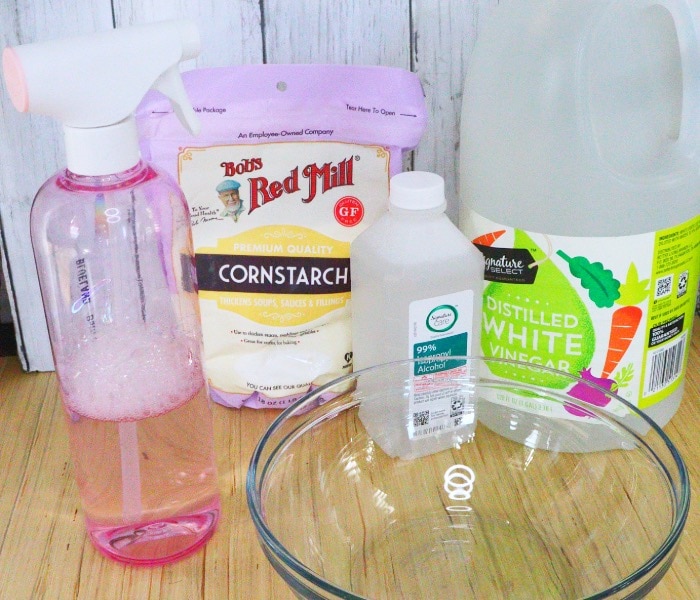
Our window cleaner recipe is designed to be quick and easy because most of us are time poor. We need to be able to DIY cleaning solutions as fast as possible while still being effective (and eco-friendly). So, with just a couple of minutes and a few household ingredients, you can mix up a powerful, natural glass cleaner that rivals any store-bought option. Here’s what you’ll need.
Ingredients:
- 1/4 cup white vinegar: Vinegar is a natural powerhouse for cutting grease and grime. Substitute apple cider vinegar if necessary, but it may leave a slight scent.
- 1/4 cup rubbing alcohol (70% concentration): While some choose not to use rubbing alcohol, we find homemade window cleaner with rubbing alcohol to be essential for quick drying and streak-free results. Substitute higher concentration alcohol (e.g. 90%) if available, but dilute slightly with water as 70% is ample.
- 1 tablespoon cornstarch (optional): Why cornstarch? we’ll there’s a bit of science behind it but let’s just say it adds extra polish and further reduces streaks, though it’s not necessary but certainly adds a level of clarity.
- 2 cups water: Use distilled water for best results to avoid mineral streaks.
DIY Window Cleaner Recipe
Instructions:
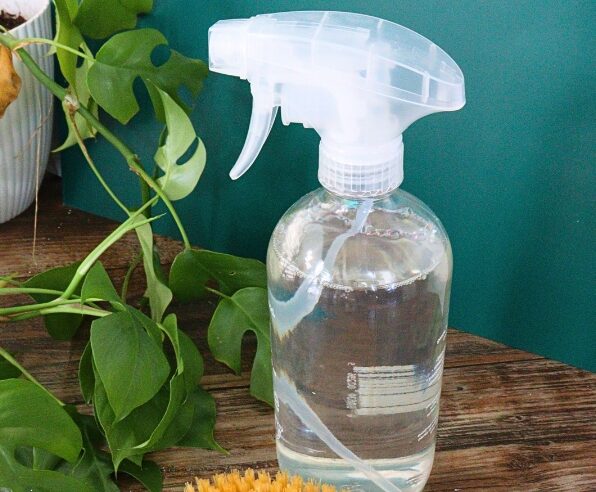
- Pour the water, white vinegar, and rubbing alcohol into a clean spray bottle.
- Add a tablespoon of cornstarch to the mixture.
- Secure the spray bottle cap and shake thoroughly to mix the ingredients.
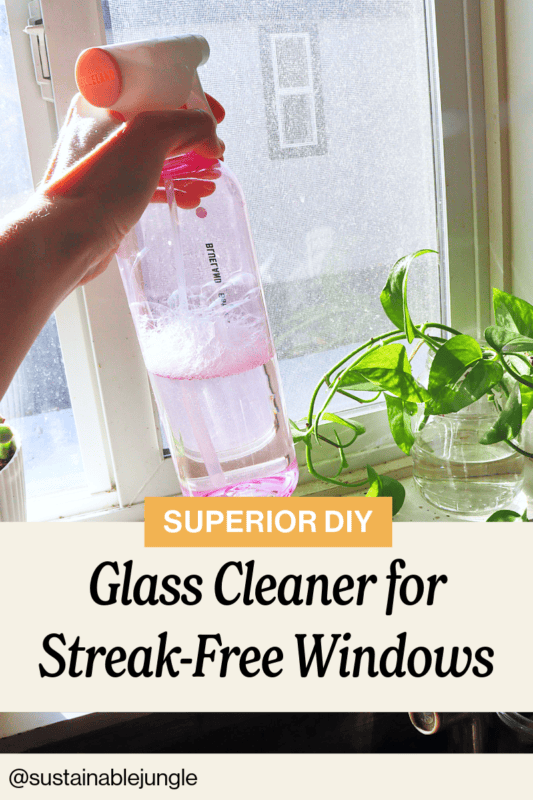
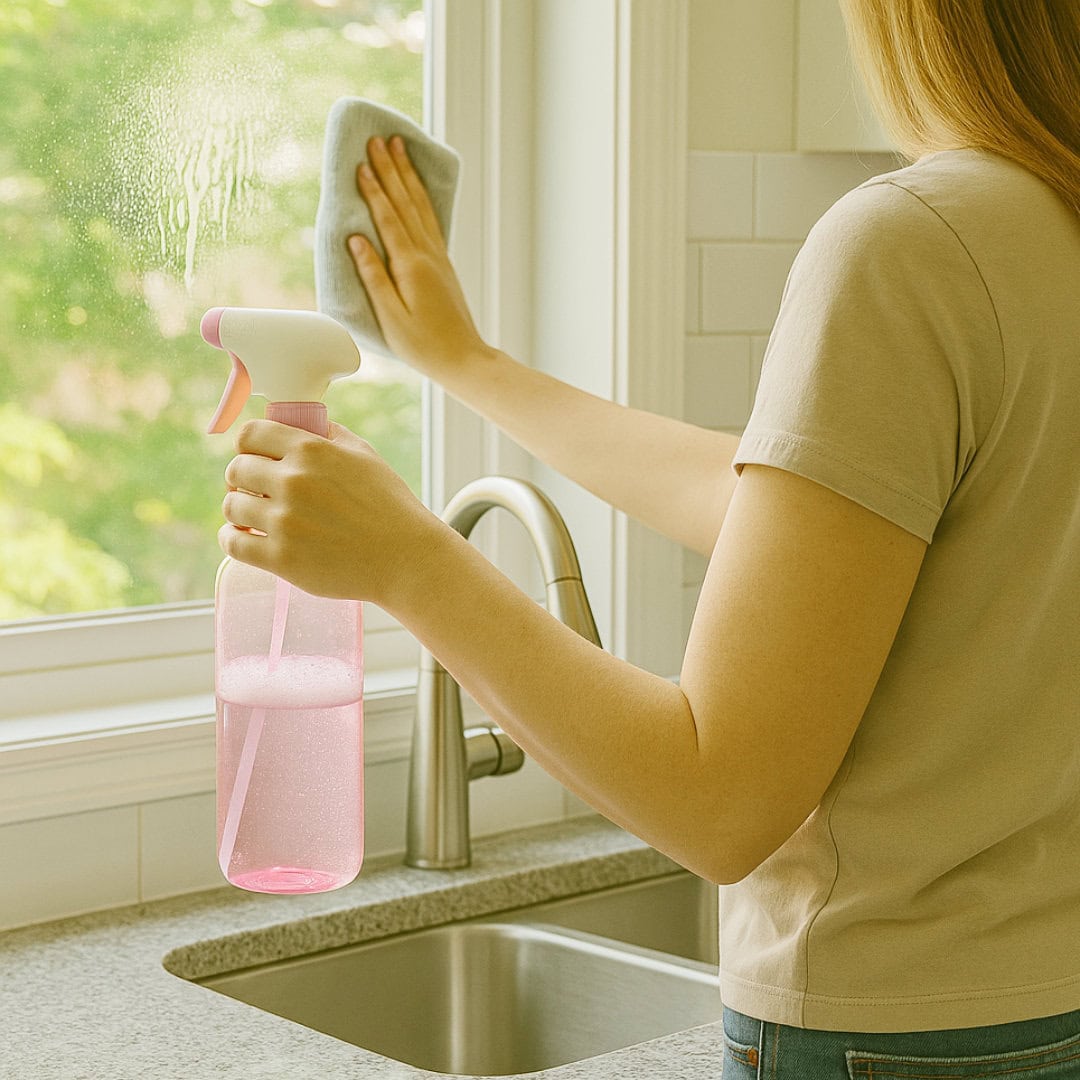
- Spray directly onto windows or glass surfaces. For best results, use a cloth or crumpled newspaper to wipe the surface clean.
If you want to use this cleaner for outside windows, use the same mixture but rinse surfaces lightly with water afterward if heavily soiled. If this rinse leaves streaks, simply reapply the solution and wipe once more.
How Much Money Will You Save With Homemade Glass Cleaner
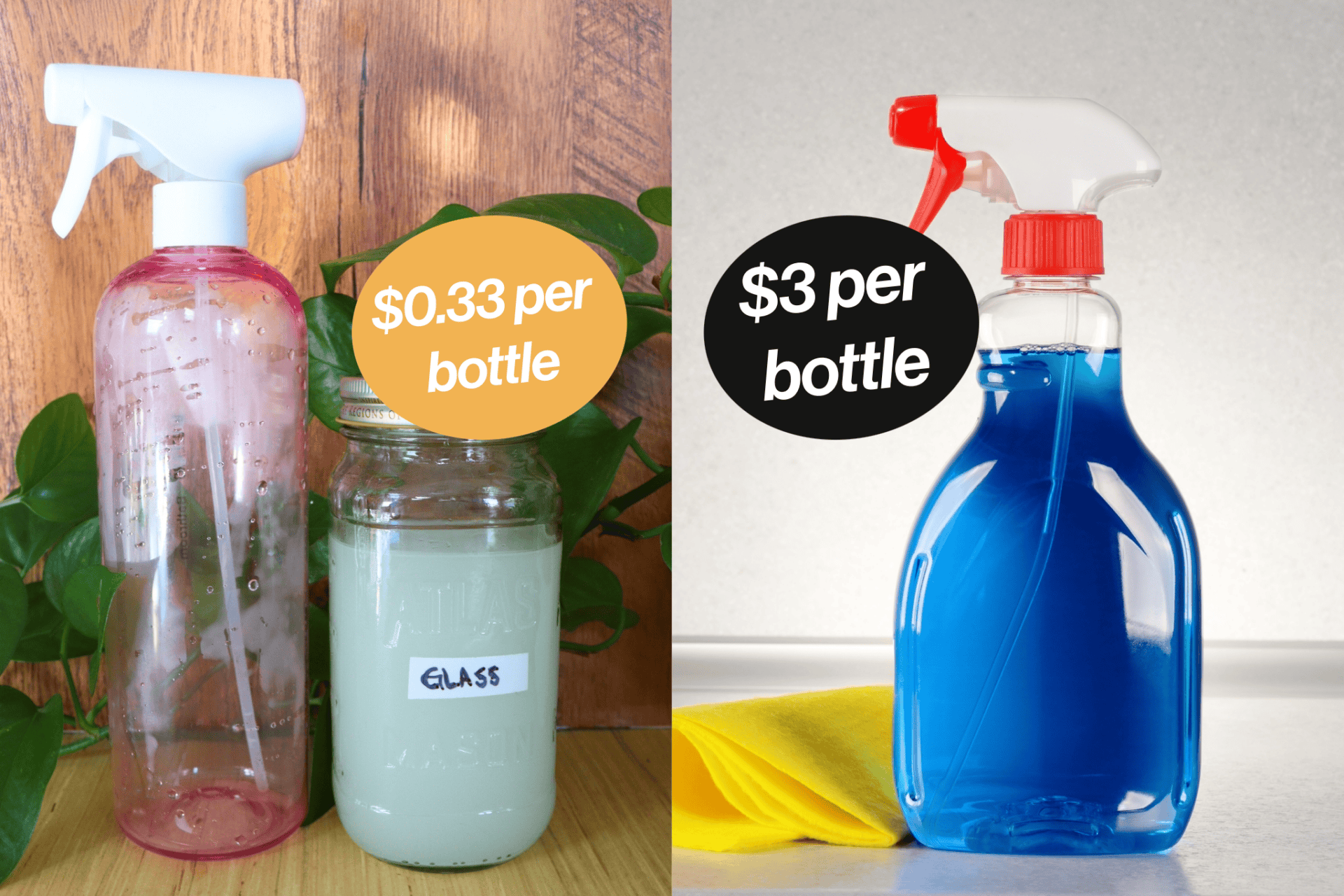
Besides the health and environmental aspects of switching to a DIY natural glass cleaner (which we’ll get into below), let’s break down the other benefit which a lot of us would appreciate: the savings. Here is the comparison of the costs of the ingredients in our cheap recipe compared against the average price of a conventional window cleaner.
1. Homemade Window Cleaner Ingredients (cost breakdown):
- White Vinegar: 1/4 cup (2 ounces)
- Cost: Approximately $0.59 for 32 ounces
- Cost for Recipe: (2 ounces / 32 ounces) * $0.59 ≈ $0.04
- Rubbing Alcohol (70%): 1/4 cup (2 ounces)
- Cost: Approximately $0.25 for 1/4 cup
- Cost for Recipe: $0.25
- Cornstarch: 1 tablespoon
- Cost: Approximately $1.39 for 16 ounces (1 pound)
- Tablespoons per Pound: 1 pound = 16 ounces; 1 tablespoon ≈ 0.5 ounces; so, 1 pound ≈ 32 tablespoons
- Cost per Tablespoon: $1.39 / 32 ≈ $0.04
- Water: 2 cups (16 ounces)
- Cost: Negligible (tap water)
Total Cost of Homemade Solution: $0.04 (vinegar) + $0.25 (rubbing alcohol) + $0.04 (cornstarch) = $0.33 for approximately 2.5 cups of solution.
Comparison to Conventional Window Cleaner: A standard 32-ounce bottle of commercial window cleaner costs around $3.00.
2. Savings (assuming you use 1 bottle every 2 months):
Homemade Window Cleaner Cost
- Monthly Cost: $0.165
- Yearly Cost: $1.98
Store-Bought Window Cleaner Cost
- Monthly Cost: $1.50
- Yearly Cost: $18.00
Savings Analysis
- Cost Savings per Bottle: $3.00 – $0.33 = $2.67 (89% cheaper)
- Cost Savings per Month: $1.50 – $0.165 = $1.335
- Cost Savings per Year: $18.00 – $1.98 = $16.02
By using our homemade solution, you save approximately $16 per annum (or $1.33 per month) which is about 82% cheaper than your average store-bought product. Now that dollar figure might not seem like much, but depending on how quickly you use your window cleaner and the cost of buying conventional cleaners overtime, it quickly adds up. Especially if you look at this in the context of all the money you spend on conventional cleaning products.
Why Make Your Own Streak Free Glass Cleaner?
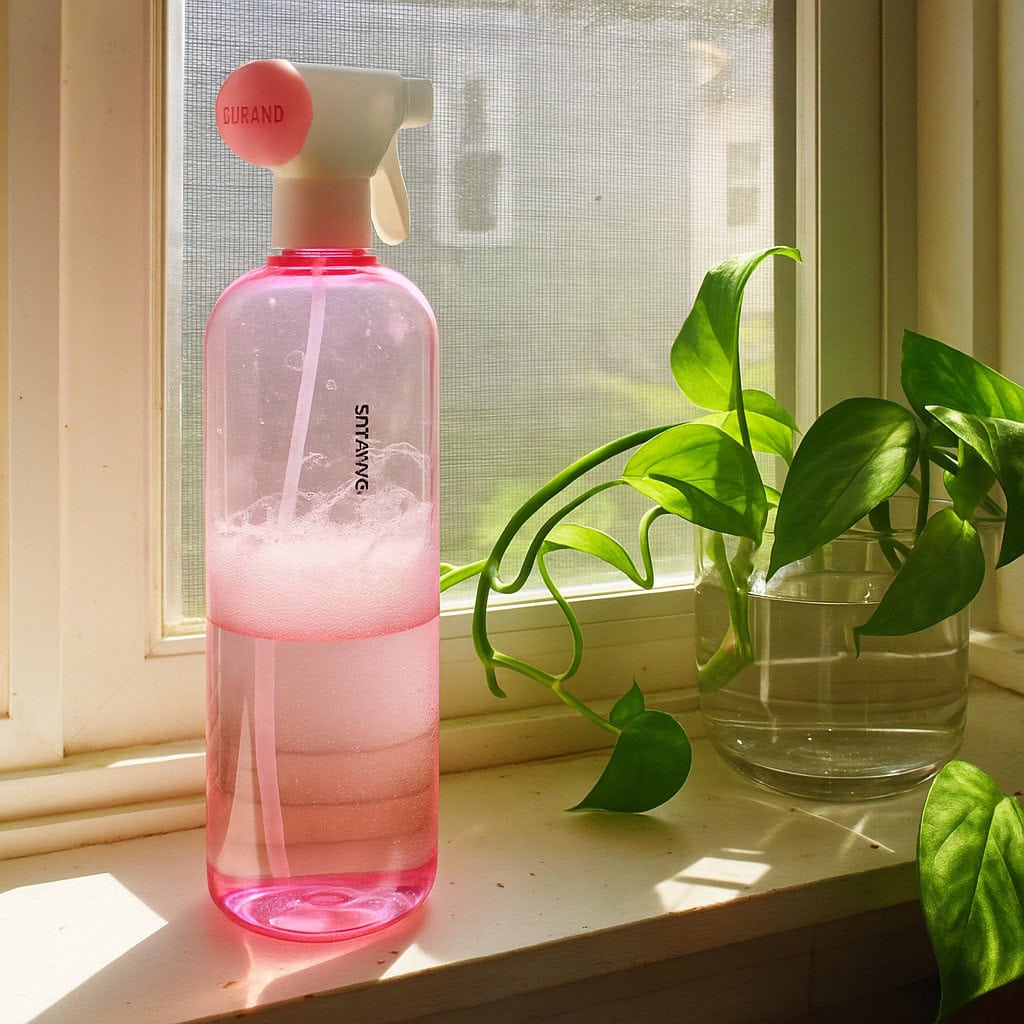
Store-bought window cleaners almost always contain a cocktail of chemicals that you wouldn’t want anywhere near your home. Here’s a short list to give you a taste of some of the more common harmful ingredients found in commercial glass cleaners:
- Ammonia: A common ingredient that can cause respiratory irritation and exacerbate asthma symptoms. Prolonged exposure may also irritate the skin and eyes.
- Butoxyethanol: Often included for its grease-cutting properties, this chemical is linked to headaches and dizziness when inhaled. In high concentrations, it can affect the central nervous system and liver.
- Sodium Lauryl Sulfate (SLS): Used for its cleaning power, SLS can irritate the skin and lungs, especially with repeated exposure.
- Synthetic Fragrances: Many glass cleaners contain artificial fragrances that can release volatile organic compounds (VOCs). VOCs contribute to indoor air pollution and may cause allergic reactions or headaches.
- Phthalates: Found in synthetic fragrances, phthalates have been linked to hormone disruption and reproductive issues.
These chemicals don’t just impact your health. As residues linger on surfaces or get washed into waterways, they also pose environmental risks.
Plus, a homemade solution is far more budget-friendly, considering it uses common ingredients you likely already have lying around—many of which can also be used in numerous other DIY home cleaning recipes.

Amber obtained Bachelor of Arts degrees in English, Creative Writing, and Psychology from The University of Oxford and Arcadia University. She is an avid crafter, gardener, quail farmer, wannabe novelist, and self-proclaimed eco adventurer. From living in a camper van to living in a tiny house, she is enamored by the small and self-sufficient; and aspires to one day become an off-grid micro-farmer, bridging sustainability with non-toxic living and eating. With a passion for outdoor sports like rock climbing, skiing, and travel, having already backpacked across 30 countries, she is always up for the next big adventure while seeking ways to minimize her impact along the way.