













Scrub smarter, not harder.
Pretty much all scouring powders are loaded with harsh chemicals, synthetic fragrances, and toxic additives that are mostly just filler. It makes little sense using these overpriced products when you can whip up your own natural homemade scouring powder in just a few minutes.
And our scouring powder is the ultimate natural cleaning recipe in your green cleaning arsenal for tackling stubborn messes, like hard water stains in stainless steel and porcelain sinks, dirty grout in tubs and showers, and cooked on grease on stovetops.
With just a few simple, non-toxic ingredients, you’ll have a powerful homemade cleaner that’s safe, eco-friendly, and, yes, effective.
Index: DIY Scouring Powder with Baking Soda
- Homemade Scouring Powder Ingredients Jump to section
- Homemade Scouring Powder Recipe Jump to section
- How Much Money Will You Save With DIY Natural Scouring Powder Jump to section
- Why Make DIY Scouring Powder? Jump to section
Homemade Scouring Powder Ingredients

To make your own scouring powder that’s gentle on surfaces but tough on grime you’ll need just three simple ingredients that you probably already have in your cupboard.
Ingredients:
- 1 cup baking soda: A mild abrasive that helps lift dirt and stains while neutralizing odors.
- 1/4 cup washing soda: Boosts cleaning power by breaking down grease and grime.
- 10 drops essential oil or dried botanicals, such as lavender buds (optional): Adds a pleasant scent and additional cleaning properties (i.e., tea tree oil for antibacterial effects or lemon oil for grease-cutting power).
Homemade Scouring Powder Recipe
Instructions:
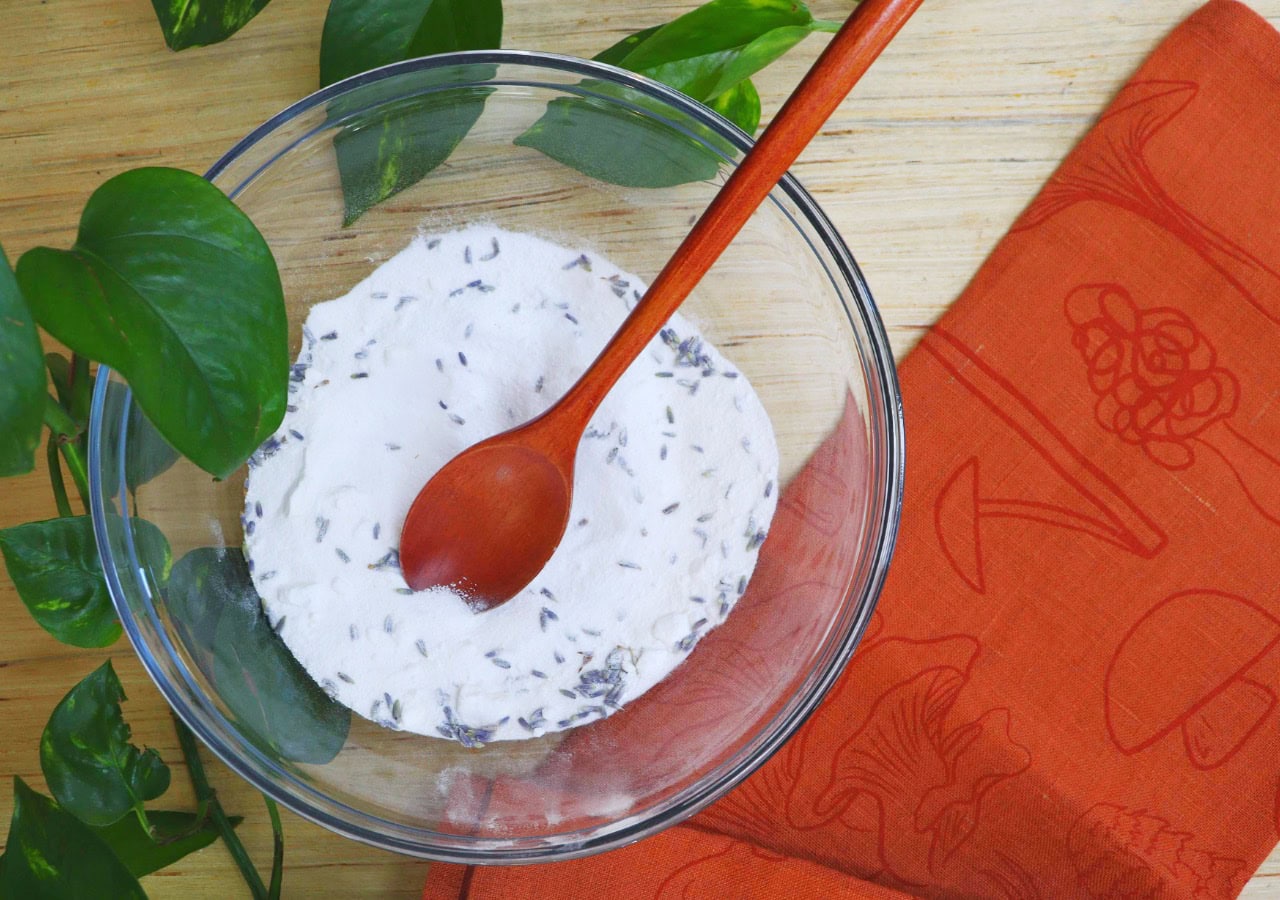
- Combine baking soda and washing soda in a clean, dry jar with a lid, or in a bowl if it’s easier, after which simply transfer to a jar.
- Add essential oil (if desired) or ground up dried botanicals and stir or shake the jar to mix evenly.
To use, simply sprinkle the powder directly onto surfaces (like sinks, tubs, or stovetops), and use a damp sponge or scour pad such as a coconut coir sponge or steel wool to scrub the area, applying light pressure as needed.
If you find you need a little more moisture, you can either add a bit of warm water as needed or combine this with a homemade all-purpose cleaning spray, simply spraying down the surface with your vinegar or castile soap-based solution a few minutes prior to sprinkling this cleansing powder on as well.
Rinse thoroughly with water and wipe clean with a cloth or towel.
How Much Money Will You Save With DIY Natural Scouring Powder

Commercial cleaners as you know are packed with unnecessary chemicals and fillers. They also come with an unjustified price tag when you compare the cost of making your own cleaning powder at home (which is just as effective and far safer) versus the average price of a store-bought product.
So here are the numbers, and the results are clear—making your own scouring powder is a no-brainer.
1. Cost of Homemade Scouring Powder Recipe
- Baking Soda (1 cup): Baking soda typically costs about $1.50 per pound (16 oz). Since 1 cup is 8 oz, the cost for this ingredient is $0.75.
- Washing Soda (1/4 cup): Washing soda costs around $4 for a 55 oz box. Since 1/4 cup is about 2.5 oz, the cost is $0.18.
- Essential Oils or Botanicals (Optional): A bottle of essential oil costs approximately $10 for 300 drops. For 10 drops, the cost is $0.33. If using dried botanicals instead, the cost could be lower (around $0.10–$0.20).
Total Cost for One Batch:
- Without essential oils or botanicals: $0.93
- With essential oils or botanicals: $1.26
This recipe makes about 1.25 cups of scouring powder, which is comparable to a standard 16 oz container of store-bought cleaner.
2. Cost of Store-Bought Scouring Powders
The average price of store-bought scouring powders ranges from $3 to $10 per container (16 oz). Let’s take a mid-range example: a $5 cleaner.
3. Savings
- Without essential oils, you save $4.07 per batch compared to the average store-bought cleaner.
- With essential oils, you save $3.74 per batch. And for heavy cleaners or eco-friendly brands on the higher end of the price spectrum ($10 per container), the savings could exceed $8 per batch.
Making your own scouring powder at home will save you between $4–$8 per container. And how much does that add up to over a year? Let’s assume you buy one container a month for twelve months which will set you back around $60-$120. If you make your own at $0.93 per batch (without essential oils), you’re looking at $11.16 per year, which means you’ll save between $48.84 and $108.84 annually. And with essential oils is not much less.
Why Make DIY Scouring Powder?

Besides the money you’ll save, store-bought scouring powders such as Bar Keeper’s Friend include harsh chemicals that can easily irritate your skin, harm the environment, and release harmful toxins into the air.
Here are some common ingredients you’ll find in this product (they’re far from safe in our opinion, especially considering you’ll be in close proximity with them while scrubbing away).
- Chlorine Bleach: A strong disinfectant that can irritate the skin and eyes, cause respiratory issues, and release toxic chlorine gas when mixed with ammonia or acids.
- Silica: Common in abrasive cleaners, it can pose a risk to respiratory health if inhaled over time.
- Sodium Bisulfate: A pH-lowering agent that helps dissolve grime and mineral deposits. Contact with sodium bisulfate can cause burns or irritation to the skin and eyes, while inhaling dust may lead to coughing, wheezing, or difficulty breathing.
- Oxalic Acid: The active ingredient in Bar Keepers Friend, though exposure to this corrosive substance (which is technically used as a pesticide) can cause skin and eye irritation. Inhalation of its fumes or dust may irritate the respiratory system, and ingestion can lead to poisoning.

Amber obtained Bachelor of Arts degrees in English, Creative Writing, and Psychology from The University of Oxford and Arcadia University. She is an avid crafter, gardener, quail farmer, wannabe novelist, and self-proclaimed eco adventurer. From living in a camper van to living in a tiny house, she is enamored by the small and self-sufficient; and aspires to one day become an off-grid micro-farmer, bridging sustainability with non-toxic living and eating. With a passion for outdoor sports like rock climbing, skiing, and travel, having already backpacked across 30 countries, she is always up for the next big adventure while seeking ways to minimize her impact along the way.