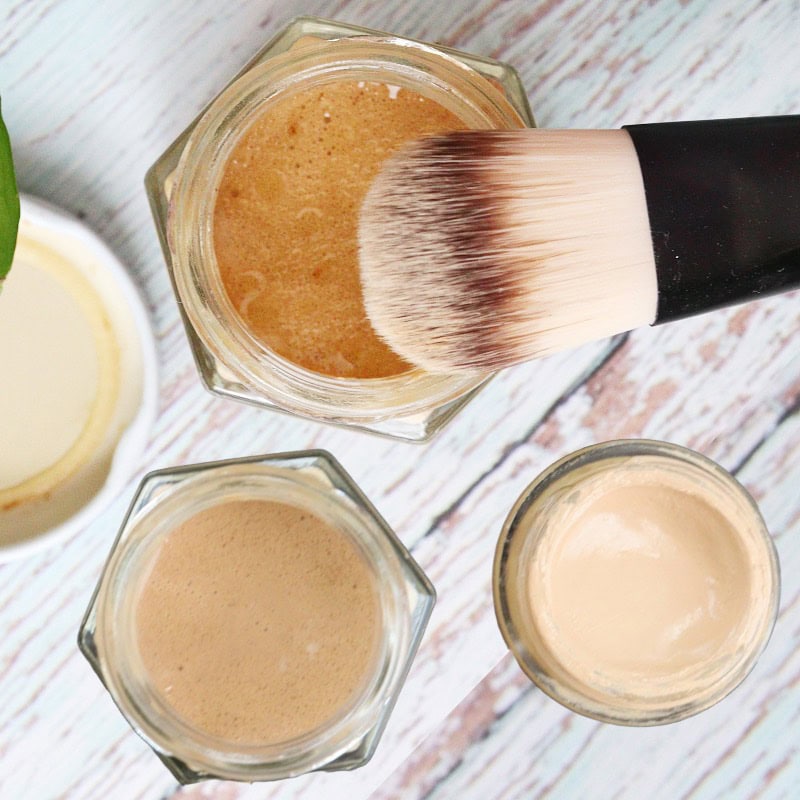














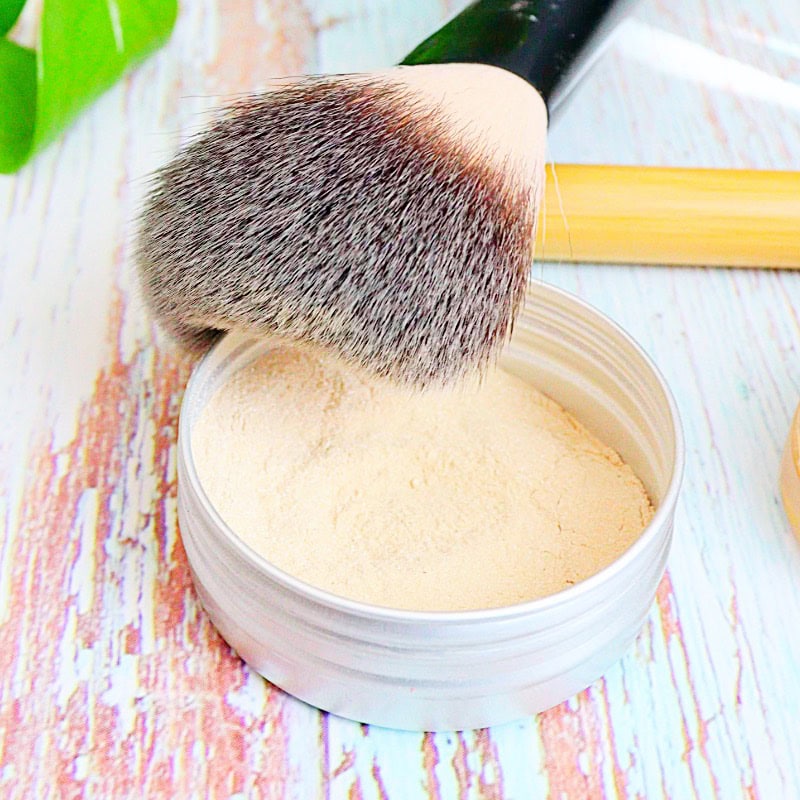
If you enjoy a bit of DIY, care about your skin’s health and want to get the perfect match for your skin tone, then do we have a homemade foundation powder recipe for you!
As you probably know (and potentially one of the reasons why you’re interested in making your own DIY makeup in the first place), most (all?) store-bought options are packed with questionable ingredients, fillers and additives that leave your skin looking cakey and dry (and irritated), not to mention they cost a small fortune which really adds up over time.
Making your own natural foundation powder might seem daunting, but it’s actually really simple, customizable, and super cost-effective (scroll to the end to see the cost breakdown) with our recipe.
You can tweak the formula to perfectly match your skin tone, all while knowing exactly what’s going on your face. Plus, it’s fun to experiment with tones and create something truly tailored to you.
Index: DIY Powdered Foundation
- Homemade Powdered Foundation Recipe Jump to section
- Cost Savings of Making Your Own Powder Foundation Jump to section
- Why Make Your Own Foundation Powder? Jump to section
Homemade Powdered Foundation Recipe
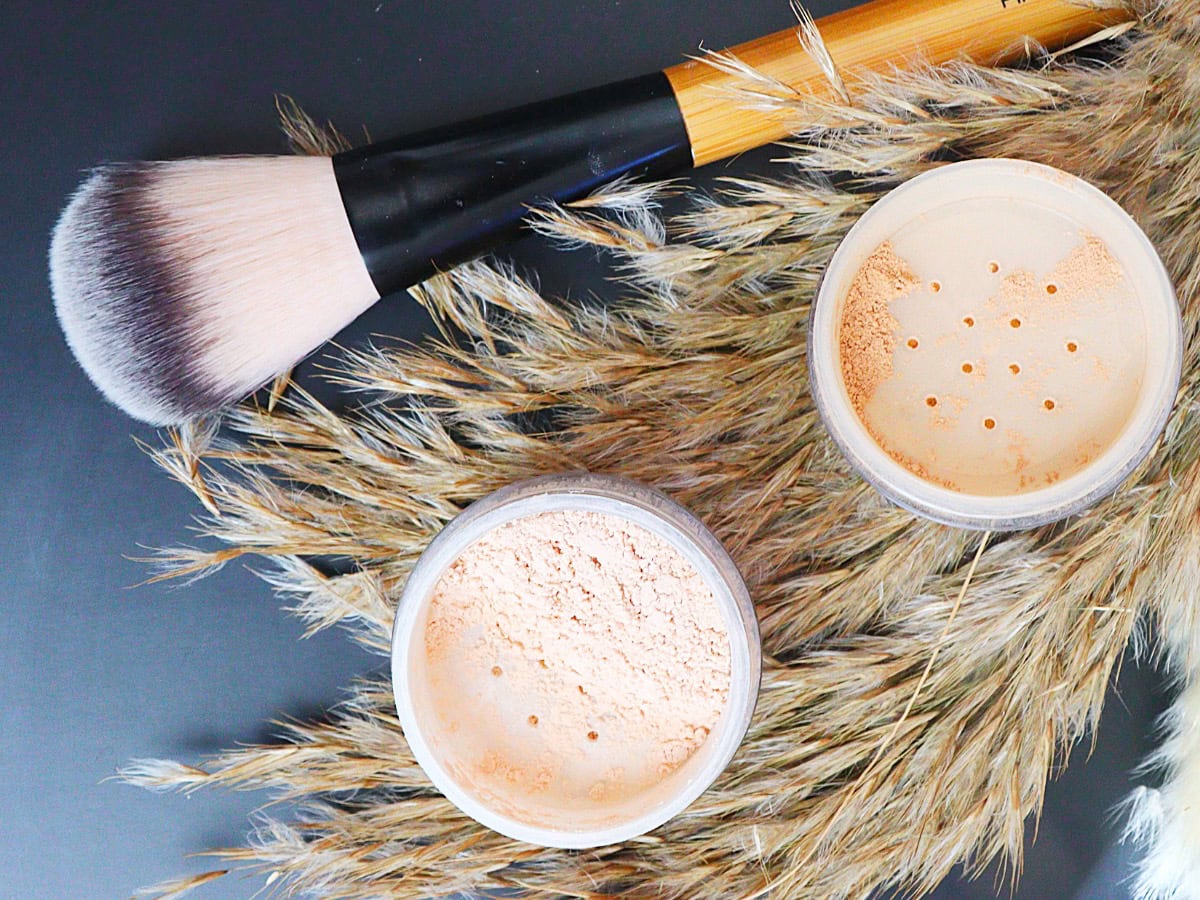
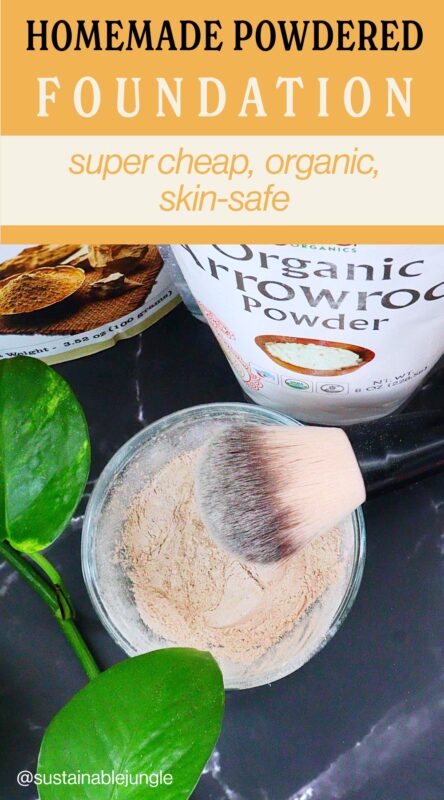
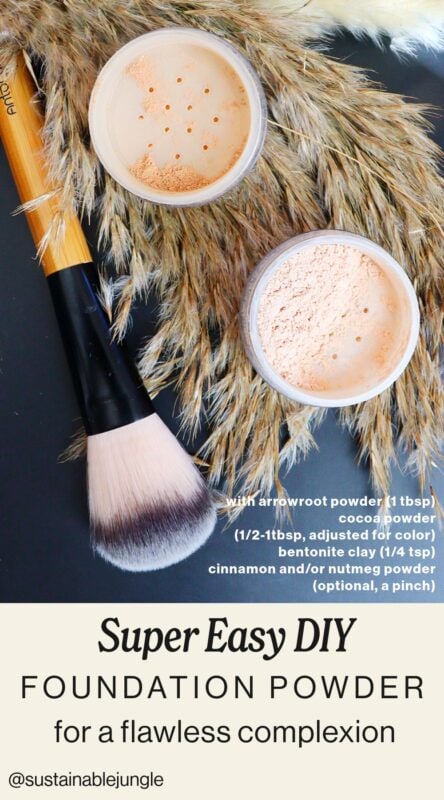
If you prefer powder over homemade liquid foundation, then this recipe combines natural non-comedogenic ingredients and household spices to create a lightweight, customizable coverage that’s perfect sensitive skin and for everyday wear.
Ingredients:
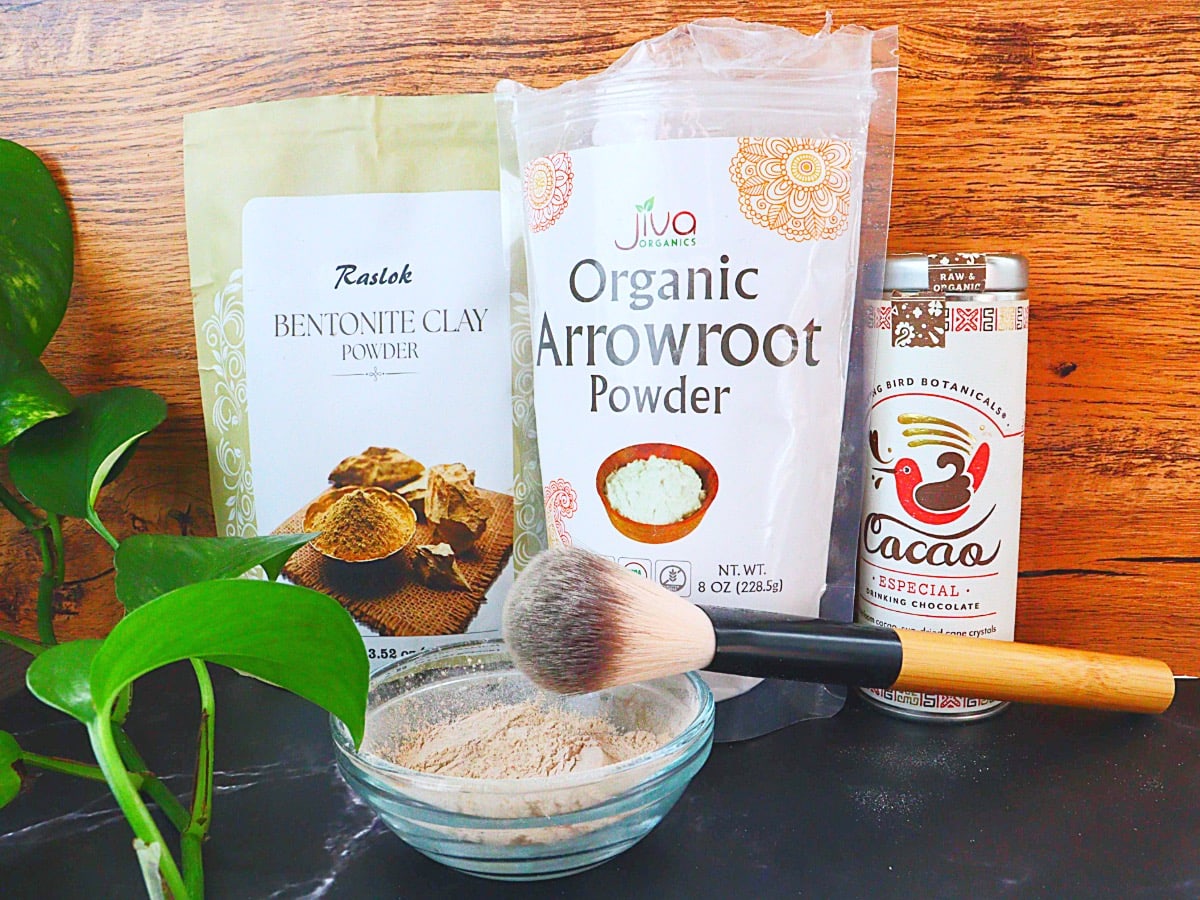
- Arrowroot Powder (1 tbsp): Acts as a base, giving the foundation a silky texture and oil-absorbing properties.
- Cocoa Powder (1/2–1 tsp, adjusted for color): Provides pigmentation and gives the foundation a warm, natural tone.
- Bentonite Clay (¼ tsp): Reduce oiliness.
- Cinnamon and/or Nutmeg Powder (Optional, a pinch): Adds a slight reddish undertone, ideal for deeper skin tones.
Instructions:
- In a small mixing bowl, combine arrowroot powder, cocoa powder, cinnamon, and bentonite clay.
- Mix thoroughly with a spoon or whisk until you achieve an even, consistent color.
- Test the powder on your skin to see if it matches your tone. Add more cocoa powder or cinnamon as needed to adjust the shade.
- Transfer the mixture to a clean, airtight container for storage. Apply with a makeup brush or puff for a natural, matte finish.
Cost Savings of Making Your Own Powder Foundation
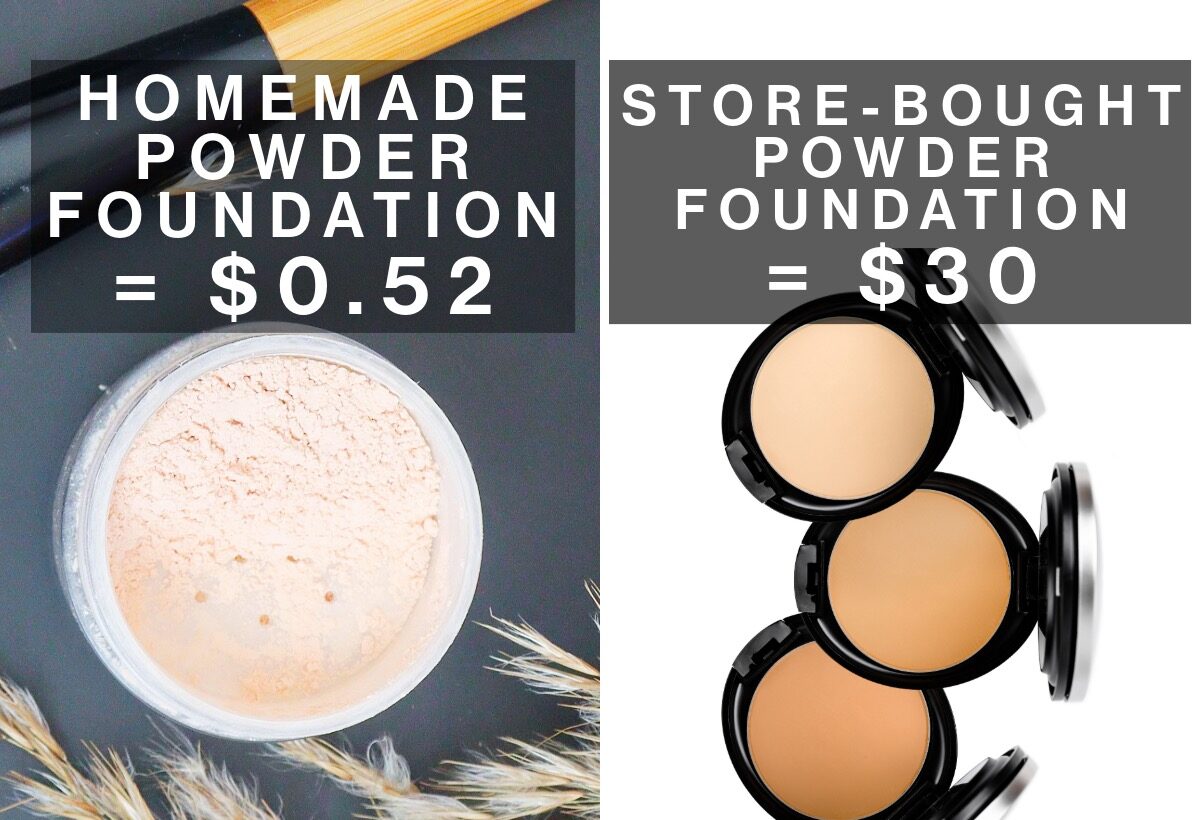
Out of all the DIY foundations and other makeup recipes, this one really stands out for it’s potential savings. The price of an average store-bought powder foundation is about $30, whereas the cost of making our recipe just a few simple, organic and skin-friendly ingredients that you can customize is a fraction of the cost ($0.52!).
Here’s the math (broken down per cost of ingredient).
Homemade Powder Foundation
- Arrowroot Powder: $6 for an 8 oz bag (~$0.37 for 1 tbsp)
- Cocoa Powder: $6 for an 8 oz container (~$0.06 for ½ tsp)
- Bentonite Clay: $6 for a 4 oz bag (~$0.04 for ¼ tsp)
- Cinnamon or Nutmeg Powder: $6 for a 2 oz jar (~$0.05 for a pinch)
Cost per batch: ~$0.52
Store-Bought Equivalent: ~$30 for 0.19 oz sifter (e.g., bareMinerals, Neutrogena, or similar mid-tier makeup brands)
Savings per Batch: ~$29.48
Why Make Your Own Foundation Powder?
While the costs savings are eye popping, there’s another very important reason as to why we go to the effort to make our own powder foundations. Conventional options almost always contain ingredients that pose health risks or cause skin irritation. Here are some common offenders you’ll spot when perusing ingredients lists:
- Parabens: These preservatives, such as methylparaben and propylparaben, are used to prevent microbial growth. However, they can mimic estrogen, potentially disrupting hormonal balance.
- Talc: Commonly used for its absorbent properties, talc can be contaminated with asbestos, a known carcinogen, raising safety concerns.
- Synthetic Fragrances: Often labeled simply as “fragrance,” these can contain numerous undisclosed chemicals, leading to skin irritation and allergic reactions.
- Petrochemicals: Ingredients derived from petroleum, like mineral oil, are used for their moisturizing properties but may clog pores and disrupt the skin’s natural balance.
- Silicones: Compounds such as dimethicone create a smooth application but can trap dirt and oil, potentially leading to breakouts. en.wikipedia.org
- PFAS (Per- and Polyfluoroalkyl Substances): These “forever chemicals” are used for their water-resistant properties but have been linked to various health issues, including cancer. Environmental Working Group
- Heavy Metals: Contaminants like lead, arsenic, and mercury have been detected in some cosmetics, posing risks of neurotoxicity and other health problems.
Being aware of these ingredients is certainly one step closer to choosing an organic foundation, but there’s no better substitute than making your own.

Amber obtained Bachelor of Arts degrees in English, Creative Writing, and Psychology from The University of Oxford and Arcadia University. She is an avid crafter, gardener, quail farmer, wannabe novelist, and self-proclaimed eco adventurer. From living in a camper van to living in a tiny house, she is enamored by the small and self-sufficient; and aspires to one day become an off-grid micro-farmer, bridging sustainability with non-toxic living and eating. With a passion for outdoor sports like rock climbing, skiing, and travel, having already backpacked across 30 countries, she is always up for the next big adventure while seeking ways to minimize her impact along the way.