












Who says low-waste living is only reserved for those with opposable thumbs? Eco-friendly cat litter is the foundation of any conscious cat parent’s zero waste kit(ten)—especially considering two million tons of litter waste is channeled into landfills in the U.S. every single year.
Not only that, but a lot of conventional cat litter is full of fillers, dust, and chemicals that aren’t good for you, the air in your home, or most of all, your feline friend. This may seem dim and dreary, but don’t let it get you meow-n!
The most environmentally friendly cat litter ensures the only nasty stuff inside that litter box is something that came from your cat. And that’s what we’ve rounded up for you, a list of options made by brands that not only use chemical-free ingredients but also green business practices.
Related Guides: Eco-Friendly Pet Products, Eco-friendly Dog Beds, Sustainable Dog Food, Sustainable Cat Food, Sustainable Dog Collars
We independently research all featured brands, and we ask them to confirm their claims. In many cases we personally review recommended products. This post contains affiliate links which means we may earn a commission if you buy something. We explain this further in our Terms of Use.
Biodegradable Cat Litter We’re Meowing About
Tuft + Paw is fully transparent on the ingredients they use—which does not include fragrances or chemicals—in their tofu-based affordable cat litter.
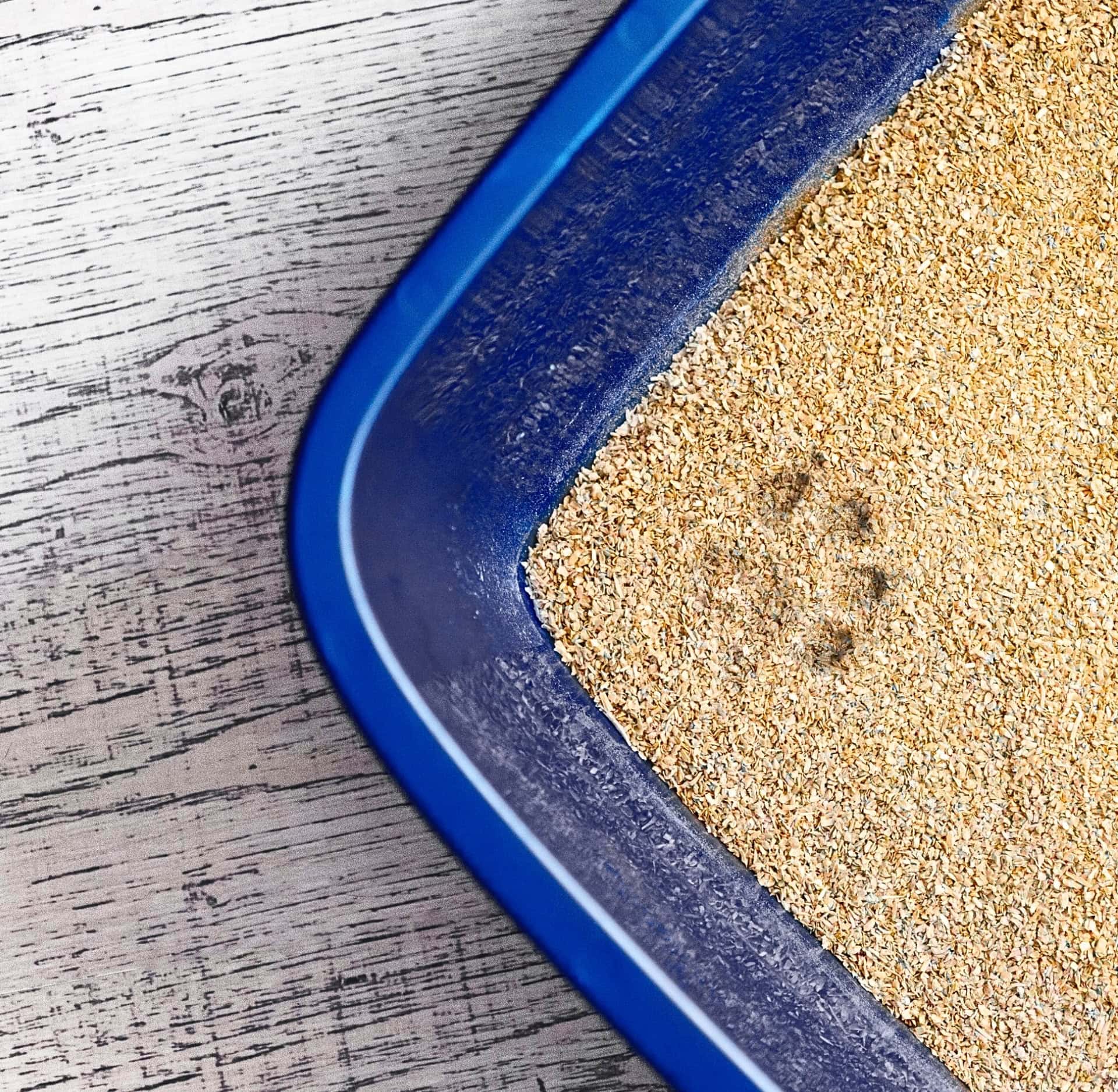
Naturally Fresh uses walnut shells from their family walnut farm to make their kitty litter super local and sustainable.
Index: Best Eco-Friendly Cat Litter
- Tuft + Paw Jump to brand
- Naturally Fresh Jump to brand
- World's Best Cat Litter Jump to brand
- Okocat Jump to brand
- sWheat Scoop Jump to brand
- Pioneer Pet Jump to brand
- KatKin Jump to brand
Tuft + Paw

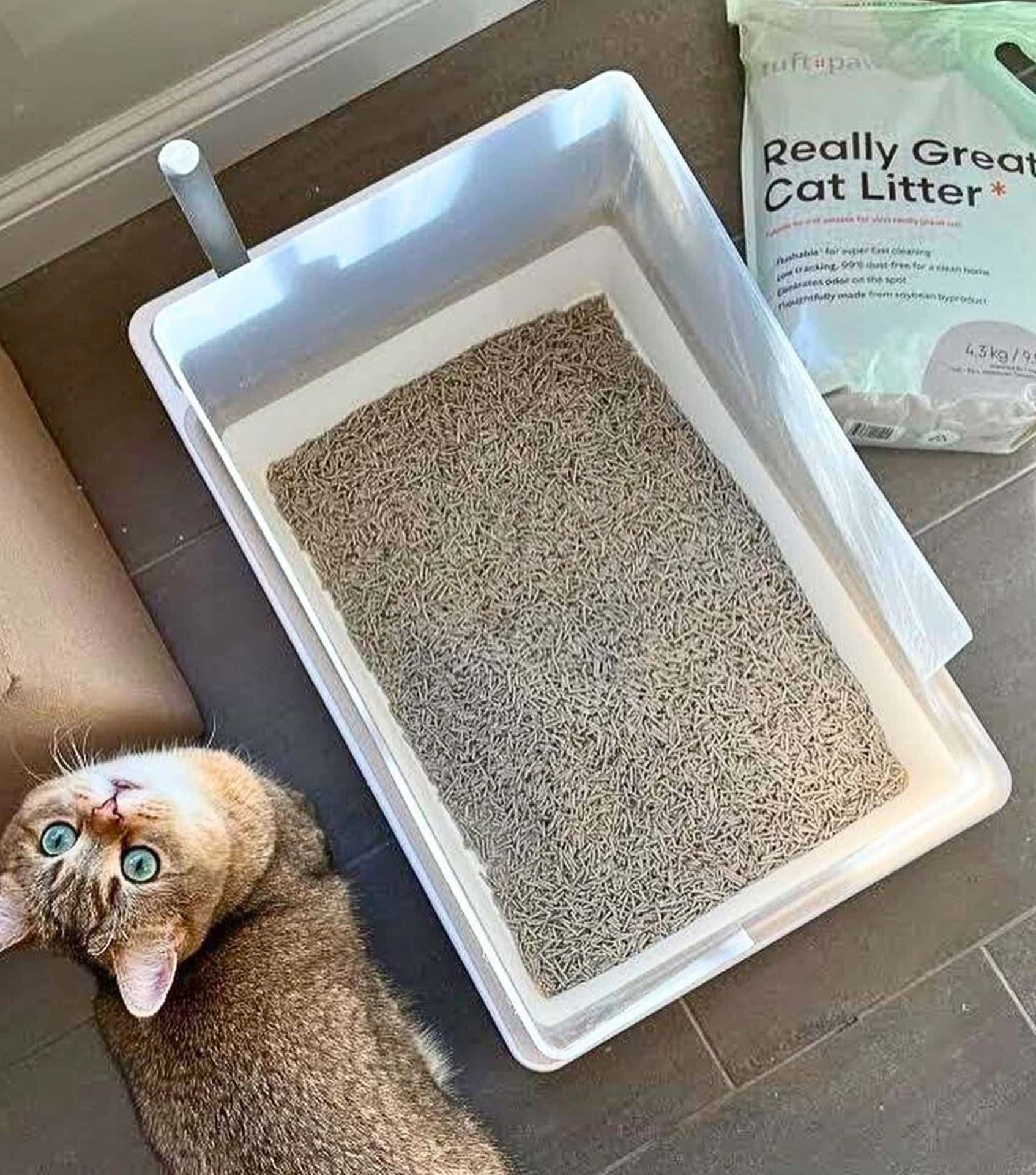
Tuft + Paw’s Cat Litter
Price Range: $29–$79
You’ve heard of tofu as a meat replacement, but what about a litter replacement?
Tuft + Paw is a feline-focused brand that produces eco-friendly kitty litter out of a soybean byproduct from the tofu industry that would otherwise go to the landfill. That’s combined with only four other chemical-free ingredients: corn starch, corn flour, guar gum, and charcoal.
It’s a low tracking, dust free, and clumping litter that is plant based and biodegradable, and the soybean fiber byproduct makes for a soft surface for cat’s paws, though from what we can tell, Tuft + Paw’s litter comes in a plastic bag that we’re not sure is easily recyclable.
About Tuft + Paw
If you purchase a Tuft + Paw product—whether it be their “Really Great Cat Litter” or feline furniture—with the intention of donating it to a cat shelter, that product is automatically 50% off.
The brand makes an effort to source recycled materials when possible for their products, and each cat furniture piece includes a partial cost breakdown, so you have visibility into how much is spent on materials and labor.
Naturally Fresh


Naturally Fresh’s Cat Litter
Price Range: $20–$33
Naturally Fresh is a brand that turns walnut shells from their family farm in California into biodegradable cat litter with sustainable odor-control.
Like other plant-based cat litter, Natural Fresh’s walnut cat litter is also compostable. Naturally Fresh claims that their litter neutralizes odor better than clay, pine, corn, and wheat (without toxic fragrances), and that their litter absorbs 3x better than clay litters.
Its solar-powered production also uses 42% fewer fossil fuels, 97% fewer mineral resources, and produces 130% fewer greenhouse gas emissions than that of clay litters. Plus, the walnut trees the shells come from act as a carbon sink for absorbing CO2. What’s nut to love?
About Naturally Fresh
Naturally Fresh regularly donates litter to cats in need, and specifically partners with shelters that pursue both sustainable practices and animal welfare.
The manufacturing process produces minimal transport emissions due to a 16-mile production radius. While their litter comes in a plastic bag, they’ve committed to switching to recyclable packaging by 2025.
World's Best Cat Litter
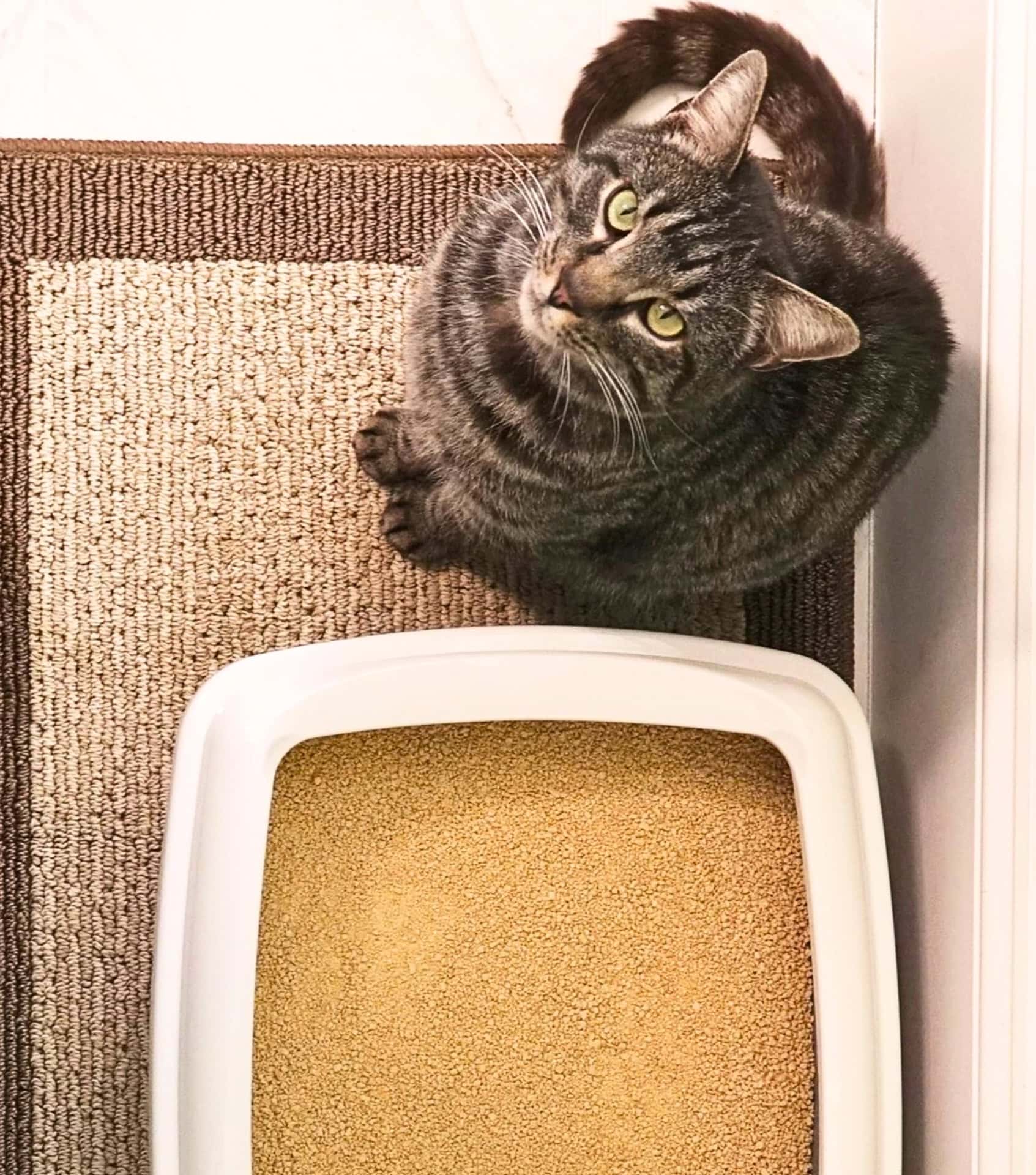

World’s Best’s Clumping Cat Litter
Price Range: $10–$70
World’s Best is an activism focused brand committed to providing a litter that both you and your cat will love, helping out cat shelters and new pet parents in the process.
Their dust free litter is made out of corn, with no chemical additives. It’s more dust free and absorbing than traditional clay clumping litter, making that litter box easier and safer to clean.
While corn is biodegradable, we’d like to see more information from World’s Best regarding how their corn is sourced, particularly since corn can be a problematic crop when it comes to water usage and soil stewardship.
About World’s Best Cat Litter
World’s Best’s website is chock-full of resources for current and prospective cat owners, from guidance on how to choose the right shelter to pros and cons of adopting a senior special needs kitty.
They also pledge to #GIVEACRAP through their Give Litter initiative, by promising to donate up to 3 million pounds of litter to the 3 million+ cats that get taken to animal shelters every year. If you post a picture of you and your cat with the custom photo frame, then World’s Best will donate 5 pounds of litter to a shelter.
Okocat

ökocat’s Cat Litter
Price Range: $16–$29
“Öko” is the German equivalent of the English “eco”—so ökocat means “eco cat.” It’s the perfect name for a brand that prioritizes sustainable litter for katzen. Theirpaper litter is made from natural wood fibers that are screened and de-dusted, with no artificial fragrances, synthetic chemicals, dyes, or GMOs.
The litter also controls odors before they start by absorbing liquid on contact, which prevents enzymes from binding with liquid and waste resulting in a fresher smelling litter box.
The wood fibers ökocat uses complies with the standards set by all three major sustainable forestry certifications, and the production process upcycles millions of pounds of paper and wood fibers that would have otherwise gone to the landfill. Over 50% of the water used for the manufacturing process is recycled and reused.
About ökocat
ökocat is affiliated with the Pet Sustainability Coalition, and sustainability messaging is added to all product packaging to increase awareness of pet sustainability and recycling options.
They’re committed to the wellbeing of their employees through education partnerships with local colleges, a comprehensive benefits package, and a community supported agriculture (CSA) farm to market program.
sWheat Scoop


sWheat Scoop’s Cat Litter
Price Range: $15-$50
Don’t sWheat litterbox cleaning—or rather, do sWheat it. sWheat scoop is a biodegradable cat litter brand that uses renewable wheat and corn. The litter is also dust free. The natural enzymes and starches in wheat makes a natural clumping litter that controls odor—without added chemicals.
While sWheat does use plastic packaging, they have an ongoing partnership with Plastic Bank, an initiative that helps keep plastic out of oceans and builds up local communities.
About sWheat Scoop
Beyond information on the sustainability of their litter, sWheat Scoop doesn’t provide insight into their supply chain or labor practices, so have reached out to the brand to learn more.
Pioneer Pet
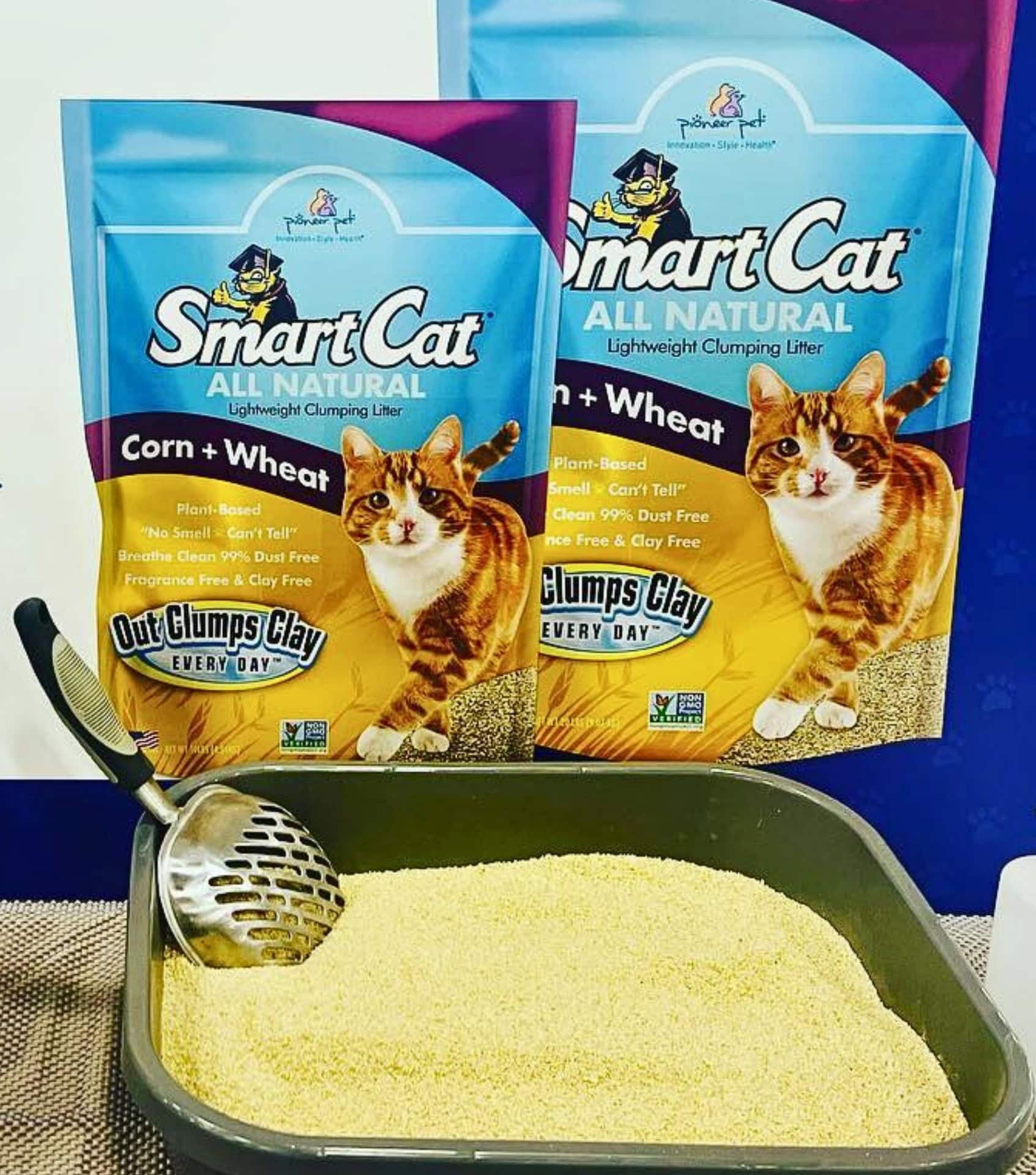

SmartCat’s Cat Litters
Price Range: $13–$30
SmartCat by Pioneer Pet has two lines of cat litters: a natural grass cat litter, and a corn-based litter. Both low-dust, natural clumping litter lines come from renewable resources, and are fragrance free. But watch out: Pioneer Pet also sells a clumping clay litter, which is not as eco-friendly as their grass and wheat options.
It appears the litter comes in plastic packaging, and it is unclear whether the packaging can be recycled.
About Pioneer Pet
While plant-based, biodegradable litter is a great start, we would love to know more about how they manufacture the litter and have reached out to ask.
KatKin

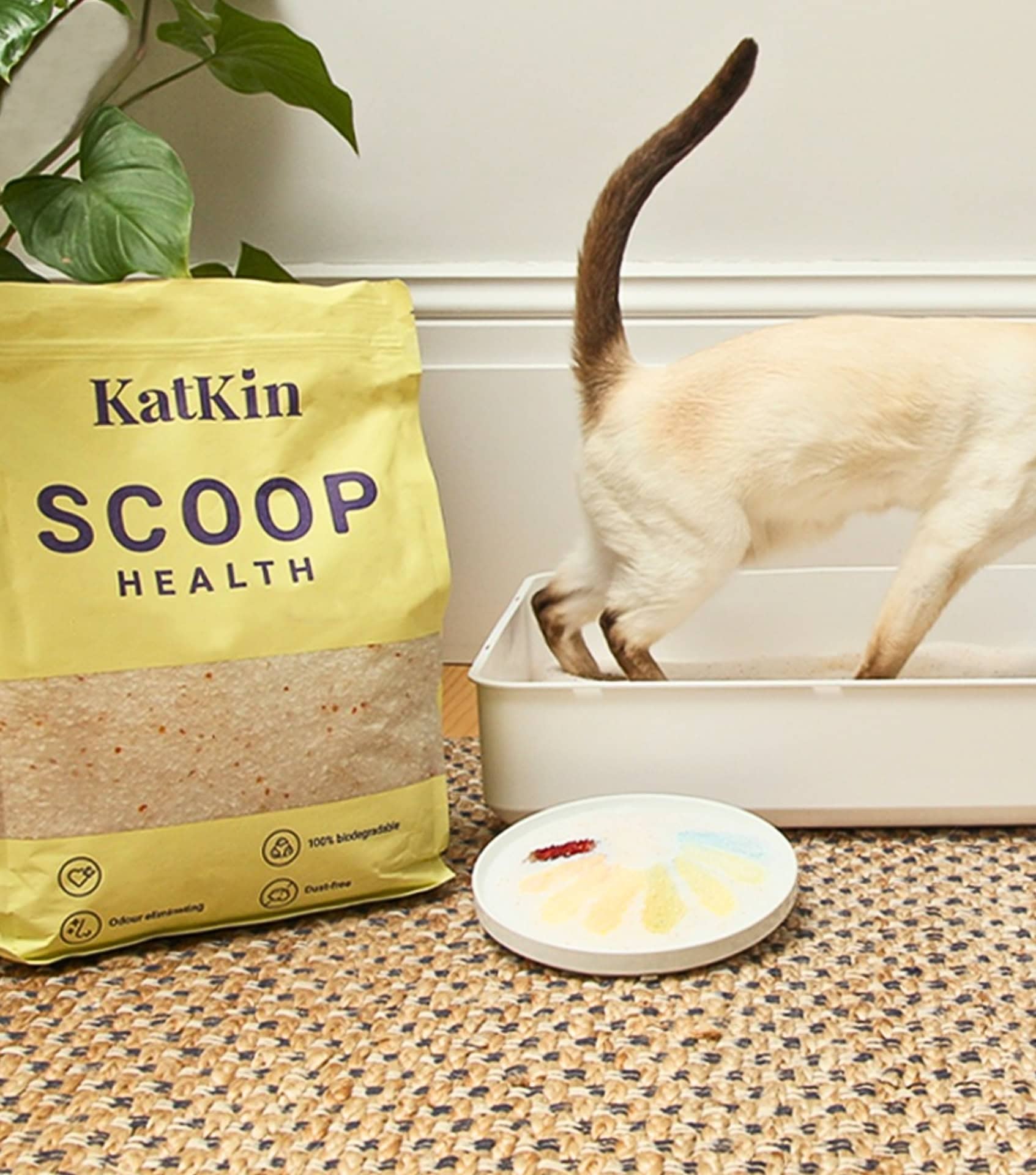
KatKin’s Clumping Cat Litter
Price Range: Subscription plan prices are quoted based on your specific cat’s needs.
“Meet the UK’s first health-monitoring cat litter” courtesy of KatKin. This Scoop Health litter features special color-changing technology designed to detect pH irregularities and identify urine health problems.
Their other sustainable litter is Scoop Tofu, a clumping litter made of a soybean byproduct. It’s dust free and soft on cats’ feet—good for litter boxes for more sensitive cats. 80% of the soya bean is used to make tofu, while the other 20% usually goes to waste. KatKin uses that 20% byproduct to make a soft, non-toxic and biodegradable cat litter that’s good for your pet and the planet.
The cat litter bags are curbside recyclable, so no need to drop it off at a special recycling location.
About KatKin
UK-based KatKin is primarily known for their custom cat food subscriptions. Their easy yet comprehensive quiz will help ensure your cat is matched with the best food for their breed, age, and more. Unfortunately, their products are not available individually, but must be purchased as part of the subscription plan.
You can refer your favorite shelter to KatKin and they will provide them with a unique discount code. The shelter can then share the discount code with new cat parents and for each one that uses the code, KatKin donates £20 to the referring shelter.
What Is The Most Eco-Friendly Cat Litter?
As conscious pet parents, we often have more questions than we do cats. Is cat litter bad for the environment? Or are there more eco-friendly ways for your cat to do its business?
If so, what is the most eco-friendly cat litter?
It starts with choosing low-impact alternatives. Conventional cat litter usually comes in two main varieties: clay cat litter and crystal cat litter (also known as silica litter).
Traditional clay litter uses either sodium bentonite or calcium montmorillonite clays that are often sourced via strip mining, a process that severely damages local ecosystems and depletes non-renewable resources. Plus, clay litter tends to cement itself to the side of the litter box, and that’s no fun to clean.
Okay then what about crystal litter—is silica cat litter eco-friendly?
Unfortunately, crystal (silica) litter is typically made from sand and other minerals, which are also non-renewable. While crystal litter can be used in automatic litter boxes, it’s not biodegradable and produces silica dust, a known carcinogen when inhaled—which your cat probably does each and every time it buries its business.
Plant-based cat litter on the other hand is eco-friendly, because it is biodegradable and renewable and there are a wide variety of types, ranging from walnuts to soy to corn to paper.
What Is the Most Environmentally-Friendly Way to Dispose of Cat Poop?
One of the most important parts of maintaining a litter box for your feline friend is knowing how to dispose of cat litter in a safe and environmentally-conscious way.
After your kitty uses the litter box, there are three primary ways to dispose of soiled litter and cat waste:
1. Throw it in the trash
Putting cat litter in the trash will send it to the landfill. Landfills aren’t designed with the proper oxygen flow needed for decomposition, so while a biodegradable litter might break down eventually, it will not decompose nearly as fast in a landfill as it would in the compost heap.
2. Flush it
Humans produce waste and cats do too—can you flush cat litter down the toilet?
Flushing cat litter is actually heavily discouraged in many municipalities due to potential water contamination issues. Indoor cats are far less likely to carry parasites and germs than outdoor cats, but flushing still puts local wildlife at risk.
3. Compost it.
Composting cat litter is a way to return the biological matter from the litter to the earth. At first glance, this probably seems like the most eco-friendly way to deal with cat litter.
But wait, is cat litter compostable? Or are “compostable” cat litters a bunch of greenwashing? Biodegradable litters will theoretically break down in a compost pile, but unfortunately, composting litter at home is not that simple.
Because of the potential health risks with using carnivorous animal waste in compost, you should follow all composting best practices and local regulations to ensure that the litter is composted safely.
To kill potential parasites and pathogens, it’s recommended that cat feces decompose for a minimum of six months in higher-heat settings (AKA hot compost) or two years in regular home composting settings. Even then, it should be composted entirely separately from your regular household compost and its yields should never be used as fertilizer on usable or edible plants (like your vegetable garden).

Tucked away in the mountains of BC, Canada, Shelby combines her sustainable lifestyle with a passion for writing. A nomad at heart, travelling to different countries, and provinces from the East to West Coast before settling down to raise a family, farm and write. With a love of poetry, psychology and putting nutrient dense food on a plate, her main goal is to foster connections, support local artisans, farmers, crafters, and creators to minimize her impact on the planet while maximizing her community.









I have been using Naturally Fresh for approximately a year. While the initial transition to this litt was great, it ended up being the same old same old. Dust was unbelievable and leaves almost a suitty residue that gets into everything. While it does clump well it lacks odor control and does mold and has a smell of yeast. My litter boxes are maintained daily. I also have a compost pile designated for used litter so I am anxious to see how well it does compost. I feel with all the hype of “eco friendly”, there is still room for great improvement. Maybe I am doing something wrong or maybe I just got a bad batch but wish the marketing of pet products would start living up to what they say it is. I am a firm believer that if you want to walk the talk, than do it honestly.