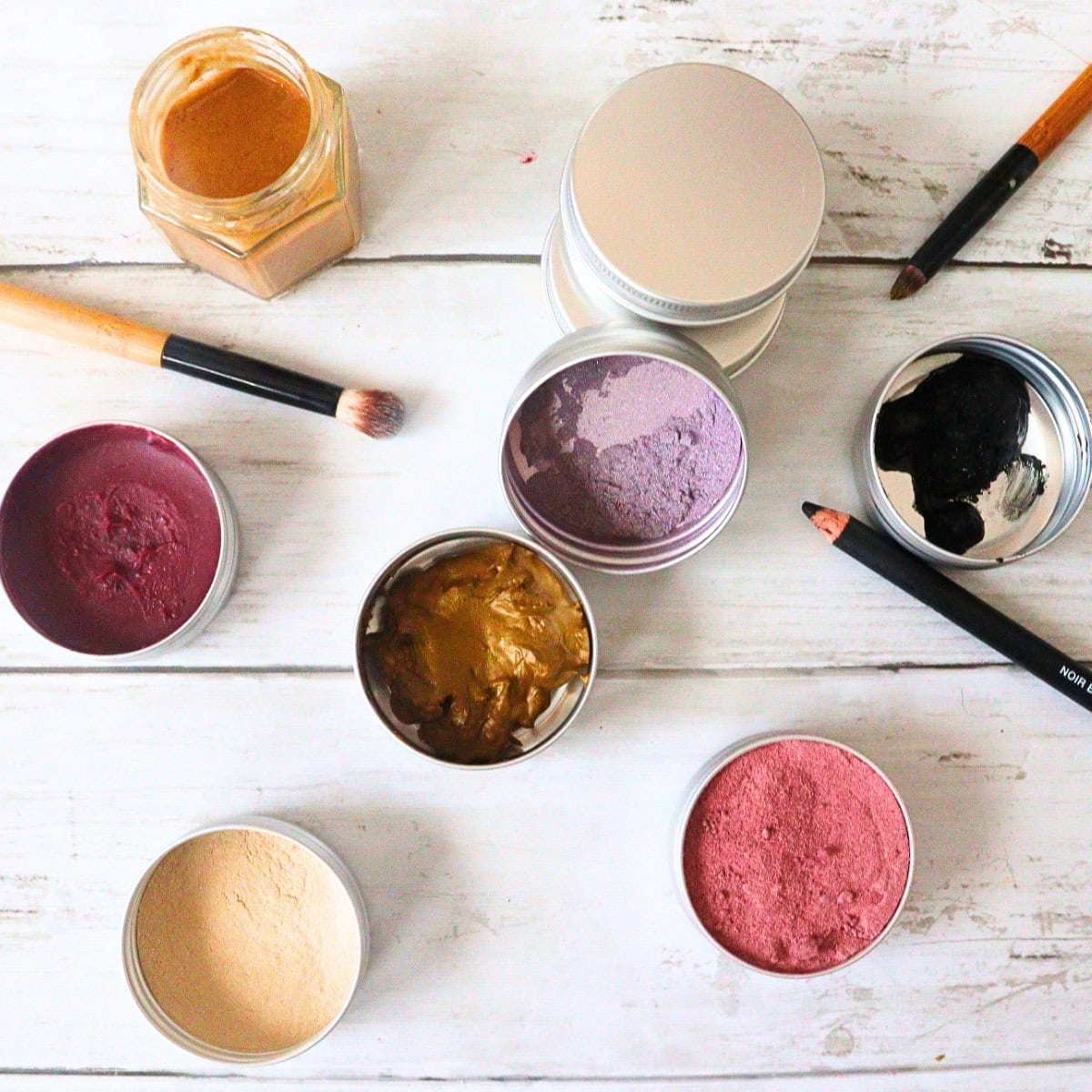














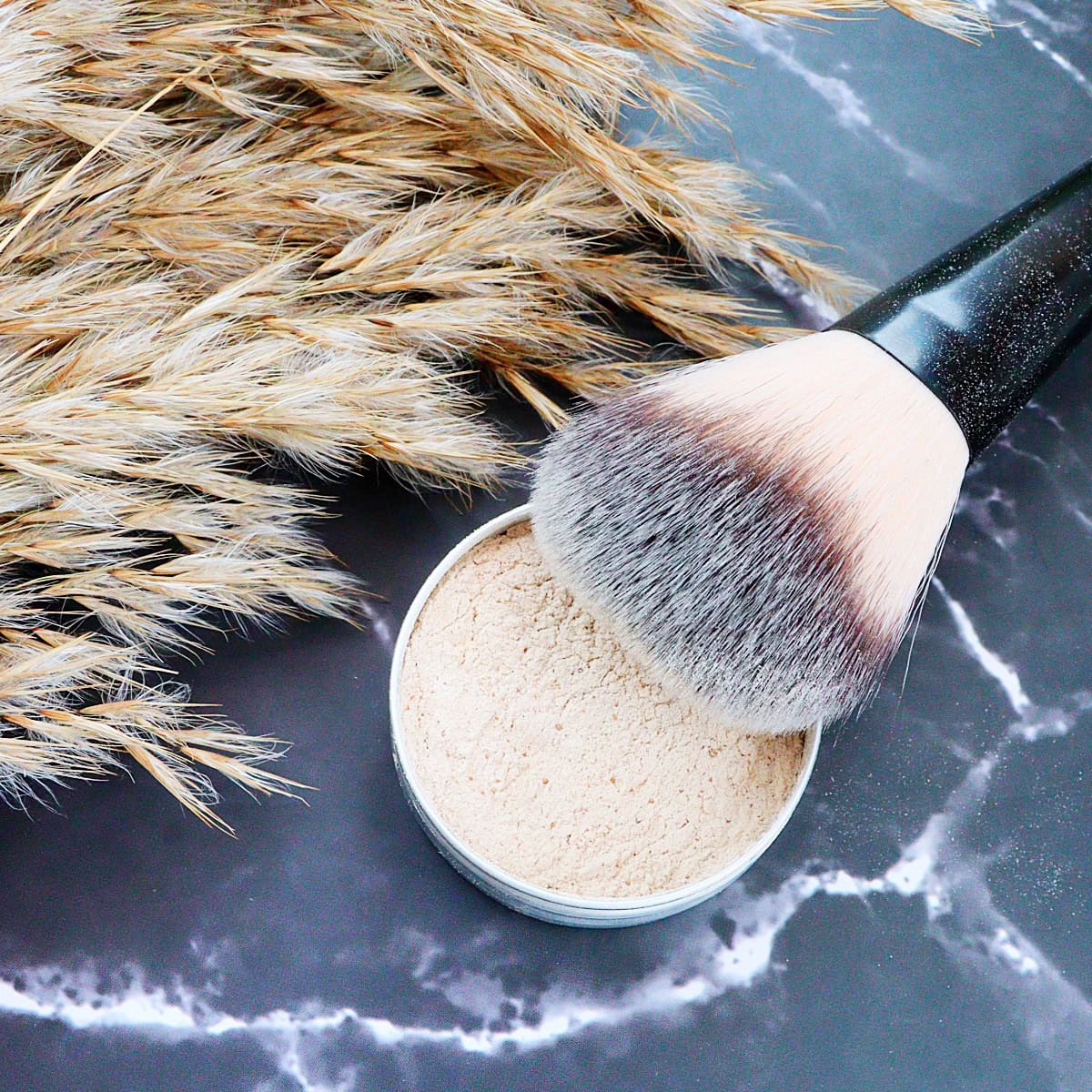
Highlighter (or luminizer) is a versatile addition to a makeup routine. It brightens cheekbones, defines brow bones, and even doubles as an eyeshadow. It also can set your makeup and absorb excess oils and sweat.
That’s a lot of pros but is it worth it if the product is made of synthetic dyes, preservatives, and irritants? We don’t think so.
Which is why we make our own DIY highlighter powder which swaps out these harmful additives you wouldn’t want anywhere near your skin with safe, simple and healthy ingredients (like arrowroot powder, clay, and finely ground oats) you may already have in your kitchen cupboard.
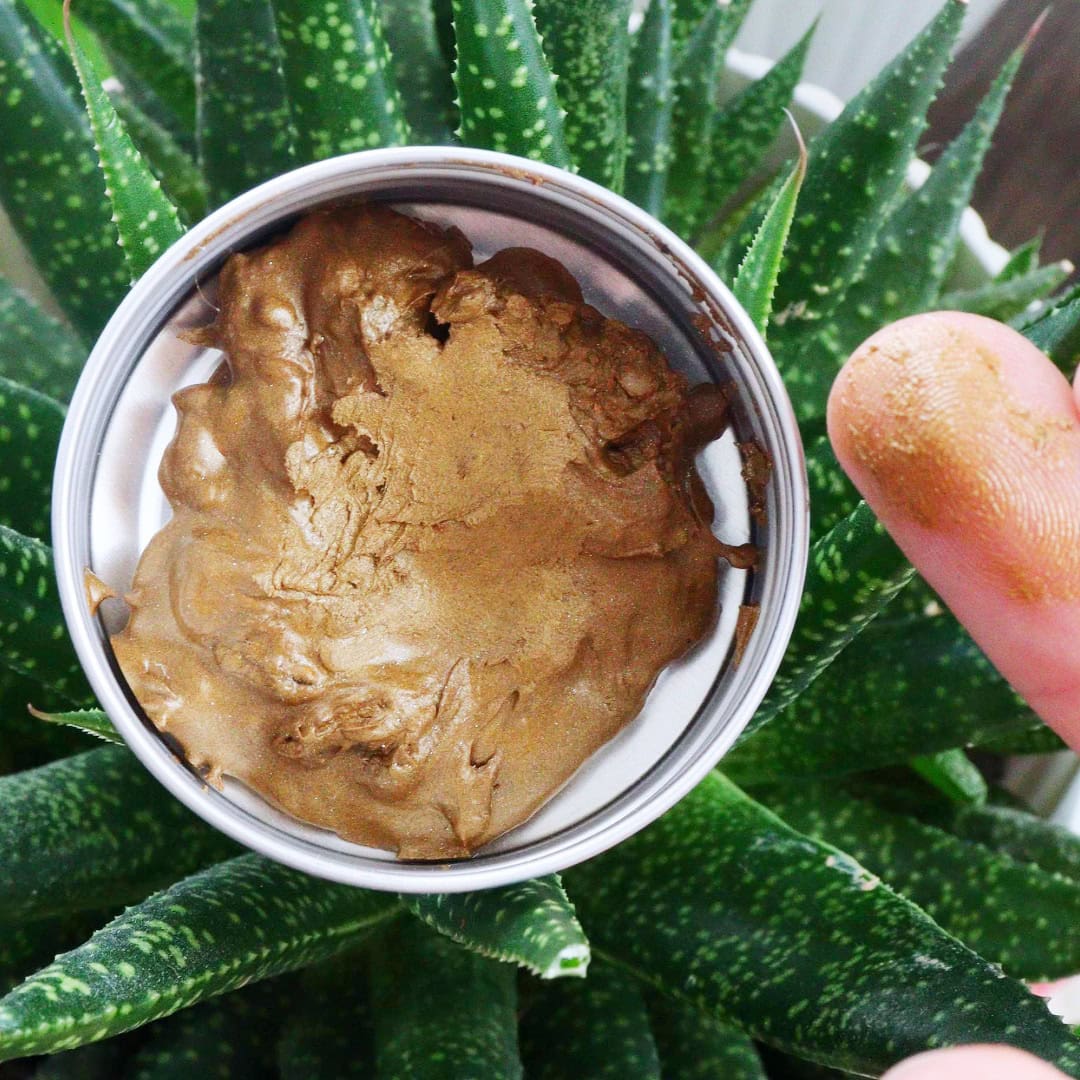
With a silky, blendable texture and skin-friendly formula, this easy DIY eye makeup recipe creates a luminous effect without the draw backs of a conventional product.
Index: Homemade Highlighter Powder
- Homemade Highlighter Powder Recipe Jump to section
- Cost Savings of Making Your Own Luminizer Powder Jump to section
- Why Make Your Own Highlighter Powder? Jump to section
Homemade Highlighter Powder Recipe

Dark circles got you down?
Brighten up your eyes and conceal your exhaustion with a little brush of eye-brightening powder. It’s basically highlighter for the eyes—and it also serves to help set the rest of your eye makeup and absorb excess oil.
Ingredients:
- Mica powder (1 tsp): Reflects light to create a brightening effect and reduce the appearance of dark circles. Opt for neutrals like pearl, champagne, or rose gold, not brightly colored mira powder.
- Arrowroot Powder (1 tbsp): Helps absorb excess oil and gives a smooth, soft-focus finish
- Bentonite or Kaolin Clay (½ tsp): Adds a silky texture while gently detoxifying and mattifying. Bentonite clay absorbs extra oil so it is better for oily skin.
- Finely Ground Oats or Oat Flour (½ tsp, optional): Gives extra skin soothing and hydrating power to the formula. Also blurs fine lines and provides a subtle brightening effect.

Instructions:
- In a small bowl (or tin that you plan to store it in, as this formula can easily be mixed in the final container), whisk together arrowroot powder, clay of choice, and oat flour until well combined.
- Gradually mix in the mica powder, stirring thoroughly to ensure even distribution. We recommend not adding the full teaspoon to start, but adding half, mixing, then testing on the back of your hand. If greater shimmer is desired, add the rest. You can also adjust the shade by adding more pearl mica for brightness or rose gold for warmth.
- Transfer to a small sifter jar or compact (unless already mixing in your final container) for easy application.
- Use a fluffy brush to lightly dust under the eyes or over high points of the face.
Cost Savings of Making Your Own Luminizer Powder

A conventional powder (or cream) from the store is a lot more expensive than making your own. To give you an idea, here are the costs of our DIY highlighting powder recipe (broken down into their ingredients) as compared to the average price of a store-bought face powder.
DIY Eye-Brightening Powder
- Mica Powder: $13 for a 30 oz bag (~$0.08 for 1 tsp)
- Arrowroot Powder: $6 for an 8 oz bag (~$0.38 for 1 tbsp)
- Bentonite Clay: $6 for a 4 oz bag (~$0.12 for ½ tsp)
- Oat Flour/Ground Oats: $7 for a 20 oz bag (~$0.05 for ½ tsp)
Total for Batch: ~$0.63
Store-Bought Equivalent: ~$6 for a 0.2 oz compact (e.g., wet n wild and similar brands)
Savings per Batch: $5.37
Similar to our DIY eyeshadow powder recipe, this is not only significantly cheaper, but it also lets you customize the shade and tone and the ingredients you choose to include for a clean, skin-friendly glow.
Why Make Your Own Highlighter Powder?
Commercial highlighter powders almost always contain ingredients that may pose health risks, especially with frequent use. Have a quick peruse of the ingredients lists the next time you go to the store, you’re pretty much guaranteed to see these common suspects:
- Talc: Often used to provide a smooth texture, talc has been scrutinized due to concerns about contamination with asbestos, a known carcinogen. While cosmetic-grade talc is generally considered safe, the potential for contamination has led some to seek alternatives.
- Parabens: These preservatives prevent microbial growth in cosmetics but have been linked to hormonal disruptions due to their estrogen-mimicking properties. Although the evidence is mixed, some consumers choose to avoid them as a precaution.
- Titanium Dioxide: Used for its whitening and brightening effects, this mineral is generally safe. However, concerns arise when it’s in nanoparticle form, which may penetrate the skin and lead to potential health issues.
- Bismuth Oxychloride: This ingredient gives a pearlescent finish but can cause skin irritation or breakouts, particularly in those with sensitive skin.
- Per- and Polyfluoroalkyl Substances (PFAS): These chemicals are sometimes added to cosmetics for their long-lasting, water-resistant properties. However, PFAS are linked to serious health concerns, including cancer, hormone disruption, and environmental persistence.
Given these potential risks, creating your own highlighter powder (much like DIY blush powder) using natural ingredients can be a safer alternative, allowing you to control what you apply to your skin.

Amber obtained Bachelor of Arts degrees in English, Creative Writing, and Psychology from The University of Oxford and Arcadia University. She is an avid crafter, gardener, quail farmer, wannabe novelist, and self-proclaimed eco adventurer. From living in a camper van to living in a tiny house, she is enamored by the small and self-sufficient; and aspires to one day become an off-grid micro-farmer, bridging sustainability with non-toxic living and eating. With a passion for outdoor sports like rock climbing, skiing, and travel, having already backpacked across 30 countries, she is always up for the next big adventure while seeking ways to minimize her impact along the way.